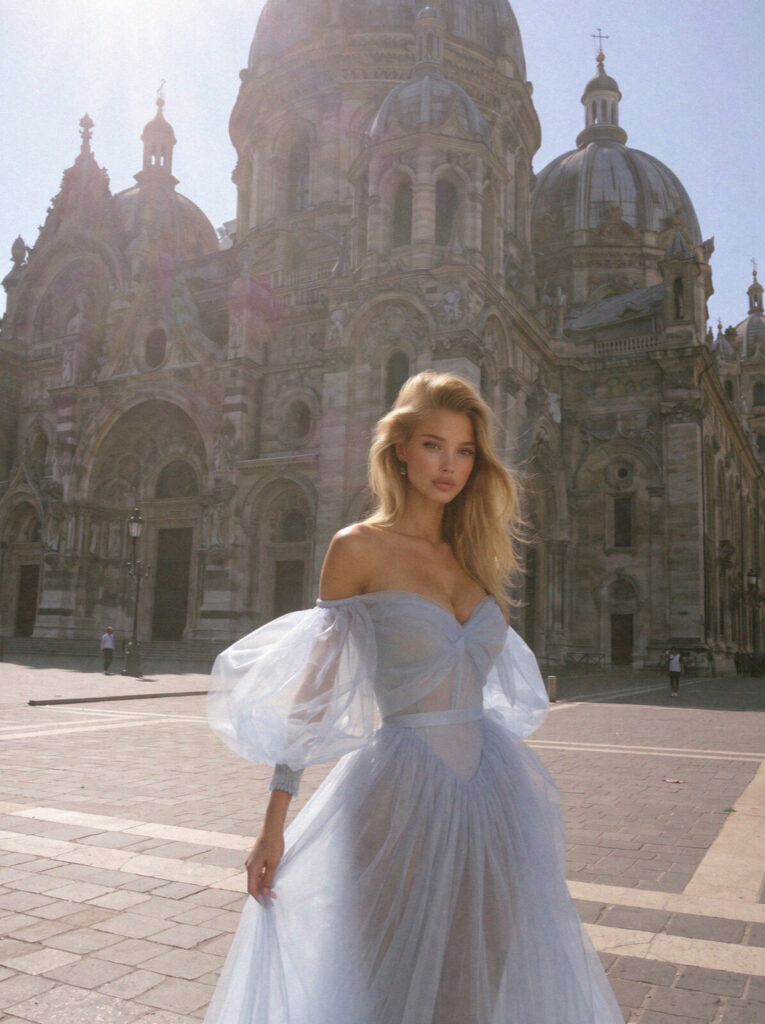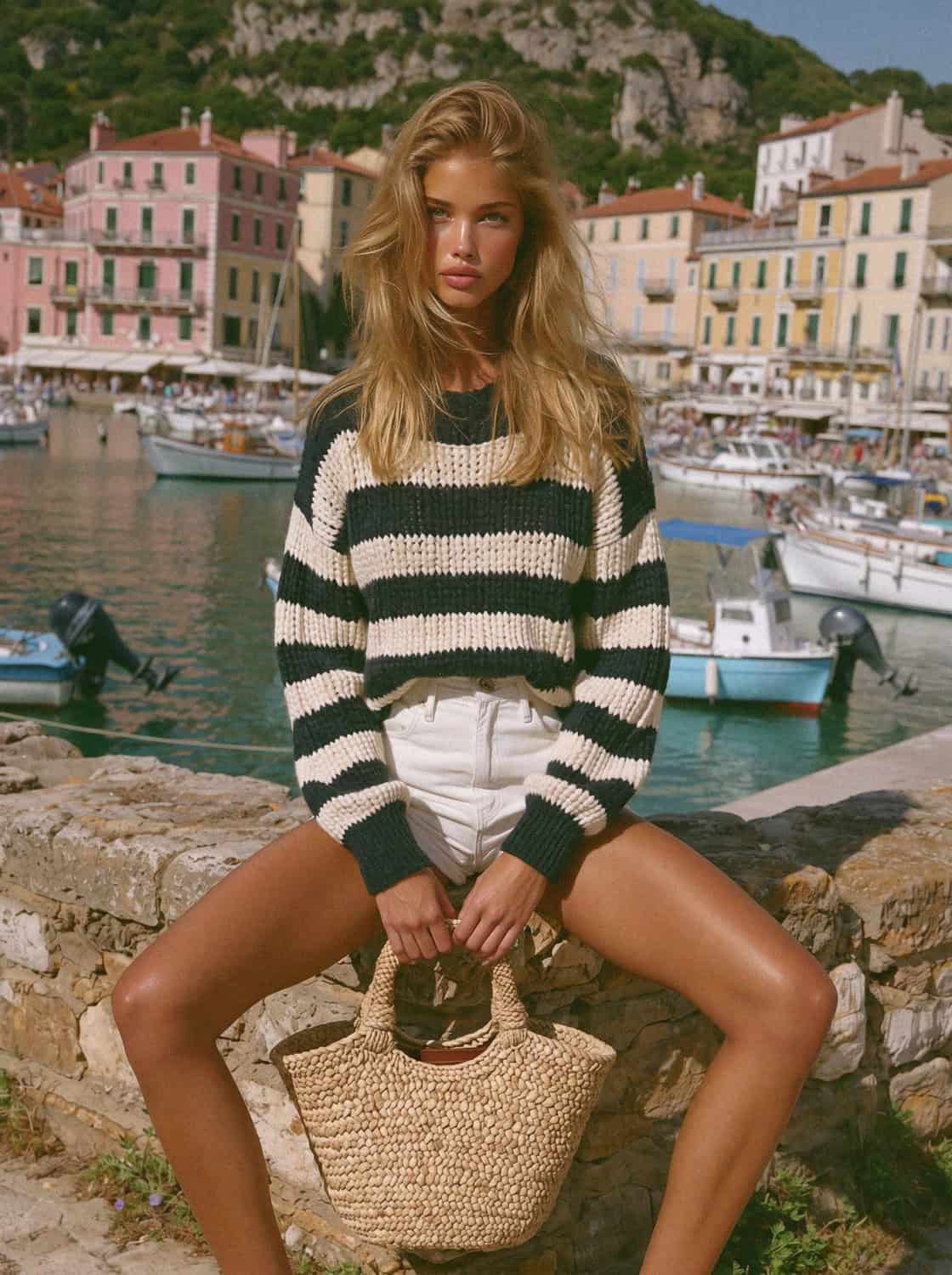
Portofino is tiny, and that is precisely what makes it so photogenic. The whole village folds around a single deep-green harbour, the pastel houses stacked so tightly they seem to lean on one another, and everything you might want to photograph sits within a twenty-minute walk of the water. What changes your pictures here is not distance but timing and where you choose to stand, because the same view can look like a postcard at seven in the morning and a scrum of day-trippers by eleven. I have come back to Portofino in every season, camera over my shoulder, and I have learned that the good light and the empty foreground are the two things worth planning your day around. Here is where I go, and when.
The classic harbour view, and where to actually stand
The image everyone carries home is the same one: the ochre, rose and butter-yellow facades curving around still water, boats moored in front. The mistake is to shoot it from the middle of the piazzetta, where you are too low and too close. Walk instead to the far end of the harbour wall, out along the quay on the right-hand side as you face the sea, and turn back toward the village. From there you get the full sweep of houses with the water in the foreground, the reflections doing half the work for you.
The Piazza Martiri dell’Olivetta, the little square at the head of the harbour, is the heart of it, but the picture lives on the breakwater. Come early. In high summer the harbour is glassy and almost empty for the first thirty to forty-five minutes after sunrise, roughly from half past five, and the crowds do not really build until around nine. That early hour is the single biggest favour you can do your photographs. A wider lens gathers the whole curve; if you like the mirror effect, the slow, still water just after dawn holds the reflections beautifully.
Plan Your Visit to Portofino
A few things I booked and loved. These help support the blog, at no cost to you.
This section contains affiliate links. If you book through them I may earn a small commission, at no extra cost to you.
Up to San Giorgio for the morning shot
A ten-minute climb from the piazzetta, up the stepped lanes on the eastern side, brings you to the little church of San Giorgio. It sits at a useful middle height, above the boats but below the castle, and the terrace beside it gives you a harbour view that feels earned rather than obvious. This is a morning spot. The light comes from the east and lands directly on the whitewashed facade of the church, and the same low sun warms the village below without the harshness of midday.
Access is free, which is worth knowing, and the terrace is rarely crowded first thing. What I would do is treat San Giorgio as the second stop on an early loop: dawn on the breakwater, then up the steps while the light is still gentle, then onward and higher.
Castello Brown, the terrace that earns its ticket
Higher still, above the church, stands Castello Brown, a fortress turned house with gardens and, more to the point, a terrace that looks straight down the throat of the harbour and out to the open gulf. The entry fee is modest, around eight euros, and the castle keeps seasonal hours, roughly from mid-morning until early evening. Because it opens late, this is not a sunrise option. It is an afternoon one.
Go about two hours before sunset. The sun then comes from the west and rakes across the coloured facades, side-lighting them so the whole village takes on depth and warmth. The temptation on the terrace is to shoot the widest possible view, but the more interesting picture is a tighter one. Move along the terrace wall and find a composition that threads through the yacht masts to the houses beyond, letting the boats layer in front of the village. A longer lens, if you have one, compresses the boats and buildings into that dense, stacked look Portofino is famous for.
The walk to the Faro at Punta del Capo
Past the castle, a path continues out along the promontory to the lighthouse, the Faro di Portofino, at Punta del Capo. Reckon on twenty-five to forty-five minutes each way from the village, depending on how often you stop, and expect uneven ground and a few inclines. Sensible shoes matter more here than a big camera bag.
The reward is not really the lighthouse itself but the openings along the way, the points where the path clears and the coastline drops off and the Gulf of Tigullio spreads out below. The strongest pictures usually come just before you reach the Faro, where the path opens to broad sea views, and, if you turn back, at the viewpoints that frame the village behind you. That backward glance toward Portofino, taken with a longer lens, is one of the most underused shots in the whole area.
For light, you have a choice. Late afternoon into early evening gives you soft, golden light and a calmer feel, and if you time it for the hour before sunset you can catch the headland in silhouette. Mornings, on the other hand, give you the path more or less to yourself. There is a small café and terrace at the lighthouse; if it is open, it is a fine place to stop before turning back.
From the road above, and the boats below
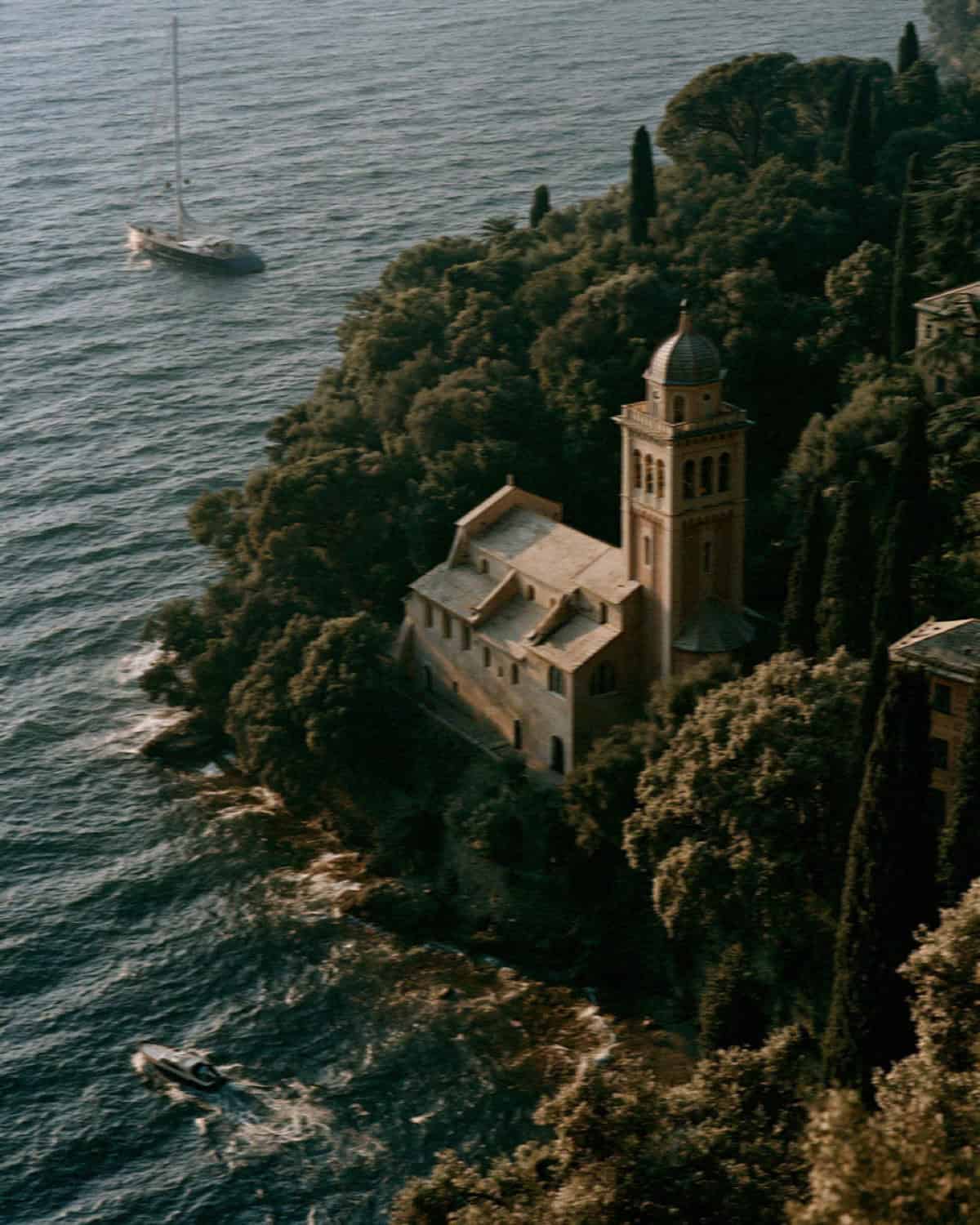
Not every good angle involves a climb through the village. The road that curls above the harbour, the way the buses and cars come in, gives you a clean elevated look down onto the basin, with the houses on the left and the wooded promontory closing the frame on the right. It is worth pausing on the way in or out rather than rushing past.
Down at water level, do not overlook the boats themselves. Portofino still has its wooden gozzi, the traditional Ligurian craft, bobbing among the sleeker yachts, and a close, patient photograph of a painted hull and its reflection can say more about the place than another wide harbour shot. Early morning, again, is when the water is calmest and the reflections cleanest.
By water: San Fruttuoso and the Paraggi cove
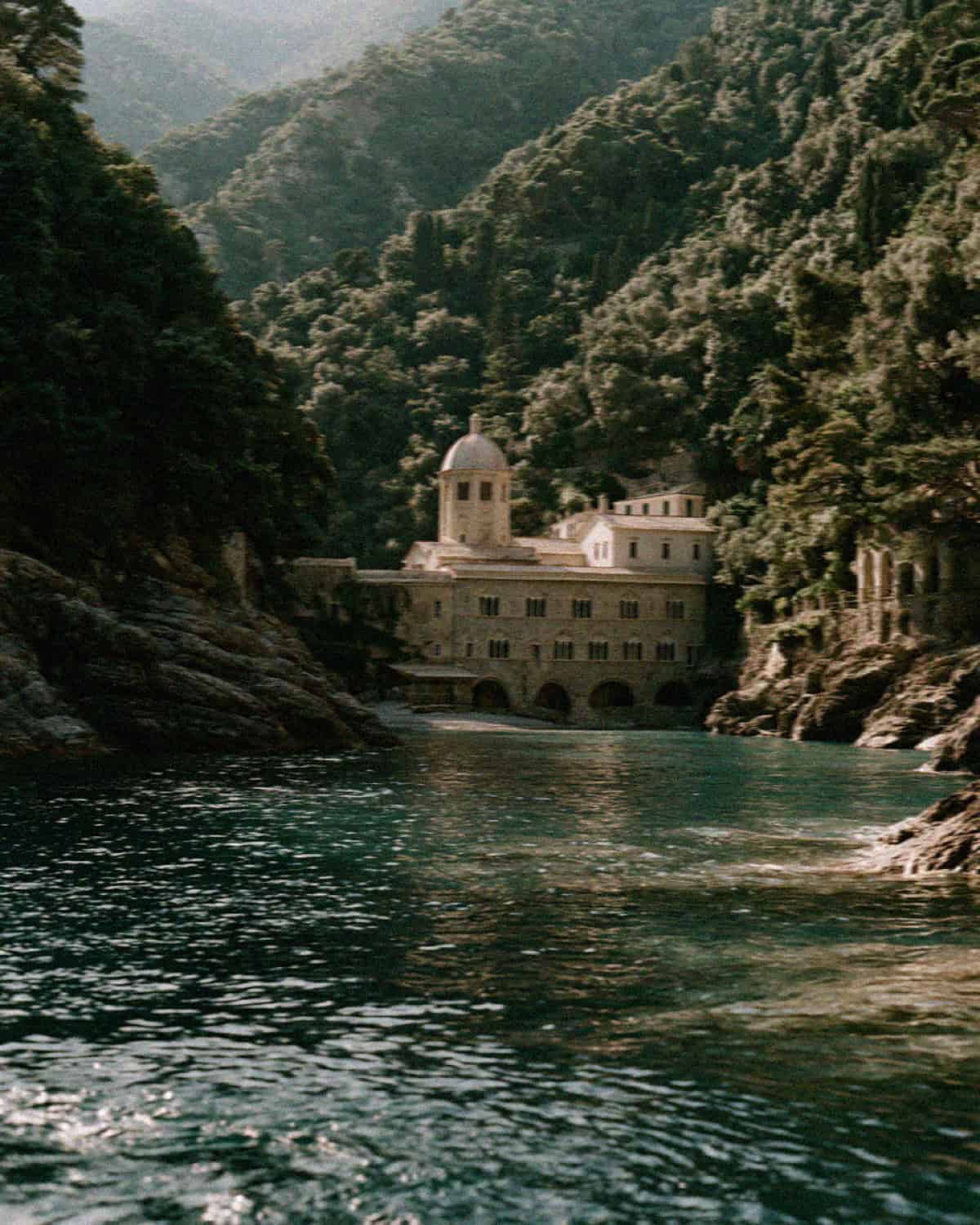
To understand Portofino you eventually have to leave it, and the best way is by boat. The little abbey of San Fruttuoso, tucked into its own cove between headlands and reachable only on foot or by sea, is at its most photogenic from the water, the pale stone framed by green hills as you approach. Boats run along the promontory from Portofino and the neighbouring towns, and the light is kindest earlier or later in the day.
On the way, watch for Paraggi. This is the emerald cove that sits on the coast road, the SP 227, midway between Santa Margherita Ligure and Portofino, its turquoise and green water set against a small crescent of golden sand. From the road above the bay you get that jewel-box colour from a height, and the bus 782 between Santa Margherita and Portofino stops right there if you want to go on foot. What I would do is ride the boat out to San Fruttuoso in the morning and save Paraggi for the way back, when the afternoon sun turns the shallows almost tropical.
A word on light: morning versus golden hour
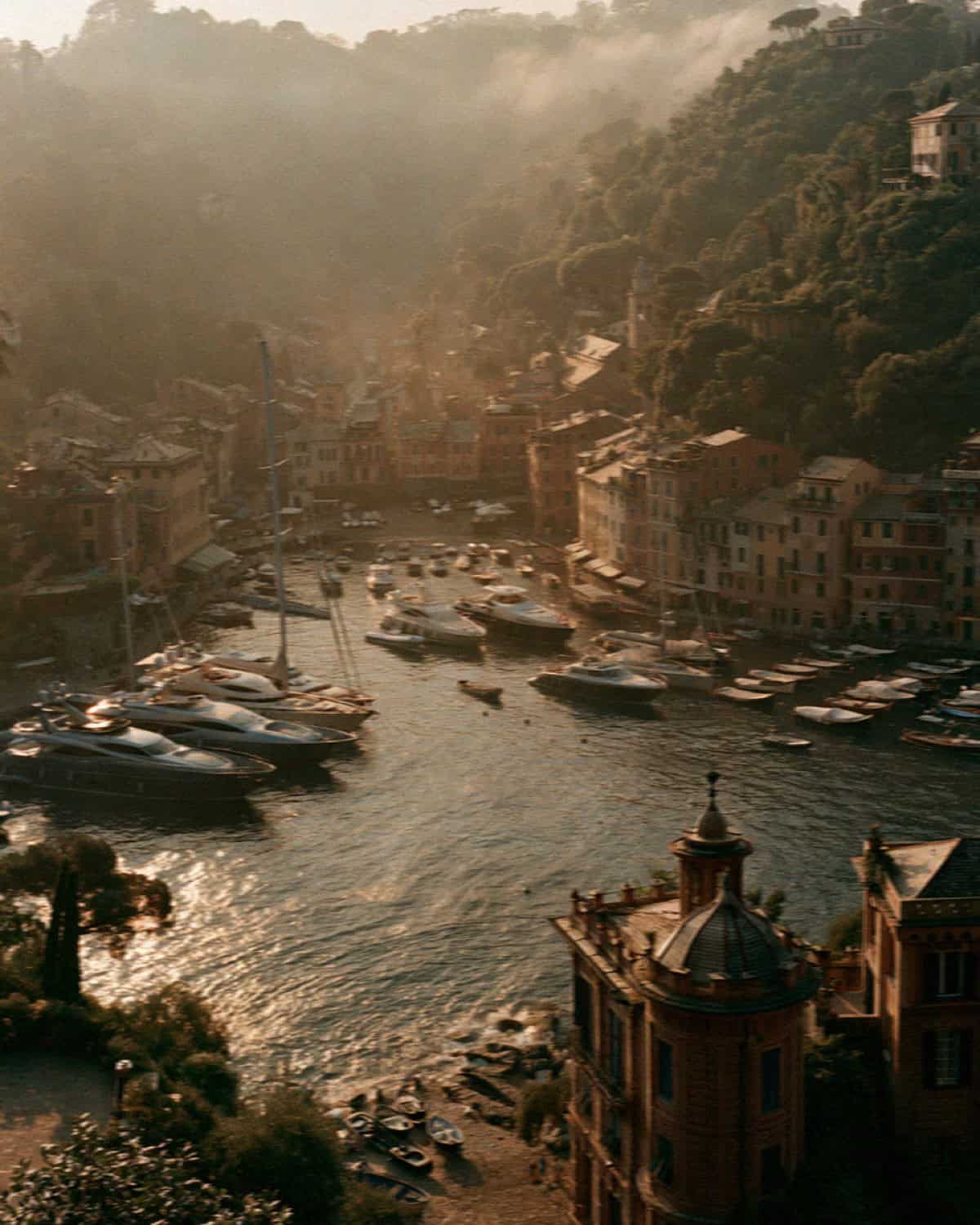
If you take only one thing from all of this, let it be the rhythm of the day. Morning belongs to the harbour and to San Giorgio: still water, direct east light on the facades, and, crucially, room to stand where you like before the crowds arrive. Golden hour belongs to the heights, to Castello Brown and the Faro walk, where the westering sun side-lights the village and silhouettes the headland. Midday, honestly, I spend at lunch. The light is flat, the piazzetta is full, and there is no shot worth fighting for that will not be better at either end of the day.
Frequently Asked Questions
When is the best time of day to photograph Portofino harbour?
Just after sunrise, from around half past five in high summer. The water is glassy, the reflections are clean, and the harbour stays quiet for the first thirty to forty-five minutes before day-trippers arrive around nine. Golden hour is lovely too, but morning gives you the empty foreground.
Where do I stand for the classic pastel-houses shot?
Walk out to the far end of the harbour wall on the right-hand quay and turn back toward the village. That puts the water in your foreground and gives you the full curve of coloured facades, which you cannot get from the middle of the piazzetta.
Is Castello Brown worth the entry fee for photos?
Yes, if you go in the late afternoon. The ticket is modest, around eight euros, and the terrace looks straight down over the harbour just as the west sun side-lights the houses. Try a tight composition through the yacht masts rather than the obvious wide view.
How long is the walk to the Portofino lighthouse?
Around twenty-five to forty-five minutes each way from the village, past Castello Brown, on uneven paths with some inclines. Wear proper shoes. The best pictures come just before the Faro and on the viewpoints that look back toward the village, and there is a small café at the end if it is open.
Can I photograph Paraggi and San Fruttuoso in one trip?
Easily, by boat. San Fruttuoso is most photogenic approached from the water, and Paraggi, the emerald cove on the SP 227 road between Santa Margherita and Portofino, is glorious in afternoon light. Do San Fruttuoso in the morning and catch Paraggi on the way back.
Read also: The Best Things to Do in Portofino | The Beaches Near Portofino | The Complete Guide to Portofino