I got as far as the stairs.
That is the short version, and it is also most of the story.
The driver collected me at six. Chania was still dark, the harbour nothing yet but the lighthouse and a man hosing down the pavement outside a café that had not opened. There was a thermos on the passenger seat.
He asked whether I had a jacket and I said I had a cardigan.
He looked at it in the mirror and said nothing, which I have since understood was a complete answer.
We went south.
The orange groves started almost as soon as the town stopped. Low dark trees in rows on both sides, close enough to the car that I could smell them through the open window before it was light enough to see the fruit.
Then the groves thinned out and the road began to climb.
It went on climbing for most of an hour, in turns so tight that the headlights spent half their time on rock and half on nothing at all.

When it was light enough to see, there was a plain.
Nobody had mentioned this.
In the middle of the White Mountains, a little over a thousand metres up, the peaks step back and leave a flat green floor about fifteen square kilometres across. A few round stone huts. A church. Sheep who had very clearly been there first.
The Omalos plateau.
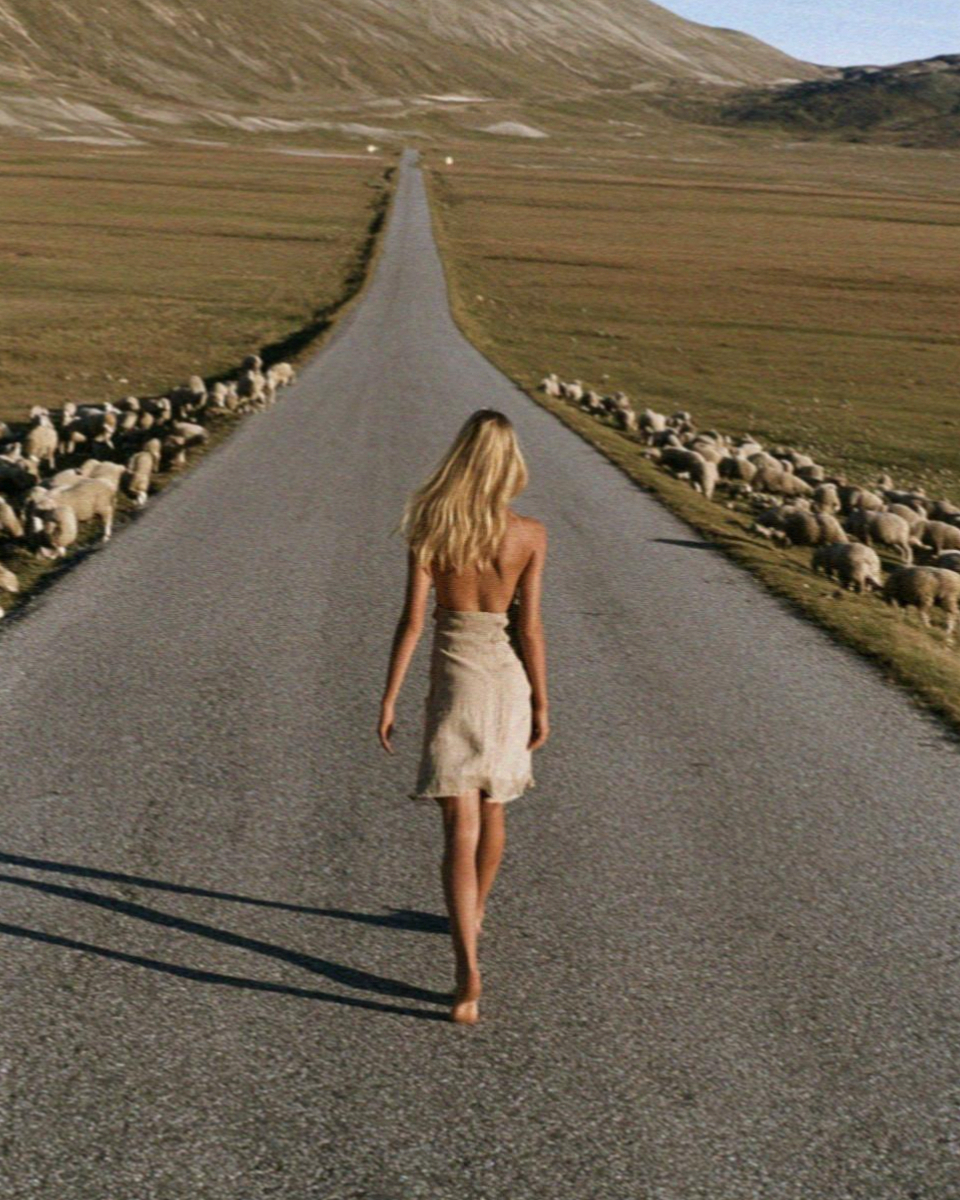
It was a lake once, the driver said. Then the water found its way out through a cave in the rock and left, and the shepherds came up after it.
The air through the window had changed. It was properly cold now, cold enough that I put the cardigan on and understood the look in the mirror.
In a field beside the road a brown horse stood with a blanket over its back, not eating, not doing anything, simply standing in the morning with its ears turned towards us.
I miss riding.
I miss it most at moments like that one, which have nothing to do with riding and everything to do with somebody else’s horse standing quietly in a field.

The road ends at Xyloskalo, two hundred metres higher, under the grey wall of Gingilos.
The name means wooden stairs.
There is a stone taverna with a terrace hung out over the drop, a small office selling tickets, and a car park that was already full of buses.
The buses had come up through the dark from Chania and Rethymno, the same as me, except they were full of people dressed for the day I had apparently not planned.
Good boots. Poles. Helmets clipped to packs. Fleeces zipped to the chin.
They stood around in the cold drinking coffee from paper cups, and then one by one they went through the gate, over the lip and down.
The Samaria gorge is sixteen kilometres long.
It starts here and runs down through the mountains to the Libyan Sea, to a village called Agia Roumeli that no road reaches. At its narrowest, a place they call the Iron Gates, the walls come in to about three metres apart. People walk the gorge in five or six hours. At the bottom there is the sea and a boat. The boat takes them along the coast to a town a bus can reach, and the bus brings them home in the evening.
Which means the gorge only goes one way.
You do not wander down for an hour and come back up for lunch.
You go in, and the mountains decide when you come out, and when you do come out you are on the other side of the island.
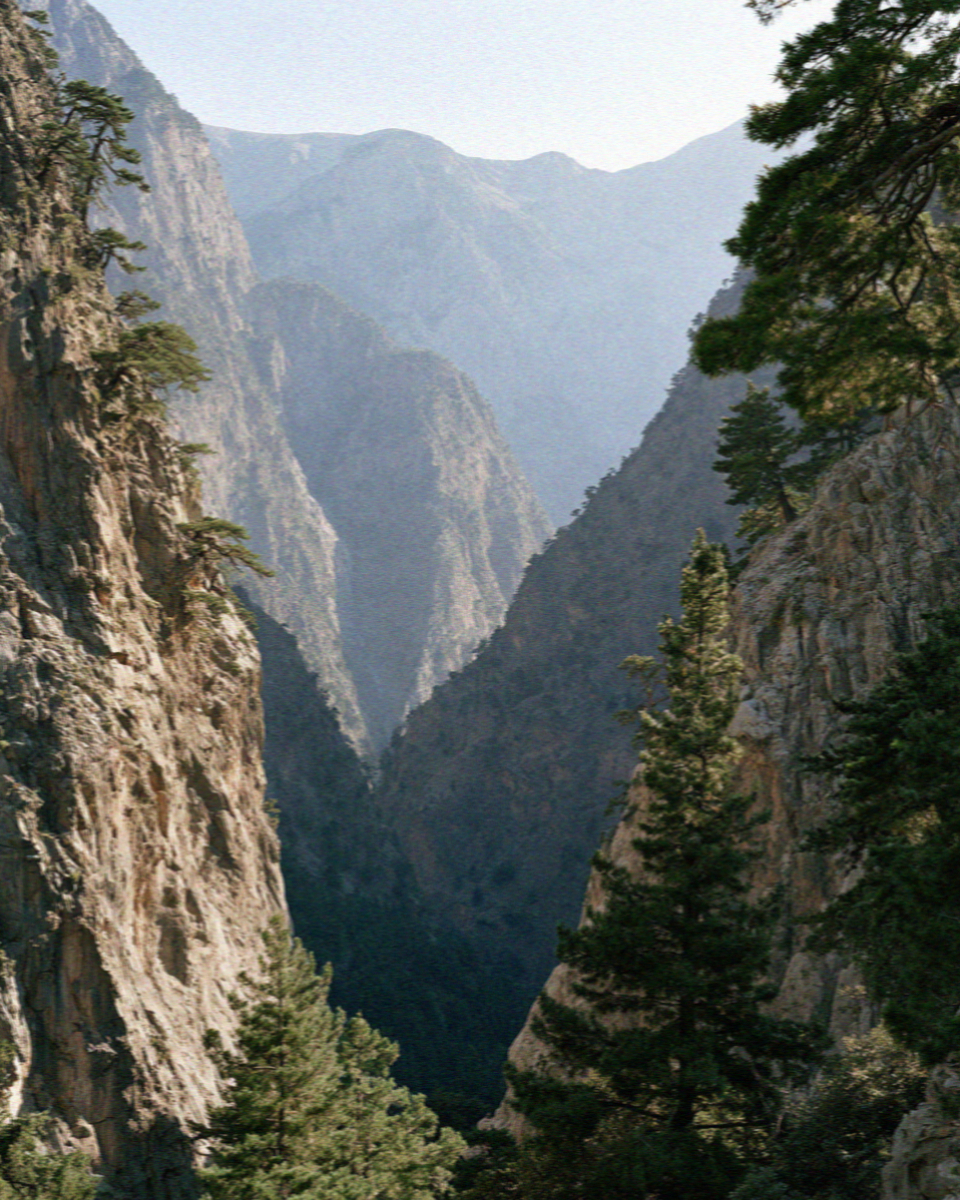
I had a cardigan, a notebook, and no boat.
I went down the first stretch of steps anyway.
Far enough to drop below the car park and lose the sound of the buses, and then a little farther, until the path turned on a landing.
From there the gorge was mostly shadow. Pines and cypresses grew straight out of the rock on ledges that did not look wide enough to hold them. The sun was already on the peaks above, but it had not come down into the gorge yet and would not for some time.
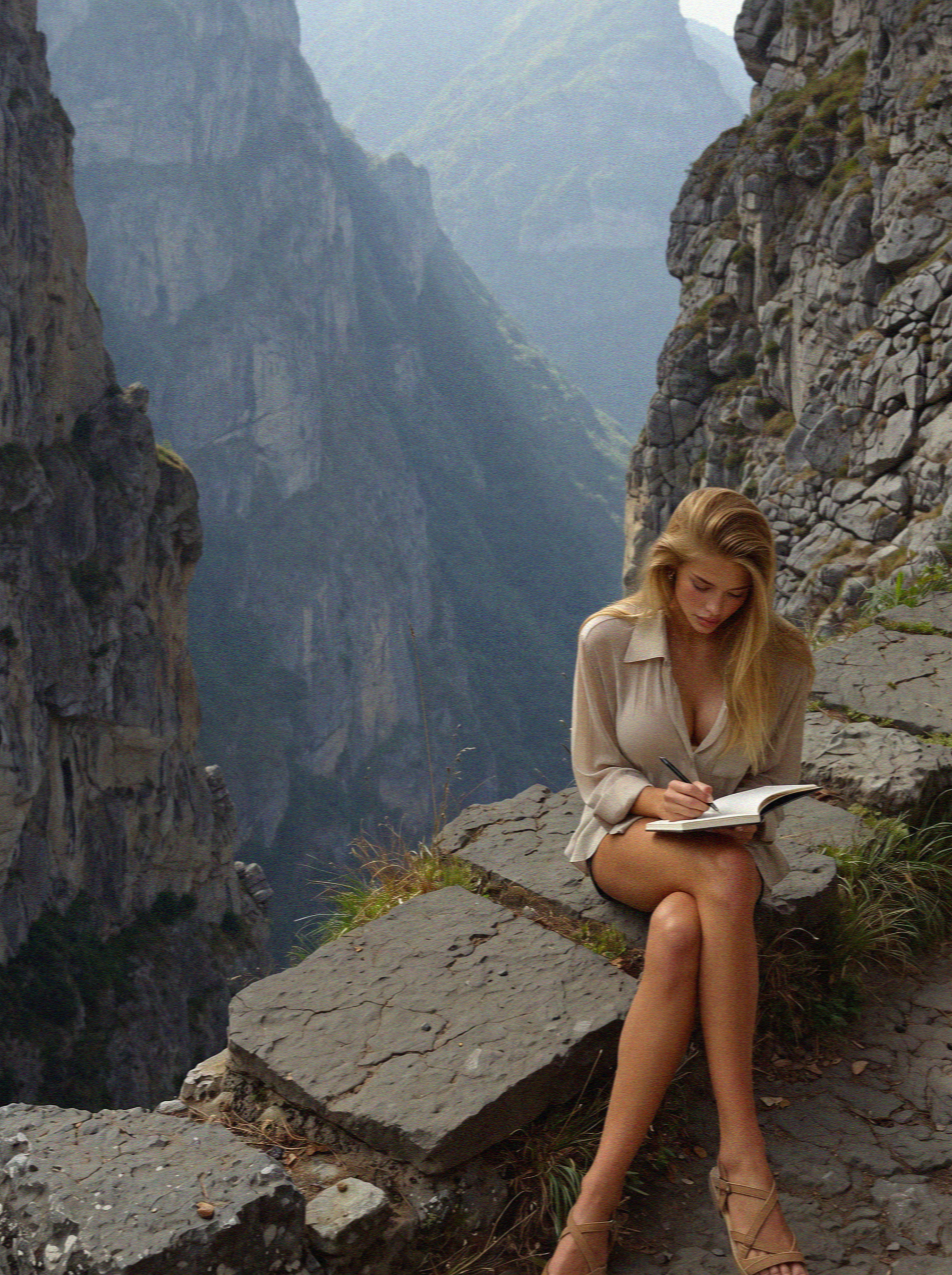
The far wall was so close and so tall that I had to tip my head right back to find the top of it.
The hikers kept passing me.
Kaliméra, kaliméra.
A couple in matching red jackets. A man on his own, walking fast, with a paper map folded into a square. A family whose youngest was explaining something at length to nobody.
Each of them went down past me and round the next turn, and none of them came back.
I watched about forty people go down into Crete.
Then I climbed back up to the taverna.

There was a goat on the terrace wall.
Not a farm goat. A wild one, tawny and lean, with a dark stripe down its back and a pair of long horns swept backwards in a curve. It stood on the parapet with the drop behind it as though the parapet had been built for that purpose.
A waiter carried a tray of coffees within a metre of it.
The goat did not move.
It was a kri-kri, the Cretan wild goat, which the shepherds call agrimi. When the gorge became a national park in 1962, protecting the kri-kri was a large part of the reason. The people who lived in the village of Samaria, halfway down the gorge, were moved out that same year. Their houses are still down there, and the hikers walk past them.
So the gorge has a village nobody lives in, a goat who is protected by law and knows it, and one direction.
I sat on the terrace in the sun with a Greek coffee and a plate of graviera with thyme honey.
The cheese is made on the plateau, in those round stone huts, from the milk of the sheep I had passed on the way up. It was salty and hard and very good.

The goat watched me eat it.
Yesterday, from the water at Nea Chora, I understood that Crete has an inside.
Today I learned that the inside has its own inside, and that you do not visit it.
You go through it, or you stay on the steps.

On the way back we stopped at Lakki, a village laid along a ridge halfway down the mountain.
White houses, a church with a red dome, a kafeneio where three old men were already arguing at ten in the morning about something that had happened, I think, decades before I was born.
From the square the whole valley fell away to the north.
Orange groves, olive terraces, a few white villages, and at the very bottom a bright thin strip that was Chania, with the sea flat and silver beyond it.
Yesterday I could not see the end of the island.
Today I could see where I had started, and it was very small.
I was back at the hotel by noon with the cardigan over my arm.
I wrote out the day’s numbers.
One thousand and fifty metres. Sixteen kilometres. Three metres at the Iron Gates. Forty people.
The hikers will be at the sea by now, waiting for their boat.
I can still see them going round that turn.
V.
More images from Crete