I keep coming back to this bay.
Not on purpose, or not entirely. It happens the way certain places arrange to happen, where you notice you are planning a route and the route has already decided something. I came for Pompeii the first time and told myself it was a day trip. I have been back to this coast more times than I have been back to almost anywhere.
There is something in the arrangement of it. The mountain, the water, the ruined century sitting in between them, the whole thing carrying on regardless with three million people making coffee at the bottom of a volcano.
This time I went to the other one.
Below the street
Herculaneum is not where you think it is.
You come out at Ercolano Scavi and walk down through a perfectly ordinary town, past a hardware shop and a bar and somebody washing a car, and the road slopes and slopes, and then there is a railing.
And the ground stops.
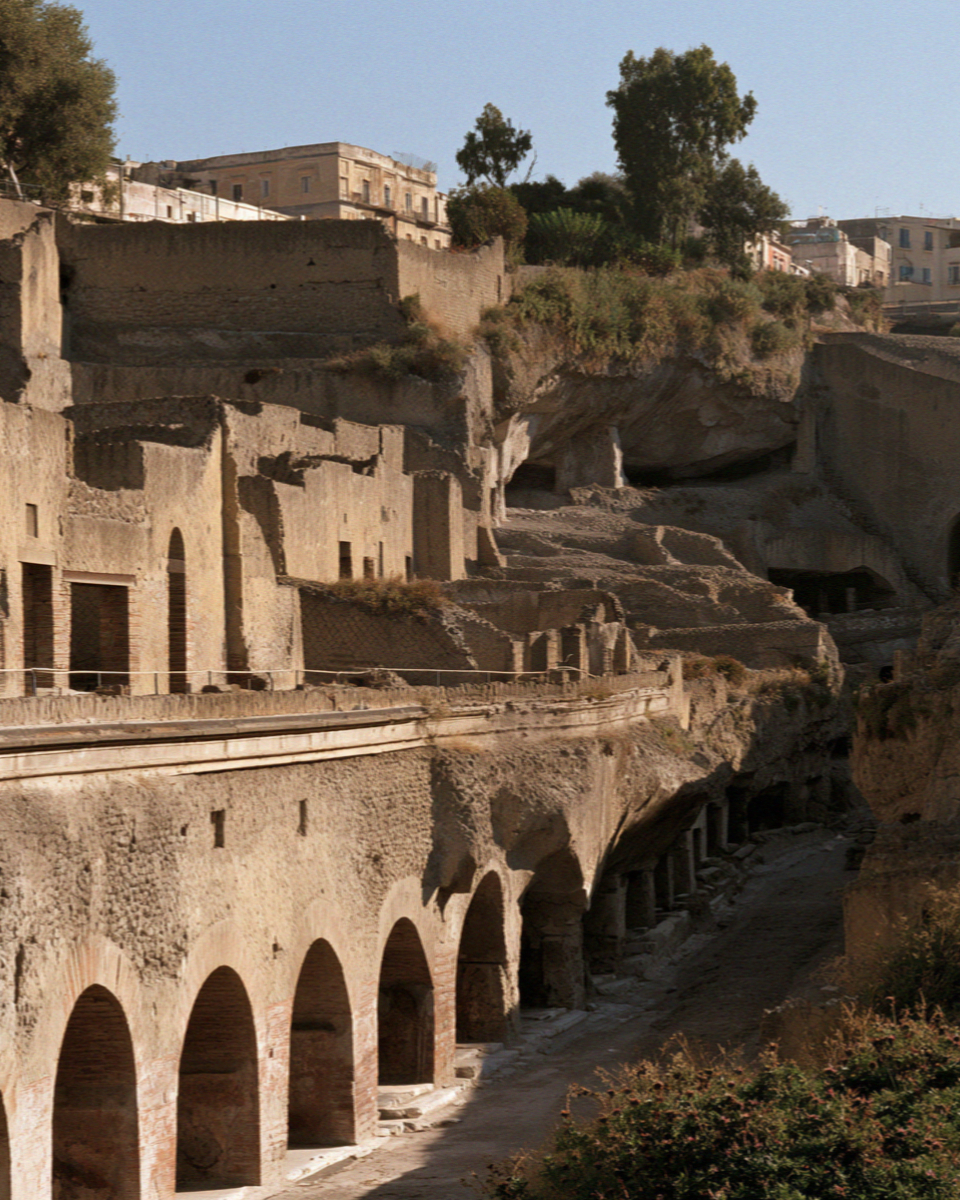
Twenty metres down, in a rectangular pit with modern apartment blocks standing along the far rim, there is a Roman town. Not a footprint of one. A town, with walls above head height and windows in them and streets you could name.
The living town is up here. The dead one is down there. People on the balconies opposite hang their washing out over it.
I stood at that railing for a while before I went down. It is the single strangest arrival in Italy and nobody warns you about it.
What the surge did
Pompeii was crushed under what fell on it.
Herculaneum was not crushed. Herculaneum was filled, fast, by something that came down the mountain at a temperature that turned wood to charcoal instead of ash and then set around the town like a mould.
So Pompeii lost its ceilings, and Herculaneum kept them.
That is the entire difference, and it does not sound like much until you are standing under one.
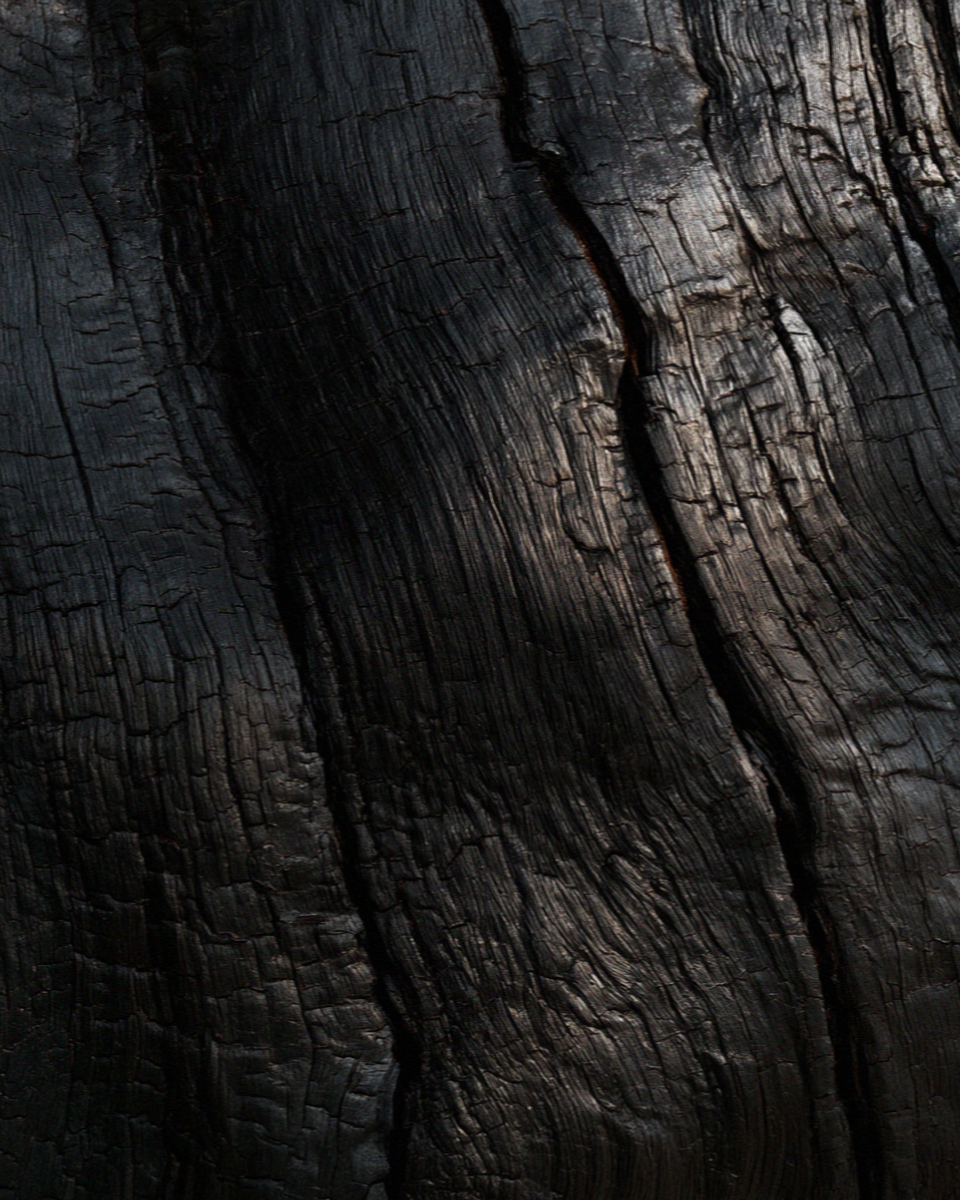
I put my hand up towards a beam in a doorway on the second street. Black, square-cut, spanning the gap the way it was put there to. Not a replacement. Not a reconstruction with a small sign apologising for itself.
The actual beam. Two thousand years, and it is still doing its job.
Something goes through you at that moment, and it is not solemnity. It is closer to embarrassment. You realise you had been carrying an assumption, without examining it, that the ancient world was made of stone because stone is what survived. It was made of wood and cloth and rope like everywhere else. We simply do not get to see that.
Here you do.
The rooms
The rooms are small and dark and full.
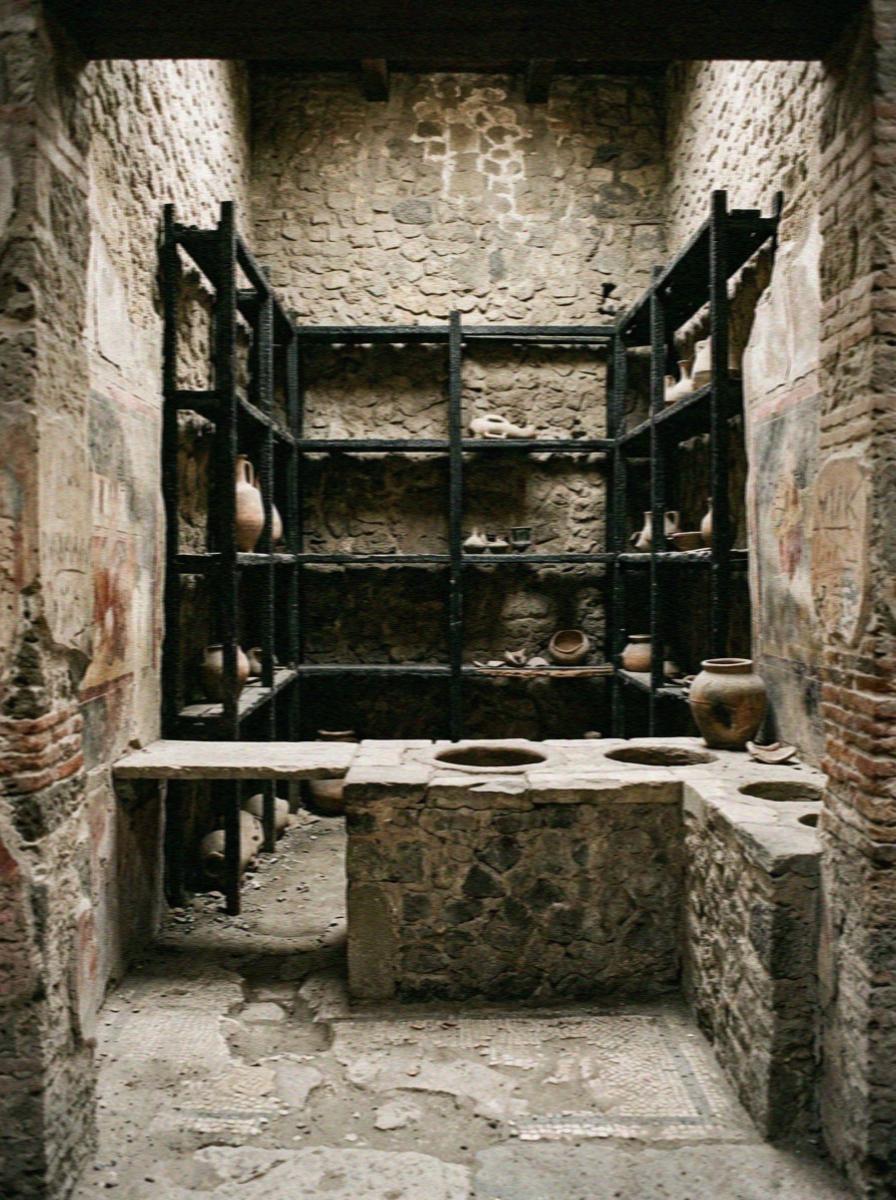
A shop with its wooden shelving still standing against the back wall, blackened, warped, holding jars. A wooden screen folded between two rooms with its bronze fittings in place. Somewhere on the site there is a bed. Somewhere there is a loaf with the baker’s stamp still legible on the crust.
Pompeii asks you to reconstruct. You look at a floor plan, and you build the walls upward in your head, and it is a pleasant exercise, and it is work.
Herculaneum does not ask. You walk in, and it is a room. Low, close, with a doorway and a shelf and a floor and something on the shelf, and you are standing in somebody’s shop rather than in the diagram of one.
I liked it enormously, and I was not prepared for how much smaller everything felt. Not meaner. Just closer. A whole town built at the scale of the people in it.
Nobody here
The other thing, and it took me an hour to notice it properly.
There was almost no one there.
I walked a whole street and met two people coming the other way. I stood in a room for as long as I wanted and nobody needed me to move. At one point I realised I could hear my own footfall, which at the other site, in August, is not a sound that exists.
Pompeii takes up to twenty thousand people in a day. Herculaneum takes a fraction of that, from the same trains, on the same line, fifteen minutes apart.
The reason is not quality, and it is not access. It is that one of them is a name you have carried since childhood and the other is a word you have possibly never said aloud.
I find that funny and slightly consoling. The most complete Roman town in existence is sitting under a suburb, twenty minutes from Naples, and the crowd went to the other one.
It is the whole argument for coming back to a region rather than through it. The first visit is the name. Everything after that is the actual place.
The arches
Along the bottom edge, where the sea used to come in, there is a row of stone chambers with arched openings. Boat sheds. Storage for nets and oars and the things you keep near water.
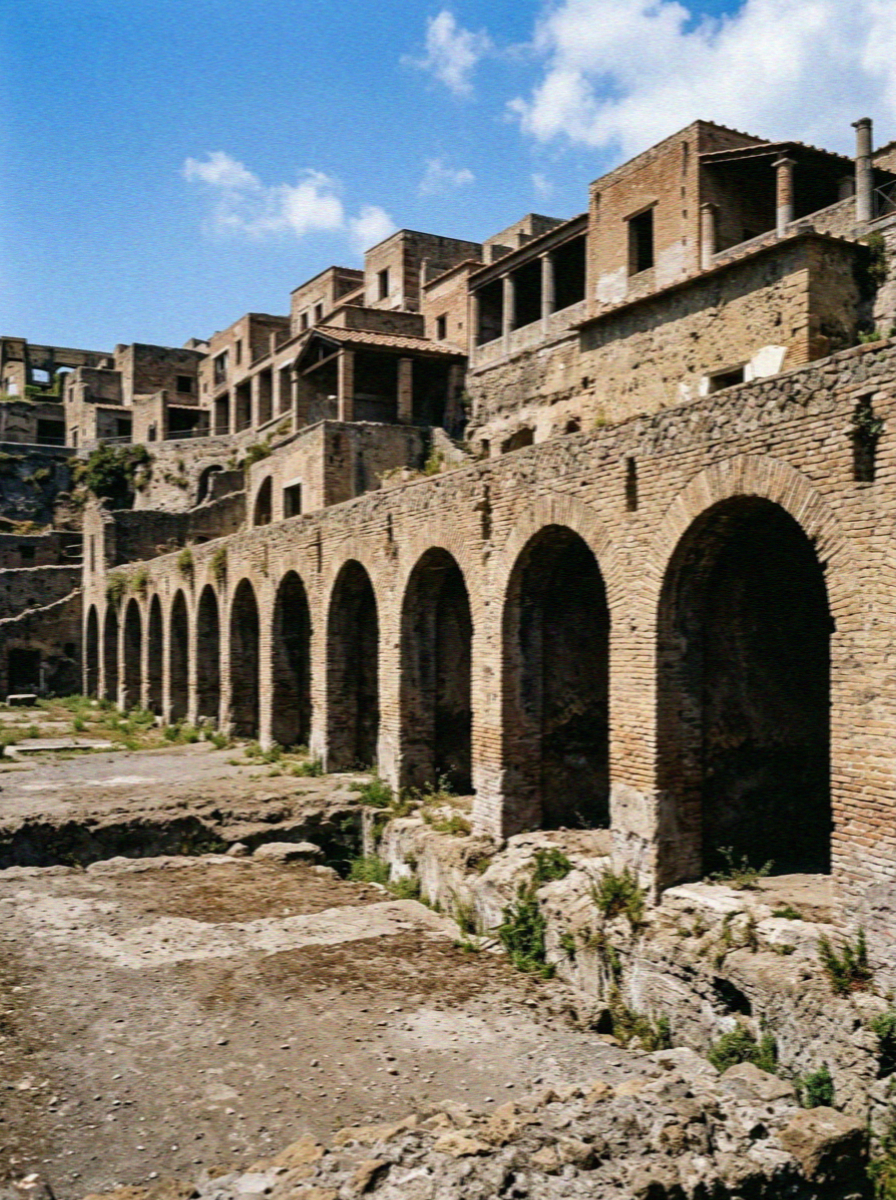
For two centuries, people believed Herculaneum had emptied in time. The excavated houses were mostly free of bodies, and the conclusion seemed obvious. They got out. The lucky town.
They did not get out. They went down to the beach.
They are still in the arches. Not casts. Not voids filled with plaster to show the shape of a person. Bone, in the positions they were in, several hundred of them, in family groups, waiting for boats.
I did not stay long, and I did not take a photograph.
What I keep thinking about is not the fact of it, which is terrible and which everybody knows once they know it. It is the two hundred years of believing they had escaped. All that time, a comfortable story, told to visitors, printed in books.
They were down at the water the whole time.
Coming back up
The walk out is the arrival in reverse. Up the slope, past the shop and the bar, into the noise of a Tuesday.
It takes four minutes. That is the part I have not resolved.
You come up out of a town that stopped in a single afternoon, and within four minutes a woman is arguing with a delivery driver, and there is a smell of frying and somebody’s television is too loud, and all of it is happening on top of the other thing, twenty metres up, with no seam.
Pompeii sits apart from the modern world in a field of its own. You leave it through a gate, and there is a decompression. Herculaneum has no gate in that sense. It is simply underneath, and the town above got on with it.
I think that is why I will come back to this bay again. Not for the ruins exactly.
For the way the living and the interrupted are stacked here, one directly on the other, and nobody up top finds it remarkable.
V.