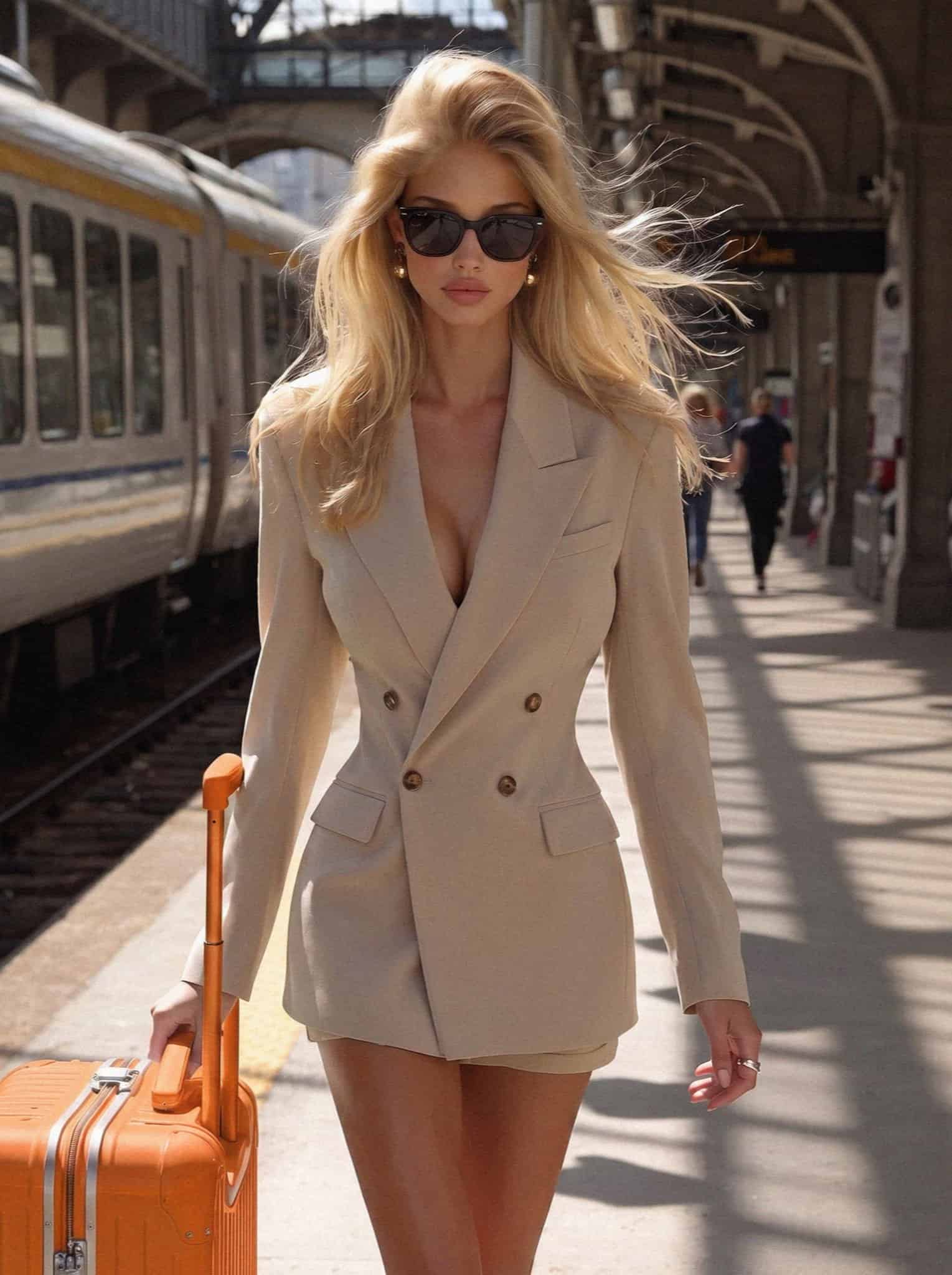
Working out how to get to Bologna is one of the easiest jobs in Italian travel, because the city sits at the exact crossing point of the country’s fast-rail network. Trains from Milan, Venice, Florence and Rome all funnel through Bologna Centrale, which means you can be sitting under a portico with a spritz barely two hours after leaving another major city. The airport is small, close and linked to the station by a little monorail, and the historic centre is so compact that once you arrive you will mostly travel on foot. This guide covers arriving by air and by rail, moving around once you are here, the driving trap to avoid, and the one road-train worth taking up the hill.
By Air
Bologna’s airport is Guglielmo Marconi (airport code BLQ), a compact single-terminal affair about six kilometres northwest of the centre. It handles a good spread of European routes, so for many visitors it is the simplest door into the region. What makes it genuinely painless is the connection into town: the Marconi Express, an elevated monorail that runs straight from the terminal to Bologna Centrale in roughly seven minutes. It costs €12.80 one-way or €23.30 return, runs up to eight times an hour from around 05:40 to midnight, and drops you at the same station where your onward trains leave. There is no faster or less fussy way in from the runway.
If you are travelling with heavy bags, arriving late, or simply cannot face lifts and platforms after a flight, a taxi from the rank outside arrivals runs about €20 to €25 into the centre and takes fifteen to twenty minutes depending on traffic. That is the sensible splurge for a family or a very early start. For everyone else, the monorail wins on speed and price, and it deposits you neatly into the rail hub, which is where the real magic of getting to Bologna begins.
Plan Your Visit to Bologna
A few things I booked and loved. These help support the blog, at no cost to you.
- Where I stayed: search Bologna hotels
- Tickets and things to do in Bologna
- Stay connected: get a travel eSIM
This section contains affiliate links. If you book through them I may earn a small commission, at no extra cost to you.
By Train
Honestly, the train is how I would come to Bologna nearly every time. Bologna Centrale is the beating heart of Italy’s high-speed network, served by both Frecciarossa and Italo fast trains as well as regional services, and the journey times to the big cities are short enough to make a day of it. Florence is about 37 minutes away, with advance fares from roughly €11 to €20. Milan is around 1 hour 5 minutes non-stop, from about €13 to €25. Venice comes in near 1 hour 15 minutes, from €14 to €25. Even Rome is only about 2 hours 22 minutes, from roughly €20 to €30 if you book ahead.
The word to hold onto there is “ahead”. Fast-train fares in Italy work like plane tickets: the earliest advance prices are far cheaper than what you pay on the day, so booking a week or two out can halve the cost. Regional trains are a different animal, priced at a flat fare and worth it for shorter hops such as Modena, Parma or Ferrara, all within an hour. If you plan to base yourself in Bologna and head out on day trips, and I think you should, that regional network is your best friend. For how I would actually spend the days once you arrive, see my Bologna itinerary.
Getting Around the City
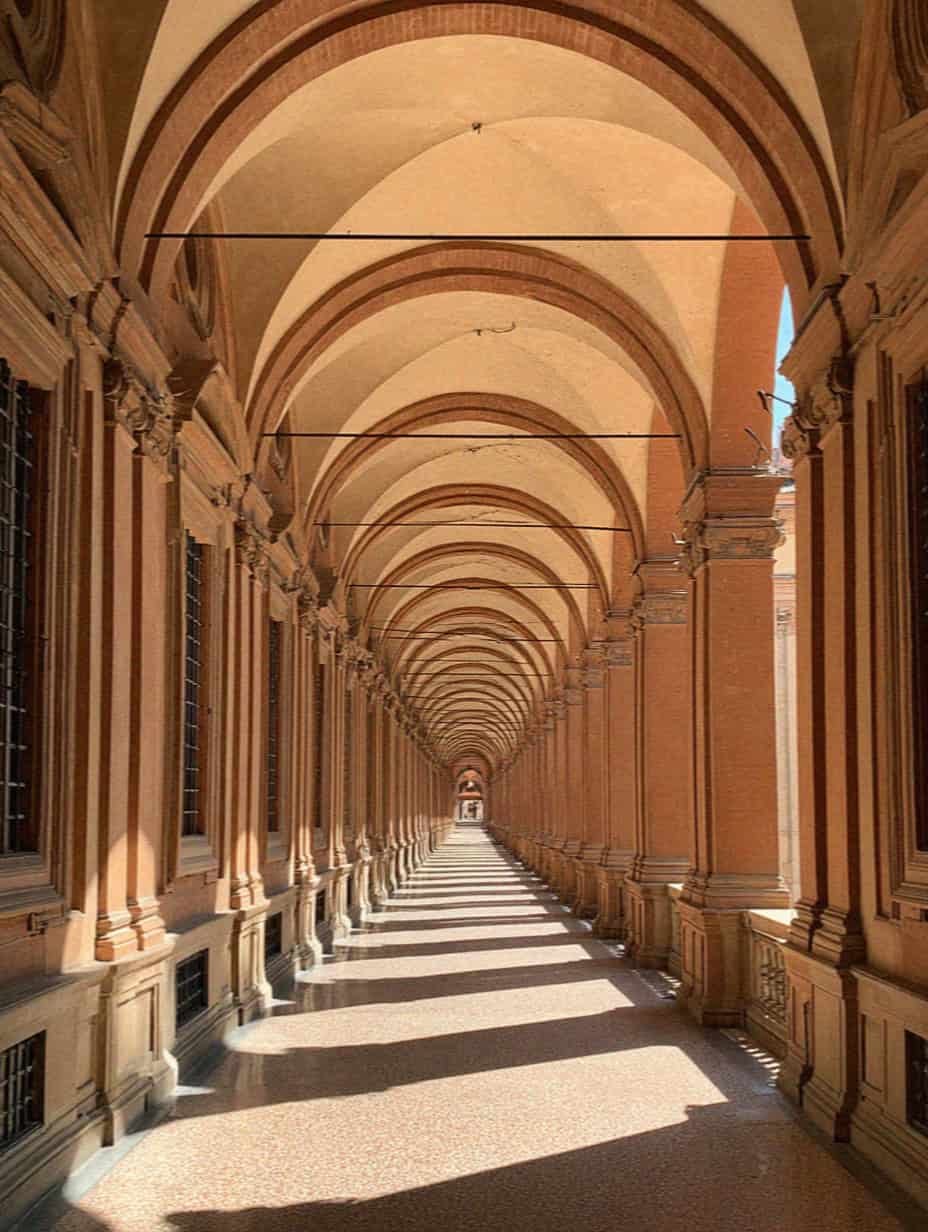
Here is the happy truth about Bologna: you will barely need any transport at all. The historic centre is small and gloriously walkable, and it comes with a roof. Around forty kilometres of the city’s famous porticoes run through the centre, which means you can cross town from end to end and let the sky do whatever it likes overhead. Most of the sights you have come for sit only a few quiet streets apart, so lace up comfortable shoes and treat walking as the default. There is no metro in Bologna, and you will not miss one.

When you do want wheels, the city runs on TPER buses. A single ticket is €2.30 and valid for 75 minutes, so you can hop and transfer within that window. If you expect to ride more than a handful of times, the City Pass of ten rides works out cheaper and can be shared between travellers. Bologna is also flat and bike-friendly, with the RideMovi bike-share dotted around town if you fancy pedalling between neighbourhoods. Taxis exist too, run by firms such as CAT and COTABO, but you take them from a rank or by phone rather than hailing them in the street.
Driving and the ZTL
My firmest piece of advice: do not drive into the centre of Bologna. The historic core is a ZTL, a limited traffic zone, and it is watched by cameras rather than barriers. There is nothing to stop you rolling in, which is exactly the trap, because the fine arrives quietly by post weeks later, typically €80 or more, and it applies per crossing. Tourists rack these up without ever realising they were somewhere they should not be. The whole centre is also now a “Città 30” zone, capped at 30 km/h, so it is slow going even where you are allowed.
If you are arriving by car, the right move is to leave it in a car park on the edge of the centre, or better still at your hotel if it has parking, and then walk. A car is genuinely useful for only a couple of things in this region, such as reaching a countryside spa resort or a mural village that public transport handles awkwardly. For everything inside Bologna itself, a vehicle is a liability, not a convenience. Come by train, leave the driving to someone else, and let the porticoes carry you.
Up to San Luca
There is one journey worth making that your own two feet might not thank you for, and that is the climb up to the Santuario della Madonna di San Luca on its hilltop above the city. The sanctuary is connected to town by the world’s longest portico, some 666 arches running roughly 3.8 kilometres uphill from Porta Saragozza. Walking it is a small pilgrimage and a wonderful one, but it is a proper haul, and not everyone has the legs or the morning for it. The view from the top is free, panoramic and one of the classic Bologna sunsets.
If you would rather save your energy, the San Luca Express road-train solves it neatly. It leaves from Piazza Maggiore, loops up to the sanctuary and back over about an hour, and costs €15 for adults and €8 reduced, with multilingual commentary along the way. It is touristy, yes, but it is also a genuinely practical way for anyone with limited mobility, small children or a tight schedule to reach that hilltop and its long green view without conquering all 666 arches on foot.
Frequently Asked Questions
What is the cheapest way to get from Bologna airport to the centre?
The Marconi Express monorail is both the cheapest and the fastest, at €12.80 one-way and about seven minutes to Bologna Centrale. It runs up to eight times an hour from roughly 05:40 to midnight. A taxi is more comfortable but costs around €20 to €25, so the monorail is the clear winner unless you have a lot of luggage or a very late arrival.
Do I need a car in Bologna?
No, and you are better off without one. The centre is compact, walkable and sheltered by porticoes, there is no metro to bother with, and buses cover anything further out at €2.30 a ride. A car mainly earns you camera fines in the ZTL, so leave it behind and arrive by train instead.
How long does the train take from Florence to Bologna?
About 37 minutes on a fast Frecciarossa or Italo service, with advance fares from around €11 to €20. It is one of the quickest intercity hops in Italy, which makes Bologna an easy add-on to a Florence trip or a comfortable base for exploring the wider region by rail.
For the complete picture, from where to stay to what to eat and every neighbourhood worth your time, this piece sits inside my complete guide to Bologna. Once you have sorted your arrival, plan the days themselves with my Bologna itinerary, and put that easy regional rail network to work with my guide to the best day trips from Bologna.