There are days made for doing very little, and today Sirmione handed me one without my having to ask. I had woken with no plan beyond the vague intention to catch the little ferry, and by mid-morning I had abandoned even that. The peninsula is so narrow here, a thin green finger of land pushing out into the south end of Lake Garda, that you can wander its whole length in an afternoon and still feel you have hurried nothing.
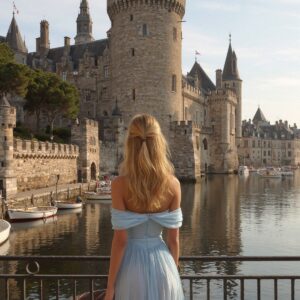
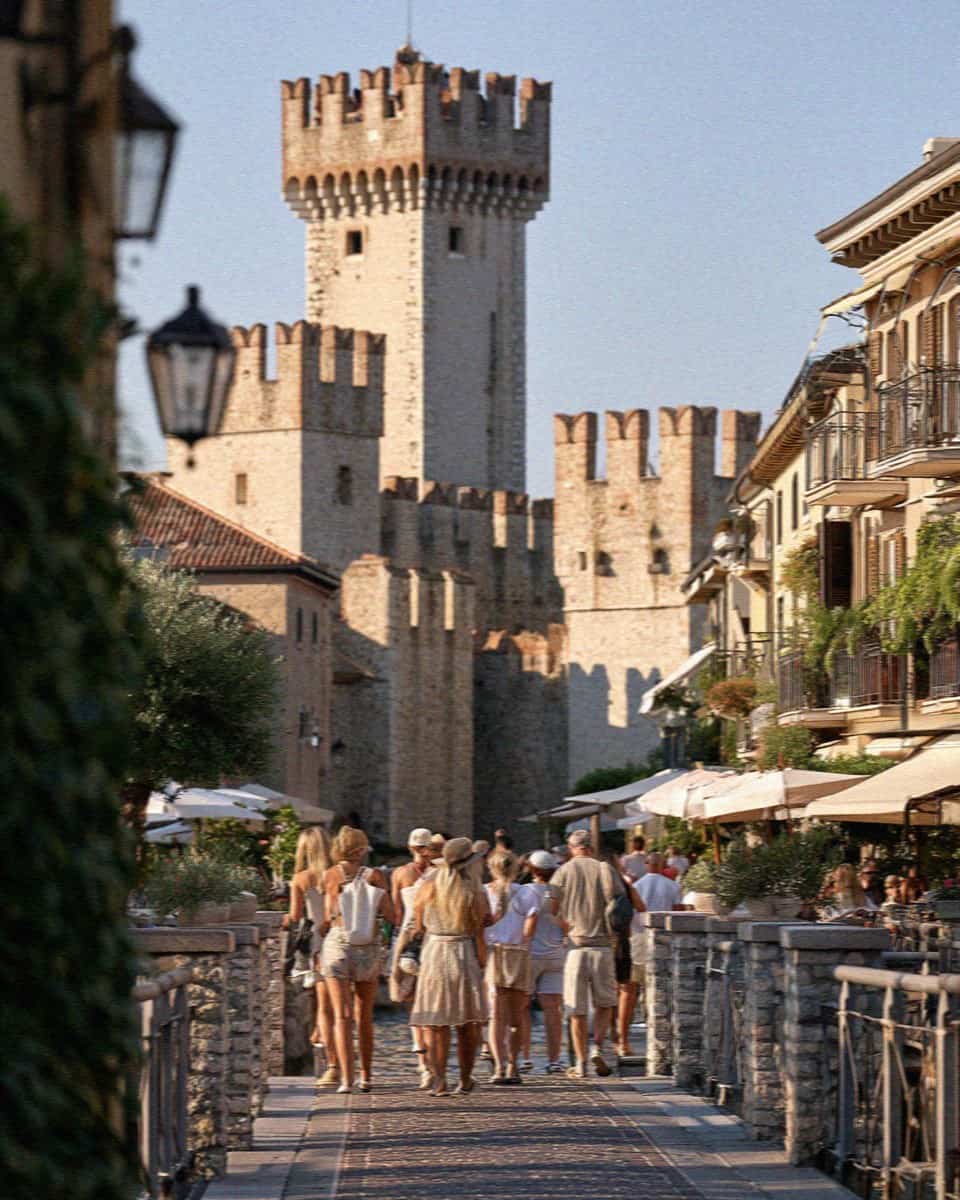
I came into the old town the only way you can, across the water and under the castle. The Scaligero rises straight from its moat at the entrance to the centre, a proper fairytale thing with swallowtail battlements and its own small harbour tucked inside the walls, where the water is so clear you can watch the fish hang in it. I stood on the little bridge for longer than was sensible, watching a family of ducks negotiate the shadow of a fortress built to keep armies out, entirely unbothered by six hundred years of it. My grandmother used to say that the best way to know a place is to let it bore you a little first, to stand still until it stops performing and simply gets on with its day. I think she would have liked it here.
The lanes beyond the castle are narrow and cool, paved smooth by centuries of feet, and they open without warning onto sudden squares of light. I let myself get lost, which in Sirmione takes no effort at all, and eventually the streets did what they always do and delivered me back to the water. Everywhere you turn there is the lake, soft and enormously wide, the far shore a pale blue suggestion and the mountains standing politely back as though not wishing to intrude. This is the warm south of Garda, gentle and open, and it feels a world away from the steep, dramatic fjord the lake becomes further north.
There is a thing about Sirmione that I had read about but not quite believed until I felt it. The town sits on warm sulphur springs that rise up out of the lake bed itself, thermal water heated somewhere deep and delivered, warm, into the cold of the lake. I walked out to a shallow stretch where you can wade in, and there it was, that strange soft warmth threading through the cool, invisible and a little uncanny, as though the lake were quietly breathing. There is a faint mineral note to the air near it, not unpleasant, the smell of something ancient still working. The Romans knew about these springs. They came here to take the waters and to build their villas, and I find it steadying, somehow, to stand in the same warm shallows and know that a great many tired people have felt exactly this and been glad of it.
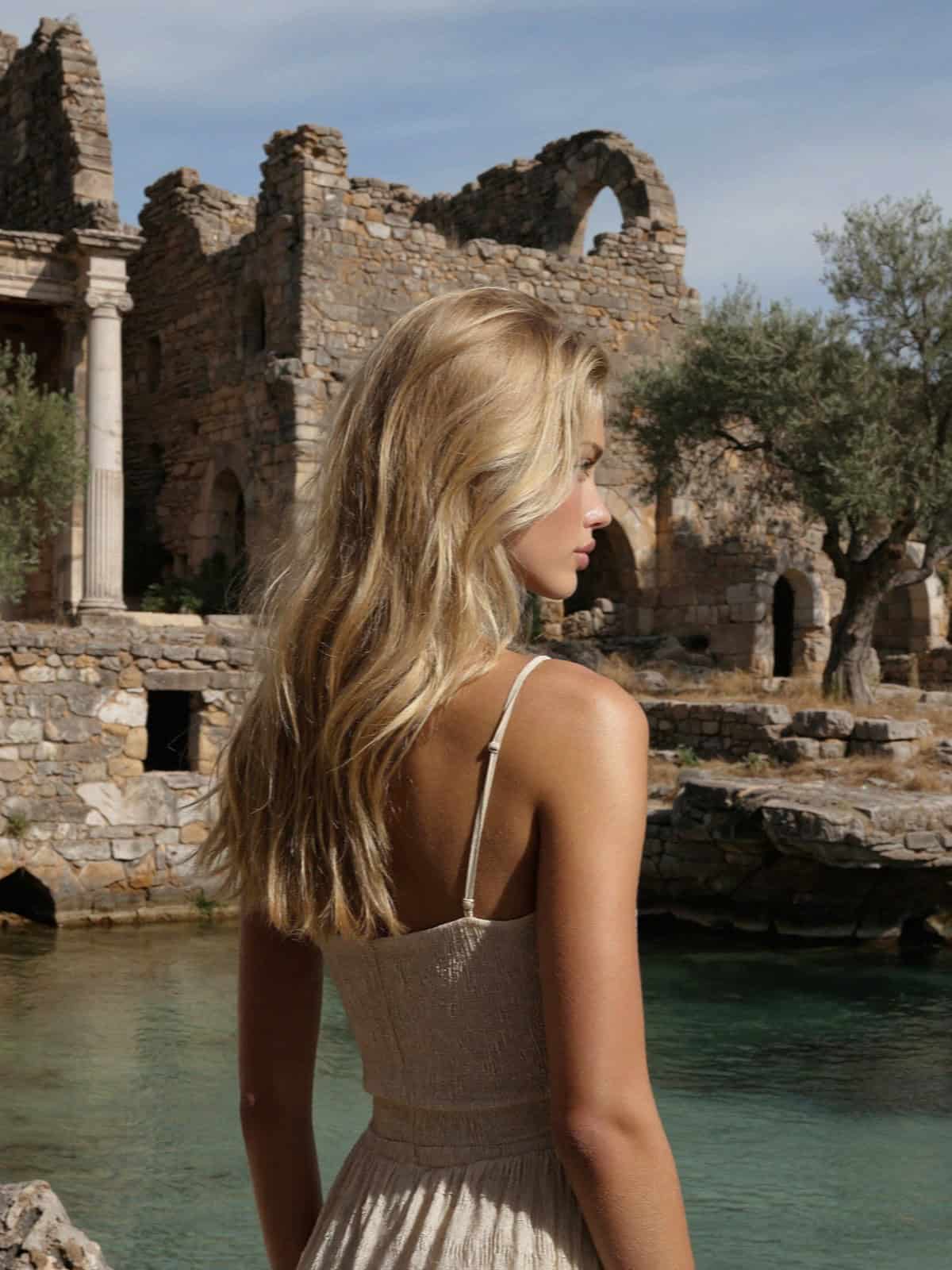
By early afternoon I had walked out to the very tip of the peninsula, to the Grotte di Catullo, the great tumbled Roman ruins spread across the point among the olive trees. They call it the poet’s villa, though nobody is quite sure it was his, and I rather like that uncertainty. What you see is honey coloured stone half swallowed by grass and silvery olives, arches and vaults open to the sky, and on either side of you the lake, turquoise on both shores at once because the land is so slender here that the water almost meets over the top of it. I sat on a low wall in the shade of an olive that may well be older than my whole country’s idea of itself, and I ate nothing, and I read nothing, and I simply looked. A lizard came out to share the warmth of the stone and we regarded one another without comment. The olives here are not decorative. This is a working landscape, and the oil from these southern slopes is famously delicate, and even the wild trees carry that faint dusty green scent that I will forever now associate with sitting still and being glad.
I walked back slowly as the light began to soften and turn the colour of the stone itself. There was gelato, of course, because there is always gelato, and I ate it standing in a doorway watching the passeggiata gather, the town filling gently with people who had also, I suspect, done very little all day and were pleased about it. As the sun dropped, I found a table near the harbour and asked for a glass of Lugana, the cool local white pressed from vines grown just south of here on the flat land behind the lake. It arrived properly chilled, pale gold, with that clean almondy edge that tastes of exactly this shore and nowhere else, and I drank it slowly while the ferries came and went and the castle turned amber and then rose and then to a soft grey against the darkening water.
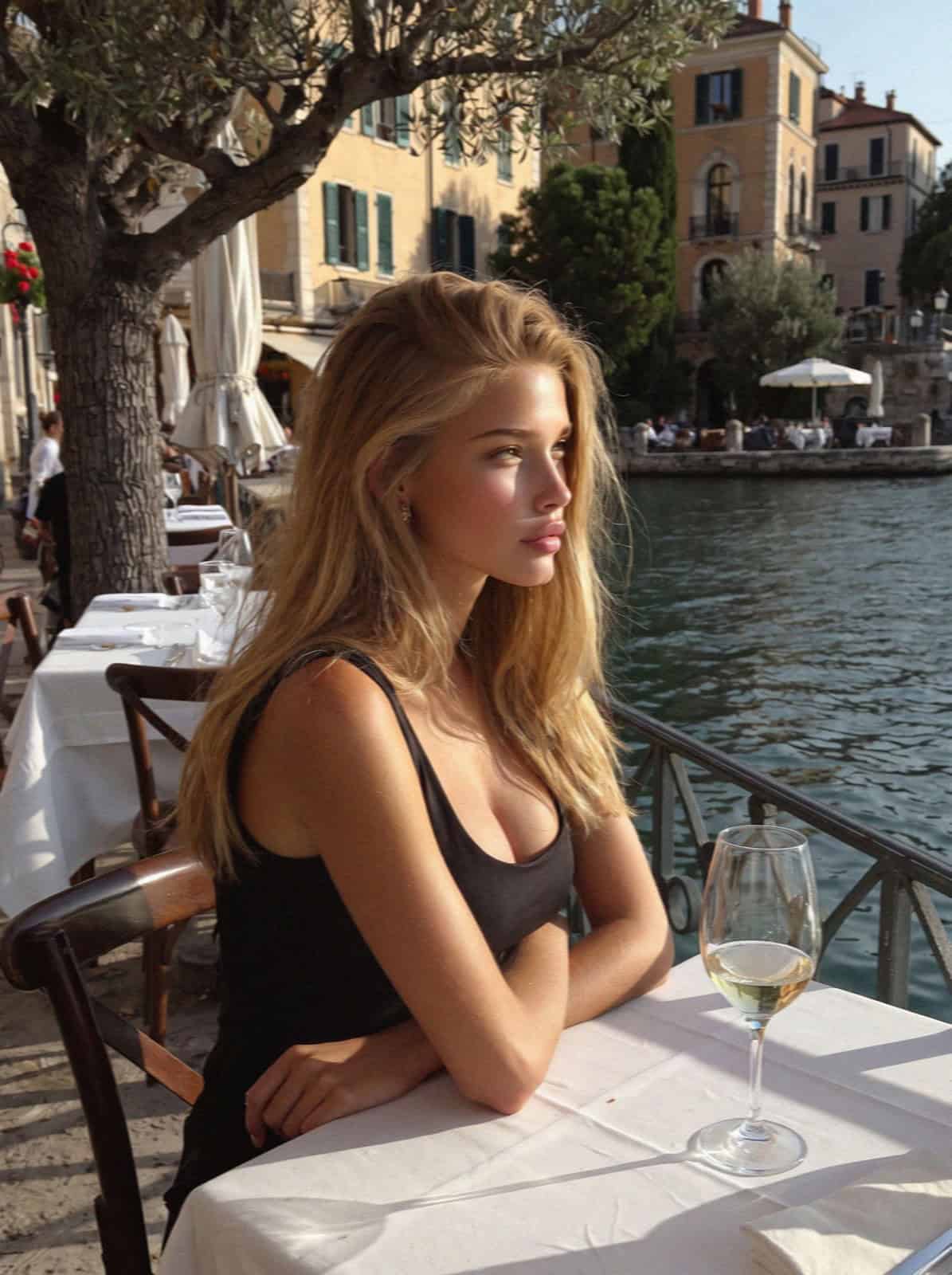
I do not always mark these evenings, but tonight before I left the table I found myself doing the small private thing I have always done, a quiet thank you said to no one in particular and to everything at once. For the warm water and the old stones. For a day that asked nothing of me. For being, however briefly, a small still figure among the ducks and the lizards and the olive trees, all of us getting on with the day. Later, back in my room, I lit the little candle I carry with me the way some people carry a photograph, and I let it burn while I wrote this, and the town outside grew quiet, and the lake, warm in its hidden places, kept breathing in the dark.
Some days are for climbing and seeing and doing. This was not one of them, and I am so grateful for that. Sirmione seems to know how to hold a person gently. Perhaps that is the whole gift of the warm south end of this lake: it does not demand that you rise to it. It simply lets you sit in its warmth, old and sunlit and unhurried, and reminds you that this too is a way of paying attention.
V.