Naxos grows most of what it eats, which is rarer in the Cyclades than you might think. On the drier islands nearby, much of what reaches the table has come off a ferry. Here the potatoes, the cheese, the meat, the vegetables and even the liqueur are from the island itself, and the islanders talk about them with the kind of pride you usually hear about wine.
So eating well on Naxos is less about finding a famous restaurant than knowing what to order. This is what makes the food here different, the dishes and drinks to look for, and where to find them, in town, in the mountain villages and by the sea. Everything beyond the table is in my complete guide to Naxos.
Why the food is different here
Naxos is the largest and most fertile of the Cyclades. Its mountains catch more rain than the islands around it, and the valleys of the interior are green with olive groves, vegetable plots and terraced fields. There is grazing for cows as well as goats and sheep, which is unusual this far into the Aegean, and that changes the cheese, the butter and the meat.
For centuries the island was largely self-sufficient, and it still farms. You notice it in the village tavernas, where the menu is short and depends on what is ready, and in the Old Market in town, where shops sell local cheese, honey, herbs and liqueur. Order the island’s own produce whenever you see it named on a menu. It is almost always the best thing there.
The potatoes
On my first evening on Naxos a stranger told me, without being asked, that the island’s potatoes were better than any others in Greece. I assumed this was ordinary local pride. By lunch the next day, in the hills, I had changed my mind.
Naxian potatoes are grown in the island’s fertile valleys and are protected as a regional product. They are firm, sweet and full of flavour, and the islanders treat them simply: fried in olive oil and salted, roasted with lemon and oregano, or boiled and dressed. Order a plate of fried potatoes with anything. That is how they are best, and how the island eats them.

Graviera, arseniko and the cheeses
Naxos makes two cheeses that are protected by name, and a cheese board here is one of the best things you can order.
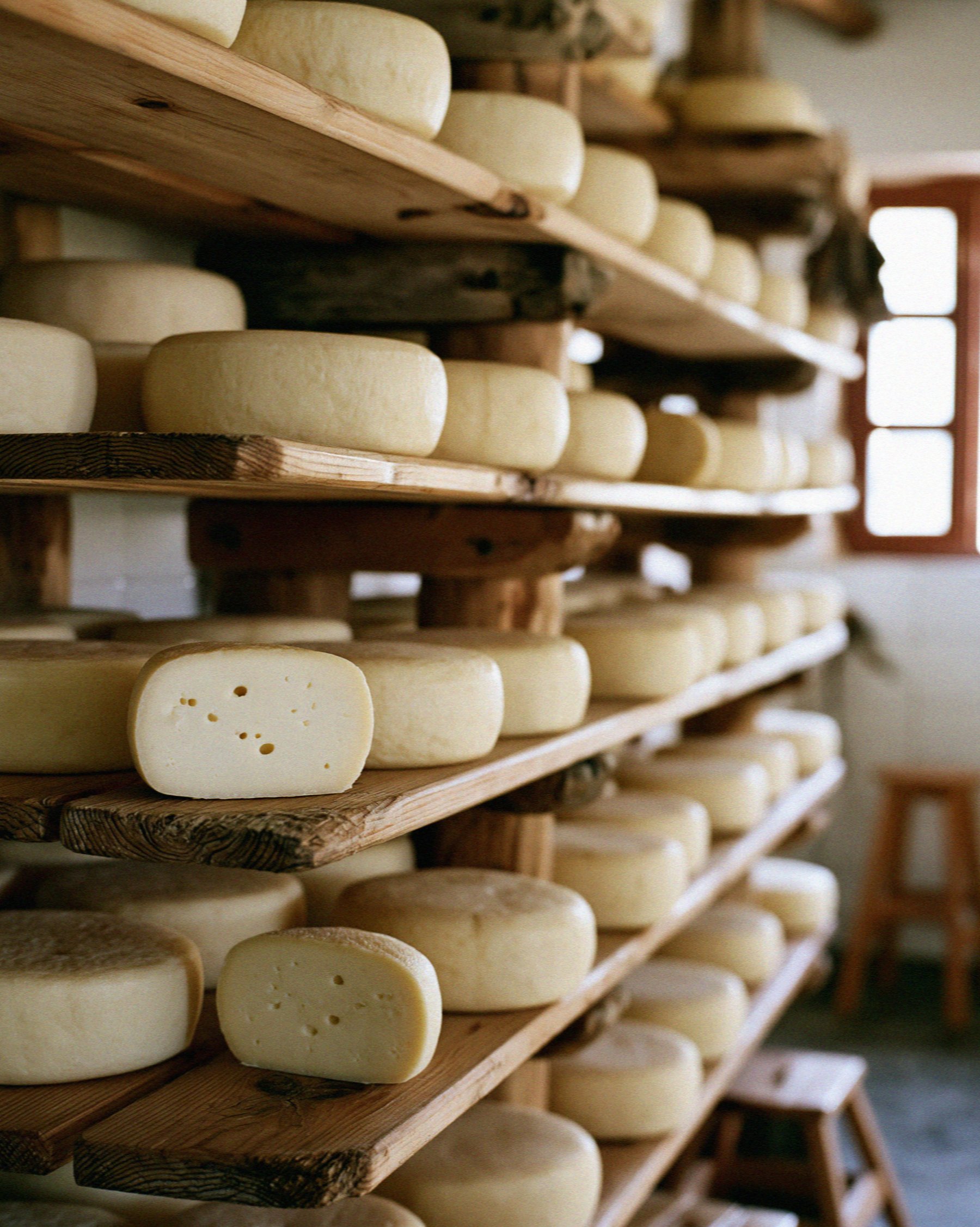
Graviera Naxou is the island’s best-known cheese, a hard, nutty, gently sweet cheese made mostly from cow’s milk and aged in wheels. It is good on its own, grated over pasta, or fried in a pan as saganaki.
Arseniko Naxou, protected since 2020, is sharper and drier, made from sheep’s and goat’s milk in the mountain villages. The name means male in Greek, which is usually taken as a nod to its strength. Eat it in small pieces with bread and a glass of wine.
Xynomyzithra, sometimes called xinotyro, is a fresh, soft, sour cheese that goes into salads and on rusks.
You can buy all three from the cheese shops in the Old Market and from the dairy cooperatives on the island, and the hard ones travel well if you wrap them properly.
Kitron
Kitron is the island’s liqueur, distilled from the leaves and fruit of the citron tree, which has been grown on Naxos for centuries. You will see its three bottles lined up in every shop window: the green is the gentlest and most sugared, the yellow the most potent, and the clear somewhere between.
The place to taste it is the Vallindras distillery in Halki, which has been making kitron since 1896. You can look at the old copper stills in the back and taste the three side by side, free of charge, with no formal tour. I was told on my first night that the green was the only one worth having. Having tasted all three, I preferred the yellow, which is drier and much more serious. Try them in order and decide for yourself.
In town, the shops below the Kastro sell bottles of every style. Ask them to wrap it well for the ferry.
Eating in Naxos Town
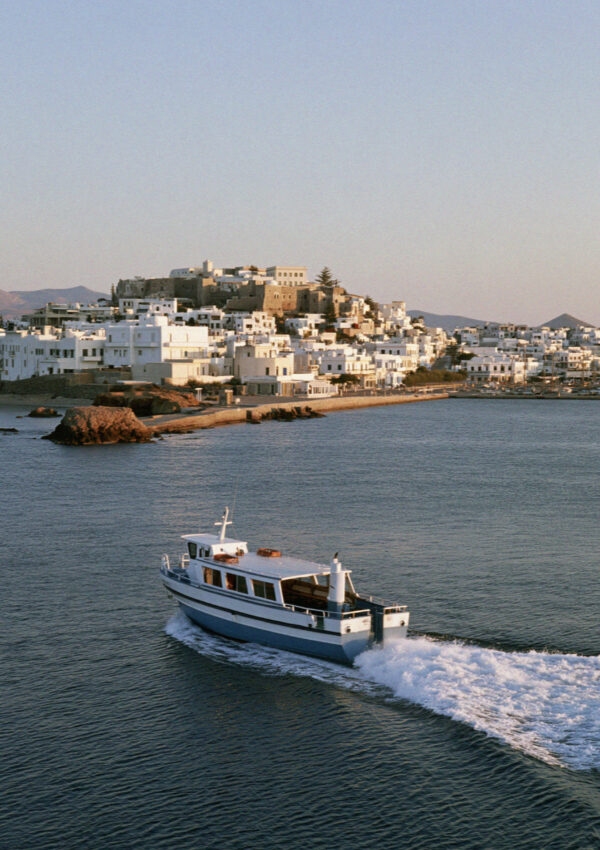
The town has the most choice and the busiest evenings. Most of the restaurants sit along the harbour front, in the lanes of the Old Market below the Kastro, and on the terraces above it.
Metaxi Mas is popular, lively and good value, with island dishes at sensible prices, which is why it is often full. Doukato has a leafy courtyard and is a lovely place for a slow dinner. Oniro has a roof terrace under the Kastro, with a view over the rooftops towards the sea. Antamoma and Barozzi are also worth knowing.
As a rule, the tables right on the harbour are about the view, and the lanes behind are about the food. Walk five minutes uphill and the menus get shorter and better.
Tavernas in the mountain villages
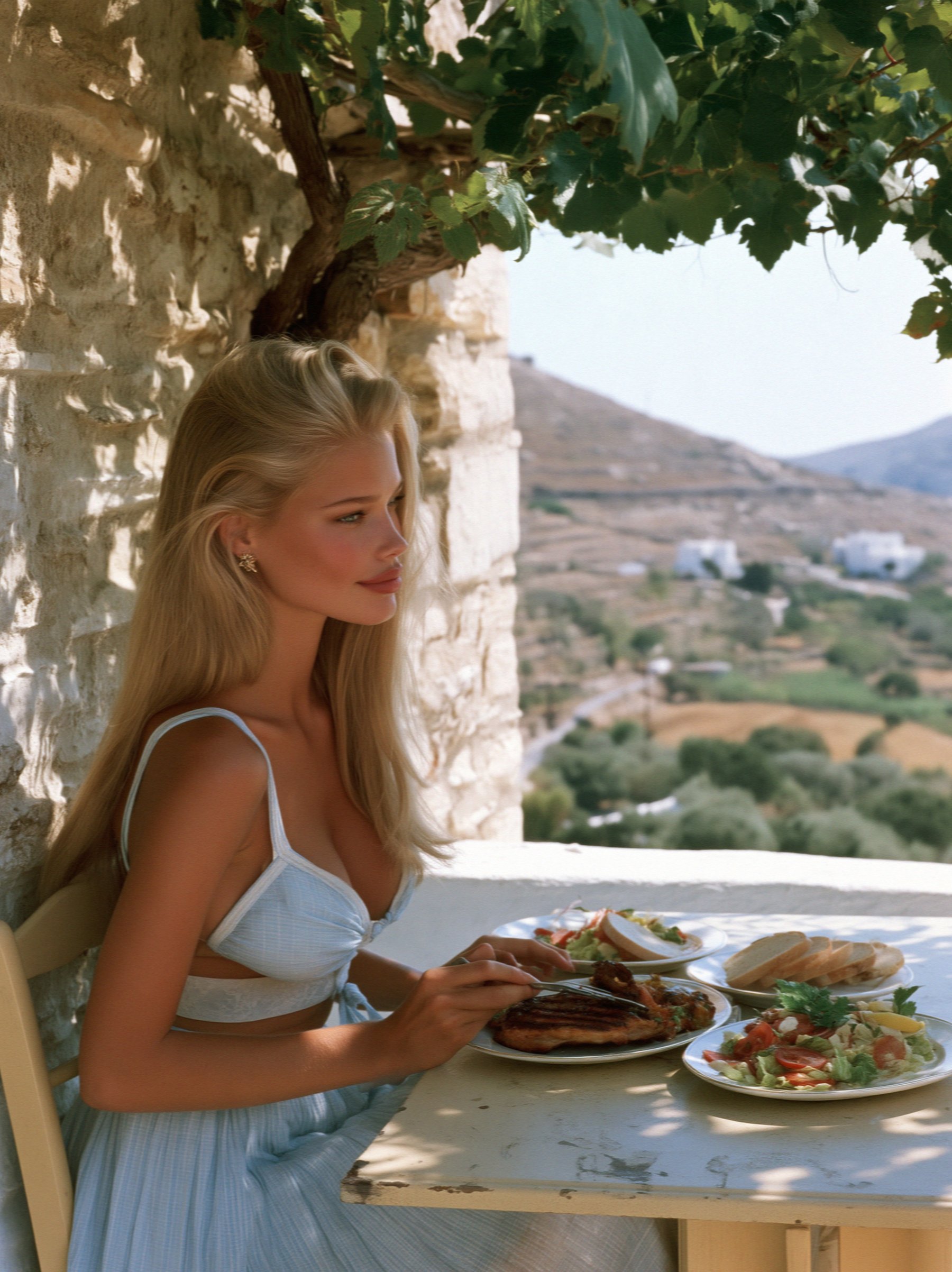
The best meals on Naxos are often in the interior, at lunch, in a square under a plane tree.
In Halki, O Yiannis is the traditional taverna, a good place to sit after the distillery. In Apeiranthos, the marble village, Platanos and Amorginos are both well known for local cooking. In Koronos, further north, Platsa is a village taverna worth the winding drive.
Closer to the coast, Axiotissa, inland from Kastraki and about twenty minutes from town, is famous across the island for its local meat and produce and is worth planning a day around.
Order what the village makes: grilled local meat, slow-cooked goat or lamb, the potatoes, a salad with the sour cheese, and whatever vegetables the kitchen has that day. My guide to the mountain villages of Naxos has the drive between them.
By the sea
On the west coast, the tavernas sit right on the beaches. At Agia Anna, the tables stand almost on the waterline, and Paradiso, open since the late 1970s, is the one the regulars return to. Down at Mikri Vigla, Kontos sits above the kite beach. Along Agios Prokopios and Plaka there are tavernas and beach restaurants for an easy lunch between swims.
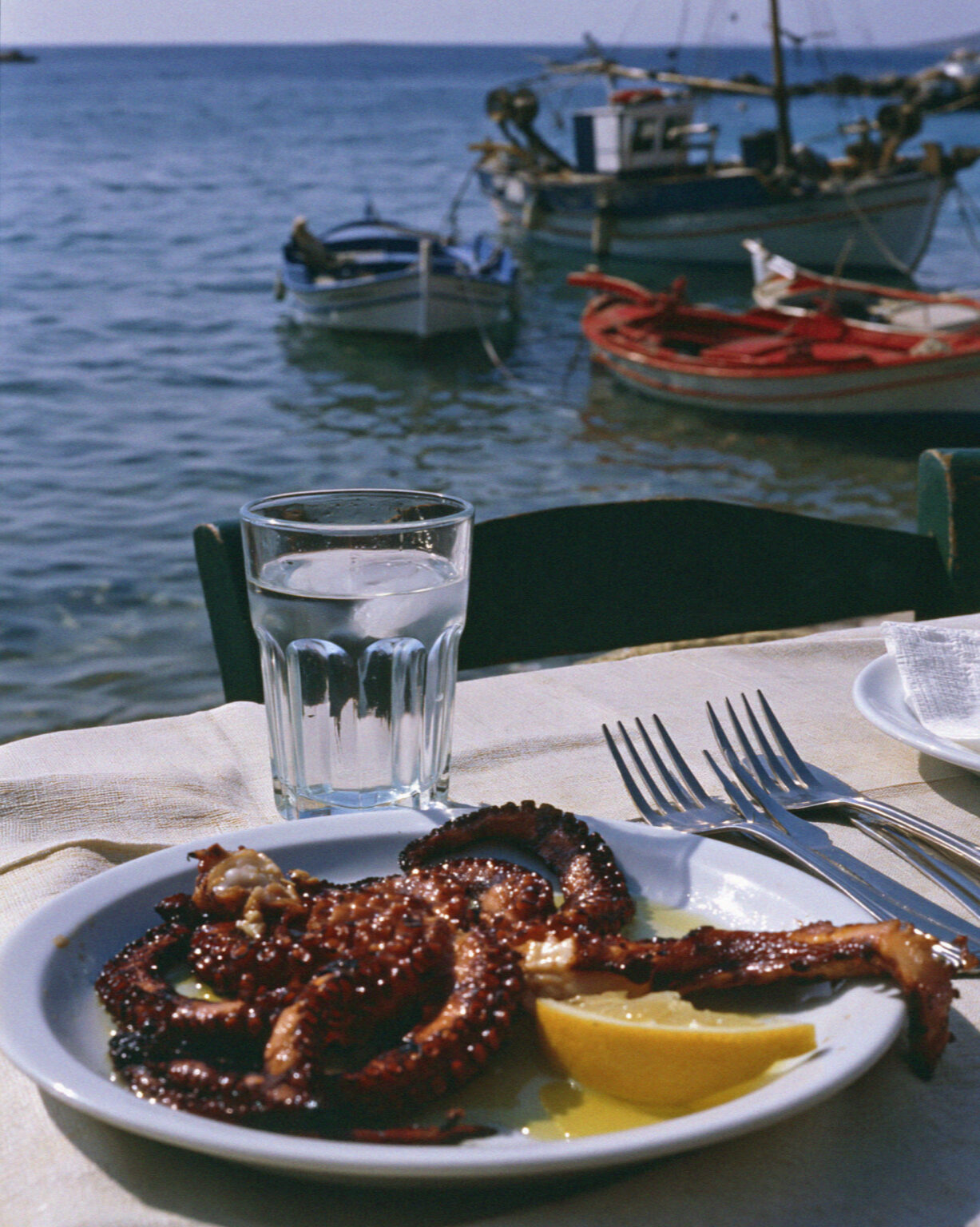
For fish, look to the small harbours: Agia Anna, Moutsouna on the east coast, and Apollonas in the north. Fresh fish is usually sold by weight, so ask to see it and agree the price before it goes on the grill. Grilled octopus, sun-dried and charred, is the classic order with a glass of ouzo or wine.
Cheap and good
Naxos is an easy island to eat well on a budget.
The bakeries by the harbour sell cheese pies and spinach pies from early in the morning, and a warm cheese pie on the sea wall was my breakfast on my last day. Gyros and souvlaki shops in town feed you for a few euros. A plate of fried potatoes, a Greek salad and a carafe of house wine at a village taverna is one of the cheapest good meals in the Cyclades.
For a picnic, buy graviera, arseniko, tomatoes, olives and bread in the Old Market and take them to the beach.
How to book
In July and August, book the popular places in town, and Axiotissa, a day or two ahead, especially for a weekend or a group. Outside high summer you can usually walk in.
Village tavernas rarely take bookings and do not need them, but go at lunchtime, because some close early in the evening outside the season. Greeks eat late, often from nine or ten at night, so an early table is easy to find. Many beach tavernas and some town restaurants close from about November to Easter, so check before travelling in winter.
Where to sleep close to the best tables is covered in my guide to where to stay in Naxos, and how to fit a village lunch into a few days on the island is in my Naxos itinerary.
Frequently Asked Questions
What food is Naxos famous for?
Its potatoes, its protected cheeses, graviera and arseniko, and kitron, a citron liqueur. The island is also known for its local meat, because it is fertile enough to graze cows.
What is the difference between green, clear and yellow kitron?
Green is the sweetest and lightest, clear sits in the middle, and yellow is the strongest. You can taste all three free at the Vallindras distillery in Halki.
Where should I eat in Naxos Town?
Metaxi Mas for good-value island dishes, Doukato for its courtyard, and Oniro for the roof terrace under the Kastro. The lanes behind the harbour are generally better than the front.
Is Axiotissa worth the drive?
Yes. It is famous across Naxos for its local meat and produce, about twenty minutes from town, inland from Kastraki. Book ahead in July and August.
Do you need to book restaurants in Naxos?
Only for the popular town restaurants and the best-known tavernas in high summer. Village tavernas and most places outside July and August are fine to walk into.
Read also: The Mountain Villages of Naxos: Halki, Filoti, Apeiranthos and the Kouroi | Where to Stay in Naxos: Town, Beach or Village | Victoria’s Complete Guide to Naxos