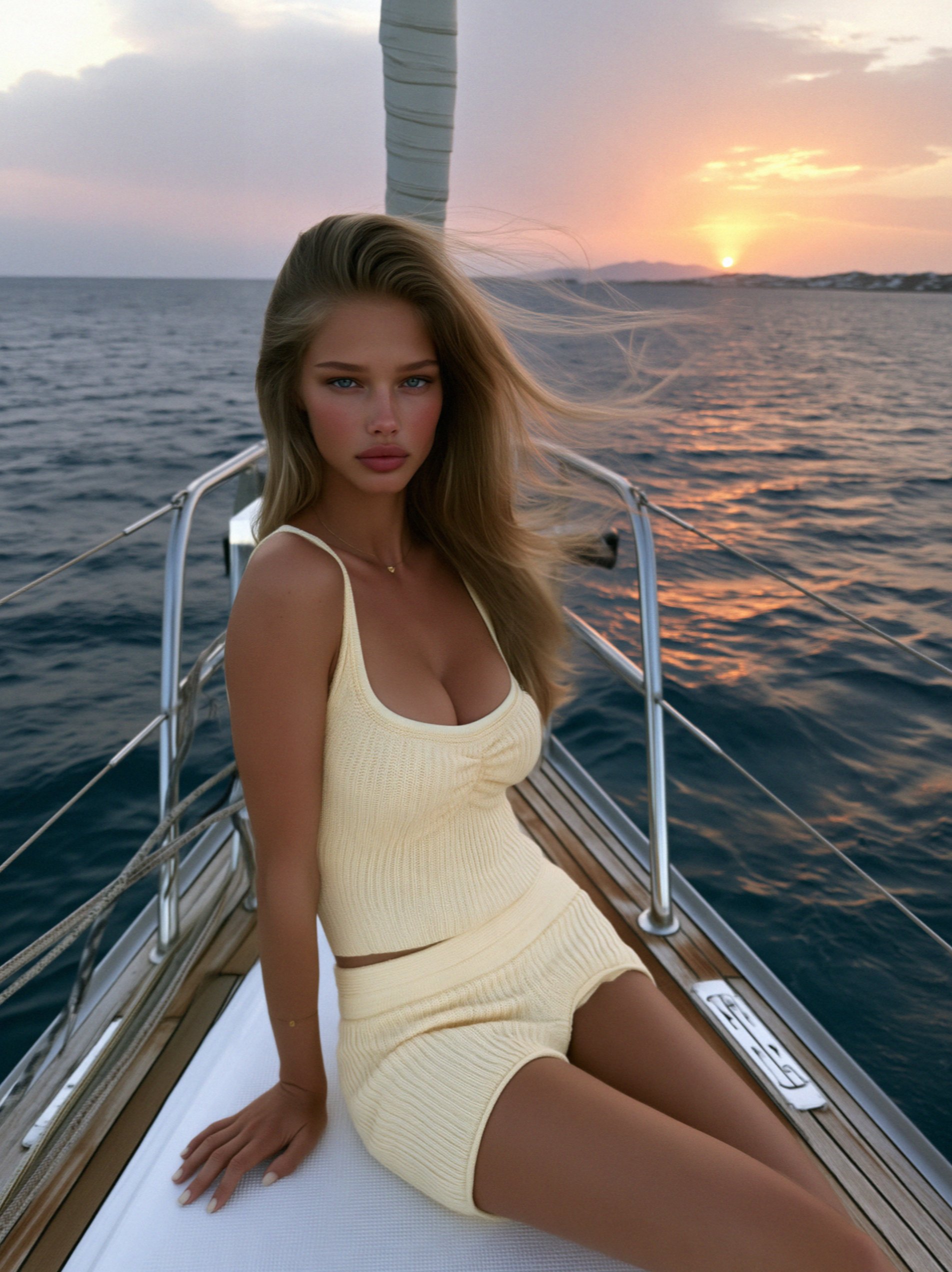
Mykonos has a reputation that arrives before you do. Beach clubs, yachts, a party that runs from lunch until the sun comes up again. All of that is real, and some of it is a great deal of fun. But it is about a third of the island, and the other two thirds are what made me want to come back.
I first came here years ago, in a different part of my life, and remembered the light and the noise. I came back at the end of September, on the ferry from Santorini, and what I had forgotten was the wind. The wind is the whole island. It shaped the town, it decides which beach you swim from, and it is the reason the most famous view on Mykonos is a row of grain mills.
This guide is the island as I would plan it now: when to come, which part to sleep in, how to get around without a taxi, which beaches suit which mood, what the nights actually cost, how to do Delos properly, and what to eat when you are tired of being impressed. Each part has its own detailed guide, linked as you go.
What Mykonos actually is
Mykonos is a small, dry, rocky island in the middle of the Cyclades, about fifteen kilometres from end to end, with almost no trees and a great deal of light. It has one real town, called Chora or simply Mykonos Town, one real inland village, Ano Mera, and a coastline cut into dozens of bays.
For most of its history it was poor and a little forgotten. Its one great asset was its neighbour. Delos, the sacred island of Apollo, sits a few kilometres off the west coast, and in the ancient world it was one of the holiest places in Greece and, for a time, one of its busiest ports. Mykonos was the place you stopped on the way there. Later it was a sailors’ island, then a stop for the first wave of travellers in the 1950s and 1960s, and then, quite quickly, the most famous party island in the Mediterranean.
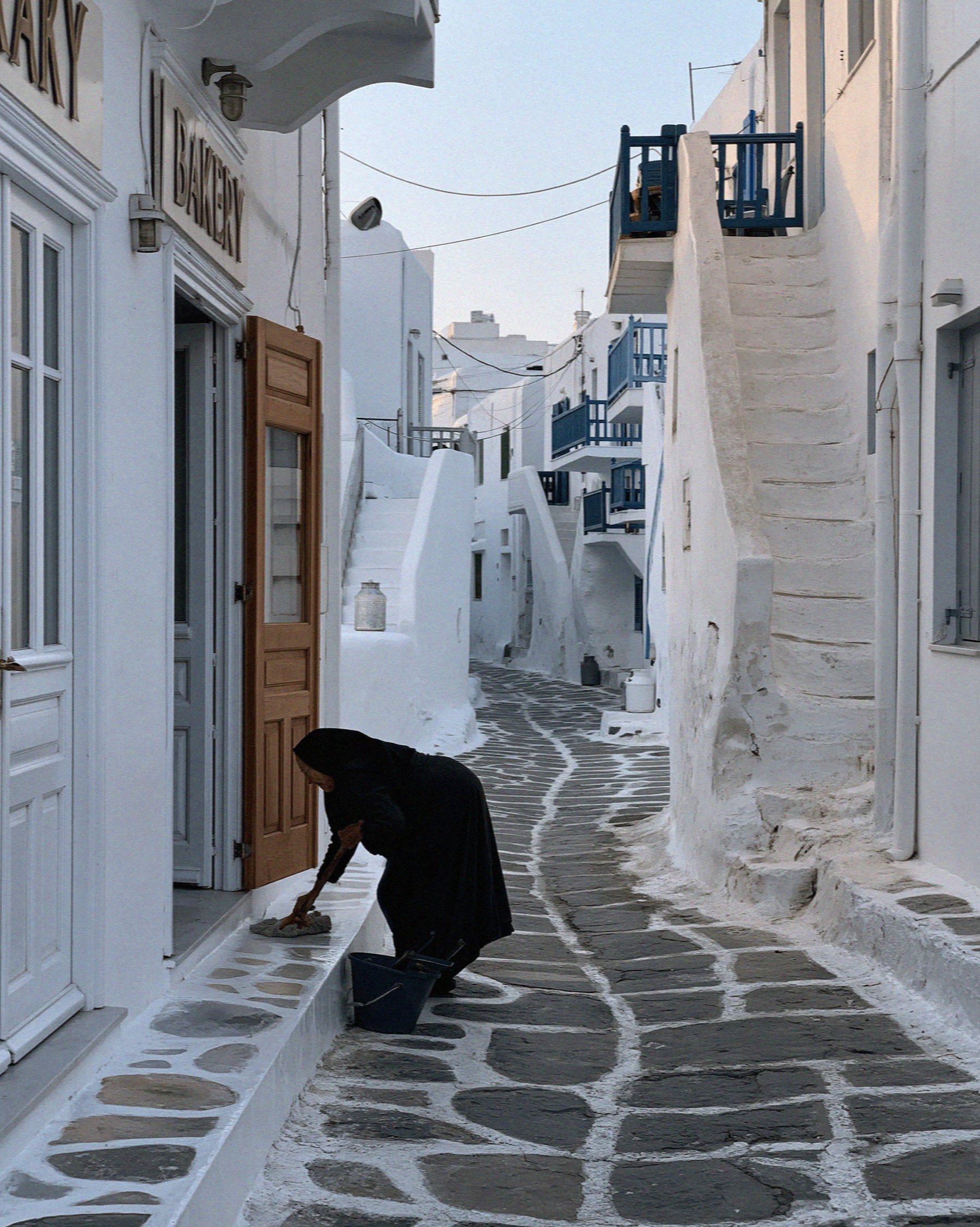
What you find now is two islands laid on top of each other. One is a working Cycladic town of whitewash, painted doors, chapels, cats and old women sweeping their steps at seven in the morning. The other is the south coast in July, with its music and its sunbed prices. They share the same roads and the same light, and the trick to Mykonos is knowing which one you want on which day.
Two practical things shape the whole island. The first is the meltemi, the strong, dry north wind that blows through the Aegean from roughly June to September, sometimes for days at a time. It is why the north coast beaches are wild and the south coast ones are crowded, and it is why ferries are occasionally late. The second is cruise ships. Big ships call at the new port north of town through the season, and on busy days the old town fills from mid-morning until late afternoon. Cruise passengers pay a levy to come ashore, twenty euros a head in high summer. If you arrive by ferry or plane, none of that touches you, but it is worth knowing which days to be on a beach instead of in the lanes.
When to go
September. If I could choose only one month, I would choose that one.
The sea has had all summer to warm up and stays comfortable well into the month, the meltemi usually eases, prices fall from their August peak and the island exhales. Early September still has the full summer scene, with every club open and every table booked. By the last week, when I was here, half the sunbeds were empty, the beach bars were playing slower music and the town belonged to the people who live in it again. I swam every day.
June is the other good window: long days, everything open, the sea cooler but swimmable, and fewer people than July. Late May and early October are lovely for walking and for the town, with some risk of a grey or windy day and a growing number of places closed. July and August are hot, windy, full and very expensive. From November to March much of the island shuts: most hotels, the beach clubs and many restaurants close, and Mykonos becomes a quiet island of about ten thousand people waiting for spring.
I have gone through the year month by month, with what is open, what the sea is like and what things cost, in my guide to the best time to visit Mykonos.
Plan Your Visit to Mykonos
A few things worth sorting before you come. These help support the blog, at no cost to you.
- Hotels in town and on the beachesFrom the lanes of Mykonos Town to the bays of the south coast
- Delos, boat days and the south coastBoats to Delos and Rhenia, sunset cruises and tours across the island
- Hire a car for the north and the eastThe quieter beaches and Ano Mera are easier with your own wheels
- Stay connected with a travel eSIMData from the moment you land, no roaming charges
This section contains affiliate links. If you book through them I may earn a small commission, at no extra cost to you.
Mykonos Town
Mykonos Town is the heart of the island and the reason to come, even if you sleep somewhere else.
It is a maze, and deliberately so. The lanes do not run straight anywhere. They fold back, narrow, turn corners for no visible reason and end at a chapel or a sea wall. The usual explanation is that the town was built this way to confuse pirates. The other explanation, which I find more convincing having stood in it during a meltemi, is that a lane that breaks the wind also keeps the houses cool. Probably both. Either way, a map is almost useless, and the best thing you can do is put it away.
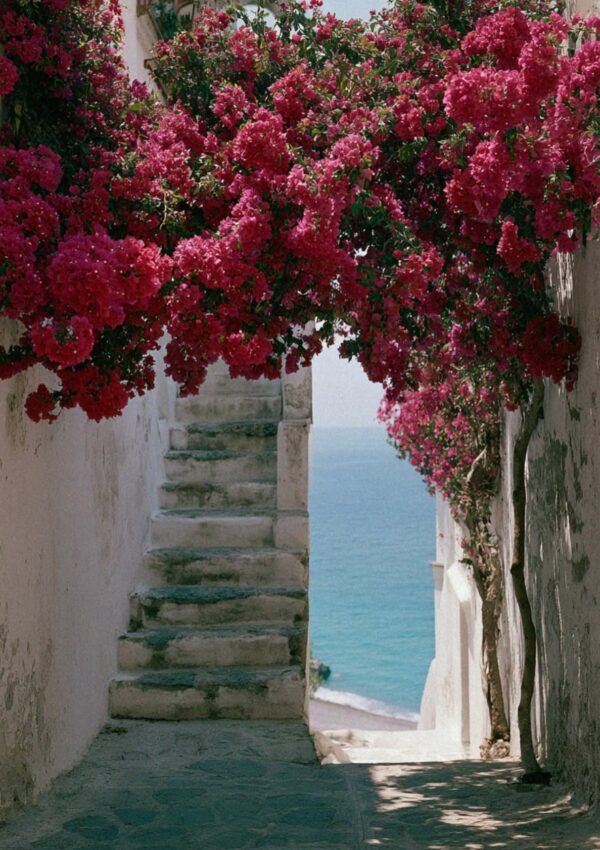
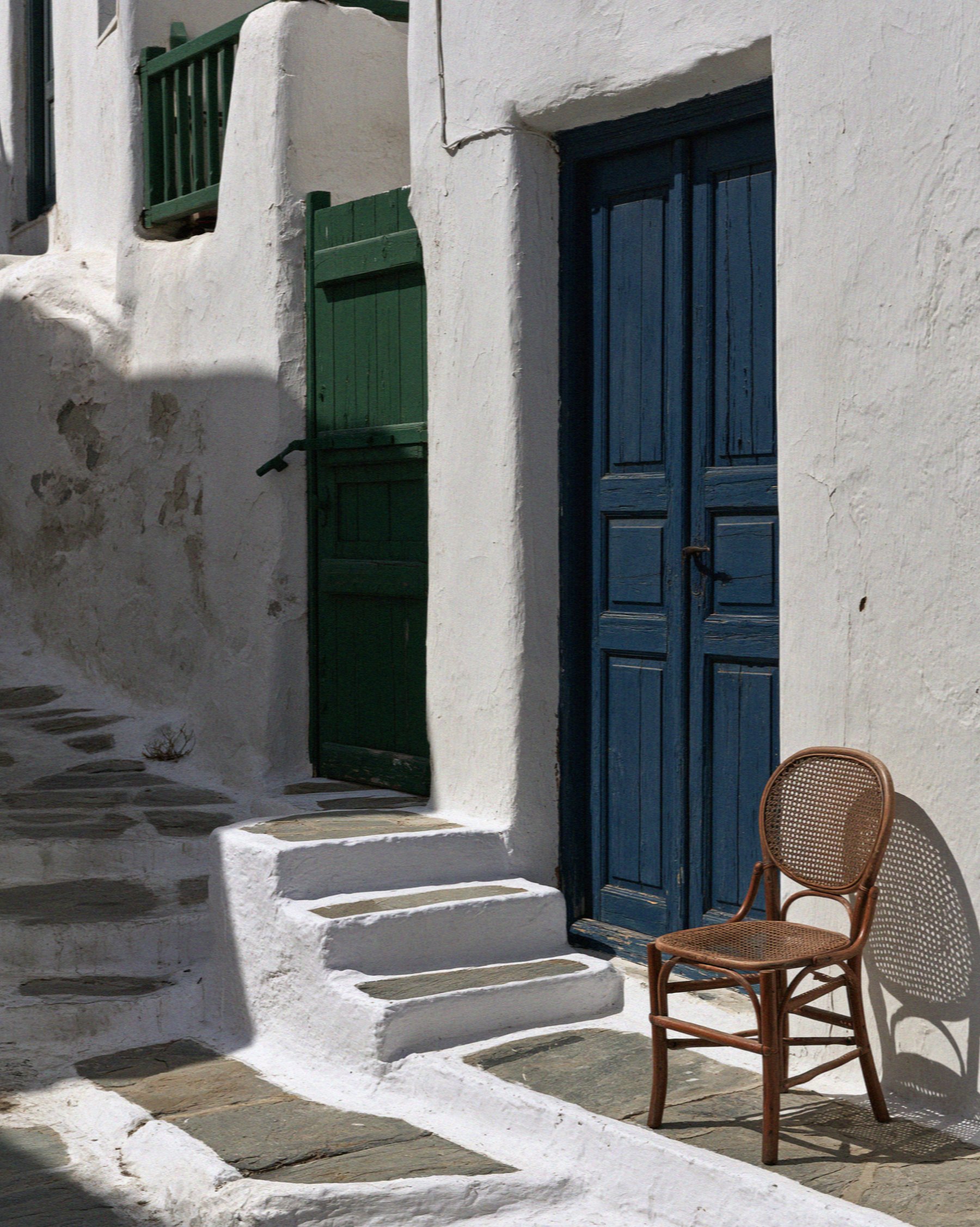
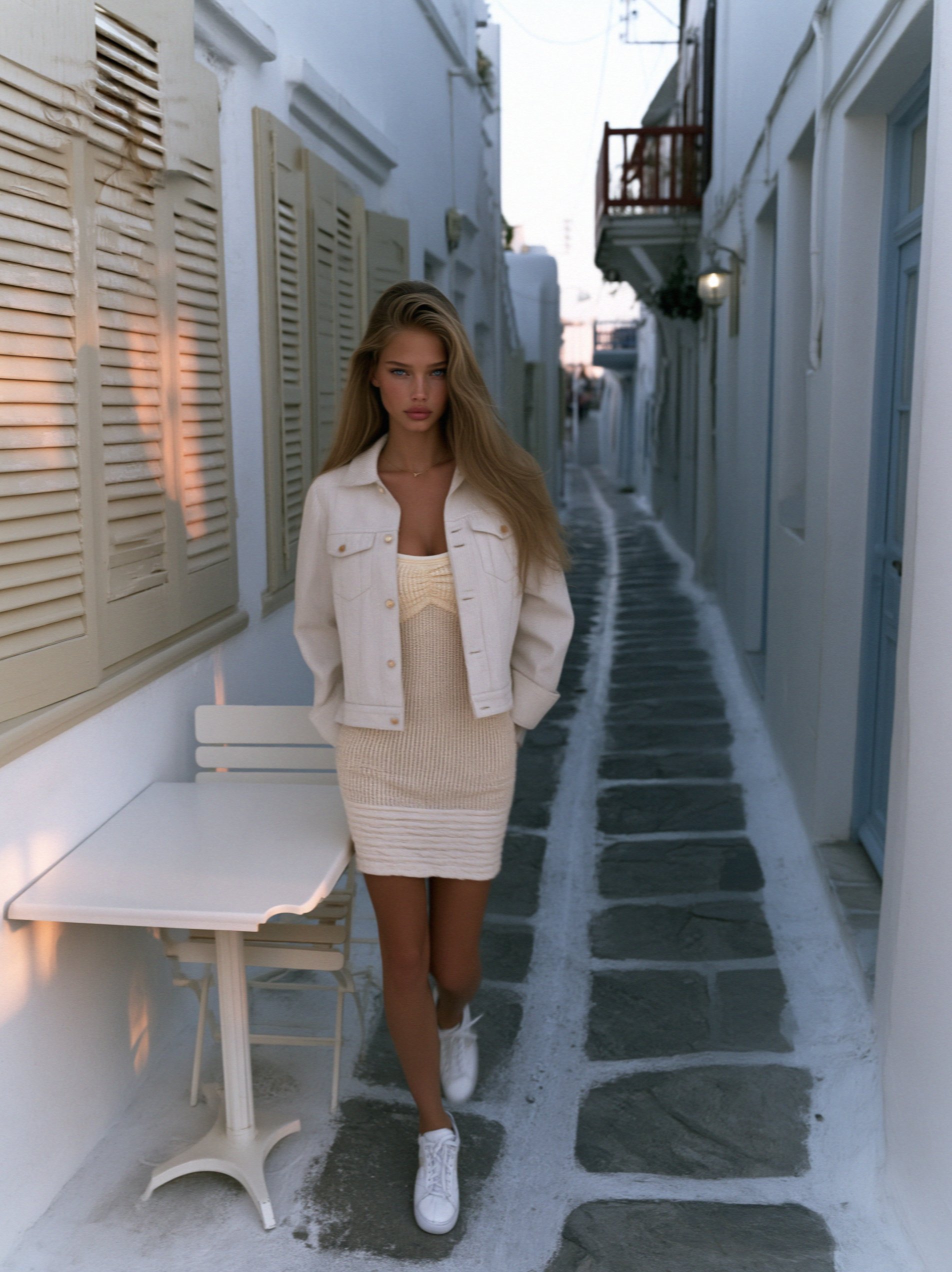
Everything is whitewashed, including the paving, with the edges of the steps painted white so you can see them at night. The colour is all in the doors, shutters and balconies: deep red, blue, a green gone chalky with salt. Every few metres there is a small chapel. There are hundreds on the island, many of them built by families as a promise or a thanks.
The town has a few quarters worth knowing by name. Matoyianni is the main shopping lane, narrow and expensive and busy until late. Kastro, on the low headland by the sea, is the oldest part, with the strange white church of Paraportiani at its tip. Little Venice runs along the water beyond it. Three Wells, Tria Pigadia, is a small square with the old town wells and two of the island’s museums close by. Manto Mavrogenous Square, by the harbour, is named after a local heroine of the Greek War of Independence.
I have written up the whole town, quarter by quarter, with a walk you can do in an evening, in my guide to Mykonos Town: Little Venice, the windmills and the old lanes.
The windmills and Little Venice
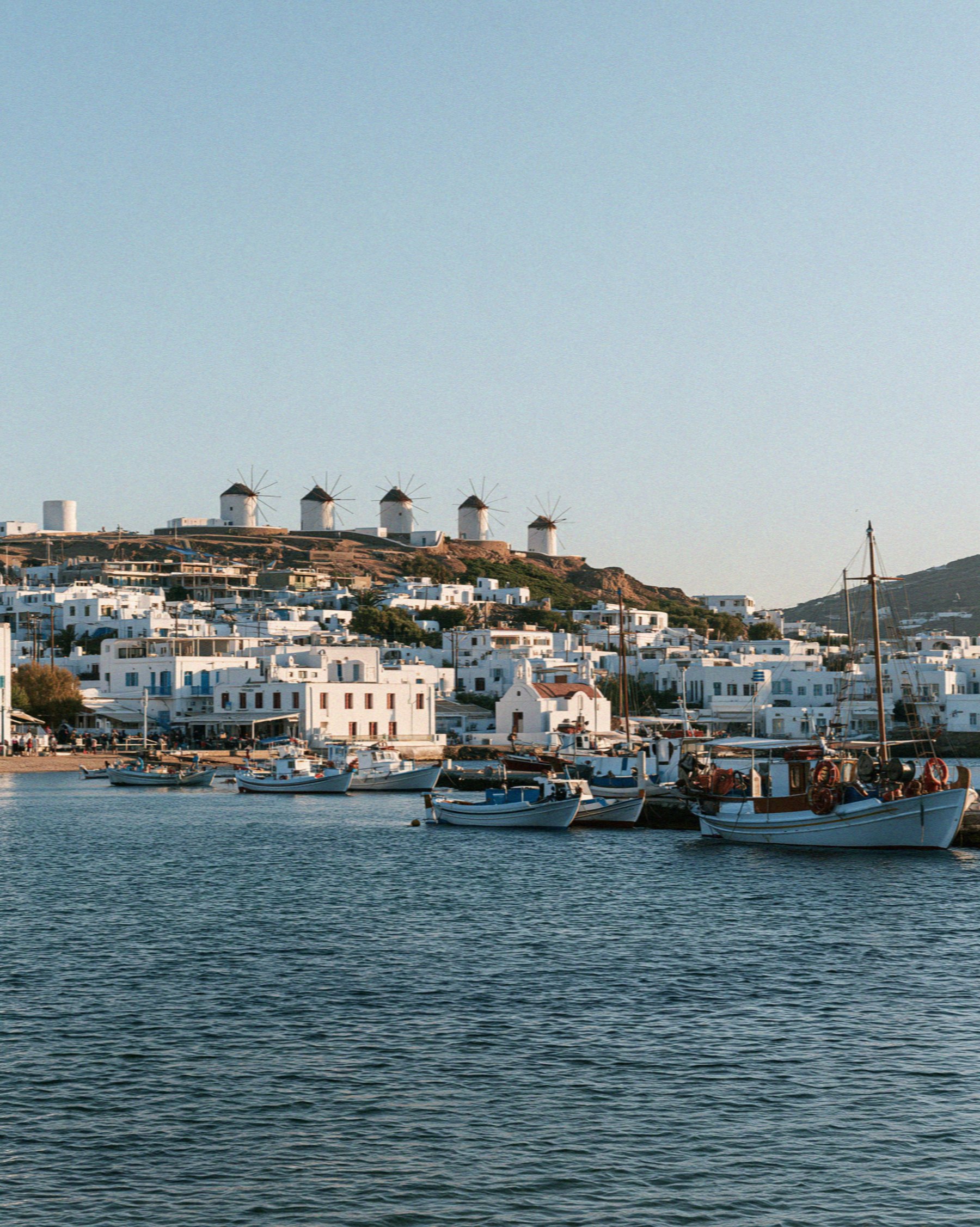
The windmills are the photograph everybody has already seen: a row of round white towers with pointed roofs on the low ridge at the southern edge of town. They are called Kato Mili, the lower mills, and there were once nearly thirty mills across the island.
They were not built to be romantic. They ground grain, much of it shipped in, and the flour was baked into paximadi, the hard twice-baked barley rusk that kept for weeks on board a ship. Mykonos sat on a busy sailing route, and feeding the ships that passed was part of how it made a living. One of the mills, Boni’s Mill, on the hill above town, is now part of the island’s small agricultural museum and opens on summer evenings.
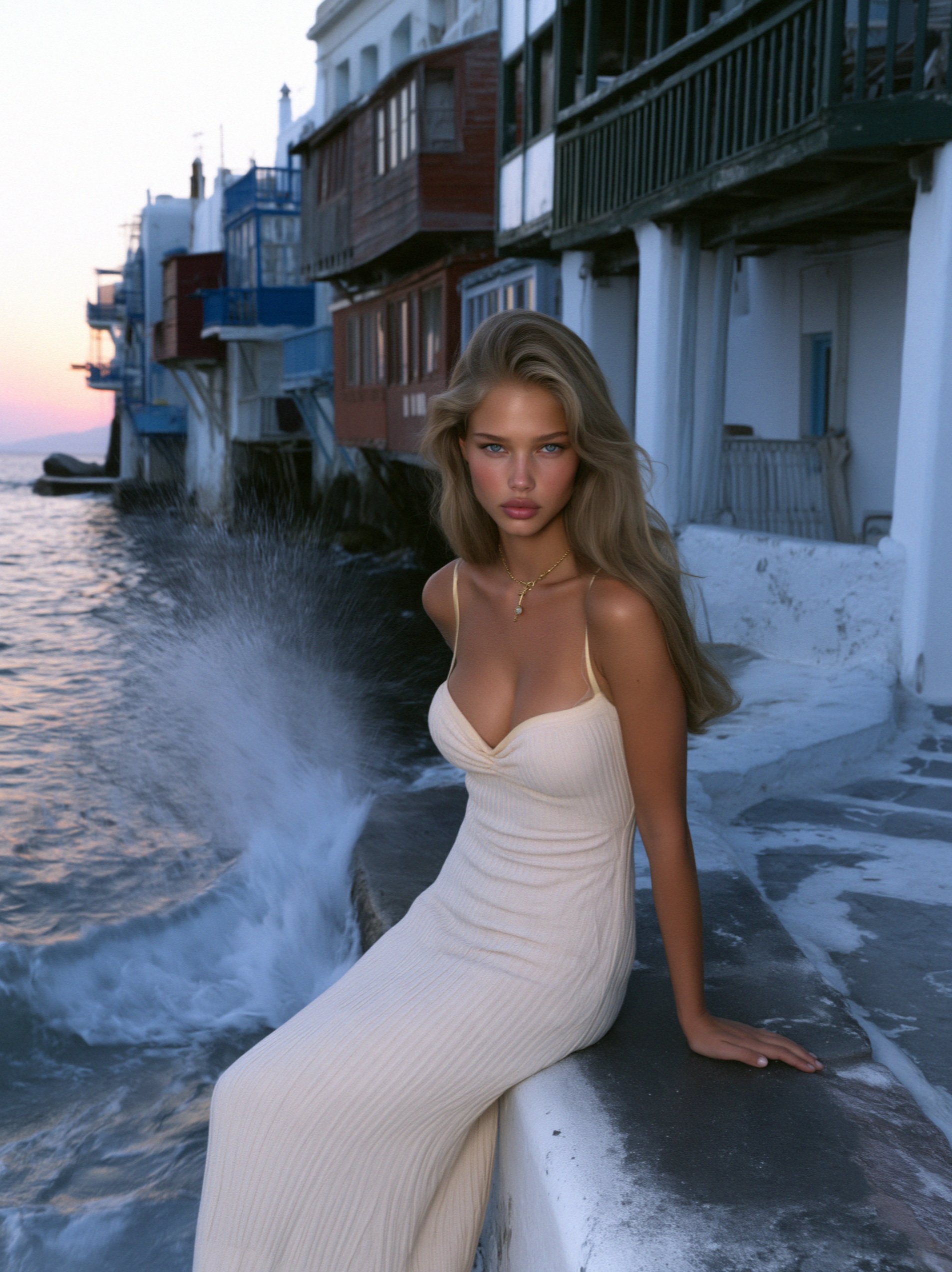
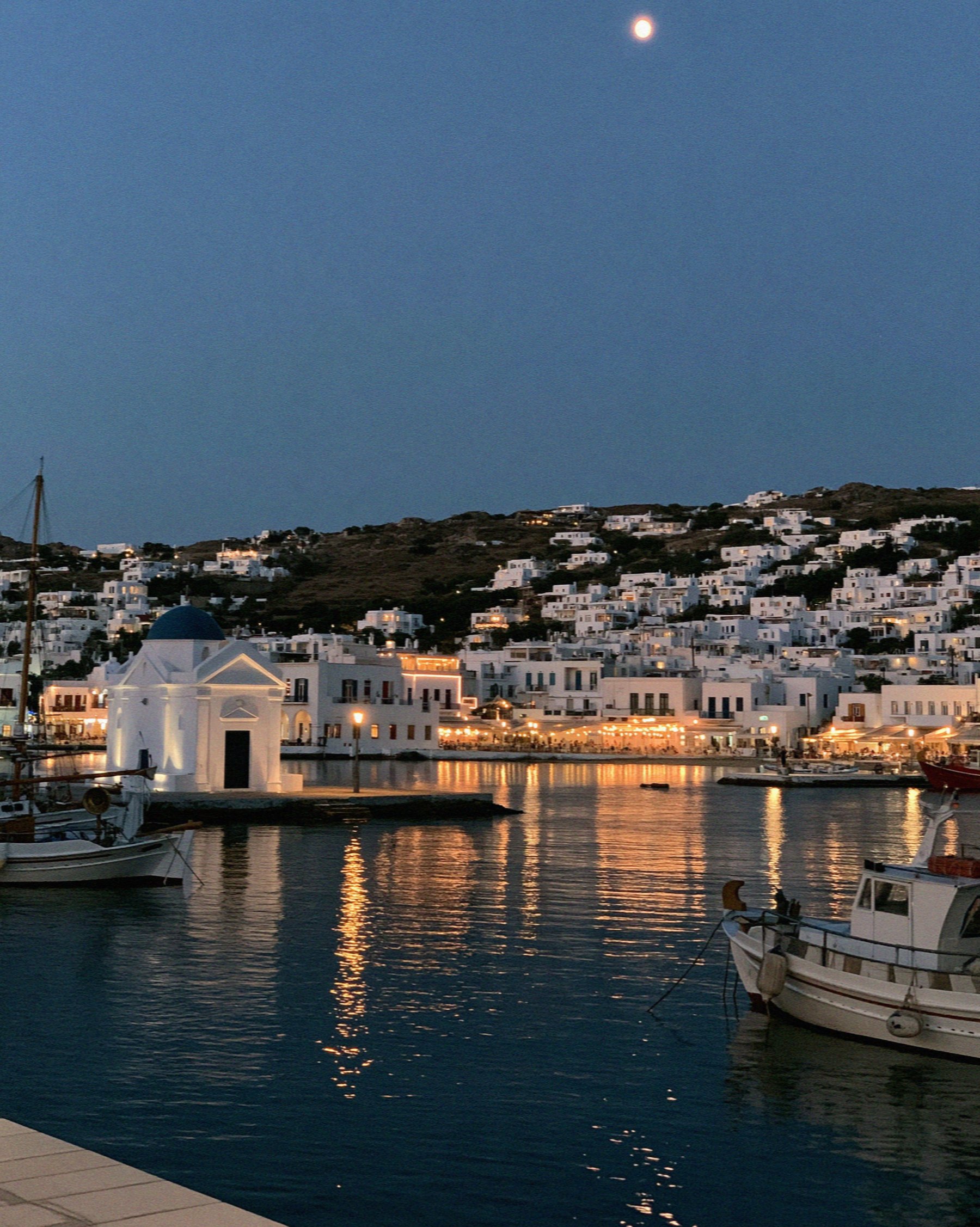
Below the windmills, Little Venice is a row of old houses built straight out of the sea, with wooden balconies hanging over the water. They were once the houses of ship captains and merchants. Now most of them are bars, and at sunset every table is taken. On a rough day the spray reaches the drinks, and people sit there anyway.

Sunset here is a crowd, and a cheerful one. The rocks below the windmills fill with people an hour before. If you want a table in Little Venice, arrive early or book. If you would rather have the same sky with fewer people, walk a little further along the coast towards the south, or watch it from a boat.
The best things to do
Walk the town in the early morning, before the shops open, when the lanes are being washed and the only sound is a broom. Watch the sunset from the windmills once, and then from somewhere quieter. Go to Delos, which has its own section below. Take the water taxi along the south coast and swim from three beaches in a day. Sail to Rhenia, the empty island beyond Delos, for the clearest water around Mykonos.
Then the quieter things, which are the ones I remember. The island is small enough that none of them takes more than half a day, and most of them are free. Drive inland to Ano Mera, the island’s only real village, for the monastery of Panagia Tourliani, founded in 1542, and lunch in the square. Go out to Armenistis lighthouse at the north-western tip, built in 1891, and watch Tinos across the strait. Spend an afternoon on the north coast, at Agios Sostis or Fokos, where there are no sunbeds at all. See Lena’s House, a perfectly kept nineteenth-century Mykonian home, and the archaeological museum by the harbour. Take a ferry to Tinos for the day, the pilgrimage island next door, with its great white church above the port, its marble villages and almost none of the noise of Mykonos.
If I had to choose three for someone else, they would be the town at eight in the morning, Delos on the first boat, which I still owe myself, and a calm afternoon on the north coast with a long lunch above Agios Sostis.
I have put all of these in order, with what each costs and how long it takes, in my guide to the best things to do in Mykonos.
Delos
If you do only one thing on Mykonos that is not a beach, make it Delos.
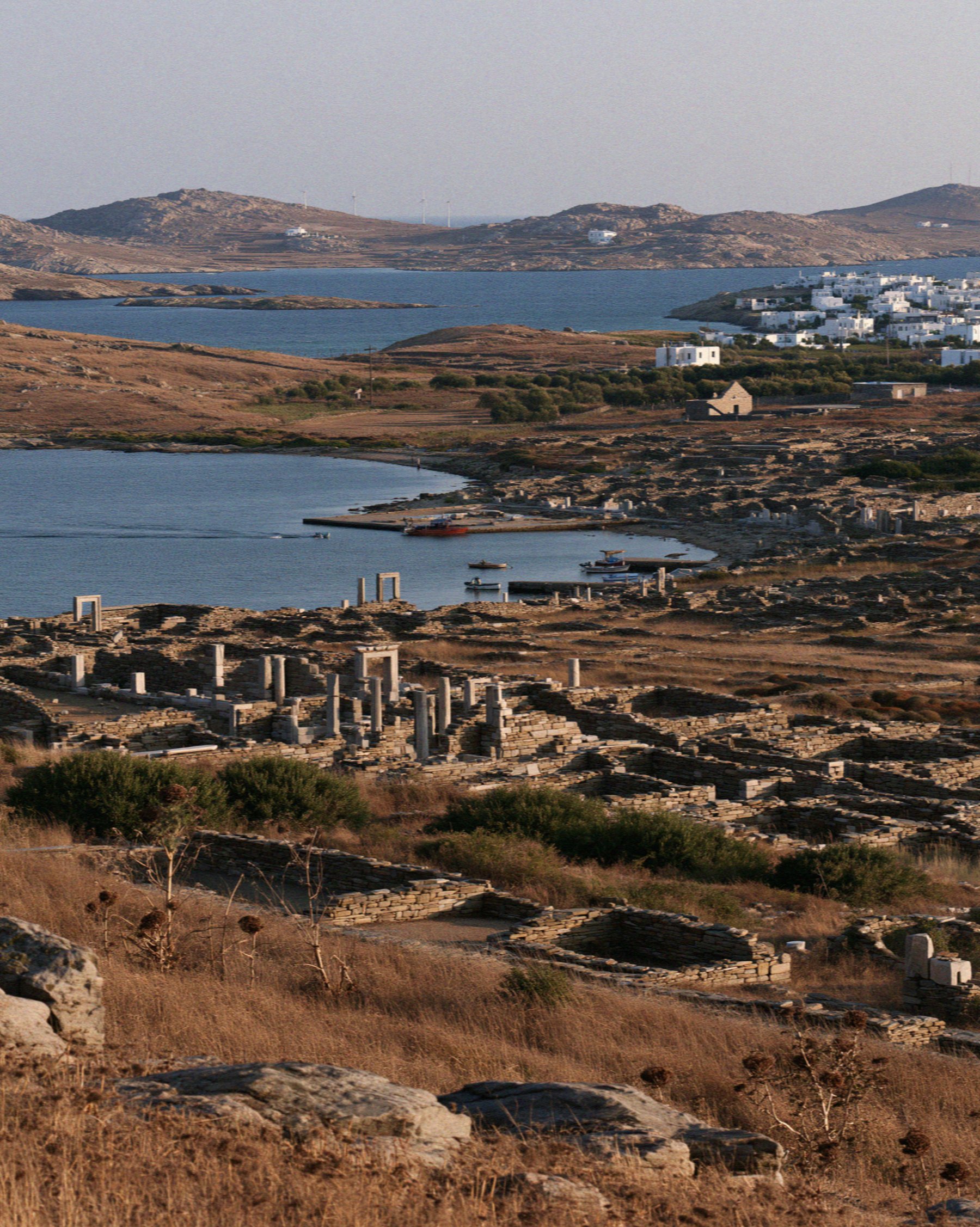
Delos is a small, bare island a short boat ride from the old harbour, and in ancient Greek belief it was where Apollo and his sister Artemis were born. For centuries it was one of the most sacred places in the Greek world. Later, under Roman protection, it became a free port and one of the busiest trading markets in the Mediterranean, with tens of thousands of people living on an island you can walk across in an hour.
Then it was sacked, twice, in the first century BC, and slowly abandoned. Nobody really lived there again. What is left is an entire ancient town lying open under the sky: temples, markets, a theatre, streets of houses with their mosaic floors still in place, and the row of marble lions that once looked out over a sacred lake. The whole island is a UNESCO World Heritage Site and nobody is allowed to stay overnight.

Boats leave from the old harbour of Mykonos Town in the morning, take about half an hour, and bring you back in the afternoon. The boat and the site ticket are separate, and the site closes completely from December to March. I meant to go, and on the day I looked at the boat and went for a coffee instead, which I wrote about in my diary. It is still the thing I would tell anyone else not to miss.
Times, tickets, what to see first and how to do it in the heat are all in my guide to how to do a Delos day trip from Mykonos.
The beaches
Mykonos has some of the best beaches in the Cyclades, and the choice comes down to the wind.
When the meltemi blows from the north, which it does for much of the summer, the south coast is sheltered and the north coast is wild. So the south is where the organised beaches are, one after another: Ornos and Agios Ioannis close to town, Psarou and Platis Gialos, then Paraga, Paradise and Super Paradise with their clubs, then Agrari and long Elia, and further east Kalo Livadi, Kalafatis and Lia. Most have sunbeds, tavernas and clear, calm water.
The north coast is the other island. Agios Sostis has no sunbeds at all, only sand and a taverna on the hill. Panormos is wider and a little smarter. Fokos and Mersini, at the end of dirt roads in the north-east, are about as empty as Mykonos gets. On a calm day they are the most beautiful beaches on the island. On a windy one you will understand why everybody else is on the south coast.
I have described every beach, with how to get there and what a sunbed costs, in my guide to the best beaches in Mykonos.
Beach clubs and nights out
A Mykonos night usually begins at lunchtime. The big beach clubs on the south coast fill from early afternoon, build through the sunset with a DJ, and empty towards town as it gets dark. Then dinner, late, then the bars in town from around midnight, and then, for the ones who are still going, the big open-air club above Paradise until the sun comes up.
You do not have to do any of it, and you do not have to do all of it. I spent one long afternoon at a beach club with turquoise everything, which was beautiful and seemed completely uninterested in the old town above it, and evenings in Little Venice that I enjoyed more than any club. The town bars are the cheapest way in, the beach clubs the most expensive, and the price of a front-row sunbed at the grandest of them would pay for a good dinner for two.
The scene is at its fullest in July and August, still lively in early September, and largely over by the beginning of October. Book the famous clubs well ahead in summer, check the minimum spend before you sit down, and plan how you are getting home, because taxis are scarce after midnight.
What each club is like, what a night costs and how to get back to your bed are in my guide to Mykonos beach clubs and nightlife.
Out on the water
Mykonos looks best from the water, and there are three kinds of boat day.
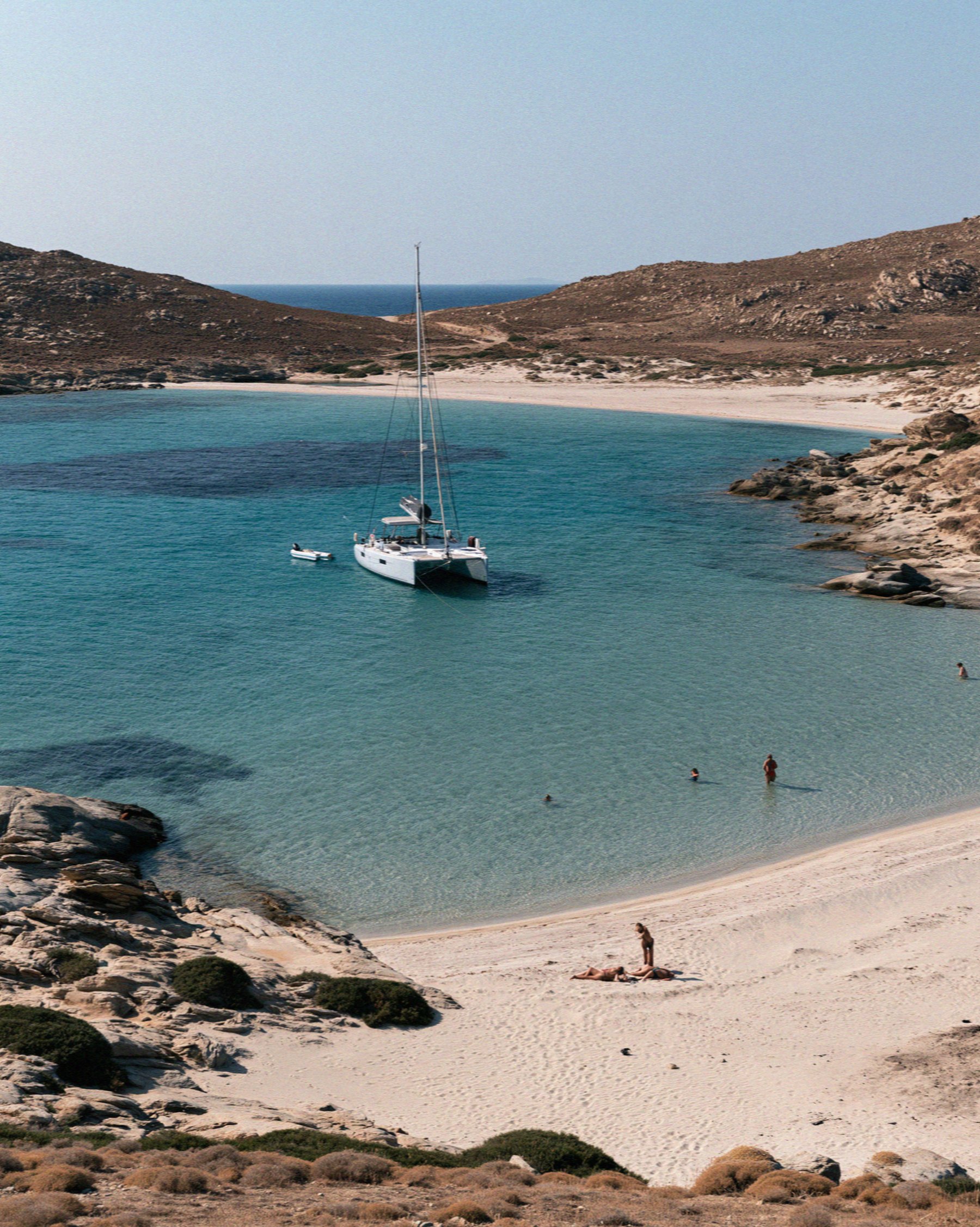
The first is Delos and Rhenia: a morning on the archaeological site, then a sail to Rhenia, the larger empty island beyond it, for swimming in coves with water so clear you can see your feet at five metres. The second is the south coast: a catamaran or a wooden caique along the beaches, with swims, lunch on board and a look at the clubs from the sea. The third is a sunset sailing, a few hours in the late afternoon, timed so the sun goes down while you are out.
Shared day trips with lunch usually cost somewhere between about eighty-five and one hundred and sixty-five euros a person. Private boats cost far more, and for a group of six or eight can be worth it. The meltemi sometimes changes the plan: on a windy day the Delos and Rhenia boats switch to the sheltered south coast instead, so read the small print and keep a spare day.
I have compared every kind of boat day, with prices and how to choose, in my guide to Mykonos boat tours.
Where to stay
Where you sleep on Mykonos decides what kind of holiday you have.
Mykonos Town is the best base for most people: the lanes, the restaurants and the evenings on your doorstep, the buses to the beaches and the boats to Delos from the harbour. It is also noisy until late in summer. Hotels on the slopes just above town, or on the edges at Megali Ammos and Agios Stefanos, give you the view and a pool with the town a walk away.
Ornos and Agios Ioannis, on the south-west coast a few minutes from town, are the easiest beach bases, sheltered from the wind, good for families, with sunsets at Agios Ioannis.
Platis Gialos and Psarou are the classic south coast, with the water taxi at the door and some of the island’s grandest hotels.
Elia, Kalo Livadi and the east are quieter and further out, better with a car.
The north coast, at Panormos and Agios Sostis, is for people who want wind, space and a different island, and do not mind driving.
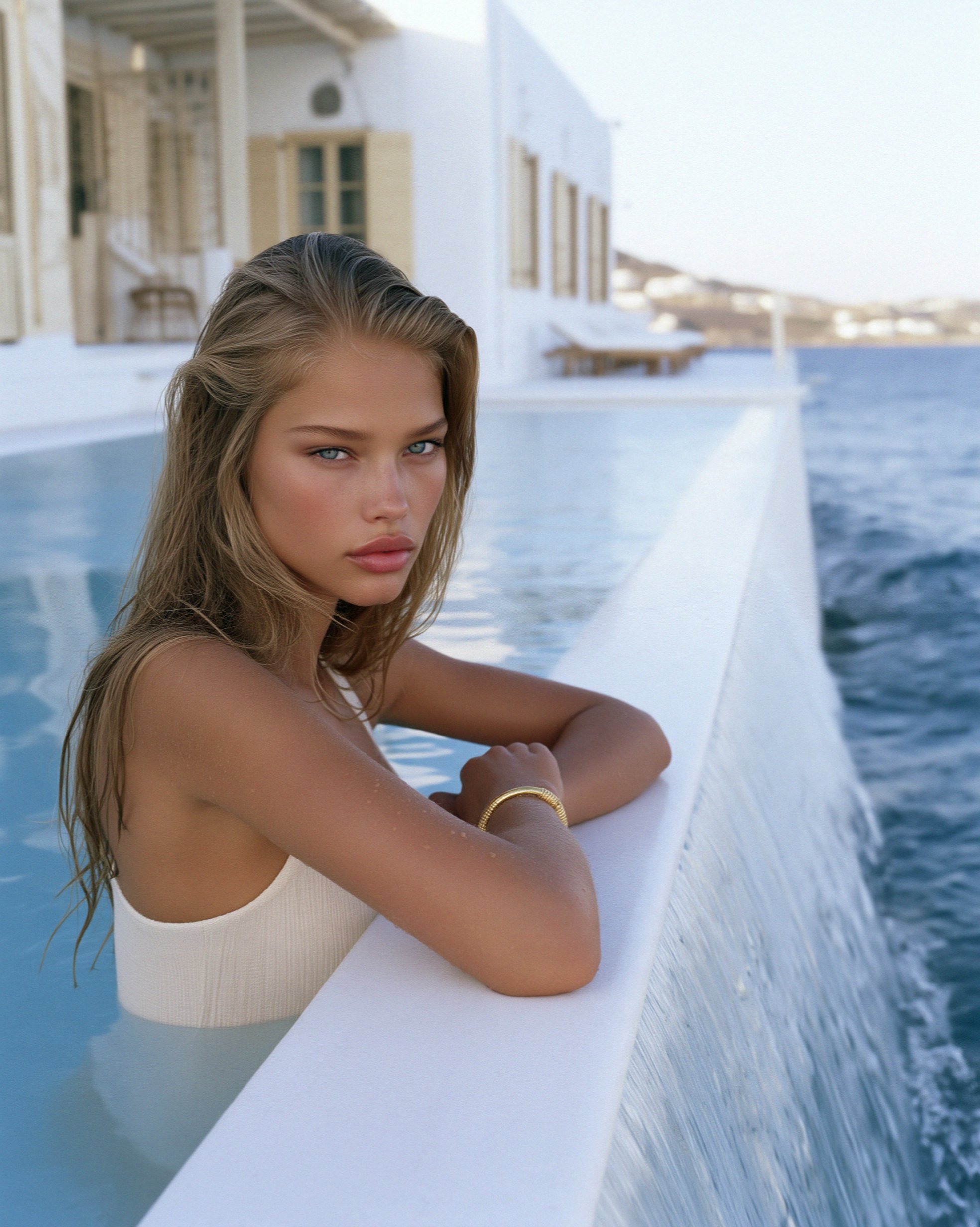
I spent my first days in town and the last in a villa above the water, waking up before sunrise to have the pool and the sea to myself, which is a very particular kind of Mykonos and an expensive one. Villas make sense for groups.
I have gone through every area, with named hotels at every price and what a room really costs, in my guide to where to stay in Mykonos.
Booking a room in Mykonos
By area, so you can compare.
- Mykonos TownIn the lanes, with the town on your doorstep at night
- Agios StefanosJust north of town, a short walk or bus ride in
- OrnosA sheltered bay south of town, easy with children
- Platis GialosThe south coast, with boats along to the beaches further on
- EliaThe far end of the south coast, quieter and greener
- See every hotel on MykonosTown rooms, beach hotels and villas
- Add a hire carFor the north coast, Ano Mera and the east
What to eat
Mykonos has a reputation for expensive, international food, and there is plenty of it. But it also has its own kitchen, and it is worth finding.
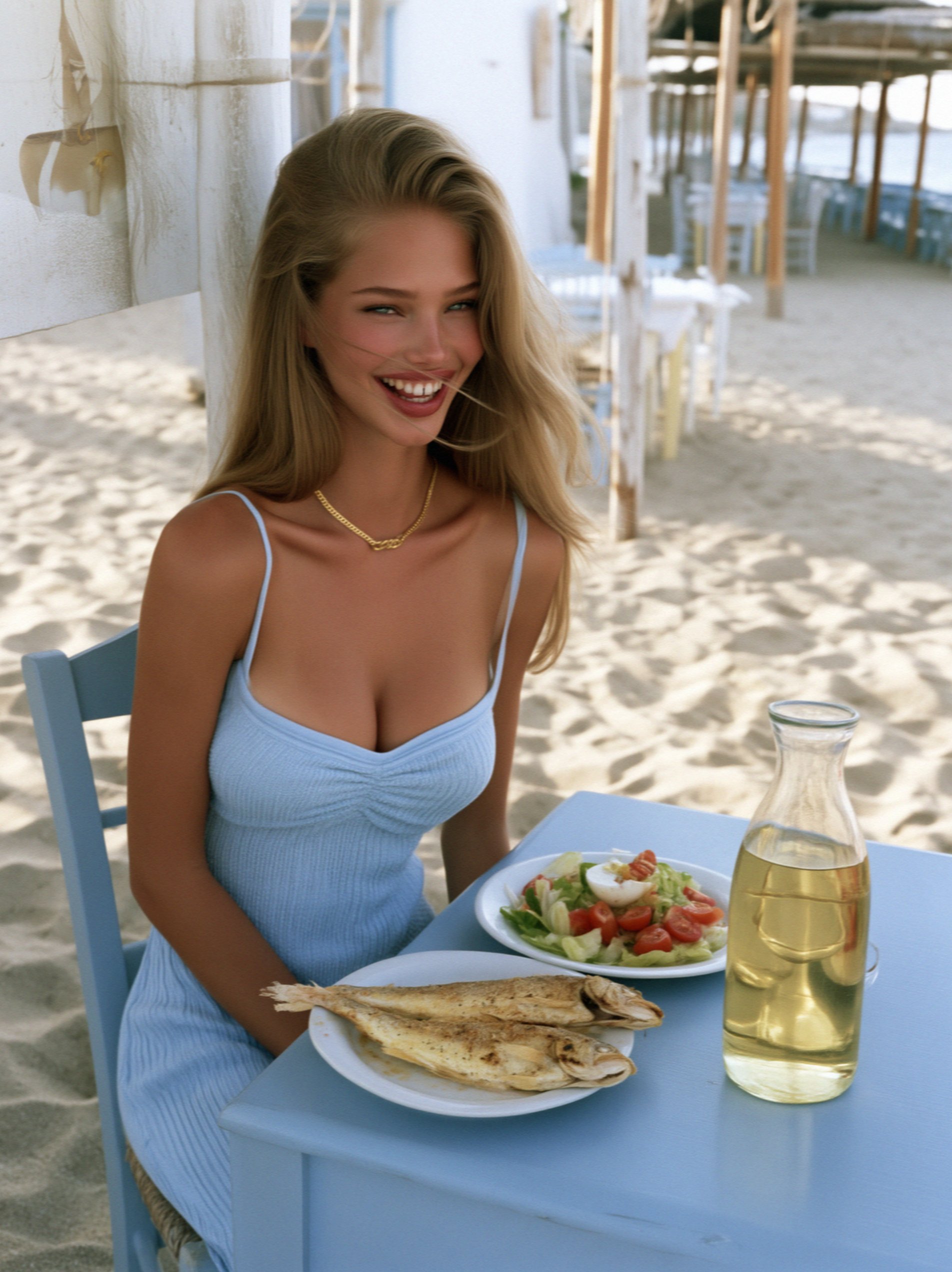
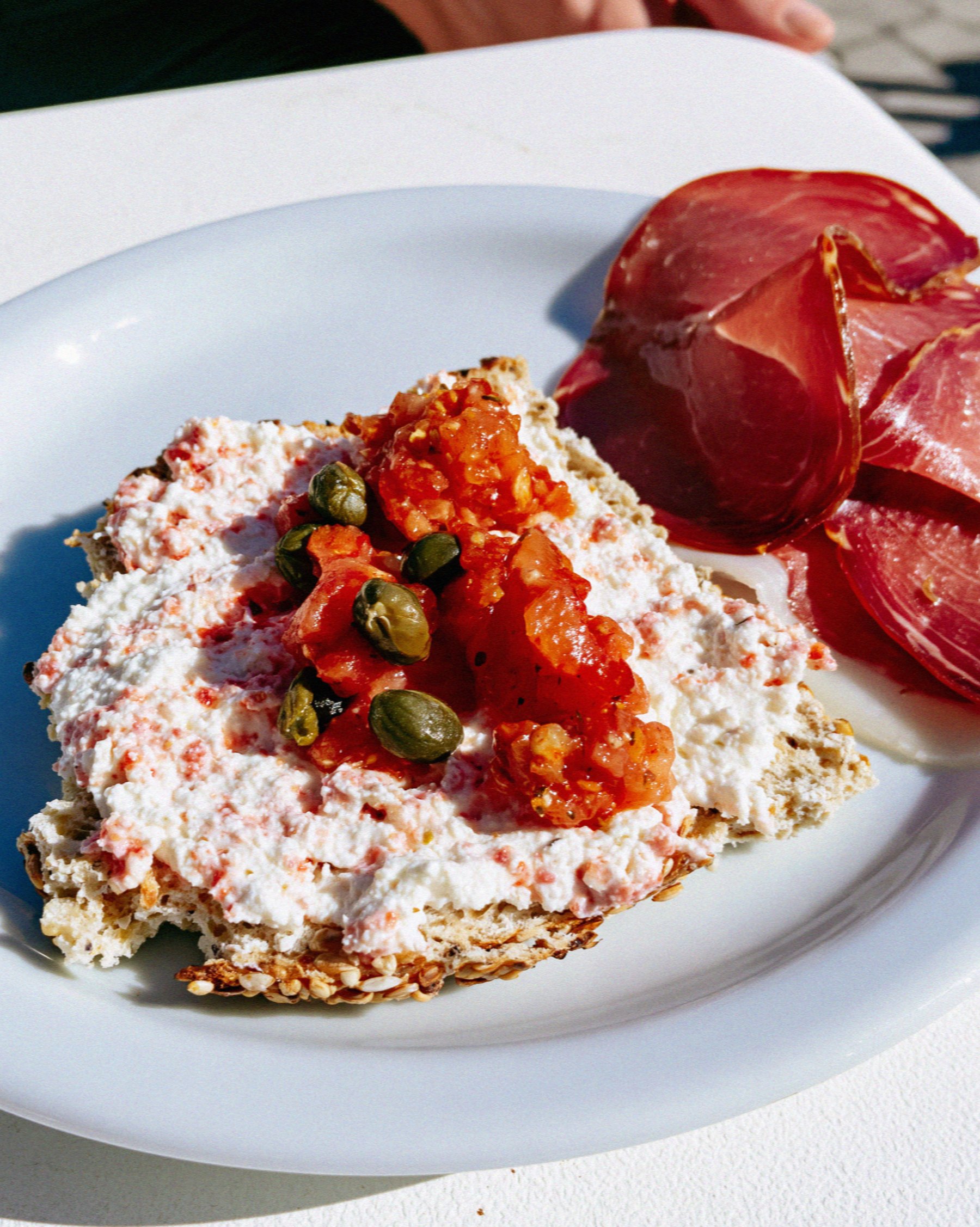
The island’s best-known product is kopanisti, a soft, sharp, peppery cheese, fermented until it bites, eaten spread on barley rusks with tomato. Louza is the local cured pork, seasoned with pepper and herbs. There are small onion pies, almond sweets called amygdalota, and the hard paximadi from the windmills, softened with tomato and oil. And there is a lot of very good fish, grilled simply, wherever there is a harbour.
The best meals I know of on the island are the simple ones. Kiki’s, a tiny taverna above Agios Sostis with a charcoal grill, no reservations and a queue that can run to a couple of hours. Fokos Taverna at the end of its dirt road. Joanna’s Niko’s Place on the beach at Megali Ammos, a few minutes’ walk from town. Kounelas, an old fish taverna by the harbour. In town, eat in the lanes rather than on the seafront, and look for the places full of Greeks. For a cheap late supper, the gyros and souvlaki shops in the lanes near Fabrika are the best value on the island. And for one grand evening, the restaurants at the hotels on the slopes above town are among the best tables in the Cyclades, at prices to match.
The island eats late: lunch from two, dinner rarely before nine, and the tables in town are at their fullest around eleven. In July and August, book the well-known places, and for Kiki’s, which takes no bookings, arrive before it opens.
What to order, where to go at every budget, and how to book are in my guide to where to eat in Mykonos.
Getting there and getting around
You can reach Mykonos by sea or by air.
Ferries leave from Piraeus and from Rafina, the smaller port nearer Athens airport. The fast boats take from a little over two hours, the conventional ferries closer to five, and fares run from around thirty-five euros to a hundred or more depending on the speed and the season. Mykonos is also well connected to the other Cyclades: I came over from Santorini in a little under three hours, and Tinos is only a short hop away. Flights from Athens take about forty minutes, and in summer there are direct flights from much of Europe.
Most big ferries and all cruise ships use the new port at Tourlos, a few kilometres north of town. Some fast ferries still use the old port right in town. A small sea bus runs between the two every half hour in the season. The airport is about four kilometres from town.
The buses are good and cheap, with tickets from the kiosk at the station or in cash from the driver at roadside stops, and they run from two stations in town: Fabrika for the south coast and the airport, the Old Port station for the north and east. The water taxi runs along the south coast beaches. Taxis are famously few, only a few dozen for the whole island, so the queues in summer are long. A car or a quad makes the north coast and Ano Mera much easier for a day or two. Book one ahead in summer, choose a small car for the narrow roads, and only take a quad or scooter if you are confident on busy, uneven roads and have the right licence.
Ferries, flights, buses, boats and cars are all in my guide to getting to Mykonos and around.
A few days on Mykonos
Three days is the minimum; five is better.
Spend the first day in town, early and late, with the windmills at sunset. The second on Delos in the morning, back for a late lunch and a swim. The third on the south coast, by water taxi from beach to beach. The fourth inland and north, at Ano Mera, the lighthouse and a wild beach, with lunch at Kiki’s if you have the patience. And on the fifth, take a boat to Rhenia or a ferry to Tinos, and come back for a last dinner in the lanes.
The whole route, with timings, costs and where to sleep for it, is in my Mykonos itinerary.
Who Mykonos suits
It suits people who want a beautiful town and good beaches close together, which is rarer in the Greek islands than you would think. It suits people who want to go out, obviously, and it has long been one of the most welcoming islands in Europe for gay travellers. It suits anyone interested in ancient history, because Delos is a short boat ride away. It suits a long weekend from Athens better than almost any other island.
It suits families more than its reputation suggests, if you choose the right base: Ornos, Agios Ioannis and Platis Gialos are sheltered, shallow and easy, and the town is lovely for children in the early evening.
It is hard on a tight budget in July and August. Rooms, sunbeds, taxis and cocktails all cost more here than almost anywhere else in Greece. Come in June or September, stay in town, use the buses and eat in tavernas, and it comes down a great deal.
It suits island-hoppers. Mykonos sits in the middle of the Cyclades, with fast boats to Tinos, Syros, Paros, Naxos and Santorini, so it is an easy first or last stop on a longer trip, and the flights to Athens and beyond make it a practical place to end one.
It does not suit anyone looking for a quiet, traditional island in high summer. Come in shoulder season, or go to Tinos.
Practical things to know
Money. Cards are accepted almost everywhere in town and at the clubs. Carry cash for the water taxi, roadside bus stops, the smaller tavernas and the Delos boat ticket office.
Water. Mykonos is dry and relies largely on desalination. The tap water is fine for washing and brushing your teeth, but most people drink bottled, and hotels and restaurants serve it.
The wind. Check the forecast every evening. A meltemi day is a south coast day; a calm day is a north coast or Rhenia day.
Cruise days. On days with big ships in, the old town is busiest from mid-morning to mid-afternoon. Be in the lanes early and late, and on a beach in between.
Sunbeds. On the organised beaches, sunbeds cost anything from about twenty-five euros a pair at the back to well over a hundred in the front row at the famous clubs, often with a minimum spend. Ask before you sit.
The climate fee. Hotels charge Greece’s nightly per-room fee on top of the room rate. It is the law, not a surcharge.
Taxis. There are very few. Book a transfer ahead for arrival and departure, and agree the fare before you get in.
Steps and access. The old town is flat by Cycladic standards, but the lanes are narrow, the paving is polished and slippery, and many small hotels have stairs and no lift. If steps are a problem, ask before you book, and look at the beach hotels at Ornos or Platis Gialos, where the ground is level.
Easter and the feast days. Orthodox Easter, which falls in April or early May (2 May in 2027), is the biggest festival of the year, with candlelit processions on the Friday night and the whole town out on the Saturday at midnight. The Feast of the Assumption on 15 August is the busiest single day of the Greek summer.
Dress. Shoulders and knees covered in the churches and the monastery at Ano Mera. Swimwear belongs on the beach and the boat, not in the lanes of town.
The season. Much of the island closes from November to March, including the clubs, most hotels and the Delos site.
What to pack
Shoes for the lanes, which are polished smooth and slippery, and for the rough paths to the windmills and the north coast. White tennis shoes, in my case, and sandals for the beach. A hat and real sun protection, because there is little shade outside town. Something warmer for the evenings, which are cool and windy on the water even in September.
A swimsuit you can wear on a boat all day, and a second one, because you will swim more than you plan. Something long and pale for the evenings, because it is that kind of island, and something with a little more sequin if you are going out. And a hair tie. The meltemi will make the case for it within the first hour.
More images from Mykonos


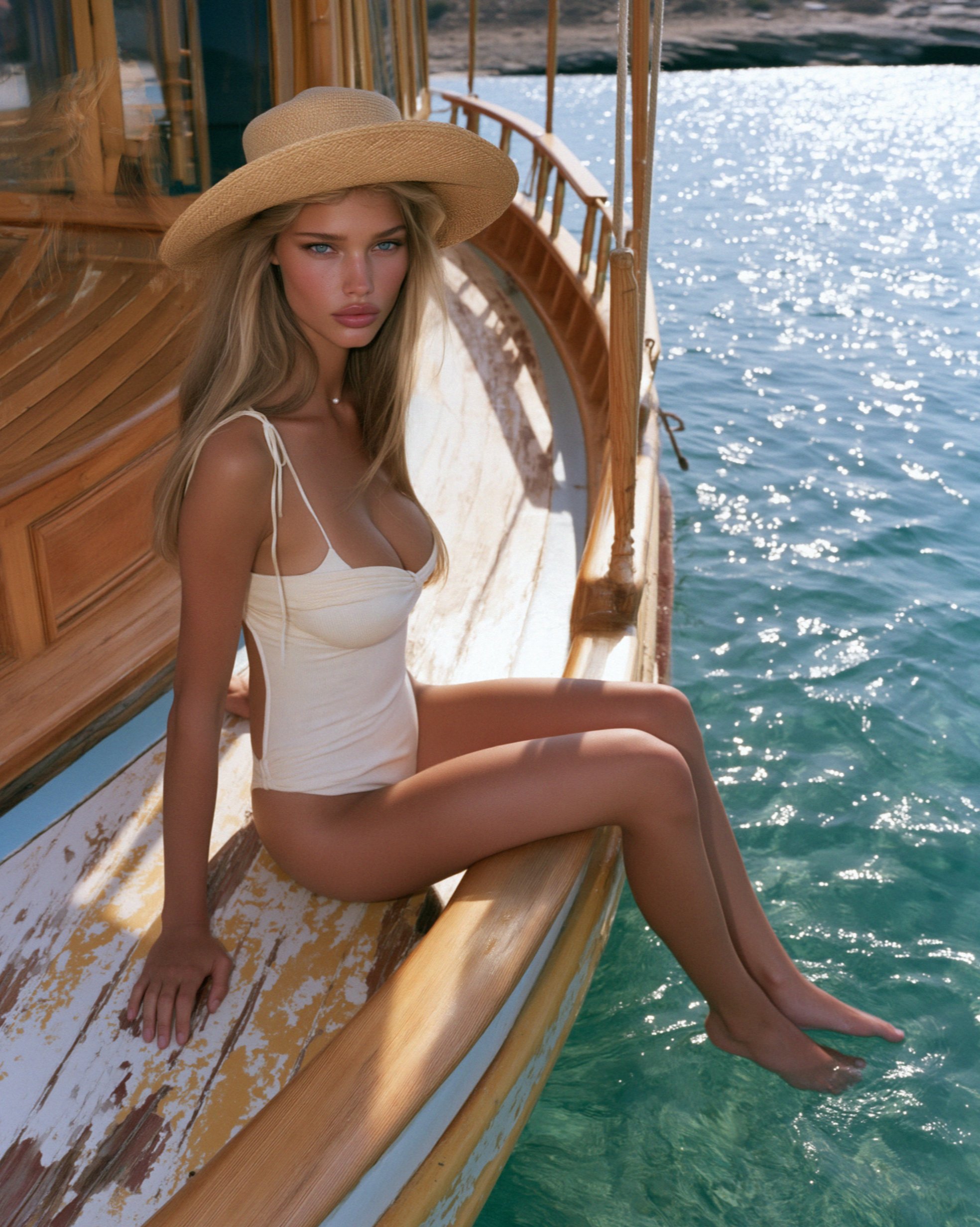
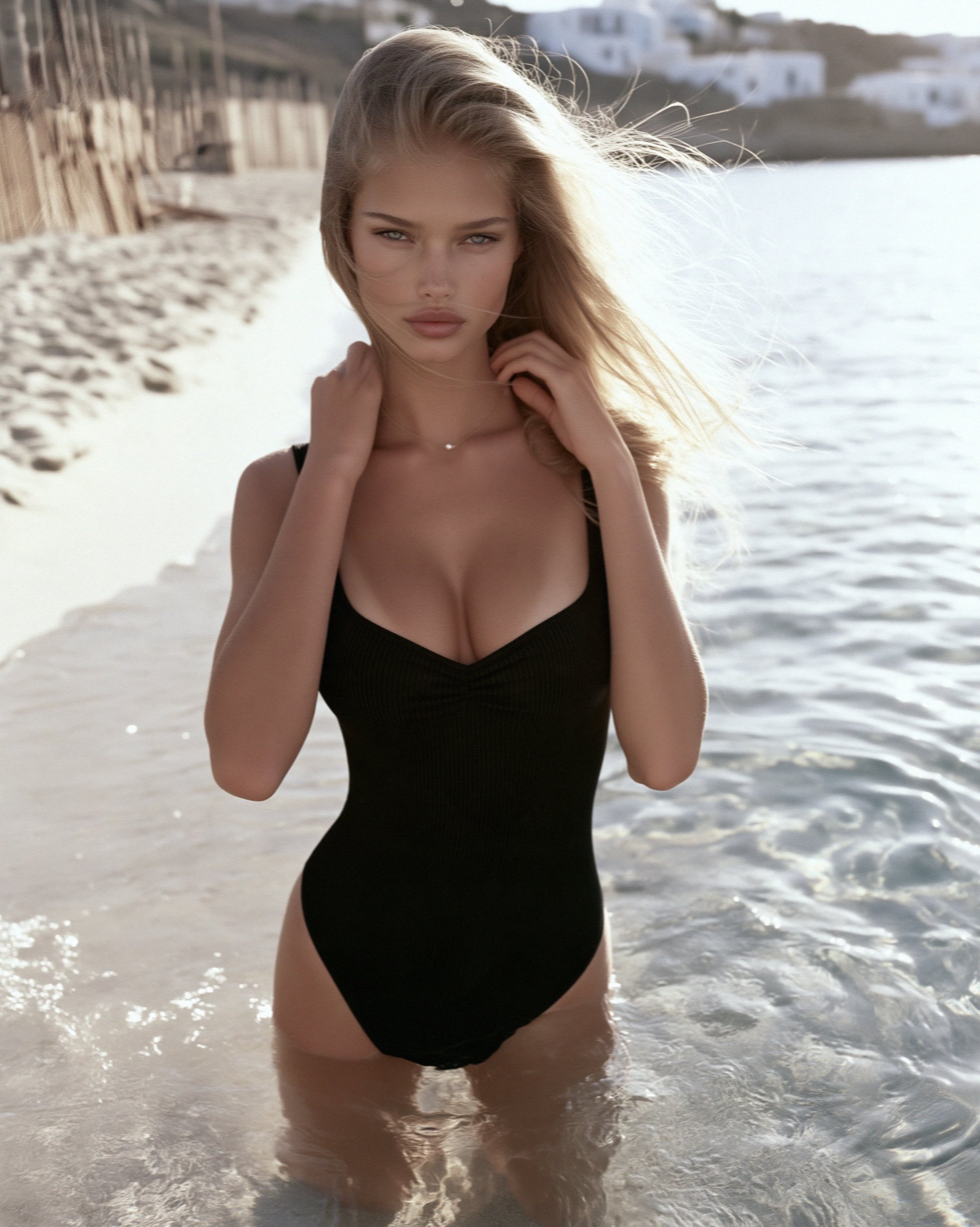
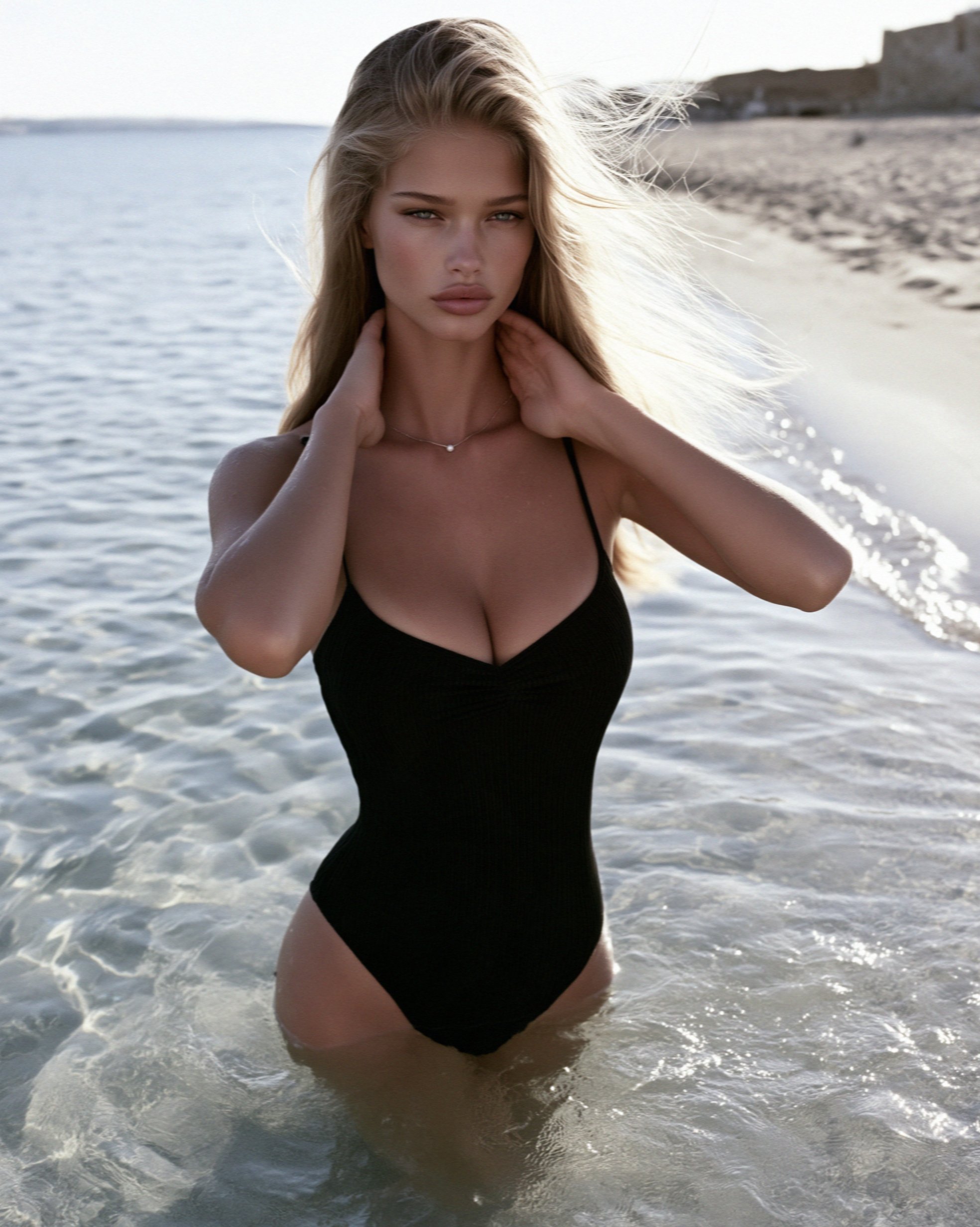

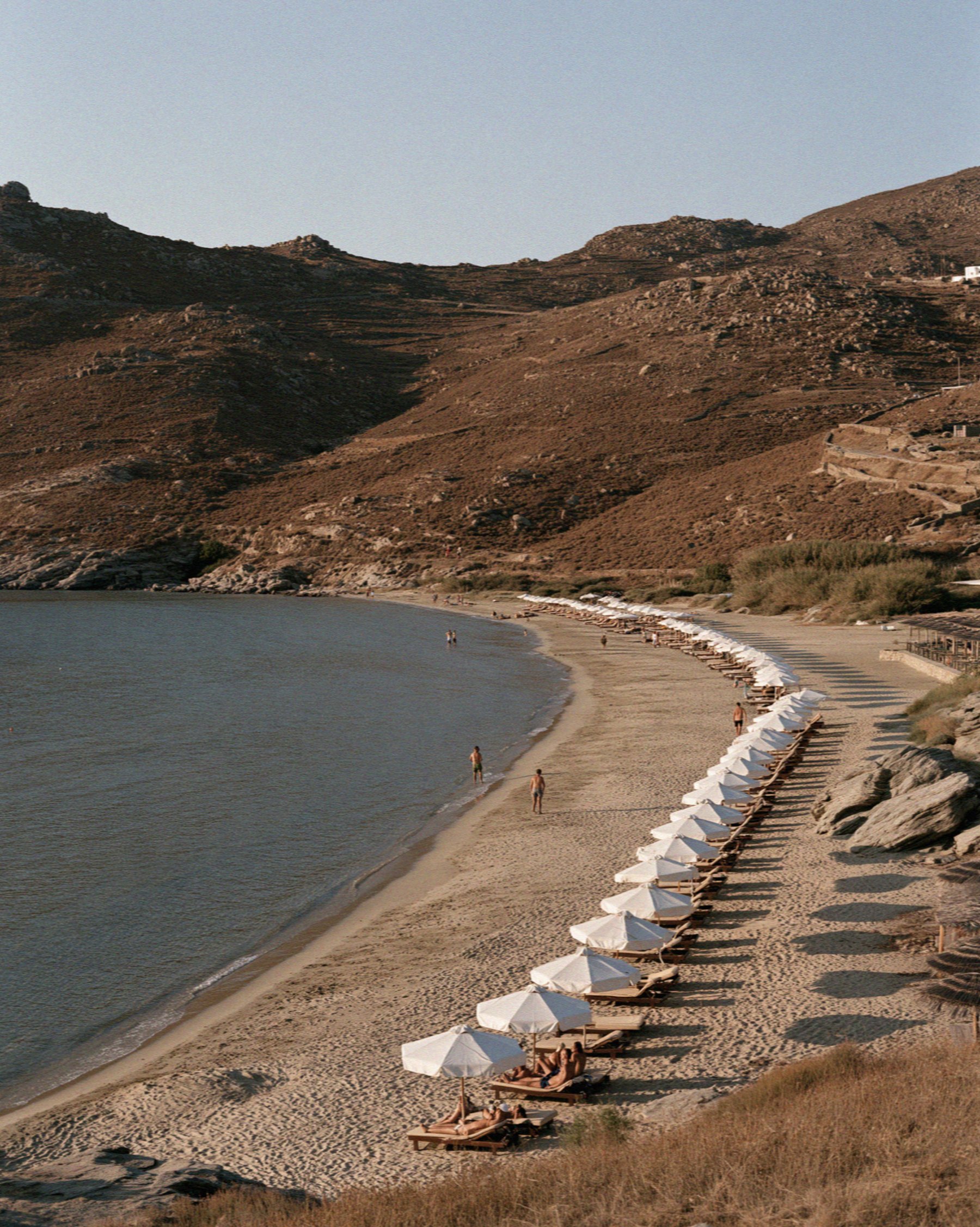






Your Mykonos Guides
Everything here in detail, guide by guide.
- The Best Things to Do in Mykonos
- Mykonos Town: Little Venice, the Windmills and the Old Lanes
- Where to Stay in Mykonos: Choosing Your Base
- The Best Beaches in Mykonos
- Mykonos Beach Clubs and Nightlife
- How to Do a Delos Day Trip from Mykonos
- Mykonos Boat Tours: Delos, Rhenia and the South Coast
- Where to Eat in Mykonos and What to Order
- A Mykonos Itinerary: 3 to 5 Days
- The Best Time to Visit Mykonos
- Getting to Mykonos and Around
Mykonos Travel Diaries
- The Last Warm Days of Mykonos
- The Light Here Does Half the Work
- Everything Here Is White Except the Doors
- The Things I Keep Choosing
Frequently Asked Questions
How many days do you need in Mykonos?
Three days is enough for the town, Delos and a day on the south coast beaches. With five, there is time for the north coast, Ano Mera and a boat to Rhenia or a day on Tinos.
Is Mykonos only for partying?
No. The clubs are on the south coast and easy to avoid. The town, Delos, Ano Mera and the north coast beaches are a completely different island, and in June or September Mykonos is surprisingly calm.
When is the best time to visit Mykonos?
September, when the sea is warm, the crowds and prices drop after the first week, and the wind usually eases. June is the other good month.
How do you get to Delos from Mykonos?
By boat from the old harbour of Mykonos Town, which takes about half an hour. The boat ticket and the site ticket are separate, and the site is closed from December to March.
Where is the best place to stay in Mykonos?
Mykonos Town for most people, for the evenings and the transport. Ornos or Platis Gialos for an easy beach base, and the north coast for space and quiet with a car.
Do you need a car in Mykonos?
No. The buses and the water taxi cover the town and the south coast beaches. A car or quad for a day or two makes the north coast and Ano Mera much easier.
Is Mykonos expensive?
In July and August, very. Rooms, sunbeds, taxis and drinks cost more than almost anywhere else in Greece. In June and September, staying in town and eating in tavernas, it is much more manageable.
Which Mykonos beaches are best in the wind?
The south coast beaches, from Ornos and Psarou to Elia, are sheltered from the north wind. Save Agios Sostis, Panormos and Fokos for a calm day.