The best beaches in Mykonos are some of the finest in the Cyclades: pale sand, clear water, and enough variety that you can have a party beach, a family beach and an empty one in the same afternoon. The one thing that decides which you should go to is not the guidebook. It is the wind.
This is every beach worth knowing, coast by coast, with how to get there and what it costs to lie down. For the rest of the island, start with my complete guide to Mykonos.
The meltemi decides your beach
For much of the summer, roughly June to September, the meltemi blows down the Aegean from the north. It is a strong, dry wind, sometimes for days at a time, and it is the most important fact about the beaches of Mykonos.
When it blows, the south coast is sheltered by the hills behind it. The water is calm, the umbrellas stay up and every bay from Ornos to Elia is full. The north coast takes the wind straight on: big waves, flying sand, empty beaches and the odd windsurfer.
When it drops, the north coast becomes the most beautiful part of the island, and almost nobody goes.
So check the forecast every evening. A windy day is a south coast day. A calm day is the day to drive north.
Ornos and Agios Ioannis
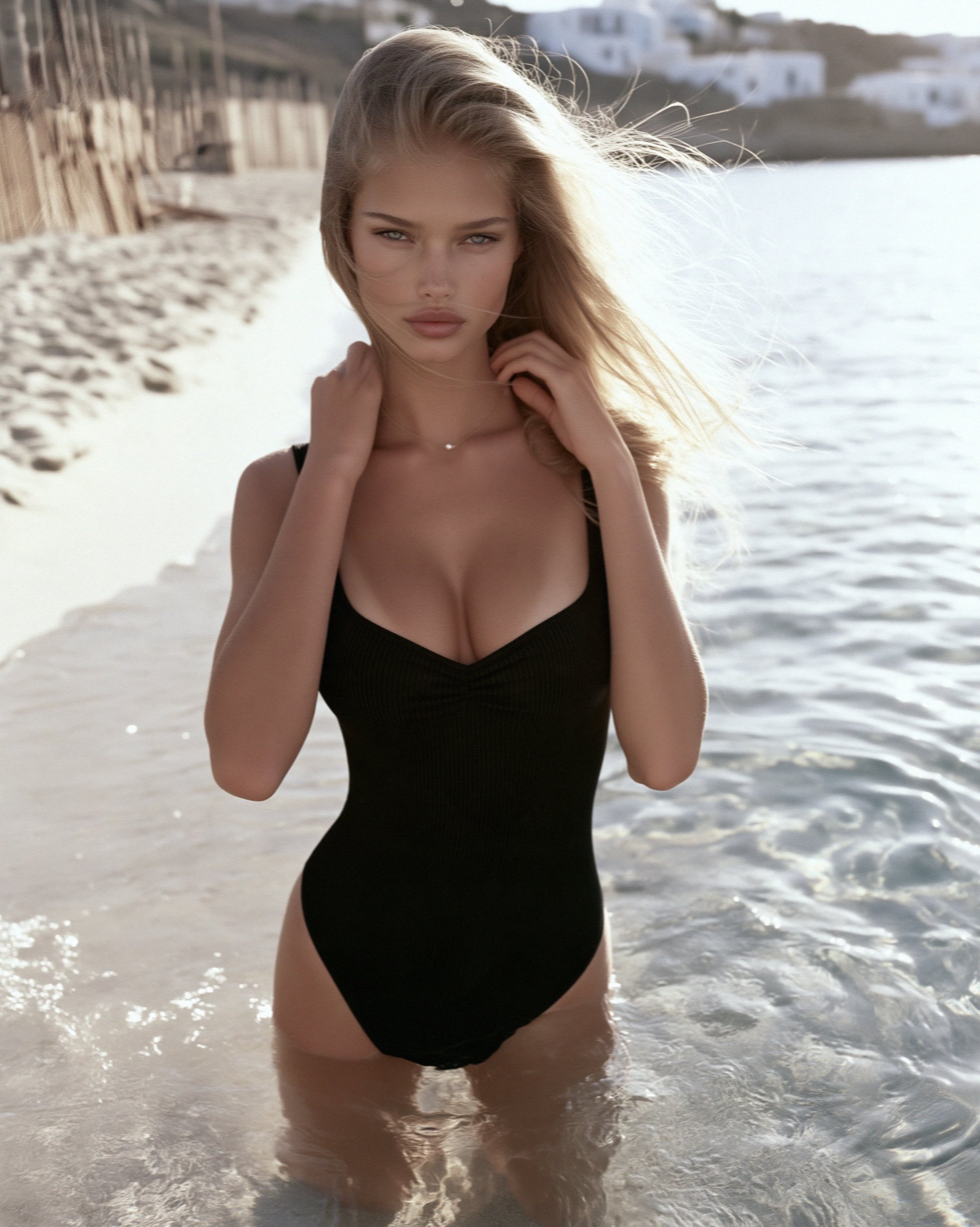
Ornos is the closest proper beach to town, a few minutes by bus from Fabrika, in a deep sheltered bay on the south-west coast. The sand is soft, the water is shallow and calm, there are tavernas and sunbeds the whole way along, and the water taxi starts here. It is the best family beach on the island and busy all summer.
Agios Ioannis, just to the west, faces Delos across the water and has some of the best sunsets on the coast. It is smaller and quieter, with a couple of hotels and tavernas, and calm, clear water.
Psarou and Platis Gialos
Psarou is a small, perfect bay of fine sand and turquoise water, and the most glamorous beach on the island. Most of it is taken up by the famous beach club’s sunbeds, with its rows of white sunbeds, yachts anchored offshore and prices to match. It is very beautiful and very expensive, and the water is as good as any on Mykonos.
Platis Gialos, next door, is a long, busy, family-friendly beach lined with hotels and tavernas, with buses every half hour from town and the main jetty for the water taxi. The umbrellas are set close together, and in the afternoon their shadows fall in rows across the shallows, so you can swim in and out of the shade. It is not the most beautiful beach on the island, but it is the most practical.

Paraga, Paradise and Super Paradise
These are the party beaches, a short hop east by water taxi.
Paraga is a pretty sandy cove with sunset beach clubs at one end and a calmer stretch at the other. It is a good choice if you want music in the afternoon without going all in.
Paradise is the most famous party beach in Greece, with a big beach club, loud music from lunchtime, and the island’s biggest open-air club on the cliff above. The sand is good and the water clear, but nobody comes here for the swimming.
Super Paradise, in a steep cove further east, has a beautiful crescent of sand and turquoise water, a lively beach club and a long history as one of the island’s gay beaches. It is reached by a steep road or, much more easily, by boat.
Agrari and Elia
Agrari is a small cove of pale sand between Super Paradise and Elia, quieter and more relaxed, with clear water, a couple of tavernas and a well-known beach bar. It is a good place to escape the noise next door, and a short walk from Elia.
Elia is the longest sandy beach on Mykonos and the end of the water taxi line, a wide stretch of sand with room to breathe even in August. There are sunbeds, tavernas and a big resort on the hill, and the far end has long been popular with gay and naturist bathers. Buses run here from the Old Port station in town.
Kalo Livadi, Kalafatis and Lia
Further east, the south coast becomes quieter and more spread out.
Kalo Livadi is a long, wide sandy beach with calm water, a few beach clubs and plenty of space. Kalafatis is the island’s wind-sports beach, with windsurf and kitesurf schools and a laid-back crowd. Lia, near the eastern tip, is one of the quietest organised beaches on Mykonos, with clear water, good snorkelling off the rocks and free sand at either end. You will want a car out here.
Agios Sostis and Panormos
On the north coast, everything changes.
Agios Sostis is the most beautiful wild beach on the island, a sandy bay with no sunbeds, no club and no music, just the sand, the sea and a small chapel. On the hill above it is Kiki’s, the most famous taverna on Mykonos, with everything cooked over charcoal, no reservations and a long queue. Bring a towel, water and shade, and come on a calm day.
Panormos, next door, is a wider bay with a couple of stylish beach bars and a hotel on the hill. It is a little more organised and still much calmer than anything on the south coast in summer.

Fokos and Mersini
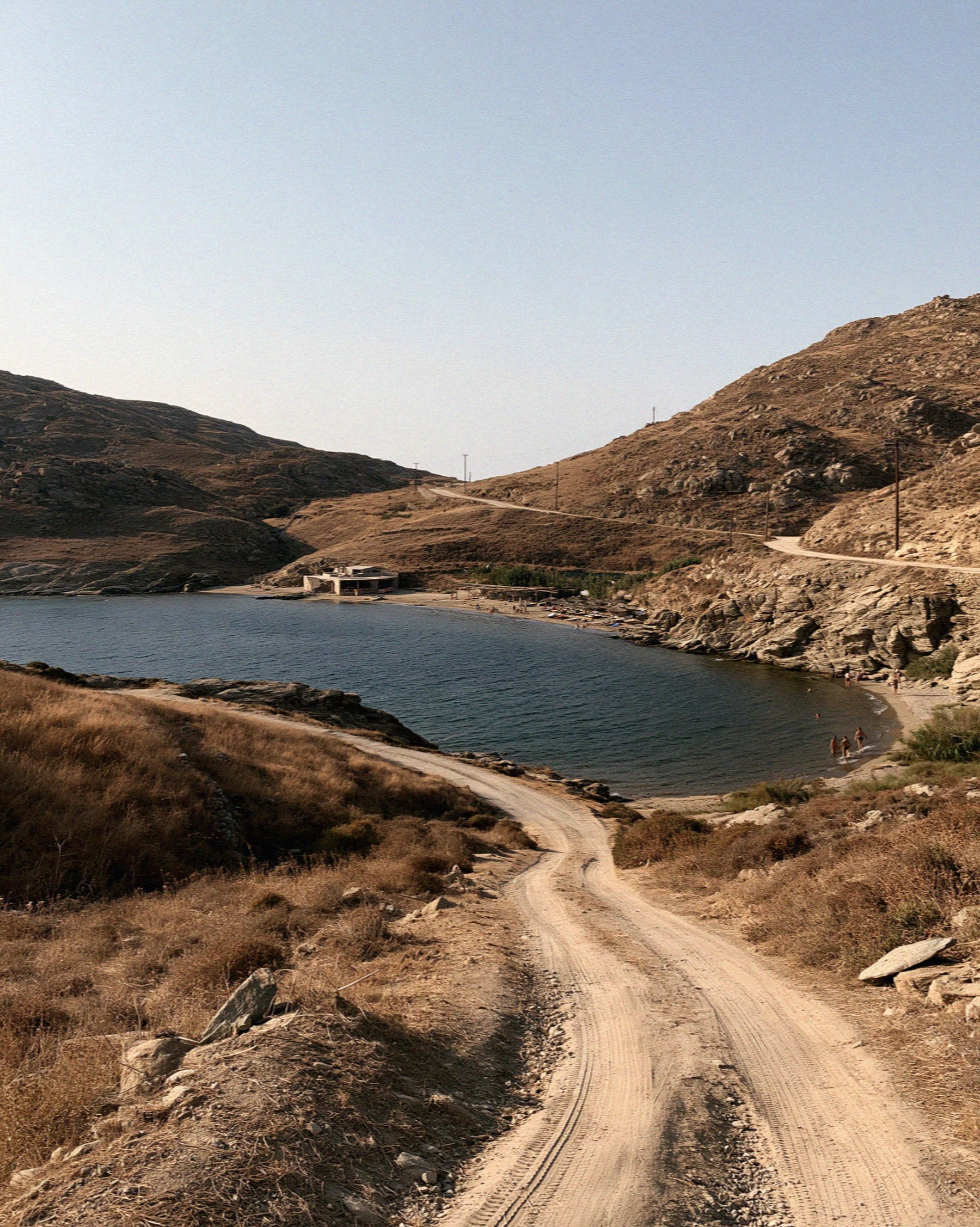
At the end of a rough dirt road in the north-east, Fokos is a small wild bay with a single taverna, Fokos Taverna, and almost nothing else. Mersini, a short walk around the headland, is quieter still, with nothing at all. These are the emptiest beaches on Mykonos. Take a car you trust on bad roads, everything you need for the day, and a calm forecast.
The water taxi
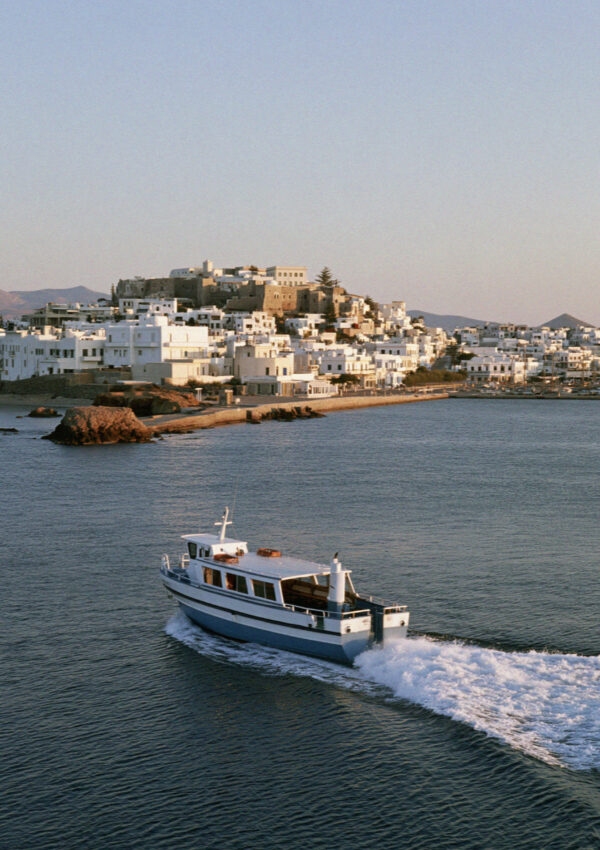
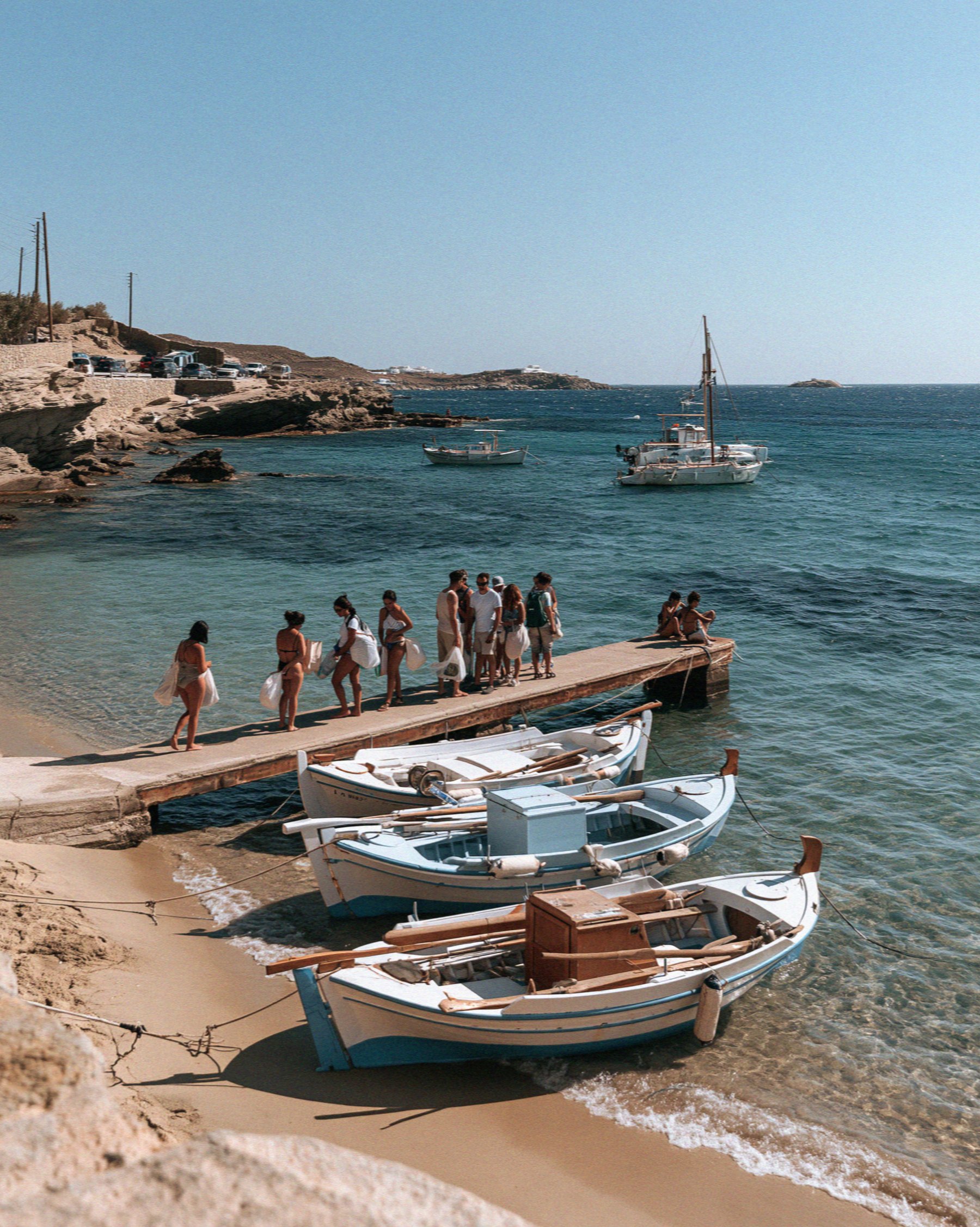
The easiest way to see the south coast is the water taxi, a fleet of small wooden boats running along the beaches in the season, roughly from late May to early or mid October.
The route runs from Ornos and Platis Gialos east to Paraga, Paradise, Super Paradise, Agrari and Elia, and the boats pull up on the sand or at a short jetty. An all-day pass, around twenty euros and paid in cash, lets you hop on and off as often as you like. The boats run roughly every hour from mid-morning to early evening, so check the last boat back.
A good day: the bus from town to Platis Gialos, the boat east to Agrari for a quiet morning swim, back to Paraga or Super Paradise for lunch, and Platis Gialos again for the bus home.
What a sunbed costs
On Mykonos, the sunbed is where the money goes.
On the ordinary organised beaches, a pair of sunbeds and an umbrella costs anything from about twenty-five euros at the back to fifty or more near the water. At the famous clubs on Psarou and Paraga, a front-row sunbed can be well over a hundred euros, often with a minimum spend on food and drink. Always ask before you sit down.
The free beaches are Agios Sostis, Fokos and Mersini, along with the quiet ends of Elia, Lia and a few others, where you can lay a towel on the sand for nothing. Every beach in Greece is public by law, so you can always walk along the shore, even in front of a club.
If you want to spend a day at a club rather than a beach, the scene is in my guide to Mykonos beach clubs and nightlife. For the beaches from the water, including Rhenia, see my guide to Mykonos boat tours.
Frequently Asked Questions
What is the best beach in Mykonos?
Psarou for glamour and the water, Platis Gialos and Ornos for easy family days, Elia for space, and Agios Sostis for a wild beach with no sunbeds.
Which Mykonos beaches are sheltered from the wind?
The south coast beaches, from Ornos and Psarou to Elia and Kalo Livadi, are sheltered from the north wind. The north coast beaches take it head on.
Are there free beaches in Mykonos?
Yes. Agios Sostis, Fokos and Mersini have no sunbeds at all, and many organised beaches have a free stretch at one end. All beaches in Greece are public.
How much are sunbeds in Mykonos?
From about twenty-five euros a pair at the back of an ordinary beach to over a hundred in the front row at the famous clubs, often with a minimum spend.
How does the Mykonos water taxi work?
Small boats run along the south coast from Ornos and Platis Gialos to Elia in the season. An all-day pass of around twenty euros, paid in cash, lets you hop on and off.
Read also: Mykonos Beach Clubs and Nightlife | Where to Stay in Mykonos: Choosing Your Base | Victoria’s Complete Guide to Mykonos