The best time to visit Mykonos depends on which Mykonos you want, because the island changes completely through the year. In August it is one of the busiest, loudest and most expensive places in the Mediterranean. In late September it is a warm, slow island with half-empty beaches. In February it is a quiet Cycladic town of a few thousand people, most of the hotels shut and the wind in charge.
This is the year month by month, with what the sea is like, what is open and what things cost. For the rest of the island, start with my complete guide to Mykonos.
The short answer
The best month overall: September, especially the second half. The sea is warm, the crowds and prices drop, and the wind usually eases.
For the full party season: July and August, or early September.
For good value with warm weather: June or the first half of October.
For walking, Delos and the town without crowds: late May, early June or early October.
To avoid: November to March, unless you want an empty island, and August, unless you want the opposite.
Spring: April and May
Spring on Mykonos is green, quiet and lovely, and the sea is cold.
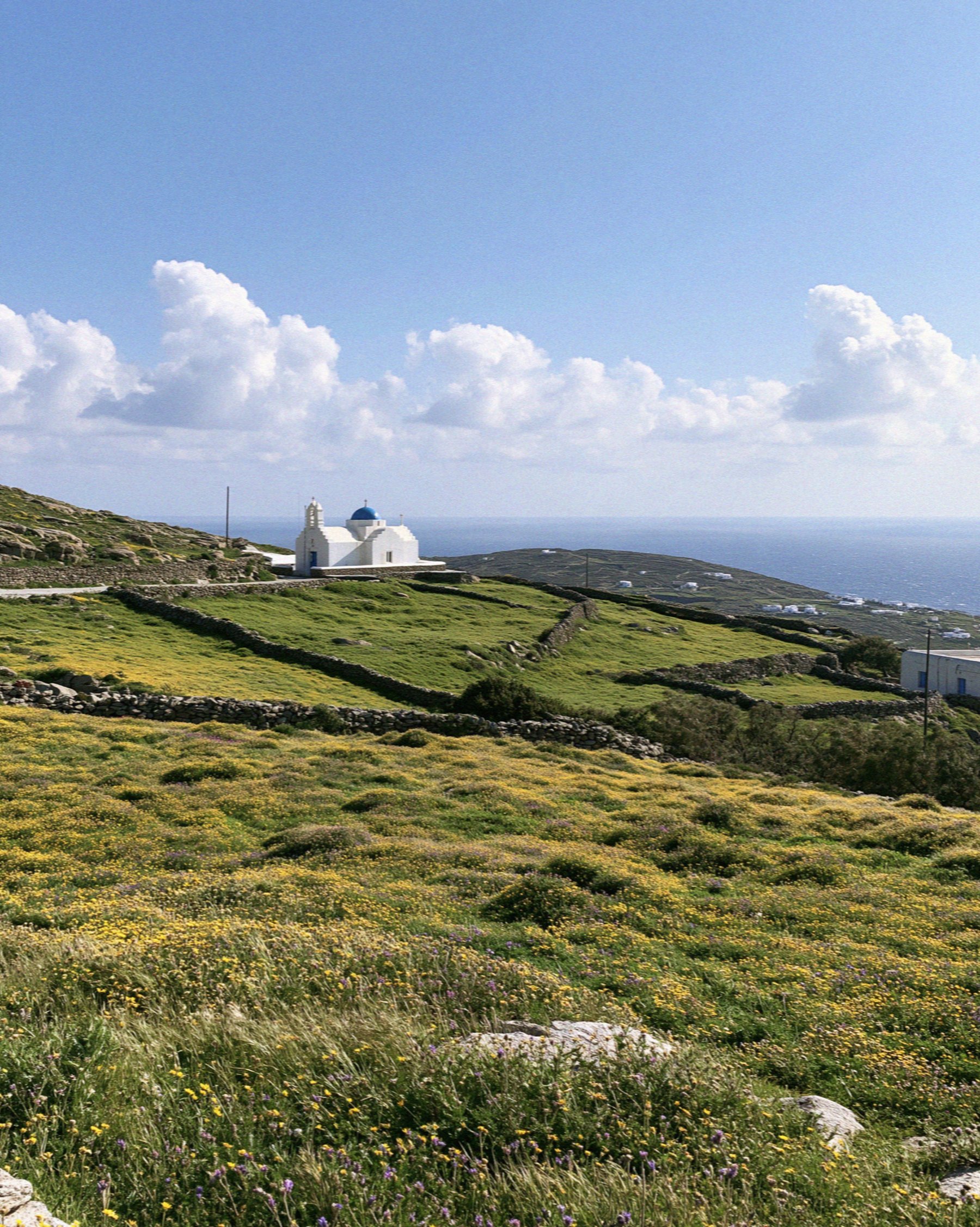
In April the island wakes up slowly. The hills are green and full of wildflowers, the chapels are freshly whitewashed for Easter, and some hotels and restaurants open towards the end of the month. Orthodox Easter is the great festival of the year, with candlelit processions on the Friday night and lamb on the Sunday; in 2027 it falls on 2 May.
By May, most of the island is open, the days are warm and long, and the town is a pleasure to walk. The sea is still cool, around eighteen or nineteen degrees, so swimming is brisk. It is a very good time for Delos, which is green and comfortable in spring.
June
June is the other best month, and in some ways the most balanced.
Everything is open, the days are the longest of the year, the sea warms through the month, and the crowds of July have not yet arrived. The beach clubs open for the season and the island has an expectant, cheerful feel. Prices are lower than in high summer, and the meltemi is usually lighter than it will be later.
July and August
This is the Mykonos of the photographs, and the most demanding version of it.
It is hot, often thirty degrees or more, and the meltemi blows hard and often, sometimes for days. Every hotel is full, every beach club is booked, the biggest DJs play, and the island runs day and night. Ferries, flights, taxis and tables are all under pressure, and prices are at their highest. Mid-August, around the Feast of the Assumption on 15 August, is the busiest week of the whole year in Greece.
If you want the party, this is when to come. If you want a calm island, come another time.
September
September is the month I would choose, and the one I came in.
The sea has had all summer to warm up and is at its best, the air is warm rather than hot, and the meltemi is usually weaker. In the first half of the month the full summer scene carries on, with every club open and every table booked. By the second half, the crowds and prices drop noticeably, the beaches have space, and the island begins to exhale. At the end of September, some of the beach bars were playing slower music, half the sunbeds were empty, and the town belonged to the people who live in it again. I swam every day.

October
October is a lovely, uncertain month.
The first half can be warm and sunny, with the sea still comfortable for swimming, and many hotels, restaurants and beach bars still open at lower prices. The big club season is largely over by the start of the month, with closing parties, and from mid-October onwards more and more places close for the winter. The weather becomes less reliable as the month goes on, with the first rain and grey days.
For the town, Delos and walking, the first two weeks of October are very good. For a beach holiday, come earlier.
Winter
From November to March, most of Mykonos closes.
Nearly all the beach clubs and most hotels shut, many restaurants close, and the Delos archaeological site closes from December to March. The ferries run less often and the weather can be wet, windy and grey. The town stays alive, with its year-round population, its tavernas, its bakeries and its churches, and it is a very different, quieter place, with the lanes to yourself and the sea crashing over Little Venice.
It is not the time for a beach holiday. It can be a lovely time for a few days of walking, eating and seeing how the island lives when nobody is watching.

The meltemi
The meltemi is the strong, dry north wind that blows across the Aegean in summer, mainly from June to September and at its strongest in July and August.
It can blow for days at a time, gusting hard enough to lift sand off the beaches and make the sea white with foam. It keeps the heat bearable, and it is the reason the island is famous for its windmills. It also decides your days: the south coast beaches are sheltered from it, the north coast takes it head on, and strong wind can delay ferries and cancel the boats to Delos and Rhenia.
If you come in summer, check the forecast every evening, plan a south coast day for the windy ones, and keep the north coast and the boat trips for the calm ones.
Prices through the year
Mykonos prices follow the season very closely.
July and August: the highest of the year, often far above anywhere else in Greece. Rooms, sunbeds, transfers and tables can all cost double their June price.
June and September: high but lower, especially in the second half of September, when rooms are often thirty to fifty per cent cheaper than in August.
May and October: good value, with fewer places open.
November to March: low, with very little open.
Cruise ships call through the season, and their passengers pay a levy to come ashore: twenty euros a head from June to September, twelve in April, May and October, and four in winter. It does not affect anyone arriving by ferry or plane, but it is a good guide to when the town will be busiest. On days with several ships in, the lanes are fullest from mid-morning to late afternoon.
Month by month
January and February: cold, windy, mostly closed. A quiet town.
March: still quiet, the first green on the hills, a few places preparing to open.
April: wildflowers, Easter in some years, the island waking up. Sea cold.
May: warm, green, mostly open, uncrowded. Sea cool, around eighteen or nineteen degrees.
June: long days, everything open, sea warming, beach clubs opening. Very good.
July: hot, windy, full, expensive. Peak party season.
August: the hottest, busiest and most expensive month. Book everything.
September: warm sea, fewer crowds after the first week, the best balance. My pick.
October: warm early in the month, closing down later. Good for the town and Delos.
November: quiet, often grey, most things closed. Delos closes at the end of the month.
December: closed for the season, with a little Christmas in the town.
When you know your dates, my guide to where to stay in Mykonos will help you choose a base, and my guide to getting to Mykonos and around covers ferries and flights by season.
Frequently Asked Questions
What is the best month to visit Mykonos?
September, especially the second half, for warm sea, fewer crowds, lower prices and lighter wind. June is the other good month.
When is the party season in Mykonos?
July and August, with early September still lively. Most beach clubs close by early October.
Is Mykonos worth visiting in October?
Yes, in the first half of the month, for the town, Delos and swimming in a still warm sea. From mid-October more places close and the weather is less reliable.
What is the meltemi in Mykonos?
The strong, dry north wind of the Aegean summer, strongest in July and August. It shelters the south coast beaches, roughens the north coast and can cancel boats.
Is Mykonos open in winter?
The town stays open with its local life, but most hotels, beach clubs and many restaurants close from November to March, and Delos closes from December to March.
Read also: Where to Stay in Mykonos: Choosing Your Base | A Mykonos Itinerary: 3 to 5 Days | Victoria’s Complete Guide to Mykonos