The accommodation decision in Lecce comes down to two questions, and neither is really about the hotel. Whether you sleep inside the old walls or outside them, and what you intend to do with a car. The second sounds like a footnote and is not: the historic centre is closed to traffic, and the Salento coast is not reachable without one.
Get those two right and almost anything you book will work. The city itself, the churches, the food and the coast, is in my complete guide to Lecce. This is the narrower question of where to put your suitcase.
One thing plainly, first. Lecce has no beach. It sits inland between the Adriatic and Ionian coasts, the nearest sea at San Cataldo. What you are buying here is the old town.
Staying inside the old town
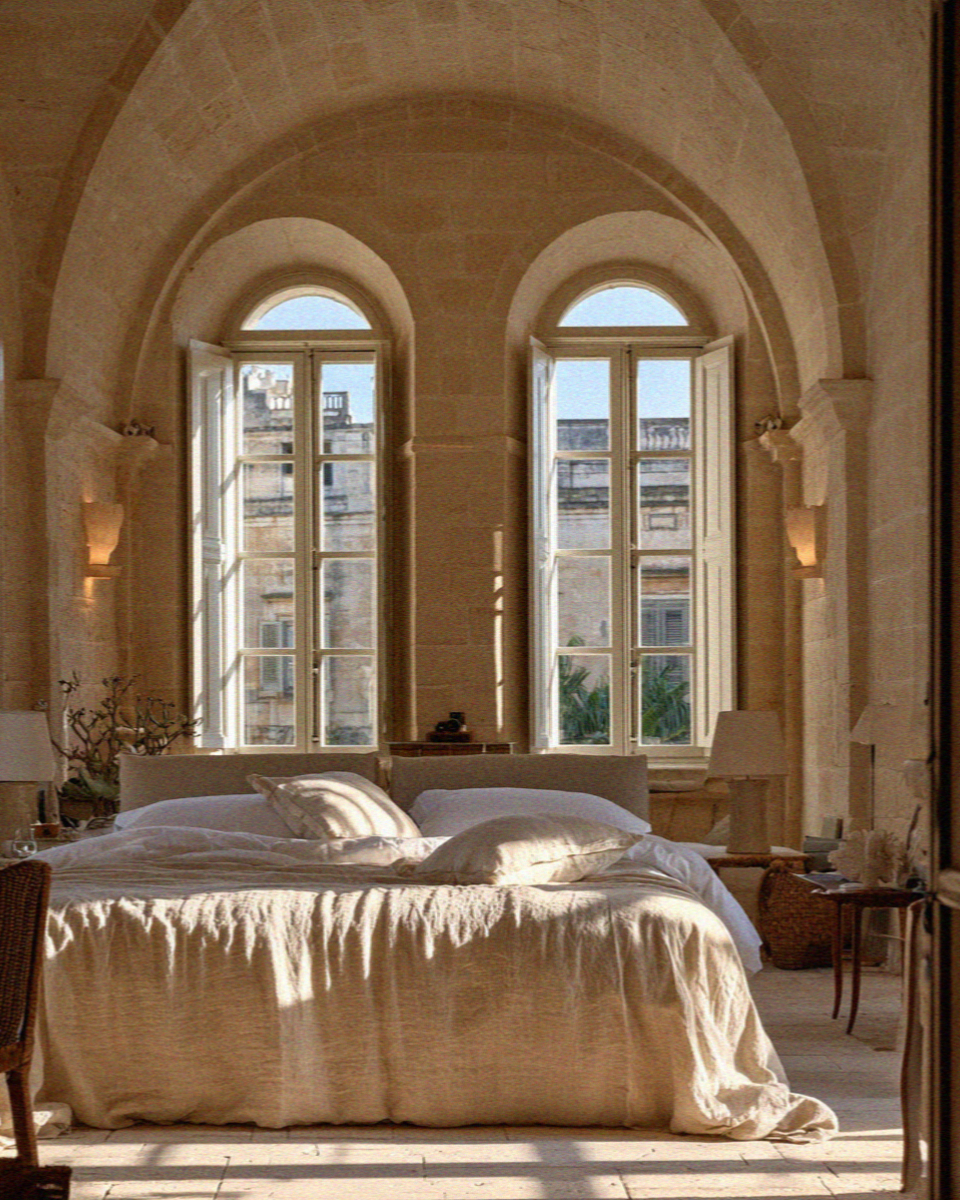
Most of the interesting places to sleep in Lecce are inside historic buildings, because that is most of what is there. They are all made of the same pale local limestone, pietra leccese, and a converted palazzo means what it says: high rooms with vaulted stone ceilings, thick walls, a stone stair, a courtyard you cross to reach your door.
The photographs never tell you what that is like to sleep in. The good part is temperature. A stone room in July is noticeably cooler than the street, and where daytime highs run into the low thirties and the night only falls to around nineteen or twenty degrees, that matters more than any amenity on the booking page.
The less good part is light and sound. These rooms often have one window, sometimes set high, sometimes facing a courtyard rather than the street. A vaulted room has no soft surfaces in it, and a courtyard behaves like a chimney: two people saying goodnight three floors below sound like they are at the foot of your bed. Ask which floor you are on and what the window faces before you book, and ask about the stairs, because many conversions have no lift.
What the noise actually is
Worth being specific, because “central can be noisy” is useless advice. In Lecce the noise has a timetable.
The loud hour is the evening. From about six the squares fill and stay full, which is the best thing the city does, but a window over a square with tables under it puts you inside the sound rather than watching it. Well after midnight it thins to voices and scooters, and a lane of hard limestone carries a scooter a long way. Mornings have their own version, since the bars take deliveries before they open.
Then August. The Festa di Sant’Oronzo falls around the 24th to the 26th, three days of processions, illuminations and fireworks, and the same fortnight carries the Notte della Taranta across the Salento villages. Book early for those dates, and choose your room knowing you will not sleep much.
The fix, the rest of the year, is a room facing a courtyard rather than a square. You trade the view for the sleep, and courtyard rooms are cooler anyway.
Rooftops and terraces
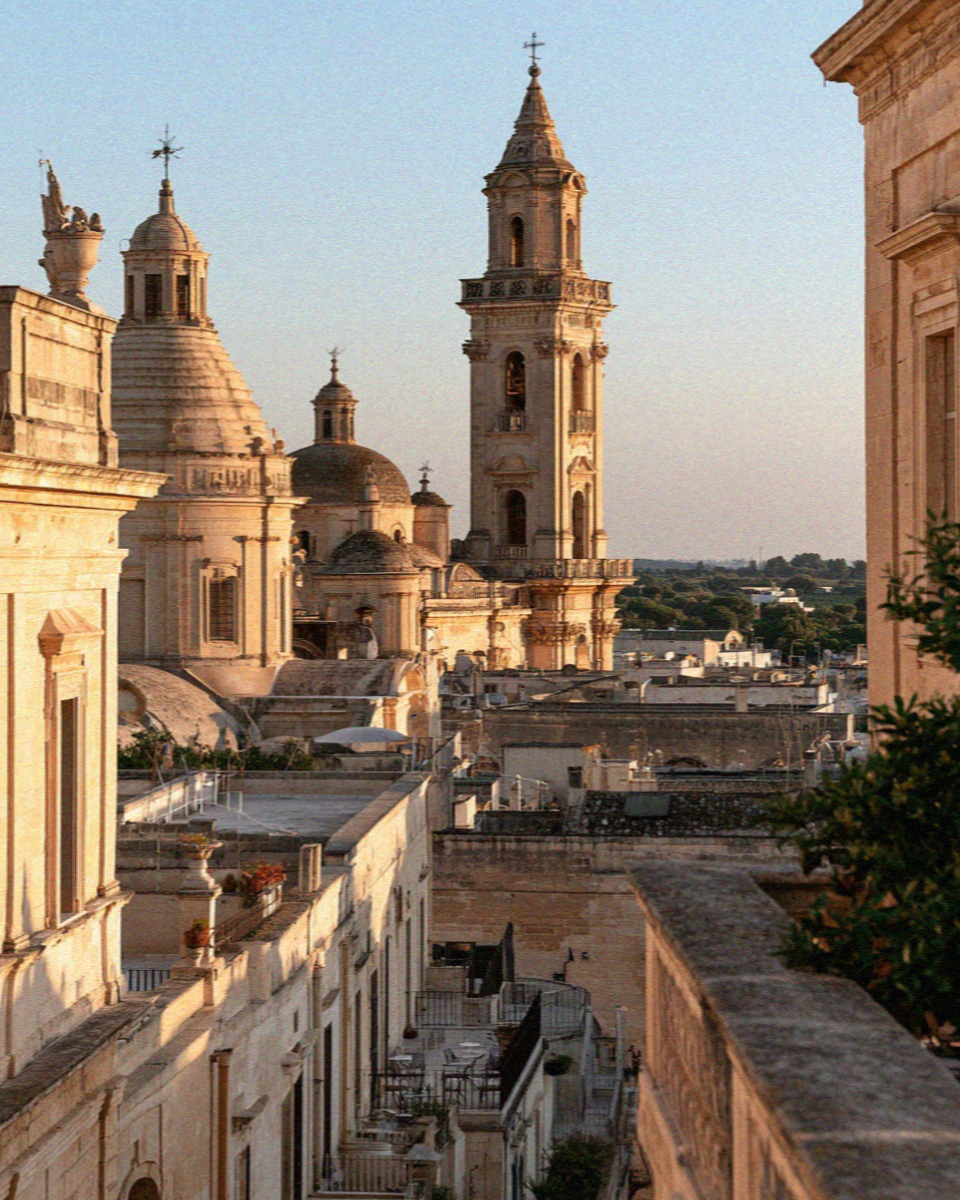
The one amenity in Lecce genuinely worth paying up for is a terrace. The old town is flat and built low, and the roofscape is a field of pale stone with domes and a bell tower standing out of it. From street level you see almost none of that. From a roof you see all of it, and because the Salento is flat the view keeps going until it runs out of land. A terrace also changes the shape of a hot day, giving you somewhere to be between five and eight, when the streets are still too warm and dinner is still too far off.
The Patria Palace has the rooftop bar people mean when they say rooftop bar in Lecce, and the small guesthouses are quietly good at this too. Choosing between two similar rooms, take the roof over the larger bathroom.
Parking, and why it decides everything
The centro storico is a ZTL, a zona a traffico limitato, and it is drawn wide enough to take in every street you would want a room on. Start from the assumption that you cannot drive in: a map showing a road to your door does not mean you may use it.
I am not going to print the hours, and you should be wary of anyone who does. The published timetables contradict each other flatly, on the windows, on the days, and on whether summer and winter differ. Getting it wrong costs a real fine, so treat your hotel as the authority and ask them close to your arrival date.
What is consistent is the mechanism. A hotel inside the zone can usually register your number plate for a temporary access window, so you drive in, drop the luggage at check-in, and do the same in reverse when you leave. Arrange it in advance, with the plate and the dates, in writing. What that window will not give you, unless the property has a garage of its own, is the right to leave the car there afterwards. It goes back out of the zone once the bags are up.
So the car parks outside the zone, and every hotel in the old town will point you to the same handful of places on the ring or down by the station. Rates are quoted inconsistently too, so check on the day.
Whether any of this matters depends on the coast. A car is effectively required for the Salento beaches, the nearest twenty to forty minutes out, the furthest around an hour, and almost none of them served by a bus you would want to plan around. Which resolves the accommodation question rather neatly: book a room you can walk to, and rent only on the mornings you are actually driving to the sea. The airports, the trains and the driving are in my guide to getting to Lecce and around the Salento.
Outside the walls, and when it is the right answer
The modern city around the old town is not a compromise so much as a different set of trade-offs, and for some trips it is the better one. You get parking, usually attached to the building. You get quiet, because the passeggiata is not happening under your window. You generally get more room for the money, a lift, and a real breakfast room. Near the station you are on the rail line and the road out, and the Brindisi Airport shuttle sets down at the Airport City Terminal.
What you give up is the walk home. Not the distance, modest in a city this size, but the late, unplanned second lap of the old town before bed, the best part of a Lecce evening and the part you skip when it means getting the car out.
What the tiers actually look like
There are no rates here on purpose. Prices in the Salento move sharply between June and August, and I would rather tell you nothing than a number that is wrong by the time you read it. The names are stable, though.
Two addresses have held the top of it for years, both in the historic centre. The Patria Palace is the five star, a member of The Leading Hotels of the World, with the rooftop bar and a breakfast people mention unprompted. The Risorgimento Resort is the other, forty-seven rooms and six suites in a converted nineteenth-century building, a short walk from the monuments. Different kinds of stay, and I would not put one above the other.
Under them sits the layer I find more interesting, and more Leccese: small boutique conversions of the palazzi themselves. Palazzo De Noha, Palazzo Sant’Anna, Palazzo Zimara and Palazzo Bozzi Corso are the names that come up, all inside the walls, all in the kind of building described above, with the courtyards and the vaulted rooms and, often, the stairs. Zimara is another whose breakfast gets singled out.
Then B&Bs and guesthouses in the same building stock, family run and four or five rooms, where a good deal of the value lives.
Whatever the tier, the two questions do not change. Which floor, and what does the window face. Where does the car go.
Frequently Asked Questions
Should I stay inside the old town or outside it?
Inside, if you are here for the city and can live with some noise, because walking out into the centre at eleven at night is what you are paying for. Outside, if you are driving to the coast most days or you sleep badly. The old town is small, so outside the walls is still close.
Which are the established places to stay in Lecce?
At the upper end, the Patria Palace, a five star in the historic centre and a member of The Leading Hotels of the World, and the Risorgimento Resort, forty-seven rooms and six suites near the monuments. Below them, boutique palazzo conversions inside the walls: Palazzo De Noha, Palazzo Sant’Anna, Palazzo Zimara and Palazzo Bozzi Corso.
What is a converted palazzo actually like to sleep in?
High vaulted ceilings, thick limestone walls and a stone stair, often without a lift. The rooms stay genuinely cool in summer, the real benefit where July highs reach the low thirties and nights only fall to nineteen or twenty degrees. The trade-offs are light and sound: many rooms have a single window, and bare stone carries every voice in the building.
Can I park at a hotel in the centro storico?
Not permanently. The old town is a ZTL, so a hotel inside it can usually register your number plate for a short access window to drop luggage at check-in and collect it at check-out, but it cannot give you a standing permit unless it has parking of its own. Arrange the plate in advance, and expect to leave the car in one of the car parks on the ring road or near the station for the rest of the stay. The restricted hours are reported inconsistently, so ask your hotel.
When do I need to book well in advance?
The second half of August above all, when the Festa di Sant’Oronzo lands around the 24th to the 26th and the Notte della Taranta finale falls at Melpignano on a Saturday late in the month, on a date that shifts from year to year. That fortnight is the hottest and busiest of the year. The spring and autumn shoulders take the pressure off considerably, though four-room guesthouses still sell out weeks ahead in them.
Work out the car and the airport transfer first, in Getting to Lecce and Around the Salento, since that decides whether you want a garage or a terrace. Then pick your dates with The Best Time to Visit Lecce, where the August question is answered properly. The rest sits in The Complete Guide to Lecce.