Lecce is not a city you eat expensively in. Three things define it, and all three cost almost nothing: a pastry, a savoury one, and a coffee poured over ice. What makes them worth writing about is not the price, it is the timing. Each belongs to a particular hour of the day, and the Leccesi keep to those hours with a consistency I found almost funny once I noticed it.
So this guide is arranged by the clock rather than by category. Eat the right thing at the right hour here and you will spend very little, and you will do it standing at counters beside people who are not on holiday. The rest of the practical groundwork sits in my complete guide to Lecce.
One thing shapes everything below. In July and August the highs run around 31 to 34 degrees and the nights barely drop below 19 or 20, so the day splits in two. You eat early, you disappear, you come back out when the stone has stopped radiating. In late spring or September the schedule relaxes, but the sequence stays the same.
Eight in the morning: the pasticciotto
The pasticciotto is the Salento pastry and Lecce is where you should meet it. A shortcrust shell about the size and shape of a small boat, filled with pastry cream, baked so the outside is firm and slightly sandy and the inside is still soft. It is eaten warm, and it is eaten for breakfast. Not as a dessert, not in the afternoon. Breakfast.
Warm matters more than anything else about it. A pasticciotto that has sat under glass since seven is a different and much sadder object, so go where they are coming out of the oven in batches and go while people are still queueing. Caffè Alvino on Piazza Sant’Oronzo is the address everyone gives, and for once everyone is right. It is reckoned to be the oldest café in the city, it looks out over the sunken Roman arena, and it does the whole local repertoire rather than just the famous item. It does close one day a week, so check before you build a breakfast around it. Natale is the other name locals will offer you, a pasticceria that takes its pasticciotti as seriously.
Order it with an espresso and stand up. Nobody sits down for this.
The savoury one
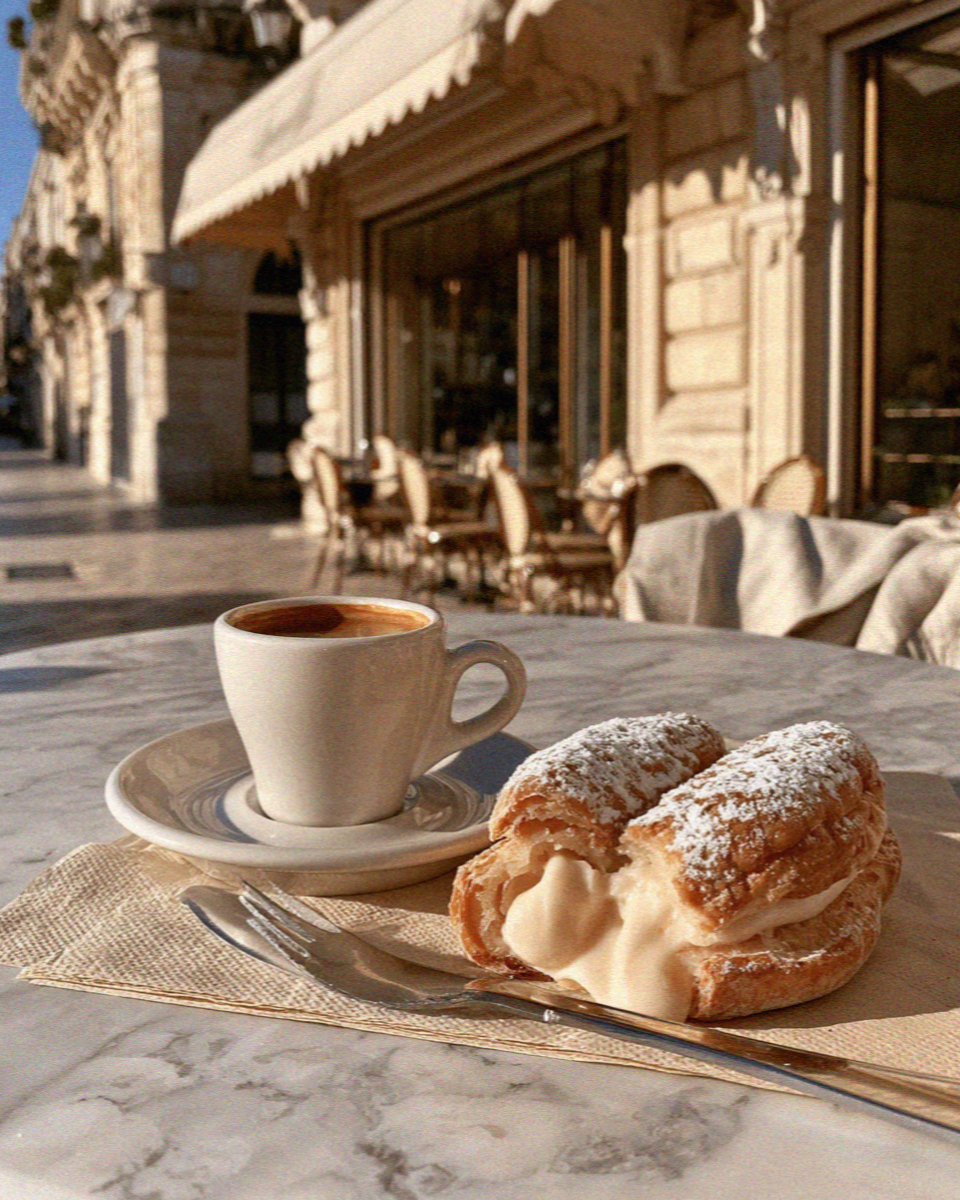
Around eleven, the city eats again, and this time it eats the rustico leccese. Two discs of puff pastry sealed around a filling of béchamel, tomato and mozzarella, baked until the top is deep gold and the inside is molten. It arrives too hot. It is supposed to. You break it, you let the steam out, you burn your mouth slightly anyway.
This is the mid-morning thing, the eleven o’clock thing, and it exists because the gap between an early breakfast and a late lunch is long. You will see men in work clothes eating one at a counter and finishing in under two minutes. Caffè Alvino does them, alongside pucce and pizzi, which makes it a useful single stop if you want to try several of these in one morning without walking the old town twice.
A rustico and a coffee together is the cheapest properly local thing you can eat in Lecce, and I would rather have that on a bar counter than a sit-down breakfast anywhere in the centro storico.
Coffee, the local way
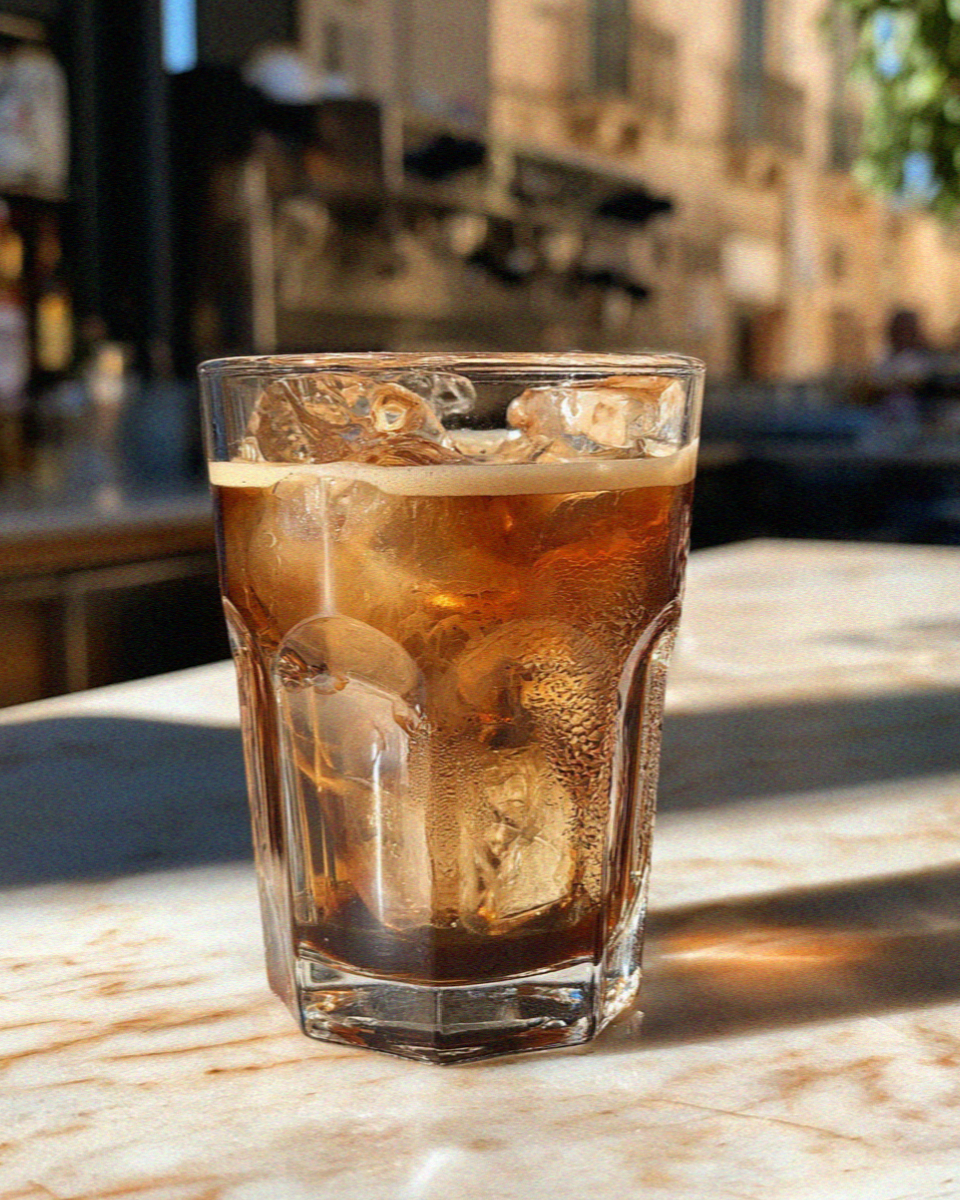
Caffè leccese is espresso poured over ice with almond syrup, latte di mandorla, in a small glass. It is not a novelty invented for visitors and it is not a dessert drink. It is what people order here from roughly May onward because it is hot and because it works, and the almond gives it a soft, faintly bitter sweetness that a plain iced coffee does not have.
Two things to know. You do not add sugar, the syrup has done that job. And you drink it quickly, before the ice defeats it. Ask for a caffè leccese and you will get it correctly; ask for an iced coffee and you may get something else entirely.
It is the one drink I would tell you to have every single day you are in Lecce in summer, usually somewhere between the rustico and lunch, and again at four when the afternoon is at its worst.
Lunch: ciceri e tria, and the two vegetables
The Salento’s signature primo is ciceri e tria, and it is a genuinely clever dish rather than a rustic one. Chickpeas and homemade pasta, except that part of the pasta is fried instead of boiled and then scattered back through the plate, so you get soft and crisp in the same mouthful. Once you have had it done properly you notice immediately when a kitchen has skimped on the fried part.
Trattoria Nonna Tetti is the straightforward, unfussy place to eat it, a Salentine trattoria that also does fave e cicorie and does not dress anything up. La Cucina di Mamma Elvira, the restaurant side of the wine bar, does a version too.
Alongside it, fave e cicoria: a purée of dried broad beans, smooth and pale yellow, served with wild chicory that has been boiled and dressed in good oil. Bitter greens against sweet beans, olive oil poured over both. It is peasant food in origin and it is on menus everywhere because people actually want it. It is also, incidentally, the reason a vegetarian eats extremely well in this part of Puglia.
For bread there are two local shapes worth knowing. Puccia is a filled roll, the Salento’s street lunch, taken away and eaten walking. Pizzi leccesi are small breads enriched with onion, tomato and olives, eaten on their own, and they are the thing I kept buying without meaning to.
Aperitivo, and the wines of the Salento
The hour before dinner is the good one in Lecce, when the squares fill and everybody who has been hiding indoors reappears at once. It is also when you should be drinking the local wine rather than a spritz.
The Salento is red wine country and the three names are Primitivo, Negroamaro and Salice Salentino. Primitivo travels and you have probably had it. Negroamaro is the one that is properly of this place, darker and drier and a little bitter at the finish, and Salice Salentino is the DOC that usually leans on it. All three are served far too cold in high summer, which I have stopped fighting because at 33 degrees it is the right decision.
Mamma Elvira is the enoteca to go to if you want to be taken seriously about any of this. The Puglian list is deep, the pours are generous, and they will steer you if you tell them what you liked yesterday.
Where people actually eat
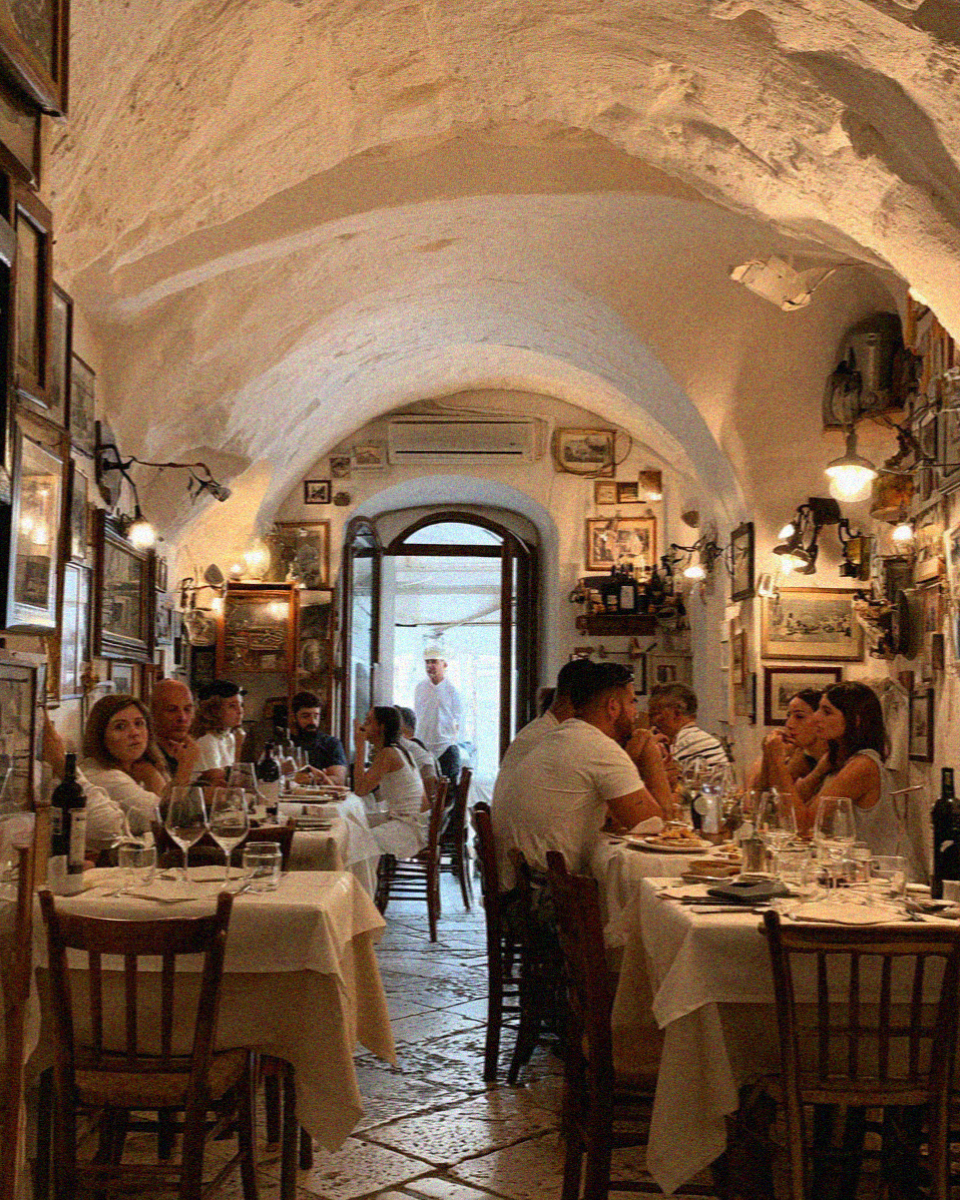
Dinner is late here, and later still in August, because there is no point sitting outside until the stone has given up its heat. Three places, all traditional, all different in character.
Alle Due Corti is the one for Salento cooking held to a standard. It is run by the family that founded it, the menu is written in dialect (ask, they are used to it and they enjoy explaining), and the kitchen keeps to things that are genuinely of the region: fave e cicoria, orecchiette, lamb with onions, lasagna ncannulata. If you eat one proper sit-down dinner in Lecce, I would make it this one.
Le Zie Trattoria Casereccia is family-run home cooking, and you ring a bell to be let in, which tells you most of what you need to know about the atmosphere. It is not a restaurant pretending to be somebody’s house. Trattoria Nonna Tetti, mentioned above for lunch, works just as well in the evening and is the easiest of the three to walk into.
In high season I would book. The heat pushes everyone out of doors at the same hour and the good tables in the centro storico go together.
Pezzetti di cavallo, plainly
Horse meat is traditional in the Salento and you will find pezzetti di cavallo on menus in Lecce: pieces of horse stewed slowly in tomato with bay and chilli, served in a small bowl with bread. It is a regional dish of long standing, not a stunt, and it is not hidden away in a corner of the menu.
I am telling you it exists so that you are not surprised by it, and so that you can order it if you want to. La Cucina di Mamma Elvira is one of the places that does it. If it is not for you, skip it and nobody will think anything of it. It is neither a challenge nor a scandal, it is just dinner here.
Frequently Asked Questions
What is a pasticciotto, and when should I eat one?
A pasticciotto is a small oval shortcrust pastry filled with pastry cream, the Salento’s own. It is a breakfast item and it should be warm, so eat it early, standing at a bar, with an espresso. Caffè Alvino on Piazza Sant’Oronzo and the pasticceria Natale are the two names locals give.
What is caffè leccese?
Espresso poured over ice with almond syrup, served in a small glass. It is a hot-weather institution rather than a tourist drink, it needs no added sugar, and it should be drunk fast before the ice waters it down. Order it by name.
Is Lecce good for vegetarians?
Unusually good. Fave e cicoria (broad bean purée with wild chicory) is a staple rather than a concession, pizzi leccesi are bread with onion, tomato and olives, ciceri e tria is chickpeas and pasta, and puccia can be filled with vegetables. None of that is a special request.
Which local wine should I order?
Negroamaro if you want the grape that belongs to the Salento specifically, Salice Salentino for the local DOC that usually leads on it, Primitivo if you want the softer, riper one. Mamma Elvira is the enoteca to ask at.
When do people actually eat in Lecce in summer?
Early and late, with a long gap. Breakfast pastry around eight, a rustico around eleven, lunch, then the city goes quiet through the worst of the afternoon and comes back out for aperitivo when the heat drops. Dinner is late, and in August it is later still.
Everything else about the city, the churches, the stone, the seasons and the coast, is gathered in the complete guide to Lecce. If you want these meals slotted into actual days, with the heat planned around rather than endured, read A Lecce Itinerary: 2 to 3 Days, and if you are still choosing your dates, The Best Time to Visit Lecce explains why June and September make all of this a great deal more pleasant than the middle of August.