Corsica is French, and almost nothing about it is.
You land expecting the south of France and you get somewhere that eats smoked liver sausage and chestnut flour, speaks a language closer to Tuscan than to anything spoken in Nice, and has a mountain in the middle high enough to hold snow into June. The road signs are in two languages and somebody has usually shot at them. It is the most beautiful island in the Mediterranean and it is not especially interested in whether you agree.
This is the whole thing in one place: where to go, when to come, what it costs, how to move around, and the honest answer to the question everybody asks first, which is where to base yourself.
What Corsica actually is
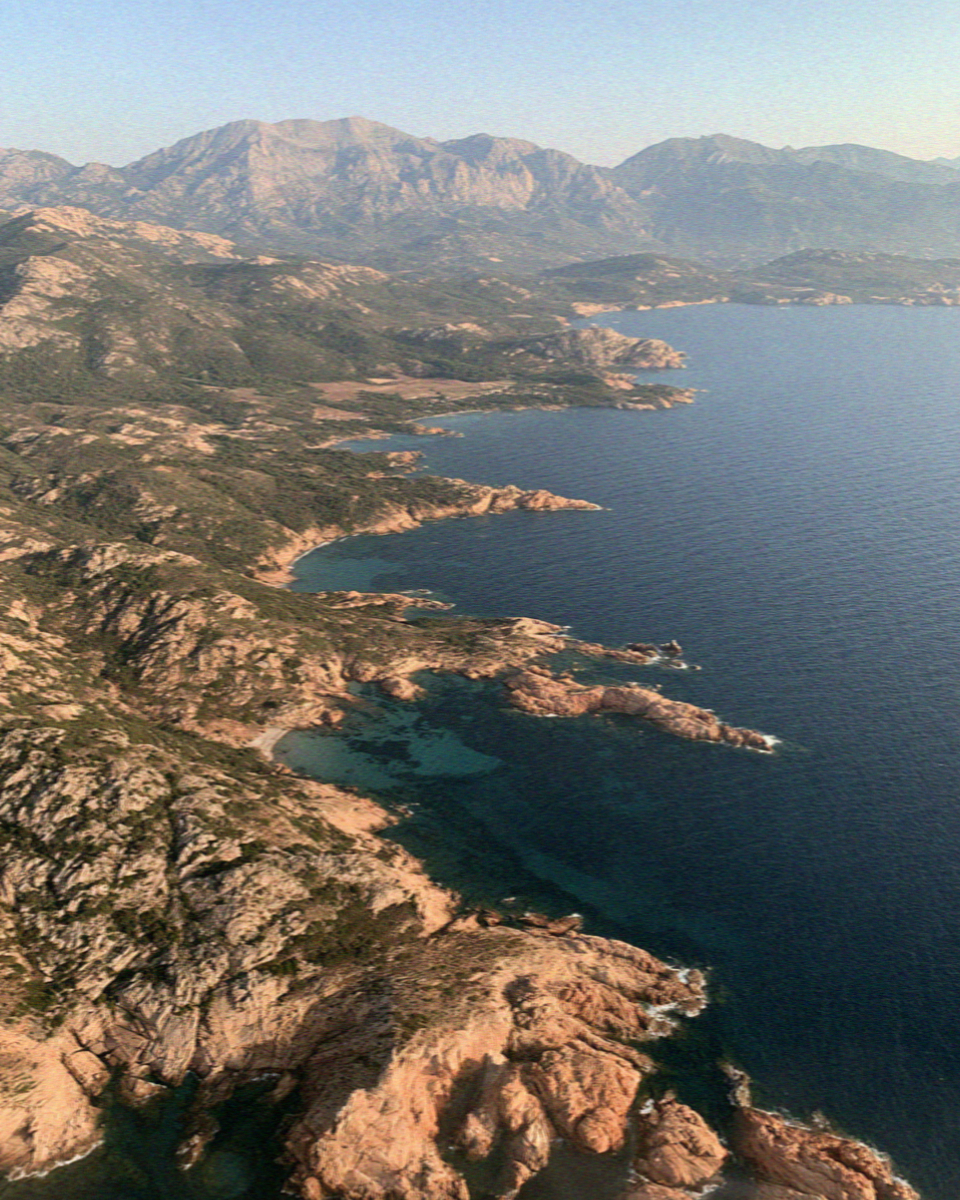
An island a hundred and eighty kilometres long with a mountain range running down the spine of it, so the coast is a ring and the middle is vertical.
That single geographic fact decides your entire trip. Corsica is roughly the size of Wales or Massachusetts, but the roads do not go across, they go around, and they go around slowly. A distance that looks like ninety minutes on a map is three hours in reality, on a road with no barrier and a drop on one side.
So the island is not one destination. It is four or five, and the difference between a good trip here and a frustrating one is admitting that early.
The south is the postcard: Bonifacio on its white cliffs, Porto-Vecchio, and the beaches everybody has seen a photograph of.
The west is the drama: the Gulf of Porto, red volcanic rock going straight into the sea, and a nature reserve you can only reach by boat.
The north and the Balagne is the softer one: Calvi, Île-Rousse, hill villages above olive terraces.
Cap Corse, the finger pointing north, is the empty one, and the interior around Corte is the one almost nobody drives into.
The mountains in the middle

Worth understanding even if you never leave the coast, because they are why everything else is the way it is.
The interior is properly alpine. Monte Cinto is 2,706 metres. There are pine forests, gorges, and villages at altitude that feel a thousand miles from a beach that is actually forty minutes away. The GR20 runs the length of it and is widely called the hardest waymarked trek in Europe, which is not a claim I am testing.
What this means for an ordinary trip is that the interior is a day, not an afternoon. Drive up from the coast into the mountains around Corte and you will spend most of it driving. It is worth doing once. It is not worth doing twice.
It also means the weather on one coast can be nothing like the weather on the other, and that a road closure in the middle can add two hours to a journey with no warning.
Plan Your Visit to Corsica
A few things I booked and loved. These help support the blog, at no cost to you.
- Where I stayed: search Corsica hotels
- Boat trips and Corsica tickets
- Stay connected: get a travel eSIM
This section contains affiliate links. If you book through them I may earn a small commission, at no extra cost to you.
Where to base yourself
The single most useful thing in this guide: you cannot see Corsica from one base. Anyone who tells you otherwise has not driven it.
Two bases is the minimum for a week. Three is better for ten days. The usual and correct split is one in the south around Porto-Vecchio or Bonifacio, and one in the north or west, around Calvi or Porto.
Which order depends entirely on where you fly into, which is covered in getting to Corsica and around. The full breakdown of towns, what each one is actually like to stay in, and what a room costs is in where to stay in Corsica.
If you only have four or five days, do not attempt the whole island. Pick the south, fly into Figari, and accept that you are seeing a third of it well rather than all of it badly.
The beaches

They are as good as the photographs, which is rarer than it sounds.
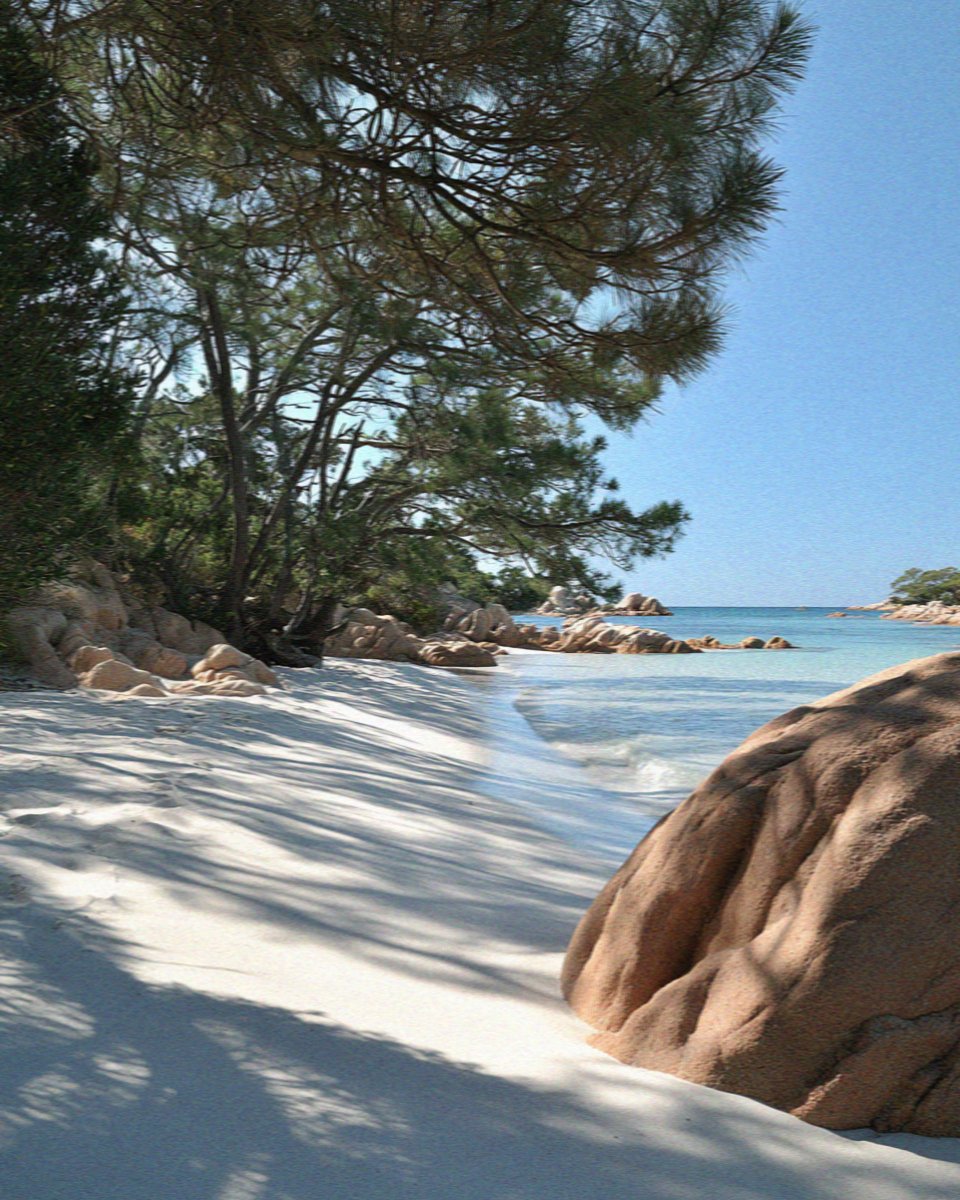
The water is the thing. It comes in over pale granite sand and it is genuinely transparent, so the colour bands out from nothing at the shore through turquoise to a deep ink blue where the bottom drops. Red granite boulders sit in the shallows and umbrella pines lean out over the sand.
Palombaggia, ten kilometres south of Porto-Vecchio, is the famous one and deserves it. Rondinara is a near perfect shell shaped bay further south, shallow and calm and much quieter. Saleccia, in the Agriates desert in the north, is the one you will remember, and it is deliberately hard to reach: a boat from Saint-Florent, a twelve kilometre dirt track that genuinely needs a four wheel drive, or a four and a half hour walk.
Which to choose, how to get to each, and when they are unbearable is in the best beaches in Corsica.
Bonifacio, which you should not skip
A town built on white chalk cliffs that the sea has undercut, so the houses at the edge hang over nothing. From the water it looks like a mistake somebody got away with.
The old town sits on top behind Genoese walls. There is a staircase of a hundred and eighty-nine steps cut straight down the cliff face, and a legend about an Aragonese king cutting it in a night that is almost certainly untrue and worth hearing anyway.
It is also the jumping off point for the Lavezzi islands, and for Sardinia. The whole town is covered properly in Bonifacio and its cliffs.
The coast you can only see from a boat
The Gulf of Porto on the west coast is UNESCO listed, and the reason is that three things sit next to each other: the Scandola reserve, the Gulf of Girolata, and the Calanques de Piana.
Scandola has no road and no path. You reach it by sea or you do not reach it. Boats run from Porto, four to five hours for the full circuit, and there is nothing else on this island quite like coming around a headland into red volcanic rock going vertically into very clear water with ospreys on the ledges.
Worth going soon. Quotas and licences for every category of user are being drafted now, and vessels over 500 tonnes are already banned from the Gulf of Porto. The rules will tighten. Detail in Scandola and the Gulf of Porto, and the practical business of which boat trip to book across the whole island is in Corsica boat tours.
Eating in Corsica
This is the part that surprises people, and it is the reason I would come back.
Corsican food is not French food and it is not Italian food. It is mountain food from a poor island, built on pigs, chestnuts and sheep.
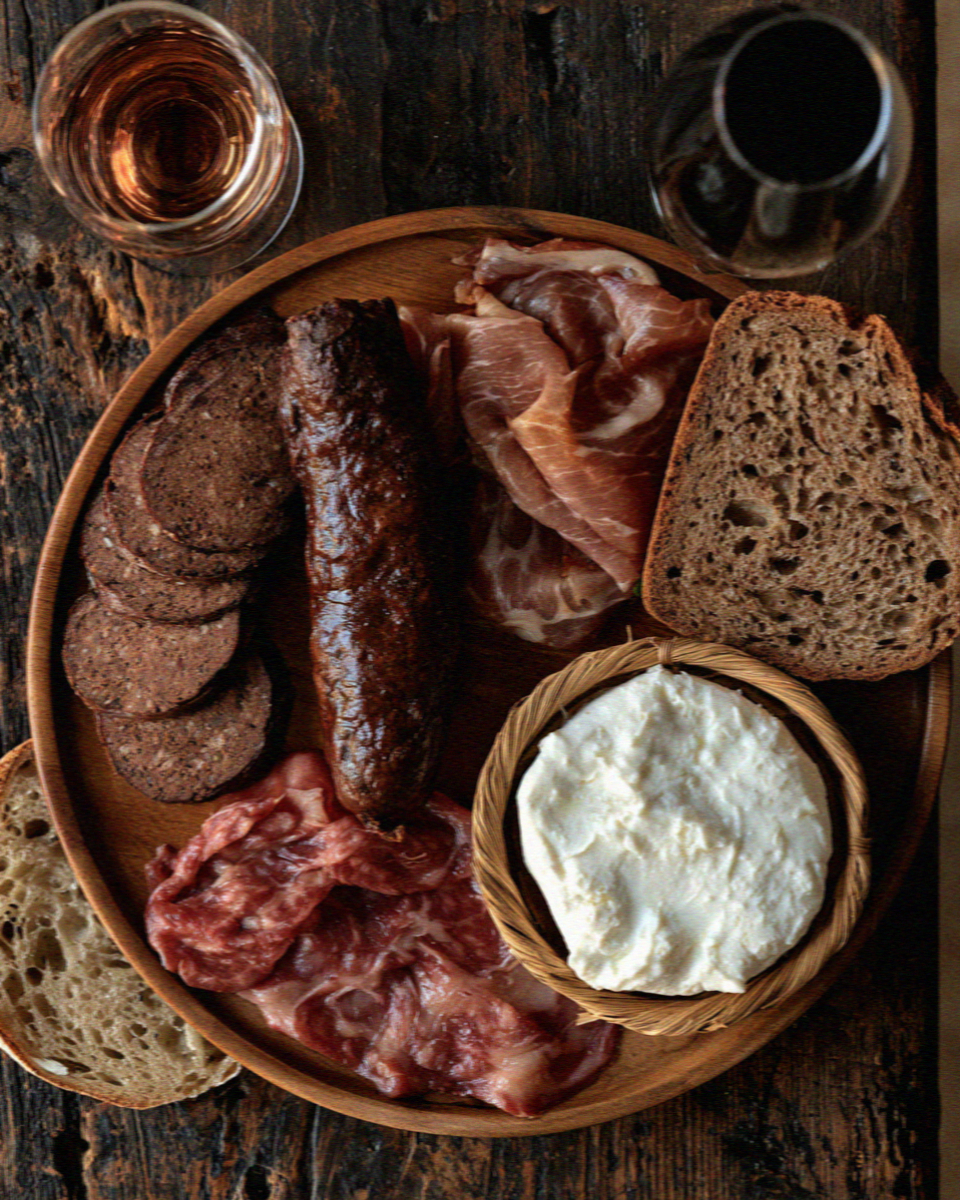
The charcuterie comes from a native pig called the Nustrale that runs half wild eating chestnuts and acorns. Figatellu is the one to try, a U shaped liver sausage smoked over hardwood, dark and strong and grilled over embers. Alongside it, lonzu, coppa and prisuttu.
Brocciu is the island cheese, made from whey, soft and fresh and faintly sweet. Two things about it matter. It goes into everything, savoury and sweet, including fiadone, the lemon cheesecake that is the island pudding. And it is only made from December to July, so if you come in August the brocciu on the menu is not fresh brocciu, and anyone honest will tell you so.
Then chestnut flour in the bread and the beer, canistrelli biscuits with aniseed or lemon, and myrtle liqueur afterwards whether you asked for it or not.
The wine is genuinely good and barely leaves the island. Patrimonio in the north is the oldest appellation, Nielluccio for the reds and Vermentino for the whites. Where to eat, what to order and what things cost is in where to eat in Corsica.
When to come
Short answer: June or September.
The sea runs about 21°C in June and 26°C by August, staying warm enough to swim through mid October. July and August bring 30 to 35°C on the coast, and the beaches and the roads are genuinely full. May is lovely and the water is cold. October is empty and half the beach bars have shut.
September is the one I would choose. Warm sea, thin crowds, lower prices, and the light goes long and gold in the evenings. Month by month, with sea temperatures and what is actually open, is in the best time to visit Corsica.
Getting here, and the car question
Four airports: Ajaccio, Bastia, Calvi and Figari. Air Corsica and Air France fly year round from Marseille, Nice, Paris Orly, Lyon and Toulouse. Direct UK flights are seasonal, roughly May to October, into Bastia and Figari.
Ferries run from Nice, Toulon and Marseille in France and from Livorno, Piombino, Savona and Genoa in Italy, arriving at Bastia, Ajaccio, L’Île-Rousse or Porto-Vecchio. All of them carry cars, which is the point.
And there is a fifty minute crossing from Bonifacio to Santa Teresa Gallura in Sardinia, about €30 to €45 as a foot passenger, roughly thirty-seven crossings a week in summer. If you have been reading my Costa Smeralda or Alghero guides, that is how the two islands join up, and it makes a very good two week trip.
Do you need a car? Yes. Not “it helps”. The bus network is thin, the train only serves a narrow spine, and everything worth seeing is at the end of a road. Hire it, and hire something small, because the roads are narrow and the villages were not built for a wide car. Full detail in getting to Corsica and around.
The north, if you have time
Calvi has a Genoese citadel on a promontory above a long crescent of sand and pine, with mountains behind it that hold snow into early summer. Behind it the Balagne is a string of hill villages above olive terraces, close enough together to do in a slow day.
It is the gentlest part of the island and the easiest to love on a first trip. Covered in Calvi and the Balagne.
Ajaccio, and the man everyone mentions
The island’s biggest town and its main airport, on a wide gulf on the west coast.
Napoleon was born here in 1769, which is one year after Genoa sold Corsica to France. He was, by a matter of months, born French rather than Genoese, and the island has never entirely got over the coincidence. His birthplace is a museum, there is a great deal of statuary, and the main street is named for him twice over.
Ajaccio itself is a working town rather than a beautiful one, with a good covered market and a long seafront. It is not the reason to come to Corsica, but it is a sensible arrival point for the west and the south, and the market on a Sunday morning is the single best place to buy charcuterie and cheese to take home.
The Genoese, and why the coast looks like this
You will see round stone towers on almost every headland. There are something like eighty-five of them still standing, and once you notice one you notice all of them.
Genoa held Corsica for roughly five centuries and built them against Barbary raids, close enough together to pass a signal fire from one end of the island to the other. The citadels at Calvi, Bastia and Bonifacio are the same programme at a larger scale. Calvi’s fort dates from the town being handed to Genoa in 1280 and was built up into a citadel over the following centuries.
The other half of the story is the resistance to all that. Pasquale Paoli ran an independent Corsican republic from Corte in the middle of the eighteenth century, wrote a constitution that was read admiringly in America, and founded Île-Rousse specifically as a port to compete with Genoese Calvi. France bought the island in 1768 and put an end to it.
None of this is museum history here. It is the reason the villages are inland and uphill, why the coast was empty until tourism, and why the road signs get shot at.
The maquis
The scrub that covers the island, and the thing you will remember longest.
It is a dense low tangle of cistus, myrtle, juniper, rosemary, lentisk and wild fennel, and in the heat it gives off a resinous, herbal, slightly sweet smell that carries out to sea. Napoleon claimed he could recognise Corsica blindfolded by the smell of it, which is the kind of line that sounds invented and is probably true.
It flowers in May and June, white and yellow and pink, and it is why so much of the island looks green from a distance and is impassable up close. It is also where the word maquis for the French resistance came from, because it is what you disappear into.
Cap Corse, and the interior
Two parts of the island most visitors skip, and both are worth a day if you have the time.
Cap Corse is the long finger pointing north from Bastia. A single road runs around it past fishing hamlets, Genoese towers, and terraced vineyards, with almost no development. It takes a full unhurried day to drive the loop and the western side is properly spectacular.
Corte sits in the middle of the island where the mountains close in, an old university town on a rock that was Paoli’s capital. Behind it the Restonica and Tavignano gorges run up into the high country, with river pools cold enough to hurt. It is the one place inland that feels like a destination rather than a drive.
Both are two hours or more from the coastal bases, so they are day trips, not detours.
Practical notes
Fuel. Fill up in towns. Stations in the interior are sparse and many close on Sundays and in the evenings.
Driving. The roads are good but narrow, with granite on one side and nothing on the other. Local drivers know them and will be close behind you. Pull in and let them past rather than hurrying, and be aware that livestock on the road is normal rather than remarkable. Cows and goats have right of way in practice if not in law.
Cash. Cards are accepted almost everywhere now, but small village shops, beach bars and some ferry kiosks still prefer cash.
August. Book accommodation and hire cars months ahead. This is not caution, it is arithmetic: the island’s population roughly triples and there is a fixed number of beds.
Water. Tap water is fine across the island.
What it costs
Corsica is not cheap, and August is expensive.
A double room in a decent hotel in the south in September runs roughly €150 to €250, considerably more in August and considerably less in May or October. Dinner for two with wine at a good but unfussy place is €70 to €110. A half day boat trip to the Lavezzi islands is around €65, the crossing alone nearer €25 to €40. Hire cars in August should be booked months out and will still cost more than you expect.
The saving is that the island’s best things are free. The beaches cost nothing, the coast road costs nothing, and the villages cost nothing.
A first trip, and a second one
Worth separating, because the island rewards a return visit more than most places do.
A first trip should be the coast. Fly into Figari, spend four or five days in the south between Porto-Vecchio and Bonifacio doing beaches and the cliff town, then drive up the west coast to Porto for the Gulf and the Calanques, and finish in Calvi. That is the greatest hits and it is genuinely great.
A second trip is the one where you go inland and slow down. Cap Corse, Corte and the gorges, the Balagne villages properly rather than as a morning, and the Castagniccia, the chestnut country in the northeast that almost no visitor sees at all. Fewer beaches, more villages, better food, and half the traffic.
If you are choosing dates for a second trip, aim at late May or early October and take the mountains rather than the sea.
The one thing people get wrong
They underestimate the driving and overbook the days.
Corsica looks small and it is not, functionally. Ninety kilometres of coast road with hairpins and a view is two and a half hours before you stop for any of it, and you will want to stop for a lot of it. An itinerary built on map distances falls apart on day two and the rest of the week becomes an argument in a car.
The fix is simple and I would hold you to it: no more than one major move per day, and no more than three bases in a week. Everything else is better for it, including the driving, which stops being a chore and becomes the best part.
How long you need
Four or five days: one region, done properly. The south is the easiest.
A week: two bases, south and north or west. This is the sweet spot.
Ten days to two weeks: the whole ring, plus a day into the interior, without hurrying. Or Corsica and northern Sardinia together via the Bonifacio ferry.
Suggested routes with realistic driving times are in the Corsica itinerary.
The language, and the signs
You will notice it before you have left the airport car park.
Corsican, or Corsu, is a Romance language much closer to Tuscan Italian than to French. If you have any Italian you will half understand a menu; if you have only French you will not. It is taught in schools and spoken at home in the villages, less so in the towns, and it is a live political question rather than a heritage exercise.
Which brings you to the road signs. Most are bilingual, French above and Corsican below, and on a great many of them the French has been sprayed out or shot at. It is startling the first time. It is also not aimed at you, and there is no version of this that affects a visitor’s day.
A few words go a long way and are genuinely appreciated. Bonghjornu for good morning, avvedeci for goodbye, grazie for thank you.
Swimming, and the water
The sea is the reason most people come, so two things worth knowing.
It is colder than the Mediterranean average until quite late. Corsica sits in deep water with cold currents and no shallow shelf to warm it, so June at 21°C feels brisk on entry even when the air is 28°C. By late August it is 25 or 26°C and perfect. September holds it, which is the argument for September.
The bottom drops fast. These are granite coasts, not sandbanks. Ten metres out you can be well out of your depth even on a calm family beach, and the pretty rounded boulders in the shallows are slippery. Nothing dangerous, but it is not a paddling sea, and it catches people out with small children.
There is very little surf on the east coast and rather more on the west, and the wind matters more than the swell: the libeccio from the southwest can shut boat trips down for a day at any point in the season.
Who Corsica suits, and who it does not
It suits people who want a beach and also want something to do that is not a beach. It suits drivers. It suits anyone who would rather eat well in a village than fashionably in a resort.
It does not suit anyone who wants to arrive and not get in a car. It does not suit a first trip to Europe. And it does not suit August unless somebody else is choosing your dates, in which case book everything now.
More images from Corsica




Your Corsica Guides
Everything here in detail, guide by guide.
- A Corsica Itinerary: 7 to 10 Days
- The Best Things to Do in Corsica
- Where to Stay in Corsica: Choosing Your Base
- The Best Beaches in Corsica
- Bonifacio: The Town on the Cliffs
- Scandola and the Gulf of Porto
- The Best Corsica Boat Tours
- Where to Eat in Corsica
- Getting to Corsica and Around
- The Best Time to Visit Corsica
- Calvi and the Balagne
Corsica Travel Diaries
Frequently Asked Questions
How many days do you need in Corsica?
Seven is the sweet spot, split between two bases. Four or five works if you stay in one region, usually the south around Porto-Vecchio and Bonifacio. Ten days to two weeks lets you do the full coastal ring plus a day in the interior without rushing.
Do you need a car in Corsica?
Yes. The bus network is limited, the railway covers only a narrow spine of the island, and almost everything worth seeing sits at the end of a road. Hire a small car, because the village streets and mountain roads were not built for a wide one.
What is the best time to visit Corsica?
June or September. The sea is 21°C in June and stays swimmable into mid October, and both months avoid the July and August crowds and the 30 to 35°C coastal heat. May is beautiful but the water is cold, and by October many beach places have closed.
Is Corsica expensive?
Moderately, and August is expensive. Expect roughly €150 to €250 for a good double room in September, €70 to €110 for dinner for two with wine, and about €65 for a half day boat trip to the Lavezzi islands. The beaches, the coast road and the villages cost nothing.
Can you get from Corsica to Sardinia?
Yes, easily. The ferry from Bonifacio to Santa Teresa Gallura takes about 50 minutes and costs roughly €30 to €45 as a foot passenger, with around 37 crossings a week in summer dropping to about six off season. It makes a two week trip across both islands straightforward.
What food is Corsica known for?
Charcuterie from the native Nustrale pig, especially figatellu, a smoked liver sausage grilled over embers, along with lonzu and coppa. Brocciu, a fresh whey cheese, goes into everything including fiadone, the lemon cheesecake. Note that brocciu is only made from December to July.
Is Corsica French or Italian?
Politically French, culturally its own thing. Corsican is closer to Tuscan Italian than to French, the food is mountain cooking rather than either cuisine, and the island was Genoese for centuries before France bought it in 1768.
What is Scandola and can you visit it?
A UNESCO listed nature reserve of red volcanic rock on the west coast, reachable only by sea. There is no road and no footpath into the core area. Boats run from Porto, usually four to five hours combined with the Calanques de Piana and the Gulf of Girolata.