Where to stay in Corfu depends less on the hotel than on the coast. The island is long, green and mountainous, its roads are slow, and the base you pick decides which Corfu you actually see.
The town is one holiday, the north-east another, the west coast a third, and the big resorts north and south of town a fourth. This guide sorts them out. For the wider picture, start with my complete guide to Corfu.
Prices are given loosely, as budget, mid-range or luxury, because rates here swing hard between May and August.
The short answer
First visit, four nights or fewer: stay in Corfu Town. You can walk everywhere, the ferries and the airport are close, and the evenings are the best on the island.
Clear, calm water every morning and no need for nightlife: the north-east coast, around Kalami, Agni or Kassiopi.
Sand and sunsets: the west coast, at Paleokastritsa or Agios Gordios, with a car.
A pool, a spa and nothing to organise: the resorts at Kommeno and Dassia, or south of town around Benitses and Moraitika.
A week or more: split it. Three nights in town, then the rest on one coast. At its widest Corfu takes up to an hour to cross by car, and doing that every day turns a holiday into a driving tour.
Where I would book in Corfu
Hotels from this guide, with their Booking.com star rating. These help support the blog, at no cost to you.
- Bella Venezia ★★★★Corfu Town
- Domes Miramare ★★★★★Moraitika, adults only
- Angsana Corfu ★★★★★Benitses
- See every hotel in CorfuAll the areas, side by side on Booking.com
- Hire a carEasier for the coast, the villages and the countryside
- Stay connected with a travel eSIMData from the moment you land, no roaming charges
This section contains affiliate links. If you book through them I may earn a small commission, at no extra cost to you.
Corfu Town
The Old Town is on the UNESCO list, and sleeping inside it is the point. You wake to the bells of Saint Spyridon, take coffee on the Spianada before the day-trippers arrive, and walk home after dinner through lanes far cooler than they were at four in the afternoon. Some evenings one of the island’s bands is rehearsing a street or two away. You only hear that if you stay.
Siorra Vittoria is a restored 19th-century mansion in the Old Town, small and calm, with breakfast in its garden. It is my pick for a couple.
Bella Venezia is a neoclassical mansion that was once a consulate and later a bank, and it still feels more like a private house than a hotel.
Cavalieri stands by the Spianada, and its rooftop bar looks straight across at the Old Fortress. Go up for a drink at dusk even if you sleep elsewhere.
All three sit in the mid-range to upper bracket. There are cheaper rooms and apartments through the lanes, many of them lovely, but check two things first: whether a car can get near the door (often it cannot, and you will wheel your case over stone), and whether the room faces a square or a back lane.
Town has no real beach of its own, so you will bus or taxi out to swim. Without a car, though, it is the base that works best, because the green KTEL buses leave from here for the main resorts.

The north-east coast: Kalami, Agni and Kassiopi
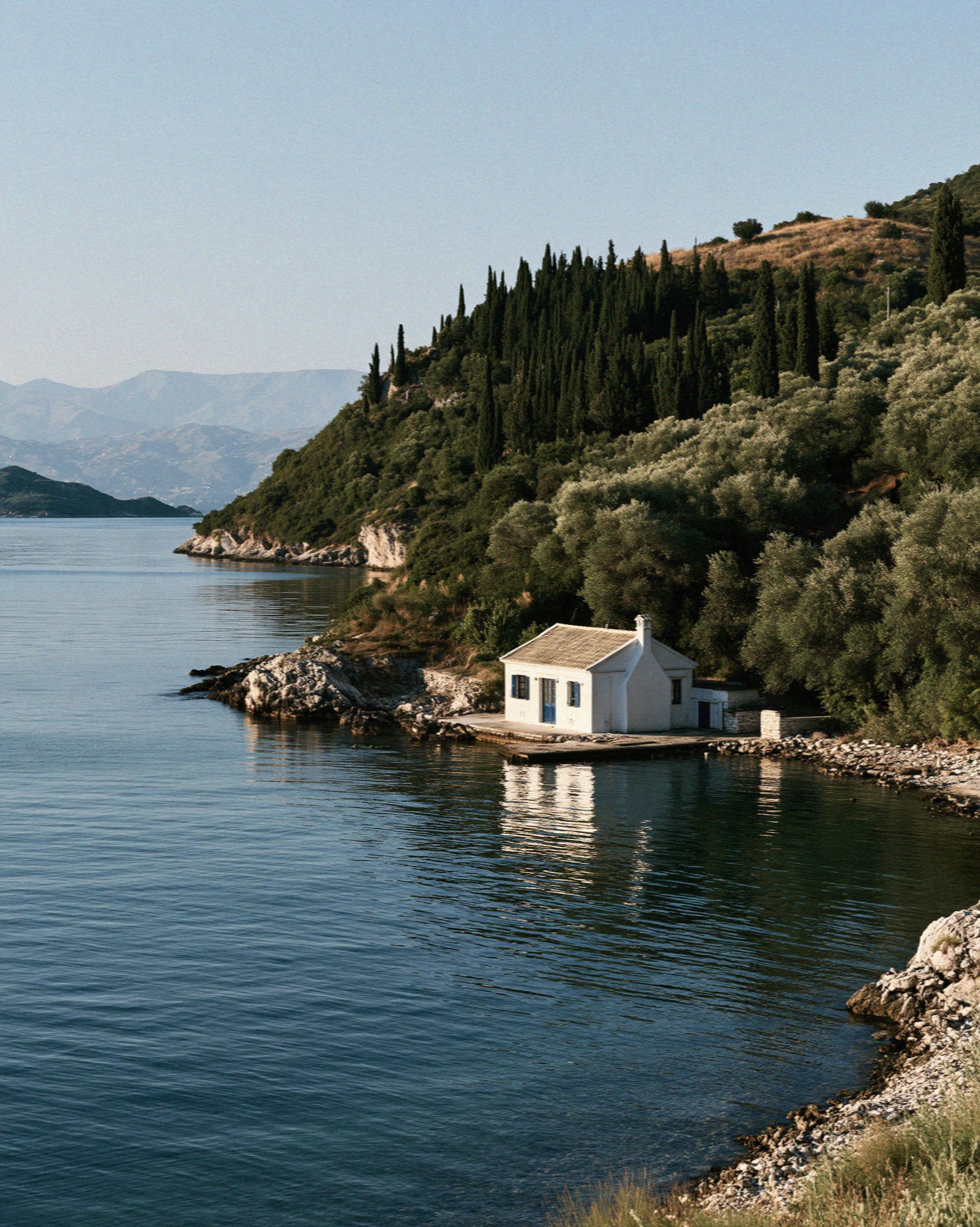
This is the coast Lawrence Durrell wrote about. It faces Albania across a narrow strait, the hills come down to the water in olive and cypress, and the bays are small, sheltered and clear. The beaches are pebble, which is why the water is so clean. Bring water shoes.
Kalami is a small bay with the White House at one end, the Durrells’ home from 1936 to 1939 and now a taverna, which also lets a villa. Beds here are mostly villas and small hotels. It is for people who want to swim, read, eat fish and do very little else.
Agni, the next bay, is smaller still and known above all for its tavernas. Staying means a few villas on the hillside and very quiet evenings.
Kassiopi is a proper village round a little harbour, with a ruined castle on the headland and a real choice of places for dinner. If you want this coast’s water and also want to walk out in the evening, choose Kassiopi.
The north-east is the best place on the island to hire a small boat without a licence and spend a day nosing from cove to cove. Villas run mid-range to luxury, and there are not many of them, so book early for July and August.
The west coast: Paleokastritsa and Agios Gordios
The west is where Corfu keeps its sand and its sunsets. The sea is more open and livelier in the afternoon, but the beaches are bigger.
Paleokastritsa, about 25 km from town, is a set of small coves below green headlands, a monastery on the hill above and cave boats waiting on the main beach. It is crowded in the middle of the day. Stay the night and you have the early morning and the evening after the coaches leave.
Agios Gordios is a long sandy bay below tall rock formations, with a relaxed resort village behind it and some of the best sunsets on the coast. It also puts the golden sand at Glyfada and the wilder beach at Myrtiotissa within easy reach.
Out here you want a car. The roads down to the beaches are steep, and the hill villages behind them are half the reason to stay on this side. Slow early on the bends and give the buses the middle of the road.
South of town: Benitses and Moraitika
South of Corfu Town the coast is gentler and more settled: old fishing villages that grew into resorts, and a handful of very good hotels in the hills and along the shore.
Benitses is a short drive south, an old fishing village with a harbour and Klimataria, a family fish taverna worth the drive on its own. It is also close to the Achilleion, though its rooms have been under restoration since 2021 (the finish date is June 2029), so a visit there means the gardens only.
Angsana Corfu, opened in 2022, sits in the hills above Benitses, a modern luxury resort looking out over the sea to the mainland.
Domes Miramare at Moraitika is adults only and part of the Luxury Collection. The old Miramare was a fashionable address in the Onassis years, and the new one keeps a touch of that glamour.
The Olivar Suites, near Messonghi, is another high-end choice on this stretch.
The big resorts
North of town, the Kommeno peninsula and the long beach at Dassia hold most of Corfu’s large luxury and all-inclusive hotels, a short drive from the airport and the Old Town.
Rodostamo, on Kommeno, is a polished luxury hotel and the first of the big places I would look at for a couple.
Ikos Dassia is a large all-inclusive resort on the beach at Dassia, made for families who want to switch off completely.
These are comfortable, well run and good at what they are: a week of pools, beach, spa and dinners without planning anything. They are less good if you came to see the island. Dassia does put you close to Etrusco, inland at Kato Korakiana, which is the one dinner on Corfu worth planning a day around.
Staying in an olive grove
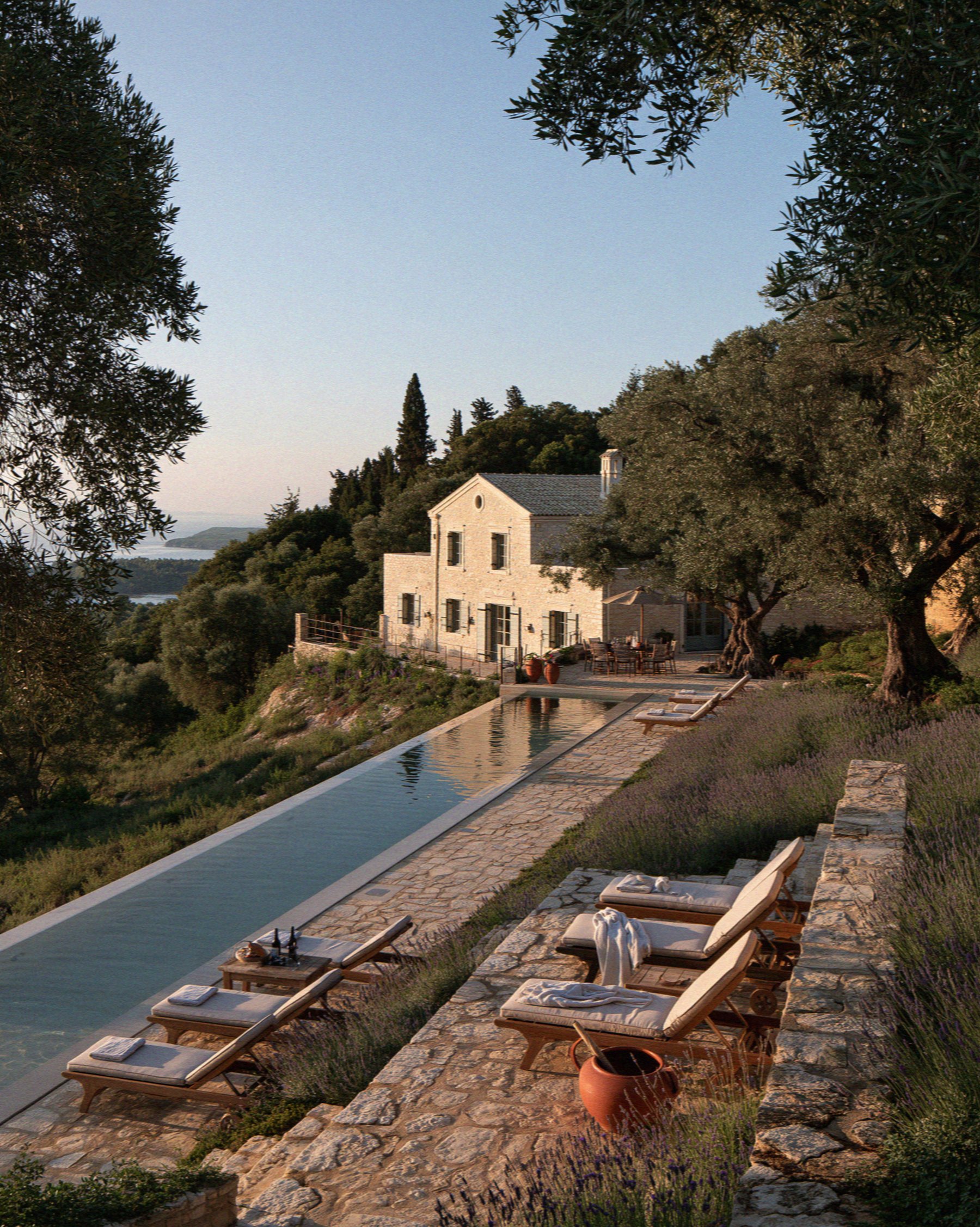
Many of Corfu’s olive trees are centuries old and have long been left unpruned, so they grow huge, silver and twisted, and the interior is a forest of them. Some of the nicest places to stay are right in the middle of it: restored stone farmhouses, old village houses and small villas with a pool among the trees.
I stayed in two rooms above an old olive press, and it changed how I saw the island. In the mornings it was so quiet I could hear the leaves. I wrote about the trees on my first day, in Nobody Prunes Them.
If you go this way, you need a car, without exception. Ask about the last stretch of road to the house, which is often a narrow track. Ask how far the nearest shop, taverna and beach are in minutes, not kilometres. And choose a house within half an hour of the coast you most want to swim on, so the olives add to the holiday instead of costing you an hour each way. Prices run from simple rooms in a village house to luxury villas sleeping ten.
Which base suits which trip
A short first visit: Corfu Town, inside the Old Town if you can.
Quiet, clear water and fish lunches: Kalami or Agni.
The same water with a choice of dinners: Kassiopi.
Sand and sunsets: Paleokastritsa or Agios Gordios, with a car.
Families who want everything on site: Dassia or Kommeno.
Luxury with character: Rodostamo, Domes Miramare or Angsana.
A week or more: town first, then one coast, or a stone house among the olives.
No car at all: Corfu Town.
Wherever you sleep, give the Old Town at least one full day, and my walking guide to Corfu Old Town is the place to start. If the swimming decides it, the best beaches in Corfu sets out what each coast is really like, and my Corfu itinerary shows how a few days across two bases fit together. Everything else is in my complete guide to Corfu.
Frequently Asked Questions
What is the best area to stay in Corfu for a first visit?
Corfu Town, ideally inside the Old Town. The sights, restaurants and ferry port are all walkable, the airport is under ten minutes away by taxi, and the buses to the resorts leave from town.
Where should I stay in Corfu for calm, clear water?
The north-east coast, around Kalami, Agni and Kassiopi. The bays face the mainland across a narrow strait, so they are sheltered, and the pebble beaches keep the water clear.
Is it better to stay on the east or west coast of Corfu?
The east has calmer water, pebble coves and quicker access to town. The west has the sandy beaches and sunsets, at Glyfada, Agios Gordios and Paleokastritsa, but you will drive more.
Do I need a car if I stay in Corfu Town?
No. The town is walkable and buses run from it to the main resorts. Hire a car for a few days only if you want the hill villages, the wild beaches or the north-east coves.
Where do families stay in Corfu?
Dassia and Kommeno, north of town, where the large resorts are, including the all-inclusive Ikos Dassia. Agios Gordios, with its long sandy beach, is a good west coast alternative.
Read also: The Best Beaches in Corfu | A Corfu Itinerary: 3 to 5 Days | Victoria’s Complete Guide to Corfu