Where to eat in Corfu is a better question than it is on most Greek islands, because Corfu cooks differently. Four centuries of Venice left the island a kitchen of its own: slow red sauces with warm spice, veal in white wine, fish stewed with garlic and lemon, and names that still sound faintly Italian.
So order the island’s own dishes rather than the souvlaki-and-moussaka menu you could eat anywhere in Greece. Below are the dishes to know, then where I would go for them: in town, on the coast, up in the hill villages, and the one dinner worth dressing for. Everything beyond the table is in my complete guide to Corfu.
The dishes to know
A Corfiot menu reads like a short lesson in the island’s history. The Venetian dishes are the backbone. The British, who held the island in the 19th century, left ginger beer and a taste for kumquats. The rest is what any Ionian kitchen does with olive oil, fish and whatever grows behind the house.
Four names are worth learning before you sit down: pastitsada, sofrito, bourdeto and bianco. If a taverna has two or three of them on the board, you are in the right place. If it has none, it is cooking for visitors.
Two smaller things to look for. Mandolato is the island’s nougat, white, sweet and full of almonds, sold in slabs in the Old Town. And the house wine in the villages is often poured from the barrel, light and a little rough, which is exactly right with all of the above.
Pastitsada, sofrito and bourdeto
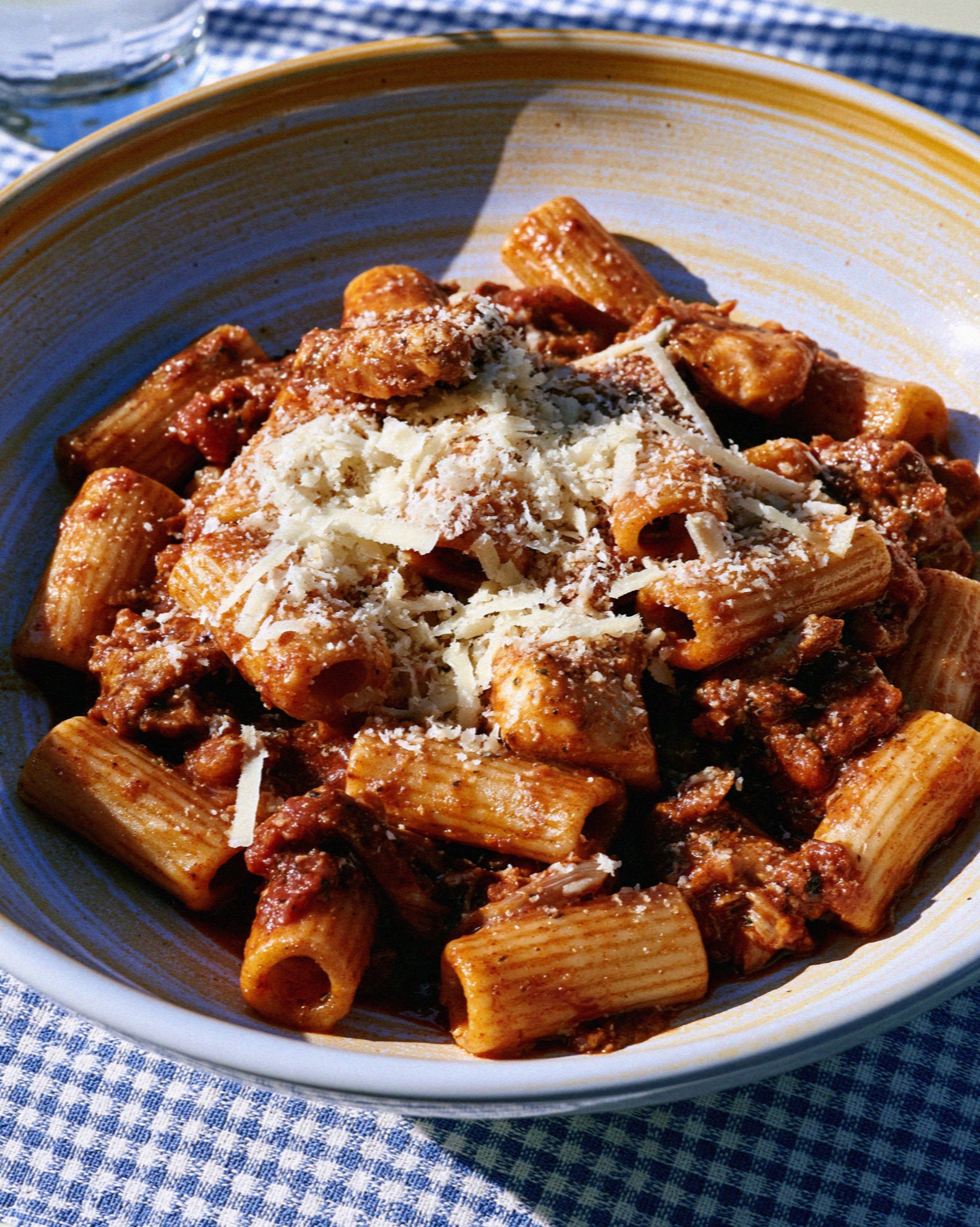
Pastitsada is the Sunday dish. Rooster, or sometimes beef, is browned and then cooked slowly for hours in a red tomato sauce with warm spices, and served over thick pasta that soaks up the sauce. It is rich, deep and faintly sweet from the spice, and it is the plate Corfiots will tell you to try first. If rooster is on the menu, choose it.
Sofrito is thin slices of veal cooked in white wine with a great deal of garlic and parsley, until the sauce is pale, sharp and savoury. It looks plain on the plate. It is not. It usually comes with potatoes or rice to catch the sauce.
Bourdeto is the one for people who like heat. Scorpionfish, the ugly red rockfish, is stewed in a fiery red pepper sauce until it falls from the bone. It is a fisherman’s dish, and the heat is the point. Ask how hot the kitchen makes it before you order.
Bianco is bourdeto’s quieter twin: white fish stewed with garlic, lemon and potatoes, without tomato, so the sauce stays pale. It is the dish I would order on a hot day at a table by the water.
If you see all four on one menu, share. Pastitsada and bourdeto together, with a plate of greens and bread, is about as good a lunch as the island offers.
Kumquat and ginger beer
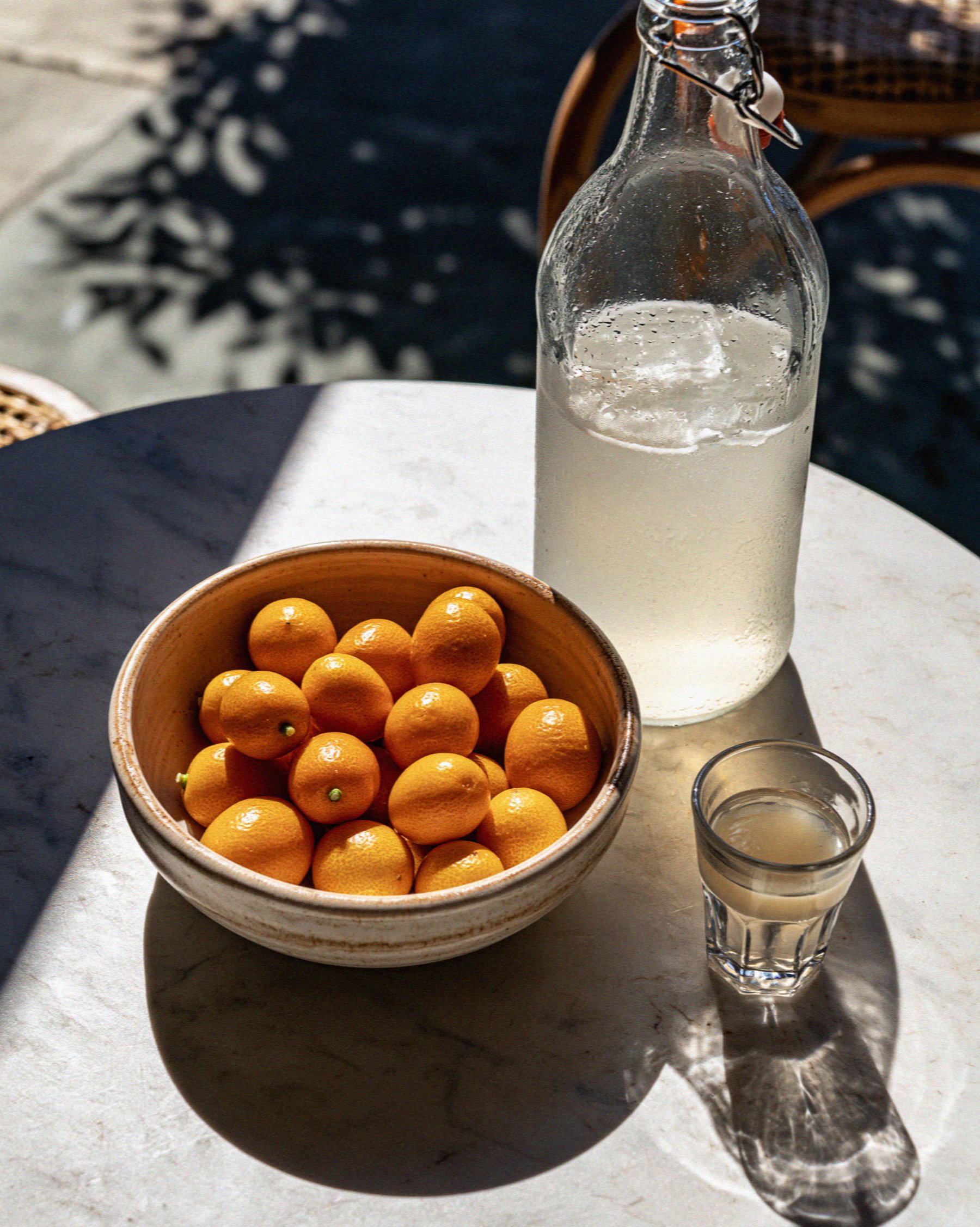
Kumquats are not native here. It is widely believed the British brought them in the mid-1800s, and they have been grown on the island ever since, above all around the village of Nymfes in the north. Corfu kumquat now carries EU protected status.
You will meet them in three forms. Kumquat liqueur is bright orange, sweet and sticky, and best in a very small glass after dinner. Candied kumquats and spoon sweets are sold in jars all over the Old Town. And the whole fruit, eaten skin and all, is sharp, bitter and oddly addictive.
Tsitsibira is Corfu’s ginger beer, left from the British years. It is made with grated ginger, lemon juice, sugar, water and yeast, and left to ferment so it comes out cloudy and lightly fizzy, with a natural foam, more lemony and less sweet than a bottled ginger beer. It goes well with an afternoon on the Spianada watching the cricket. Not every café has it. Ask.
Eating in Corfu Town
The Old Town has more restaurants than it needs, and many of those on the main squares are cooking for passing trade. Walk one lane back and it improves.
Rex, by the Liston, has been feeding the town since 1932, and it is where I would go for a first pastitsada and sofrito. It is central and long established, and a good place to learn what the classic dishes are supposed to taste like before you go looking for them in the villages.
The Liston itself, the arcaded row of cafés on the Spianada built under the French in 1807, is for coffee and a drink rather than for dinner. Sit there in the late afternoon, order something cold, and watch the town walk past.
Fish on the coast: Benitses and Agni
For fish, leave town. The two places I would drive for sit on opposite sides of it.
Klimataria “Bellos” in Benitses, south of town, is a small family fish taverna opened in 1997 by Nikos and Lilly Bellos. It is simple, very good, and very popular, so booking is essential. It opens for most of the year, roughly February to November, which makes it one of the more useful addresses outside high summer.
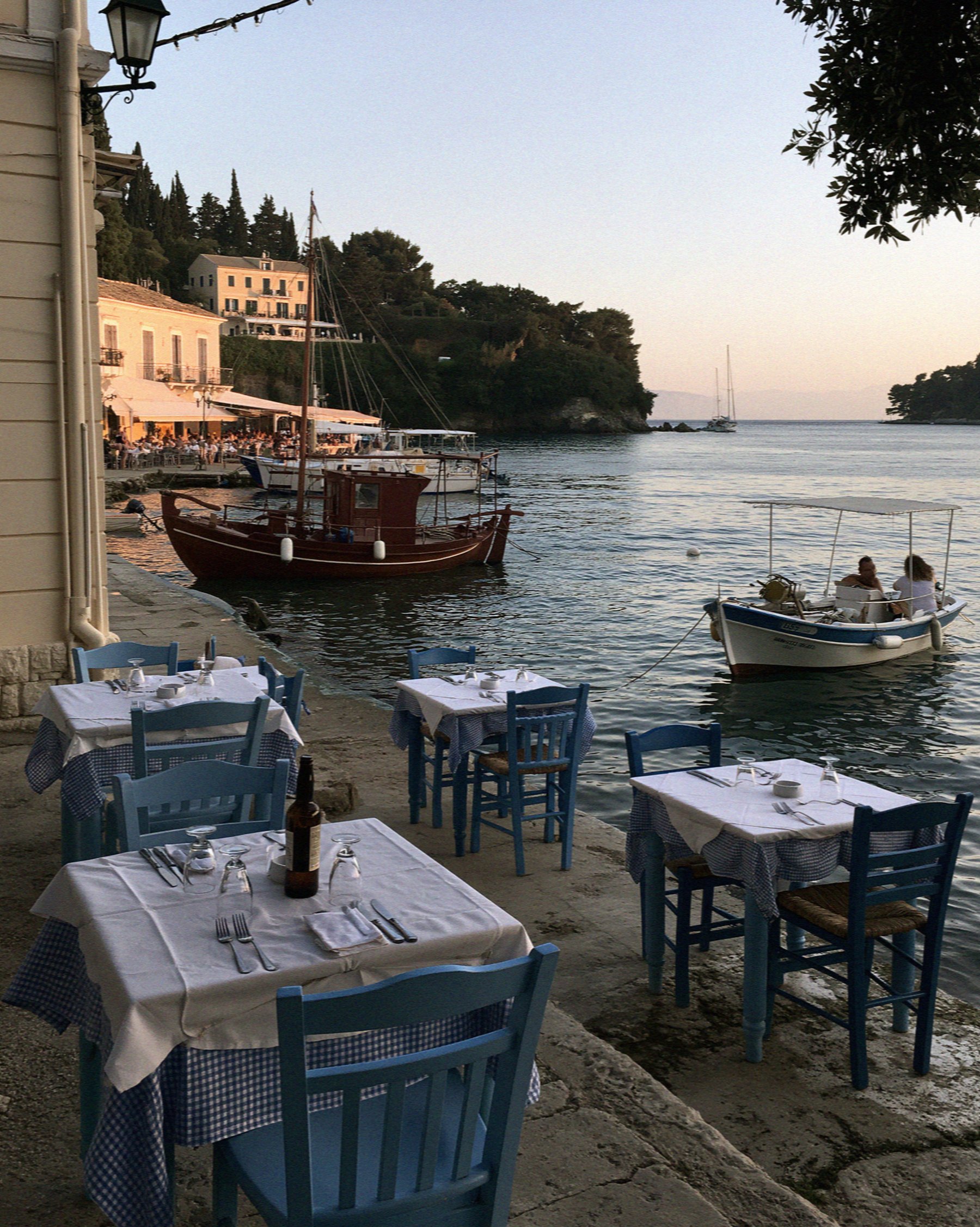
Agni, on the north-east coast, is a tiny bay known almost entirely for its tavernas. Toula’s Seaside has been cooking on the beach there since 1982, and seafood is the reason to come. Taverna Agni and Nikolas are the other two in the bay. All three put tables almost at the water’s edge, and you can arrive by car down the hill, or by boat if you have hired one along the coast, which is half the pleasure.
A note on fish prices. Fresh fish in Greece is sold by the kilo, weighed before it is cooked. Ask to see the fish and ask the weight and the price before it goes on the grill, and you will never be surprised by the bill.
Up in the villages
Some of the best eating on Corfu is inland, in villages where the tavernas cook for the people who live there.
Taverna Tripa in Kinopiastes, a short drive from town, is an old village institution that goes back to the Durrell years. It is the place for a long, generous dinner of Corfiot dishes.
Taverna Elizabeth in Doukades, a hill village in the north-west, is slow village cooking at its most unpretentious, and worth the drive into the hills.
Taverna Rouvas in Strinylas, high on Mount Pantokrator, is where I would stop for lunch on the way up the mountain, or down from it. When I drove up to Old Perithia and Pantokrator, what stayed with me was the cool air and Albania across the strait, and a village lunch up there is the right way to break the drive.
And at Kalami there is the White House: Lawrence and Nancy Durrell made it their home in the late 1930s, and today it serves lunch on the water from May to October. It is lovely for lunch whether or not you have read Prospero’s Cell.
The one big night out
Etrusco, in Kato Korakiana, inland from Dassia and about 14 km north of town, is the island’s most celebrated restaurant. It is run by the Botrini family: Etrusco Botrini opened it in 2000, and his son Ettore has run it since 2003. The cooking is modern and inventive, with Italian roots and Corfiot ingredients, served as tasting menus on a terrace under a big mulberry tree on the family’s estate, surrounded by vegetable and herb gardens.
It opens for the summer season and is priced as fine dining, so this is a special-occasion evening rather than a casual meal. Book well ahead, especially for July and August, and plan the rest of the day around it so nobody has to drive back tired.
How Corfiots eat
The main meal was traditionally eaten in the middle of the day, and the island still leans that way. Pastitsada is a Sunday lunch, not a supper. If you want the classic dishes at their best, eat your big meal at lunchtime in a village taverna and keep the evening lighter.
Share. Order a few starters and two or three mains for the table rather than one plate each. Greens, a salad, bread and a jug of house wine are the frame for any meal.
Tavernas outside town do not always print a full menu, and the board or the waiter will tell you what is cooking. Ask. That is where the island’s own dishes turn up.
Many coastal tavernas are seasonal and close for the winter, and the opening dates vary from year to year. If you are travelling early or late in the season, check before you drive.
Food is one good reason to pick your base carefully, and my guide on where to stay in Corfu explains which coast puts you closest to which tables. The best time to visit Corfu covers when the tavernas are open, and the best things to do in Corfu includes a lunch at Kalami. The whole island is in my complete guide to Corfu.
Frequently Asked Questions
What food is Corfu famous for?
Its Venetian-influenced dishes: pastitsada (rooster or beef in a spiced red sauce over thick pasta), sofrito (veal in white wine, garlic and parsley), bourdeto (scorpionfish under a hot red pepper sauce) and bianco (white fish with garlic, lemon and potatoes). Also kumquat liqueur and tsitsibira, the island’s ginger beer.
What is the difference between bourdeto and bianco?
Both are fish stews. Bourdeto uses scorpionfish in a hot red pepper sauce. Bianco uses white fish stewed with garlic, lemon and potatoes, with no red sauce, so it is mild and pale.
What is the best restaurant in Corfu?
Etrusco, in Kato Korakiana near Dassia, is the island’s most celebrated, run by the Botrini family and serving tasting menus in summer. Book well ahead.
Where can I eat fish by the sea in Corfu?
Agni Bay on the north-east coast, at Toula’s Seaside, Taverna Agni or Nikolas, and Klimataria “Bellos” in Benitses, south of town, where booking is essential.
What is tsitsibira?
Corfu’s ginger beer, introduced in the British years. It is made from ginger, lemon, sugar, water and yeast, and naturally fermented, so it is cloudy and lightly fizzy.
Read also: Where to Stay in Corfu: Choosing Your Base | The Best Time to Visit Corfu | Victoria’s Complete Guide to Corfu