The best time to visit Santorini is September, and if you take nothing else from this page, take that. The sea is at its warmest, the heat has eased, the summer crowd has started to go home, and the light in the late afternoon is the best of the year. I was there at the end of September and the island felt as though it had finally sat down.
But every month on Santorini is a different island, and the right one depends on whether you want to swim, walk, eat or simply have the place to yourself. This is the year, season by season and then month by month. For everything else, start with my complete guide to Santorini.
The short answer
Best overall: September.
Best for walking and quiet: May and October.
Best for swimming: late June to late September.
Hottest, busiest and most expensive: July and August.
Quietest and cheapest, but much of it closed: November to March.
If you want the caldera hotels, the boats and the wineries all open, come between May and October.
Spring: April and May
Spring is when the island is green. After the winter rain, the slopes below the caldera path are covered with small wildflowers, yellow and purple against the dark rock, and the walking is at its best: warm enough, never too hot, with clear air and long views.
April is still quiet, with daytime temperatures around twenty degrees, and many hotels and restaurants opening for the season over the course of the month. Greek Orthodox Easter, which usually falls in April or early May, is celebrated with real ceremony in the villages and is a lovely time to be here, though rooms fill up. In 2027 it falls on 2 May.
May is warmer, usually in the low to mid twenties, and nearly everything is open. The sea is still cool, around eighteen or nineteen degrees, which is bracing rather than pleasant for most people. For walking, wine and quiet, May is my second choice after September.

Summer: June to August
June is a fine month: hot but not yet scorching, with long evenings, the sea warming into the low twenties, and the crowds building rather than peaking.
July and August are the high season in every sense. Daytime temperatures sit around thirty degrees, with little shade on the caldera, and the meltemi, the strong northerly wind of the Aegean summer, blows on many days, cooling the air but roughening the sea and sometimes cancelling boats. Prices are at their highest, the good hotels are booked months ahead, and the sunset at Oia is a crush. Mid-August is the busiest moment of all: 15 August is one of the biggest holidays of the Greek year, half the country is travelling, and ferries and rooms around it sell out.
If summer is the only time you can come, it is still worth it. Walk early, swim in the middle of the day, eat late, and keep away from the rim at sunset.
September
September is the month I would choose. The sea has warmed all summer and sits at about twenty-four or twenty-five degrees, the warmest of the year. The air has dropped a few degrees from August, the meltemi usually calms, and after the first week the crowds thin noticeably as families go home.
The grapes on Santorini are picked early, mostly in August, so by September the new wine is in the tanks and the wineries are calmer and glad to talk about it. Prices begin to fall, especially in the second half of the month. And the light, lower and warmer, makes the caldera look its best in the late afternoon.
By the very end of September, the season has turned. Some shops have already gone dark, others have a handwritten note in the window about closing for winter. I liked the island best like that.
October
October is still warm, usually in the low twenties, and the sea is still swimmable in the first half of the month, around twenty-two degrees, though it cools as the month goes on and the first autumn storms arrive.
It is a very good month for walking and for the wineries, quieter and cheaper than September, with soft low light. By the end of the month many hotels, restaurants and wineries close for the winter, and the boat trips thin out. Come in the first half of October for the best of both.
Winter
From November to March, Santorini is a different place. Many caldera hotels close, most of the wineries close, a large share of the restaurants in Oia and Imerovigli shut, and the island belongs to the fifteen thousand or so people who live here.
The weather is mild by northern European standards, usually in the mid-teens by day, but it can be windy, grey and wet, and ferries are sometimes cancelled by storms. Fira stays partly open all year, and the archaeological sites and museums keep shorter winter hours.
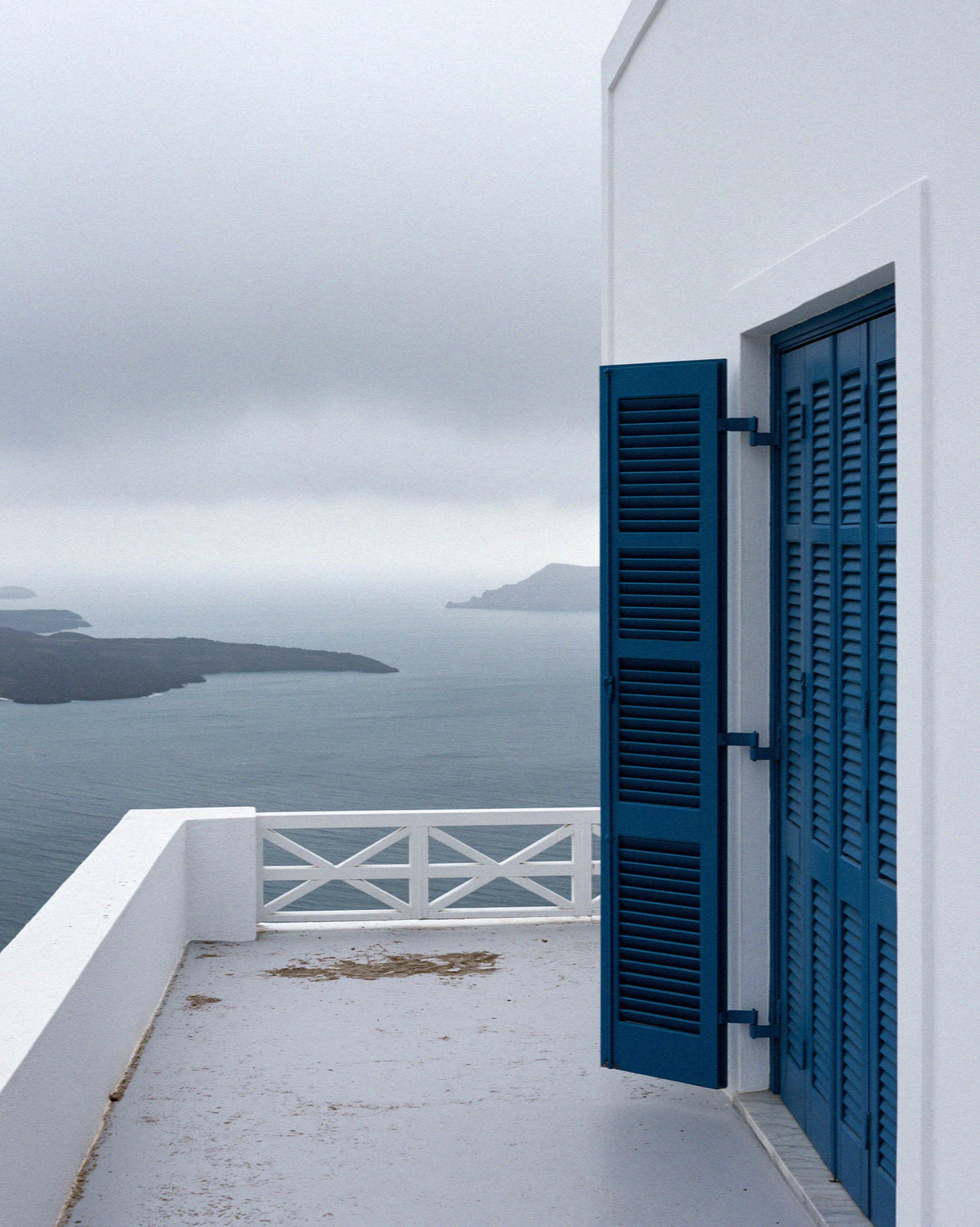
If you want the caldera almost to yourself and do not mind closed doors, winter has a real beauty: shuttered terraces, a grey sea, the villages quiet. But it is not a holiday in the usual sense.
Cruise days and crowds
A lot of the crowding on Santorini comes from cruise ships, which anchor in the caldera and send their passengers up to Fira, often for just a few hours, and much of that crowd then moves to Oia.
Things have improved. The island now caps cruise arrivals at 8,000 passengers a day, and Greece charges cruise passengers a levy: 20 euros each between June and September, 12 euros in April, May and October, and 4 euros from November to March. Peak days are much less crowded than they were a few years ago.
Even so, on a day with several ships in, Fira’s main lanes and the cable car queue are very busy from mid-morning to late afternoon. The answer is simple: be in Fira early or late, spend the middle of the day inland or on a beach, and if you are arriving by ferry, avoid the cable car queue entirely. None of this affects you as a visitor arriving by ferry or plane, except in the crowds.
Prices through the year
The same room on the caldera can cost very different amounts depending on the month.
July and August are the most expensive, with the best hotels full months ahead. June and September are a little cheaper, especially after the first week of September. May and October are where the value is: the weather is still good, nearly everything is open, and caldera rooms are often around a third cheaper than in high summer. From November to March prices fall furthest of all, but that is because so much is closed.
The nightly climate fee that Greek hotels add to the bill, which rises with the star rating, is also charged at a higher rate in the warm months.
Ferries follow the same curve. In summer several boats a day leave Piraeus for Santorini; in winter there are only a handful a week, and they are more often stopped by storms. Flights thin out too, with many direct routes from northern Europe running only in the season.
Month by month
January and February: cool and often windy, most tourist businesses closed, very quiet. Sea about fifteen degrees.
March: still quiet, the first hotels opening at the end of the month, spring flowers on the slopes.
April: around twenty degrees, the season beginning, Easter in the villages. Sea too cold for most.
May: warm and fresh, nearly everything open, excellent for walking. Sea around eighteen or nineteen.
June: hot, long evenings, crowds building. Sea in the low twenties.
July: hot, busy, windy days, highest prices. Sea around twenty-three or twenty-four.
August: the peak in every way, hot, crowded and expensive, with the 15 August holiday at its centre. Sea around twenty-four or twenty-five.
September: the best month. Warm sea, easing heat, thinning crowds, quiet wineries.
October: warm early, quieter, still swimmable in the first half. Closures from late in the month.
November: cooler, windier, most hotels and wineries closed.
December: quiet and grey, the island to itself.
If you are booking a room, prices by season and village are in my guide to where to stay in Santorini. For swimming, the beaches are in my guide to the best beaches in Santorini, and for tastings, my guide to Santorini wineries.
Frequently Asked Questions
What is the best month to visit Santorini?
September, for the warm sea, easing heat, thinner crowds and lower prices than August.
When is the cheapest time to go to Santorini?
November to March, but many hotels, restaurants and wineries close. The best value with everything open is May or October.
Is Santorini too crowded in summer?
July and August are very busy, especially at sunset in Oia and in Fira on cruise days. Early mornings and inland villages are much quieter.
Can you swim in Santorini in October?
Yes, in the first half of the month, when the sea is around twenty-two degrees. It cools after that.
Is Santorini worth visiting in winter?
For quiet and views, yes, but much of the island closes, and it is not a beach holiday.
Read also: Where to Stay in Santorini: Choosing Your Village | A Santorini Itinerary: 3 to 5 Days | Victoria’s Complete Guide to Santorini