Some links in this guide are affiliate links. If you book through one, this site may earn a small commission, at no extra cost to you. How this works.
A Delos day trip from Mykonos is the best thing you can do on the island that does not involve a beach. Half an hour across the water lies one of the most important ancient sites in Greece: not a single temple but an entire town, with its markets, theatre, houses and streets, lying open under the sky on an island where almost nobody has lived since antiquity.
This is how to get there, what it costs, what to see and how to do it well in the heat. For the rest of the island, start with my complete guide to Mykonos.
What to book before you come
Three ways across to Delos, depending on how much of the day you want to give it.
Delos with a guide, and a swim off Rhenia
A small boat across and a proper guide on the site, then the beaches on the island next door.
The boat to Delos and back
Just the crossing, for anyone who wants to walk the site at their own pace.
Delos, then lunch on Rhenia
The site in the morning, then a long swim and lunch across the strait.
Each button opens GetYourGuide in a new tab, so this page stays open. Booking through them supports the blog at no cost to you.
What Delos was
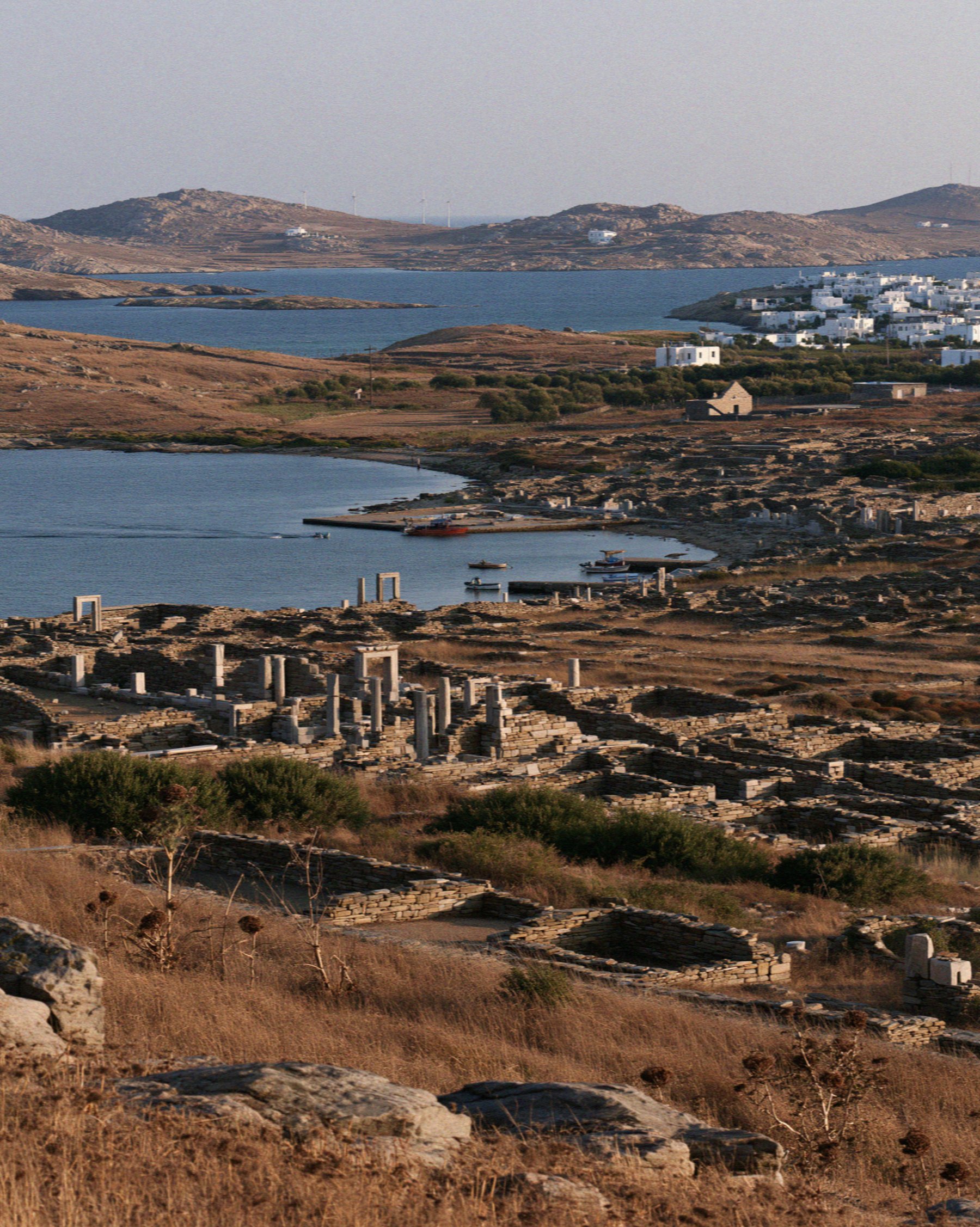
Delos is a small, bare, rocky island, about five kilometres long, just off the west coast of Mykonos. In Greek myth it was where Leto gave birth to the twins Apollo and Artemis, and from very early times it was one of the holiest places in the Greek world, a sanctuary that people sailed to from all over the Aegean.
Its history has two great chapters. The first is sacred. For centuries Delos was a religious centre, home to temples, treasuries and festivals in honour of Apollo, and for a time the headquarters of the league of Greek cities led by Athens. The Athenians were so concerned with its purity that, in the fifth century BC, they ruled that nobody could be born or die on the island, and moved the old graves across the water to Rhenia.
The second chapter is commercial. In the second century BC, Delos was made a free port, and it became one of the busiest trading markets in the Mediterranean, full of merchants from Italy, Syria, Egypt and beyond, with tens of thousands of people living on an island you can walk across in an hour. Many of the houses you see were built in this period, and some of them were very rich.
It ended quickly. Delos was sacked in 88 BC and again in 69 BC, trade moved elsewhere, and the island was slowly abandoned. That is why so much survives: nobody built on top of it. Excavation began in the nineteenth century and is still going on. The whole island is a UNESCO World Heritage Site. Apart from the site guards, nobody lives there, and visitors may not stay overnight.
Getting there
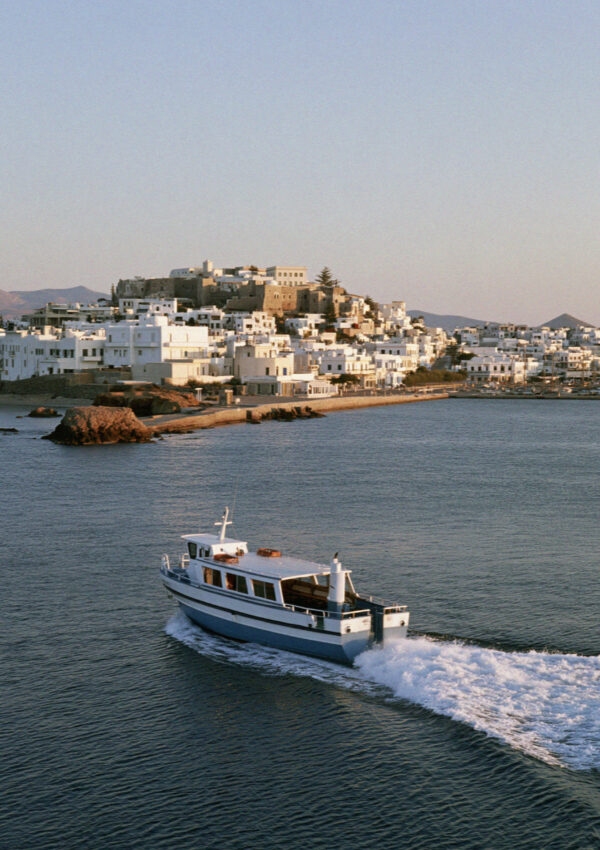
Boats to Delos leave from the old harbour of Mykonos Town, right in the centre, from a small ticket booth by the quay. The crossing takes about half an hour.
In the season there are usually a few sailings in the morning and one or more in the afternoon, with return boats timed so you have about three hours on the island. The first morning boat is the one to take, before the heat and the cruise-ship groups. A return ticket costs around twenty-five euros, separate from the site ticket. Some boats also leave from Ornos and Platis Gialos on the south coast, and day cruises combine Delos with swimming at Rhenia.
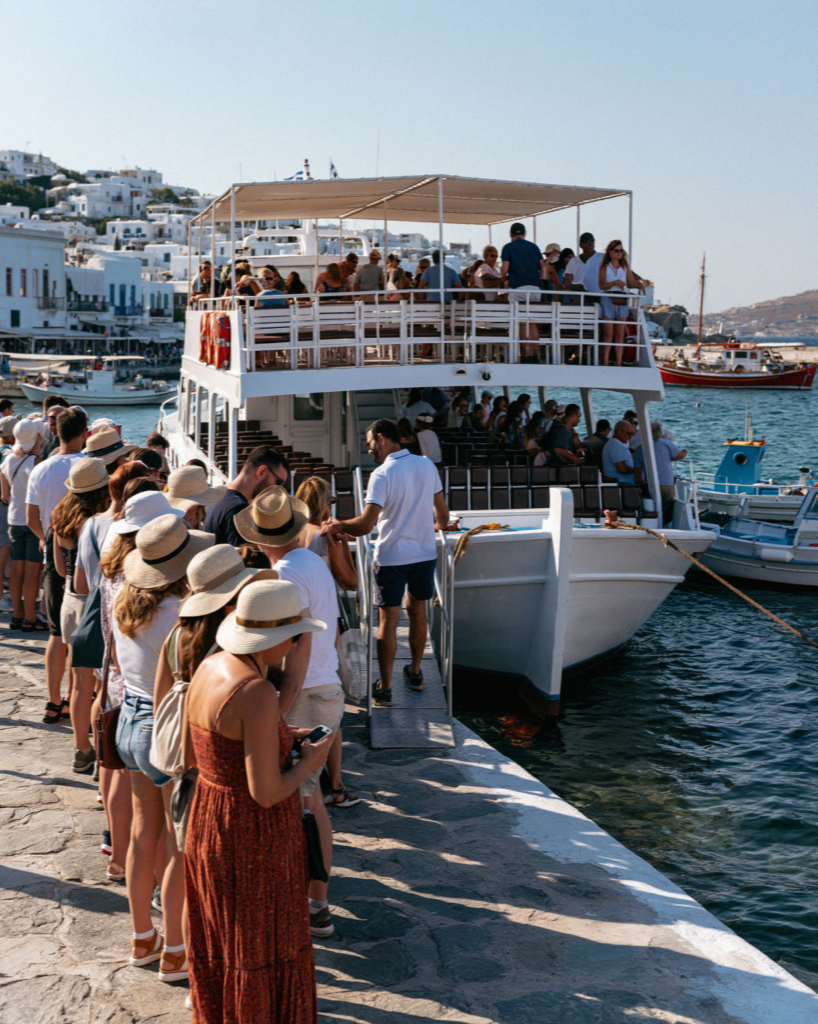
Boats do not run in strong winds, and the meltemi can cancel sailings in summer, so keep a spare day. Check the return times as soon as you land. Missing the last boat is not a quirky adventure, because there is nowhere to stay.
Tickets and opening hours
The archaeological site and museum share one ticket, twenty euros full price and ten euros reduced, bought at the entrance when you land or online in advance.
The hours change through the year, and are set by the Ephorate of Antiquities of the Cyclades. In 2026 the site opened from eight in the morning until early evening in summer, with closing time moving earlier through the autumn: half past seven in the first half of September, then gradually earlier to four in the afternoon in November. From December to March the site is closed, and visits are possible only by written request. Check the latest hours before you go, and remember that the boats, not the site, really decide how long you have.
There is almost no shade anywhere on Delos, and the only refreshments are a small café near the museum. Take water, a hat, sun cream and proper shoes.
The Terrace of the Lions
The most famous sight on Delos is a row of marble lions sitting upright on a low terrace, facing east towards where the Sacred Lake once was.
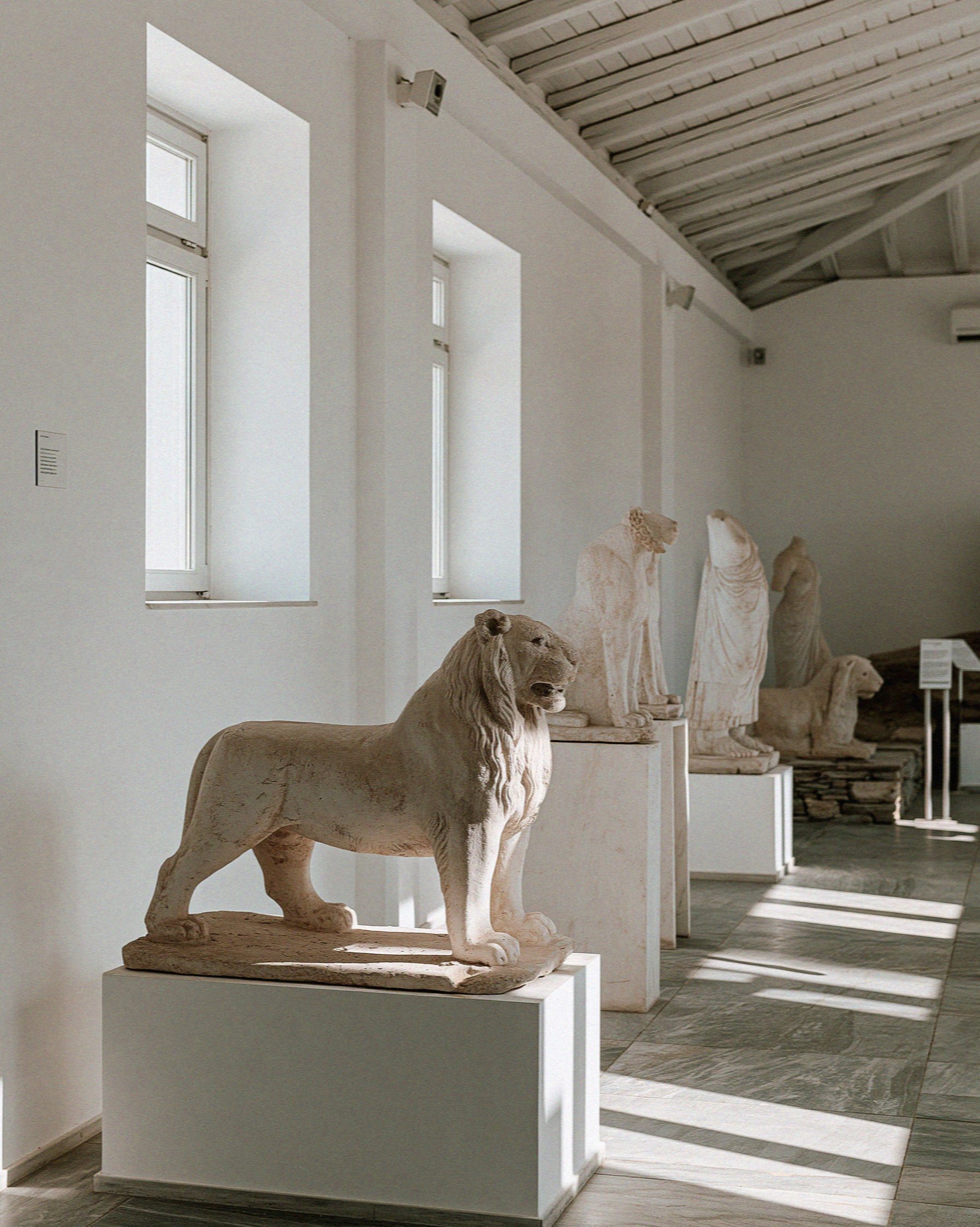
They were set up around 600 BC, carved from marble brought from Naxos, and there were originally more of them, perhaps nine to twelve. Five survive on the island in good condition. The ones on the terrace today are copies; the originals, worn smooth by twenty-six centuries of wind, have been moved inside the museum to protect them. Another was carried off by the Venetians and now sits by the gate of the Arsenal in Venice.
The lake they faced, where Apollo was said to have been born, was drained in the 1920s to stop malaria. Its outline is marked by a low wall, with a palm tree planted where the sacred palm once stood.
The Theatre Quarter and the houses
The part of Delos that stays with people is not the temples. It is the houses.
South of the harbour, the Theatre Quarter is a whole neighbourhood of narrow streets, with the walls of houses standing to head height, their doorways, their courtyards and their cisterns. The richest ones had floors of mosaic, and several are still in place: the House of Dionysus, the House of the Masks, the House of the Dolphins, with images of gods, masks, animals and a figure riding a dolphin, all made of tiny coloured stones. Walking through it, you can see exactly how people lived here, which rooms faced the street, where the water was kept, where the light came in.
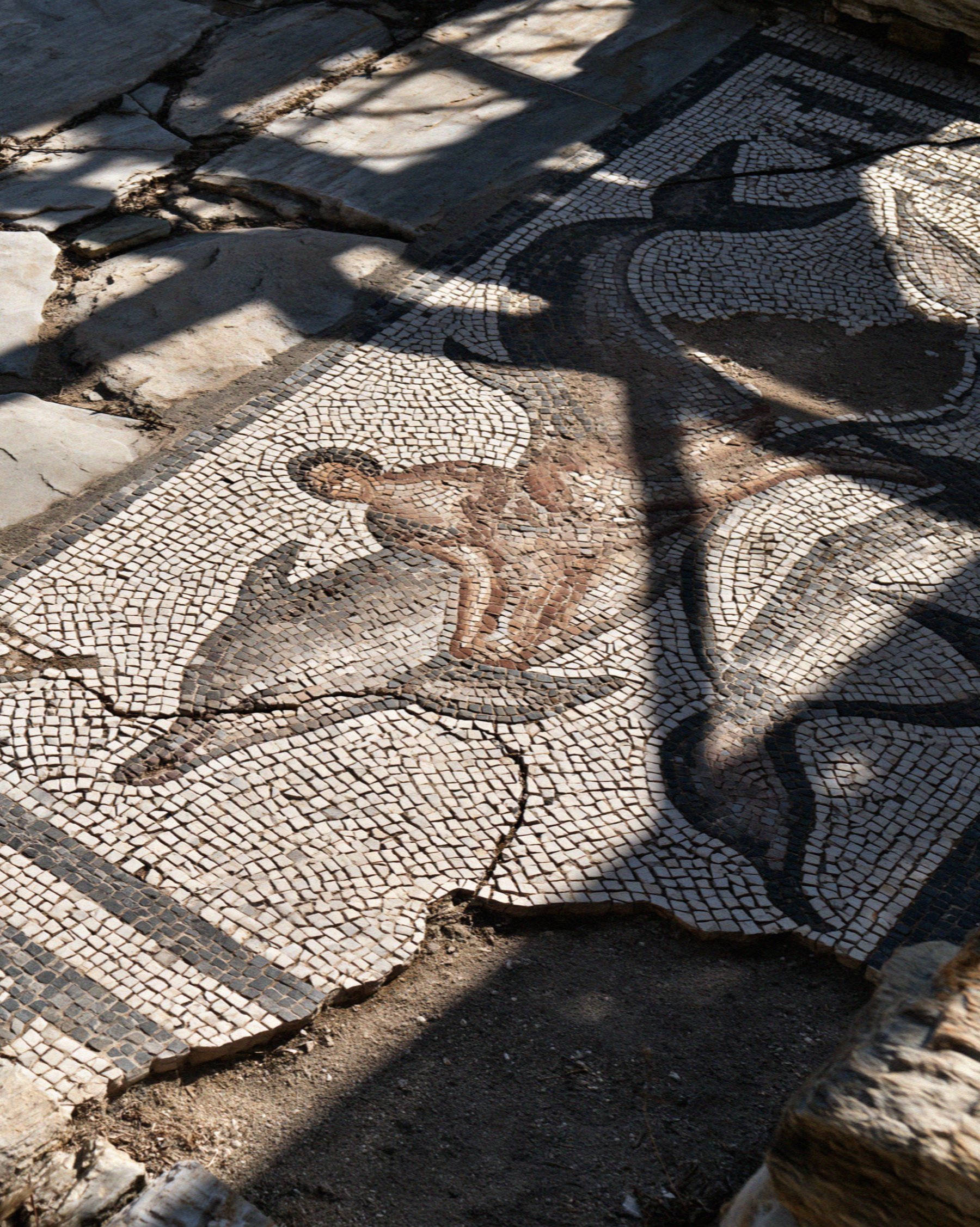
At the top of the quarter is the theatre, built into the slope in the third century BC, with room for several thousand people, and a huge vaulted cistern beside it that collected the rainwater from its seats.
Mount Kynthos
Mount Kynthos is the small rocky hill in the middle of Delos, barely more than a hundred metres high, and by every account the climb to the top is the best thing on the island.
A stone path, partly ancient, leads up past sanctuaries to foreign gods, Egyptian and Syrian among them, left by the merchants who lived here. The climb takes about twenty minutes and is steep and hot. From the summit, where there was once a sanctuary of Zeus and Athena, you can see the whole ancient town spread below you, the harbour, Rhenia across its narrow channel, Mykonos to the east, and on a clear day a ring of other Cycladic islands, which is how the Cyclades got their name: the islands in a circle around Delos.

The museum
The small museum on Delos holds the finest things found on the island, including the original marble lions, sculpture, wall paintings, mosaics and everyday objects from the houses. It was renovated and reopened in 2024 and is included in your ticket.
It is a good place to go in the middle of your visit, out of the sun, to see up close what the site outside only suggests.
Guided or on your own
Delos is easy to do on your own: the site is signed, the layout clear, and a good map or an audio guide is enough for the main sights.
A guide makes a real difference, though, because almost nothing on Delos is complete, and it is hard to imagine a market or a temple from a low line of stones. Guided tours from Mykonos usually include the boat, the site ticket and a guide for a couple of hours on the island, and cost noticeably more than doing it alone, often somewhere around ninety euros or more. Book one if you want the stories as well as the stones. Go alone if you want to wander at your own pace and climb Kynthos.
The day cruises that combine Delos with swimming at Rhenia are in my guide to Mykonos boat tours.
How to do it well
Take the first boat. You will have the site before the heat and before the groups.
Plan the route. Land, look at the Sacred Way and the sanctuary, then the Terrace of the Lions, then the museum in the middle of the day, then climb Kynthos and come down through the Theatre Quarter and its houses to the harbour.
Take more water than you think. There is little shade, and the stones throw the heat back.
Wear proper shoes. The paths are uneven marble, gravel and loose stone. White tennis shoes, not sandals.
Check the wind. A strong meltemi can cancel boats. Go on a calm morning.
Leave three hours. Less and you will rush; more, in summer, and the heat wins.
Choose spring or autumn if you can. In May or late September the island is greener, the light softer and the walk up Kynthos a pleasure rather than an ordeal.
I meant to go myself. On the morning I had planned it, I looked at the boat, then at the town, and went for a coffee instead, which is in my diary from that day. Delos has been there for several thousand years and will manage another week without me. It is still the first thing I would tell anyone else to do. It sits on day two of my Mykonos itinerary, and it is one of the best things to do in Mykonos.
Frequently Asked Questions
How long is the boat from Mykonos to Delos?
About half an hour from the old harbour of Mykonos Town. Return boats are usually timed to give you about three hours on the island.
How much does it cost to visit Delos?
The site and museum ticket is twenty euros, ten euros reduced, and the return boat is around twenty-five euros on top. Guided tours that include both cost more.
Is Delos open every day?
It is open daily in the season, with hours that get shorter through the autumn, and closed from December to March. Boats can be cancelled in strong wind.
Can you stay overnight on Delos?
No. The whole island is an archaeological site and nobody is allowed to stay overnight, so make sure you are on the last boat back.
Is a guided tour of Delos worth it?
It helps a great deal, because the ruins are hard to read without context. On your own, a good map or audio guide covers the main sights.
Read also: Mykonos Boat Tours: Delos, Rhenia and the South Coast | The Best Things to Do in Mykonos | Victoria’s Complete Guide to Mykonos