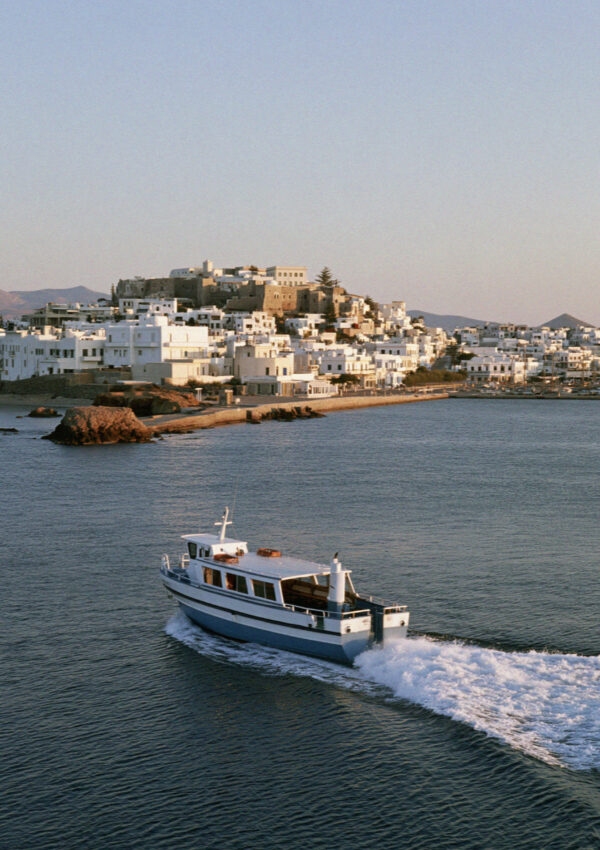
The beaches here change completely from one side of town to the other. The old town has small sandy coves tucked under its walls. North of the harbour the shore turns to pebbles. The Cap has rocks, ladders and water so clear it looks shallow when it is not. And Juan-les-Pins, on the far side of the peninsula, has the long sandy beaches and the clubs.
That variety is the whole pleasure of swimming here. You can spend a morning on a town beach with the ramparts behind you, walk the coastal path in the afternoon and drop off the rocks into a cove, and finish on a sunbed in Juan-les-Pins. This is every beach worth knowing, what is under your feet at each, and when the water is warm enough to enjoy it. Everything beyond the shoreline is in my Antibes and Cap d’Antibes guide.
Sand, pebbles or rock
Before anything else, decide what you want from the day, because it changes where you go.
Sand, shallow water, children: Ponteil and La Salis, just south of the old town, or the long beaches at Juan-les-Pins.
A swim between sightseeing: Plage de la Gravette, right under the walls by the port.
Space and fewer people: the pebble beaches north of the Fort Carré, Plage du Fort Carré and La Fontonne.
The clearest water: the rocks and coves of the Cap, reached by ladder.
A sunbed, lunch and a parasol: a private beach club on the Cap or in Juan-les-Pins.
Most of the coast is a mix of public beach, which is free, and private concessions, where you pay for a sunbed and usually eat lunch. Both can sit side by side on the same stretch of sand.
Plage de la Gravette
La Gravette is the town beach, and it is a lovely surprise. It sits tucked behind the ramparts right beside the port, a small curve of sand that most visitors walk past without seeing, with the old walls rising behind and the masts of Port Vauban beside it.
The water is calm, protected by the harbour, and it is the easiest swim in Antibes if you are staying in the old town: down the steps in the morning before the museum, back up for a coffee afterwards. It is small, so in July and August it fills early. I go before nine, when it still belongs mostly to people from the lanes above.
Ponteil and La Salis
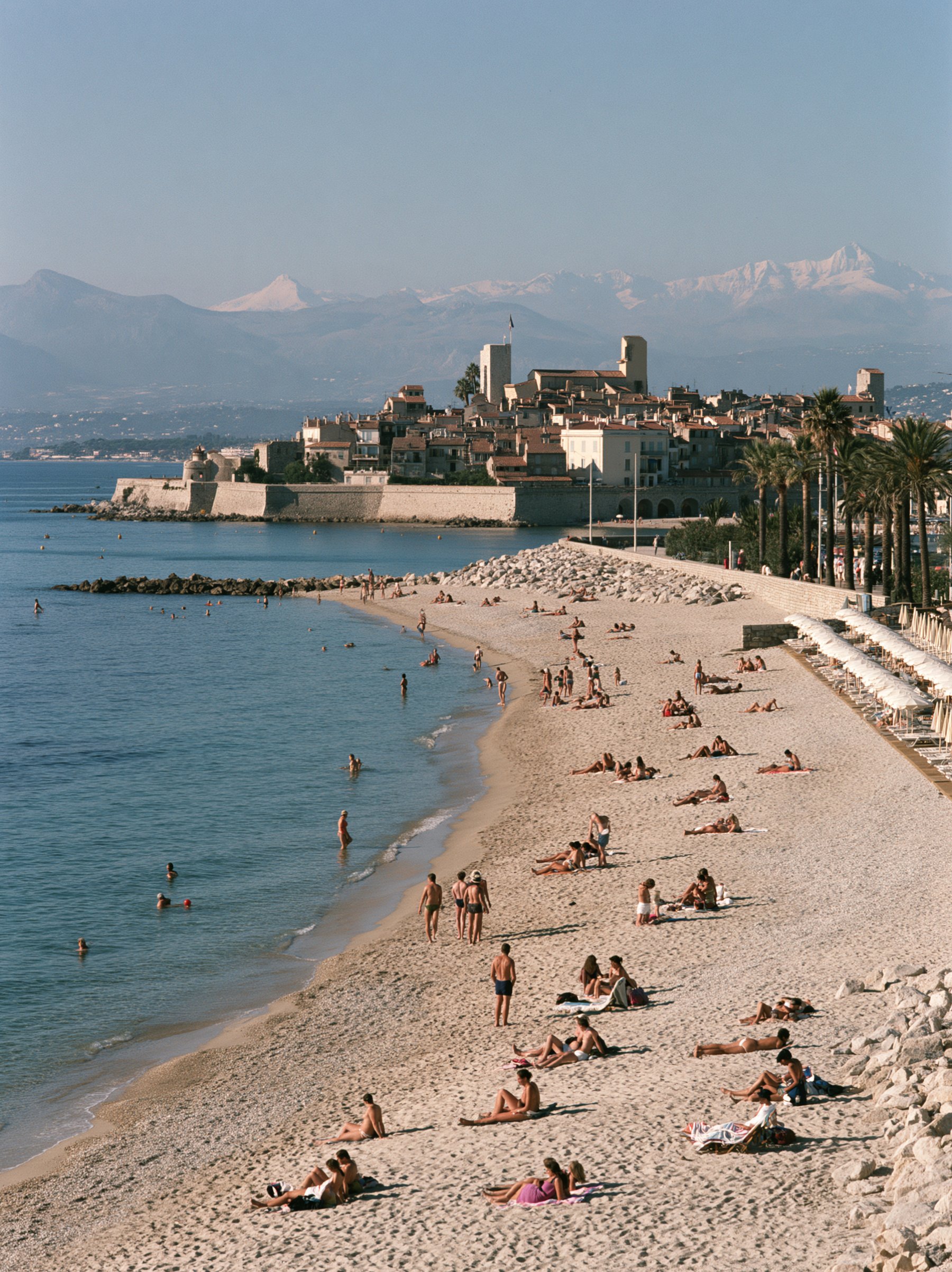
A short walk south of the old town, along the seafront boulevard, are the two main sandy beaches of Antibes. Plage du Ponteil comes first, then the sailing club, then Plage de la Salis, longer and more open.
Both are public, sandy and shallow, which makes them the family beaches of the town, and both have the view that sells Antibes: the old town walls and the château across the water, and on clear days the mountains far beyond. La Salis is the bigger of the two and the one to choose if you want room to spread out, and both are an easy walk back to the old town for lunch.
Fort Carré and La Fontonne
North of the harbour, past the Fort Carré, the coast turns to pebbles. Plage du Fort Carré sits below the fort, and La Fontonne runs on beyond it towards Biot.
These are not the prettiest beaches in Antibes, and pebbles are hard on bare feet (bring water shoes), but they are long, public and much less crowded than the sand south of town. The water is clear and they suit swimmers more than paddlers. They are also the beaches where locals go when the town beaches are full.
Plage de la Garoupe
On the east side of the Cap, Plage de la Garoupe is a little crescent of sand backed by pines, where the coastal path begins. In summer the concessions, Keller the best known, take most of it, leaving a public strip for everyone else.
It is the most elegant beach on the Cap and it feels it, with lunch at the clubs and water that is calm and very clear. The public section is small and fills quickly, so arrive early in high season. Look up how the buses run before you set out, or come on foot along the coast. The rest of the peninsula is in my guide to Cap d’Antibes.
The coves of the Cap
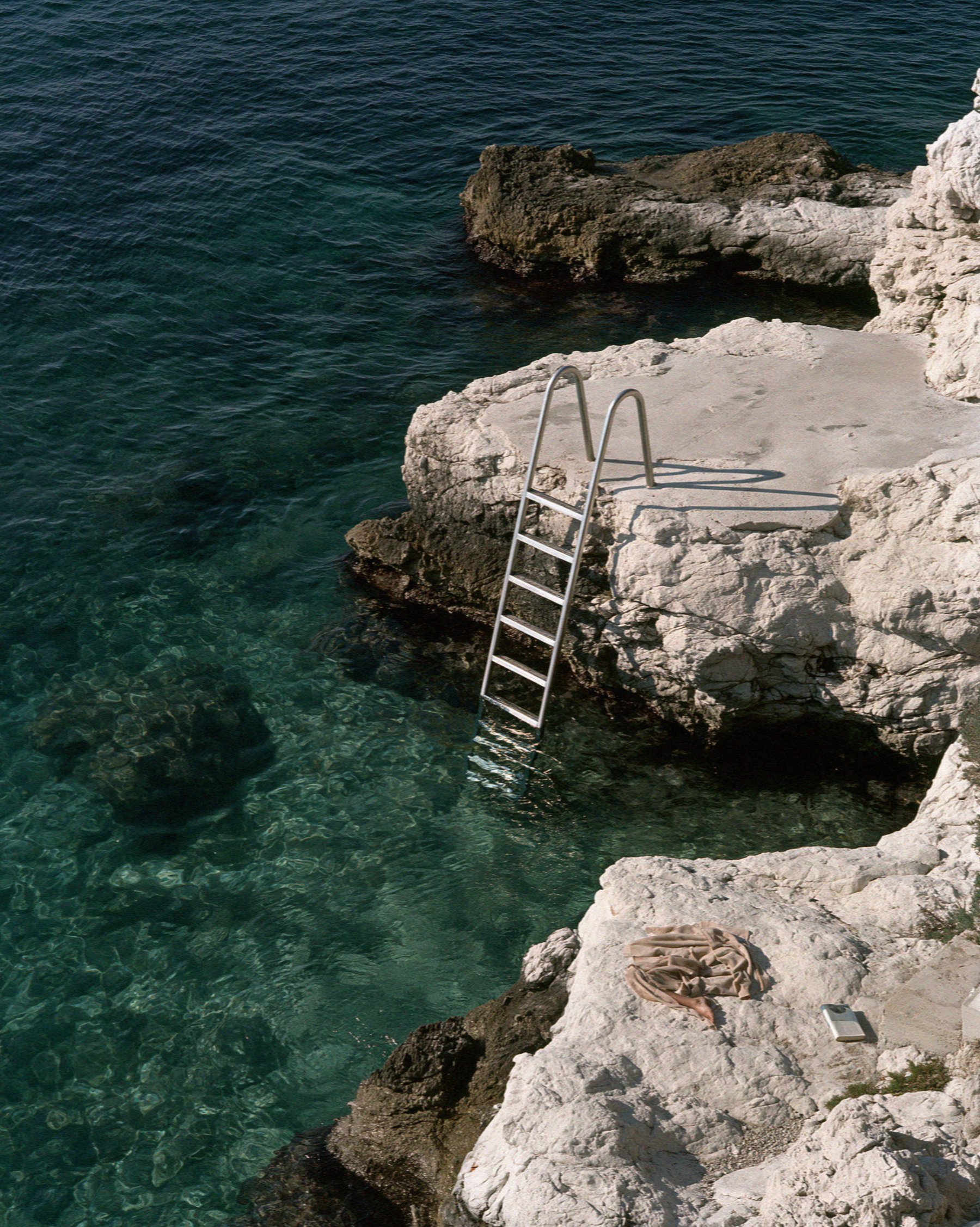
Between the Garoupe and the tip of the Cap, the coastal path passes a string of small coves, some with a patch of sand, most just rocks with a ladder or a flat shelf to swim from. There are no facilities, no shade and no lifeguards, and that is exactly the appeal: the water is the clearest on this stretch of coast.
Wear shoes with grip for the path, take everything you need with you (water most of all), and do not swim when the sea is rough, which is also when the path is closed. On the western side of the Cap, near Juan-les-Pins, Plage des Ondes is a small public beach that is easier to reach.
Juan-les-Pins
Juan-les-Pins, on the western side of the Cap, is the classic Riviera resort, and its beaches are long, sandy and shallow, curving round the bay with the Pinède Gould pine grove behind. It is a mix of public stretches and private beach clubs, and it is the easiest place in the commune to spend a whole lazy day by the sea.
Locals claim water-skiing was first tried in these waters. It is livelier than the old town side, with bars and restaurants along the front, and in July the jazz festival plays under the pines just behind the sand. It has its own railway station, so you can come from Antibes, Nice or Cannes for the day without a car.

Private beach clubs
The beach clubs are part of Riviera life, and on a hot day in August a reserved sunbed, a parasol and lunch brought to you is worth paying for. The best of them are at the Garoupe and along Juan-les-Pins, and some belong to hotels, such as the private beach and jetty of the Hôtel Belles Rives in Juan-les-Pins.
Prices vary a great deal by club and by month, and the front row costs more than the back. Book a day or two ahead in July and August, especially at weekends, and ask whether the sunbed price includes lunch or only the bed. Many clubs close from October to April. If you are staying on the Cap or in Juan-les-Pins, your hotel can usually reserve for you; my guide to where to stay in Antibes has the hotels with beaches of their own.

Swimming off the rocks
Swimming off the rocks is what the Cap does best, and the people who know it rarely go anywhere else. The water is deep and clear right from the edge, and the metal ladders bolted into the rock let you climb back out.
The rules are simple. Check the sea before you get in, because a calm-looking surface can hide a swell against the rocks. Use a ladder or a flat shelf rather than jumping. Wear shoes on the rock, which is sharp and can be slippery near the water. And watch for sea urchins in the shallows. The grand hotels on the Cap swim the same way; even the Hôtel du Cap-Eden-Roc has nothing but rock between its guests and the sea.
When the water is warm
The sea here warms slowly and stays warm late. On average it is about 17°C in May, 20°C in June, 23°C in July and 24°C in August, then 22°C in September and still around 20°C in October.
That means late June to late September is the real swimming season, and September is my favourite month for it: the water is at its warmest, the crowds have gone, and the beaches are quiet again by the middle of the month. May is lovely for the beach but bracing in the water, unless you are used to cold seas. Out of season the clubs close and the public beaches empty, but on a still, sunny winter day the town beaches are still good for a walk and, for the brave, a very short swim. The month-by-month picture is in my guide to the best time to visit Antibes.
Frequently Asked Questions
Does Antibes have sandy beaches?
Yes. Plage de la Gravette, Ponteil and La Salis by the old town are sandy, as are the long beaches at Juan-les-Pins and the small bay of the Garoupe. North of the Fort Carré the beaches are pebbles.
What is the best beach in Antibes for families?
Ponteil and La Salis, just south of the old town, are sandy, shallow and public, and an easy walk from the old town. Juan-les-Pins is also good for children.
Are the beaches in Antibes free?
The public beaches are free. Private beach clubs charge for sunbeds and parasols, and many sit side by side with public stretches.
When is the sea warm enough to swim in Antibes?
From late June to late September. The sea averages about 20°C in June, 23 to 24°C in July and August and 22°C in September.
Where can you swim off the rocks on Cap d’Antibes?
Along the coves of the coastal path between Plage de la Garoupe and the tip of the Cap, where ladders lead into deep, clear water. Do not swim there in rough seas.
Read also: Cap d’Antibes: the Coastal Path, the Lighthouse and the Villas | Where to Stay in Antibes: Old Town, the Cap or Juan-les-Pins | Victoria’s Complete Guide to Antibes and Cap d’Antibes