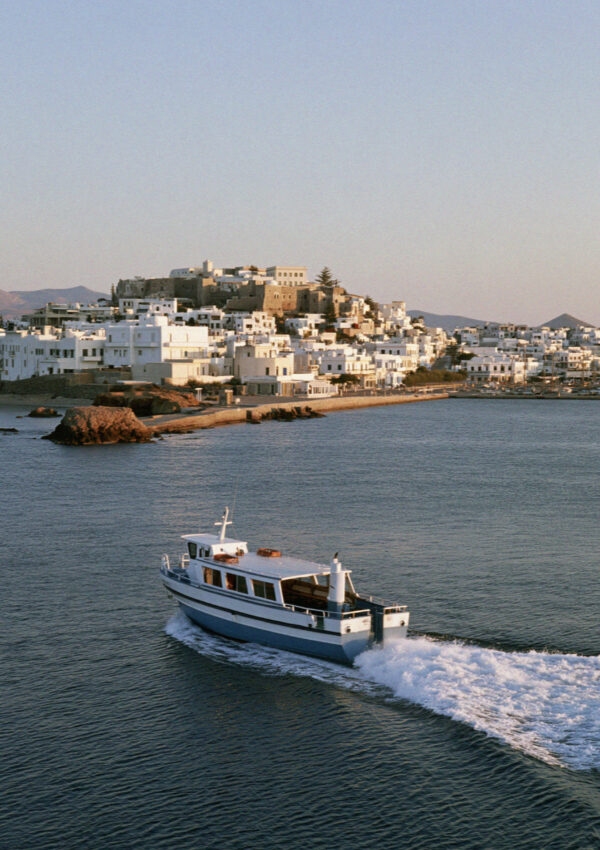
Put the hotels of Naxos on a map and almost all of them land on one stretch of coast, from the harbour south to Plaka. That is good news. It means the decision is not really which part of a big island to commit to, but how close to the town you want to be, and whether you would rather wake up to the Kastro or to the sand.
I slept in town, within sight of the Portara, and walked or took the bus everywhere else. This guide covers every area worth considering, who each one suits, named hotels at different budgets, and what a room really costs through the season. The rest of the island is in my complete guide to Naxos.
The short answer
First visit, three or four days, no car: Naxos Town, or Agios Georgios at its southern edge.
A beach holiday with the town close by: Agios Prokopios or Agia Anna.
Long sand, space, a slower pace: Plaka.
Wind sports: Mikri Vigla.
Quiet, walking, the real interior: a farmhouse or small hotel inland, with a car.
Something special and adults only: Stelida.
Whatever you choose, book early for July and August, and remember that most beach hotels close from roughly November to April, so a winter trip means town.
Booking a room in Naxos
A search for each area in this guide. These help support the blog, at no cost to you.
- Naxos TownThe lanes, the Kastro and the harbour, with the ferry on the doorstep
- Agios GeorgiosThe town beach, a few minutes on foot from the lanes
- Agios ProkopiosThe long west coast beaches, with the bus into town
- Agia AnnaA small beach village with tavernas on the sand
- PlakaThe long beach of dunes and tamarisks south of Agia Anna
- See every hotel on NaxosTown rooms, beach hotels and village houses
- Add a hire carFor the mountain villages and the south
- Stay connected with a travel eSIMData from the moment you land, no roaming charges
This section contains affiliate links. If you book through them I may earn a small commission, at no extra cost to you.
Naxos Town
Naxos Town is the best base for a first visit and the only one where you need nothing on wheels. The ferries arrive here, the airport is only a few kilometres away, the KTEL buses to the beaches and villages leave from the port, and every evening you have the Kastro, the Old Market lanes and the Portara at sunset within a few minutes’ walk.
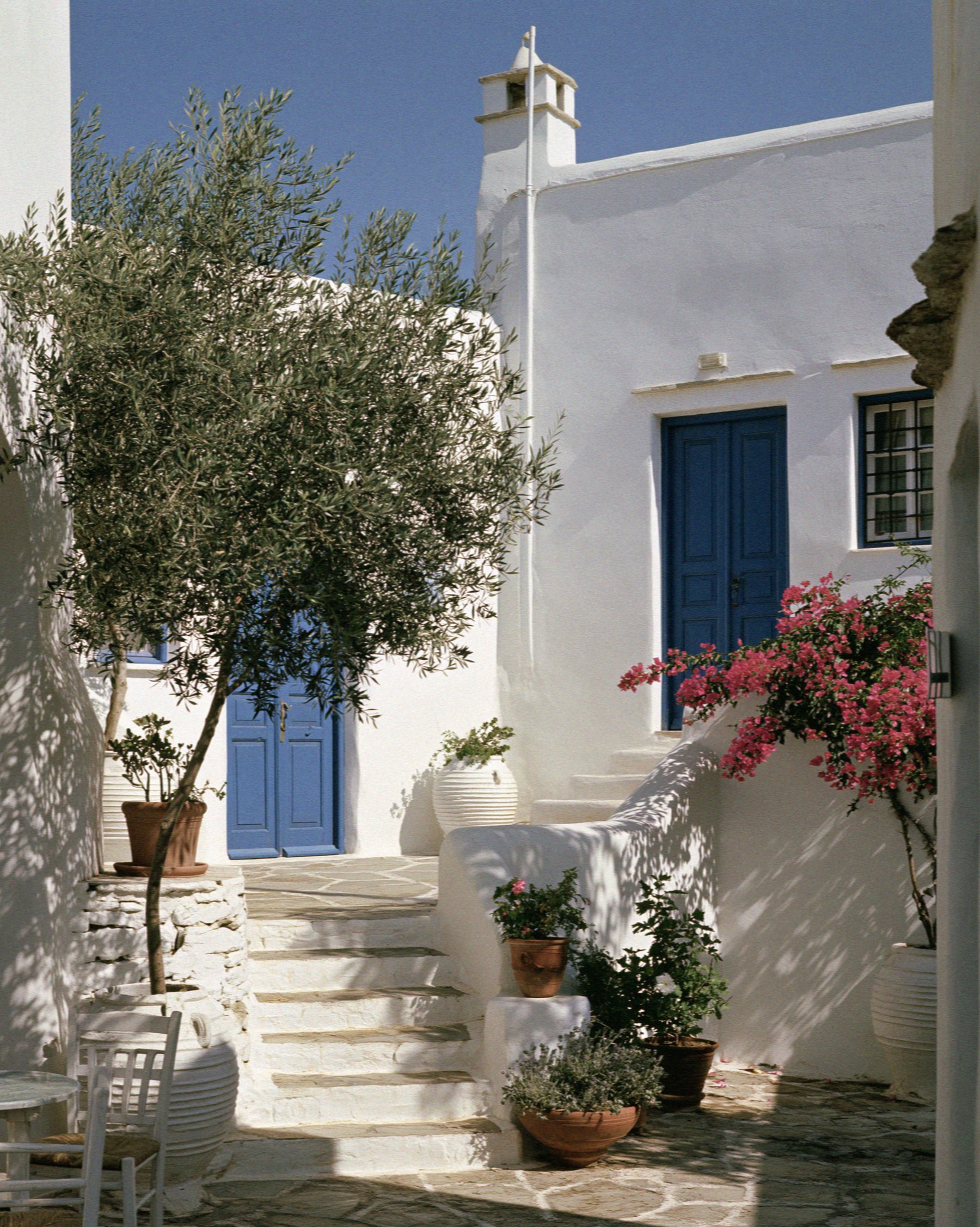
The town itself is a jumble of small hotels and rooms rather than big resorts. Up in the old quarter the lanes are steep and car-free, so rooms there are atmospheric but mean carrying your bag. Down along the waterfront you get the harbour view and the noise that goes with it. The streets behind the front, and the newer area towards Agios Georgios, are the quietest compromise.
Where I would look. At the northern end of town, Hotel Grotta is a long-running, family-run hotel near the Grotta rocks, an easy walk from the harbour. In and around town, Argo Boutique and Georgia Mare are smaller, well-regarded places; check the map before you book to see whether a hotel sits nearer the harbour or the beach, because the walk changes the holiday. Simple rooms and family-run studios are everywhere and are the cheapest beds on the island.
Agios Georgios
The streets behind Agios Georgios are really the southern end of Naxos Town. It is the most practical base on the island: a calm, shallow beach on your doorstep, cafes and tavernas along the sand, and the Kastro a short walk away.
It suits families above all, because the water is safe for small children, and anyone without a car who still wants to swim every morning. Nissaki Beach Hotel, a five-star right on the sand, is the smartest address here. Around it are many smaller hotels and apartments at every price.
The only drawback is that it is a town beach, busy and built up rather than wild. If that is what you want, you do not need to look any further.
Stelida
Stelida is the hillside south of town, rising between Agios Georgios and Agios Prokopios, with long views over the sea towards Paros. It is quieter than town and higher than the beaches, and it is where several of the island’s more design-led hotels have been built.
Akre is adults only, the sort of place for a couple who want a pool, a view and very little else. Kouros Art Hotel is a smaller, art-filled hotel in the same area. From Stelida you are a short drive from town and from the sand at Agios Prokopios, but you will want a car or rely on taxis in the evening.
Agios Prokopios
Agios Prokopios is the best beach base on the island. The beach is long, pale and gentle, the bus to town runs along the road behind it, and there are enough tavernas and small shops to manage without driving anywhere at all.
It has the widest choice of beach hotels too. 18 Grapes and Virtu Suites are boutique places with suites and pools. Lagos Mare and Kavos are long-running hotels in the same area, worth comparing on location before you book. For families or friends wanting space, Naxian Collection rents villas on the slope above.
I walked out here from town for a swim, and it is easy to see why so many people never leave it. The one thing to know is that it faces the meltemi in July and August, so on a windy day the beach is breezy rather than calm.
Agia Anna and Plaka
Agia Anna follows straight on from Agios Prokopios and feels more like a village, with tavernas on the sand and a small harbour where the day boats leave in summer. That makes it a good base if a boat trip to the Small Cyclades is part of the plan. Iria Beach Art Hotel sits right on the beach here.
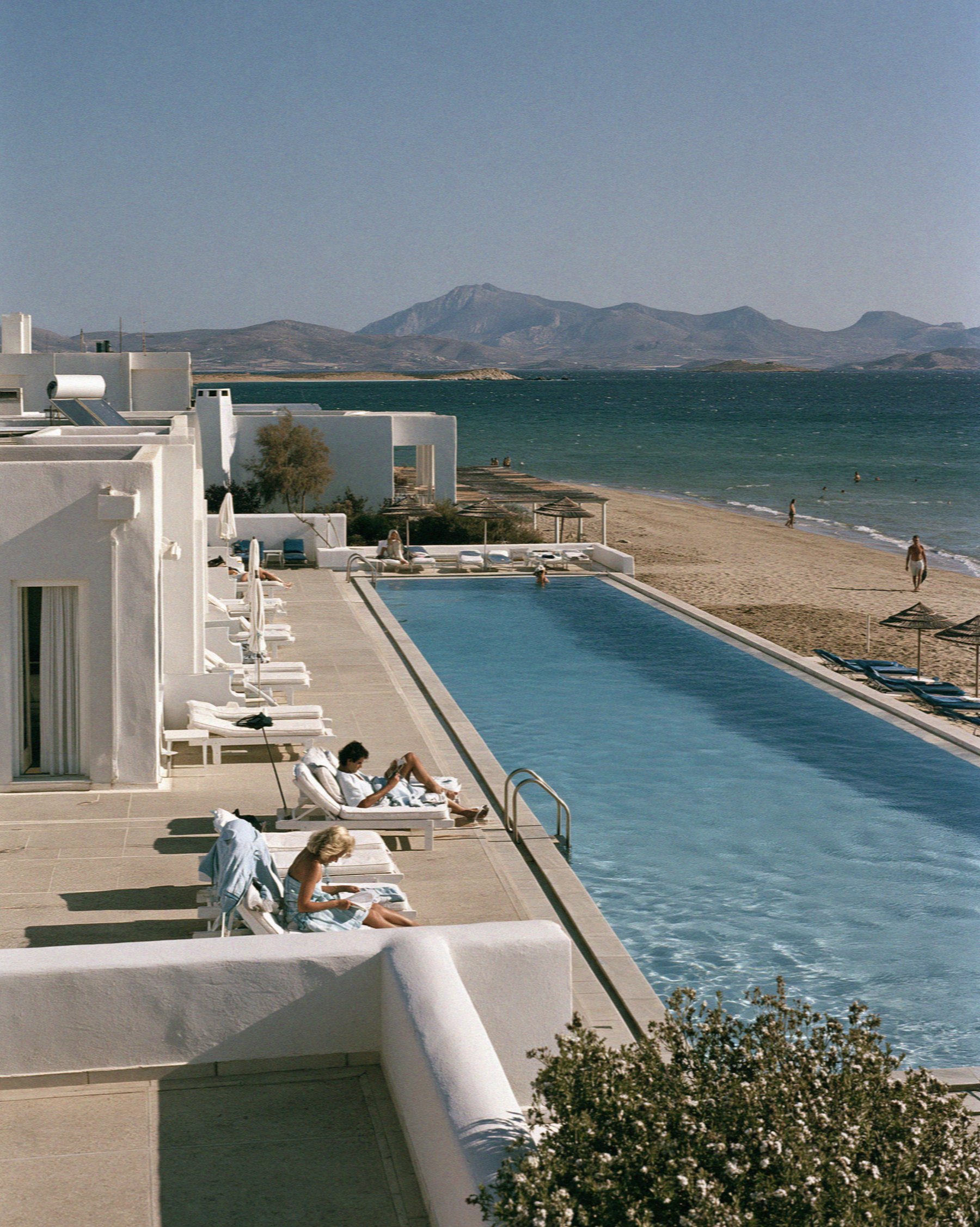
Plaka is about four kilometres of sand beyond it, and the further south you go along it, the quieter it gets. It suits people who want to walk along the waterline every evening and do not mind being further from town. Naxian on the Beach is the smart choice, Ammothines is a calmer, smaller one, and Medusa Beach Resort has the facilities of a proper resort.
The bus still reaches Plaka, though less often in the evening. A car makes life much easier from here south.
The south: Mikri Vigla to Alyko
Beyond Plaka, the coast belongs to the wind and the open beaches. At Mikri Vigla a handful of small hotels and apartments serve the kitesurfers and windsurfers, with schools on the sand. Further south, around Kastraki, Glyfada and Alyko, there are scattered studios and villas, but no town and very few shops.
This is a base for two kinds of people: those who come to kite every day, and those who want long empty beaches and are happy to drive for everything else. Check that your room is close to a mini-market, bring a car you are comfortable on dirt tracks with, and expect the evenings to be very quiet indeed.
Inland and in the villages
The interior is the Naxos most visitors never sleep in, and it is a different island: green valleys, olive terraces, Venetian towers and village squares where the evening means one taverna and a few old men with a backgammon board.
Elaiolithos, in the Tragaea valley around Halki, is a small retreat among the olive groves. Ayiopetra, near Sangri, is another quiet inland address, close to the Temple of Demeter. In the villages themselves, including Halki, Filoti and Apeiranthos, you will find simple rooms above tavernas and small guesthouses at the cheapest prices on the island.
Sleep here if you plan to walk, climb Mount Zas early before the heat, or simply want to see the island’s real rhythm. You will need a car, and you will be thirty minutes or more from the beaches. The villages themselves are in my guide to the mountain villages of Naxos.

What a room really costs
Naxos is still noticeably cheaper than Mykonos or Santorini, and good rooms exist at every level. As a rough guide for a double room per night in high season:
Simple rooms, studios and family-run guesthouses: about 70 to 120 euros.
Good mid-range hotels, in town or on a beach: about 120 to 250 euros.
Five-star hotels and the best boutique places: about 200 to 450 euros, and more for the best suites and villas.
In May, June and late September the same rooms are often considerably cheaper, and October, when I was there, still has warm sea and quiet hotels. From November the beach hotels shut one by one, and they rarely reopen before spring. On top of the room rate, Greek hotels add a nightly climate fee per room, paid at the hotel: in summer about 2 euros at a simple place, rising to 15 euros at a five-star, and much less in winter.
Which base suits which trip
No car, first visit: Naxos Town or Agios Georgios, with the bus to the beaches and villages.
Families: Agios Georgios for the shallow water, or Agios Prokopios for a beach hotel.
Couples: Stelida or a boutique hotel on Agios Prokopios, for the pool and the view.
A boat day or two: Agia Anna, close to the jetty.
Wind sports: Mikri Vigla.
Walkers and slow travellers: a farmhouse inland, with a car.
The beach in front of each of these bases is described in my guide to the best beaches in Naxos, and the best tables near them are in my guide to where to eat in Naxos.
Frequently Asked Questions
What is the best area to stay in Naxos for a first visit?
Naxos Town or Agios Georgios at its southern edge. Everything starts from the port, you can walk to the Kastro and the beach, and the buses go to the coast and the villages.
Is Agios Prokopios or Plaka better as a base?
Agios Prokopios is closer to town, with more hotels and a frequent bus. Plaka is longer and quieter, better for space and long walks, but further from the evenings in town.
Do I need a car if I stay in Naxos Town?
No. Town and the west coast beaches as far as Plaka are easy by bus or on foot. You will want a car for a day in the villages, the south coast or Mount Zas.
How much does a hotel in Naxos cost in summer?
A simple room runs about 70 to 120 euros in summer, a good mid-range hotel 120 to 250, and five-star from about 200 to 450 or more, plus the nightly climate fee.
Are Naxos hotels open in winter?
Most beach hotels close from about November to April. Naxos Town keeps a good number of hotels and rooms open all year, so it is the base for a winter visit.
Read also: The Best Beaches in Naxos | Where to Eat in Naxos and What to Order | Victoria’s Complete Guide to Naxos