Verona is small enough to walk across in twenty minutes and rich enough to keep you busy for days, which is a rare and wonderful combination. Everything worth seeing sits inside a single loop of the river, so a day here is less about logistics than about mood, drifting from a Roman arena to a medieval balcony to a marble square with a glass of wine. These are the things I would not leave Verona without doing, roughly in the order I would do them, with the honest practical notes I always wish someone had given me first.
What to book before you come
Verona is small enough to walk end to end in half an hour, and the single most useful thing you can buy is the card that gets you into everything without queuing for each one separately. After that it is the wine, which is the real reason this city is rich.
- The Verona Card, with priority Arena entry. 4.6 from over nine thousand people, and the obvious first purchase. It covers the Arena, the churches, Juliet s house and the transport, and the churches here charge separately otherwise.
- A Valpolicella and Amarone half day. Rated 4.8. Amarone is made from grapes dried on racks for months before pressing, which is why it tastes the way it does, and the cellars are twenty minutes out of town.
- A tasting with a view over the city. 4.9 from nearly seven hundred people. An hour, at the end of the afternoon, above the rooftops.
- A pasta and tiramisu class. 4.9 from over twelve hundred people.
- Sirmione and Lake Garda in a day. The lake is half an hour away and this is the least effortful way to get a day on it.
Walking up to Castel San Pietro for the view over the river, the Piazza delle Erbe market, and standing outside the Arena at night while somebody sings in it are all free.
See the Arena, and go at night if you can
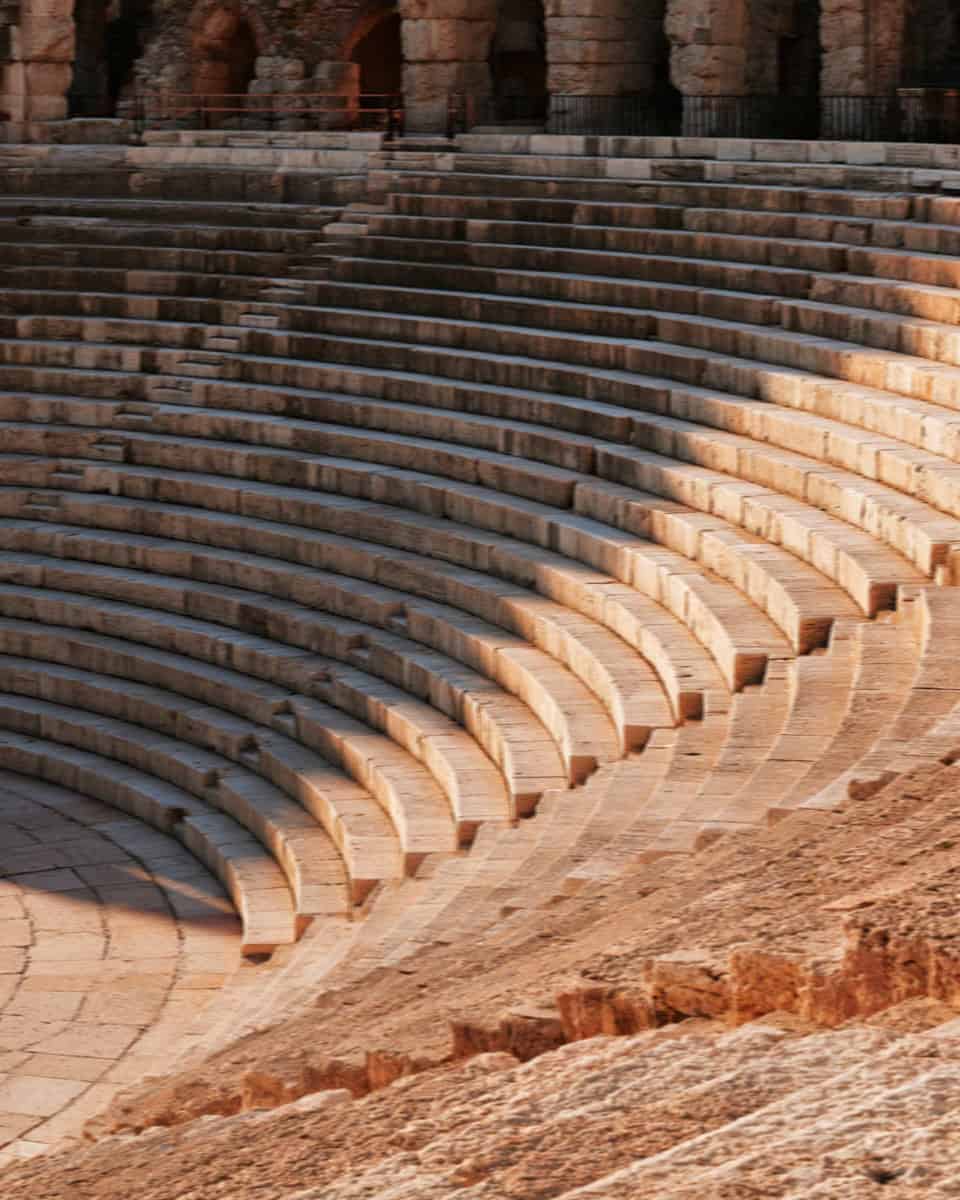
The Arena di Verona is the reason most people come, and rightly so. Built in the first century, it is the third largest Roman amphitheatre still standing and, uniquely, still in nightly use. By day you can walk in and climb the worn pink steps for a few euros, and it is worth doing to feel the sheer scale of the thing. But the Arena’s true magic is the summer opera festival, which runs from mid June to mid September. As the sun drops, twenty thousand people settle onto the ancient stone, a little candle is lit and passed along the rows, and a full opera unfolds under the open sky with the swifts wheeling overhead.
You do not need to be an opera devotee to be moved by it. Tickets start on the unreserved stone steps, the gradinata, for around thirty to forty euros, rising through numbered seats to the cushioned stalls at two hundred and upwards on the biggest nights. My advice for a first time: take the stone steps, hire a cushion at the entrance, bring a light layer, and choose one of the famous crowd-pleasers, Aida, Carmen, Nabucco, La Traviata, so the spectacle carries you even if the language does not. Book ahead in high summer.
Plan Your Visit to Verona
A few things I booked and loved. These help support the blog, at no cost to you.
- Where I stayed: search Verona hotels
- Verona Arena and attraction tickets
- Rent a car to explore the area
- Stay connected: get a travel eSIM
This section contains affiliate links. If you book through them I may earn a small commission, at no extra cost to you.
Make your peace with Juliet’s House
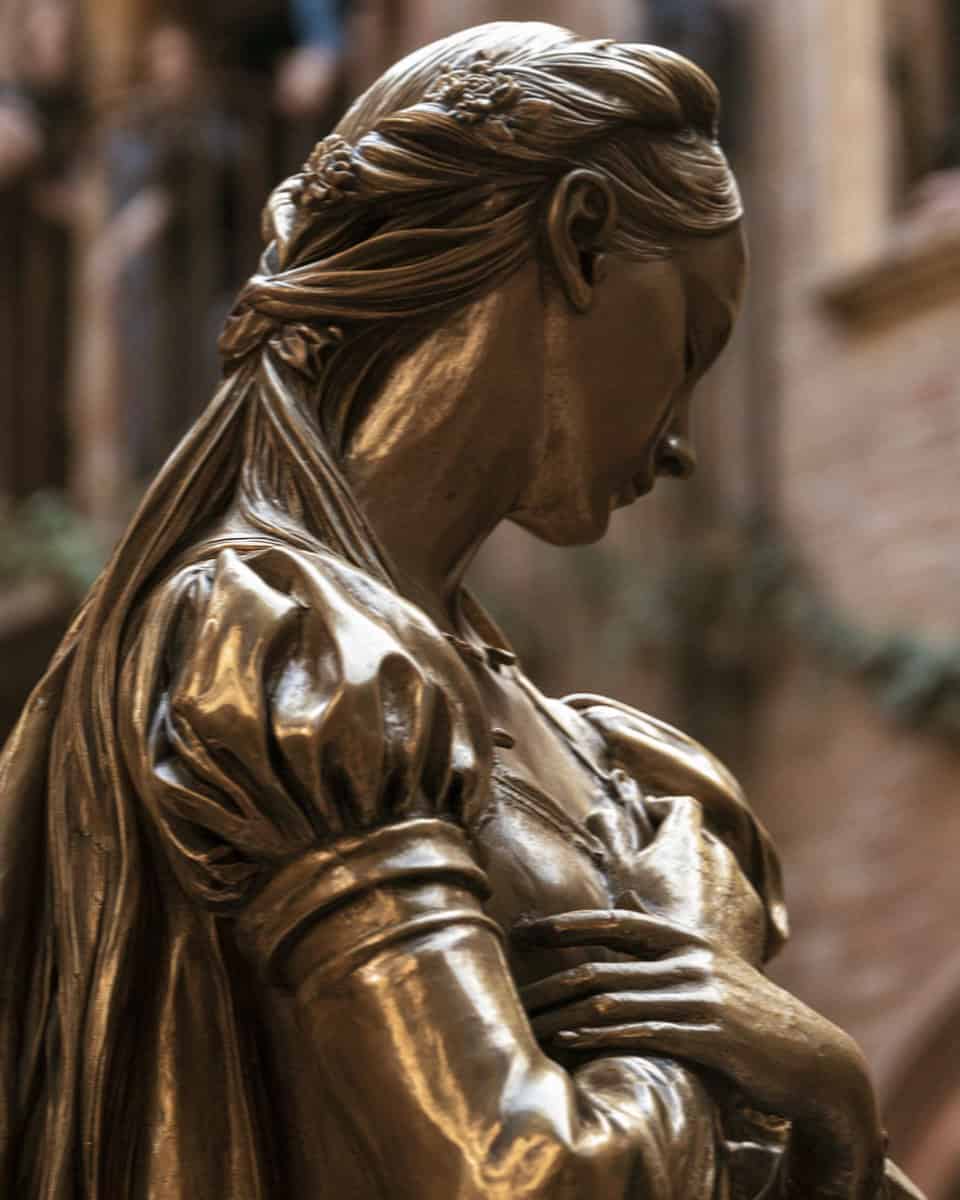
The Casa di Giulietta is pure invention, and I adore it anyway. A thirteenth-century house was designated Juliet’s in the last century, a balcony was added for effect, and a legend with no basis in fact became one of the most visited spots in Italy. Step into the little courtyard, which is free to enter, and you find the walls layered with love notes, a bronze statue of Juliet worn gold at one shoulder by decades of hopeful hands, and a crowd of strangers all quietly wishing for the same thing. It is impossible to be cynical in there for long.
If you want to stand on the balcony yourself and see the museum of paintings, costumes and film memorabilia, the ticket is around twelve euros and must be booked online for a timed slot, as they no longer sell at the door. Go early or late to miss the thickest of the crowds.
Climb the Torre dei Lamberti
For the view that ties the whole city together, climb the Torre dei Lamberti, the eighty-four metre medieval tower rising over Piazza delle Erbe. There is a glass lift if you would rather not take the stairs, and the ticket is a modest six euros or so. From the top the terracotta rooftops spread out below you, the Adige loops green and slow around the old town, the Arena sits like a pale shell in its square, and on a clear day the mountains stand blue along the horizon. Come in the last hour of light if you can.
Wander the two great squares
Verona’s soul lives in its squares. Piazza delle Erbe, the old Roman forum, is still a working market under a huddle of frescoed palaces and a Venetian lion, with the little fountain of Madonna Verona at its centre and café tables spilling everywhere. A short arch away lies Piazza dei Signori, statelier and calmer, ringed by the civic palaces of the medieval city with a brooding statue of Dante at its heart, for the poet found refuge in Verona during his exile. Between and around them, do not miss the Scaliger Tombs, the extraordinary Gothic monuments where the city’s medieval rulers lie beneath pinnacled canopies of white marble, wrought iron and stone.
Cross the Castelvecchio bridge
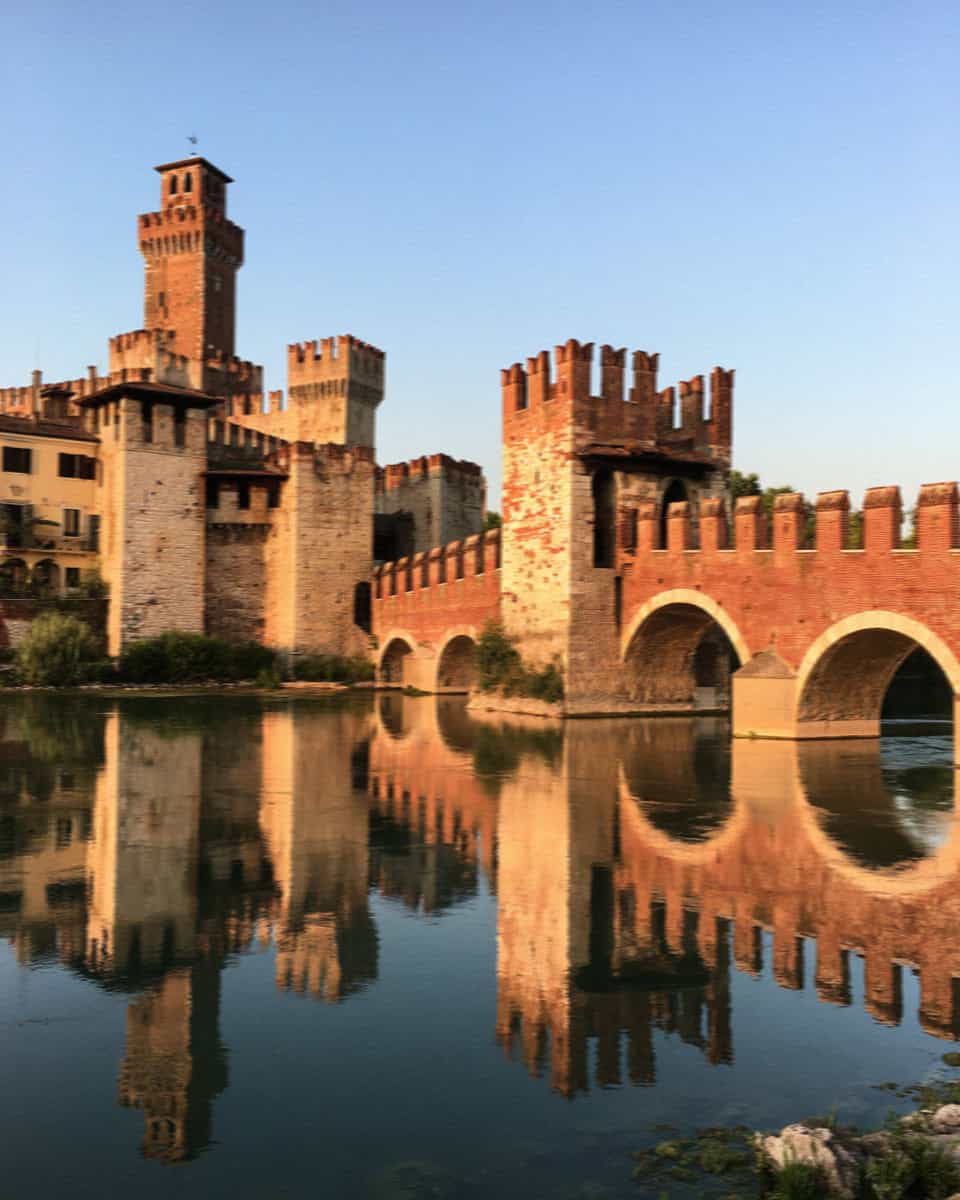
To the west, guarding the river, stands Castelvecchio, the red-brick fortress of the Scaligeri with its swallowtail battlements. Inside is one of the finest small museums in the Veneto, its medieval and Renaissance collection beautifully staged in a modernist restoration that is admired by architects the world over. But even if you skip the museum, walk out onto the fortified Ponte Scaligero behind it, the castle’s private bridge across the Adige, all warm brick and forked crenellations, and one of the loveliest things in the city to photograph.
Climb to the Roman theatre and Castel San Pietro
Cross the river to the eastern bank, the district called Veronetta, and the ground rises steeply. Here the Teatro Romano, older than the Arena, still stages summer performances against a backdrop of cypresses and stone. Above it, reached by a stiff climb or a little funicular, sits the belvedere of Castel San Pietro, where the entire city lays itself out below in one perfect sweep, the river, the bridges, the domes and towers, the Arena in the distance. This is where everyone comes for sunset, and for once the crowd is right.
Slip into the churches and a secret garden
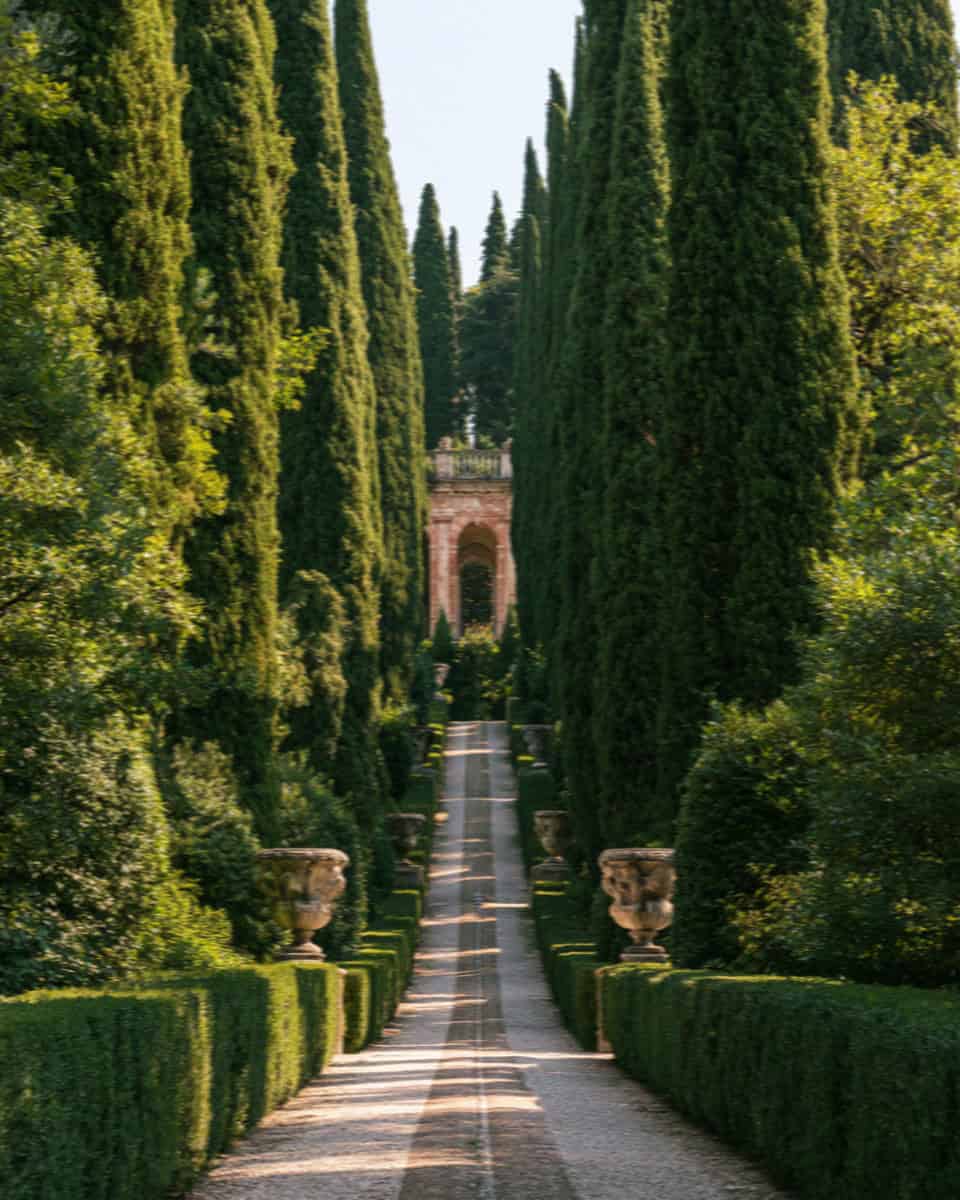
Verona’s churches are quietly magnificent. The Basilica di San Zeno Maggiore, a masterpiece of Romanesque architecture with bronze doors like a picture book and a luminous Mantegna altarpiece, is worth the short walk out from the centre. The Duomo rewards a visit, and the Gothic Sant’Anastasia holds a famous fresco of Saint George. And for a pocket of calm, cross to the Giardino Giusti, a Renaissance garden of clipped hedges, cypress avenues and a little belvedere, laid out in the sixteenth century and beloved of Goethe. It asks a small entrance fee and repays it with silence.
A note on tickets
If you plan to see three or more of the paid sights, buy a VeronaCard. It covers the Arena, Juliet’s House, Castelvecchio, the Torre dei Lamberti, San Zeno, the Duomo, the Scaliger Tombs and the Roman theatre among more than twenty places, and includes the city buses. It comes in twenty-four and forty-eight hour versions; check the current price when you buy.
Frequently Asked Questions
What is the number one thing to do in Verona?
See the Arena, ideally at a summer opera performance between mid June and mid September. It is a Roman amphitheatre still in nightly use, and a night on the ancient stone steps under the stars is unlike anything else in Italy.
Is Juliet’s House worth visiting?
Yes, for the atmosphere rather than the history. The courtyard is free and full of charm; paying around twelve euros to stand on the balcony and see the museum is optional. The whole legend is invented, but the joy of the place is real.
Is the VeronaCard worth it?
If you visit three or more of the main paid sights it saves money, and it includes unlimited city buses. For a single-sight visit it is not worth it. Buy the twenty-four or forty-eight hour version to match your stay.
How long do you need to see Verona’s sights?
Two full days lets you see everything here without hurrying. One long day covers the essentials, the Arena, the squares, Juliet’s House and a climb for the view, but you will feel the rush.
Related
Read next: the perfect Verona itinerary, the most beautiful photo spots in Verona, and Victoria’s complete guide to Verona.