The best photo spots in Bologna are not the ones that shout loudest, and that is exactly why I love photographing this city. Bologna hands you red terracotta, endless arcades and a low golden light that seems made for a camera, but it rarely poses. You have to walk under the porticoes, look up, look through a shuttered window, and wait for the moment the light lands. Here are the spots I return to again and again, where each one sits, and when the light is kindest.
La Finestrella di Via Piella, Bologna’s Little Venice
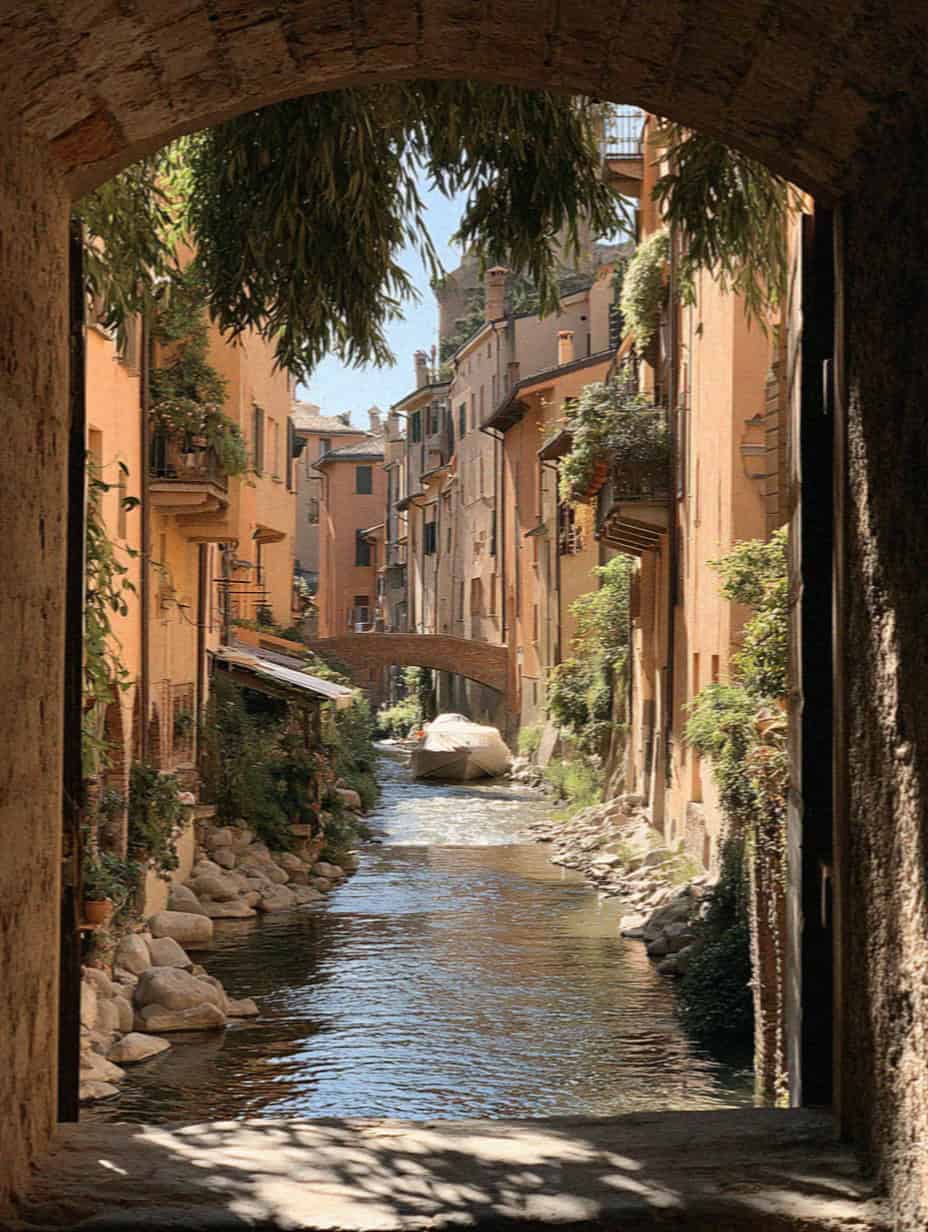
If you photograph one thing in Bologna, make it this. La Finestrella di Via Piella is a small shuttered window at Via Piella 16/a to 18/a, and when you swing it open you look straight down onto the Canale delle Moline, a green sliver of water hemmed by ochre houses that has earned the nickname “Bologna’s Little Venice”. It is a genuine surprise, because from the street you would never guess a canal ran behind the walls at all. Most of Bologna’s medieval waterways were paved over centuries ago, so this little frame is one of the last places you can still see them.
The window is narrow and the spot is popular, so go early. I like it soon after breakfast, before the queue forms and while the light is still soft rather than glaring off the water. Late afternoon works too, when the far wall catches a warm wash of sun. Frame the shutters as a border around the canal, and if you want a second angle, there is another canal view a short walk away from Via Oberdan. This is the easiest great photograph in the whole city, which is why I put it first.
Plan Your Visit to Bologna
A few things I booked and loved. These help support the blog, at no cost to you.
- Where I stayed: search Bologna hotels
- Tickets and things to do in Bologna
- Stay connected: get a travel eSIM
This section contains affiliate links. If you book through them I may earn a small commission, at no extra cost to you.
The Santuario di San Luca at sunset
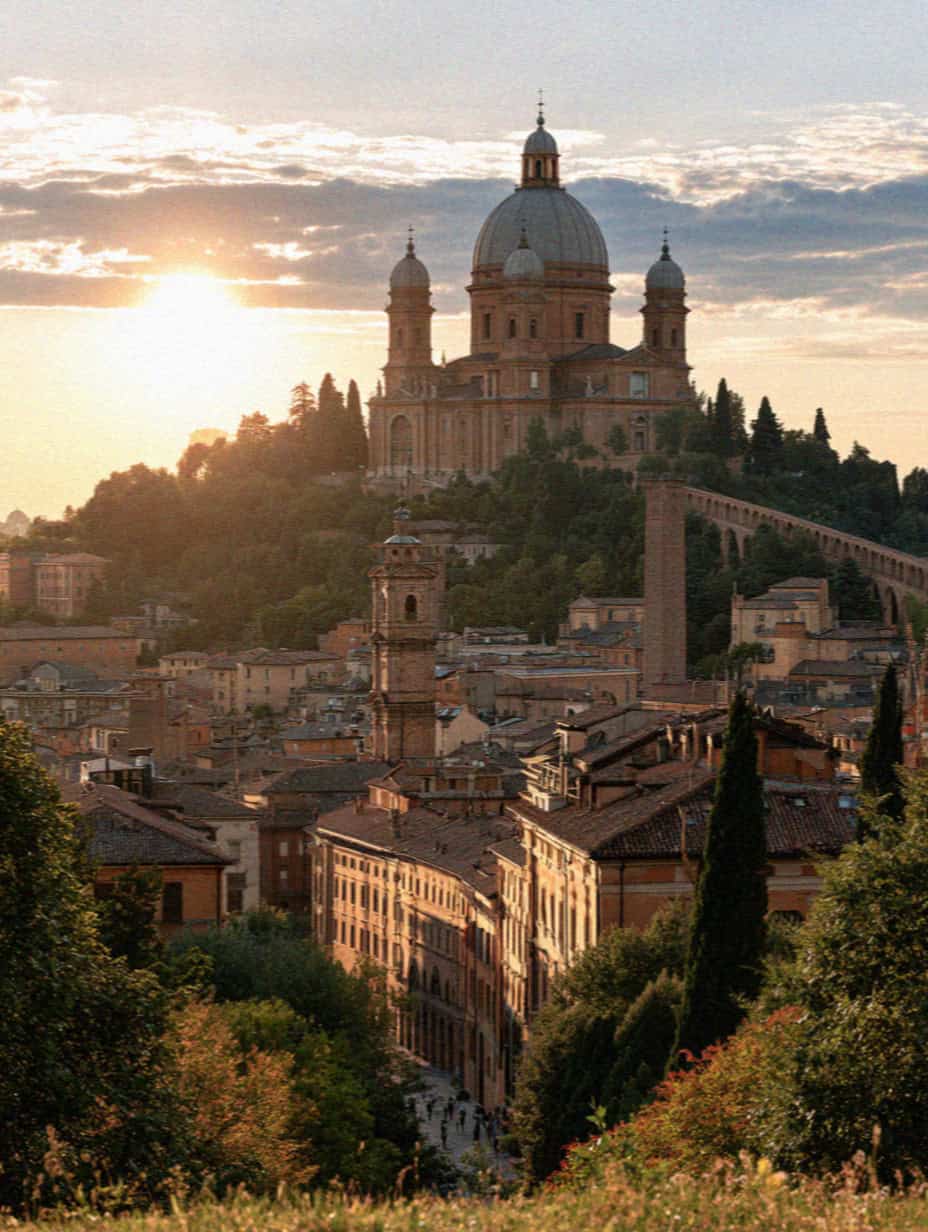
For the widest, most cinematic view of Bologna, climb to the Santuario della Madonna di San Luca. It sits on a wooded hill above the city and it is free to visit. You can walk up under the Portico di San Luca, the longest portico in the world, 666 arches and roughly 3.8km from Porta Saragozza, passing the graceful Arco del Meloncello of 1732 on the way. It is a proper walk uphill, so allow time and comfortable shoes. If you would rather save your legs, the San Luca Express road-train runs a loop from Piazza Maggiore, about an hour, at 15 euro for adults and 8 euro reduced.
Come for sunset. From the hilltop the whole terracotta sprawl of Bologna spreads out below you, the towers pricking the skyline, and the light turns everything the colour of warm brick. This is the classic golden-hour shot, and it suits anyone who does not mind a bit of effort for the payoff. Check the time the sun drops before you set off, and give yourself a margin, because you do not want to be racing the last of the light up the hill.
Piazza Santo Stefano
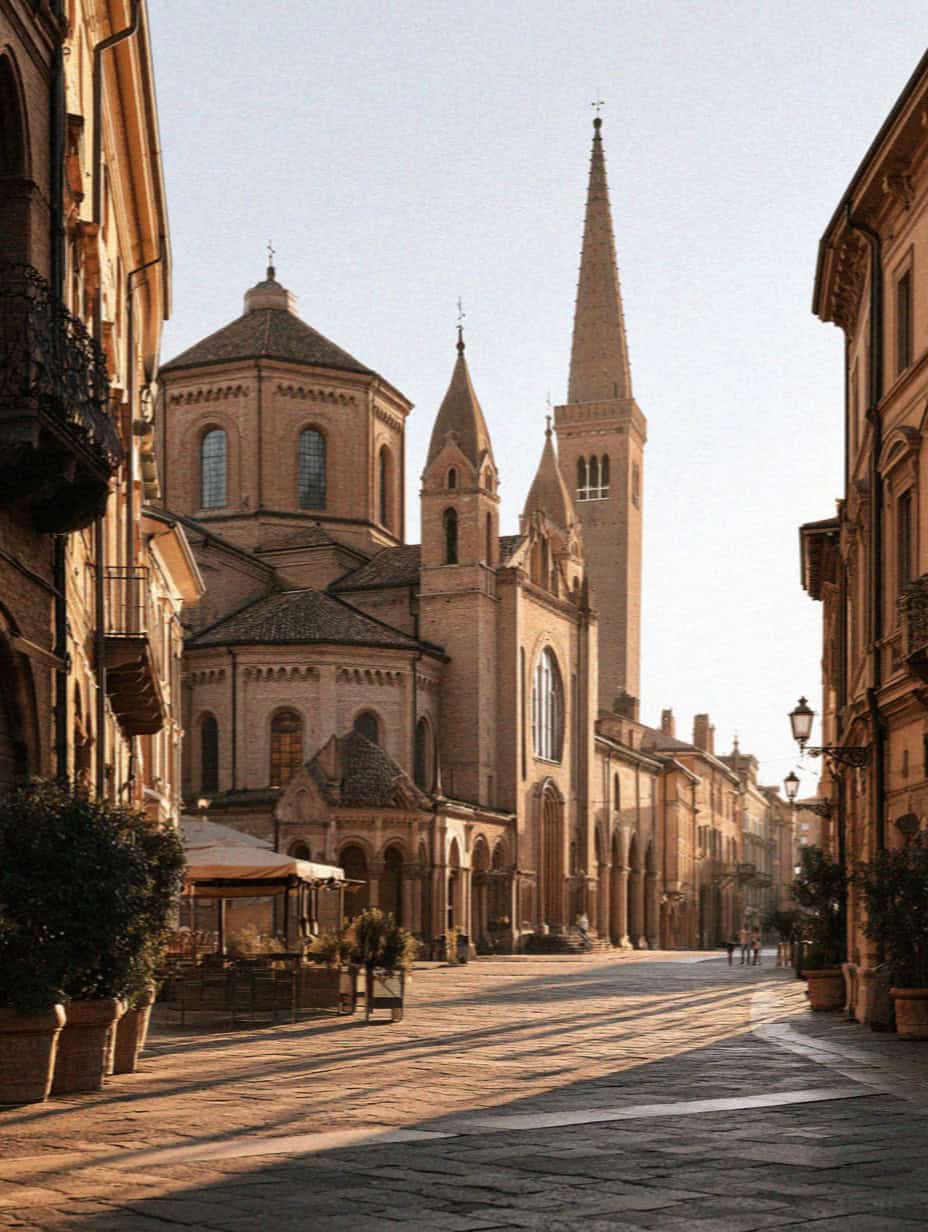
Piazza Santo Stefano, on Via Santo Stefano, is the prettiest square in Bologna and the one I would photograph if I wanted a single image that felt like the city’s soul. It is triangular rather than square, which gives it an unusual, tapering perspective, and it opens onto the Basilica di Santo Stefano, the famous “Sette Chiese”, or Seven Churches, a free-to-enter maze of interconnected churches and courtyards around the Cortile di Pilato. The medieval facades and the quiet elegance make it hard to take a bad picture here.
Morning light is loveliest, when the sun comes low across the piazza and the crowds are thin. Position yourself at the wide end of the triangle so the church anchors your frame and the buildings funnel the eye towards it. Step inside the Seven Churches too, because the courtyards there are a photographer’s gift of arches, worn stone and pools of shadow and light. This spot suits anyone who prefers atmosphere and architecture to a big panorama.
The red porticoes of Via Farini and Via Santa Caterina
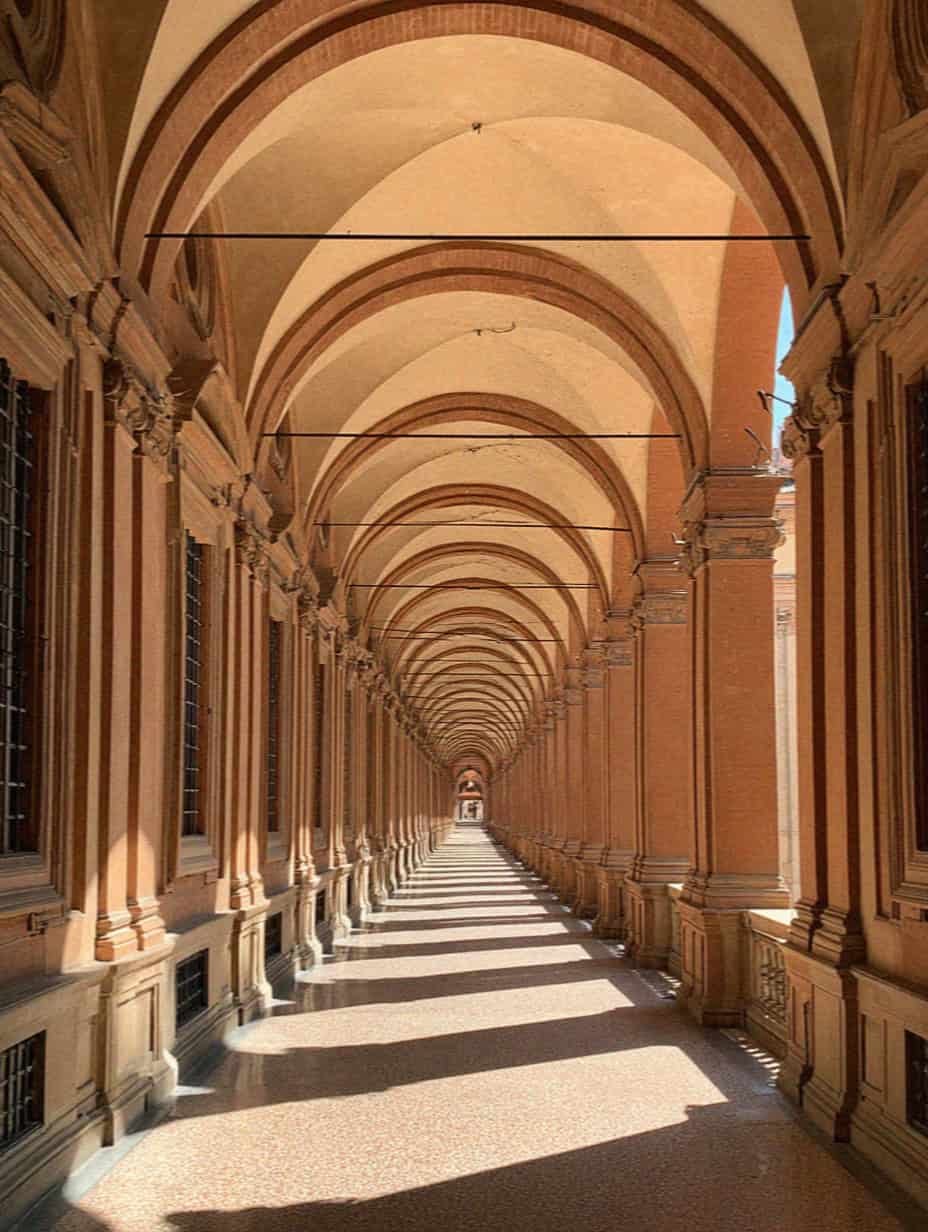
Bologna’s porticoes are a UNESCO World Heritage site, roughly 62km across the city and about 40km in the centre alone, and they are the thing I find myself photographing more than anything else. The endless repeating arches make natural leading lines, and the warm red and ochre ceilings glow when the light slants in. For the classic red-portico shot, head to Via Farini or Via Santa Caterina, where the colours are especially rich and the arcades run long and clean.
The great thing about the porticoes is that they photograph well in almost any weather, since they hold off the rain and soften the harshest of the sun. Aim for the hours after sunrise or before sunset, when the low light reaches deep under the arches and lights the ceilings from the side. Stand in the centre of the walkway and shoot straight down the vanishing point of the columns. And if you want the grandest arcade of all, the Portico di San Luca climbing towards the sanctuary gives you those same 666 arches marching uphill, which is a photograph in its own right.
The Archiginnasio courtyard
The Archiginnasio, the old seat of the university on Piazza Galvani, hides one of the most photogenic courtyards in Bologna, and the courtyard itself is free to walk into. Look up and around and you are surrounded by tiers of painted coats of arms, roughly 6,000 student crests layered over the walls and ceilings in a riot of faded colour. It is the kind of detail Bologna does so well, quiet, historic and endlessly patterned.
Because it is a covered, enclosed space, the light stays soft and even through much of the day, so this is a fine spot when the midday sun is too harsh for the streets. Shoot the arcades and staircases for the crests, and let the geometry do the work. If you want to go further inside, a combined ticket of 10 euro gets you into the 17th-century carved-wood Teatro Anatomico, the anatomy theatre with its two “spellati”, the skinless figures holding up the canopy. The courtyard alone, though, is reason enough to come.
Rooftops from the Torre dell’Orologio
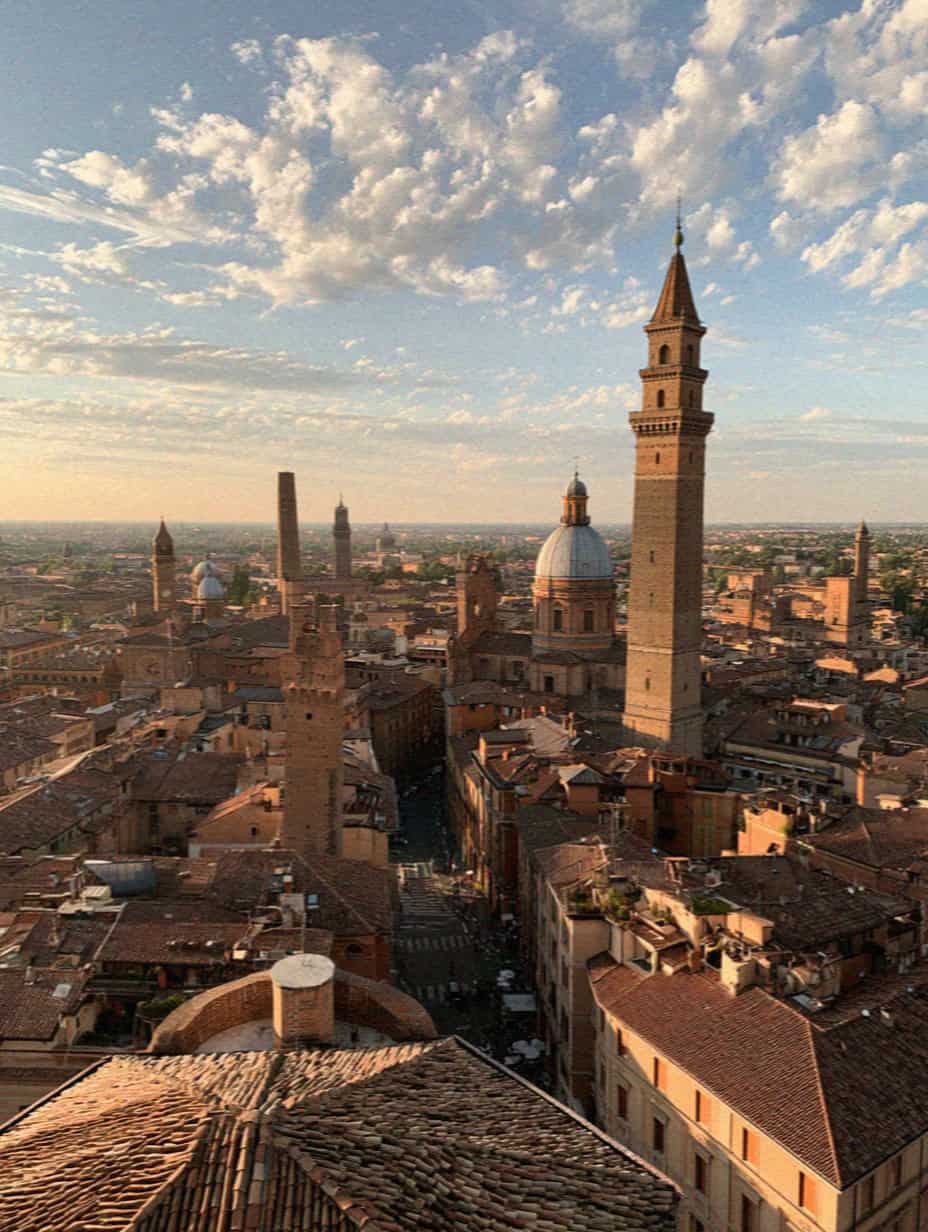
For the view out over Bologna’s terracotta rooftops from within the centre, the tower to climb is the Torre dell’Orologio, the Clock Tower, inside Palazzo d’Accursio on Piazza Maggiore. It costs 10 euro and it is currently the main central panoramic tower open to visitors. From the top you look across a sea of red roofs to the towers beyond, which is the quintessential Bologna skyline shot without a long trek out of the centre.
A word on the alternatives is worth it, because plenty of guides still list spots that no longer work. The Two Towers cannot be climbed in 2026. The Torre degli Asinelli has been closed since October 2023 with no reopening date, and the leaning Torre Garisenda is cordoned off under a multi-year stabilisation project, so you can only view and photograph them from Piazza di Porta Ravegnana. The panoramic terrace of San Petronio is permanently closed too. That leaves the Clock Tower as the reliable rooftop option in the heart of the city, and honestly it is a lovely one. Go in the last hour before sunset for the warmest light on the roofs.
Frequently Asked Questions
Can you climb the Two Towers in Bologna for photos?
No, not in 2026. The Torre degli Asinelli has been closed since October 2023 and the leaning Torre Garisenda is fenced off for a long stabilisation project. You can still photograph both from Piazza di Porta Ravegnana, which is a fine street-level shot. For a rooftop view, climb the Torre dell’Orologio on Piazza Maggiore instead, which costs 10 euro.
What is the best time of day to photograph Bologna?
Early morning and the golden hour before sunset are the two windows I plan around. Morning gives you empty squares like Piazza Santo Stefano and softer light at the Finestrella di Via Piella, while late afternoon warms the red porticoes and the rooftops. Save San Luca for sunset itself, when the whole city glows beneath the hill.
Where is Bologna’s Little Venice?
It is at La Finestrella di Via Piella, a small window at Via Piella 16/a to 18/a that opens onto the Canale delle Moline. This narrow strip of water lined with ochre houses is the last easily visible remnant of Bologna’s medieval canals, which is how it earned the nickname. Arrive early to beat the queue for the window.
These are the spots that fill my memory card every time I come back. If you want the wider picture, this guide sits within my complete guide to Bologna, where I pull together everything from where to stay to how to get around. To build these photo stops into a fuller day, pair it with my roundup of the best things to do in Bologna, and for the quieter corners the crowds miss, read my guide to the hidden gems in Bologna.