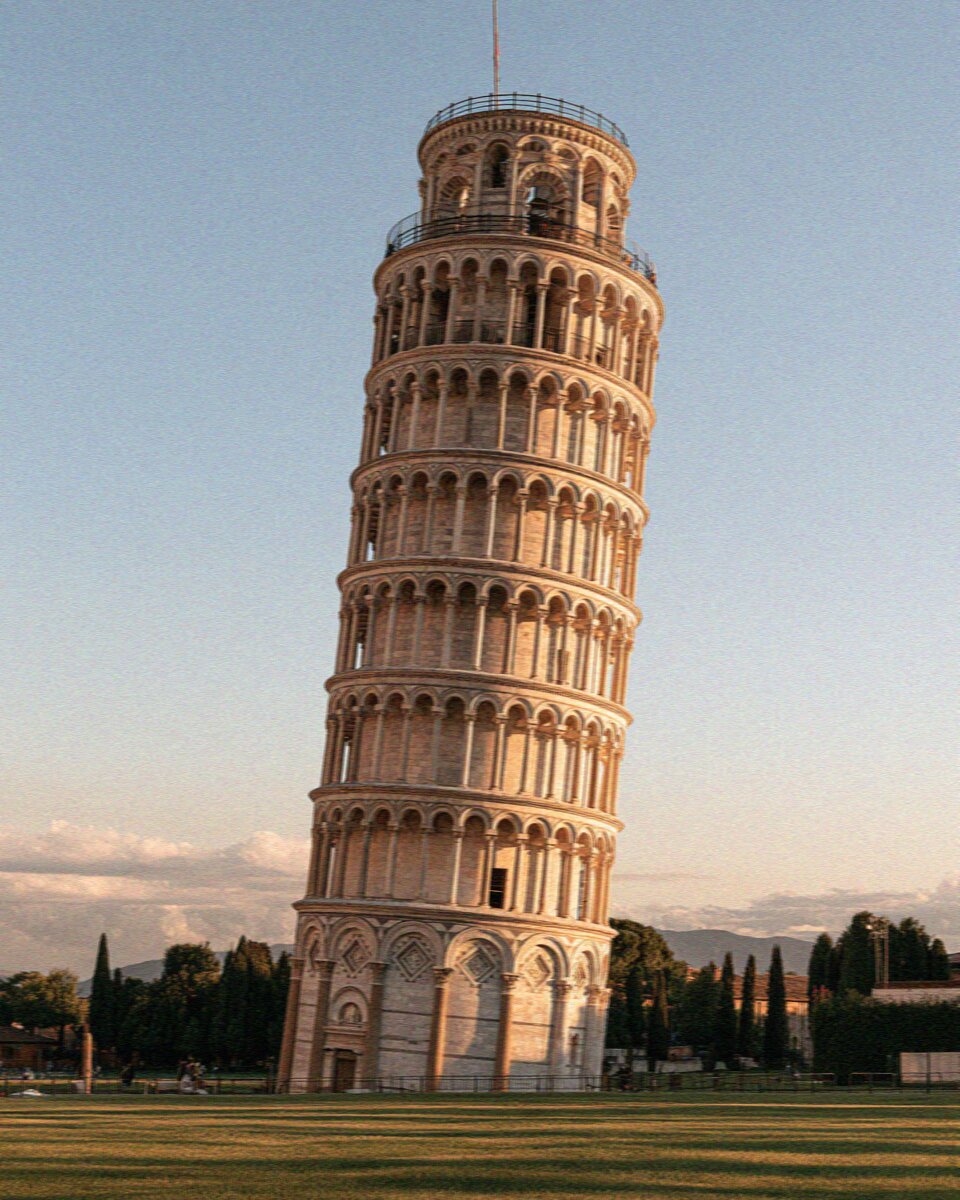
The Leaning Tower of Pisa is one of those sights that survives every cliché thrown at it, and I say that as someone who arrived a little braced for disappointment. It is smaller than you expect and stranger than the photographs suggest, a white marble drum that genuinely tilts, set on a lawn so green it looks painted. I have climbed it twice now, once in the flat light of a January morning and once in the gold of a summer evening, and both times I came away glad I had bothered. This guide is the practical one: what it costs, how the timed tickets work, what the climb is actually like, and how to fold the rest of the Piazza dei Miracoli into a single unhurried morning.
Which ticket to buy
There are three sensible answers and the difference between them is how much of the square you want besides the tower. All of them are timed, all of them sell out in summer, and none of them can be bought at the gate on the day with any confidence.
- Tower and Cathedral. The straightforward one, and what most people want. 4.5 from over fourteen thousand bookings.
- Tower plus the rest of the square. Baptistery, Camposanto and museum as well. Buy this if you have half a day rather than an hour.
- Guided, with the Baptistery. 4.8. The climb is the same two hundred and ninety four steps either way; what you get is somebody explaining why the thing leans and why it stopped.
Children under eight cannot go up, and bags are not allowed on the stairs. There is a free left luggage counter beside the ticket office.
A short history of why it leans
The tilt was never the plan. Construction began in 1173 as a freestanding bell tower for the cathedral, and the trouble started almost at once. The subsoil here is soft clay and sand left by an old river channel, and by the time the builders had finished the third of eight storeys the whole structure had begun to sink unevenly to one side. Work stopped for the better part of a century, which as it turned out saved the building, giving the ground time to settle. When later architects resumed, they tried to correct the lean by building the upper floors slightly curved, so the tower is not merely tilted but faintly banana-shaped if you know to look for it. It was finally topped out with its bell chamber in the fourteenth century.
By the late twentieth century the lean had grown alarming and the tower was closed to the public in 1990. A decade of quiet engineering followed, with soil carefully removed from the higher side to coax the structure back a little towards upright. It reopened in 2001, stabilised rather than straightened, and is expected to hold its current angle for a good couple of centuries. So when you climb it, you are climbing something that was rescued, not just something that happens to lean.
Plan Your Visit to Pisa and Lucca
A few things I booked and loved. These help support the blog, at no cost to you.
- Where I stayed: search Pisa hotels
- Leaning Tower and Cathedral tickets
- Rent a car to explore the area
- Stay connected: get a travel eSIM
This section contains affiliate links. If you book through them I may earn a small commission, at no extra cost to you.
How to buy tickets and current prices
Everything for the square is run by the Opera della Primaziale Pisana, and the only official booking site is opapisa.it. Buy there and nowhere else. A great many lookalike sites sell the same tickets at a markup, and while they are not scams exactly, there is no reason to pay more for the privilege.
The climb ticket for the tower costs around €20 at the time of writing, and it is a timed-entry ticket: you book a specific half-hour slot and turn up for that slot, not whenever you please. Prices do drift year to year, so treat that figure as a guide and confirm the current one when you book. The cathedral itself is free to enter, though you still need a ticket to control the queue, and that free cathedral admission comes bundled with any paid ticket you buy for the square. The other monuments, which I come to below, are sold separately or in combinations.
You can book online up to ninety days ahead. In the deep quiet of winter you can often walk up and buy a same-day tower slot on the spot, but from spring onwards, and certainly in July and August, popular slots go weeks in advance. If your dates are fixed and climbing matters to you, book as soon as the window opens rather than gambling on the day.
Climbing the tower
There are just under 300 steps, a tight marble spiral with no lift, and the whole visit runs to about half an hour from the moment you are let in. It is not a punishing climb, but it is an odd one. The steps are worn into shallow dips by eight centuries of feet, and because the tower leans, the staircase leans with it, so your sense of balance keeps quietly recalibrating. On one side of the spiral you feel yourself pressed towards the outer wall, on the other you feel oddly light. The marble can be slippery, so flat shoes with a bit of grip are worth more than any advice I could give about the view.
A few firm rules are worth knowing before you turn up. Children under eight are not allowed to climb at all. Anyone under eighteen must be accompanied by an adult, and staff can ask for identification to check ages, so bring it. Crucially, no bags are allowed inside, not even small ones, and there is a free left-luggage cloakroom at the base where you deposit everything before you go up. Build a few minutes into your timing for this, because the deposit and collection queue is part of the visit whether you planned for it or not. And do arrive for your slot on time. If you are late you are not admitted and you are not refunded, which is exactly as unsentimental as it sounds.
At the top you step out onto the bell chamber, and the reward is not really the height. It is the strangeness of standing on a floor that visibly slopes, looking down over the cathedral roof and the marble of the square, with the Tuscan hills soft in the distance. The bells are still there. Give yourself a moment up there rather than rushing the photographs, because the half hour goes quickly.
The combined Piazza dei Miracoli ticket
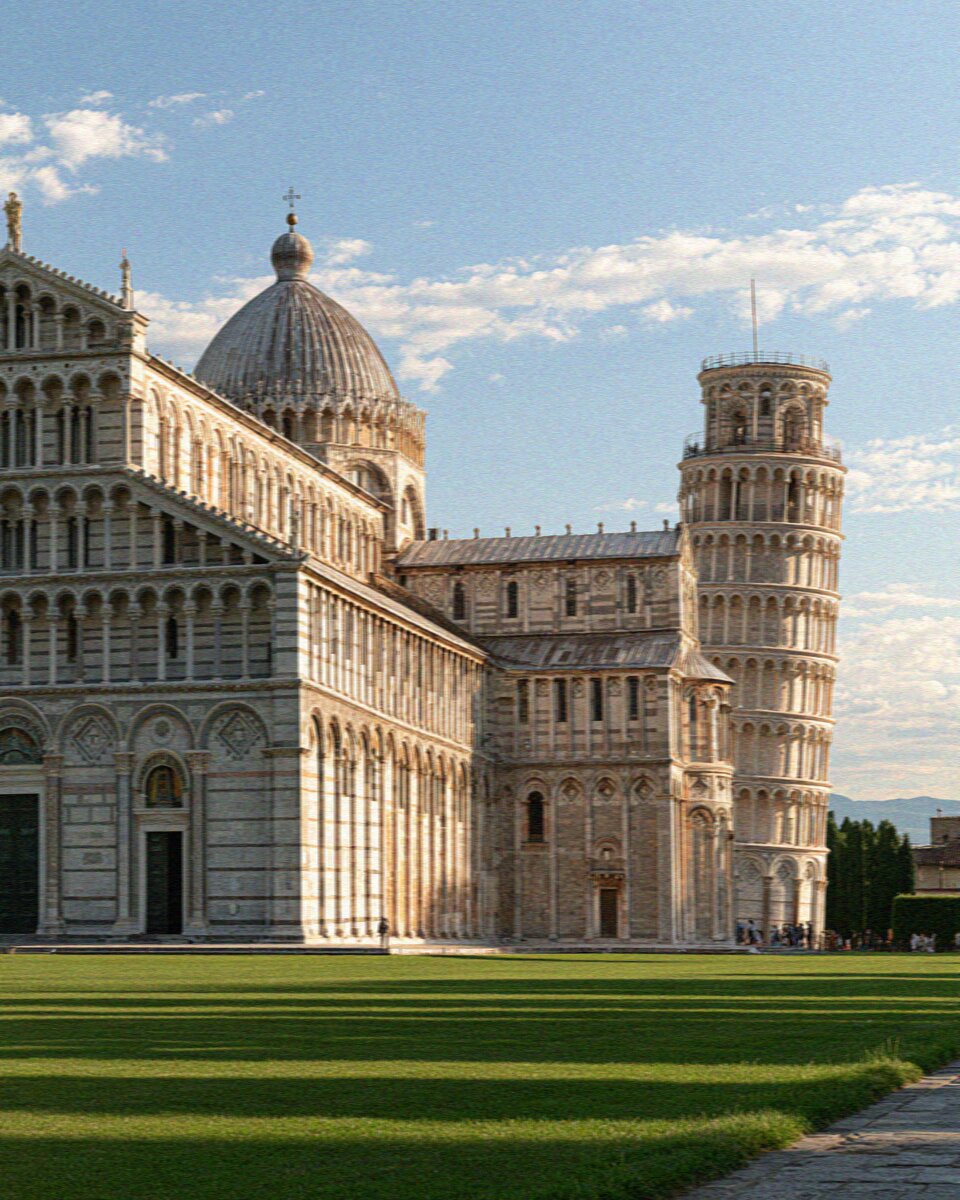
The tower is the headline, but the square around it holds three more things well worth your time, and skipping them to snap the tower and leave is a genuine mistake. The cathedral, the Duomo, is a vast striped basilica with a gilded ceiling and Galileo’s famous swinging lamp, and it is free with any paid ticket. The Baptistery, the round building facing the cathedral door, has extraordinary acoustics, and if you are lucky a member of staff will sing a few notes into the dome to show you how they bloom and hang in the air. The Camposanto is the monumental cemetery along the north edge, a long cloister of white marble wrapped around what is said to be soil brought back from Golgotha, its walls lined with frescoes that were bombed in the war and painstakingly restored.
These monuments, along with the two museums on the square, are sold on opapisa.it either individually or as a combined ticket that lets you pick how many you want to see. Individually each is only a few euros; a combination covering the Baptistery, the Camposanto and a museum tends to work out at roughly ten euros or so, and saves a little against buying them one by one. The exact combinations shift, so choose on the site itself. My honest advice is to include at least the Baptistery and the Camposanto. They give the square its depth, and they are far quieter than the tower.
The famous “holding up the tower” photo
You will see them the moment you walk in: dozens of people on the lawn, arms outstretched at improbable angles, pushing, propping and pretending to topple the tower. It is gloriously silly and I would not dream of telling you to be above it. The trick to a good version is simple. The photographer crouches low, quite far back on the grassed area to the west of the tower where the lean falls away from you, while the subject stands closer and lines up a flat palm or a fingertip against the tilt. Because everyone is chasing the same shot, patience helps more than technique. Wait for a gap, ignore the crowd doing the same thing three metres away, and take a few frames rather than one.
If you want the clean, uncluttered picture of the tower and cathedral together, walk round to the eastern side of the square in early morning light, before the coaches arrive. That is when the marble glows and the lawn is empty enough to compose properly.
Best time of day and year to visit
The square is open every day of the year, but the hours shift with the season. In the depths of summer, roughly from mid-June to the end of August, the monuments stay open late, often to around half past ten at night, which is a real gift: an evening slot on the tower, with the crowds thinned and the marble catching the last of the light, is the loveliest way to climb it. Through autumn and winter the closing time pulls back to early evening, and in the shortest months you should plan around a late-afternoon close. Last entry is typically half an hour before closing across all the monuments.
For the year as a whole, I would take a shoulder-season morning over a summer midday every time. April, May, late September and October give you mild weather and a square you can actually move around in. Whenever you come, the first hour after opening and the last hour before closing are the two windows when the coach parties are elsewhere. Aim for one of those and the whole place feels different.
How to get there
Most people arrive at Pisa Centrale, the main train station, which sits south of the river. From there it is a walk of around half an hour up through the shopping streets, across the Arno at the Ponte di Mezzo and on through the handsome Piazza dei Cavalieri to the square. It is a flat, easy walk and a good way to see that Pisa is a real working city rather than a stage set. If you would rather not walk, the LAM Rossa bus runs from outside the station to the “Torre” stop right by the square; buy your ticket from the machines before you board.
If you are flying in, Pisa airport (Galileo Galilei) is unusually close to the city. The PisaMover shuttle links the airport terminal to Pisa Centrale in a few minutes, and from the station you continue on foot or by the LAM Rossa bus exactly as above. It is quite possible to land, leave your bag, climb the tower and be back at the airport in an afternoon, though I would not want to travel that way if I could help it.
Frequently Asked Questions
Is it worth climbing the Leaning Tower?
Yes, if you are reasonably steady on your feet and not troubled by tight spiral stairs. The pleasure is less the view than the sensation of the lean underfoot, which nothing else quite matches. If the climb is out of the question for you, the square is still very much worth a visit from the ground, and the Baptistery and Camposanto give you plenty to see.
How long should I allow at the Piazza dei Miracoli?
The tower climb itself takes about half an hour once you are let in, plus a little for the luggage cloakroom. To do the square properly, with the cathedral, the Baptistery and the Camposanto, give yourself a comfortable half day. If you are only there for the tower and a few photographs, a couple of hours will do it.
Can you visit the square for free?
Walking into the Piazza dei Miracoli and standing among the monuments costs nothing, and the lawn is where most of the famous photographs are taken. The cathedral is free to enter too, though you still need to collect a timed ticket for it. Climbing the tower and entering the Baptistery, Camposanto and museums all carry a charge, booked through opapisa.it.
If this has you planning a proper day in the city, I have gathered the rest of it together for you: the wider Best Things to Do in Pisa, my Best Photo Spots for both cities, and a ready-made itinerary that pairs Pisa with Lucca. It all sits within my complete guide to Pisa and Lucca, which is the place to start if you are still shaping the trip.