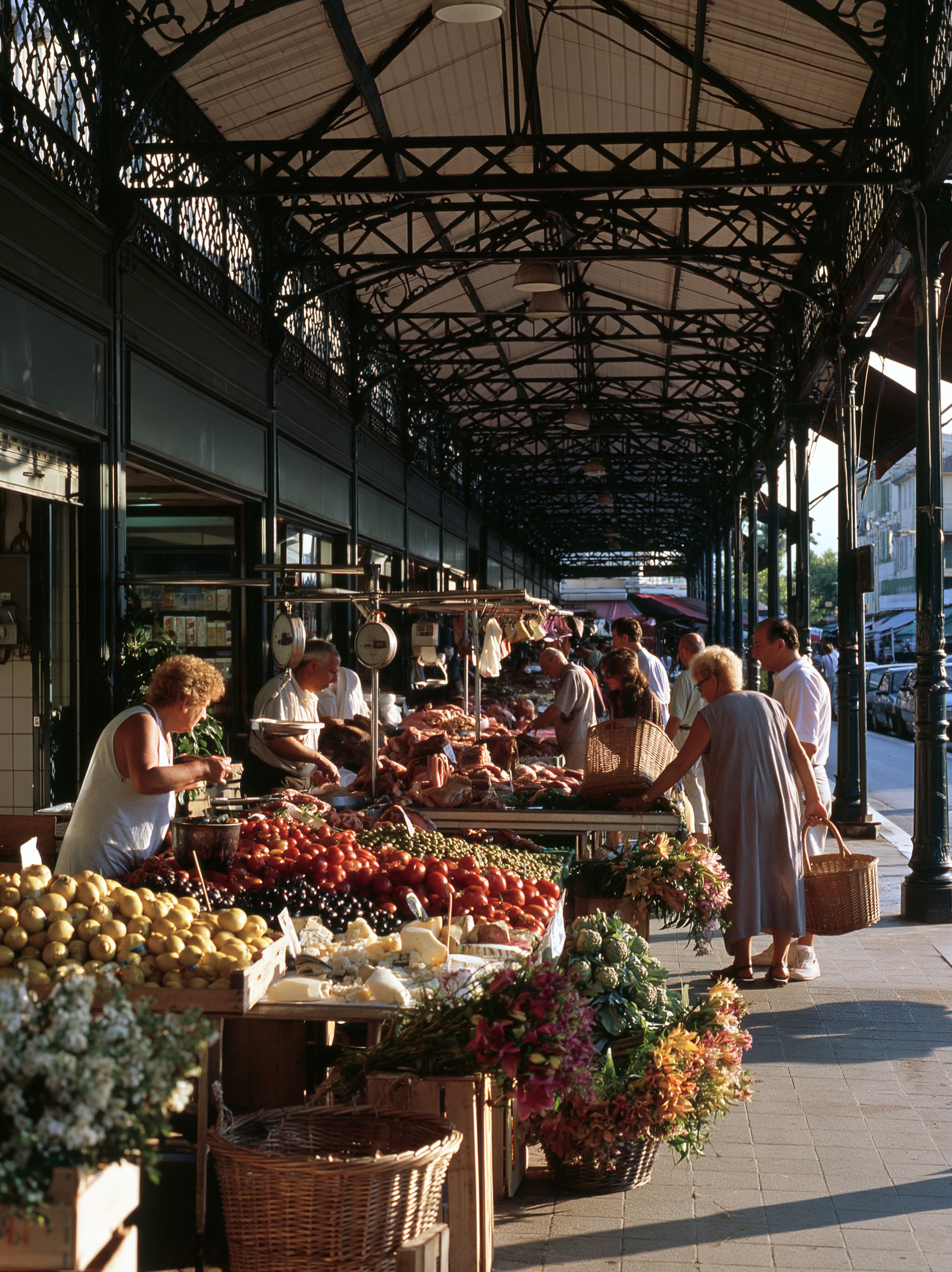
Most mornings the lanes of Vieil Antibes wake up to a market under an iron roof. A short walk away, in a castle on the sea wall, hang the 23 paintings and 44 drawings Picasso made there in the autumn of 1946 and left to the town when he went.
That is Vieil Antibes: a compact, mostly pedestrian old town between the harbour and the sea walls, where you can buy socca at breakfast, see Picasso before lunch and watch the yachts come in at dusk. This guide walks it piece by piece, with opening days, prices and the order I would do it in. The Cap, the beaches and the wider coast are covered in my complete guide to Antibes, the Cap and Juan-les-Pins.
How the old town fits together
The old town sits on a low promontory on the east side of Antibes, with the sea on one side and Port Vauban on the other. The Greeks of Marseille knew the settlement as Antipolis, and the town has been built and rebuilt on the same rock ever since.
Think of it as a rough triangle. The Cours Masséna, with the covered market, runs through the middle. The Château Grimaldi and the old cathedral stand together on the seaward edge. The ramparts run south along the water from there, with the little Safranier quarter tucked in behind them. And to the north, through the old gates, lies the harbour, with the Nomade on its bastion and Fort Carré across the water.
It is small enough to cross on foot in a few minutes and dense enough to fill a full day. Wear flat shoes: the lanes are cobbled and many of them are stepped.
The Provençal market
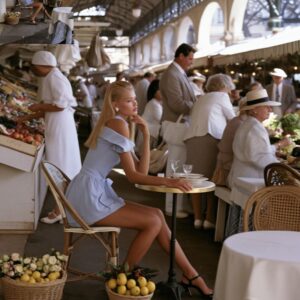
The Marché Provençal fills the hall on the Cours Masséna, under its iron roof, from 06:00 until about 13:00, Tuesday to Sunday, and every day in June, July and August. It is a proper food market, with local produce first and souvenirs a distant second.
Around the edges you will find socca, the chickpea pancake of this coast, sold hot and peppered, and squares of pissaladière, the onion tart with anchovies and olives. Breakfast here, standing up among the stalls, is how I would start any day in Antibes. From three in the afternoon the hall turns into a craft market, Friday to Sunday in the low season and Tuesday to Sunday from mid-June to late September.
Go early. By late morning the crowds thicken, and by one the traders are packing away. For the restaurants and what to order around it, see my guide to where to eat in Antibes.
The Picasso Museum in the Château Grimaldi
The Château Grimaldi stands on the sea wall at Place Mariéjol. Picasso worked here in the autumn of 1946, and the gift he left behind made it, on 27 December 1966, the first museum dedicated to him.
The heart of the collection is the work from that one season by the sea. There is also a room given to Nicolas de Staël, who worked in Antibes from September 1954 to March 1955, and the castle terrace has sculptures set against the sea. The current exhibition, “Claude Picasso, une vie en marges”, runs from 11 October 2026 to 10 January 2027.
Practical details. Entry is 12 euros, 8 reduced. The museum is closed on Mondays and on 1 January, 1 May, 1 November and 25 December. From 15 June to 15 September it is open 10:00 to 18:00 without a break; the rest of the year 10:00 to 13:00 and 14:00 to 18:00. A combined ticket at 15 euros, valid for seven days, covers the town’s museums and Fort Carré, and pays for itself if you see two.
The cathedral and the old streets
Right beside the château is the old cathedral, Notre-Dame-de-l’Immaculée-Conception, with its ochre façade. The bishops of Antibes moved to Grasse in 1244, so it has not been the seat of a bishop for centuries, but the name stuck. The church was badly damaged in the siege of 1746 and 1747 and rebuilt afterwards, which is where the present façade comes from.
Inside, look for the altarpiece of Our Lady of the Rosary in a transept chapel, painted in the early 1510s by Louis Bréa of Nice, and the carved walnut doors from around 1710 showing Saint Roch and Saint Sebastian, the town’s patron saints.
From the cathedral, the old streets drop away inland in a tangle: narrow lanes, shuttered houses, small squares with a fountain or a plane tree, and shops selling linen, olive wood and soap. There is no right route. Lose yourself for half an hour and you will come out somewhere near the market.
Le Safranier
South of the château, behind the ramparts, is Le Safranier, a tiny quarter of low houses and stepped lanes, with flowers in pots on every step and climbing plants up the walls. It feels like a village within the old town, quieter than the streets around the market and almost entirely residential.
There is nothing to tick off here, which is the point. Walk it slowly, keep your voice down, because people live behind those doors, and come back to the ramparts at the end.
Along the ramparts
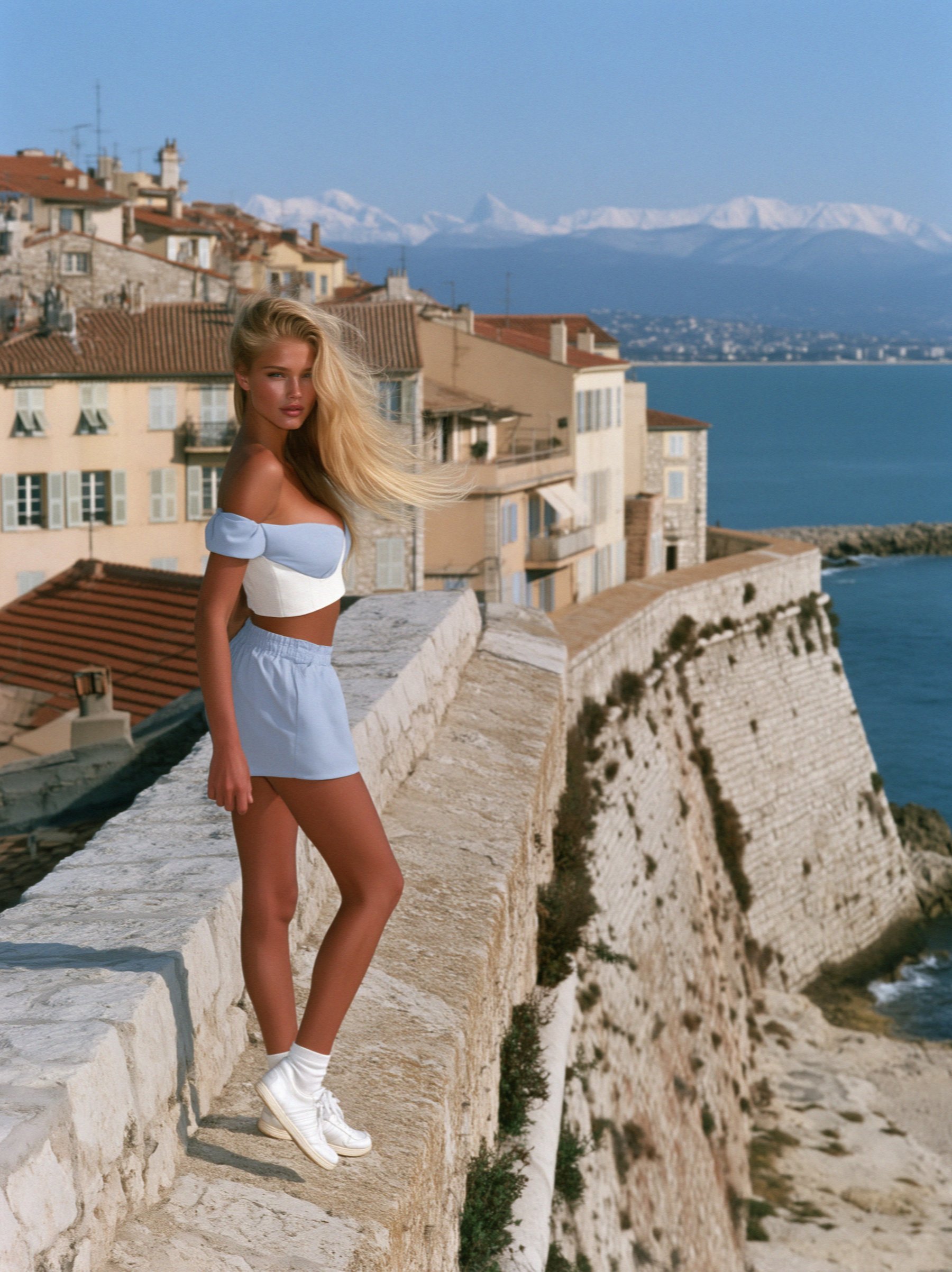
The sea walls run south from the château along the water, and walking them is the simplest pleasure in Antibes. On one side are the backs of the old houses; on the other the rocks and the open water, with Nice low on the far side of the bay.
At the southern end, the Bastion Saint-André holds the Musée d’Archéologie, the town’s archaeology museum, for 5 euros. Back in the old streets, the Musée Peynet et du Dessin humoristique, also 5 euros, is devoted to cartoons and drawing and is a good one for children. Both are covered by the combined ticket.
Below the walls, the beaches of La Gravette, by the port, and Ponteil and La Salis, a little to the south, are close enough for a swim between museums. They are all in my guide to the best beaches in Antibes.

The Nomade on the Bastion Saint-Jaume
At the harbour end of the old town, on the Bastion Saint-Jaume, sits the Nomade: a figure about eight metres high, seated with his knees drawn up, made entirely of steel letters, by the Catalan artist Jaume Plensa. It was first shown here in 2007 and installed for good in 2010.
You can walk right up to it and look out through the letters to the sea. It is free, and closed on Mondays. Opening hours are 10:00 to 18:00 from September to May and until 23:00 from June to August, when it is at its best at dusk, with the boats behind it.
Port Vauban
Through the old gates, the harbour opens out. Port Vauban is the largest yacht harbour in the Mediterranean by tonnage, and the outer Quai Camille Rayon, opened in 1986, is known as the Billionaires’ Quay. It is run by the International Yacht Club d’Antibes for the very largest yachts, and walking along it is mostly a lesson in scale.
Across the water, on the point to the north, is Fort Carré, star-shaped and reworked by Vauban. It is closed on Mondays, often visited by guided tour, and covered by the combined ticket. The rest of the town’s sights, from the fort to the Cap, are in my guide to the best things to do in Antibes.
The old town in the evening
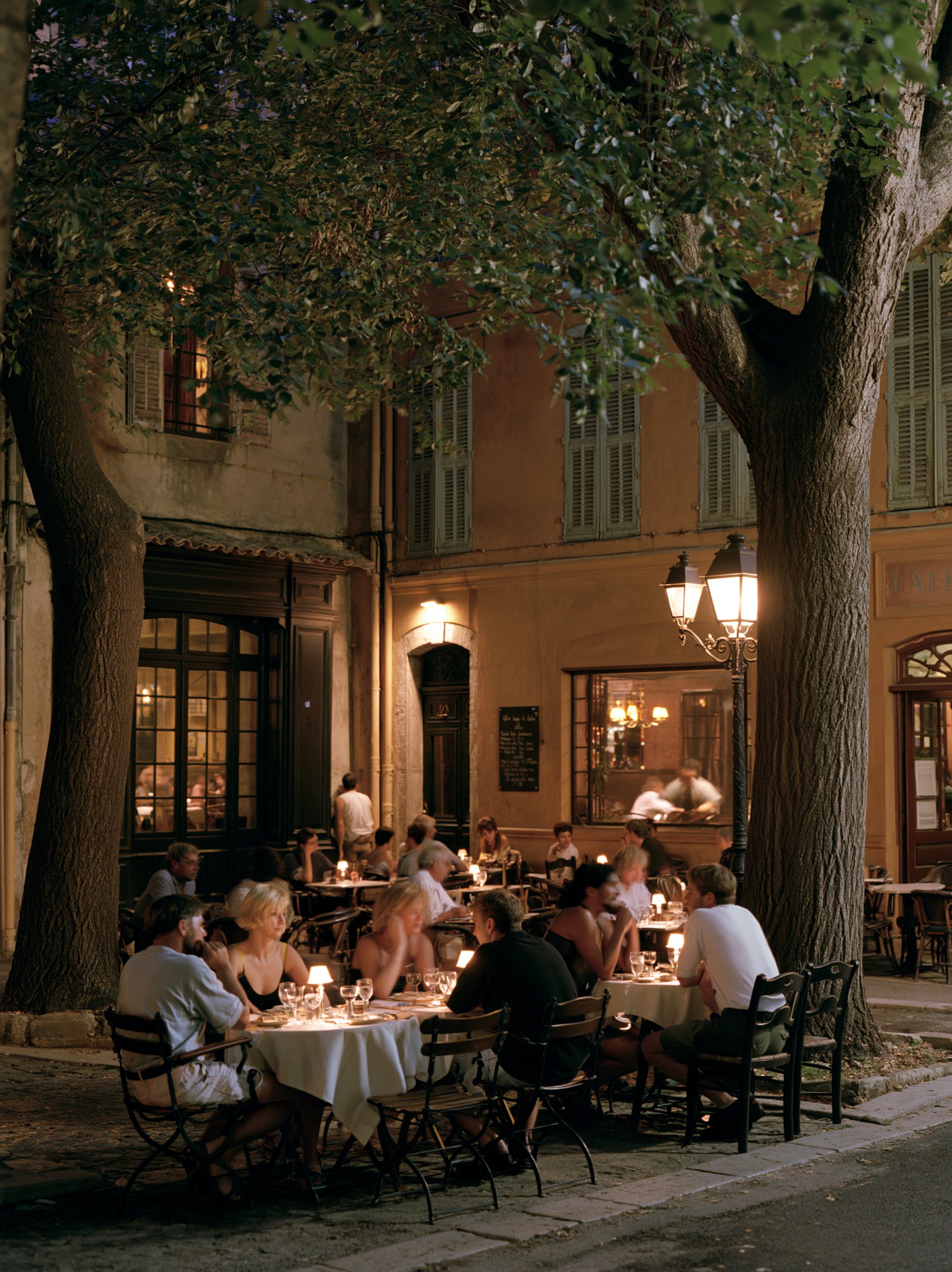
When the day-trippers leave, the old town changes. Tables spread across the small squares, the lanes fill with people going to dinner, and the ramparts are full of couples watching the sea go dark.
Book dinner in summer. Les Vieux Murs, on the ramparts, has the sea view. Le Vauban, on rue Thuret, does classic French cooking. For something simpler, a plate of socca and a glass of rosé at a café table is as good an evening as any. In July and August the old town stays busy late; in spring and autumn it is calmer and, to me, nicer.
A walk for your first morning
08:00: the market on the Cours Masséna, with socca for breakfast.
09:00: wander the lanes inland, then up to the old cathedral.
10:00: the Picasso Museum as it opens, before the groups arrive, and the sculpture terrace.
11:30: the ramparts south to the Bastion Saint-André, then back through Le Safranier.
12:30: lunch in the old town, or a swim at La Gravette.
Afternoon or evening: north through the gates to Port Vauban, the Billionaires’ Quay and the Nomade. Remember that the museum, the Nomade and Fort Carré are all closed on Mondays, so do not plan this walk for one.
Frequently Asked Questions
How much is the Picasso Museum in Antibes?
Entry is 12 euros, or 8 reduced. A 15-euro combined ticket, valid for seven days, covers the town’s museums and Fort Carré.
What days is the Antibes market open?
Tuesday to Sunday for most of the year, and daily through June, July and August. Trading starts at 06:00 and winds down around 13:00.
Is the Picasso Museum in Antibes closed on Mondays?
Yes. It is also closed on 1 January, 1 May, 1 November and 25 December. The Nomade and Fort Carré are closed on Mondays too.
What is the Nomade statue in Antibes?
It is a sculpture by Jaume Plensa: a man sitting with his knees drawn up, about eight metres tall and built from a lattice of steel letters, on the bastion above the harbour. Entry is free.
Is the old town of Antibes walkable?
Yes. It is compact and largely pedestrian, and you can cross it on foot in a few minutes, though the lanes are cobbled and many are stepped.
Read also: The Best Things to Do in Antibes | Where to Eat in Antibes and What to Order | Victoria’s Complete Guide to Antibes and Cap d’Antibes