Tuscany keeps its treasure in its small towns. Florence gets the fame, and it deserves it, but the deeper magic of this region is in the hilltop villages, each one a little walled world of golden stone and Renaissance squares and a single perfect view over the vineyards. You could spend a lifetime working through them. Here are the ones I would not miss, the towns that between them tell you what Tuscany actually is.
Siena
If you see one town beyond Florence, make it Siena. This is Florence’s ancient rival, a Gothic city of warm red brick built across three hills, and its heart is the Piazza del Campo, the great shell-shaped square that slopes down to the medieval town hall like an amphitheatre. It is one of the most beautiful public spaces in Europe, and twice each summer, on the 2nd of July and the 16th of August, it is filled with sand for the Palio, the bareback horse race between the city’s neighbourhoods that is less a sporting event than a religion. The striped marble Duomo is extraordinary, inside and out, and the climb up the Torre del Mangia gives you the whole city and the countryside beyond. Siena is easy to reach by train or bus, but its centre is a ZTL, so park outside and walk in.
San Gimignano
You will see it long before you reach it: a cluster of medieval stone towers rising straight out of a hill, unmistakable across the Val d’Elsa. San Gimignano once had more than seventy of these towers, built by feuding families competing to build higher than their neighbours, and fourteen of them still stand, giving the town its nickname, the medieval Manhattan. Inside the walls it is tiny and ravishing, all narrow lanes opening onto the Piazza della Cisterna. It is also no secret, so it fills with day-trippers by late morning; go early, or stay the night and have it to yourself in the evening. While you are there, drink the local Vernaccia, Tuscany’s noble white wine, and queue for the gelato at Dondoli on the square, which has genuinely won world championships.
Montepulciano
High on its ridge between two valleys, Montepulciano is the jewel of the sixteenth century, a steep and handsome town that rewards you for every step of the climb up its main street to the Piazza Grande at the top. This is wine country’s aristocrat: the town is the home of Vino Nobile di Montepulciano, and beneath the Renaissance palazzi run ancient cellars where the wine ages in the cool and the dark. Duck into one for a tasting, catch your breath in the square, and take in the view that seems to stretch across half of Tuscany.
Pienza
Pienza is unlike anywhere else, because it was designed. In the fifteenth century Pope Pius II decided to remodel his birthplace into the ideal Renaissance town, and the perfect little centre he built is now a UNESCO World Heritage Site: a cathedral, a papal palace and a jewel-box square, all laid out with humanist precision. Wander the impossibly romantic lanes along the ramparts, with their sweeping views over the Val d’Orcia, and buy some pecorino di Pienza, the sheep’s cheese the town is famous for, aged in ash or wrapped in walnut leaves. It is small, and you can see it in an hour, but it may be the single loveliest hour of your trip.
Montalcino
Crowned by a great fourteenth-century fortress, Montalcino sits above a sea of vines, and it has one job, which it does better than almost anywhere on earth: Brunello. Brunello di Montalcino is widely considered Italy’s most elegant and long-lived red wine, made from a local Sangiovese, and the town exists to celebrate it. Taste it up in the Fortezza’s enoteca with the countryside falling away below you, or drive out to one of the estates for a proper cellar visit. If Brunello is beyond your budget on the day, its younger sibling Rosso di Montalcino is a joy and a fraction of the price.
The Val d’Orcia Villages
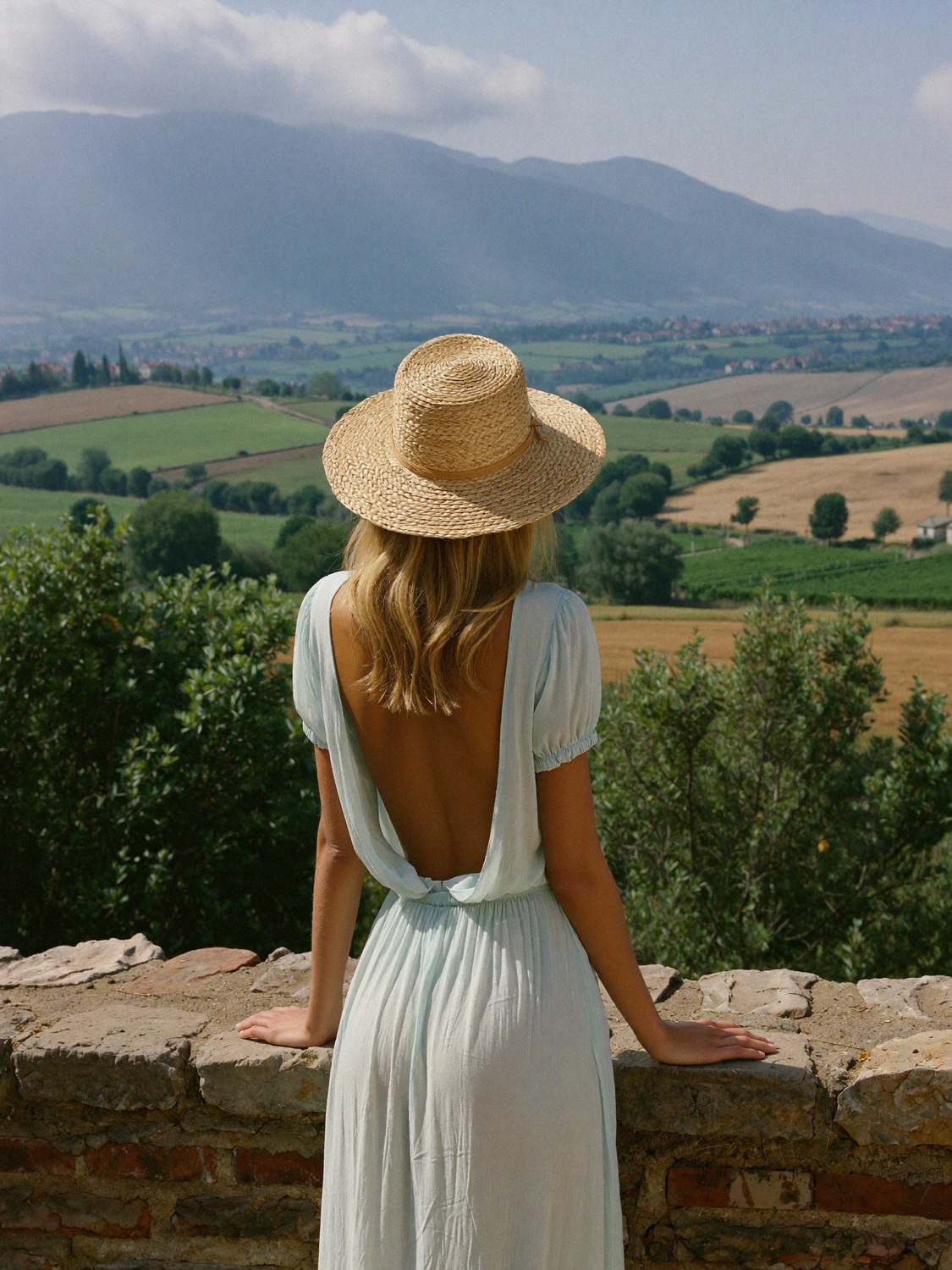
South of Siena, the Val d’Orcia is the landscape everyone pictures when they picture Tuscany: rolling gold-and-green hills, solitary cypresses, farmhouses on distant ridges. Scattered through it are villages that make perfect bases and stops. San Quirico d’Orcia is a charming, central little town with a beautiful Romanesque church and formal gardens, ideally placed between Montalcino and Pienza. Bagno Vignoni is unforgettable and strange: instead of a piazza it has a great steaming pool of thermal water at its centre, used since Roman times. And tiny Monticchiello, walled and quiet, feels like a secret.
Further Afield
If you have longer, three more towns are worth the drive. Cortona, high above the Val di Chiana, is the hill town of Under the Tuscan Sun, with Etruscan roots and long views toward Lake Trasimeno. Volterra is dramatic and windswept, an ancient Etruscan and Roman town famous for its alabaster. And Lucca, out toward the coast, is a delight of a different kind: a flat, elegant walled city whose great Renaissance ramparts are now a tree-lined park you can walk or cycle right around the top of.
How to See Them
Do not try to do them all in a day, and do not treat them as a checklist. Pick a base in the middle of it all, San Quirico or a Chianti village, and visit two or three towns a day at most, leaving time to sit in a square with a coffee or a glass of wine and simply be there. Every one of these towns has a ZTL, so park outside the walls and walk up. And remember that the drives between them, along the cypress roads and over the hills, are as much the point as the towns themselves.
Frequently Asked Questions
What are the most beautiful towns in Tuscany?
Siena for its great shell-shaped square and Gothic grandeur, San Gimignano for its medieval towers, Montepulciano and Montalcino for their hilltop wine culture, and Pienza for its perfect little Renaissance centre. In the Val d’Orcia, San Quirico d’Orcia and Bagno Vignoni make lovely stops. Further out, Cortona, Volterra and Lucca are all worth the drive.
Which Tuscan town should I visit if I only have one day?
Siena. It is the easiest to reach, the most substantial after Florence, and its Piazza del Campo and striped Duomo are unforgettable. If your day is really about the countryside rather than a city, spend it in the Val d’Orcia instead, taking in Pienza, Montepulciano and Montalcino.
How do I get between the Tuscan towns?
By car, for the most part. The hill towns and Val d’Orcia villages are poorly served by public transport, so a car gives you real freedom. Siena, Pisa and Lucca are reachable by train, and some wine towns have infrequent buses from Siena, but for the countryside you either drive or take a guided day tour.
Is San Gimignano worth visiting despite the crowds?
Yes, but time it well. San Gimignano is genuinely beautiful and its skyline of medieval towers is unique, but it fills with day-trippers from late morning. Arrive early, or better still stay overnight, so you can enjoy the town in the quiet of the early morning and the evening when the crowds have gone.
What is Pienza known for?
Pienza is a UNESCO-listed town, designed in the fifteenth century as an ideal Renaissance city by Pope Pius II, with a perfect small centre and romantic lanes overlooking the Val d’Orcia. It is also famous for pecorino di Pienza, the local sheep’s cheese, which you can buy aged and flavoured all over town.
Read also: The Best Photo Spots in Tuscany | A Guide to Tuscan Wine | The Complete Guide to Tuscany
V.