What happens when the place that made you no longer wants you?
I found myself turning that question over this morning in a quiet corner of Verona, standing beneath a pale marble figure that almost everyone walks straight past. They have come for Juliet’s balcony, not for him, and it is easy to see why: a man on a plinth with a laurel in his hair looks, at a glance, like part of the furniture of an old Italian square. But this is Dante Alighieri, and before he became the poet whose name the whole of Italy now claims, he was something far more precarious. He was a politician, and he was on the losing side.
We tend to remember Dante, if we remember him at all, for the Divine Comedy, that vast journey down through Hell and up at last towards the stars. Fewer of us remember that he wrote almost the whole of it as an exile. In 1300 he sat among the highest magistrates of Florence, a city then tearing itself apart between two factions, the White and Black Guelphs. A year later, while he was away in Rome on the city’s own business, his rivals seized power, and in 1302 they condemned him. The charges were corruption, fraud, and the abuse of his office (the ordinary accusations a city reaches for when it wishes to be rid of an inconvenient man) and the sentence was exile. When he refused to come home and buy his way back by confessing to a guilt he did not believe was his, Florence made the sentence final. Should he ever be found within its territory again, he was to be burned alive.
He never returned. Nineteen years later, he died in Ravenna, which keeps his bones to this day, while Florence, after centuries of asking for them back, still tends an empty tomb it will almost certainly never fill.
Between the city that cast him out and the city that buried him, there was Verona.
His statue stands in a corner of the Piazza dei Signori with his back half turned to the square, as though he had been caught in the middle of leaving and thought better of it. There is a laurel wreath worked into the marble of his hair and a heaviness in the way he looks down, not at the tourists arranging themselves beneath him for photographs, but at some point on the paving stones that only he can see. People stop, tilt their heads, read the single name on the plinth, and drift on towards gelato and the shade. I stayed longer than I meant to. There is something about that downward gaze that asks you not to hurry away.
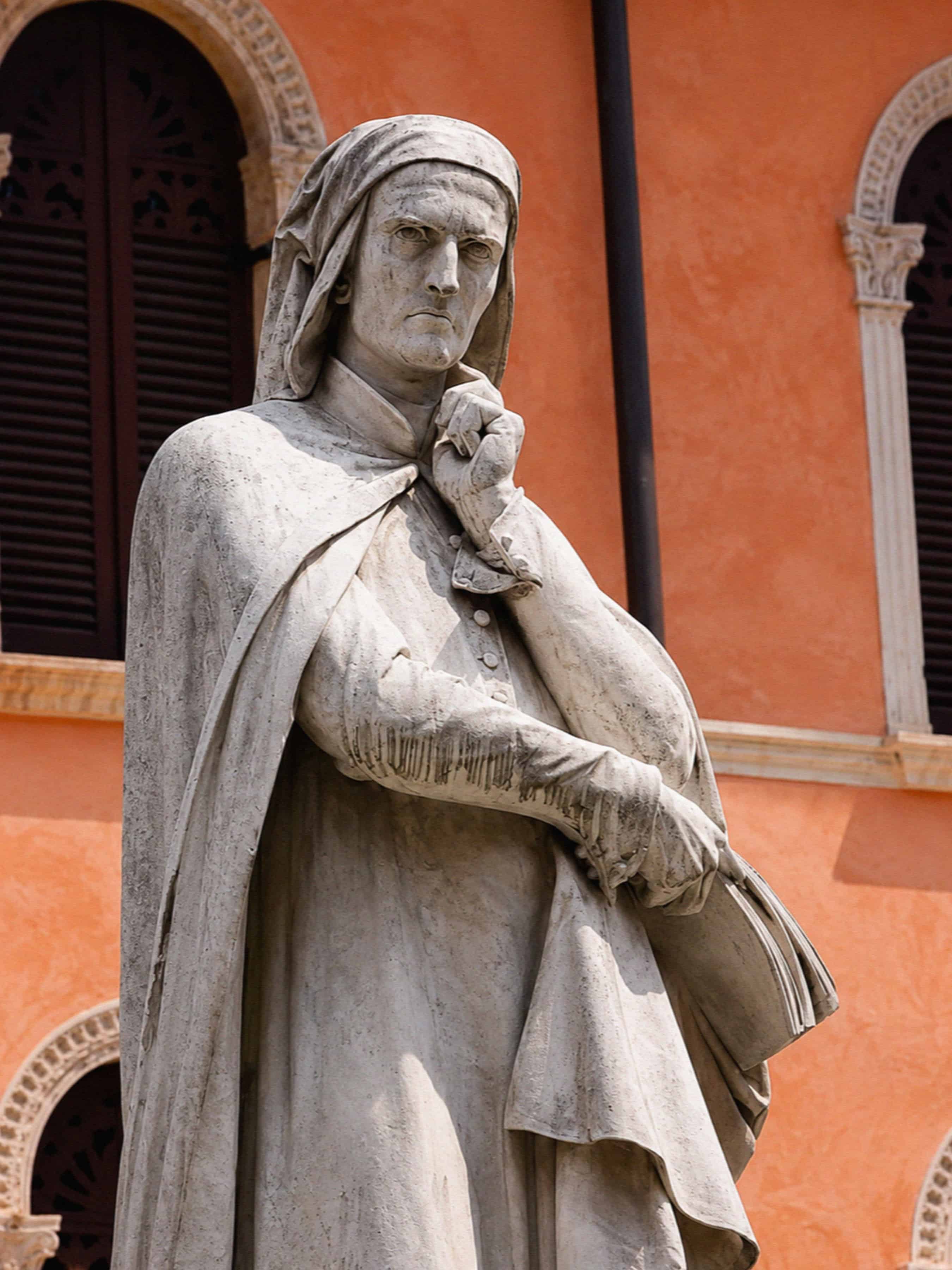
They raised him here in 1865, six hundred years after his birth, in the city that is neither the one he came from nor the one where he is buried, but perhaps the one that kept him. Verona is not Florence. Dante belonged to Florence with the particular intensity of someone who would spend the rest of his life unable to walk back into it.
The della Scala family, whose ladder crest still appears carved above doorways throughout the old town, welcomed him here. First Bartolomeo, in those uncertain early years, and later Cangrande, the brilliant young lord of Verona to whom Dante would dedicate the Paradiso, the final and most luminous part of the poem he carried with him from one borrowed roof to another. It is a remarkable thing to hold in your mind while standing in an ordinary square on an ordinary morning, that some of the most enduring lines in European literature may have first taken shape here, written by a man who had lost almost everything except the work itself.
He wrote about exile, naturally. He was not a man to let a wound remain unexplored. Somewhere in the Paradiso he gives to the spirit of his own long-dead ancestor a prophecy of the life that awaits him, and it remains one of the quietest and most devastating descriptions of exile I have ever read. You will learn, the old soul tells him, how salty another man’s bread tastes, and how difficult it is to climb and descend another man’s stairs. I have carried those words with me all afternoon. Not because they speak of grand tragedy, but because they notice the ordinary humiliations instead. It is not the loss of the city alone that hurts. It is the unfamiliar bread. The staircase that slowly becomes familiar beneath your feet while your heart continues to insist it does not belong there.
And yet he climbed those Veronese stairs for years. He ate that bread at that particular table. Verona could not give him back Florence, but it gave him something almost as precious: a patron, a desk, a measure of safety, and the quiet miracle of being allowed to remain. A place can do that. It can take you in without ever becoming yours, and shelter you just long enough for the most important work of your life to be finished. I found myself thinking that perhaps this, too, is a kind of home.
I know a little about being kept by places that are not the one where I began. I was born in one country and grew up in another, and the house I think of first whenever someone says the word home is not the house where I was born but an old stone house by the sea, my grandmother’s, where the walls grew warm by mid-morning and seemed to hold that warmth long after the sun had gone. There were schools after that, in cities that belonged neither to my mother nor my father, and in each of them I slowly learned the small geography of not quite belonging. Which stair creaked beneath your feet. Which window caught the final light of the afternoon. How many weeks it took before a borrowed room no longer felt entirely borrowed. For a long time I thought of this as a kind of rootlessness. Standing beneath Dante this afternoon, I wondered whether it might be something closer to the opposite. Perhaps those of us who have been gathered up by many places carry a little of each of them with us, and become, in some quiet way, more at home in the world, even if less completely at home in any single square upon it.
The Piazza dei Signori seems a fitting place to think about such things because it has always been a square concerned with belonging. Who ruled. Who was welcomed. Who remained outside the walls. The Scaliger family governed from here, and their extraordinary tombs, all Gothic pinnacles, carved canopies and that familiar ladder crest repeated again and again like a signature, still stand just around the corner, as though even in death they could not quite bear to leave the centre of the city. Cangrande smiles from horseback above them. He was only thirty-eight when he died, and yet seven centuries later the ruler survives as a monument while the poet he sheltered remains alive in the only way that truly matters to writers, inside the minds of strangers.
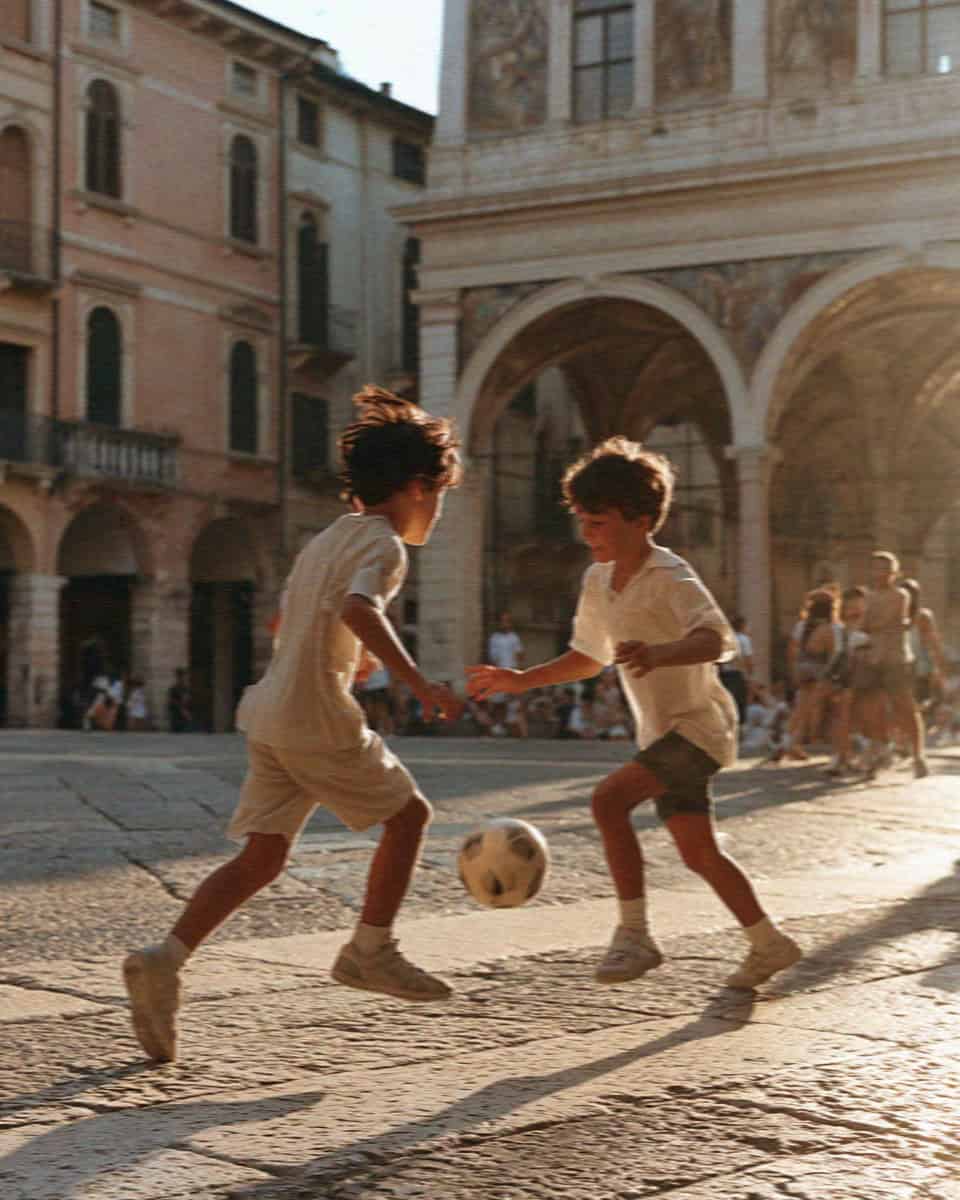
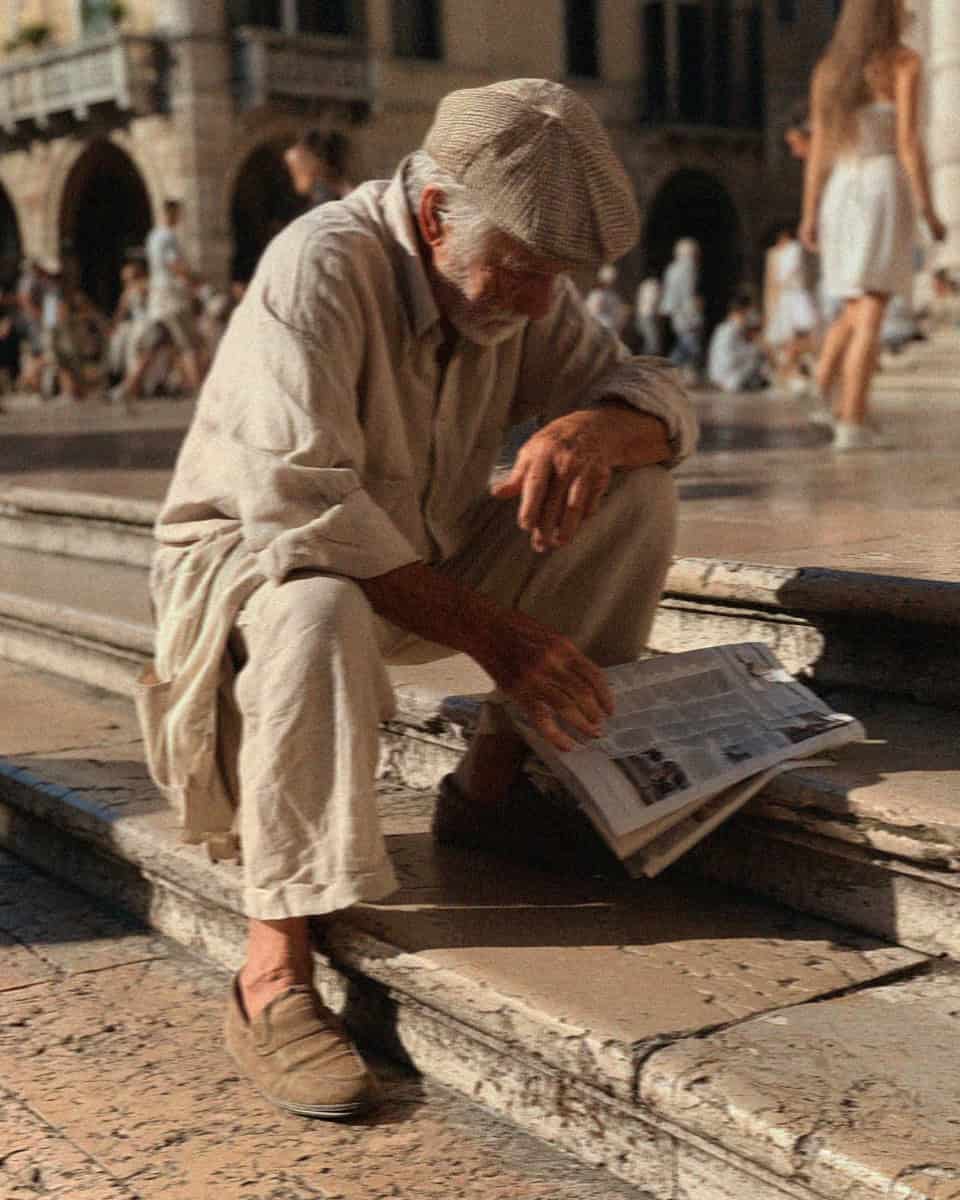
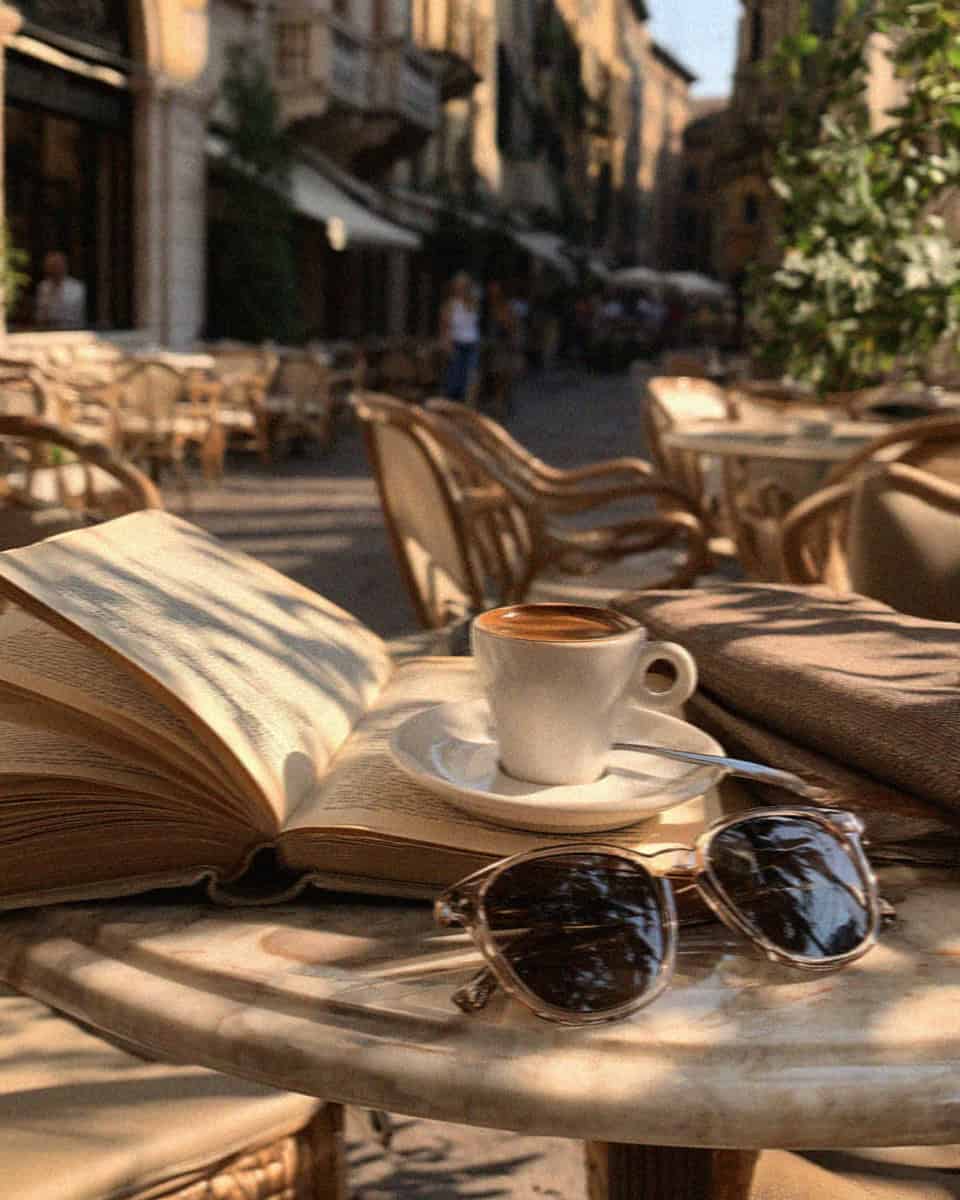
I bought a coffee and drank it standing, as the Veronese so often do, and watched the square continue with its afternoon. A woman carefully choosing peaches from a market stall. Two boys nudging a football beneath the arcade. A very old man lowering himself onto a familiar step with the slow ceremony of someone who has probably occupied that same place for decades and intends to do so for many more. Almost nobody looked up at Dante. Why would they? He has become part of the square itself now, a landmark by which people arrange to meet friends before wandering off together. It struck me that this may be another form of belonging altogether, to become so completely woven into the life of a place that nobody thinks to notice you any longer.
I did not come to Verona for Dante. If I am honest, I came for Juliet, like almost everyone else, and yesterday I wrote about the letters people still leave for a girl who never existed. But it feels right that a city famous for a love story should also quietly keep watch over a poet whose greatest subject was never simply love, but the long road home. Florence gave him his language. Verona gave him shelter, a staircase to climb each morning, and enough peace to continue writing. He turned both into something far more enduring than either city could ever have imagined. Not a house. Not a monument. Simply a voice that continues to find a home inside strangers centuries after the bread has gone stale and the lords who offered it have become names carved into stone.
Tomorrow, perhaps, Venice.
But I was glad, today, to have stayed.










If you are planning your own Verona, my complete guide to Verona has the practical shape of a visit.
My other Verona diaries: Letters for Juliet and A Candle, and Then the Music.