I have never quite got over the civility of the Milanese evening. Somewhere around six, the city loosens its collar. The offices empty, the light goes gold along the tram lines, and a whole population that has spent the day being impeccably serious decides, quite firmly, that it is time for a drink and something to nibble. I find it one of the most quietly joyful rituals in Europe, and after years of coming back I still plan my days around it.
This is my guide to doing it properly. Not as a tourist gulping a spritz on a plastic chair, but as someone who has learnt where to stand at the bar, when to drift down to the canals, and how to make an evening of it. Milan rewards a little knowing, and the aperitivo is where that pays off most handsomely.
What aperitivo actually is, and how it works
Aperitivo is the hour, roughly six to nine in the evening, when you buy a drink and food arrives with it. That is the essence of it. You order a cocktail or a glass of wine, and the price, usually somewhere between ten and fifteen euros in a decent place, includes something to eat. The word comes from the idea of opening the appetite, and the whole thing is designed to carry you elegantly from the working day to dinner.
There is an important distinction to hold onto. A classic aperitivo brings you a small, curated plate: olives, crisps, a few cubes of cheese or mortadella, perhaps some focaccia. An apericena, a portmanteau of aperitivo and cena, dinner, is the more generous, buffet-led version, where a fixed drink price gives you the run of a spread of pasta, rice, cured meats and salads. The apericena is a younger, more student-flavoured invention, and it is everywhere in the Navigli. I enjoy both, but I never confuse them. The classic version is about the drink; the apericena is very nearly a meal, and you should treat it as one.
Plan Your Visit to Milan
A few things I booked and loved. These help support the blog, at no cost to you.
- Where I stayed: search Milan hotels
- Duomo, Last Supper and attraction tickets
- Stay connected: get a travel eSIM
This section contains affiliate links. If you book through them I may earn a small commission, at no extra cost to you.
The classic Milanese drinks
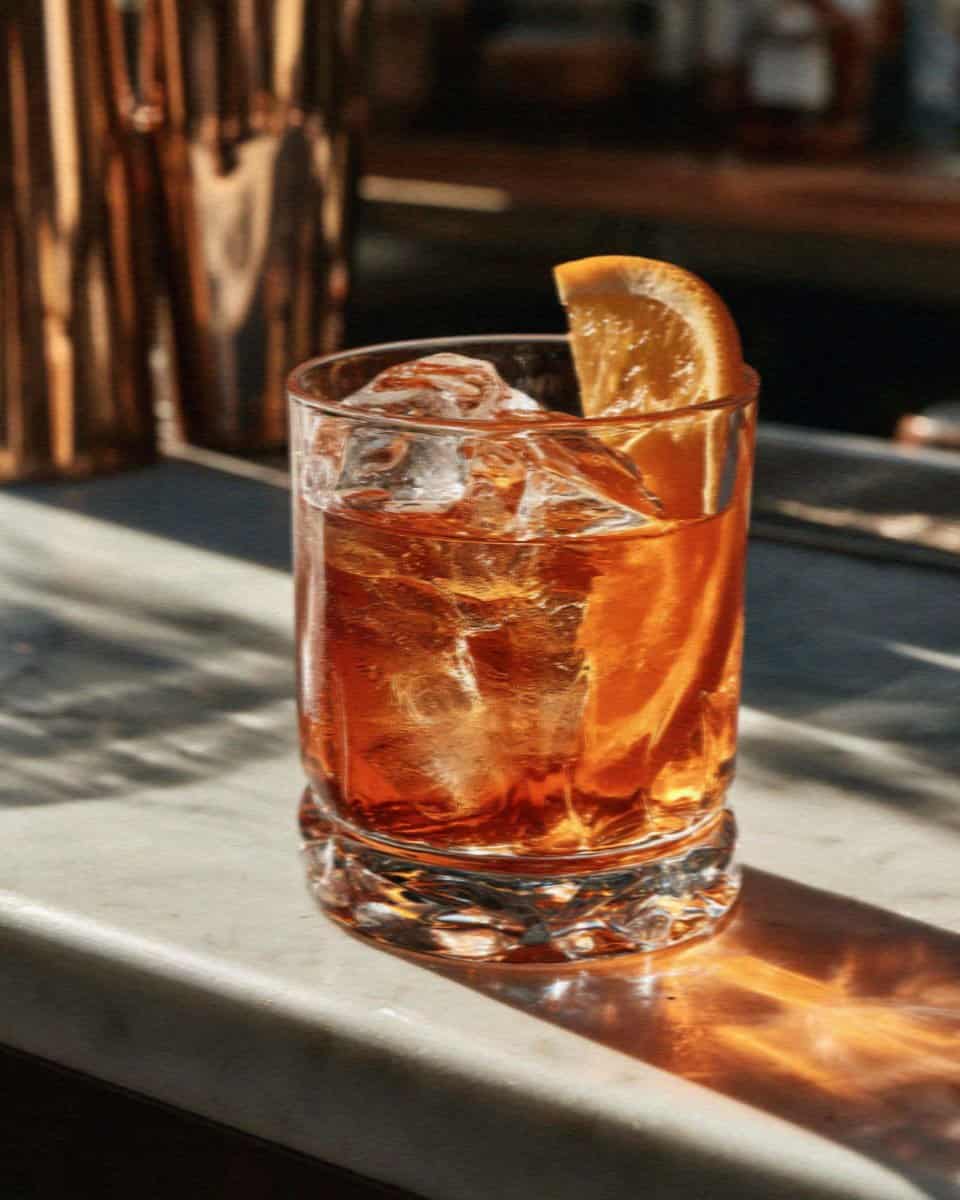
If you want to drink as the city does, there is a small canon worth learning. The Negroni is the obvious one, equal parts gin, Campari and sweet vermouth, bitter and grown-up and impossible to improve upon. But Milan’s real signature is the Negroni Sbagliato, the mistaken Negroni, where the gin is swapped for sparkling wine. It is lighter, fizzier and, I would argue, more suited to a warm evening by the water.
Then there is the Milano-Torino, affectionately the Mi-To, which is simply Campari from Milan and vermouth from Turin over ice, a beautifully austere little drink that predates all the others. And the Campari spritz, Campari topped with prosecco and soda, the rosier, more bracing cousin of the ubiquitous Aperol spritz. When in doubt, I order a Campari-based drink in Milan. This is Campari’s home town, and it shows.
The historic temples
Some places you go for the drink; some you go for the church of the thing. Two are non-negotiable.
Camparino in Galleria sits at the mouth of the Galleria Vittorio Emanuele II, directly beside the Duomo, and it has been pouring Campari since 1915. It was reopened and lovingly restored a few years ago, and the ground-floor standing bar, all Art Nouveau tiling and mirrored splendour, is where I like to take a Negroni standing up, elbow on the marble, watching the cathedral change colour through the glass. It is not cheap and it is not a secret, but it is genuinely magnificent.
Bar Basso, over towards Porta Venezia on Via Achille Maiocchi, is the other pilgrimage. This is the bar where, in 1972, the barman Mirko Stocchetto invented the Negroni Sbagliato by reaching, so the story goes, for sparkling wine instead of gin. His son runs it now, and it is still gloriously unchanged, wood-panelled and unhurried, the sbagliati arriving in absurdly large goblets. It sits a little apart from the tourist track, which is exactly why I love it.
The Navigli in the evening
For the evening proper, I go south to the Navigli, Milan’s canal district, and I have never tired of it. The Naviglio Grande is the long, lantern-lit canal where the crowds gather, its towpaths lined shoulder to shoulder with bars, and the Darsena, the old dock at its head near Porta Genova, has been handsomely redone into a basin ringed with terraces. As the light fades, the whole quarter fills up, first with after-work Milanese, then, later, with a younger, louder set.
My favourite corner is the Vicolo dei Lavandai, a tiny preserved alley off the Naviglio Grande where the old communal washing station still stands, its stone basins and wooden boards intact. It is one of the most photographed spots in Milan for good reason, and it stays quietly beautiful even when the main canal is heaving.
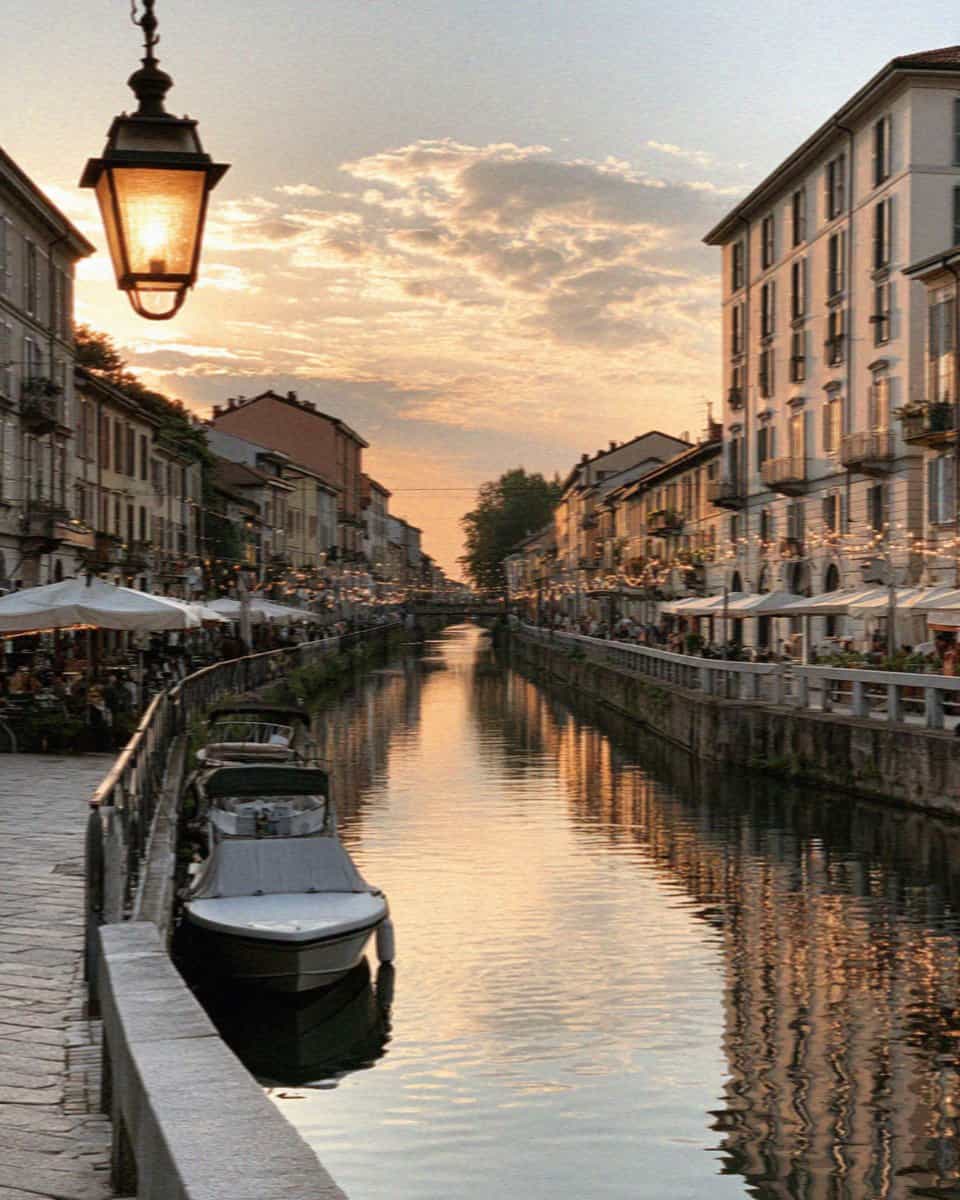
A word of honest counsel. The busiest stretch of the Naviglio Grande, on a Friday or Saturday, can become a crush, and the drinks there are not always the ones you would choose. When it thickens, I step off the main run. The Naviglio Pavese, the second canal branching south from the Darsena, is calmer, and the streets a block back from the water hide better bars with room to breathe. The trick to the Navigli is to arrive early, take the atmosphere while the light is good, and know when to slip away.
Elegant and rooftop alternatives
If the canal crowds are not your mood, Milan has grander perches. Brera, the artists’ quarter behind the Scala, is all cobbled lanes and candlelit terraces, and I love an aperitivo there when I want the evening to feel like a painting rather than a party.
For height, the city has become serious about rooftops. Ceresio 7, the Dsquared2 restaurant and bar near the Cimitero Monumentale, has two pools and a terrace with one of the finest skyline views in Milan. It is a dress-up occasion and priced accordingly, but the view earns it. Terrazza Aperol, perched above the Galleria beside the Duomo, is more accessible and more fun, a proper spritz with the cathedral almost close enough to touch.
How to do an aperitivo crawl
A few things I have learnt, offered plainly. Timing is everything. Start around half past six, when the plates are freshest and you can still get a seat. Do two or three stops, not more. I like to begin somewhere handsome and central, Camparino or a Brera terrace, then drift south to the Navigli as it comes alive.
Remember that dinner comes later. The aperitivo is a prelude, not the main event, and even a generous apericena is best treated as a way to arrive at nine or ten with a genuine appetite. On money and manners: aperitivo prices are all-in, so you are not expected to tip in the way you might at home. Rounding up or leaving a euro or two for lovely service is gracious but never obligatory. Above all, do not treat it as a task to complete. The Milanese do not race through aperitivo. They stand, they talk, they let the evening open like the drink is meant to.
Read also: where to eat in Milan and the best things to do in Milan, both part of Victoria’s complete guide to Milan. If you are still choosing a base, my notes on where to stay in Milan will help.
Frequently Asked Questions
What is Milanese aperitivo?
It is the early-evening ritual, roughly six to nine, where you buy a drink and food comes with it. In a classic aperitivo that means a small plate of nibbles; in an apericena it means access to a fuller buffet. The point is to open the appetite and ease from work into the night.
What is the best area for aperitivo in Milan?
The Navigli, Milan’s canal district, is the liveliest and most atmospheric, especially along the Naviglio Grande and around the Darsena. For something more elegant, I prefer Brera or a rooftop such as Ceresio 7. I often do both in one evening.
What time does aperitivo start in Milan?
It begins around six in the evening and runs until roughly nine. I aim to arrive by half past six, when the food is freshest and there is still somewhere to sit before the crowds build.