Milan has a reputation for being all business and no soul, and I have never once found that to be true at the table. This is a city that turns saffron into gold, that breads a veal chop until it sings, and that has quietly perfected the art of drinking a Negroni with something to nibble while the light goes amber over the rooftops. I come back for the fashion and the Duomo, but I stay an extra day for the food.
What follows is how I actually eat in Milan. Not a list of everything, but the dishes I order again and again, and the real places I return to for them. I have kept the addresses honest and the prices current for 2026, so you can plan a table with confidence.
The classic Milanese dishes
Before I send you off to the trattorie, know what you are looking for on the menu. The Milanese canon is small and gloriously rich, built for cold winters and long lunches.
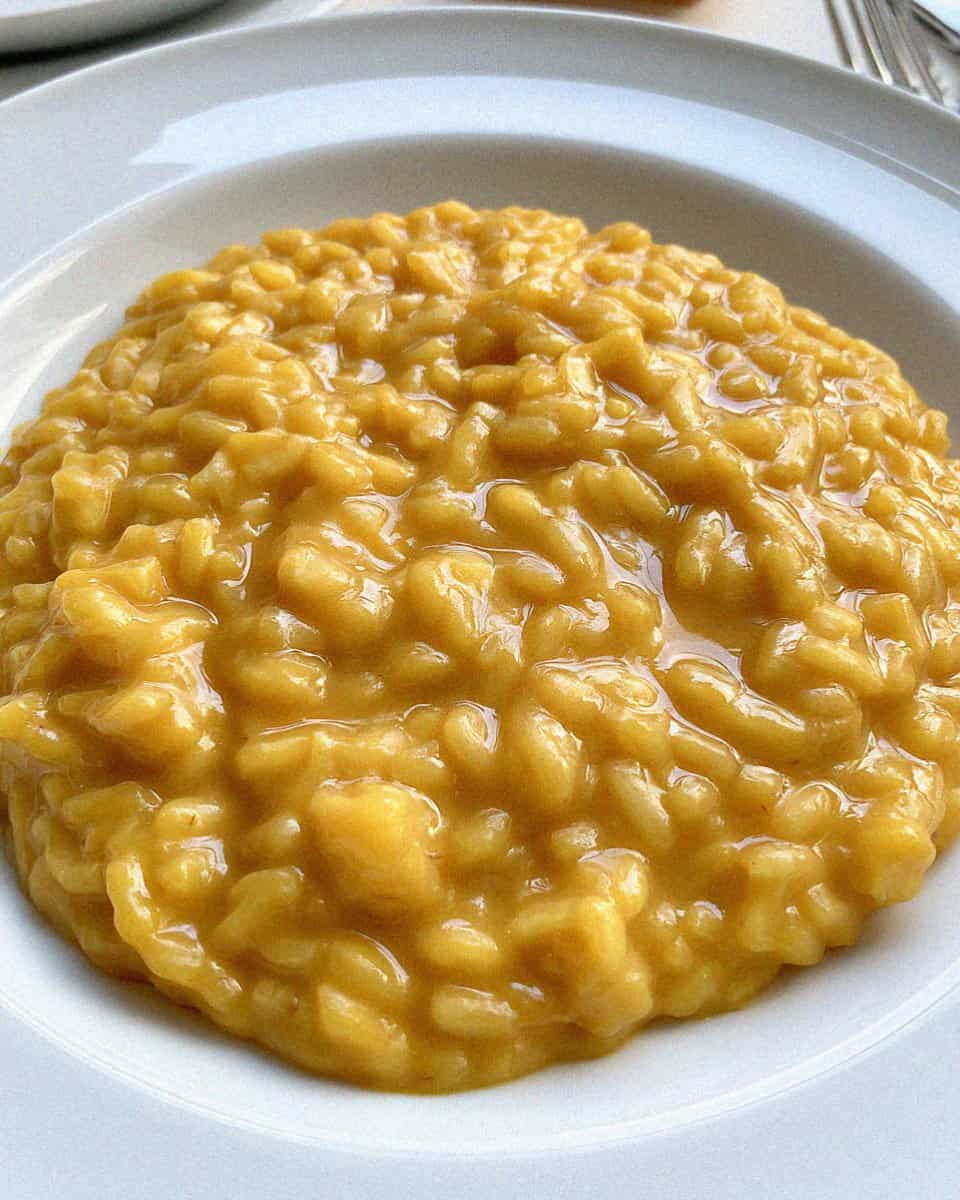
Risotto alla milanese, also called risotto giallo, is the one I would not leave the city without. Carnaroli rice cooked slowly with onion, white wine, beef marrow and, crucially, real saffron, until it is loose and glossy, the colour of an egg yolk. It should ripple on the plate, not stand up. Ask for risotto al salto if you see it: yesterday’s risotto pressed into a pan and fried into a crisp golden disc.
Cotoletta alla milanese is the veal cutlet, bone in, pounded thin or left tall and pink in the middle, breaded and fried in butter until deeply golden. The tall version is the showpiece. It needs nothing but lemon.
Ossobuco is a cross-cut veal shin braised until the meat surrenders and the marrow melts in the centre bone. It is traditionally finished with gremolata, a bright mince of lemon zest, garlic and parsley, and served alongside the risotto giallo. That pairing, ossobuco with risotto, is the great Milanese marriage.
Cassoeula is the winter dish locals adore and visitors rarely find: a hearty braise of pork and cabbage cooked down until unctuous. You will mostly see it from autumn into February. And panettone, of course, the tall domed Christmas bread studded with candied fruit and raised over days. The best bakeries now sell versions year round, and I never argue with that.
Plan Your Visit to Milan
A few things I booked and loved. These help support the blog, at no cost to you.
- Where I stayed: search Milan hotels
- Duomo, Last Supper and attraction tickets
- Stay connected: get a travel eSIM
This section contains affiliate links. If you book through them I may earn a small commission, at no extra cost to you.
Where to eat traditional Milanese
For the classics done properly, I go to the old rooms where the recipes have not moved in a century.
Trattoria Masuelli San Marco on Viale Umbria is my first choice for a proper Milanese lunch. Family run since 1921, with the original wooden interior and a menu that alternates Milanese and Piedmontese by the day. The risotto al salto here is textbook. Expect around 45 to 60 euros a head with wine. Book ahead, and note it closes Sunday and Monday.
Antica Trattoria della Pesa, near Porta Garibaldi, has been feeding Milan since 1880 in beautiful faded rooms. This is where I send anyone who wants ossobuco with risotto giallo on one plate, roughly 50 to 70 euros a head.
Trattoria Milanese, tucked on Via Santa Marta in the old centre, is the unfussy classic: cotoletta, risotto giallo, mondeghili in a snug room that has barely changed. Around 40 to 55 euros.
For a cotoletta I dream about, Ratana near the Bosco Verticale is where chef Cesare Battisti cooks the Milanese repertoire with real reverence and slightly more polish. It is more of an occasion, closer to 60 to 80 euros a head, in a lovely old railway building with a garden.
Fine dining, when the evening calls for it
Milan holds Michelin stars easily, and two names sit at the top of my list.
Enrico Bartolini al Mudec, inside the Mudec museum in the Tortona district, is the city’s three-star flagship. Bartolini’s cooking is precise and deeply Italian. Tasting menus run in the region of 260 to 320 euros before wine. Reserve well in advance.
Cracco, set grandly inside the Galleria Vittorio Emanuele II, is the other. Carlo Cracco’s dining room is theatre. Budget from around 180 euros upward for the tasting experience, more with the cellar. If you want the same address for less, the cafe and bistro downstairs let you drink in the setting over a lighter plate.
The aperitivo ritual
If you do one thing my way in Milan, make it the aperitivo. This is the hour, roughly six to nine, when the city stops and pours itself a drink. You order a cocktail, classically a Negroni, a Negroni Sbagliato, or a bittersweet Spritz, and small bites arrive alongside. It is the civilised bridge between the working day and the evening, and Milan invented it.
Camparino in Galleria, on the corner of the Galleria beside the Duomo, is where I take the ritual seriously. It opened in 1915, all mosaic and mirrored elegance. A cocktail runs around 15 to 20 euros, and you are paying for one of the most beautiful rooms in Italy along with your Negroni.
Bar Basso, further out in the Loreto direction, is the spiritual home of the Negroni Sbagliato, the mistaken Negroni made with sparkling wine instead of gin, invented here. Drinks around 12 to 15 euros. I have written far more about this ritual in my full guide to aperitivo and the Navigli.
Pasticcerie and coffee
Milanese mornings deserve a proper pasticceria, and the standard here is very high. Marchesi 1824 is my ritual. The jewel-box branch inside the Galleria, with its pistachio-green banquettes, is one of my favourite places to stand at the bar with an espresso and a pastry. Their panettone is exceptional.
For coffee more generally, drink it standing at the bar as the Milanese do. An espresso is around 1.20 to 1.50 euros al banco, more at a table. A cappuccino is a morning drink here, never after lunch.
A note on the Navigli for evening
When the sun drops, I drift down to the Navigli, the old canal district in the south of the city. The Naviglio Grande and the Darsena are lined with bars and osterie. It can be touristy at the busiest stretch, so I step a little off the main canal.
Un Posto a Milano, inside the restored eighteenth-century farmhouse of Cascina Cuccagna just east of the Navigli, is my quiet favourite: a beautiful courtyard, seasonal Lombard cooking, and a relaxed aperitivo under the trees. A dinner here sits around 40 to 55 euros. For where to base yourself, my notes on the best neighbourhoods to stay in Milan will point you to the right doorstep.
Frequently Asked Questions
What should I eat in Milan?
Start with the trio that defines the city: risotto alla milanese, the golden saffron risotto; cotoletta alla milanese, the breaded veal cutlet fried in butter; and ossobuco, braised veal shin with gremolata. Add cassoeula in winter and a slice of panettone, and finish with a proper aperitivo.
What is a Milanese aperitivo?
It is the early-evening ritual, roughly six to nine, of an aperitif drink served with small bites. You order a Negroni, a Negroni Sbagliato or a Spritz, and snacks arrive alongside. Camparino in Galleria and Bar Basso are the classics.
What is the best area for dinner in Milan?
Brera is lovely and central for a romantic evening, the Navigli suit a lively canalside night, and Isola near the Bosco Verticale has excellent modern-Milanese kitchens like Ratana. For the grand classics, follow the address rather than the district.
Read also: the best things to do in Milan, my guide to Milan aperitivo and the Navigli, and the full complete guide to Milan.