You see it from a long way off.
That is the first thing about Ostuni and it does not stop being the thing. The road comes across a plain of olive trees, flat and silver and going on much further than you expect, and then the land lifts and there it is on the hill, white, the whole of it, stacked and folded on itself like something poured and left to set.
I put the window down. It was hot already at nine.
I had come from the coast and I had expected the town to be a version of what I had just left. It is not. It is inland and up and dry, and it faces the sea the way a person faces a window rather than a door.
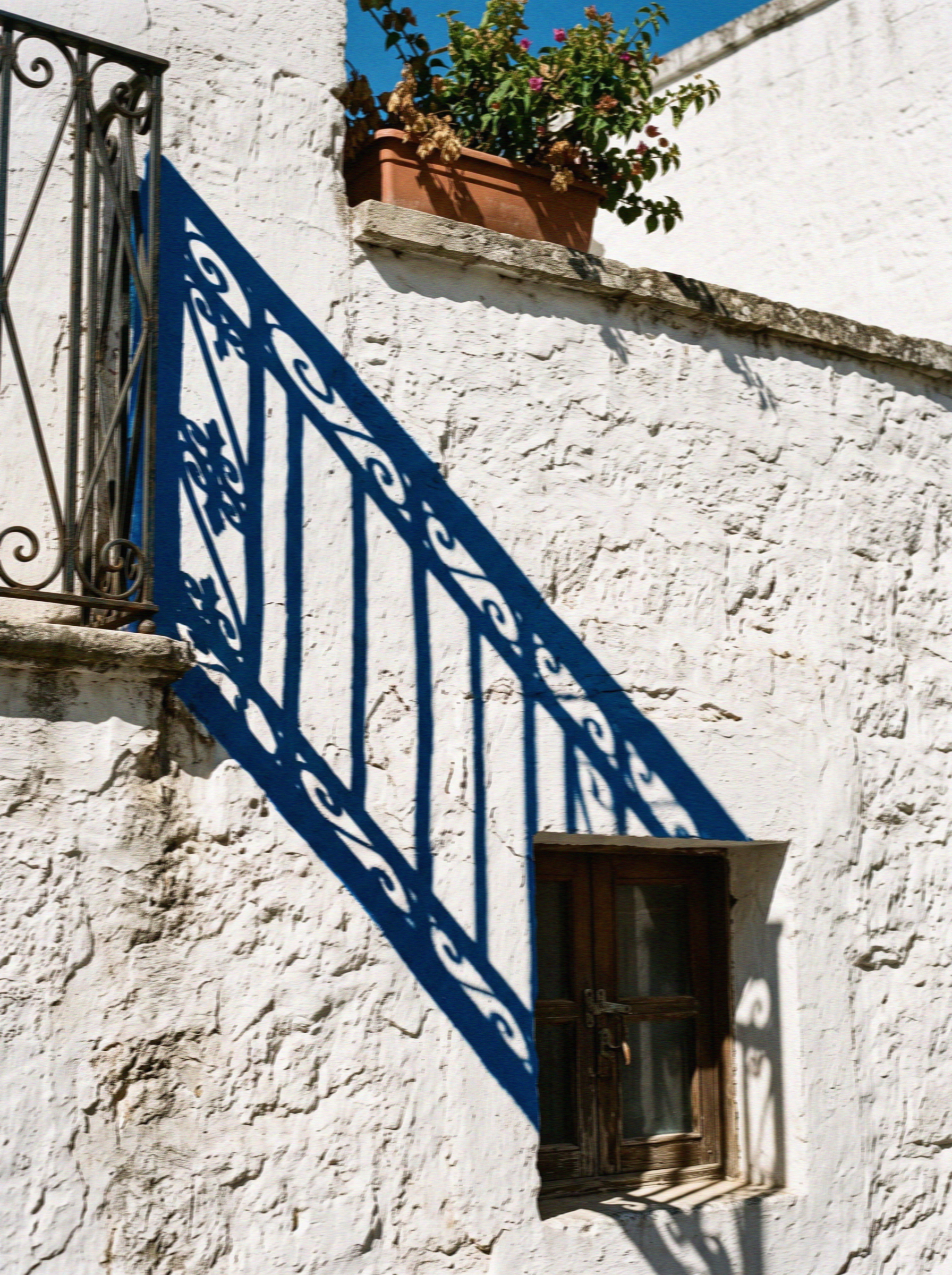
The white is not one white.
I want to be accurate about this because it is the whole reason to come. In the shade it is blue, properly blue, the blue of skimmed milk. In the sun it is not a colour at all, just brightness, and you cannot look at it for long without your eyes doing something defensive. At the edges where the lime has gone on and on for a few hundred years, the corners have lost their angles. Everything is slightly rounded. Everything has the softness of a thing that has been painted too many times.
And the shadows are hard. Blue-black, cut clean, with edges you could measure.
I walked the lanes for two hours before nine and met almost nobody. A woman throwing water across a step. A cat that had claimed the one cool flagstone. Somewhere above me a radio, and further off a scooter working its way up the hill in low gear.
The old town is built as a spiral and it defeats a map on purpose. Lanes curl round the hill, staircases cut between them, arches are thrown across where two houses have leaned into one another for support. You cannot navigate it. You can only be carried up it.
My mother spent her life looking at rooms the way other people look at faces, reading their proportions, what they were hiding, what they had been given and what they had earned. I have never been able to put that down. In Ostuni it is almost too easy, because there is nothing to read except surface. No colour, no ornament, no fresco, no marble. Only lime on stone, again and again, and what the light decides to do with it.
I filled a lot of pages. Most of it will not be any use. That is generally how it goes.
There is a cathedral up near the top with a rose window in it, one of the biggest in Italy, twenty-four carved rays going out from the middle like something opening. The facade is pale limestone and it stands out against all that white the way a slightly warmer note stands out in a chord. I came back to it in the late afternoon when the sun had dropped enough to come across the carving sideways, and the whole thing acquired depth it simply does not have at midday.
Then I sat on the steps of the little square in front of it for a while and did nothing at all.
By eleven the town had filled. Coaches somewhere below, and the lanes I had walked alone at eight now moving slowly in both directions, everyone very hot, everyone photographing the same blue door.
I did what people who live here do, which is disappear until five.
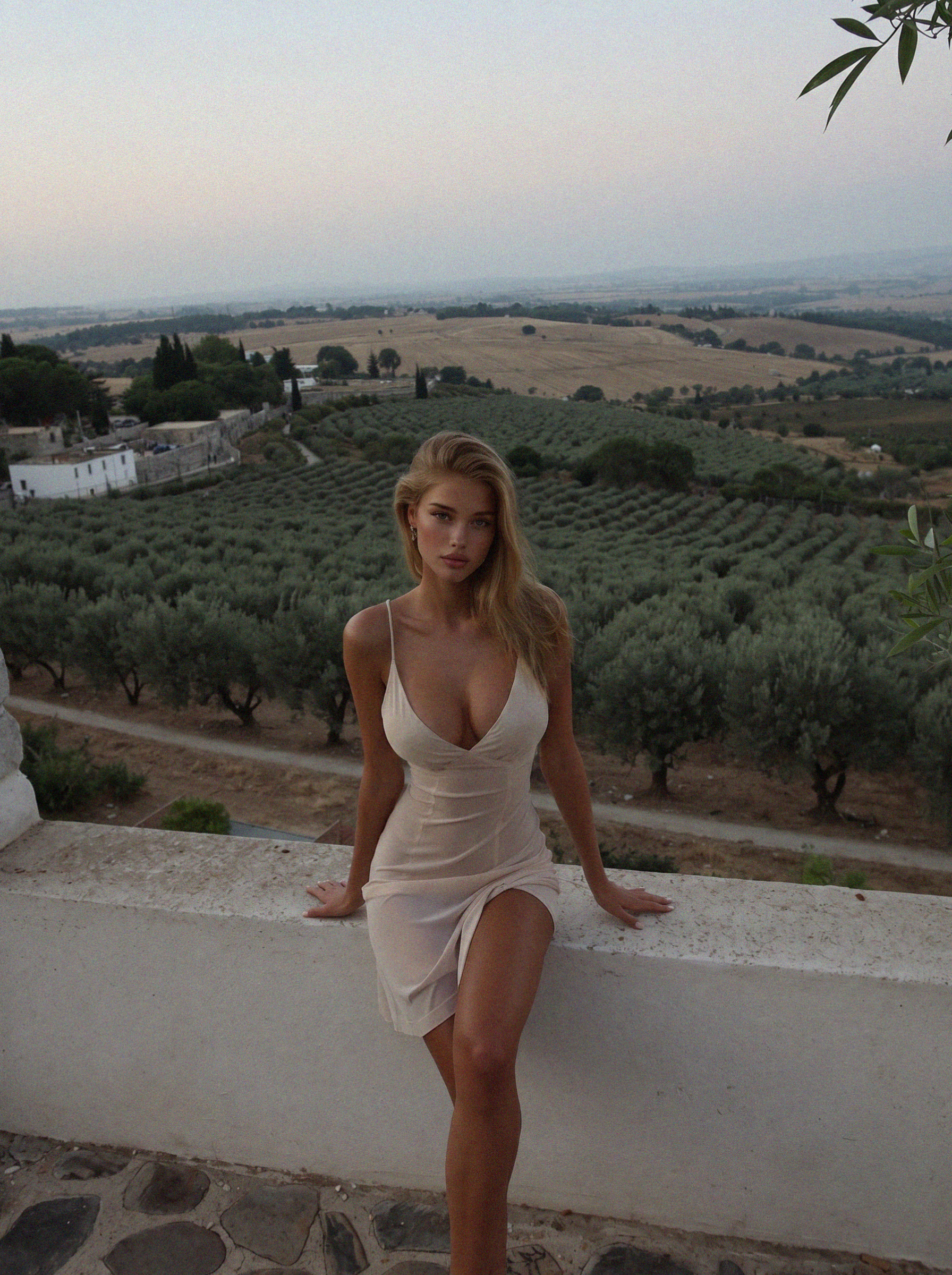
The evening is the reason.
I have been in a lot of towns this year that are lovely at the wrong hour and unbearable at the right one, and Ostuni is not one of them. At seven the day empties out of it. The coaches go. The heat lets go of the stone slowly, the way it does, and the light comes in low and long across the plain and the white walls take it and turn faintly gold, and then pink, and then a sort of lilac that lasts about four minutes and that I would not believe if I had not sat and watched it happen.
Below the town the olive plain goes dark first. Then you begin to see the lights of the coast, strung out flat and far away along the bottom of everything, and above them nothing.
I ate late on a terrace at the edge of the walls with the ground dropping away below the railing. Orecchiette with turnip tops and breadcrumbs, bitter and green and salty. A carafe of something cold and local that I did not ask the name of. Bread, and oil poured over it that tasted like it had been pressed that week, peppery enough to catch at the back of the throat.
The town came out around me while I ate. Not for anything. Just out. Couples arm in arm, three generations of one family taking up a whole table, children still running about at ten at night, the same old men who had been in the shade at eleven in the morning now sitting in almost exactly the same arrangement, having what appeared to be the identical conversation.
Afterwards I walked the lanes again and they were unrecognisable. Under lamplight the white goes warm and close and the alleys stop being steep and start being intimate. In daylight the town is a spectacle. At night it is a place where people live, and the difference is enormous.
I stood a while at a gap in the wall where the buildings simply stop and the whole plain opens up. Warm stone under both hands. The lights of the coast, and the dark between here and there, and behind me somebody calling something up a staircase.
It is a strange thing to build a town this white and then spend the best part of the day hiding from it.
Tomorrow, down the hill to the sea, and the long slow business of finding out which of the coves is worth the drive.
Tonight, the lanes, and the last of the heat coming up out of the stone.
V.
This is a diary from Ostuni. The practical version of the town, and everything I worked out about it, is in my complete guide to Ostuni.