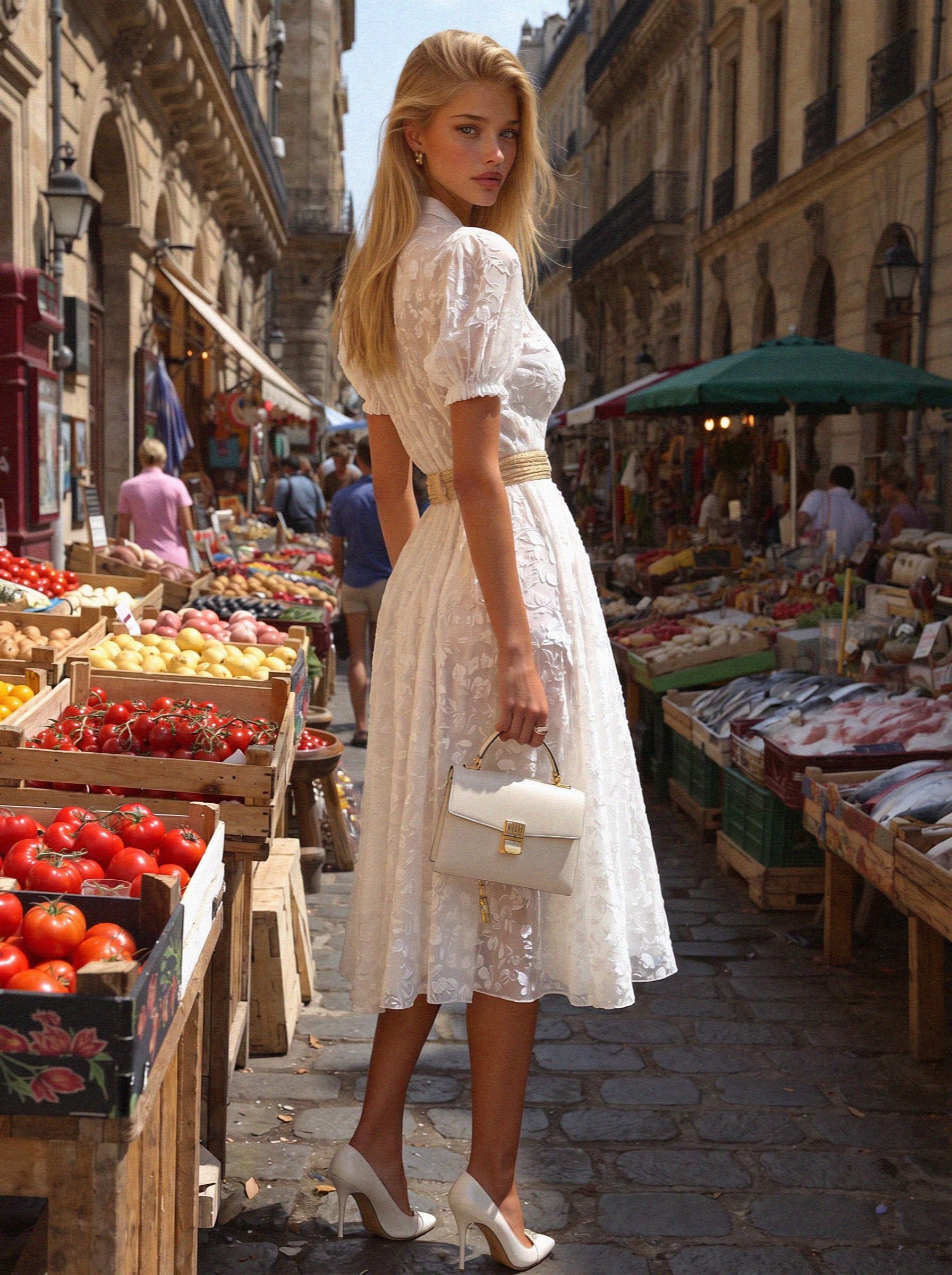
Syracuse is several cities standing in each other’s footprints, and only one of them still has a job.
I went to the market on the second morning because I had run out of fruit and stayed for two hours because I could not make myself leave.
It runs along a couple of streets behind the temple. It starts before seven, and by nine it is at full volume. Crates of tomatoes in four colours. Aubergines stacked in a way that has clearly been done every day for a very long time by someone who no longer thinks about it. Whole tuna laid out on ice with their heads on. Bundles of oregano still on the stalk. Lemons the size of a fist with the leaves attached, which is the detail that tells you they came from about six miles away and not from a lorry.

There is a man at the fish end who calls.
Not to me. He calls the way a bird calls, on a loop, more or less continuously, a rising line that ends somewhere up in his nose and starts again. He got through it perhaps forty times while I was standing there and never once looked at me. He was not selling to anyone in particular. Every so often a woman would stop and he would break off mid-note, deal with her entirely differently, quietly, at length, weighing things and putting them back and weighing them again. Then when she left he would pick the call up exactly where he had dropped it.
I have thought about this more than the theatre.
Because here is what I had done the day before. I had walked up the hill to the Greek theatre and sat on the stone and been appropriately moved. Aeschylus. Two and a half thousand years. All of it true. Then I went into the quarry below it, where they cut the stone out to build the town, which is now a sunken garden full of lemon trees growing in the pit. It is beautiful, and I photographed it, and I felt the thing you are supposed to feel.

But those places have stopped.
The theatre is a ruin with a ticket office. The quarry is a garden. The temple, the enormous Doric one the whole island was built around, is now inside the cathedral, its columns swallowed into the walls, doing structural work for a religion that arrived a thousand years after it was built. You can stand in the nave and see them in there, fat and fluted and out of place, like something the building ate.
Every one of them has been converted into a thing to look at.
The market has not.
It is doing on a Tuesday morning what it was doing when the Greeks were putting on plays up the hill, in roughly the same place, for the same reason, at the same hour. Nobody has thought to charge for it or interpret it or put a rope across the front.
That is the oldest live thing in this town and it has no sign on it.
I bought a sandwich. I want to describe this sandwich properly because it deserves the space.
A man cut a loaf the length of my forearm, and then he did not stop. Mortadella, then a soft white cheese in handfuls, then grilled aubergine, then a pile of something pickled, then more cheese, then tomatoes, then oil poured on from a height and a great deal of pepper. He pressed the top down with the flat of his hand and held it there for a moment, the way you would settle a suitcase.
It cost about five euros.
I could not finish half of it and I have thought about it since.
My father would have wanted to know why the bread was that shape. He would have asked, and got an answer, and told me about it for the rest of the day.
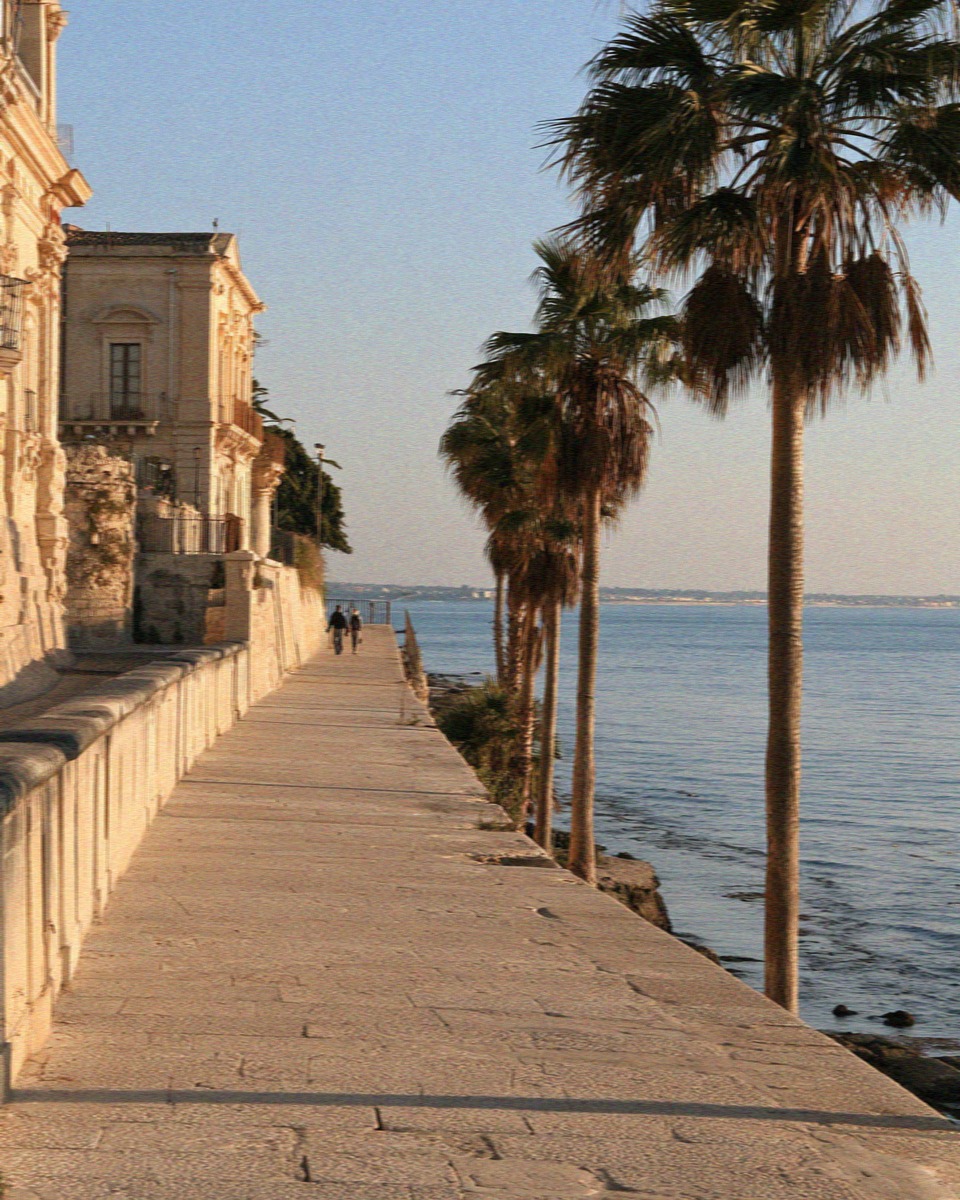
In the afternoon I walked out along the sea wall on the far side of the island, where the buildings turn their backs on the water and there is a line of palms and a paved walk and almost nobody on it.
The fortress sits at the very tip. Yellow stone, square, built to be shot at. Out past it there is nothing but open sea until Africa, which is a fact I keep turning over because it explains the shape of everything behind me. This town has been taken by everyone who ever wanted it. Corinthians, Romans, Arabs, Normans, Spanish. All of them arrived by water and all of them built on top of what was already here rather than clearing it away.
That is why the temple is in the cathedral. Nobody had the time or the inclination to knock it down.
And it is why the market is still there. Not preserved. Just never interrupted.
I sat on the wall until the light went orange and the swifts came out over the water, and a boy nearby was fishing with a hand line wound round a plastic bottle, catching nothing, entirely content.
Everybody here fishes for nothing, apparently, and does it beautifully.
I go on to the islands in the morning and I am not ready. Two days was the plan and two days was wrong, and the thing I will actually miss is not the theatre or the temple or even the square at nine o’clock.
It is a man calling a fish price on a loop at half past eight, in a language I do not speak, in a street that has been doing this since before anyone thought to write any of it down.
V.