The oldest village on this island is empty, and it emptied because life got better.
I had that backwards the whole way up.
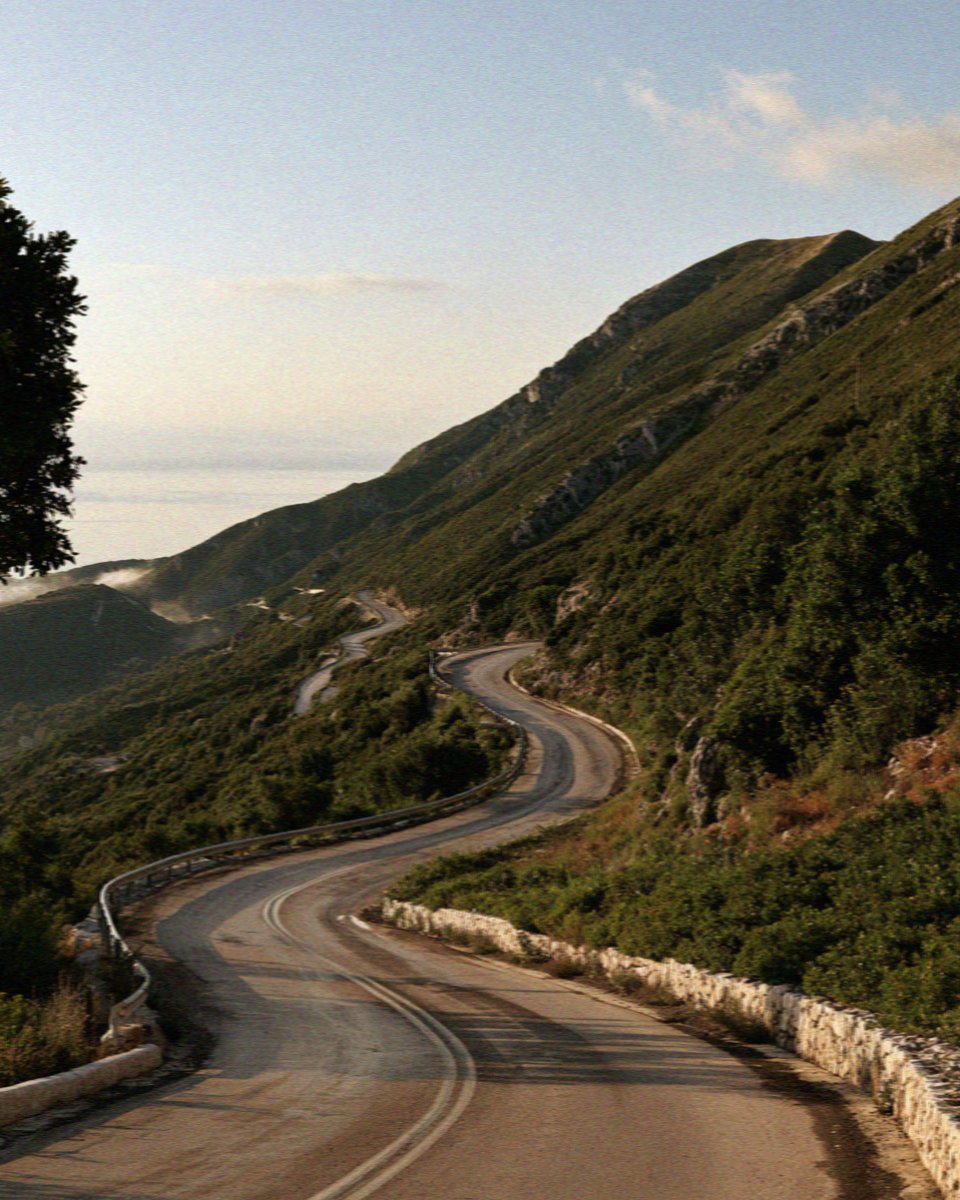
I left before seven to get the road while it was still cold. It climbs off the north coast in switchbacks that keep handing you the same view from slightly higher, and for the first twenty minutes you are still inside the olive tunnel from my first day here, in that green underwater light.
Then the olives thin.
Then they stop altogether.
You come out above them into rock and scrub and thyme, and the air changes so completely that I pulled over to be certain it was not something in the car.
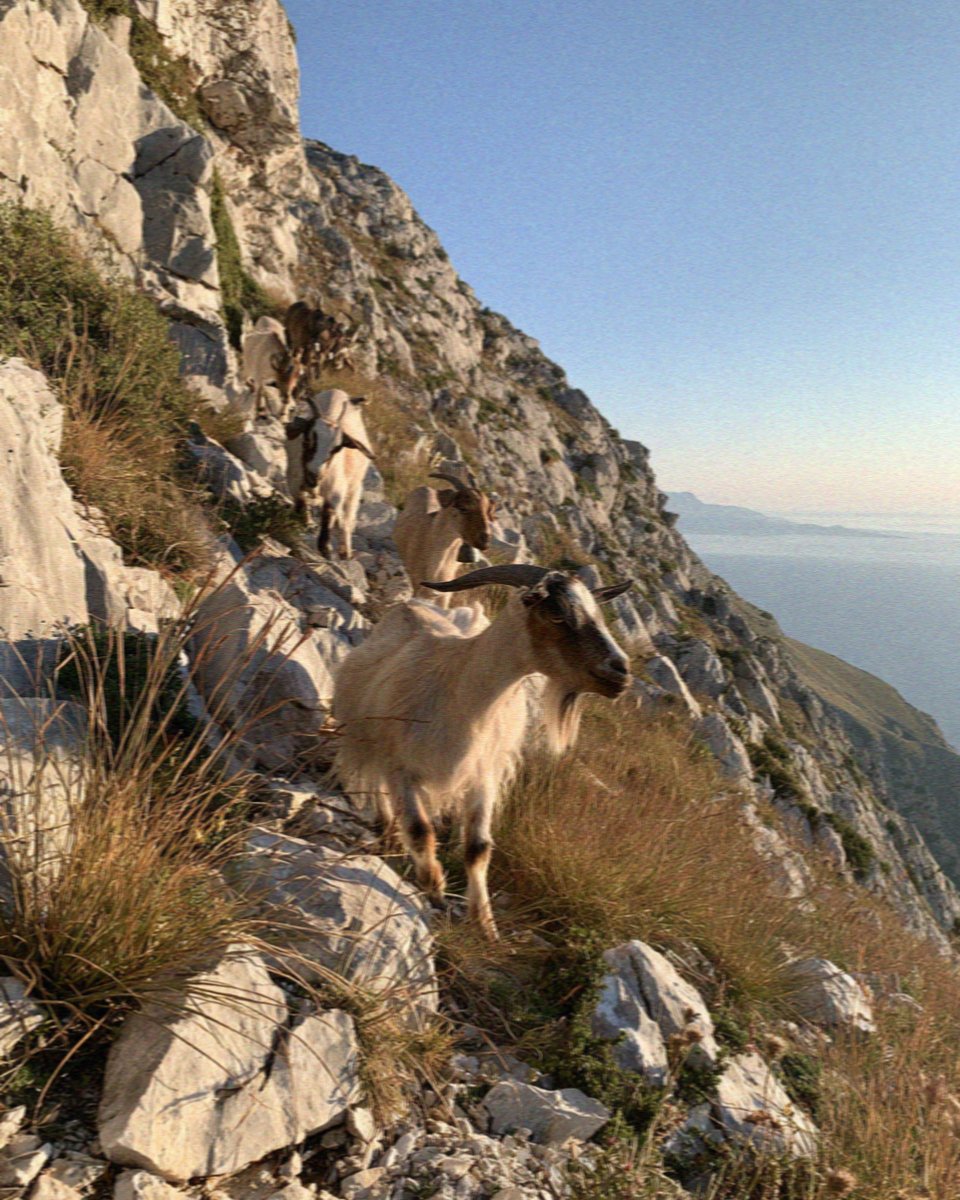
Bells somewhere below the road.
No goats anywhere I could see.
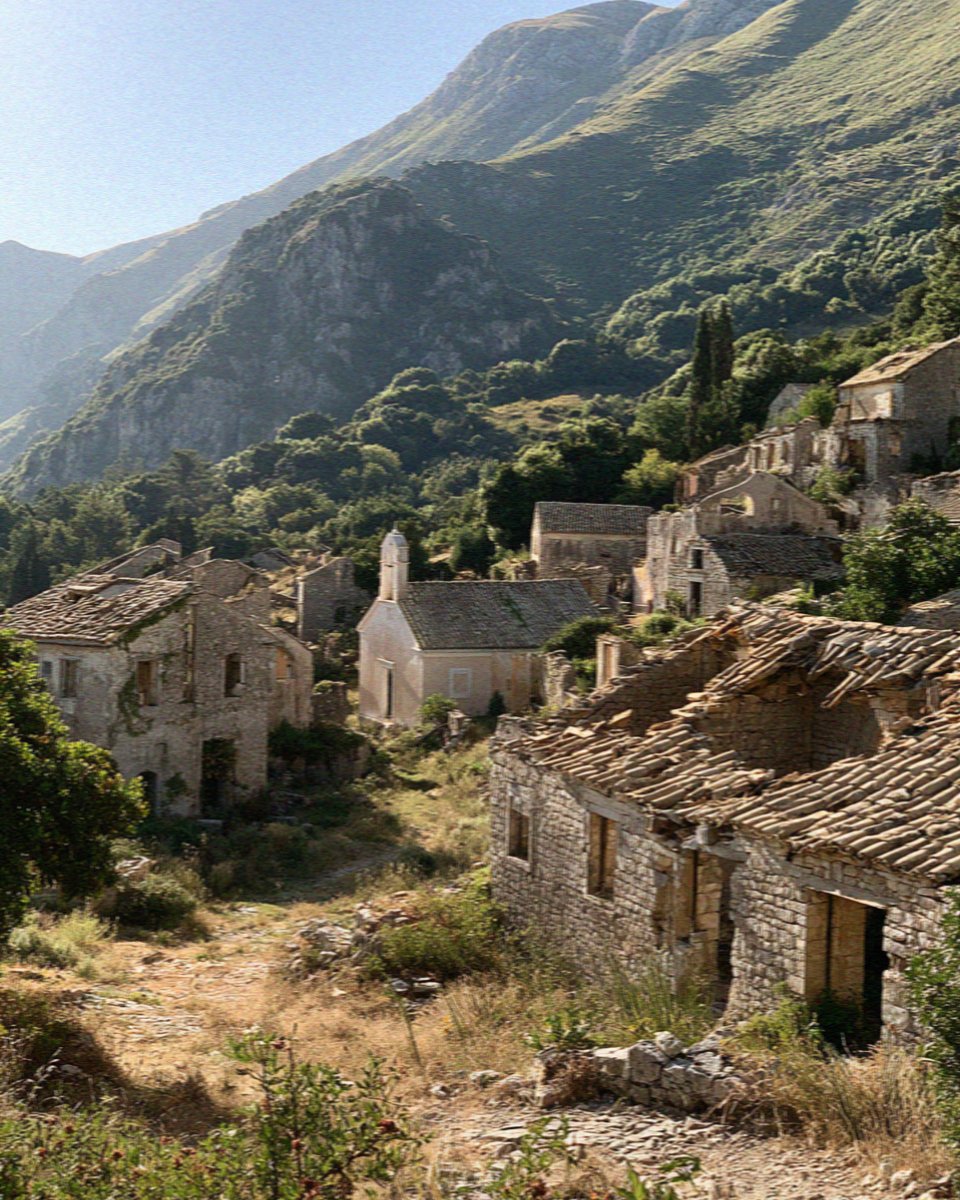
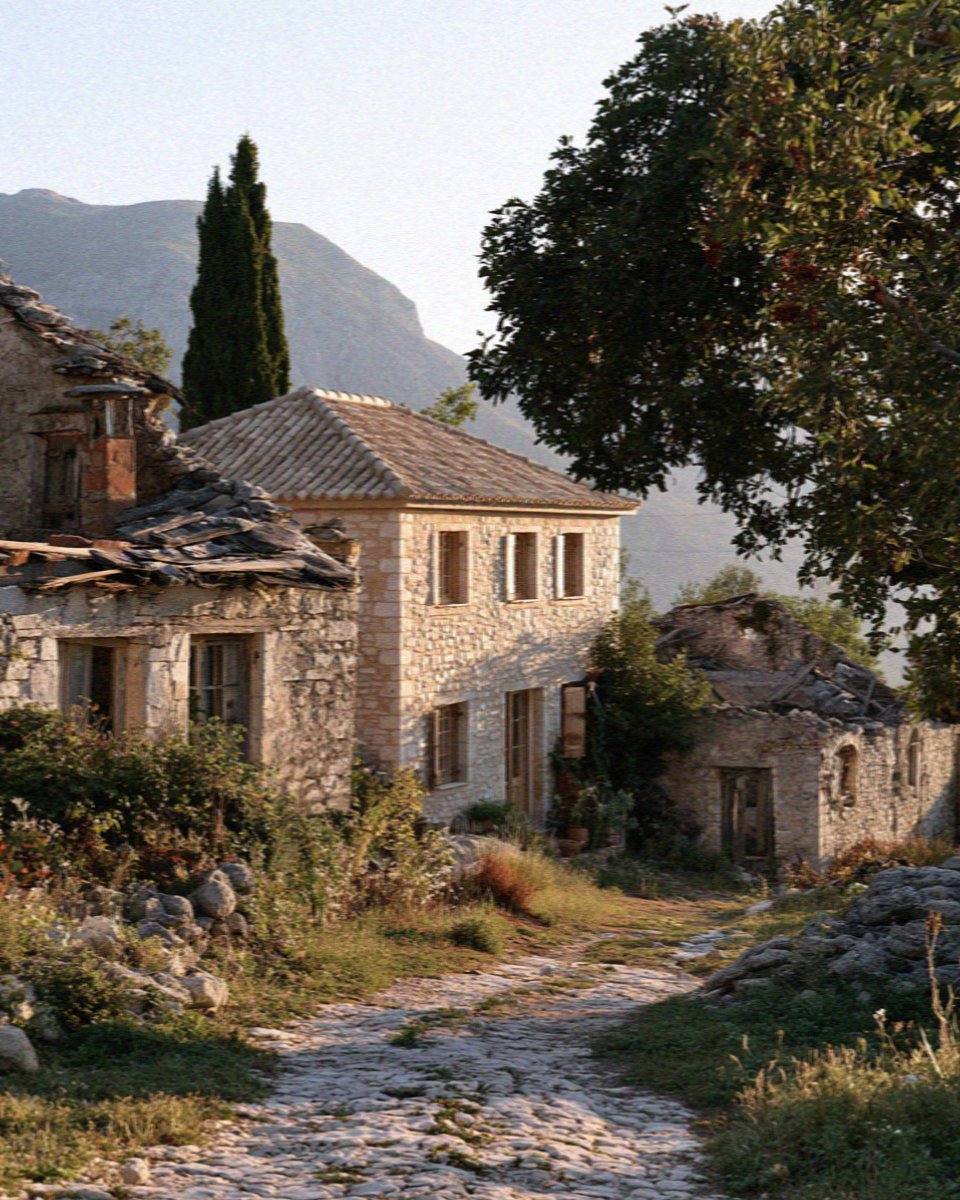
Old Perithia sits in a fold about four hundred metres up the north flank of the mountain, and the thing to understand first is where they put it.
From the village you can see the sea.
From the sea you cannot see the village.
That is the entire design, and it took me most of the morning to hear what it means.
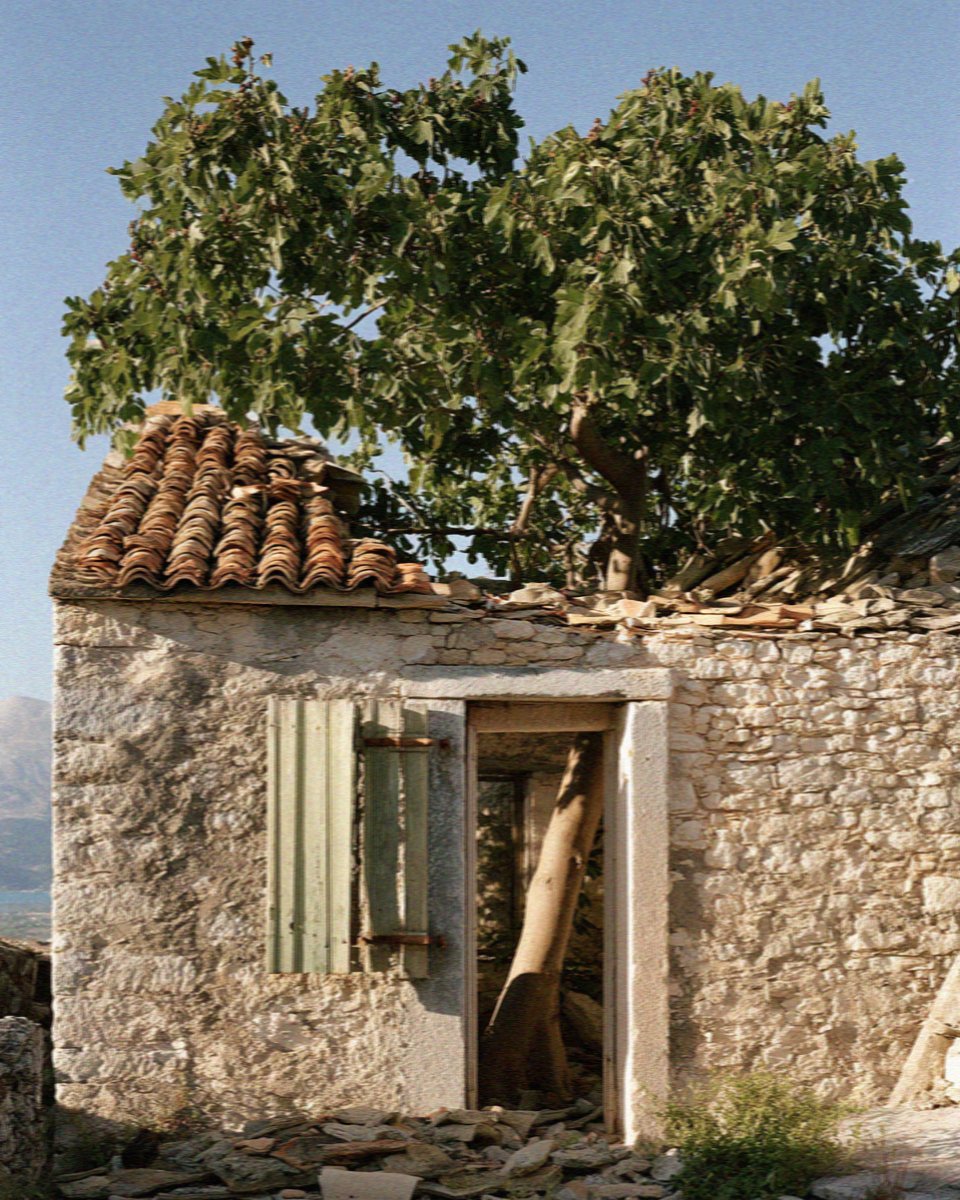
They were hiding.
Corsairs worked these coasts for centuries and took people from the shore, and the answer was to live somewhere you could watch the water without the water watching you. So one of the oldest villages on Corfu is not a harbour. It is four hundred metres up a mountain with its back turned.
There was a second reason, and it is the one I keep going over.
The coast was malarial. The marshes below carried it and this air up here did not, so height was not only safety from men. It was safety from the air itself.
Two dangers, one answer.
Go up.
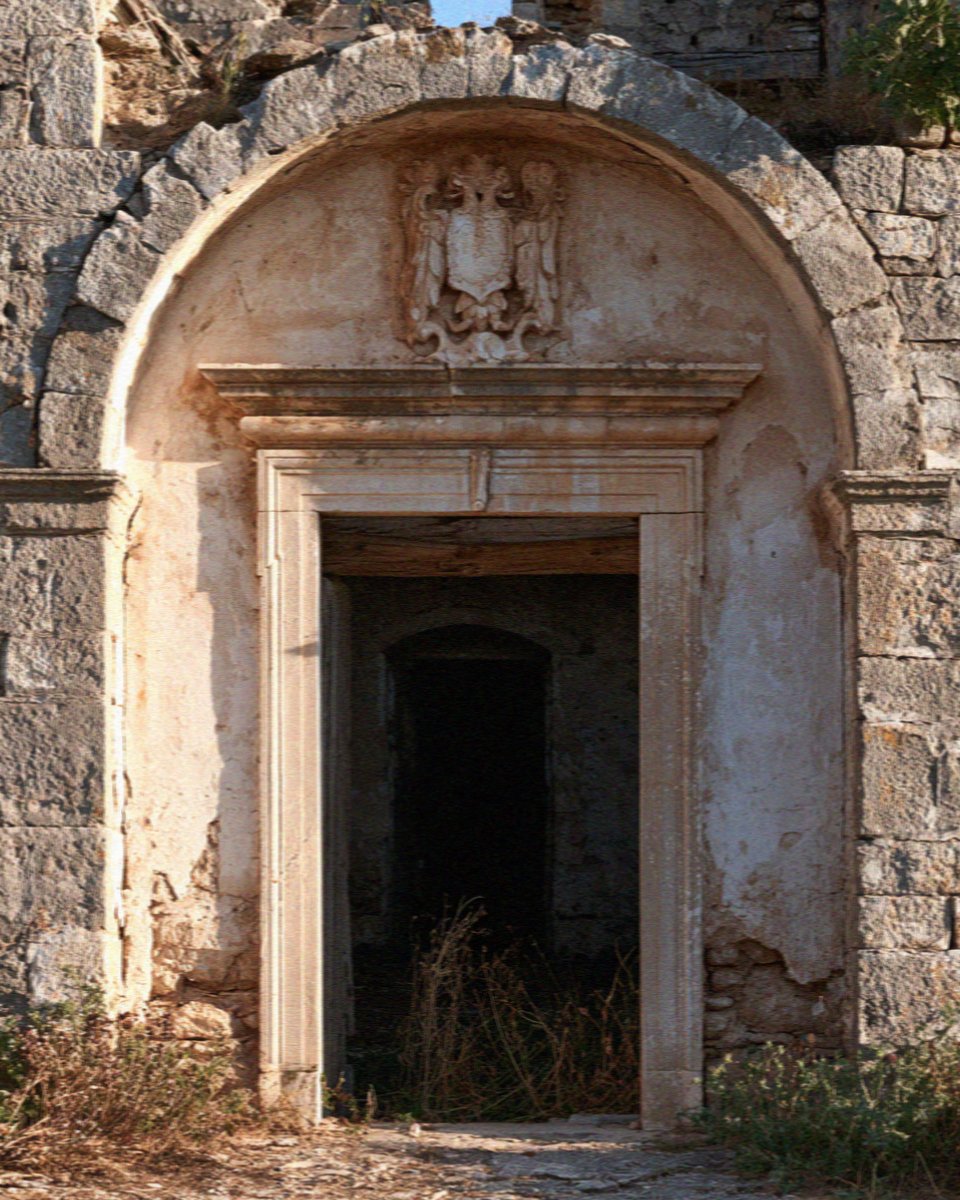
It worked, and the village prospered. By the middle of the seventeenth century there were about a hundred and thirty houses here, all stone, all put up by hand, and eight churches, and something like twelve hundred people living among them. Venetian houses, proper ones, coats of arms over the doors, marble stairs, those heavy arched surrounds the Venetians put around a doorway when they intended it to outlast everybody.
Eight churches for a hundred and thirty houses.
I walked it slowly.
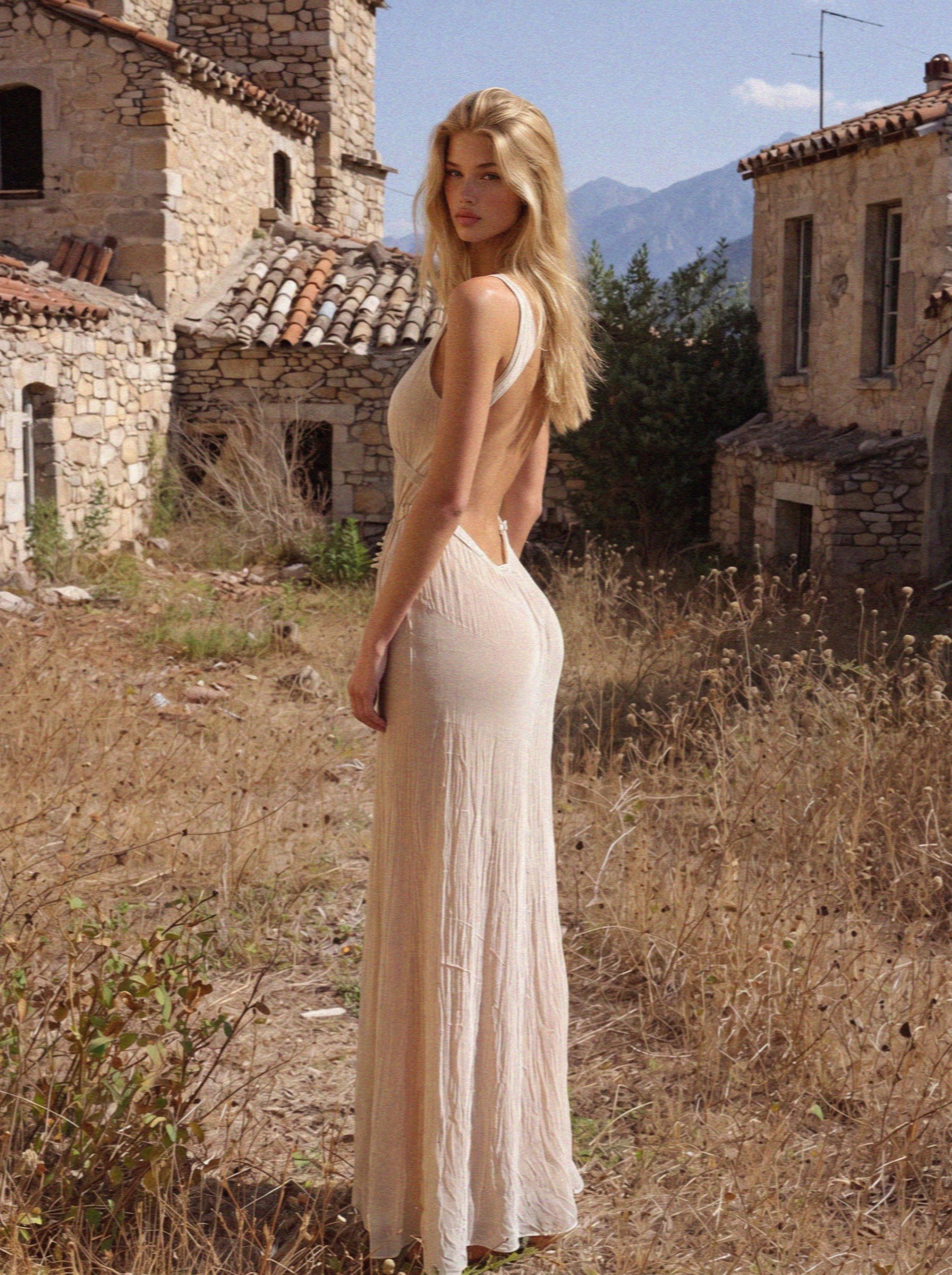
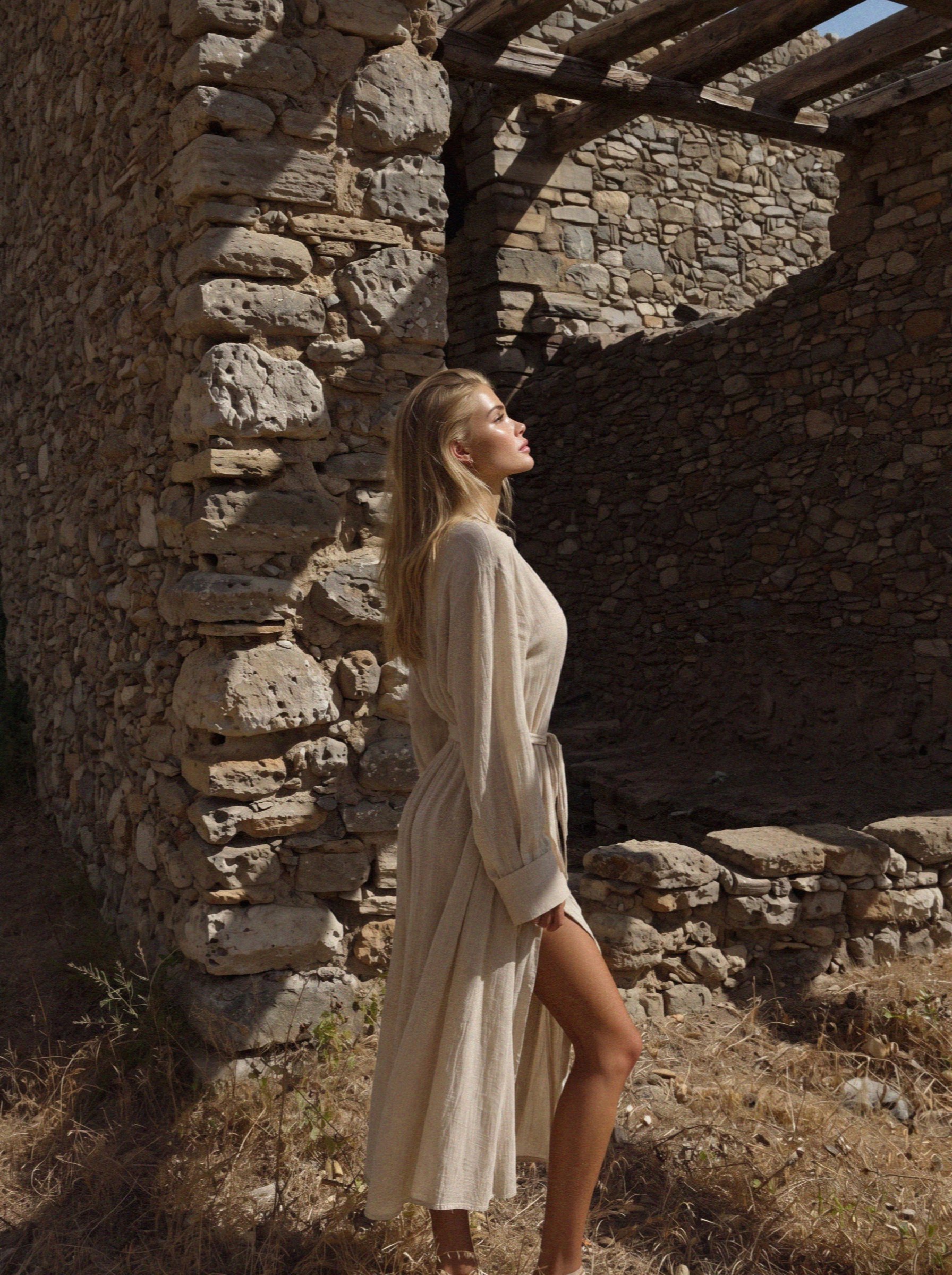
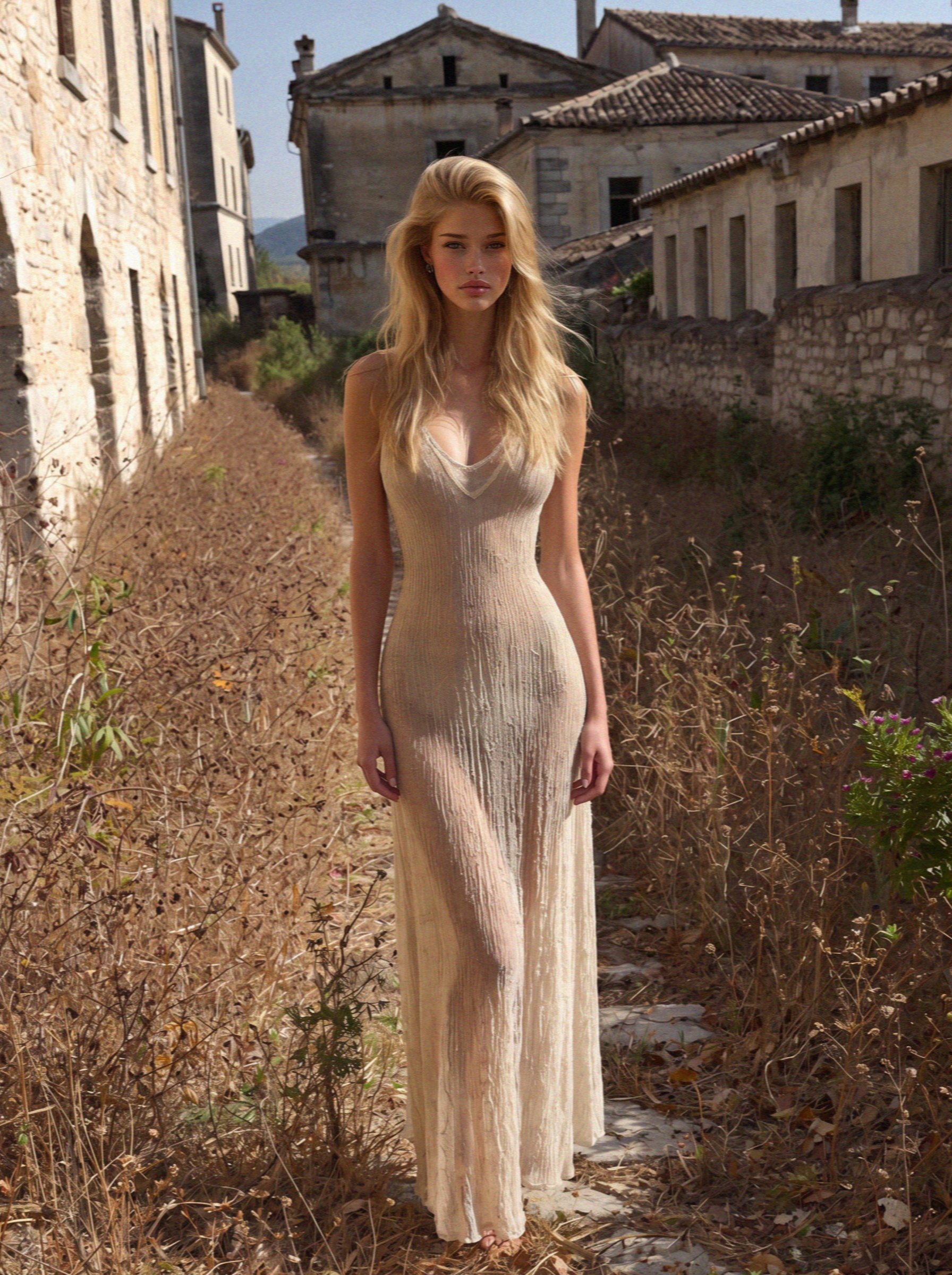
The doors are gone or going. Shutters hang from single hinges. There are fig trees coming up through the floors of rooms and out through the roofs, which is what a fig will do with ten years and nobody watching.
Somebody’s flowerpot in pieces on a step, still where it fell.
I stood in one house for a long while, working out from the beams and the stair where the good room had been and which wall had been put in later. It is a thing the women in my family do to a building without deciding to, and I have it too, and there is no cure for it.
Then the hinge.
In 1946 Greece began spraying for mosquitoes nationwide, and within a few years malaria cases had collapsed. By the early fifties the disease that had helped push people up this mountain was disappearing. Greece would eventually be certified free of malaria.
So the coast became safe.
Nobody in this village held a meeting. There was no year when everybody decided anything.
The whole reason for living up here had simply begun to disappear, quietly, because men with equipment had changed the calculation.
After that it was only a question of how long.
People started wintering below and coming back up for the summers. Then the sixties arrived on that same newly safe coast, and there was work down there, and money, and roads, and shops that stayed open.
They went down the hill.
Twelve hundred people.
Two live here now.
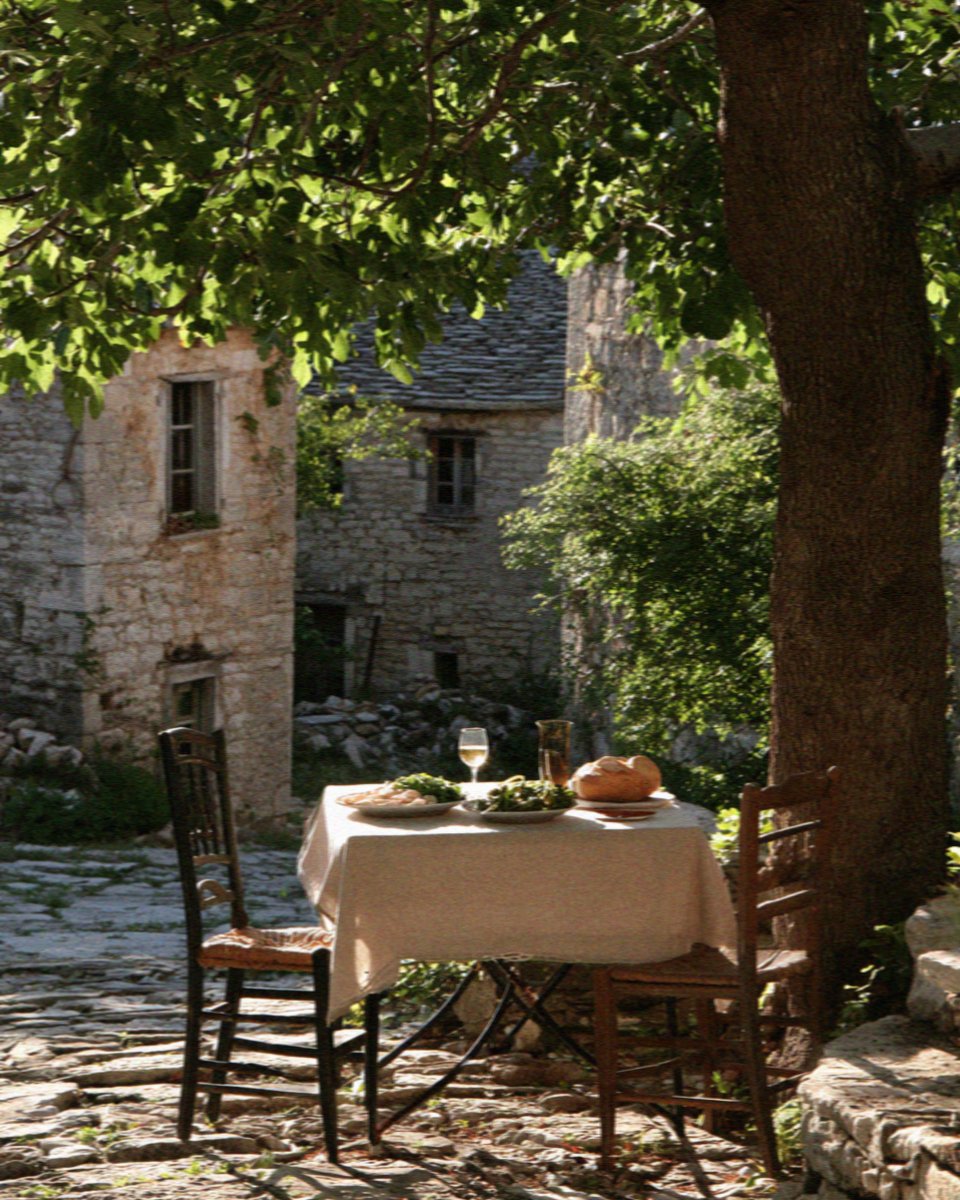
I ate lunch among the ruins, at a table under a mulberry, and it was among the best things I have eaten in Greece, and I am not going to dress it up.
Beans, greens, bread, a little wine that had not travelled farther than the next valley.
Three of the houses have been brought back by a couple who found them as rubble about fifteen years ago and then gave the village more than a decade of their lives. You can see exactly which three. The stone has gone back with the same thickness and the same gaps, which is much rarer than it sounds.
My grandmother did the opposite of this village, and I have never really understood it until today.
She was born in a stone farmhouse on a cliff in the south of France, and she spent years away from it, and then she went back. She is there now, with her goats and the windows open into cold morning air, in a house that is harder to live in than almost anywhere else she could have picked.
I used to file that under stubbornness.
Sitting in a place that twelve hundred people left because leaving had finally started to make sense, I think it is nearly the reverse.
She knows what it costs.
She is paying it on purpose.
I drove the rest of the way up afterwards, because you may as well.
Nine hundred and six metres, the highest point on the island.
There has been a monastery on that summit since 1347. Destroyed in the fifteen hundreds, rebuilt at the end of the sixteen hundreds, given a new front in the eighteen hundreds, and still working.
Beside it, and a great deal taller, stands a telecommunications mast, with more of them behind it.
The largest is planted directly on top of a well.
I laughed out loud at that.
There was nobody up there to hear it.
Water and a mast, one on top of the other.
The reason anybody could live up here, and the reason nobody needs to.
The view does what it is meant to.
The island lies out underneath you all at once, the green end and the dry end, and you can finally see that it is a thing with a shape rather than a series of roads you have driven.
East, Albania, near enough to read as the far side of a lake rather than another country.
On a very clear day people say you can see Italy, a hundred and thirty kilometres away.
Today was not that day.
I stayed until the light went long and orange and the masts threw shadows halfway down the mountain.
Three days, and I only understood the place from above it, on the afternoon I leave.
The olives were a subsidy. The bands were an accident. The village was built from fear, and then somebody took the fear away, and people were finally free to leave.
Tomorrow, Santorini, which is going to be white and dry and will not look like anywhere I have been this week.
I am going to miss the green.
V.
This is a diary from my last day on Corfu. The practical version is in my complete guide to Corfu, the mountain and its villages are in the best things to do in Corfu, and the day before, in the town, is in The Band They Started by Accident.
More images from Corfu