There is a moment, walking into the old town of Alghero for the first time, when you look up at a street sign and find it written twice.
Italian on top. Underneath, in smaller letters, something that is not Italian at all. Carrer, not via. And if you stand outside a bakery in the morning long enough you will hear two old men greet each other in a language that sounds like it belongs six hundred miles west of here, on the other side of the sea.
That is the thing about Alghero, and everything else follows from it.
The shape of the place
Alghero sits on a low promontory on the north west coast of Sardinia, which means it faces the open sea with nothing between it and the Balearics. The old town is walled, compact, and pushed right out onto the rock, so the sea is on three sides of you almost everywhere you walk.

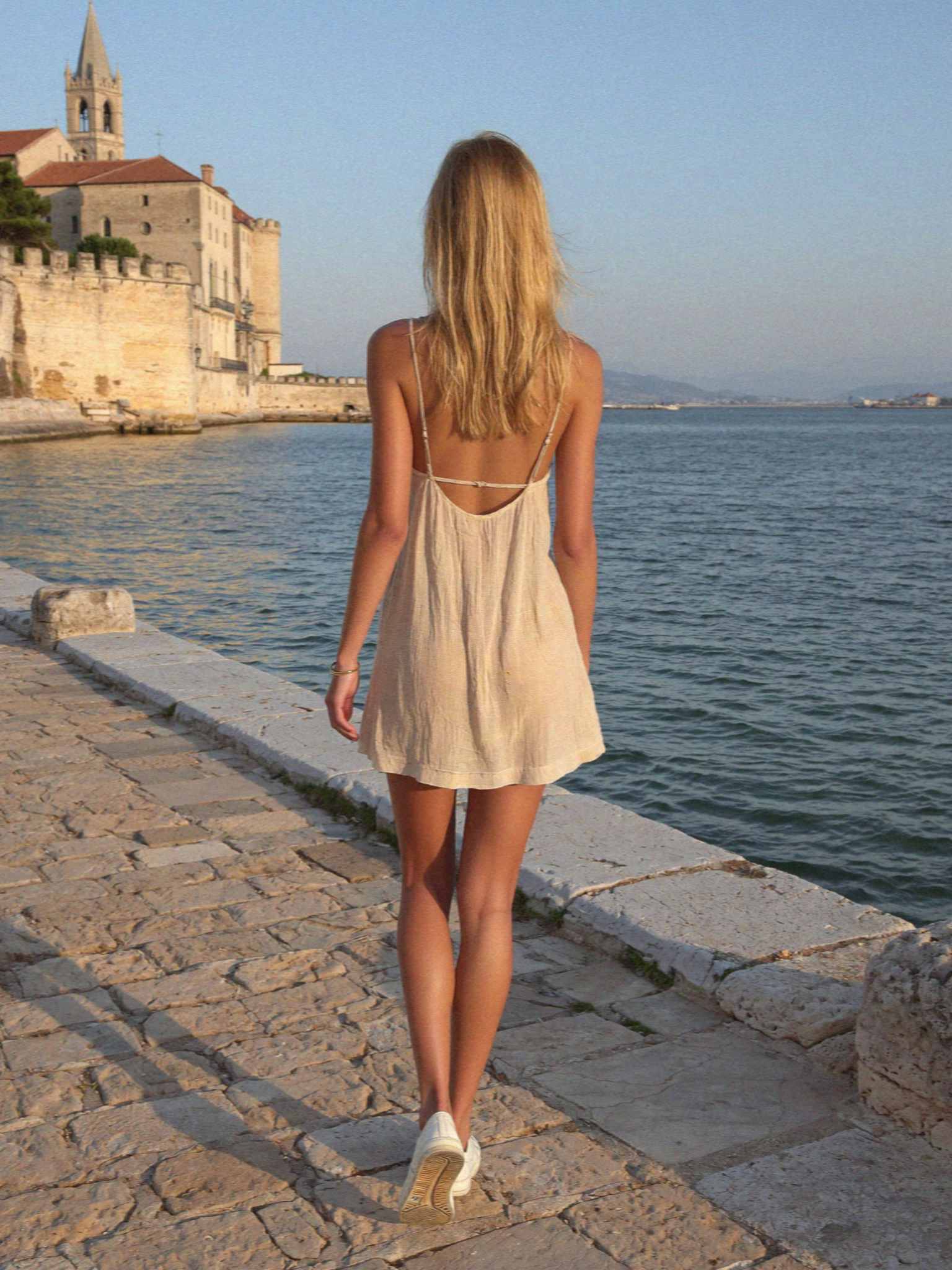
The walls are the reason to come. They were built by the Catalans and finished by the Spanish, they run the whole seaward edge of the town, and at some point in the sixteenth century somebody decided the top of them should be flat and wide enough to walk on. So now they are the promenade, forty feet above the water, and at seven in the evening the entire town is up there.
Behind the walls the old town is a grid of very narrow lanes in honey coloured stone, mostly too tight for cars, and beyond that a modern town of about forty four thousand people that most visitors never see. To the north is the Lido, a long sandy beach with the hotels along it. To the west, twenty minutes out, is the headland at Capo Caccia and everything that makes this coast worth a week rather than a weekend.
What makes it different
Aragon took Alghero in 1354. What happened next is unusual: they did not simply garrison it, they emptied it. The Sardinian population was expelled and the town was repopulated with settlers from Catalonia, and the language and the building style and the food came with them and then stayed.
Six and a half centuries later it is still here. Around a fifth of the town still speaks alguerès, the street signs are bilingual by law, and the cathedral is late Catalan gothic rather than anything you would find on the Italian mainland. If you want the full telling of how that happened and what to look for, I have written it up separately in the city’s Catalan heritage.
The practical upshot for a visitor is that Alghero does not feel like the rest of Sardinia. The food is different, the street plan is different, and the town has an outward looking, harbour-facing confidence that the inland towns do not.

Plan Your Visit to Alghero
A few things I booked and loved. These help support the blog, at no cost to you.
- Where I stayed: search Alghero hotels
- Boat trips and Alghero tickets
- Stay connected: get a travel eSIM
This section contains affiliate links. If you book through them I may earn a small commission, at no extra cost to you.
Walking the old town
You can cross the old town in ten minutes, which is not the point. The point is that the lanes are so narrow and so tall that you are walking in shade at two in the afternoon in August, and every fifty metres one of them opens onto the sea.
Start at the Torre di Porta Terra, the old land gate, because it is the only way in on foot from the modern town and it makes the geography obvious. From there the lanes run toward the water. The Cattedrale di Santa Maria is in the middle, and its bell tower is the one thing here worth climbing for the view down onto the roofs.
Then get onto the walls and stay on them. Bastione della Maddalena at the north end, round past Bastione Pigafetta and Bastione Magellano, and the whole southern stretch above the harbour. It takes half an hour at a slow walk. Do it once in the morning when it is empty and again at seven when it is not, because they are different experiences and the second one is the town’s actual social life.
There is far more than a walk can hold, and I have set out the whole list, in the order I would actually do it, in my guide to the best things to do in Alghero.
The harbour

The harbour sits below the southern walls and it is a working one, not a marina pretending to be a harbour. Fishing boats come in early and unload onto the quay. By nine the same fish is on the counters in the covered market a few streets up.
It is also where almost everything on the water leaves from, and on this coast that matters more than usual, because the good parts are unreachable by road.
The coast, and why you need a boat
Twenty minutes west of the town the land ends in an enormous white limestone headland called Capo Caccia, which drops something like two hundred metres straight into the sea. At the base of it, at water level, there is a cave.
Neptune’s Grotto is the reason most people come to this stretch of coast, and it needs a bit of planning. It is guided only, in timed groups, about half an hour underground, and there are two ways in: down the Escala del Cabirol, a stairway cut into the cliff face, or by boat from Alghero harbour. The boat only runs part of the year. The stairs run all year and are considerably harder than they sound. I have put the full detail, the prices and the honest warning about the climb in Neptune’s Grotto and Capo Caccia.
Separately from the Grotto, the coast itself is worth a day on the water. Almost half the bookable trips in Alghero are boat trips, and they are mostly sailing rather than the cave-hopping you get further south: catamarans out to the bay at Porto Conte, snorkelling stops under the cliffs, and sunset sails that make the most of the fact that this town faces west into open water. That is its own guide, in Alghero boat tours.
The beaches
This is where Alghero quietly beats most of Italy, because the good beaches are reachable on a bus for about a euro.
Maria Pia is the closest, a long crescent of pale sand behind dunes and pine, roughly fifteen to twenty minutes out. Le Bombarde and Lazzaretto are further round toward Capo Caccia, both white sand, both with the water shelving so gradually that you walk out a long way before it reaches your waist. Lazzaretto has a watchtower on the headland above it and is the prettier of the two. Porto Ferro is wilder, north, orange-tinted sand, and it takes a car.
The summer beach bus runs the coast road as far as Capo Caccia, which is what makes all of this possible without hiring anything. Which beach suits which kind of day, and how to get to each one, is in the best beaches in Alghero.
The archaeology, which almost nobody bothers with
Sardinia has something like seven thousand nuraghi, dry stone towers built in the Bronze Age by people who left no writing at all, and two of the most accessible sites on the island are twenty minutes from Alghero.
Nuraghe Palmavera is a tower with the remains of a village of round stone huts around it. Anghelu Ruju is a necropolis of tombs cut down into flat sandstone, older still. Neither is crowded, both are cheap, and there is a combined ticket that makes doing both the obvious choice. I have written up what they are, what you are actually looking at, and how to reach them without a car in the nuraghi near Alghero.
Eating here
Alghero eats differently from the rest of Sardinia, and the reason is the same as everything else.
The dish is aragosta alla catalana: lobster, cold, over raw sliced onion and tomato with good oil and lemon. It is Catalan in origin and it was invented in this town, in a specific restaurant, in 1949. It is expensive and it is the thing to have once.
Beyond that you get the Sardinian repertoire done well, plus a lot of very good sea urchin in season, and a local white wine worth knowing about: Torbato, a grape that essentially does not grow anywhere else on earth and was brought back from near-extinction by one estate outside town. Where to eat, what to order and what a lobster should actually cost is in where to eat in Alghero.
The coral, and what is worth buying
The stretch of coast either side of Alghero has been fished for red coral for centuries, and it is the one souvenir here that is actually from here.
Two things are worth knowing before you spend money on it. The first is that real Mediterranean red coral, Corallium rubrum, is heavily regulated, harvested under licence in limited quantities, and priced accordingly. The second is that a great deal of what is sold as coral in tourist towns is dyed bamboo coral, reconstituted powder, or plastic, and it looks convincing.
The tell is weight and surface. Real coral is dense, slightly cool, and under a loupe has a fine grain running along the branch rather than a uniform colour. Anything suspiciously large, suspiciously cheap or suspiciously identical to the piece next to it is not what it claims. The established workshops in the old town will tell you which is which without being asked, and will show you the raw branch alongside the finished piece.
I am not going to tell you to buy jewellery. But if you were going to buy one thing in Sardinia, this is the thing that is genuinely local, genuinely skilled, and not made somewhere else and shipped in.
A suggested four days
Day one, the town. Arrive, walk in through the land gate, get lost in the lanes deliberately for an hour. Cathedral in the late afternoon. Onto the walls by seven and stay there until the light goes. Dinner in the old town.
Day two, the cape. Out early to Capo Caccia. Do the Grotto on the first or second entry of the day before the heat and the queue. Back up the stairway slowly. Afternoon at Le Bombarde or Lazzaretto to recover, which is fifteen minutes from the cape on the same road.
Day three, the beaches and the Bronze Age. Morning at Maria Pia or back to Lazzaretto. Palmavera and Anghelu Ruju in the late afternoon when the light is long and the sites are empty, which takes about two hours including the drive.
Day four, Bosa. The coast road south, a slow lunch by the river, the castle if you have the legs, and back along the same road in the evening light, which is better in that direction.
If you have three days, cut Bosa. If you have five, add a day of doing nothing on the wall.
Practical notes
Parking. In the old town it is close to impossible and largely resident-only. If you hire a car, choose accommodation that includes a space or plan to use the paid lots outside the walls. This catches people out more than anything else here.
Booking dinner. From June to September the old town restaurants fill. A day ahead is usually enough; for the lobster places on a weekend, two.
The bus tickets. Buy before boarding, from the machine at the terminal, a tabacchi or the app. Boarding without one is more expensive and occasionally not possible.
Sunday. Much of the town closes in the afternoon, including some of the archaeology ticket offices in winter. Check before driving out to a site in low season.
The wind. This coast is exposed and the mistral can arrive at any time of year. It is what closes the Grotto boat and shortens the sailing trips, and it is why anything on the water should be booked early in a stay rather than on the last day.
Where to base yourself
Two real choices, and they suit different trips.
The old town puts you inside the walls with the restaurants and the evening promenade at your door. It is the atmospheric option and the one I would take. The cost is that the lanes are narrow, most have no vehicle access, and parking is a genuine problem rather than an inconvenience.
The Lido is a ten minute walk north, on the beach, with easier parking and more modern hotels. It suits families and anyone with a hire car.
Further out there are agriturismi and country hotels in the farmland toward Porto Conte, which are lovely and completely dependent on having a car. The full comparison is in where to stay in Alghero.

Getting here, and whether you need a car
Alghero has its own airport at Fertilia, ten kilometres out, which is the easiest arrival in Sardinia. The ARST bus runs from outside arrivals to Via Catalogna in the middle of town in about twenty minutes, roughly hourly, and costs a bit over a euro. There is no need for a taxi.
By sea you arrive at Porto Torres, about forty five minutes north, which takes ferries from Genoa, Civitavecchia and, pleasingly, Barcelona.
A car is not needed for the town, is not needed for the main beaches, and is needed for Bosa, Porto Ferro and the country. My honest recommendation is to hire one for two days in the middle of a week rather than for the whole stay. The detail on all of it, including the bus network, is in getting to Alghero.
When to come
September, and it is not close.
The heat has broken but the sea is still around twenty three degrees, the crowds thin out within a couple of weeks of the Italian holidays ending, and the town has its patron saint festival late in the month. October still swims and is emptier again. May and June are lovely and slightly cooler in the water.
July and August are hot, busy and expensive, and the old town restaurants need booking days ahead. Winter is quiet and a fair number of places close, but the Grotto stairway stays open and the walls in a January storm are worth seeing once. Month by month is in the best time to visit Alghero.
Going further
The single best day out is the coast road south to Bosa, a town of pastel houses stacked under a castle on a river mouth. The road is about sixty kilometres of cliff and bend and it is one of the great drives in the Mediterranean. It takes a car or a tour, and it takes most of a day done properly.
North is Sassari, the island’s second city and almost entirely un-touristed. Inland is the wine country. All three, with honest timings, are in day trips from Alghero.
One piece of advice: do not try to combine Bosa and Neptune’s Grotto in a single day. Both want a morning, and doing them together means rushing the one that deserves the time.
What it is like in the evening
I want to describe the passeggiata here properly, because it is the thing I would come back for and it is not really an attraction.
At about seven, and later in high summer, the town comes up onto the walls. Not some of the town. Families with pushchairs, teenagers in groups arranged to be looked at, men in their seventies walking in threes with their hands behind their backs, couples doing the full circuit and turning round and doing it again. Nobody is going anywhere. There is no event.
It works because of the geometry. The wall is long, flat, wide enough for four people abreast, has the sea on one side and a row of bars on the other, and ends in a way that makes you turn around and walk back. So everybody passes everybody else twice, which is presumably the entire point and has been since the sixteenth century.
The bars along the inside edge put tables out and charge a premium for the position, and it is worth paying once. Order something long and cold, sit facing outward, and watch a town do the thing it does every single evening of the year.
By eleven the wall has emptied and moved into the lanes behind it, where the restaurants run late. By one it is genuinely quiet, and the old town at one in the morning, lit by iron lamps on the walls with nobody in it, is the other version of this place worth staying up for.
How long to stay
Four nights is the right answer for most people. Two days in the town and on the walls, one for the Grotto and the cape, one for the beaches, and a fifth if you want Bosa without hurrying.
Three works if you skip either Bosa or the archaeology. A week is not too long if you are swimming, because the beaches here reward repetition and the town is pleasant to run out of things to do in.
Who Alghero suits, and who it does not
It suits anyone who wants a walkable base with real beaches attached and does not want to hire a car for a week. That combination is rarer in Sardinia than you would expect, because most of the island’s good coast requires driving to.
It suits people who like a town to have a life of its own outside the season, which this one does, because forty four thousand people live here and the fishing boats go out whether or not anybody is watching.
It does not suit anyone looking for the Sardinia of the magazines. That is the north east, two hours away, and it is a different proposition entirely: bigger money, better-known beaches, far less town. If you want a marina full of very large boats, go there instead.
And it does not suit anyone who wants to be at a beach club at eleven and back at a spa by four. Alghero is a working town with a beautiful wall around it, not a resort, and the pleasure of it is fairly quiet.
What it costs
Alghero is noticeably cheaper than the Costa Smeralda and slightly cheaper than Cagliari. A good dinner without lobster is manageable. The lobster is not, and should be treated as the one expensive meal. Museums and archaeological sites are single figures. The buses are about a euro. The expensive decisions are the hire car and, in August, the room.
What to book before you come
Alghero is a walking town and most of it costs nothing. Three things are worth arranging before you arrive, because they sell out in summer and the good slots go first.
- A walk through the old town with a local guide. The Catalan layer is invisible until somebody points at it, and then you cannot stop seeing it.
- A half day on the water to Porto Conte. The cliffs and the bay behind them, which is the half of this coast you cannot reach on foot.
- A food and wine walk in the centre. Worth doing early in the trip, because you spend the rest of the week going back to the places you were shown.
More images from Alghero





Your Alghero Guides
Everything here in detail, guide by guide.
- The Best Things to Do in Alghero
- Neptune’s Grotto and Capo Caccia
- The Best Alghero Boat Tours
- The Best Beaches in Alghero
- Where to Stay in Alghero
- Where to Eat in Alghero
- Getting to Alghero and Getting Around
- The Best Time to Visit Alghero
- Day Trips from Alghero
- The Nuraghi and Necropolis Near Alghero
- Alghero’s Catalan Heritage
Alghero Travel Diaries
Frequently Asked Questions
Is Alghero worth visiting?
Yes, and for a specific reason. It is the only Catalan city in Italy, with its own language still spoken, a walled old town you can walk the ramparts of, white sand beaches reachable by public bus, and a Bronze Age archaeological site twenty minutes away. It is also considerably cheaper than the north east coast of Sardinia.
How many days do you need in Alghero?
Four nights suits most trips: two for the town and the walls, one for Neptune’s Grotto and Capo Caccia, and one for the beaches. Add a fifth if you want to drive the coast road to Bosa without rushing it.
Do you need a car in Alghero?
Not for the town, and not for the main beaches, which are served by local buses and a summer beach bus for around a euro. You do need one for Bosa, Porto Ferro and the inland country. Hiring for two days of a week is usually better value than hiring for the whole stay.
What language do they speak in Alghero?
Italian, and also alguerès, a variety of Catalan brought here in the fourteenth century and still spoken by a significant minority of the town. Street signs in the old town are written in both, which is the easiest place to notice it.
What is Alghero famous for?
Its Catalan heritage and language, the walled seafront old town, red coral fished off this coast and worked by local jewellers, Neptune’s Grotto in the cliffs at Capo Caccia, and lobster served alla catalana with raw onion and tomato.
When is the best time to visit Alghero?
September. The sea is still about twenty three degrees, the summer crowds have gone, and the town holds its patron saint festival late in the month. October is quieter again and still warm enough to swim. July and August are hot, busy and the most expensive.
How do you get from Alghero airport to the town?
Take the ARST bus from outside arrivals to Via Catalogna in the centre. It runs roughly hourly, takes about twenty minutes, and costs a little over a euro from the machine in the terminal or slightly less through the ticket app.
Can you visit Neptune’s Grotto without taking the boat?
Yes. The Escala del Cabirol stairway down the cliff is open all year, while the boat from Alghero harbour runs only from spring to late autumn. The stairway is free to walk; you still pay to enter the cave, and the climb back up is a serious one in summer heat.