The bus to Lefkes leaves from the harbour in Parikia, and the driver calls out the stops as though each one has personally disappointed him.
Five kilometres up the road he said, “Marathi.”
Nobody moved.
I got off.
I had read one line about the quarries the night before, sitting under the windmill after the church.
One line was enough.

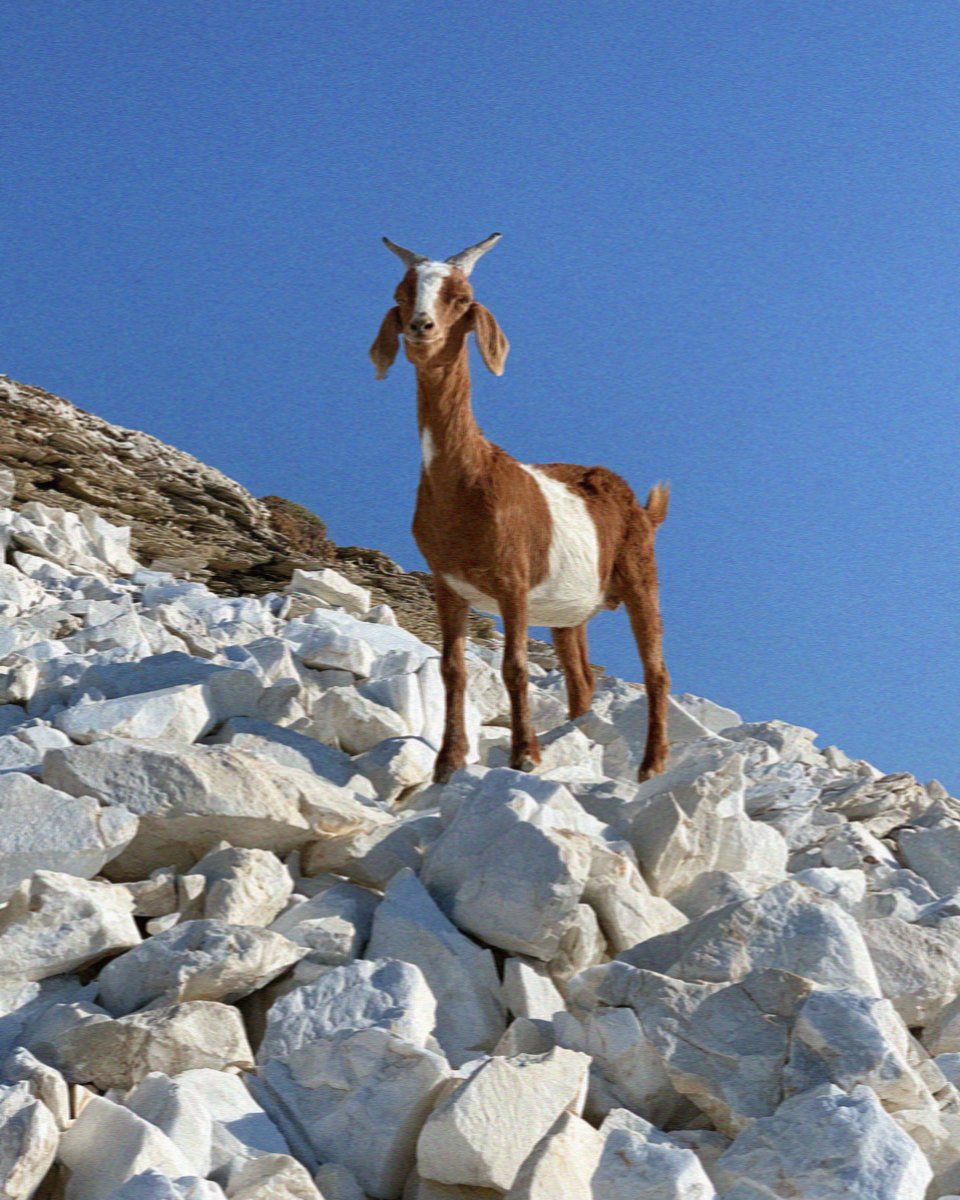
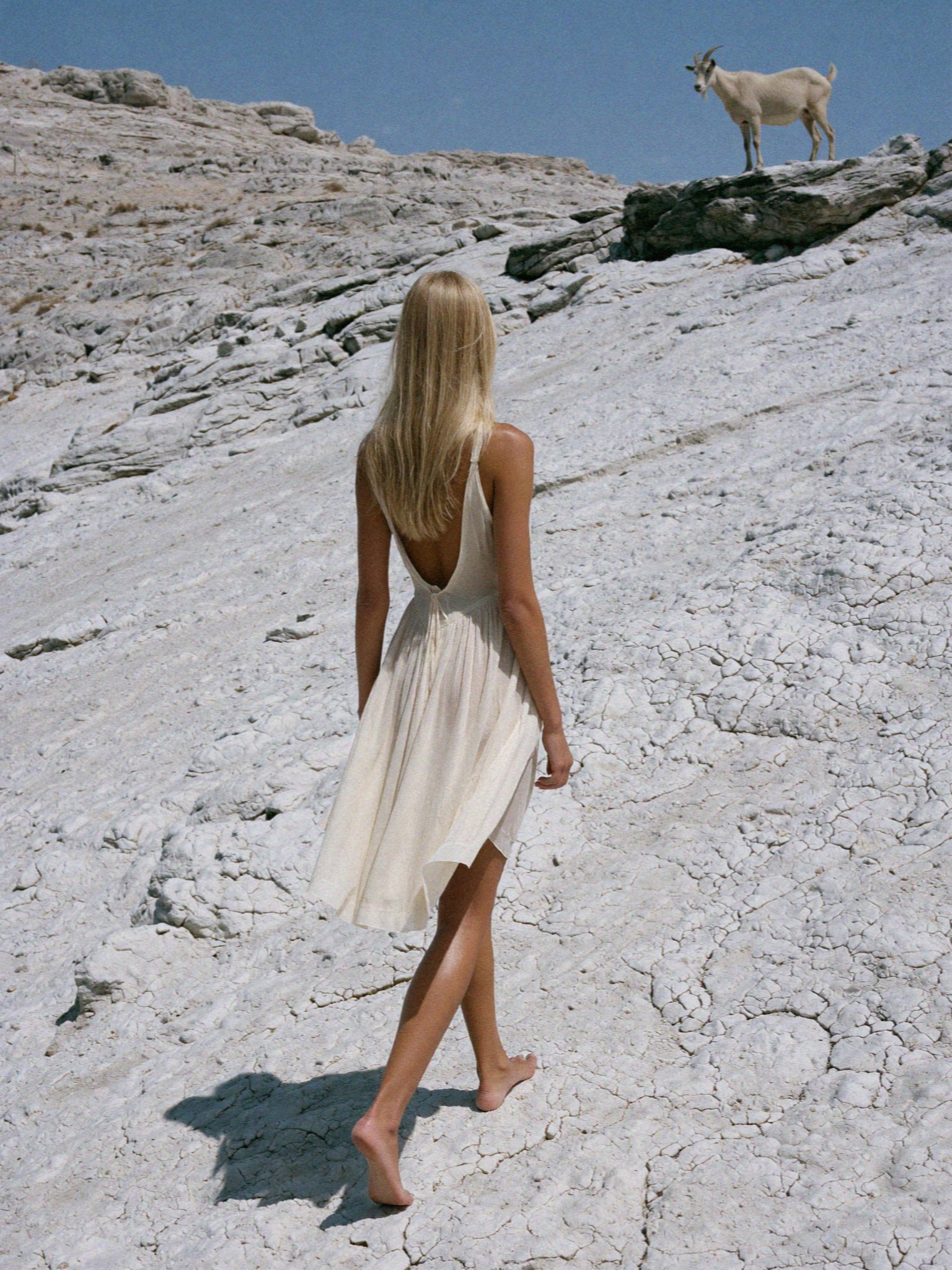
The path climbs from the road between low walls and dry scrub, signposted in the half-hearted way of places that matter and are not quite open. The hillside is covered in broken white stone, pieces the size of a fist, pieces the size of a loaf, all the same pale colour.
You walk on it and it crunches like sugar.
Then the hill opens.
There are dark mouths cut into the rock, roughly square, and the nearest has a grille across it and a sign explaining that the galleries are unsafe.
I put my face to the bars anyway.
The air coming out was cold.
Not cool. Cold, like a cellar, on a morning already hot enough to make the backs of my knees damp.
It felt as though the hill were breathing at me.
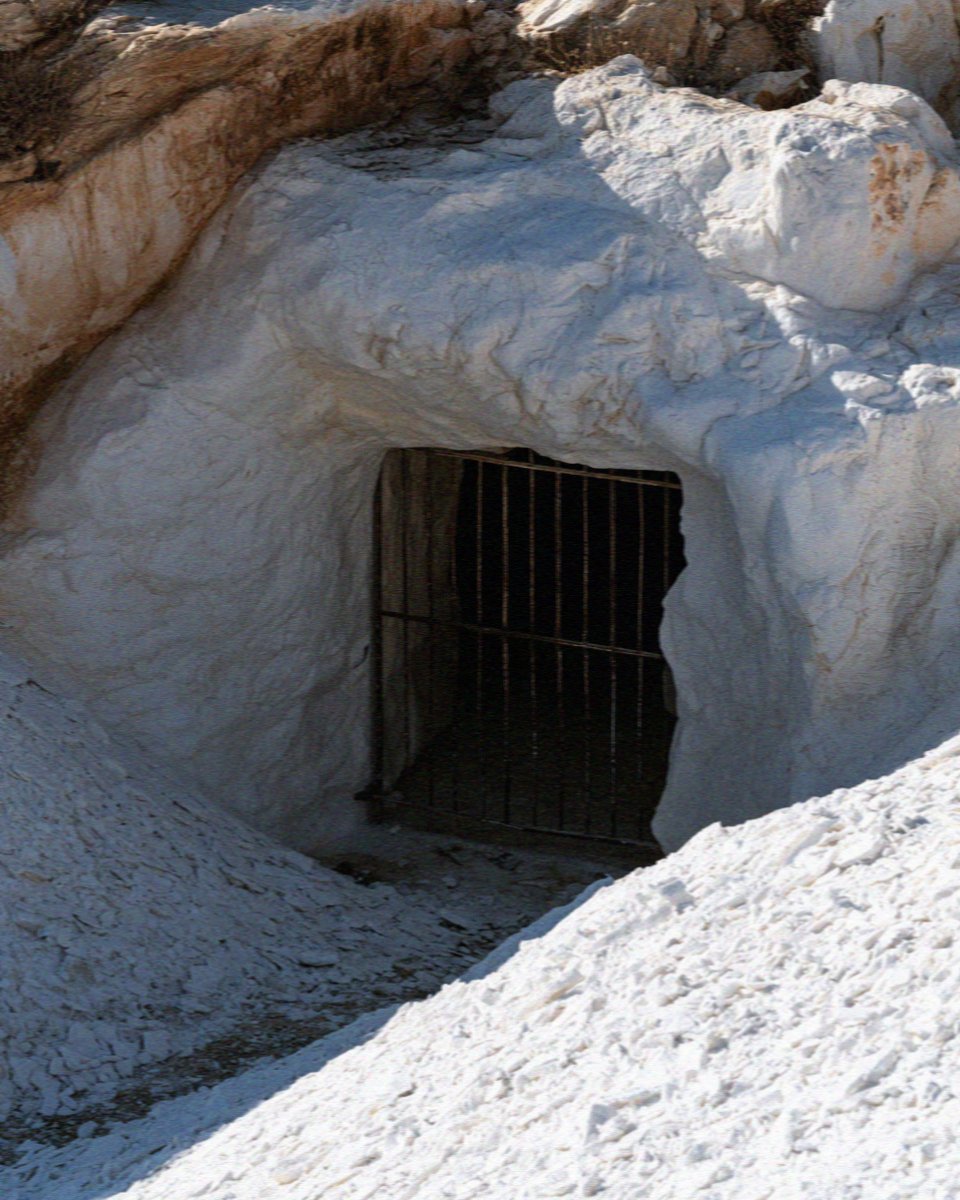
Behind the bars the passage slopes down and keeps going, following the seam of marble people once came into this hill to find by lamplight.
They called it lychnites, from lychnos, a lamp.
Perhaps because they quarried it underground by lamplight. Perhaps because the marble is translucent enough that light enters it. Apparently nobody has managed to end the argument.
I hope they never do.
A goat watched me from the top of the spoil heap with the expression of a guard who has seen everybody try the grille.
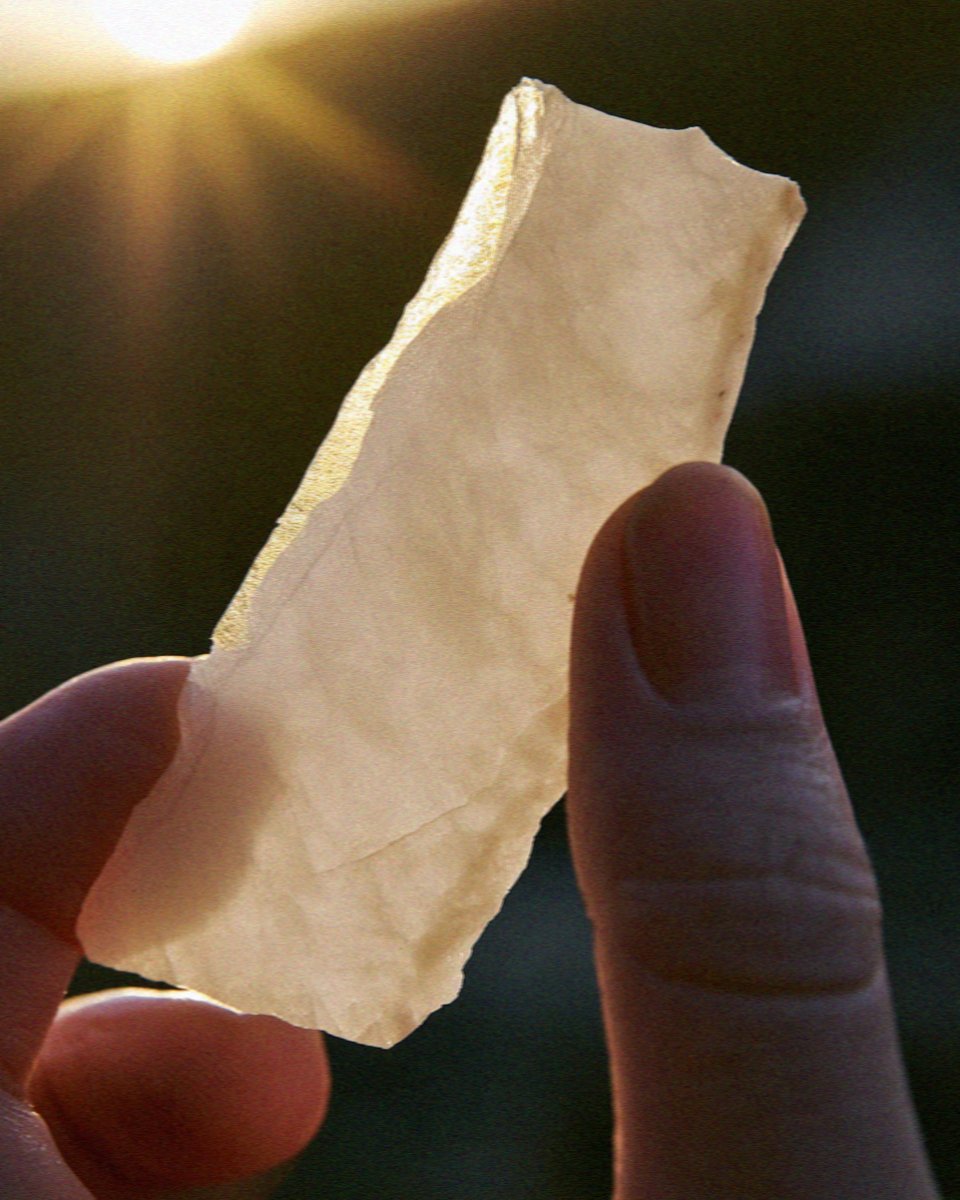
I picked up a thin chip of marble from the broken stone on the ground and held it to the sun.
The light came through at the edges.
Not much. Just enough to turn the rim faintly gold, the way a fingernail does when you hold it over a torch.

That little bit of light is part of what made Parian marble so beautiful for sculpture. It does not only throw the sun back at you. The light seems to sit just beneath the surface, which is why old marble skin can look oddly like skin.
I sent a photograph of the chip to Camille.
After a minute she replied:
“It’s a rock.”
Which is fair.
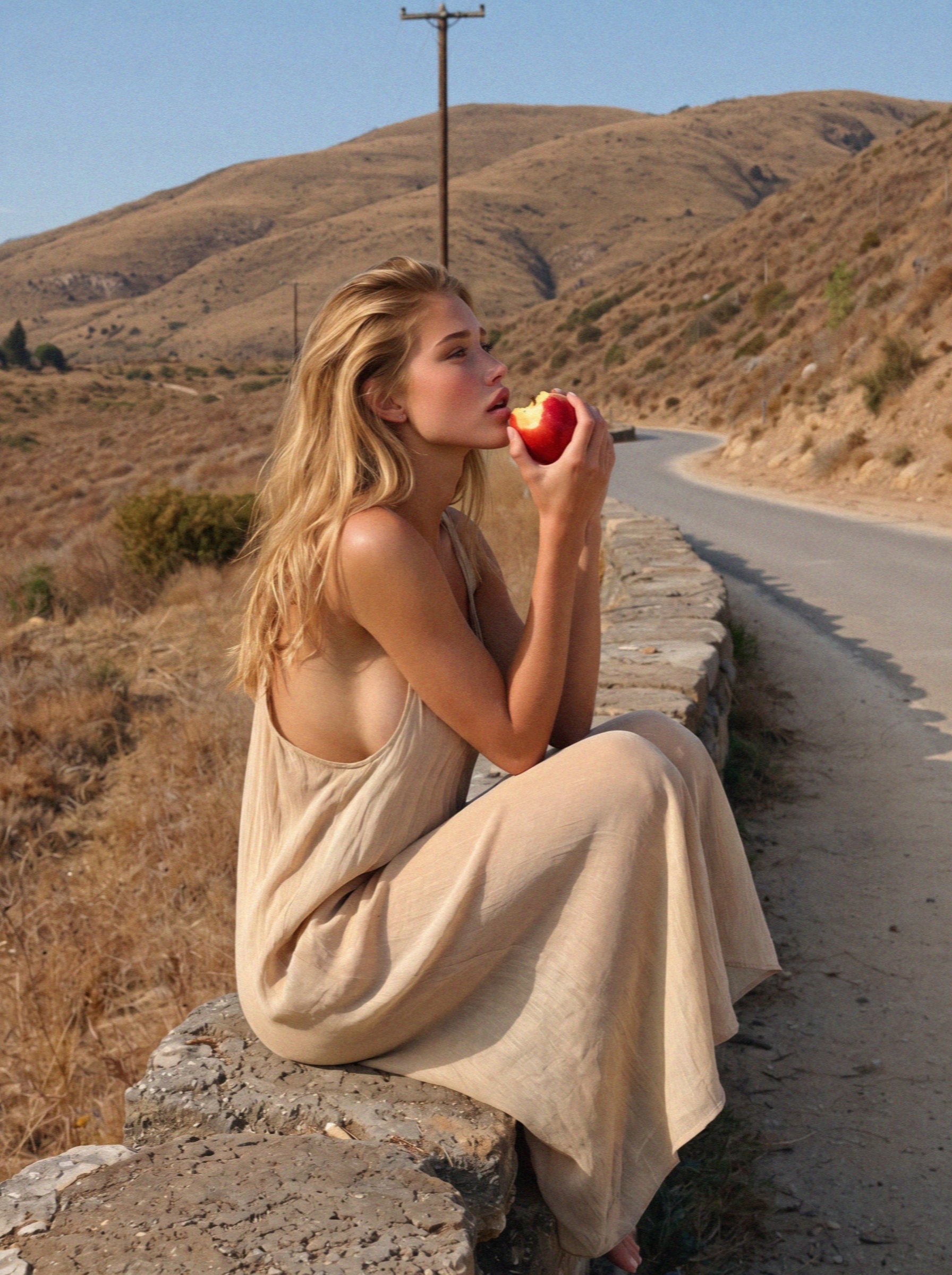
The next bus was forty minutes away. I spent them sitting on a wall by the road eating an apple and watching a lizard repeatedly decide I was not worth the risk.
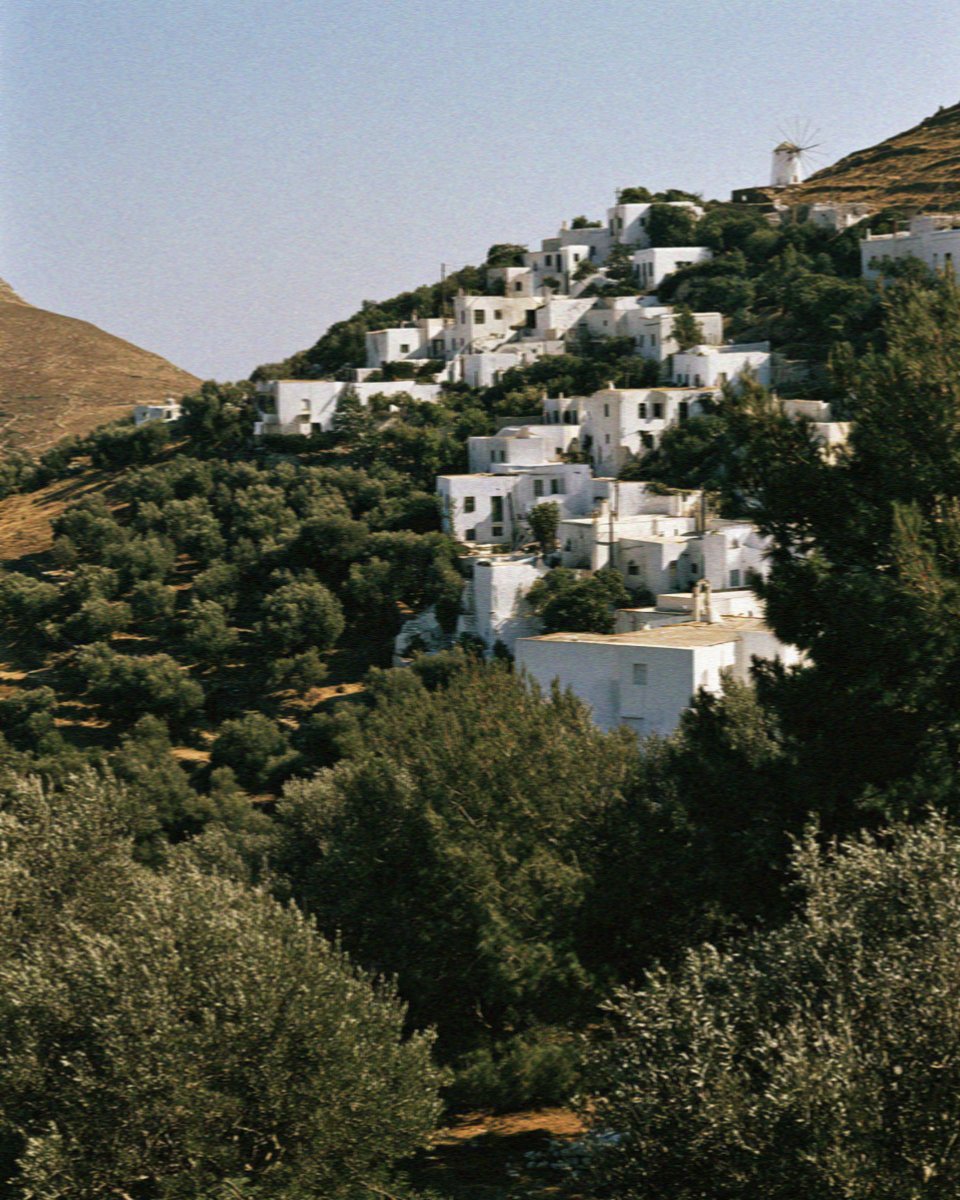
Lefkes sits high in the middle of the island, built inland where pirates had to make an effort. It was once the capital for exactly that reason.
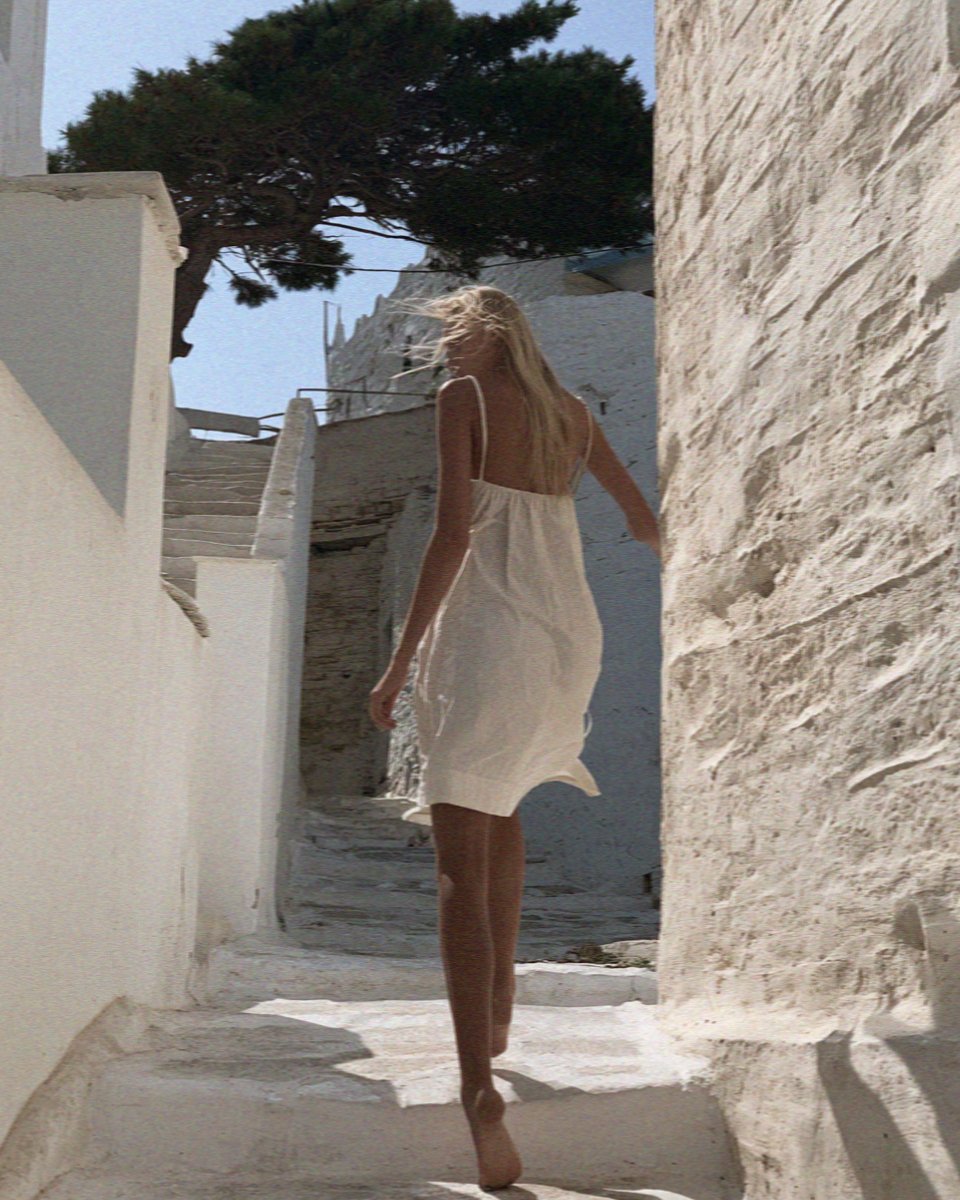
Now it is white houses climbing a hill among olives and pines, arches over the lanes, a marble church bright enough to make you squint, and the particular quiet of a village in October.
A radio somewhere. A broom. A man repainting a door the same blue it already was.
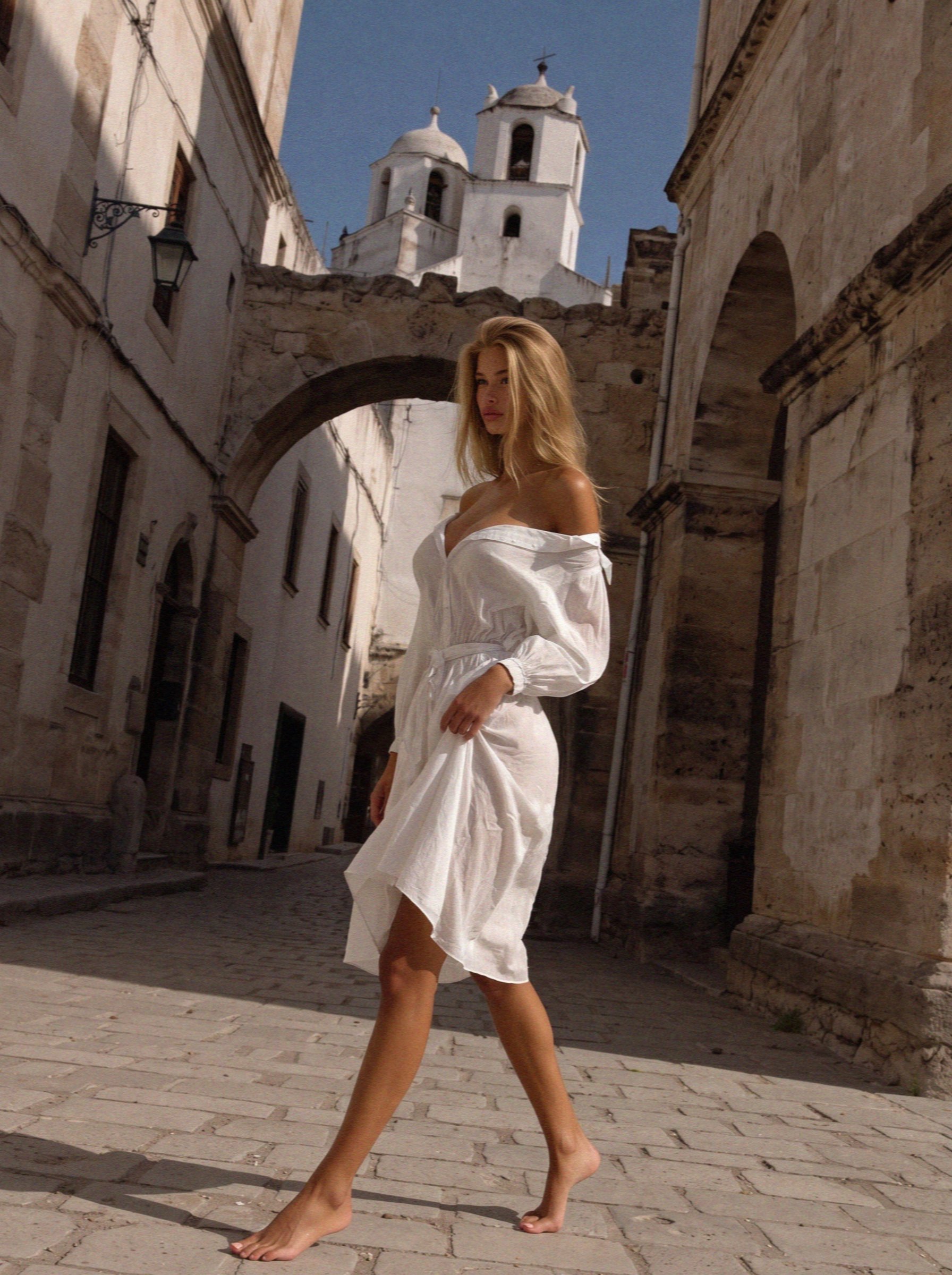
From the top of the village a path goes down to Prodromos. Three and a half kilometres, the woman in the café told me. An hour if you do not stop.
She said it in a tone that made clear she expected me to stop.
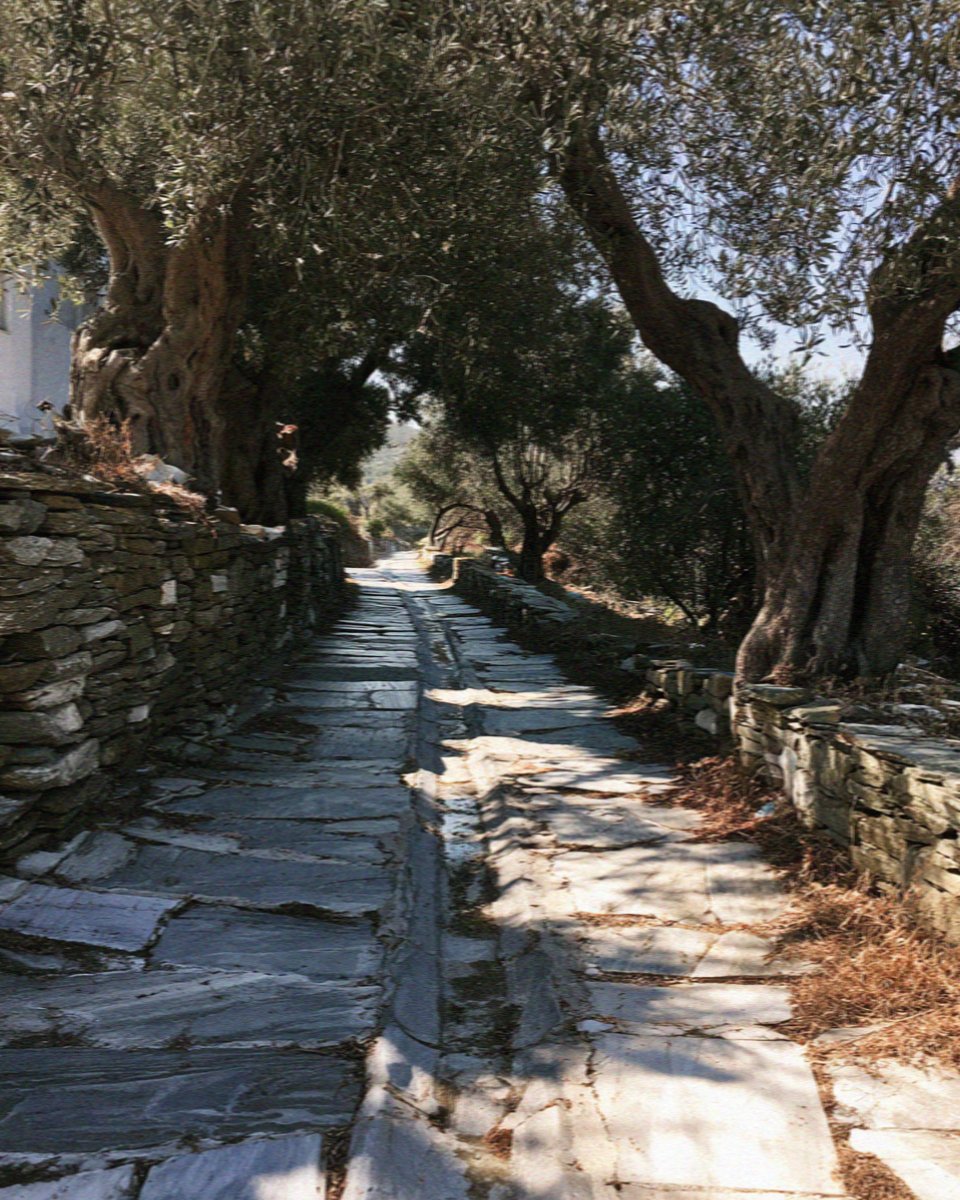
It is called the Byzantine road, and much of it is paved in marble. Not polished marble, obviously. Grey and white stones laid edge to edge down the hill centuries ago and worn into a shallow channel where feet and hooves have kept choosing the same line.
Little stone bridges cross dry streams. Terraces. Olive trees grow straight out of the walls.
Across the water to the east was Naxos, and on it the mountain I had climbed the day before yesterday.
From here it looked like nothing much.
I kept my hand in my pocket around the little piece of marble almost the whole way down.
I was walking on the same stone.
That was the part I could not quite get over. Here it was under my shoes, in walls and steps and bits scattered beside the road. And the beautiful end of it had travelled all over the ancient world and, eventually, into museums all over ours.
The Winged Victory standing at the top of her staircase in the Louvre. The famous Aphrodite found on Milos, the one everybody knows without her arms.
Milos is my next island.
So one of the most famous women on Milos began here, inside a cold hill, and was carried across the sea to be found there centuries later.
I will be making the same crossing.
With less ceremony and both arms.
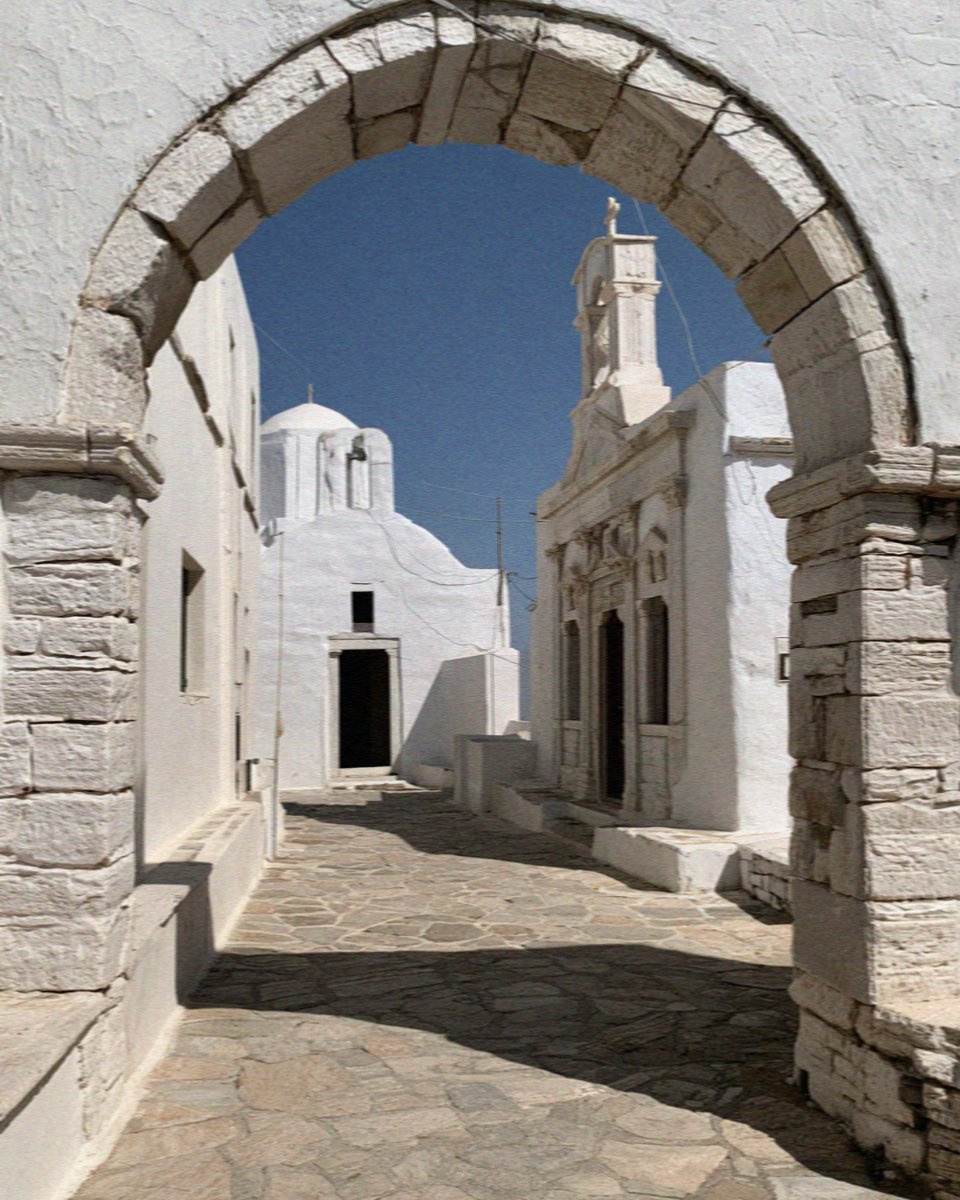
Prodromos is a scatter of white houses and an arch between two churches that you walk under to leave the path. From there the road runs down towards Piso Livadi, a little fishing harbour with a handful of tavernas and boats knocking together at their ropes, and round the point a beach with its umbrellas already folded for the year.
I swam out along the rocks to the harbour mouth and back.
The sea was warmer than the quarry and cooler than the road, which felt like exactly the right amount of difference for one day.
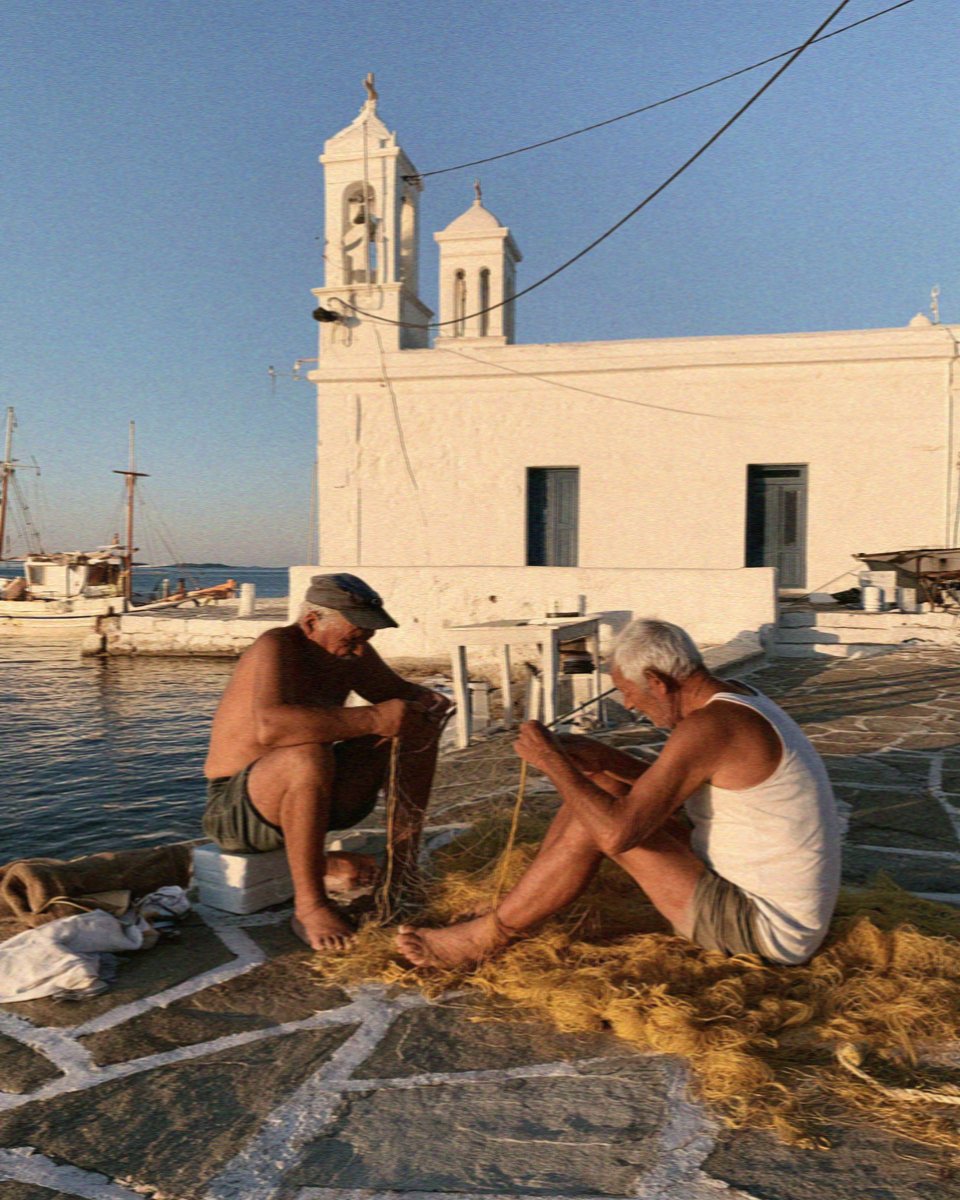
Two men mending a yellow net on the quay watched me come out and then went back to the net.
On the bus back to Parikia I took the marble chip out and held it against the window.
The sun was lower by then and the light seemed to go further into it.
Or I wanted it to.
It is on the table now, next to the green kitron, which I still have not opened.
V.
More images from Paros