Where to eat in Mykonos is a harder question than it should be, because the island is famous for the wrong kind of food. Sushi flown in, champagne carried down the sand, bills that become anecdotes. All of that exists. But underneath it, Mykonos has a small, sharp kitchen of its own, a handful of tavernas that have not changed in decades, and some of the best simple grilled fish in the Cyclades.
This is what to order, where to find it at every budget, and how to get a table. For the rest of the island, start with my complete guide to Mykonos.
The dishes to know
The food of Mykonos is Cycladic island food: dry land, little water, a lot of sea. It is built on pork and cheese from the island’s small farms, on barley and pulses, on capers and wild greens, and on fish.
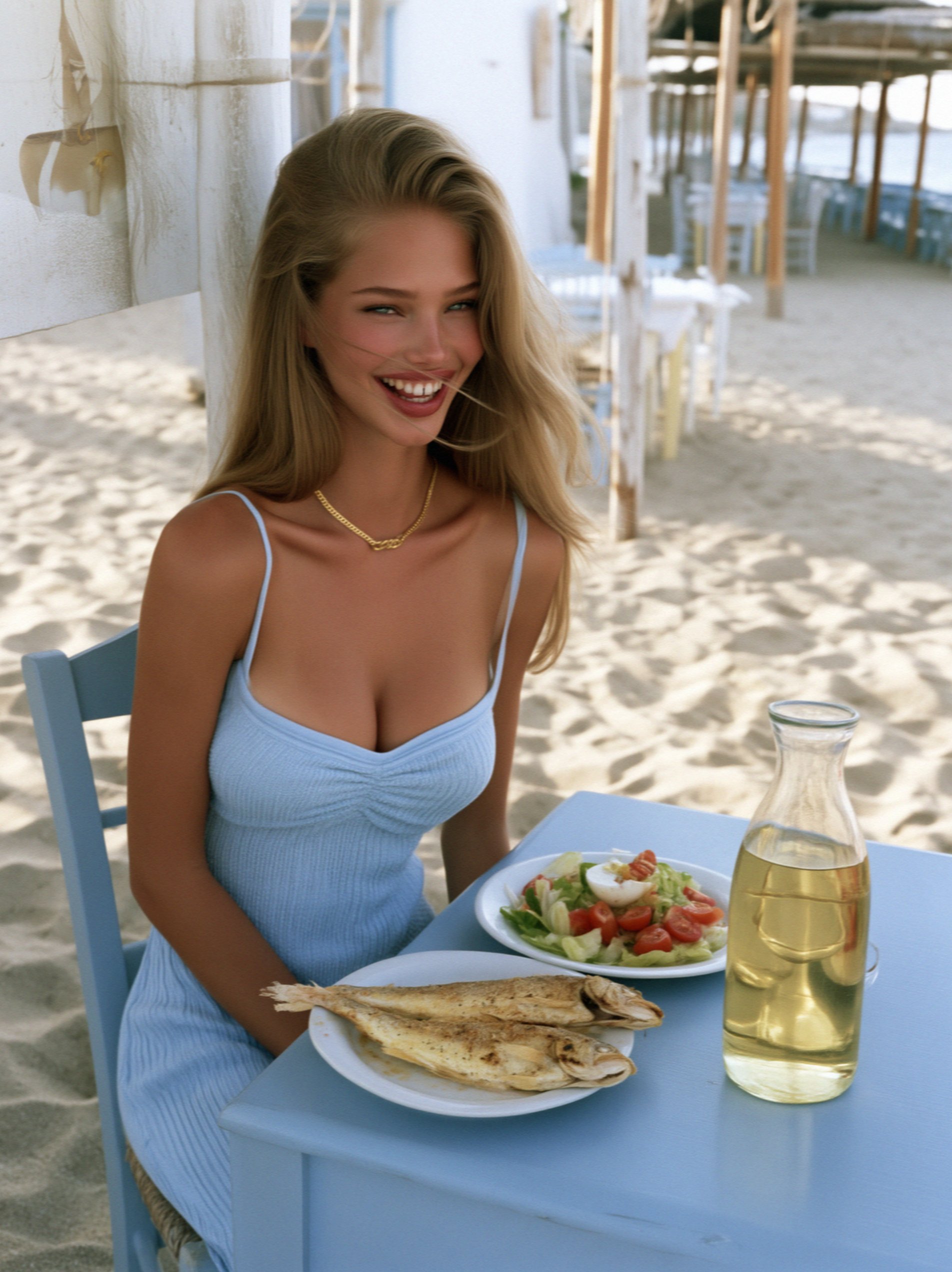
Order the fish of the day, grilled whole with oil and lemon, priced by the kilo, and ask to see it first. Order grilled octopus, which hangs to dry in the sun outside the harbour tavernas, and small fried fish. Order a horiatiki, the Greek salad, made properly with island tomatoes, capers and a slab of cheese. Order fava, the yellow split pea purée, with onion and oil. And look on the menu for the island’s own dishes below.
The wine on most tables is a Cycladic white or a carafe of house wine, cold and cheap. Some tavernas pour a little tsipouro or raki at the end.
Kopanisti, louza and the island’s own
Kopanisti is the island’s great cheese, a soft, pink-tinged, peppery cheese fermented until it bites, with protected status. You eat it spread on barley rusks with chopped tomato, or crumbled into a salad. It is strong, salty and very good with cold white wine.
Louza is the island’s cured pork, a loin rubbed with salt, pepper and spices, air-dried and sliced thin, traditionally made in the winter when the family pig was killed.
Paximadi is the hard twice-baked barley rusk that the windmills once ground flour for, softened with tomato and oil as a salad called a dakos elsewhere in Greece.
Kremmydopita, a small onion and cheese pie, and amygdalota, soft almond sweets dusted with sugar, are the island’s other specialities. You will find the amygdalota in the bakeries in town.
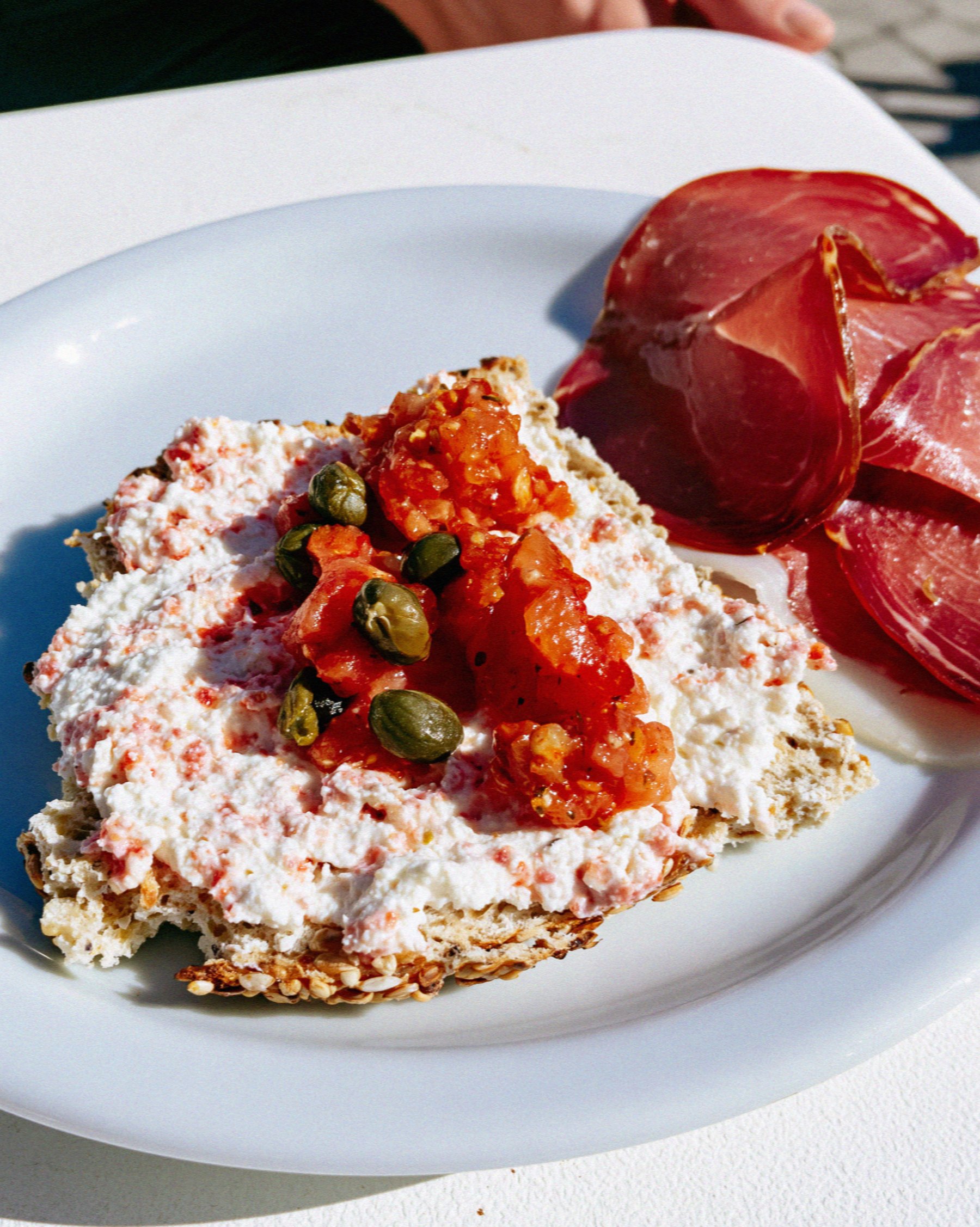
Look for these on menus and order them. They are the best way to tell a real taverna from a tourist one.
Eating in Mykonos Town
In town, the rule is simple: eat in the lanes, not on the seafront.
The waterfront restaurants have the view and the prices. The good food is in the small places in the lanes behind, where the tables are set out on the whitewashed steps under the bougainvillea. To Maereio is a tiny place in the old town serving home-style Mykonian cooking, and it fills up fast. Kounelas, near the old harbour, is one of the oldest fish tavernas on the island, a simple garden with fish on the grill. Niko’s Taverna, by the old harbour, is an old-fashioned, busy, reliable taverna near the pelican’s beat.
For a grander evening, Interni, in a courtyard off Matoyianni, is fashionable, late and loud, more about the scene than the food. The restaurants at the hotels on the slopes above town, among them the Japanese restaurant at Belvedere and the restaurant at Bill & Coo, are among the best tables on the island and priced accordingly.

Tavernas by the sea
The best simple meals on Mykonos are on the beaches.
Joanna’s Niko’s Place, on the beach at Megali Ammos a few minutes’ walk south of the windmills, is a family taverna with tables on the sand, Greek standards done well and no pretension at all. It is where I would take anyone for a first lunch. Nikolas Taverna at Agia Anna, on the coastal walk between Platis Gialos and Paraga, has fish and tables beside the sand. Nice n Easy, on Alefkandra square at the edge of town, by the water below the windmills, is a relaxed, well-run place with good Mediterranean food and a sunset view.
At any of them, order the fish, a salad, fava and a carafe, and stay as long as the afternoon lasts.
Kiki’s and the north coast
Kiki’s is the most famous taverna on Mykonos, and it has earned it.
It sits on the hill above Agios Sostis beach on the north coast: a small, vine-shaded terrace with a charcoal grill, everything cooked over the coals, no reservations and no sign to speak of. The menu is a few big salads and whatever is on the grill, fish, chicken, pork, done very simply. People queue for it, often for an hour and sometimes for two, sitting on the wall with a glass of wine that the taverna brings out while they wait. Get there before it opens, around midday, or late in the afternoon, and go for a swim while you wait. It closes for the winter.

Further east, at the end of a rough road, Fokos Taverna stands alone above Fokos beach, with grilled meat, salads and the whole bay in front of you. It feels like the Mykonos of fifty years ago.
The beach club tables
The beach clubs of the south coast all serve food, some of it very good and almost all of it expensive.
At the clubs on Psarou and Paraga, lunch is the event: long tables, seafood platters, champagne and a bill that can easily reach a hundred euros a person or more. The food at the bohemian sunset clubs leans towards grilled fish, vegetables and wood-fired cooking. If you want the scene, book a table rather than a sunbed, ask about the minimum spend, and go once. For an ordinary lunch by the sea, the tavernas above are better and a third of the price.
The clubs themselves are in my guide to Mykonos beach clubs and nightlife.
Cheap and good
Mykonos is not cheap, but you can eat well for little.
Souvlaki and gyros. There are good grill shops in the old town, around Fabrika and the lanes behind the harbour, where a gyros wrapped in pita costs a few euros and is the best late-night food on the island.
Bakeries. Pick up pies, rusks and amygdalota for a beach lunch. The old bakeries in town have been working since long before the clubs arrived.
Ano Mera. The tavernas in the village square, inland, are calmer and cheaper than anything on the coast, and the food is properly local.
The harbour fish tavernas. Fish is priced by the kilo everywhere, but a simple plate of small fried fish and a salad is never expensive.
How to book
July and August: book the well-known places days or weeks ahead, especially for sunset. The beach clubs book out well in advance.
June and September: book for dinner at the popular places, especially at weekends.
Kiki’s: no bookings. Arrive early and be patient.
Timing: the island eats late. Lunch from two, dinner rarely before nine, and the tables in town are fullest at eleven.
Paying: cards are widely accepted, but carry some cash for the smaller tavernas.
Tipping: service is not usually included. Leaving around ten per cent for good service is normal.
Check the fish. Fish is sold by weight. Ask the price per kilo and see the fish before it is cooked, so there are no surprises on the bill.
If you are planning meals around a few days, my Mykonos itinerary puts Kiki’s on day four, and my guide to the best beaches in Mykonos shows which tavernas are on which beach.
Frequently Asked Questions
What food is Mykonos known for?
Kopanisti, a peppery fermented cheese eaten on barley rusks, louza, the cured pork, small onion pies and almond sweets, along with grilled fish and octopus.
What is the most famous restaurant in Mykonos?
Kiki’s Tavern above Agios Sostis beach is the most famous taverna, with no reservations and a long queue. Among the grand places, the beach club restaurants on Psarou and Paraga are the best known.
Is eating out in Mykonos expensive?
At the beach clubs and on the seafront, very. In the lanes of town, at the beach tavernas and in Ano Mera, it is far more reasonable.
Do you need to book restaurants in Mykonos?
In July and August, yes, for the popular places and for sunset tables. Kiki’s takes no bookings at all.
Where can you eat cheaply in Mykonos?
At the souvlaki and gyros shops in town, the bakeries, the taverna square in Ano Mera, and the simple harbour fish tavernas.
Read also: The Best Beaches in Mykonos | Mykonos Beach Clubs and Nightlife | Victoria’s Complete Guide to Mykonos