Some links in this guide are affiliate links. If you book through one, this site may earn a small commission, at no extra cost to you. How this works.
Antibes gives its best to people who get up early. By seven the market hall on the Cours Masséna is already loud, the sea wall is empty, and the Picasso Museum is three hours from opening. By noon the lanes are full and the beaches are a carpet of towels. Plan the day around that rhythm and the town is easy. Fight it and you spend half your trip queuing.
This is everything I would actually do here, in roughly the order I would do it. If you want the whole town laid out first, my guide to Antibes and the Cap does exactly that.
What to book before you come
Three things I would book ahead, because the small boats and the guided walks fill up in summer.
The old town on foot, with a local
Two hours in the lanes behind the ramparts with someone who grew up there.
A morning sail with breakfast
Out along the coast from Golfe-Juan, with a swim, a paddle and breakfast on board.
The Lérins Islands under sail
A small sailing boat out to the islands off Cannes, with time to snorkel and paddle in the clear water.
Each button opens GetYourGuide in a new tab, so this page stays open. Booking through them supports the blog at no cost to you.
Walk the market on the Cours Masséna
The Marché Provençal sits under an iron-roofed hall in the middle of the old town, and it is the first thing I do on any morning here. It opens at six and is packing up by about one; Monday is its day off, except in June, July and August, when it runs daily.
Go before nine, when the buyers are mostly locals with baskets. Beyond the olives, cheeses and herbs, look for the two things particular to this coast, sold hot around the edges of the hall: socca, the thin chickpea pancake, and pissaladière, its onion-and-anchovy cousin.
Later in the day the same hall fills with craft stalls instead, but the morning is the reason to come.
The Picasso Museum
Picasso painted inside the Château Grimaldi, up on the sea wall, for a few months in 1946, and the castle has been his museum since 1966.
What I love is that the work belongs to the place: pictures painted in a castle above this exact stretch of water, in the first autumn after the war. Nicolas de Staël has a room there too. Do not skip the terrace, where sculptures look straight out to sea.
Tickets are 12 euros, 8 reduced, and it is shut on Mondays. Opening times, holiday closures, the current exhibition and the combined ticket that also covers the fort are all in my guide to the old town of Antibes.

The ramparts and the Nomade
Walking the sea walls south from the château is free and the best way to understand where you are: rooftops on one side, open water on the other, and on a clear morning the mountains standing up behind Nice.
In the other direction, north of the château on the Bastion Saint-Jaume above the port, sits Jaume Plensa’s Nomade, a giant figure woven from steel letters, hugging its knees and facing the sea. It costs nothing to stand beneath it. It closes on Mondays and stays open late on summer evenings, which is when to see it, at dusk with the boats behind.
Port Vauban and the Billionaires’ Quay
Below the Nomade is Port Vauban, by tonnage the biggest yacht harbour in the Mediterranean.
Its outer arm, the Quai Camille Rayon, is something else: this is where the biggest private yachts tie up, which is why everyone calls it the Billionaires’ Quay. You cannot board, obviously, but the view of those hulls from the harbour wall or the fort, white and enormous against the old town, is one of the strange sights of the coast.
Fort Carré
Across the harbour on its own point, the Fort Carré is a sixteenth-century star-shaped fort of four bastions, strengthened later under Vauban. The view back from its walls, across the yachts to the ramparts, is the best in Antibes.
Entry costs a few euros and is included in the combined ticket. It is closed on Mondays, open 10:00 to 18:00 in July and August and 10:00 to 17:00 the rest of the year, and visits are often guided. It also closes in bad weather, so if the wind is up, check before you walk out along the shore.

The coastal path on the Cap
The Sentier de Tire-Poil is the walk I recommend to everyone: the former customs track round the end of Cap d’Antibes, over pale rocks and past little coves of very clear water, named for the wind that pulls at your hair out on the point.
Allow about two hours for the loop from La Garoupe, which comes back inland past the walls of the great villas. When the waves come over the rocks it is closed. Wear proper shoes and take water, because there is almost no shade. For the route in detail and everything else out there, see my guide to Cap d’Antibes.
The Garoupe lighthouse and chapel
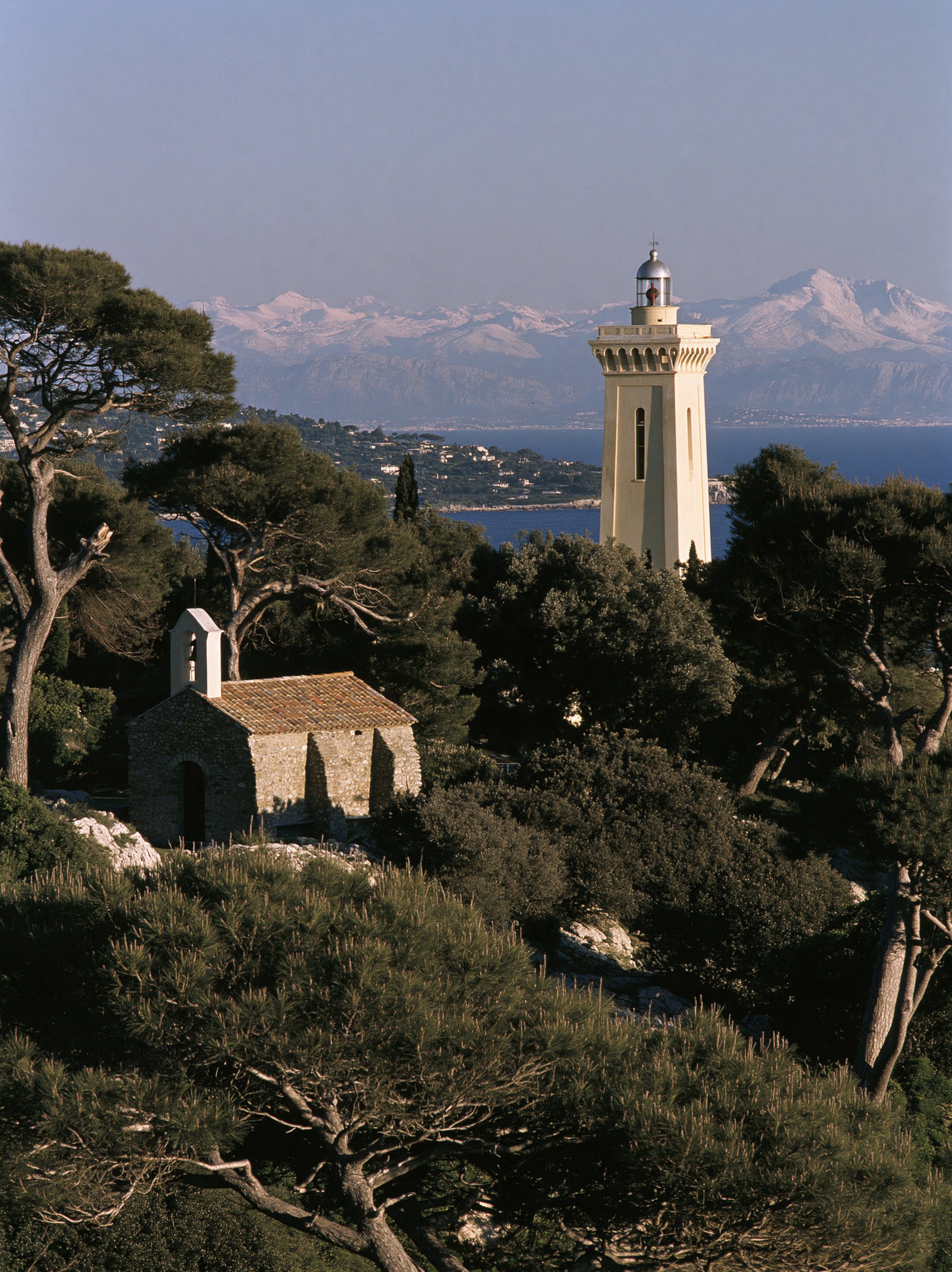
On the plateau in the middle of the Cap, at its highest point, stands the Phare de la Garoupe, in its rebuilt post-war form.
Beside it, the Sanctuaire de la Garoupe chapel holds marine ex-votos left by sailors; its hours are irregular, so do not make the climb for the chapel alone. Either way, the viewing table beside the lighthouse is reason enough: the whole coast laid out around you, with the Alps behind on a clear day. You can drive up, or walk if you do not mind a steep climb.
Villa Eilenroc and the Thuret garden
At the tip of the Cap, Villa Eilenroc and its gardens run down to the sea. It opens on Saturdays only, roughly 10:00 to 17:00, for about 2 euros, and stays shut through August; openings can be irregular, so look it up the week you go. Its tea room is also reachable from the coastal path.
The Villa Thuret botanical garden costs nothing, but it keeps office hours: weekdays only, never at weekends or on public holidays. It is still a working research garden, run by INRAE, and the reason to come is the old trees and the quiet.
A morning on the beach
Mornings are when the sea is at its best: calm, clear and uncrowded. The town beaches of La Gravette, Ponteil and La Salis are sandy, public and a short walk from the old town walls. Over the peninsula, Juan-les-Pins has the long sandy stretches and the beach clubs. And on the Cap itself you can swim off the rocks by ladder into water so clear you can count the stones on the bottom.
In July and August, leave by noon. Every option is in my guide to the best beaches in Antibes.
Jazz à Juan in July
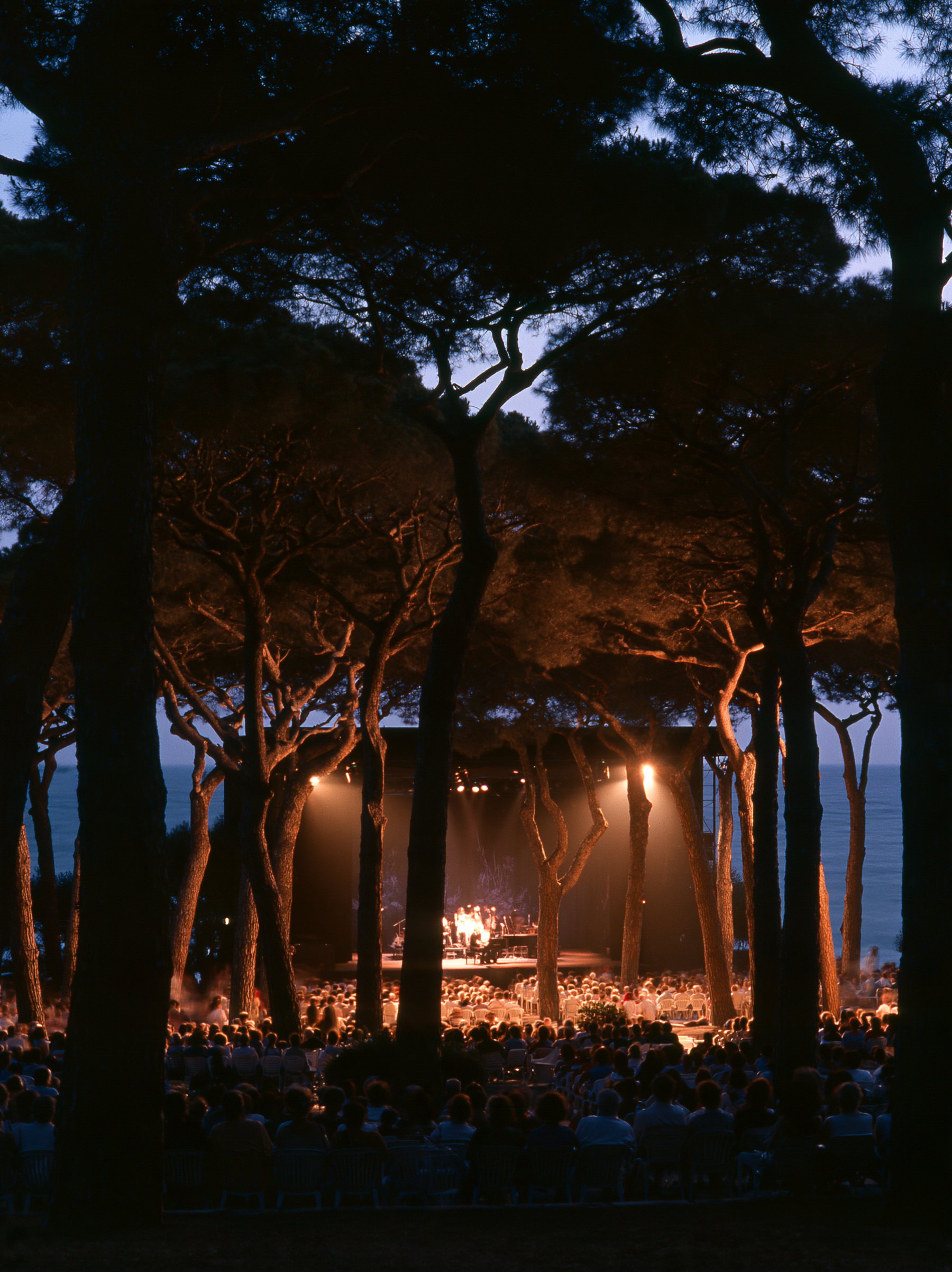
Jazz à Juan has been played in the Pinède Gould, the pine grove behind the beach at Juan-les-Pins, since 1960. The 2026 edition, the 65th, ran from 9 to 19 July. Two concerts most nights, under the pines with the sea just behind the stage, and tickets that vary widely by night.
Book as soon as the programme is announced. The free early-evening concerts on a smaller stage need no ticket at all.
Lunch at Eden-Roc
If you want to see the Hôtel du Cap-Eden-Roc without a room key, book lunch. The Eden-Roc Restaurant, in the pavilion at the foot of the Grande Allée, right above the sea, serves breakfast and lunch, takes lunch reservations from non-residents, and asks for smart casual dress.
Book well ahead in summer, and remember the hotel closes for the winter. The history, the grounds and the other ways in are all in my guide to the Hôtel du Cap-Eden-Roc.
What not to plan around
Marineland is gone: the marine park on the edge of town closed for good on 5 January 2025.
The museums and the Fort Carré close on Mondays. Villa Eilenroc opens on Saturdays only and not at all in August; the Thuret garden is the reverse, weekdays only. The coastal path and the fort both close in bad weather. And the Hôtel du Cap and many of the beach clubs close from mid-October to April, so a winter visit is about the old town, the walks and the empty sea.
Frequently Asked Questions
What is Antibes best known for?
The old town and its sea walls, the Picasso Museum, the superyachts of Port Vauban, and Cap d’Antibes with its coastal path.
Is the Picasso Museum in Antibes worth visiting?
Yes. It holds the work Picasso made in the château in 1946 and a room of Nicolas de Staël. Tickets are 12 euros and it is closed on Mondays.
Is Fort Carré in Antibes worth visiting?
Yes, for the view back across the yachts to the ramparts. Entry is a few euros and covered by the combined ticket, visits are often guided, and it closes on Mondays and in bad weather.
Is Marineland in Antibes still open?
No. Marineland closed for good on 5 January 2025.
When is Jazz à Juan?
Every July, in the Pinède Gould at Juan-les-Pins. The 2026 edition, the 65th, ran from 9 to 19 July, and the free early-evening concerts on the smaller stage need no ticket.
Read also: Antibes Old Town: the Market, the Ramparts and the Picasso Museum | Cap d’Antibes: the Coastal Path, the Lighthouse and the Villas | Victoria’s Complete Guide to Antibes and Cap d’Antibes