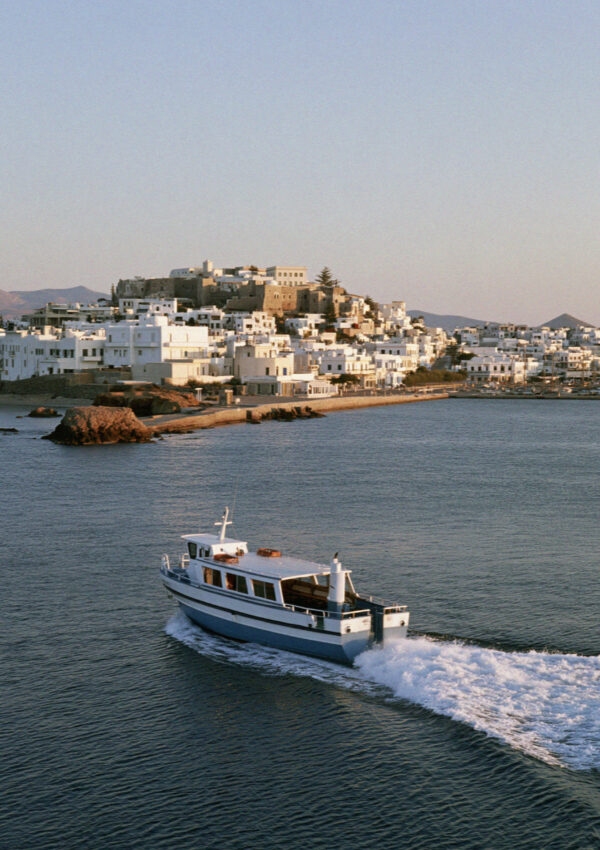
My one real swim on Naxos was at Agios Prokopios, in the first week of October, after walking out from town with nothing more than a towel. It is still the beach I would send most people to first. But it is only one of a long chain of sandy bays down the west side of the island, and the further south you go, the wider and emptier they become.
This is the whole coast, beach by beach: which ones suit families, which belong to the kitesurfers, where to find dunes and cedar trees, and how to reach each one without a car or with one. The town, the villages and the rest of the island are all in my complete guide to Naxos.
The west coast does the work
Naxos is the largest of the Cyclades and most of it is mountain. The sand is concentrated on the west, in an almost continuous run that starts at the edge of Naxos Town and carries on south for many kilometres: Agios Georgios, Agios Prokopios, Agia Anna, Plaka, Orkos and Mikri Vigla, then Kastraki, Glyfada, Alyko and Pyrgaki.
Two things follow from that. First, you rarely need to go far. The best beaches near town are a short bus ride away, and the bus runs along the coast road behind them. Second, the wind matters more than the map. Through the second half of July and all of August the meltemi blows from the north, and with Paros sitting across the strait, it comes down this coast with nowhere else to go. On those days the sea is choppy, the sand moves, and the kitesurfers are delighted while everyone else looks for shelter.
So the rule is simple. In June, September and early October, the whole west coast is yours. In high summer, check the forecast the night before, keep the town beach and the more protected corners in reserve, and treat a calm morning as a gift.
Agios Georgios
Agios Georgios is the town beach, a long curve of sand that begins just south of the harbour. You can walk to it from almost anywhere in Naxos Town, which is the whole point.
The water is shallow for a long way out, which makes it the easiest beach on the island for small children, and the protected bay is where beginners learn to windsurf. It is lined with cafes, tavernas and hotels, and it is never wild or empty. It is not the most beautiful sand on Naxos, but on a day when you have spent the morning in the Kastro and want to be in the sea within ten minutes, nothing beats it.
Agios Prokopios
A few kilometres further south, Agios Prokopios is the beach most people picture when they think of Naxos: a long, pale bay with clear water that turns from green to blue as it deepens.
It shelves gently, so you can wade out a long way before you have to swim. There are sunbeds and umbrellas along much of it, a row of small hotels and tavernas behind, and free stretches of sand where you can simply put down a towel. In October the umbrellas were mostly folded and the beach was nearly empty, which suited me perfectly. In August it is busy but rarely crowded, because there is so much of it.
It is also the beach with the best transport. The bus from the port stops on the road behind it, and plenty of people walk out from town along the coast, which takes about an hour.
Agia Anna
Agia Anna runs straight on from Agios Prokopios, divided from it by a small headland. It is smaller, livelier and more of a village, with tavernas set right on the sand so that you can eat lunch with your feet almost in the water. Paradiso, right on the beach, has been feeding swimmers here for decades.
There is also a little harbour here, which matters for two reasons. In the season, many of the day boats to the south coast, the Rina cave and the Small Cyclades leave from this jetty, so it is a good base if you plan a boat day. And the harbour gives the northern end a little shelter, so the water is often calmer here than further along.
Plaka
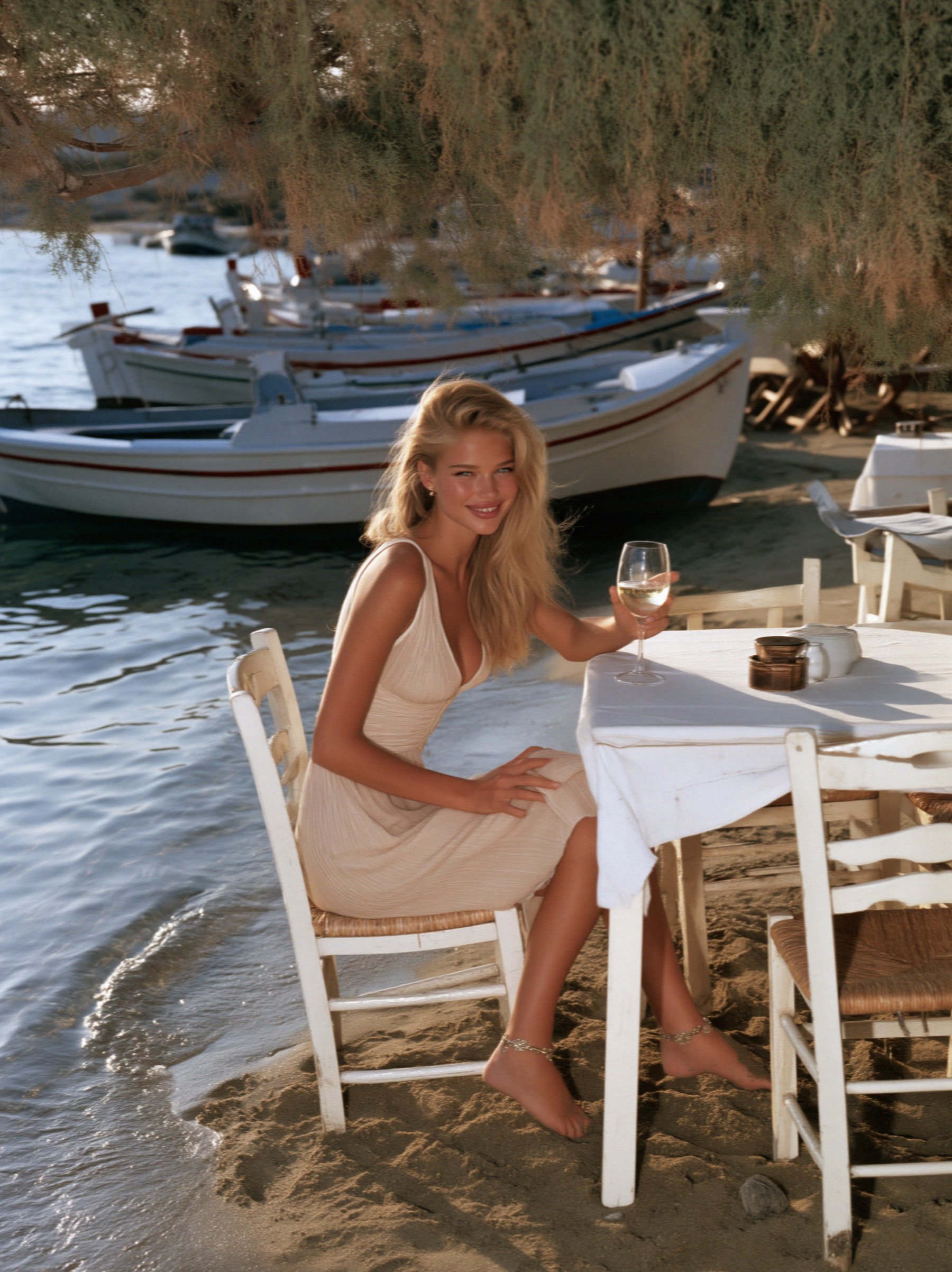
Plaka is the long one: about four kilometres of sand, backed by low dunes and junipers, with the hotels and beach bars thinning out the further south you walk.
The northern end, closest to Agia Anna, is organised and busy in summer. The southern end is quieter and more open, and the sand goes on long enough that you can always find space. It is a beach for long walks along the waterline, for a swim at the far end and a slow return, and it has some of the best sunsets on the west coast, with Paros lying low across the water.
The bus continues here from Agia Anna, so Plaka is still easy without a car.
Mikri Vigla and the wind
Beyond Plaka, past the small bay of Orkos, a rocky headland called Mikri Vigla splits the coast into two beaches. Parthena, on the north side, takes the wind full on and is the island’s great kitesurfing beach. The beach on the south side, often called Sahara, is usually a little calmer and suits windsurfers and swimmers.
There are kite and windsurf schools here, a few small hotels, and a relaxed, outdoor crowd. In July and August the bay fills with coloured kites from midday. If you have never watched good kitesurfers, it is worth an hour on the sand even if you have no intention of trying.
The bus runs this far in the season. Outside it, you will need a car.

Kastraki and Glyfada
South of Mikri Vigla the coast opens out and the buildings almost disappear. Kastraki is a long, wide beach with fine sand and only a few places to eat, and Glyfada, just beyond it, is wilder still: an open stretch with dunes and almost nothing behind it.
These are beaches for people who want space more than service. Bring water and shade, because you may not find either. In return you get a kilometre of sand to yourself even in summer. Inland from Kastraki is Axiotissa, one of the island’s best-known tavernas, which makes a long lunch an easy part of a beach day down here.
Alyko and the cedars
Alyko is the most unusual corner of the coast. The headland is a protected area of cedar and juniper trees growing out of sand dunes, which gives it a look you will not find on the barer islands nearby. There are paths through the trees, little coves on either side, and the shell of an unfinished hotel that has been covered in street art over the years.
On the far side of the peninsula is Hawaii beach, a small cove of turquoise water below the dunes, and Mikro Alyko close by. A little further east is Pyrgaki, a quiet sandy beach where the road starts to leave the coast.
Come early, bring everything you need, and stay on the paths, because the dunes are fragile and the trees are what make the place.

The east and north coasts
The rest of the island is mountain, but there are beaches on the other coasts too, and they make good ends to a day in the villages.
On the east coast, Moutsouna is a small harbour with a beach and a couple of tavernas, at the end of the road down from Apeiranthos. South of it, Psili Ammos and Panermos are quiet sandy bays reached by a slower coastal road. In the north, Apollonas has a small bay in front of the village, with fish tavernas along the front and the giant unfinished kouros on the hillside above. None of these is a reason to cross the island on its own, but each pairs well with the drive. I have set out the villages along the way in my guide to the mountain villages of Naxos.
Getting to the beaches
The KTEL bus is the easy way to reach the west coast. Buses leave from the station by the port and run south along the coast road to Agios Prokopios, Agia Anna and Plaka, and on to Mikri Vigla in the season. Expect to pay about 2.50 euros a ride. Buy it at the kiosk at the port, not on board, and check the last bus back in the evening.
Agios Georgios is a walk from town, and Agios Prokopios is an hour on foot along the coast if you feel like it.
For anything south of Mikri Vigla, and for the east and north coasts, you need a car, a scooter or a quad. In August book it ahead. If you want to wake up with the sand on your doorstep, my guide to where to stay in Naxos covers every beach base, and my Naxos itinerary shows how to fit a whole beach day around the rest of the island.
Frequently Asked Questions
Which is the best beach in Naxos?
For most people, Agios Prokopios: long, pale sand, clear and gently shelving water, and an easy bus from town. Plaka is better if you want space, and Alyko if you want something wilder.
Which Naxos beach is best for families with small children?
Agios Georgios, the town beach, because the water stays shallow a long way out and everything is within walking distance. Agios Prokopios and Agia Anna are also gentle and well served.
Is Naxos too windy for the beach in August?
It can be. The meltemi blows from about mid-July to the end of August and hits the west coast hard. Check the forecast each evening, and keep calm mornings for the open beaches.
Can you reach the Naxos beaches without a car?
Yes, for the west coast as far as Plaka, and Mikri Vigla in season, by the KTEL bus from the port for about 2 to 2.60 euros. Kastraki, Alyko and the east coast need a car or scooter.
Where do people kitesurf on Naxos?
Mikri Vigla, especially Parthena on the north side of the headland, which takes the full wind. There are schools for beginners here, and Agios Georgios in town suits first-time windsurfers.
Read also: Where to Stay in Naxos: Town, Beach or Village | A Naxos Itinerary: 3 to 5 Days | Victoria’s Complete Guide to Naxos