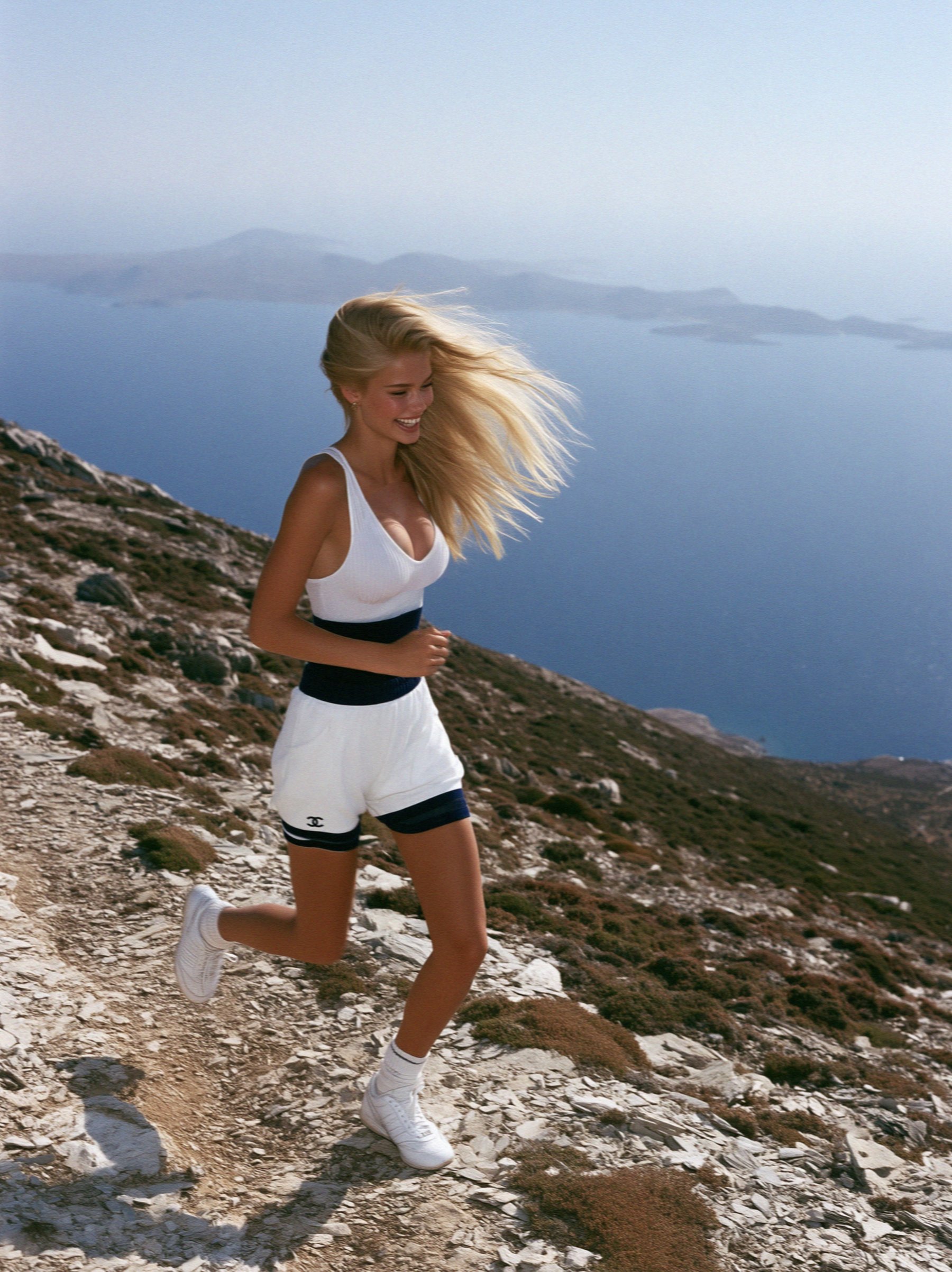
At 1,004 metres, Zas is the roof of the Cyclades, and from its summit on a clear day you can pick out half the islands you have been ferrying between. It is a proper mountain walk, steep and stony and completely exposed, but not a technical one: no scrambling, no ropes, just a path marked with red paint and cairns and a great deal of uphill.
I took the early bus to Filoti in October and walked up from the spring at Aria, past the cave, to the top. This guide covers that route, the gentler one from Agia Marina, when to go, what to carry and how to reach the trailheads with or without a car. The rest of Naxos is in my complete guide to Naxos.
What to expect
Zas rises in the middle of the island, above the village of Filoti. Legend says the infant Zeus was hidden in a cave on its slopes, out of reach of a father who swallowed his children, and the mountain takes its name from him. Crete makes the same claim for its own caves.
The paths are rocky from start to finish, with loose stones in places, and once you leave the spring there is no shade at all. The spring at Aria is also the only water on the mountain. Above the cave the path climbs steadily over open ground of low scrub and boulders, and the summit is a rocky crown with nothing on it to shelter behind. None of it is dangerous in good weather, but the footing needs attention, and the way down is harder on the knees than the way up.
Wear walking shoes or trail shoes with real grip.
The two routes
There are two main ways up, and a longer loop for keen walkers.
From Aria spring. The classic route and the steeper of the two. It starts at a small car park at the end of a narrow road above Filoti, passes the Cave of Zas after twenty minutes or more, and reaches the summit about 2.5 kilometres from the spring. Allow roughly 2.5 to 3 hours there and back.
From Agia Marina. The easier way up. It starts at the chapel of Agia Marina, on the road from Filoti towards Danakos, and climbs more gradually: about 5 kilometres there and back, with around 500 metres of ascent. Allow 2.5 to 4 hours.
The loop from Filoti. For a full day on the mountain, a loop of about 10 kilometres starts and finishes in the village itself. Allow 4 to 5 hours.
If you can arrange a lift at one end, going up from Aria and down towards Agia Marina gives you the cave and the gentler descent in one walk.
From Aria spring past the cave
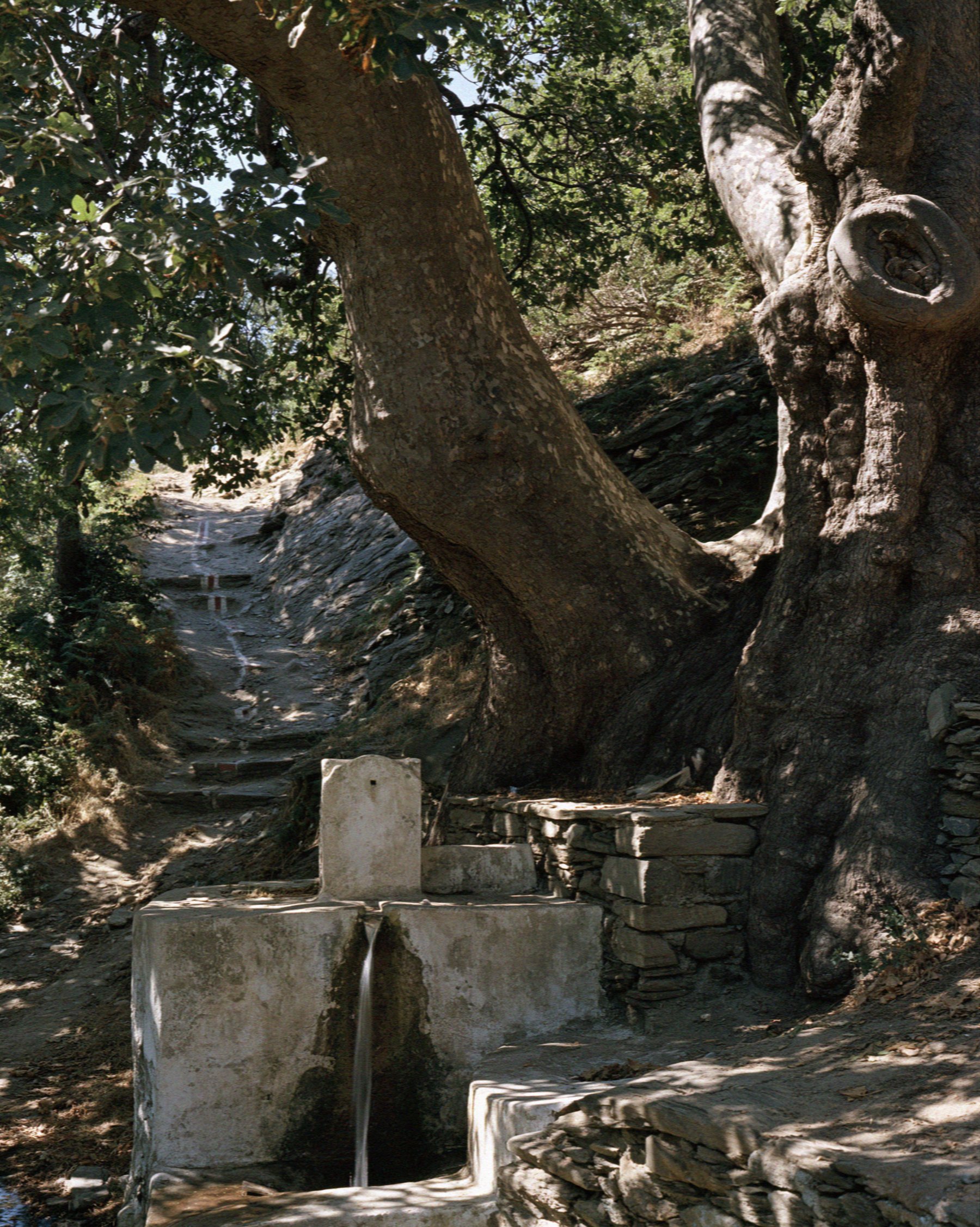
This is the route I walked, and the one most people choose. The path begins at the spring, where water runs beside a big old plane tree and a small parking area. Fill every bottle you have here. There is nothing further up.
From the spring a stony path climbs through old terraces and scrub, and steepens quickly. Twenty minutes or more in, a signed turning leads a short way off the path to the cave. Beyond it the trail keeps on up the open mountainside, rocky and relentless, with the view opening a little further every time you stop to catch your breath.
Most of the 2.5 to 3 hours is the climb. Take the descent slowly on the loose stones.
The Cave of Zas
The cave opens in the rock just off the main path, a wide dark mouth in the mountainside. Inside, the air is cool and damp, there are stalactites, and your eyes need a minute to adjust. Use your phone torch, watch your footing on the wet rock, and do not go further in than the light carries.
This is where Zeus is said to have been hidden as a baby. It is free and unfenced, and it takes ten minutes to see.
It is worth the detour even if you have no intention of reaching the summit. The walk from Aria spring to the cave and back takes about an hour and makes a good short outing on its own.

From Agia Marina
The Agia Marina path approaches from the other side of the mountain. It is gentler underfoot than the Aria route, and the better choice if you are unsure of your legs or walking with older children.
Start at the small chapel by the road and follow the waymarks uphill over open ground. This route does not pass the cave.
The summit
The top of Zas is a broad, rocky crown, and on a clear day the view runs the whole way round: Paros lying low to the west, Ios to the south, Amorgos further out to the east, the Small Cyclades scattered closer in, and on the very clearest days Santorini. Santorini was the one that stayed hidden in the haze.
There is no shelter up here, no shade and usually some wind. Bring a layer even in summer, and do not plan a long picnic if the north wind is blowing hard.

When to go and what to bring
Spring and autumn are the seasons for Zas. April and May bring wild flowers and green slopes; late September and October bring cooler, steadier days. In July and August the mountain is exposed and hot by mid-morning, and if you must climb then, start at first light and be off the summit before noon. Avoid days of strong wind, when the gusts on top can knock you off balance.
What to carry:
- Water, at least a litre and a half each, filled at Aria.
- Sun protection: a hat, sunglasses and sunscreen. There is no shade.
- A warm layer for the wind on the summit.
- Shoes with grip, not sandals.
- Food, something to eat on top and something for the way down.
- A phone torch for the cave.
Getting to the trailheads
By car. Drive inland from Naxos Town through the Tragaea valley to Filoti, beyond Halki. From the village, follow the signs uphill to Aria, about two kilometres above, where there is parking by the spring. For Agia Marina, take the road out of Filoti towards Danakos and look for the chapel beside it.
By bus. The KTEL village line from the port in Naxos Town runs to Filoti. Buy your ticket at the kiosk by the port before you board; they are not sold on the bus. Take an early departure. From the bus stop it is a steady walk uphill by road and track to the spring, so add that to your timings, both ways, so add that walk to your timings, both ways. Check the time of the last bus back to town before you set off.
Making a day of it in Filoti
Come down in time for lunch in Filoti, the biggest village on the island, where the cafes and tavernas around the square serve simple, filling food to hungry walkers. Then give the afternoon to the villages nearby. Halki, a few kilometres back towards town, has the Vallindras kitron distillery. With a car, the kouros lying in his garden at Flerio is a short drive away, and that is where I went after my own climb. Apeiranthos, the marble village, is over the mountain to the east.
My guide to the mountain villages of Naxos covers all of them, and my list of the best things to do in Naxos shows how a Zas day fits with the rest of the island.
Frequently Asked Questions
How long does it take to hike Mount Zas?
From Aria spring above Filoti, about 2.5 to 3 hours there and back. From the chapel of Agia Marina, 2.5 to 4 hours for about 5 kilometres. The loop from Filoti village is about 10 kilometres and takes 4 to 5 hours.
How difficult is the Mount Zas hike?
Moderate. The path from Aria spring is steep and rocky but needs no scrambling or technical skill. The Agia Marina route is gentler, with about 500 metres of ascent. Heat, not terrain, is the real difficulty in summer.
Where does the Mount Zas hike start?
Most walkers start at Aria spring, where there is a small car park about two kilometres above Filoti, and pass the Cave of Zas on the way up. The easier route starts at the chapel of Agia Marina on the road from Filoti towards Danakos.
Can you get to Mount Zas by bus?
Yes. The KTEL bus from the port in Naxos Town runs to Filoti, with tickets sold at the port kiosk. From Filoti it is an uphill walk on foot to Aria spring. Check the last bus back before you start.
Is there water on Mount Zas?
Only at Aria spring, at the start of the main route. There is none higher up and no shade anywhere on the mountain, so carry at least a litre and a half per person.
Read also: The Mountain Villages of Naxos: Halki, Filoti, Apeiranthos and the Kouroi | The Best Things to Do in Naxos | Victoria’s Complete Guide to Naxos