Some links in this guide are affiliate links. If you book through one, this site may earn a small commission, at no extra cost to you. How this works.
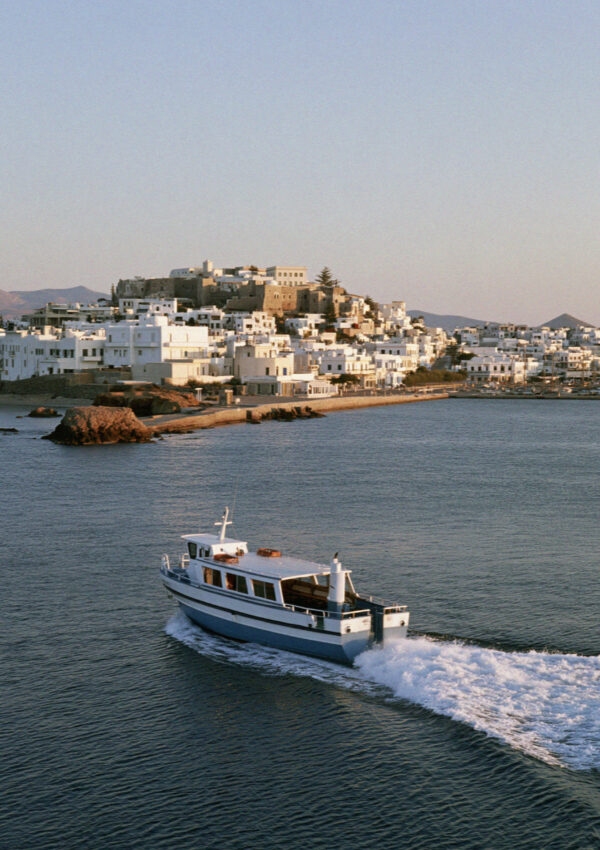
Most people who come to Naxos see the marble doorway on its rock, spend a week on the sand at Agios Prokopios, and go home believing they have seen the island. They have seen the edge of it. Naxos is the largest of the Cyclades and the most fertile, a farming island with a range of mountains down its middle, and the best of it lies a short drive inland: villages paved in marble, statues lying unfinished where the sculptors left them, a summit with half the Aegean spread out below.
I had about three days here in early October, moved my onward ferry to get them, and would happily have taken a fourth. This is my list, with the hours, the prices and what to know first. For the island as a whole, start with my complete guide to Naxos.
What to book before you come
Three things I would book ahead, because the guided walks and the boats are small and fill up.
Mount Zas with a guide
Up to the highest point in the Cyclades with someone who knows the path and the cave.
Koufonisia and the Rina cave by boat
A full day out to the small islands to the east, with swims in the clearest water around Naxos.
Paros and the blue lagoon by boat
Across the strait for the day, with swim stops on the way and time on Paros.
Each button opens GetYourGuide in a new tab, so this page stays open. Booking through them supports the blog at no cost to you.
Watch the light at the Portara
The Portara is the great marble door frame on the islet of Palatia, a short causeway walk from the ferry quay. It is the entrance to a temple begun around 530 BC under the tyrant Lygdamis and never completed, probably abandoned when he fell from power a few years later. It is said to face Delos across the water.
It is free, always open and floodlit after dark. There is a low fence, so you look rather than touch. Sunset is when the crowds come. Dawn is the better hour. I went down on my last morning and had it nearly to myself, nearly to myself.
Walk the Kastro after dark
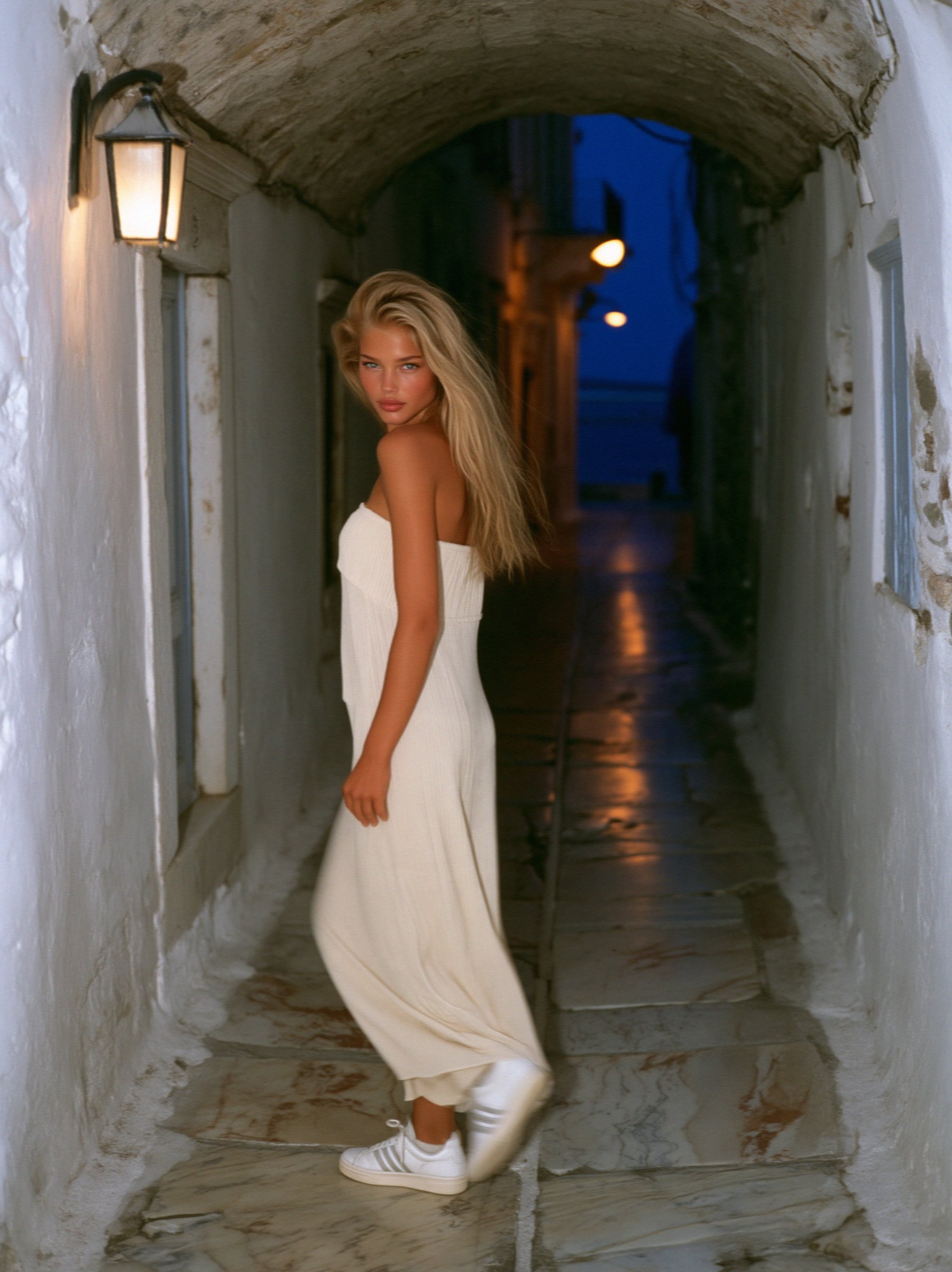
Above the harbour sits the Kastro, the walled quarter the Venetian Marco Sanudo built after 1207, when he made Naxos the seat of his Duchy of the Archipelago. By day it is quiet lanes and coats of arms over doors. In the evening, when the little shops and workshops switch on their lamps, it becomes the most atmospheric walk on the island.
Go in from the old market quarter below and simply keep climbing. You will get lost, and you should. Look for the Catholic cathedral, the old Ursuline convent, the old Catholic school of commerce where Nikos Kazantzakis studied briefly as a boy, and the Glezos tower on the walls. My guide to Naxos Town takes the quarter lane by lane.
The archaeological museum
Know this before you go: the museum’s main building in the Kastro is shut for a long rebuild. What you can visit is a small temporary exhibition in the former Ursuline convent, now the St Ursula cultural centre, which amounts to about one room of Cycladic figurines and pottery.
It is still worth half an hour. The figurines are the flat, folded-arm shapes of the early Bronze Age, and they explain a good deal about this island’s love of marble. Entry costs nothing, and the doors are open from 09:00 until 14:00 on every day except Tuesday.

Drive the mountain villages
If you do one thing away from the coast, make it this. A road climbs out of town through the Tragaea valley, all olive groves and stone terraces, to Halki, Filoti and Apeiranthos. Halki is neoclassical and a little grand, Filoti is the biggest village on the island, spread over the lower slopes of Zas, and Apeiranthos, about 600 metres up, is built almost entirely of marble.
A car is the easy way. The KTEL bus runs the same road from the port, but check the last bus back before you commit. The full route is in my guide to the mountain villages of Naxos.
Find the kouros in the garden
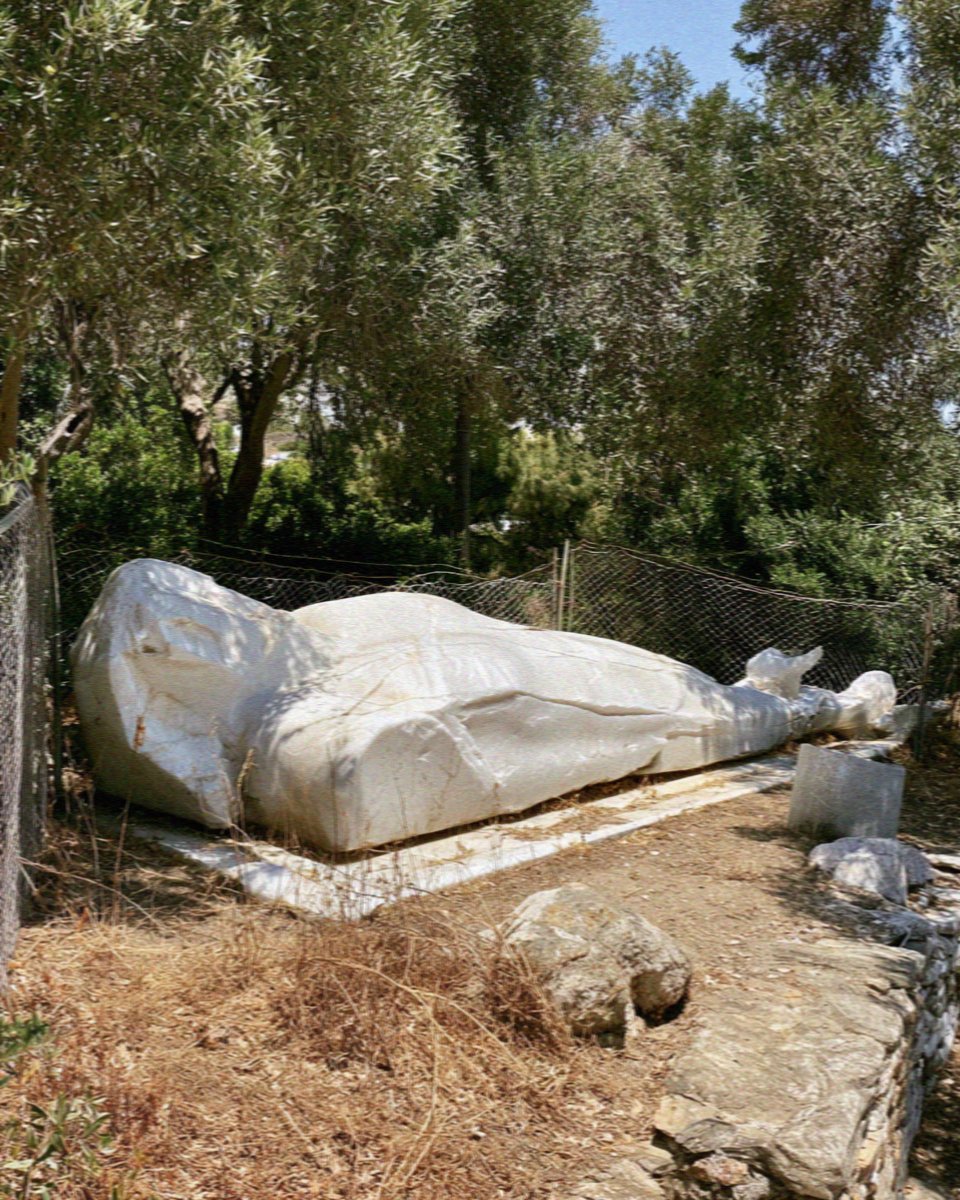
Near Melanes, in the hills east of town, a marble youth close to five metres long lies face up in a garden among olive trees. He was cut in the 6th century BC in the quarry at Flerio and left behind when his feet broke. A second, equally unfinished, lies higher up in the quarry itself, along a short, rough path.
Neither has a ticket, a gate that shuts or, most of the time, a crowd. I came to the garden on the afternoon of my Zas climb, and he is the thing from Naxos I have thought about most since.
Climb Mount Zas
At 1,004 metres, Zas is the highest summit in the Cyclades. The usual route starts at the spring of Aria above Filoti and passes the cave where Zeus was supposedly hidden as a baby on the way up. From the spring it is roughly a three-hour round trip, a little less if your knees are good on the way down.
The path is steep and stony and has no shade, which makes it a spring or autumn walk, or a first-light start in summer. I went up from the spring, and from the top had Paros, Ios and Amorgos all around me. Both routes, the gentler one included, are in my guide to hiking Mount Zas.
The Temple of Demeter
On a low rise near Sangri, about half an hour’s drive from town, stands a small temple from around 530 to 520 BC, made entirely of marble, roof tiles and all. Part of it has been put back up from its original blocks, and because a Christian basilica was later built over it, you see two religions in the same stones. A small site museum holds the excavated pieces.
It is open 08:30 to 15:30 except on Tuesdays, and costs 5 euros, or 3 reduced. Go in the morning, before the hillside bakes, and pair it with Halki, which is on the same road.
A kitron tasting in Halki
Kitron is the island’s own liqueur, distilled from the leaves and fruit of the citron tree. It comes in three styles: green, the sweetest and lightest; clear, in between; and yellow, the strongest. In Halki, the Vallindras distillery has made it since 1896, and you can wander in, look at the old copper stills and taste all three for free. There is no formal tour.
A stranger on my first evening told me green was the only one worth ordering. I tried all three at Vallindras and preferred the yellow, which is not a drink for the faint-hearted.

A long beach day on the west coast
South of town the west coast is one long run of sand: Agios Georgios at the edge of town, then Agios Prokopios, Agia Anna, Plaka with around four kilometres of beach, Orkos and Mikri Vigla. A bus runs down it from the port.
On my first afternoon I walked out to Agios Prokopios and swam, in the first week of October, in water warmer than the evening air. From mid-July to the end of August the meltemi funnels hard through the channel between Naxos and Paros and the west coast can be very windy for days on end. Choose your beach by the forecast; my guide to the best beaches in Naxos says which ones hold up.
The giant at Apollonas
At the northern tip of the island, in an ancient quarry just above the fishing village of Apollonas, lies the largest of the Naxos kouroi: about 10.7 metres long and some 80 tonnes, bearded and never finished. Nobody can agree whether he was meant to be Dionysus or Apollo.
Apollonas is a little over 30 kilometres from town by the north-coast road, and further, and slower, if you come over the mountains. I would make it the end of a village day, coming down through Koronos for a late lunch by the water.
A boat to the Small Cyclades
East of Naxos lie the Small Cyclades, Koufonisia, Iraklia and Schinoussa among them, low, quiet islands known for their clear, pale water. Fast boats reach Koufonisia in about 35 to 45 minutes. The Express Skopelitis, the slow and much-loved local boat, takes around two and a half hours, calling at Iraklia and Schinoussa on the way, and sails from the marina next to the ferry quay.
The catch is that the timetables rarely allow a same-day return. In season, the organised day boats from Agia Anna are the simple answer; otherwise, go for a night. The options, with Paros and the Delos cruise, are in my guide to day trips from Naxos.
What not to plan around
The museum is a single room for now. The ticketed archaeological sites close on Tuesdays, so do not leave the Temple of Demeter for the last day of your trip and discover that the hard way. The final village bus back to town leaves earlier than feels reasonable. In July and August the wind can cancel small boats and spoil the west-coast beaches for days at a time. And most beach hotels close from roughly November to April, which makes a winter visit a walking and village trip rather than a swimming one.
Frequently Asked Questions
What is Naxos best known for?
Its marble and its unfinished statues, its farming and its long sandy west coast. Visitors come for the Portara, the Kastro, the mountain villages, the kouroi, Mount Zas and kitron.
Is the archaeological museum in Naxos open?
Only in part. The main building is shut for works, and a single room of Cycladic figurines and pottery is on show in the former Ursuline convent, with no charge, every day but Tuesday from 09:00 to 14:00.
Is the Portara free to visit?
Yes. The Portara stands on the islet of Palatia, a short causeway walk from the harbour, with no ticket and no closing time.
How many days do you need in Naxos?
Three days covers Naxos Town, a day in the mountain villages and a day on the west-coast beaches. With four or five you can add Mount Zas, the giant at Apollonas or a boat to the Small Cyclades.
Do you need a car in Naxos?
You can manage without one in town and along the west coast. The villages, the kouroi, Apollonas and the far south are far easier with a car. For the villages, the kouroi, Apollonas and the far south, a car makes everything easier.
Read also: Naxos Town: the Portara, the Kastro and the Old Market | The Mountain Villages of Naxos: Halki, Filoti, Apeiranthos and the Kouroi | Victoria’s Complete Guide to Naxos