I came into the light rather than out of it, which somehow seems the right way to arrive at an evening in Venice. It was late afternoon, that hour when the sun stops climbing and simply leans, and the whole city turned the colour of a coin left too long in a warm pocket. I had been walking without much purpose along the edge of the water near the Fondamente Nove, and the lagoon had gone to hammered gold, so bright in places that I had to look at the stones instead. The stones were gold too. Even the shadows had a warmth in them, as though the day were reluctant to let go and was pressing its cheek to everything before it left.
It was then, on an impulse I did not stop to examine, that I stepped down into a gondola. It is an unfashionable thing to confess to, the gondola, the sort of pleasure one is supposed to be too knowing for, and I have never quite understood the embarrassment. We slipped off the bright fondamenta into the hush of the smaller canals, the gold of the afternoon lying flat on the water ahead of us, the gondolier working his single oar with the offhand grace of a man who stopped counting the crossings long ago. For half an hour the city asked nothing of me at all. I trailed a hand in the cool green water and watched the palaces slide past upside down beneath themselves, and I thought, the way one does from down there, that Venice is a place best entered slowly and from below. He set me down a little further along, and I stepped back up onto the stones and carried the quiet of the water with me into the streets.
I turned away from the crowds on purpose. It is a small skill you learn here, the turning away, and it never fails to feel like a secret. Two streets in from the promenade, the noise thinned, then folded up altogether, and I was in the quiet back canals of Cannaregio where the houses lean towards one another over the water like old friends sharing something they would rather not say aloud. Washing hung between windows, still and pale. A cat considered me from a doorstep and decided I was not worth the effort of standing. The water in these narrow rii is a different water entirely from the great glittering lagoon, darker, greener, patient, and it held the buildings upside down so perfectly that I stopped once just to watch a reflected shutter swing when nothing above it moved.
Then the bells. They came from somewhere I could not place, one church answering another, and then a third joining a beat late as though it had been dozing. I stood in a small campo I did not know the name of and let them go over me. There is a particular loneliness that is not sad at all, and the bells always seem to find it in me and sit with it for a while. When they stopped, the silence afterwards was thicker than the silence before, the way a room feels fuller once someone has left it.
There was a church at the edge of that campo, its door standing open the way they sometimes are at this hour, giving out a breath of cool stone and old wax. I went in, because I always do, because it is a thing my hands seem to know how to do before I have decided anything. It was almost dark inside, one lamp burning red near the altar and a rack of candles by a side chapel, most of them unlit. I put a coin in the box and lit one from the single flame already going, and I watched it take. The small business of it, the wick catching, the flame steadying, the tiny warmth against my fingers, has always moved me more than I can quite account for. I stood there a moment and said a quiet thank you into the dark, not for anything in particular, just for the gold on the water and the bells and the cat that could not be bothered with me. A directed thank you, warm, the way you might press someone’s hand without saying why. Then I left the candle to do its slow work and stepped back out into the evening, which had gone violet while I was not looking.
I found a bacaro down a calle so narrow I nearly walked past it, the light from its counter spilling out onto the paving like something spilled and not mopped up. Inside it was all voices and elbows and the good clatter of a place that has been doing exactly this for a very long time. I ordered a spritz, the proper bitter kind, and stood at the counter because that is where you stand, and the barman set down a small plate without my asking. Cicchetti, a few of them, a slice of bread with baccala whipped to a cloud, a half egg with an anchovy laid across it like a comma. I ate slowly and watched the room. An old man beside me was telling a story to no one and everyone, and though I caught only a word here and there, I understood the shape of it, the rising and the pause and the laugh he took for himself at the end. An ombra, a little shadow, they call the small glass of wine, because once the wine sellers moved their barrels to stay in the shade of the campanile. I like that the language here keeps its tenderness even for a glass of wine.
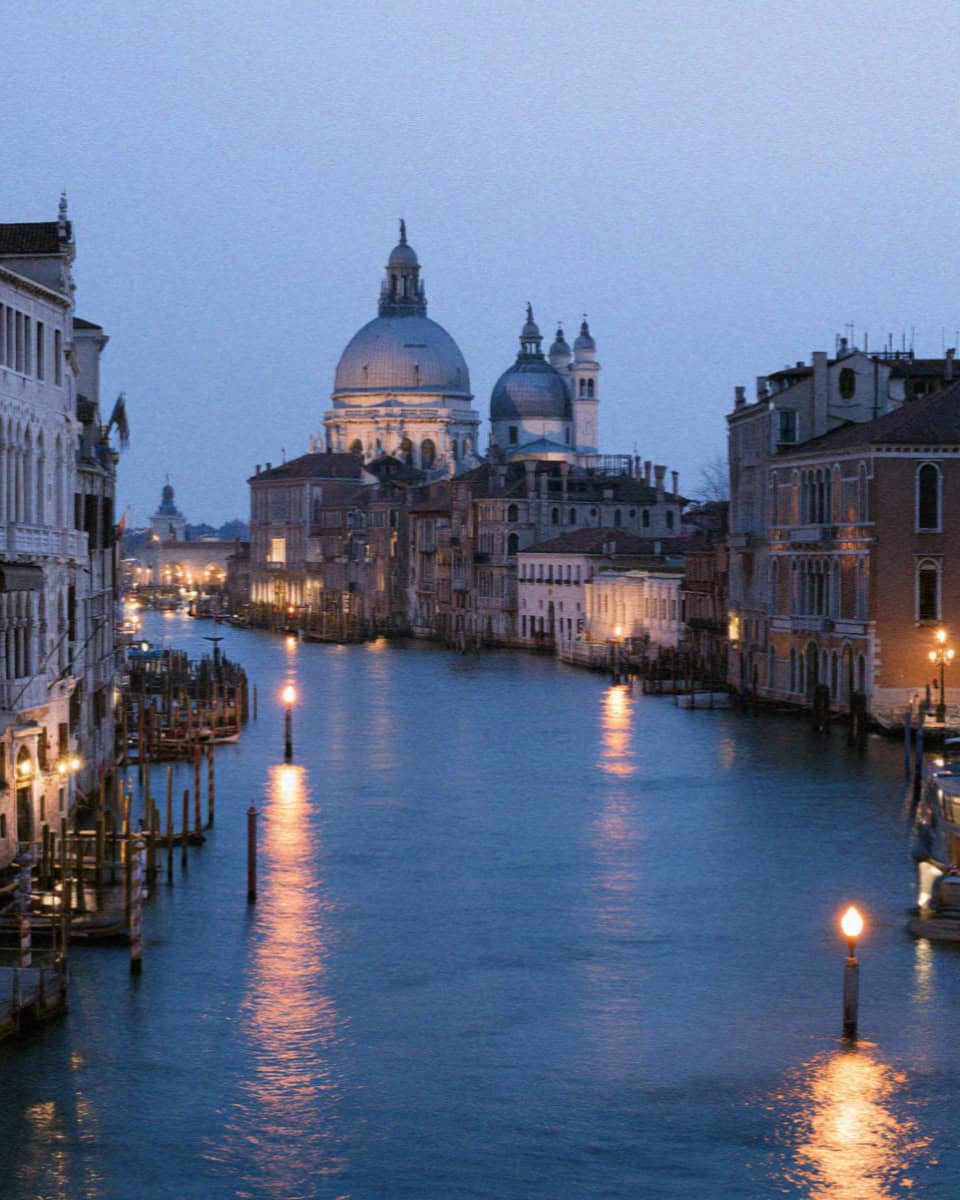
When I came out again, it was fully night. I walked back towards the water, and the reflections had changed their nature entirely. The gold was gone and in its place were long soft ribbons of lamplight, amber and pale green, breaking and mending on the black surface with every small movement of the tide. A boat went by somewhere I could not see, and its wake reached me minutes later, setting all the reflected lamps swaying at once, and then a gondola came out of a side canal, empty, the gondolier taking it home, standing very upright and unhurried, and the only sound was the single push of his oar and the answer of the water. Perhaps he saw me. Perhaps not. He went on into the dark, and the lamps stitched themselves back together behind him.
I stayed out very late, later than I meant to. This is the hour I come back for, if I am honest, the hour when the day-trippers have long since been carried away on their boats and their trains and Venice quietly returns to itself. It seems almost to exhale. The stones give back the day’s warmth. A window closes somewhere above with a soft wooden knock. The city becomes, for a few hours, only itself and the few of us still walking in it, and it may have been my imagination, but it felt kinder for being emptier, the way a person is kinder when they think no one is watching.
I walked back the long way, past the church, though the door was shut now. Somewhere inside, I knew, my small candle was still burning, or had burned down, its little light spent in the dark for nothing anyone would ever see. That thought did not sadden me. It felt, if anything, like the truest thing I had done all day.
The gold, then the violet, then the black water full of lamps.
The bells, and the fuller silence after.
One candle, still going, behind a closed door.
Venice, holding its own hand in the dark.
Planning your own days on the water? My complete guide to Venice has where to stay, where to eat and how to find your way, all in one place.
V.