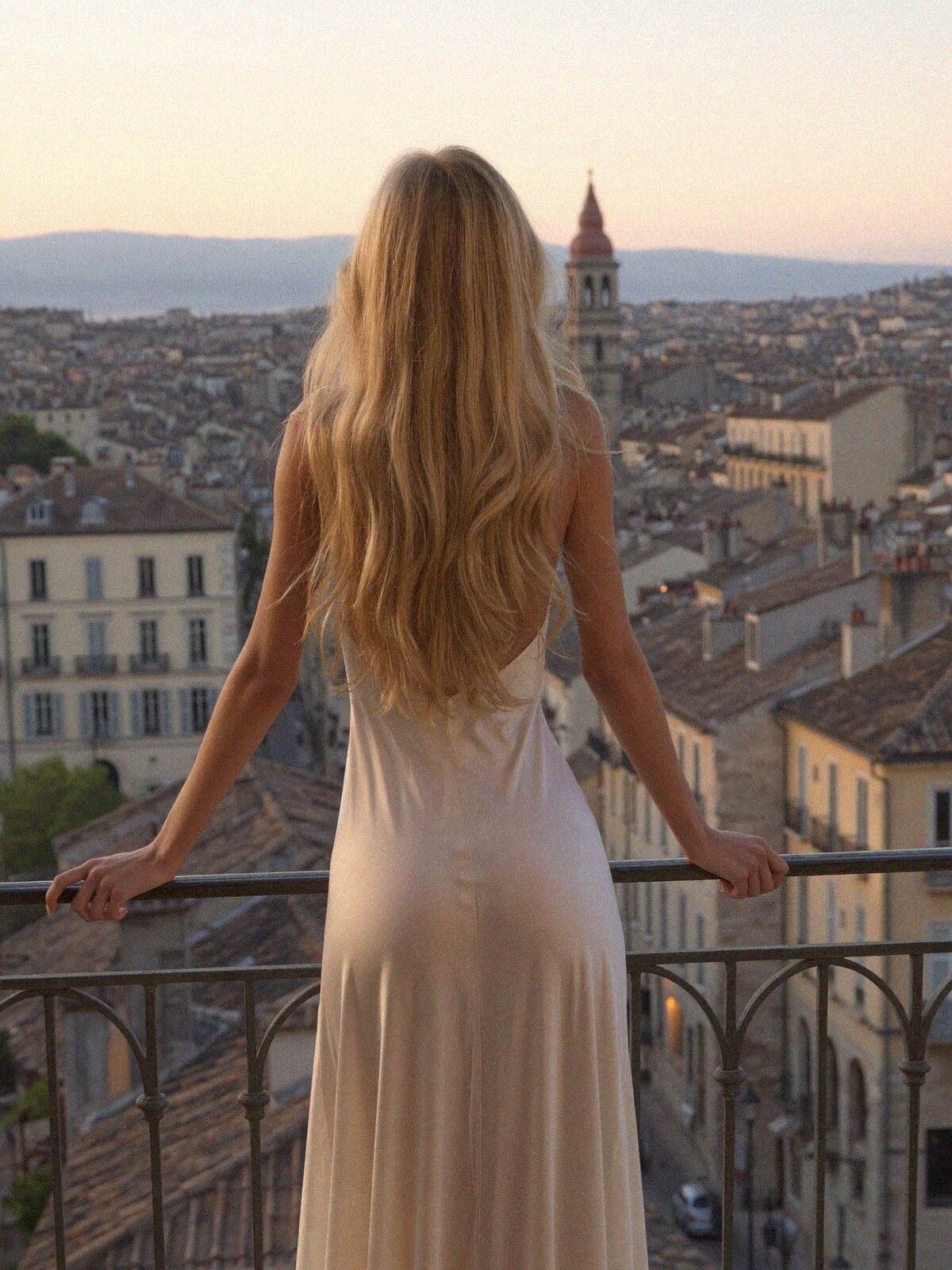
I arrived in Pisa prepared to be unimpressed, which is a foolish way to arrive anywhere. It is the traveller’s small vanity, this wish to be above a thing that everyone else has already loved, and Pisa punishes it gently. You come out of the station, you take a bus or you walk the long straight streets past the shops and the river, and then the wall opens and there it is on its green lawn, leaning as if it had been caught mid-swoon and never quite recovered. And you laugh. I did, anyway. There is no dignified way to meet the Leaning Tower. It is absurd and it is lovely and it knows it, and the only sensible response is to stop pretending you are too serious for it.
By midday the lawn belongs to the crowds, and the crowds are all doing the same thing, which is the funniest part. Hundreds of people with an arm flung out, holding up the tower, pushing it over, pinching it between finger and thumb. A whole field of strangers pressing against an invisible weight, each convinced the pose is theirs alone. I found I could not be cross with it. There is something almost tender in so many people wanting to be, for a photograph, part of something older and stranger than themselves.
But the tower is not the true gift of the Piazza dei Miracoli, and you only learn that if you come early. I went back the next morning before the coaches, when the grass was still wet and the light was the colour of weak tea, and the whole square was nearly empty. Then you see it properly. The cathedral, the round white drum of the baptistery, the campanile leaning off at the edge, all of it laid out on the green like a set of chess pieces someone had abandoned mid-game. Marble that goes gold and grey and rose as the sun decides what it wants to do. In the quiet you understand that the leaning tower was never the point. It was the accident. The point was a city rich enough on ships and sea trade to build all this in praise of something larger than itself, and confident enough to build it beautifully.
My father would have understood Pisa. Willem spent his life in the world of trade and money, and he had a feeling for cities that had once been powerful and were now merely lovely. He never lectured, but he taught me things sideways, and one of them was this: that great wealth places a person under a very bright light, and the only dignity is to decline to perform beneath it. Pisa, once a maritime power to rival any of them, has aged into exactly that grace. It no longer performs. It simply is, on its green lawn, leaning, keeping its cathedral for the quiet ones who arrive at dawn.
The train to Lucca
Lucca is a short way up the line, and I recommend the train not for speed but for the small ceremony of it. You leave one city and are given another, and in between there is a strip of Tuscan nothing-much, back gardens and olive trees and washing on lines, that lets the first place settle before the second begins. I like a journey that gives you time to change your mind about where you have been.
And Lucca is the antidote to Pisa, though I do not think it means to be. Where Pisa hands you its miracle on an open lawn, Lucca keeps everything inside a wall and makes you come and find it. The walls are the great fact of the place. They are enormous, broad ramparts of brick and grass that ring the whole old town, and somewhere along the centuries, when the walls were no longer needed for war, the people of Lucca did the wisest thing imaginable with them. They planted trees on top and turned them into a park. Now you can walk or cycle the entire circle of the town along the top of its own defences, in the shade of plane trees, looking down into gardens on one side and out to the hills on the other.
I hired a bicycle, of course. Everyone does, and for once the obvious thing is also the right one. There is a particular happiness in circling a town on its ramparts with no purpose but the circling, the same rooftops coming round again, the same bell towers rearranging themselves against the sky. Old men on benches. A woman teaching a child to ride, both of them wobbling. The whole loop takes less time than you want it to, so I went round twice, and would have gone round again if my conscience had not reminded me there was a town underneath waiting to be walked.
My mornings in Lucca began as they always do, wherever I am, before the town is properly awake. I keep a small private ritual with my violin, nothing anyone else need hear, just enough to remember who I am before the day tells me who to be. In a town this quiet the sound seemed to belong, and I would play with the shutters half open onto a lane where the only other early sound was a shop being swept. Then coffee, and then out into the streets before they filled.
The oval and the tower
The thing about Lucca that I keep turning over is the Piazza dell’Anfiteatro. Once there was a Roman amphitheatre here, an oval arena for whatever cruelties Romans wanted watching. The stone was carried off over the centuries, the way old stone always is, and houses grew up around the empty shape of it. And so today there is a piazza in the form of a perfect oval, ringed by ordinary tall houses in ochre and cream, with cafes under the arches and children kicking a ball across the middle. The violence is entirely gone. Only the shape remains, holding the memory the way a dry riverbed holds the memory of water. I sat there a long while with a coffee, thinking about how a place can keep the form of a thing and let go of its meaning, and become, in the letting go, better than it was.
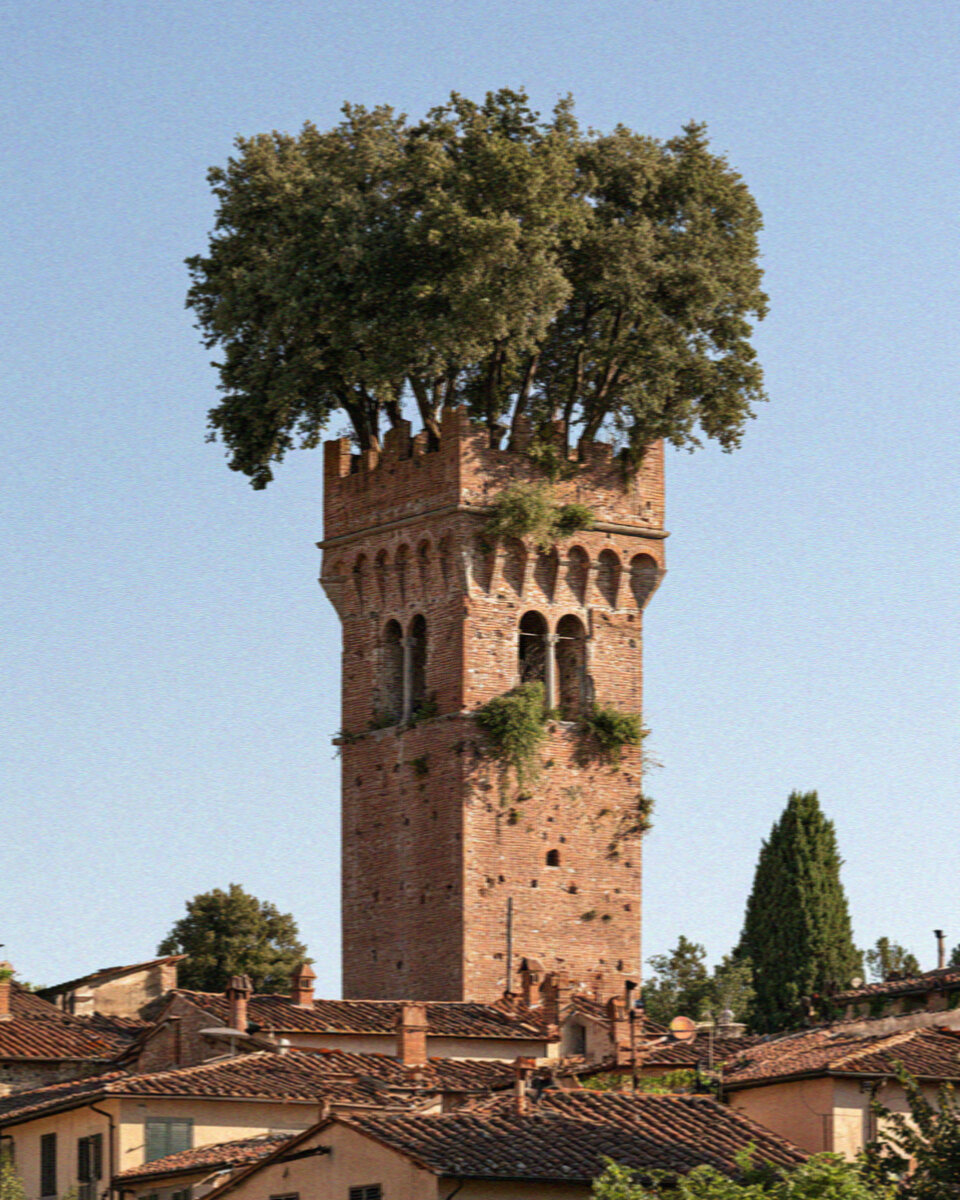
Then the Guinigi Tower, which I had been saving. Lucca once bristled with towers, dozens of them, each family building higher than the next in that old competition of pride and stone. Most are gone. The Guinigi survives, and at the top of it, absurdly, wonderfully, there are trees. A little grove of oaks growing in a garden on the roof, planted centuries ago by a family who apparently decided that a tower was not complete without a wood at the summit. You climb the long turns of the stair, your legs complaining, and you come out into the light to find oak trees and their shade and a bench, as though you had climbed not up but somehow out into open country.
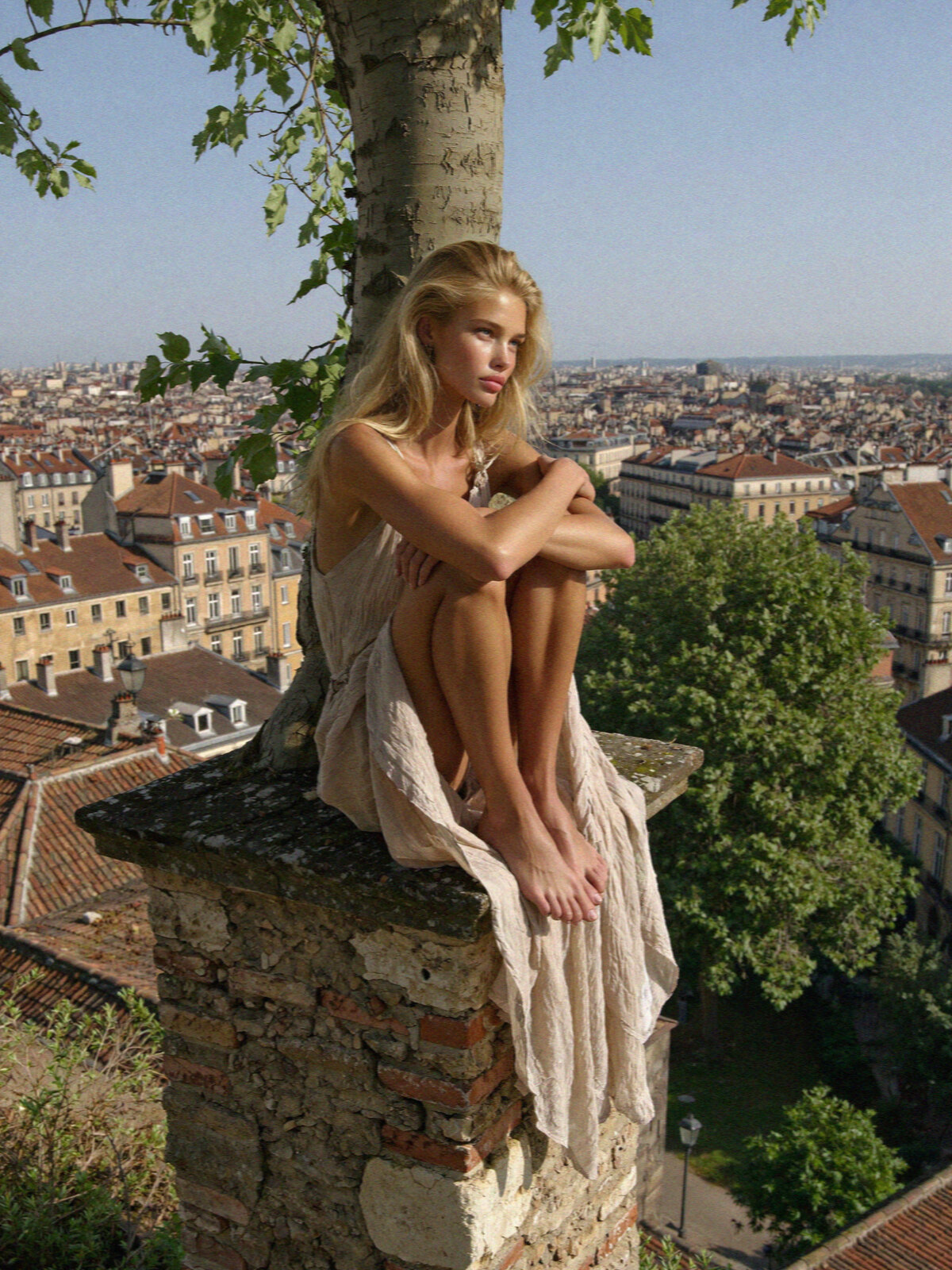
From up there the whole red town lies below you, the roofs all warm terracotta and tumbling into one another, the campaniles rising, the green line of the walls holding it all in, and beyond the walls the hills going soft and blue. I stayed up among the oaks until my legs had forgiven me. There is a peculiar joy in a high garden, in shade that has no business being so far above the ground. The Guinigi family, who built it, were merchants and moneymen too, silk traders grown wealthy, and I liked them for this. Given all that money and all that bright light, they chose to grow a wood in the sky. Not the worst way to spend a fortune. Not the worst way to decline to perform.
A candle, and the gold hour
In the late afternoon I went into San Martino, the cathedral, out of the heat and the light into that cool stone dark that Italian churches keep like a held breath. There is a labyrinth carved by the door, worn smooth by centuries of fingers tracing it, and inside a small marble temple that holds the Volto Santo, the town’s beloved wooden Christ, an old face that has been loved a very long time. I am not one for making a display of these things. But I lit a single candle, as I do, and stood a moment, and said a quiet thank-you that was between me and no one else. For the walls and the oaks and the train that morning. For my father, who taught me how to look at cities. For being, at that particular hour, exactly where I was.
And when I came out the day had turned to gold. This is the hour Lucca keeps for the patient. The stone caught the low sun and gave it back warm, the ochre walls glowing, the swifts turning and screaming over the rooftops the way they do at the day’s end. I climbed back up onto the ramparts and walked a stretch of them slowly as the light went, watching the town below go from gold to rose to grey, the first lamps coming on in the piazzas, someone somewhere practising the piano through an open window. Pisa had given me a spectacle and a laugh. Lucca gave me this, which is quieter and harder to photograph and stays longer.
I think that is the true shape of these two towns held together. One leans out at the world and lets the world come and pinch it. The other keeps its wall around itself and lets you in slowly, tree by tree, tower by tower, until you have circled it enough times to feel you might belong. You need the first to understand the second. You need the crowds and the comedy of the tower to make you grateful, an hour later, for the oval where the violence went out of the stone, and the oaks growing where no oaks should grow, and the gold coming down over a town that never once tried to impress you. If you want the practical side of it, the trains and the ramparts and the towers worth the climb, you will find all of that in my complete guide to Pisa and Lucca. The towns themselves ask only that you slow down, and arrive early, and stay for the gold.
V.