Getting to Assisi is easier than the town’s pink hilltop silhouette makes it look, and once you have arrived it becomes the perfect base for wandering the rest of Umbria. The one thing to understand before you go is that the train station is not actually in Assisi: it sits down in the valley, and the medieval town you have come to see is a climb above it. Sort that out and everything else falls into place. Below I have gathered everything I have learned about arriving here by train, plane and car, the ZTL and parking puzzle that trips up so many drivers, and the day trips that make this corner of Italy worth lingering over. For the bigger picture of how it all fits together, start with my complete guide to Assisi.
Getting to Assisi by train
Here is the detail that catches people out: the “Assisi” railway station is in the valley at Santa Maria degli Angeli, roughly 4 to 5 km below the historic centre. You step off the train, look up, and the town is a pale crown on the hillside above you. From the station you have two easy options. Bus Line C (run by Busitalia) climbs from the station up through the Basilica di San Francesco to Piazza Matteotti at the top of town in about 15 minutes. It costs around EUR 1.30 to 1.50, runs roughly every half hour, and you should buy your ticket before boarding. A taxi covers the same run for about EUR 12 to 15, which is well worth it if you are tired and hauling luggage up to a hotel inside the walls.
The train connections themselves are straightforward, mostly on Regionale services. From Rome (Termini) the journey takes about 2 to 2.5 hours and often involves a change at Foligno, with regional tickets around EUR 12 to 16. From Florence (Santa Maria Novella) allow 2 hours 20 to 3 hours, changing at Terontola-Cortona or Foligno, roughly EUR 14 to 25. From Perugia (Fontivegge) it is a quick 20 to 30 minutes, hourly, for about EUR 3 to 4. Do not let the Foligno change worry you: it is routine, short and well signposted, and Umbria’s regional trains are slow but reliable.
Plan Your Visit to Assisi
A few things I booked and loved. These help support the blog, at no cost to you.
- Where I stayed: search Assisi hotels
- Tickets and things to do in Assisi
- Rent a car to explore the area
- Stay connected: get a travel eSIM
This section contains affiliate links. If you book through them I may earn a small commission, at no extra cost to you.
Getting to Assisi by air
The closest airport is Perugia “San Francesco d’Assisi” (airport code PEG) at Sant’Egidio, about 15 to 18 km away. It handles limited, mostly seasonal routes, so it is a lovely convenience if the timetable happens to suit you but rarely the deciding factor. When there is a flight, the Umbria Airlink bus links the airport to the Assisi and Perugia stations in about 20 minutes for EUR 5.
For most travellers the practical choice is Rome Fiumicino, which has by far the best international connections, followed by a 2 to 2.5 hour onward journey by train or car. If you are coming from the north, Florence works as an alternative gateway. I usually fly into Fiumicino and take the train up, treating the slow roll through the countryside as the gentle start of the trip rather than a chore.
Getting to Assisi by car, the ZTL and parking
Driving gives you the countryside and the day trips, but the historic centre is a camera-enforced ZTL (limited traffic zone), and the cameras are not forgiving. Stray in without authorisation and a fine of roughly EUR 80 to 100 will find you by post weeks later. Hotel guests are usually granted short access to load and unload, and electric vehicles may enter and park free, but otherwise you leave the car below the walls.
The good news is that parking is well organised. The Saba lots run 24/7 at around EUR 1.50 to 2 per hour with a daily cap of roughly EUR 15 to 20. Giovanni Paolo II is closest to the Basilica di San Francesco; Mojano has escalators and a mechanised walkway that carry you up into town; Porta Nuova sits nearest Santa Chiara and also has escalators; and Matteotti is at the very top of town, handy if your accommodation is up there. There are a few free lots further out for the patient. As for drive times, reckon on about 2 hours 15 to 2 hours 30 from Rome, 2 to 2 hours 15 from Florence, and just 25 to 30 minutes from Perugia. If being inside the walls with your own car matters to you, my where to stay guide covers which hotels have their own parking.
Getting around town
Assisi is compact and genuinely walkable end to end, about 20 to 25 minutes from the Basilica di San Francesco at the lower western edge up through Piazza del Comune to Santa Chiara and Piazza Matteotti at the top. But do not underestimate the gradient: this is a steep town of cobbles, stairs and slopes, and it will find any weakness in your footwear. Bring proper shoes and you will be fine. The escalators rising from the Mojano and Porta Nuova car parks take some of the sting out of the climb, and there is no shame in using them. When you have the lay of the land, my best things to do in Assisi maps out how to string the sights together on foot.
The best day trips from Assisi
Assisi’s real gift to a traveller is its position. Umbria is small, and from this one hilltop you can reach a scatter of hill towns, vineyards, lakes and waterfalls in under an hour or two. Here are the trips I keep coming back to, with honest distances and times.
Perugia (about 20 km, 25 to 30 minutes by car, or 20 to 30 minutes by train, hourly, EUR 3 to 4) is the regional capital, all escalators through buried medieval streets, a grand fountain and serious art. It is the easiest half or full day of the lot.
Spello (about 12 km, 15 to 20 minutes by car, or a 10 to 12 minute train hop) is the one I send everyone to first. A rose-pink town tumbling with flowers, famous for its June Infiorata carpets of petals, and small enough to drink in over a slow morning.
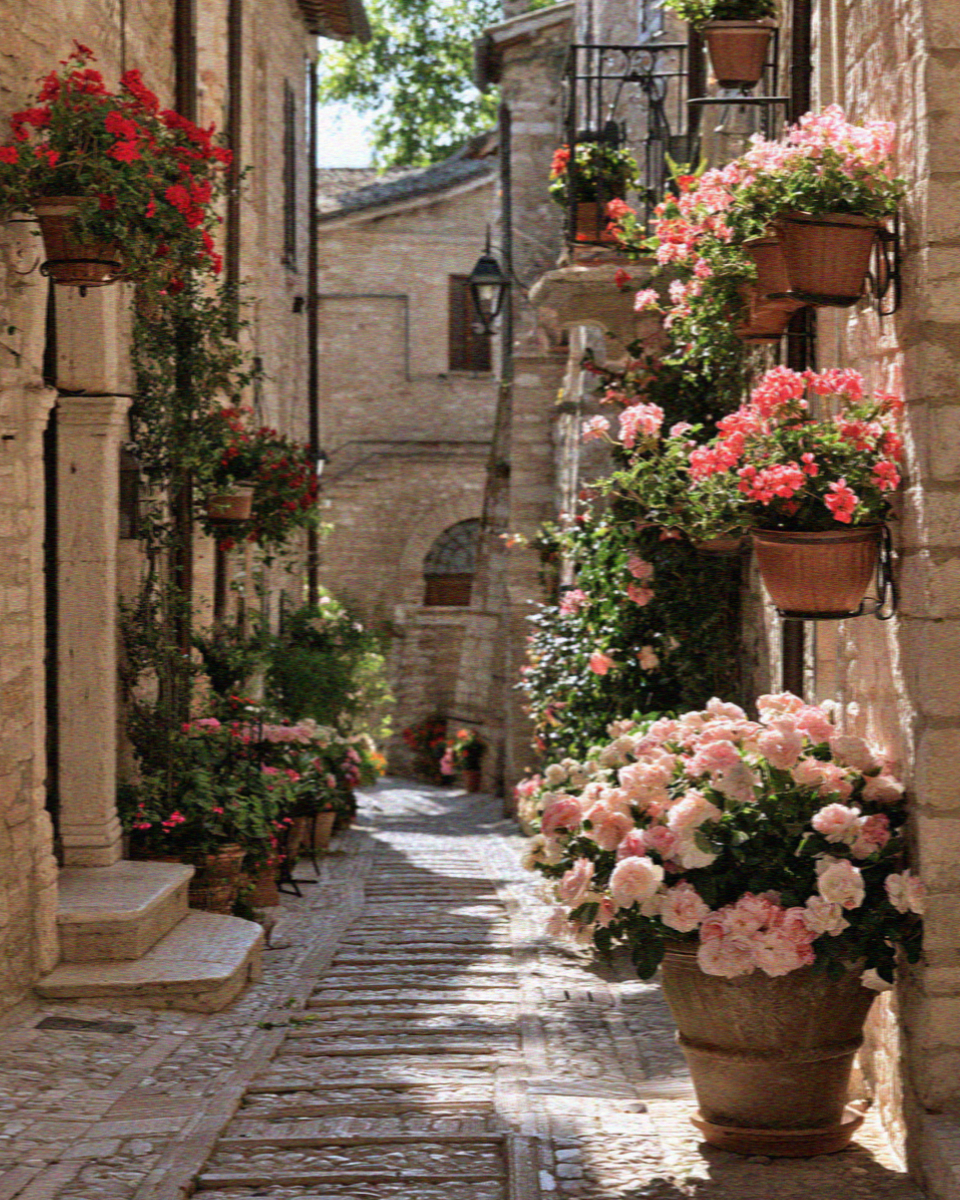
Bevagna (about 25 km, 30 minutes by car) is a quiet, flat-bottomed town with a beautiful square and Roman remains; car or bus is the way in.
Montefalco (about 30 km, 35 to 40 minutes by car) is nicknamed the “balcony of Umbria” for its sweeping views, and it is the home of Sagrantino di Montefalco, one of Italy’s boldest, most muscular red wines. Come for the vineyards and stay for a tasting.
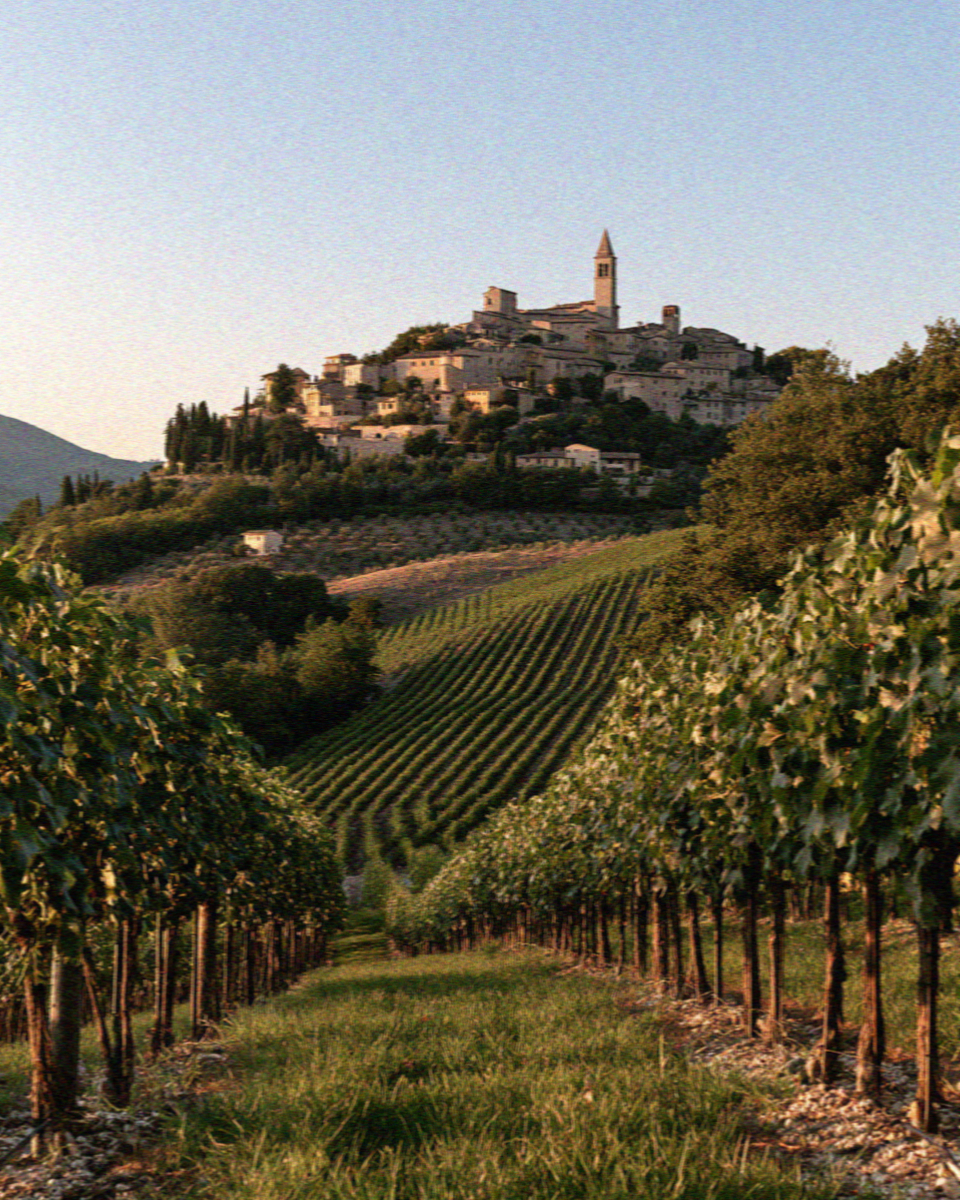
Gubbio (about 50 km, 50 to 60 minutes by car) is severe, grey-stone and gloriously medieval, with a funicular that carries you up Monte Ingino in a little birdcage of a cabin. Spoleto (about 48 km, 45 minutes by car or 40 to 55 minutes by train via Foligno) rewards you with the great Ponte delle Torri striding across its gorge. Lake Trasimeno at Passignano (about 55 km, 50 to 60 minutes by car, or 1 to 1.5 hours by train) is where Umbrians go to swim and eat lake fish in summer. Cascata delle Marmore (about 75 km, roughly 1 hour by car) is a thundering, partly man-made waterfall on timed water releases, so check the release schedule before you set off or you may arrive to a trickle. Further afield, Todi (about 45 km, 45 to 50 minutes) is a serene hill town with a perfect square, and Orvieto (about 80 km, 1 hour 15 by car or 1.5 to 2 hours by train) crowns a tufa cliff with one of Italy’s most dazzling cathedral facades.
If you would rather cluster than dart about, three loops work beautifully. Spello, Bevagna and Montefalco make a lovely wine-and-hill-town car loop in a day. Perugia pairs naturally with Lake Trasimeno. And Spoleto sits close enough to Cascata delle Marmore to combine the two. To weave a day trip or two into a longer visit without fraying the edges, see my Assisi itinerary, and for choosing when to come, my best time to visit Assisi is the place to start.
Frequently Asked Questions
How do I get from Assisi train station to the old town?
The station is down in the valley at Santa Maria degli Angeli, about 4 to 5 km below the centre. Take Bus Line C, which runs to Piazza Matteotti in around 15 minutes for EUR 1.30 to 1.50 (buy your ticket before boarding), or a taxi for roughly EUR 12 to 15.
Can I drive into the centre of Assisi?
Only with authorisation. The historic centre is a camera-enforced ZTL with fines of around EUR 80 to 100 for unauthorised entry. Hotel guests usually get short access to load and unload, and EVs may enter free, but most visitors park in the Saba lots below the walls (Giovanni Paolo II, Mojano, Porta Nuova, Matteotti) and walk or ride the escalators up.
What is the best day trip from Assisi?
For a first, easy outing I would choose Spello, just 12 km away and reachable by a 10 to 12 minute train. If you have a car and a day to spare, the Spello, Bevagna and Montefalco loop through the Sagrantino wine country is hard to beat.
Whichever way you arrive, let the getting-there be part of the pleasure rather than a hurdle. Once you are settled, my complete guide to Assisi ties the whole trip together, my best things to do in Assisi fills your days inside the walls, and my Assisi itinerary helps you decide when to stay put and when to head out into the Umbrian hills. This small town gives back far more than it asks, and the roads and rails around it are simply an invitation to see more.