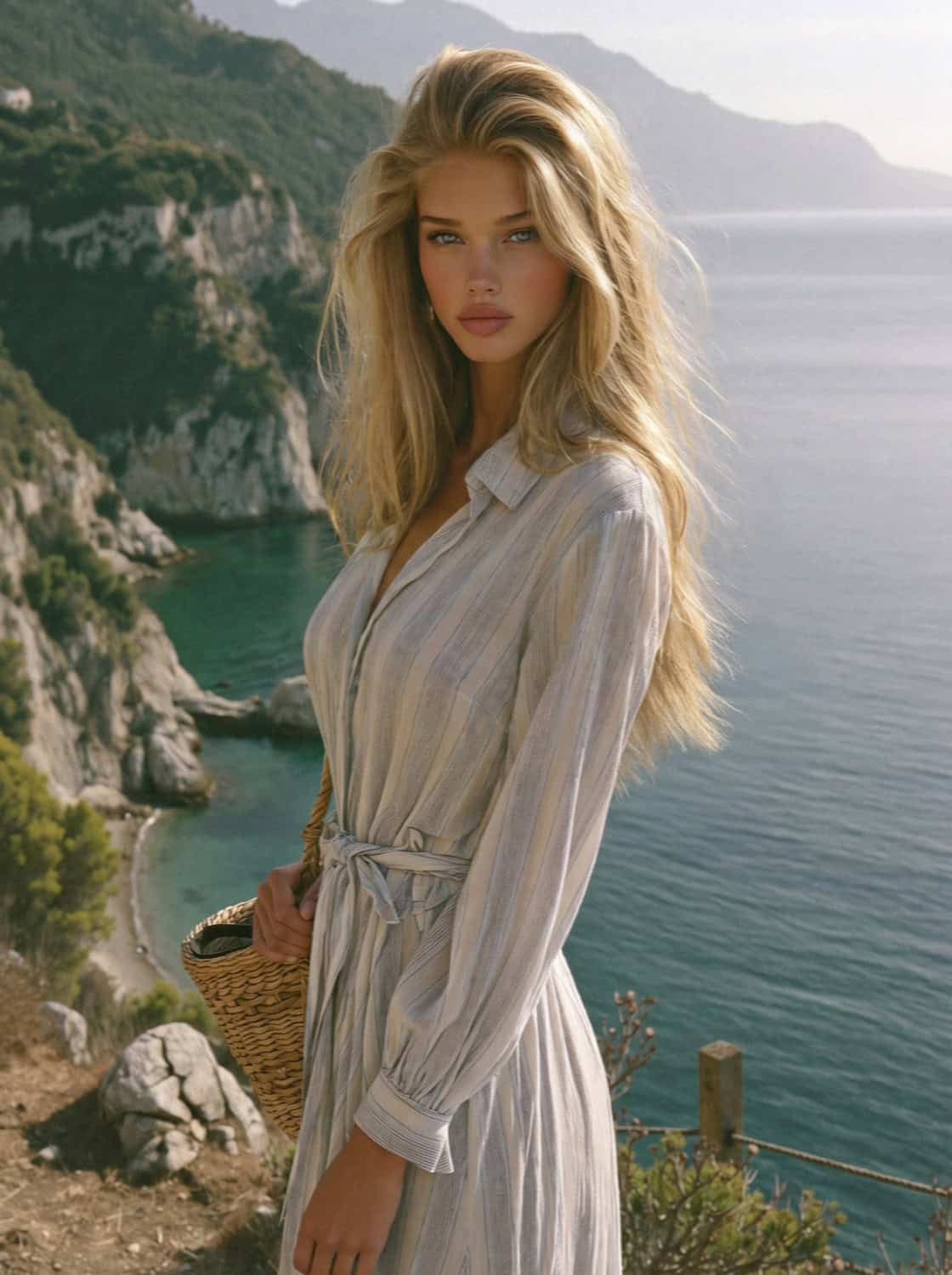
When I woke this morning, I decided not to chase anything. The sea would still be there tomorrow, the harbour would still be beautiful, and the paths would wait as they always have. Some places ask you to see more. Portofino, I think, sometimes asks you to slow down enough to notice yourself. So today began with the quiet luxury of taking care of myself before I gave the day to anywhere else.
There was still a faint memory of salt on my skin from the day before, that particular tightness the sea leaves behind, and I was in no hurry to wash it away. The figure beneath the water had stayed with me through the night, hands open, patient, and I lay for a while watching the light move across the ceiling before I let the morning properly begin. There was no boat to catch today, no tide to keep. For once the day asked nothing of me at all.
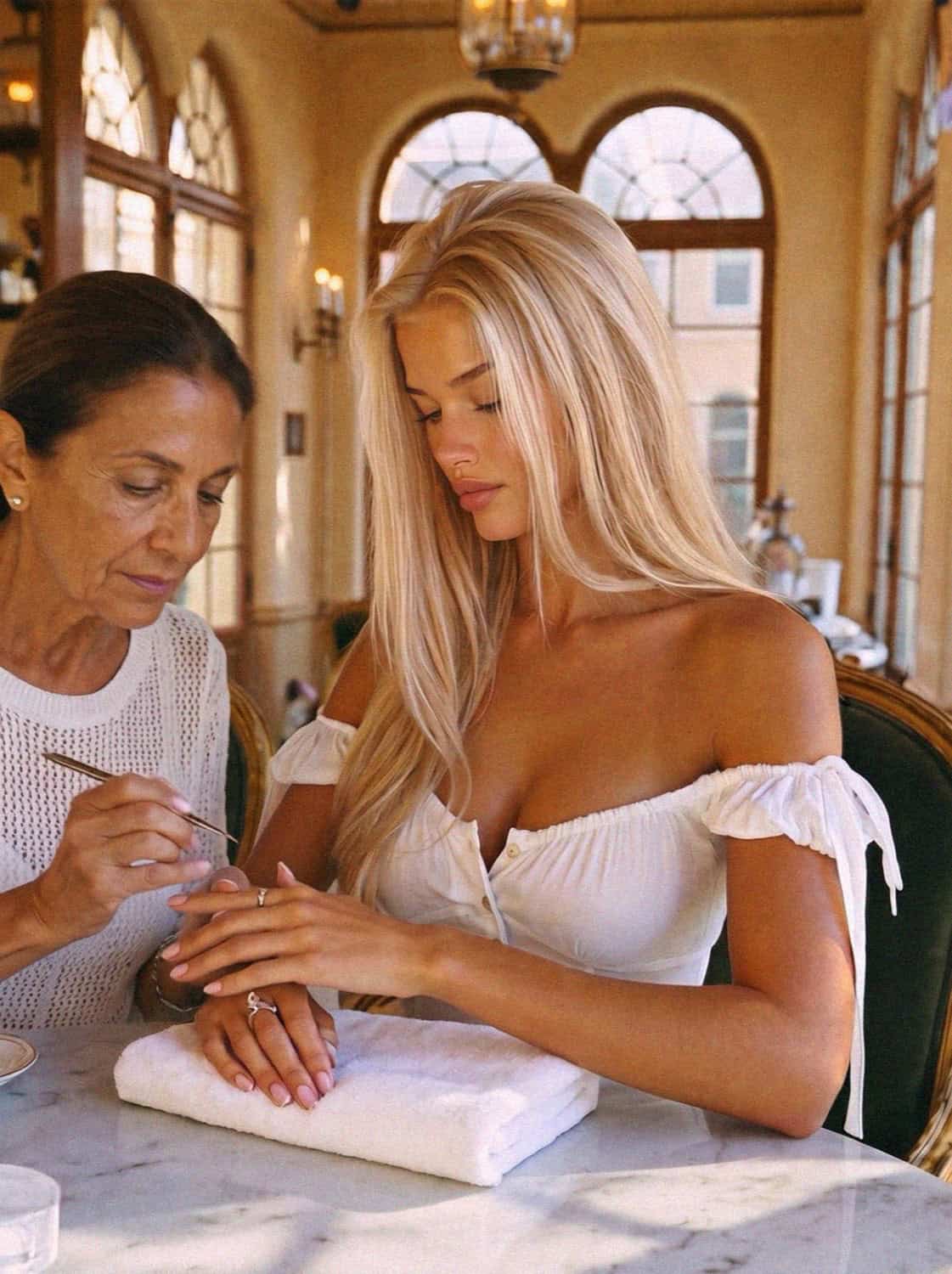
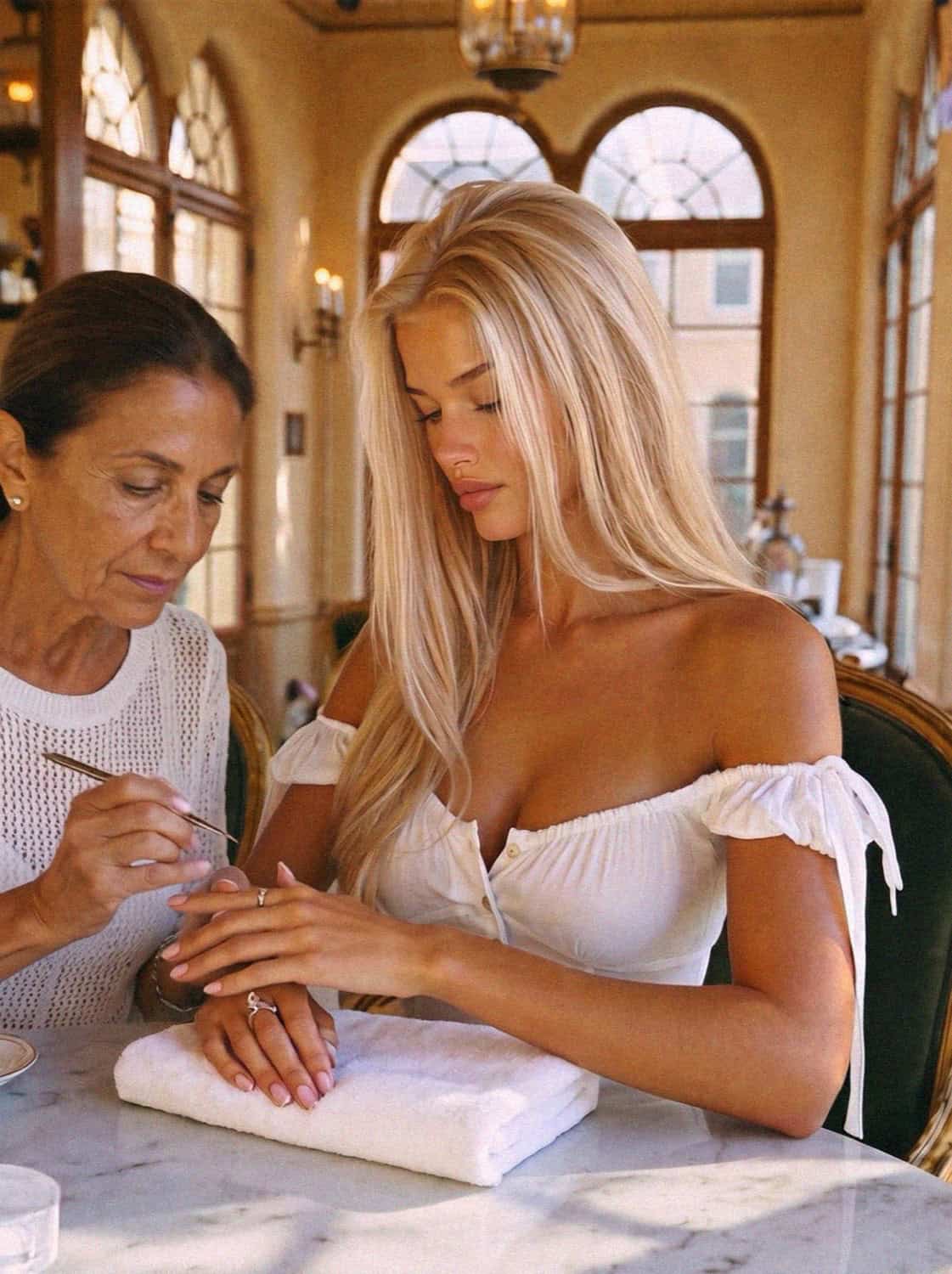
So I gave the first hours to myself. There is a small salon a few streets back from the water, and I went for the simplest of reasons: a trim, my nails, my feet, an hour of being quietly looked after while the town carried on with its morning outside. I have travelled long enough to know these little rituals matter more than we admit, that a slow morning is not time lost but time returned. Afterwards I let a coffee go cold twice at a table in the sun. By the time I stepped out to begin walking I felt quietly put back together, which is a rarer feeling than it should be, and exactly the one the day seemed to be asking of me.
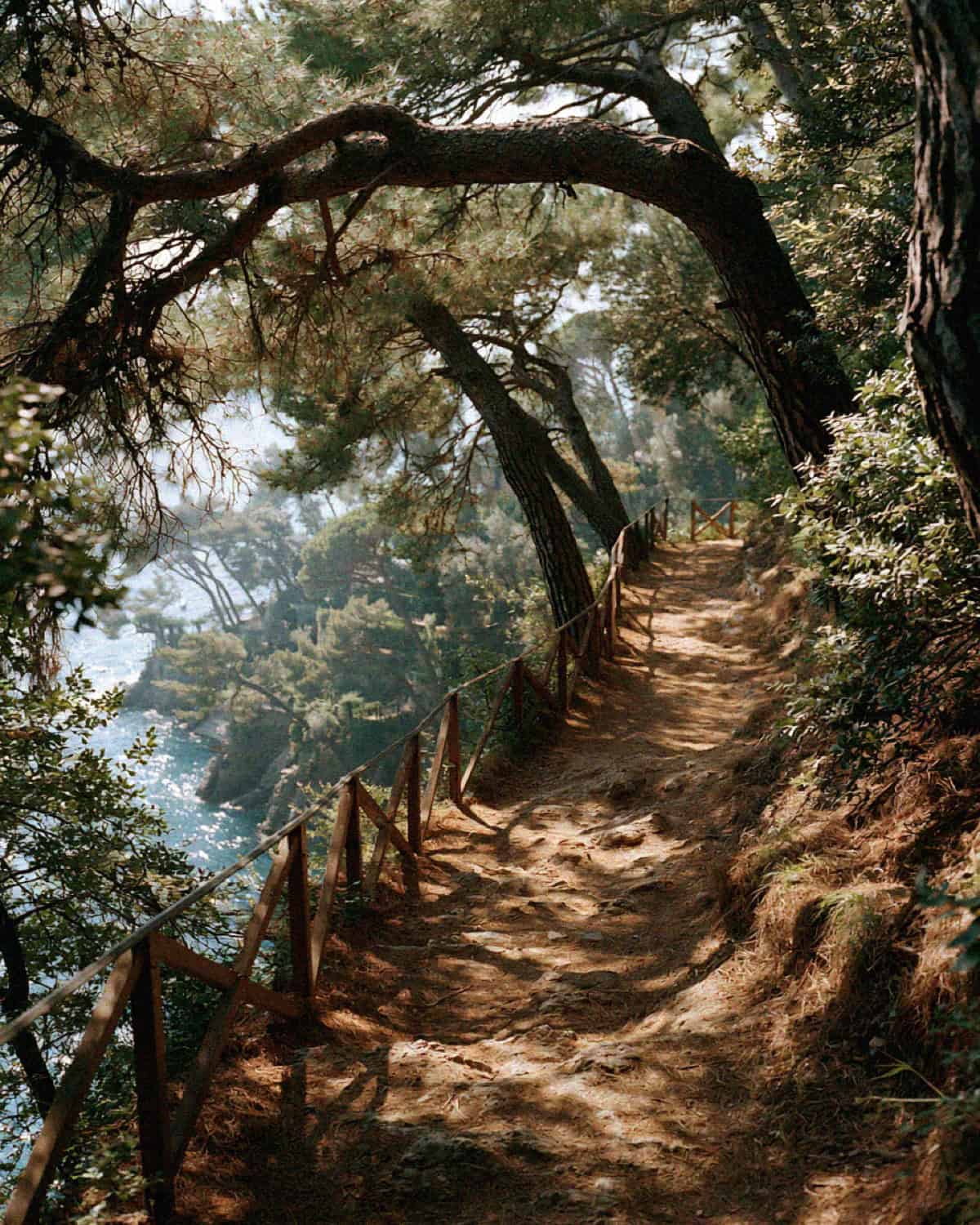
Then I walked. Behind Portofino the path climbs gently through the umbrella pines towards the old lighthouse at the very tip of the promontory, the Faro. It is not far. Nothing here ever is. But the going is slow because the sea keeps interrupting you, appearing suddenly through a gap in the trees so blue and so far below that you have to stop simply to make sure it is real. The stone underfoot is worn smooth by everyone who has come this way before, and the pines lean over the water as though they, too, want a better look.

The lighthouse itself is a small, plain, honest thing standing at the place where the land finally admits it can go no further. I sat on the rocks beside it for a long while. There was a couple further along who had clearly stopped talking some minutes before I arrived, not from any coldness but because the view had done to them what it does to everyone. Ahead there was only the sea, folding and unfolding, reaching all the way to the pale line where it finally gives itself up to the sky. I understand why they light these places at night. Some points on the earth feel as though they should never be entirely dark.
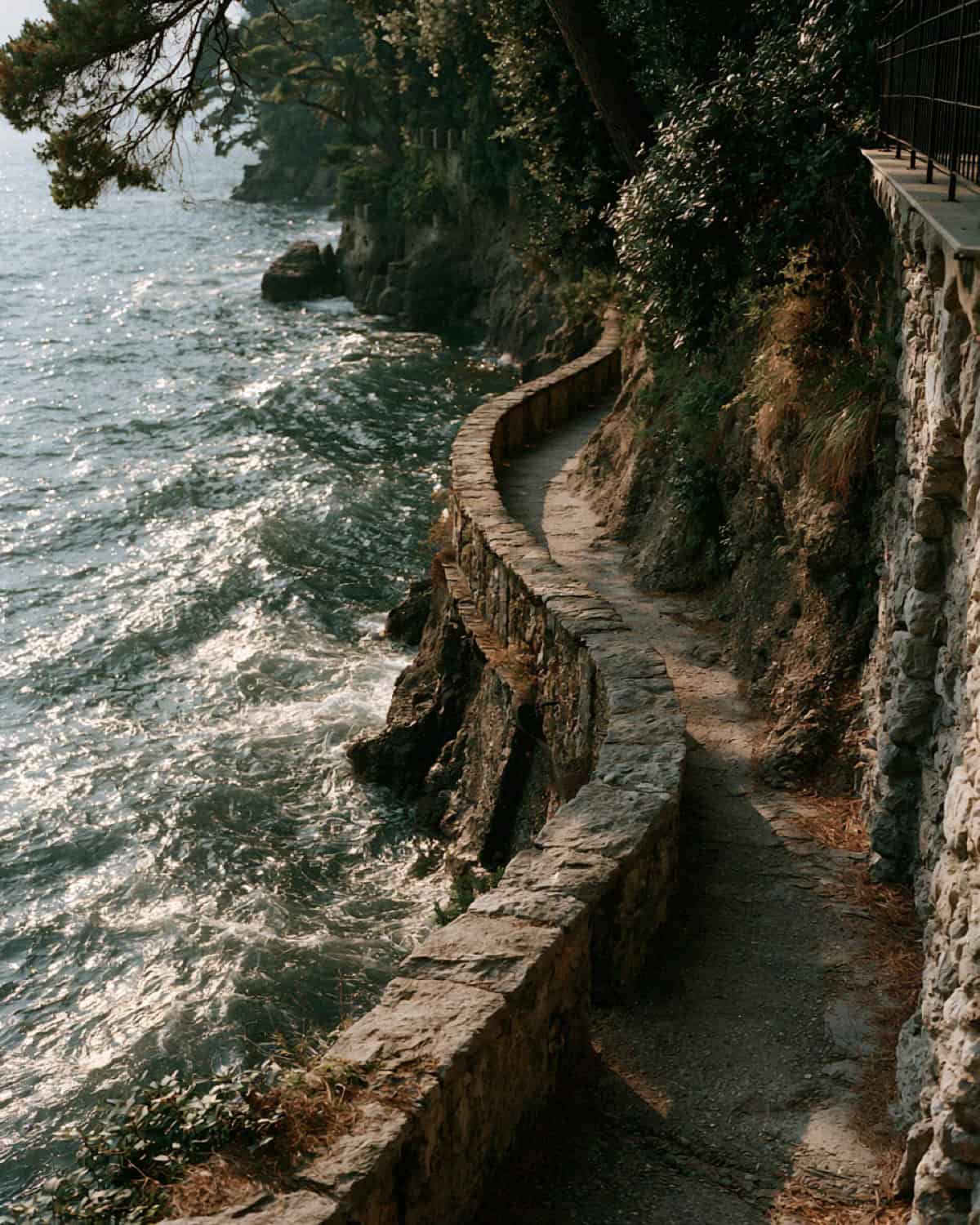
In the afternoon I followed the coast the other way, along the Passeggiata dei Baci, the Walk of Kisses, the seaside path that ties Portofino to Santa Margherita with a low stone wall and a long ribbon of glittering water. I have thought about the name more than once since. It is easy to smile at, and easier still to understand once you are on it, with the sea breathing beside you and the light breaking across it in bright pieces. It is the kind of path that makes people reach for a hand without ever quite deciding to.
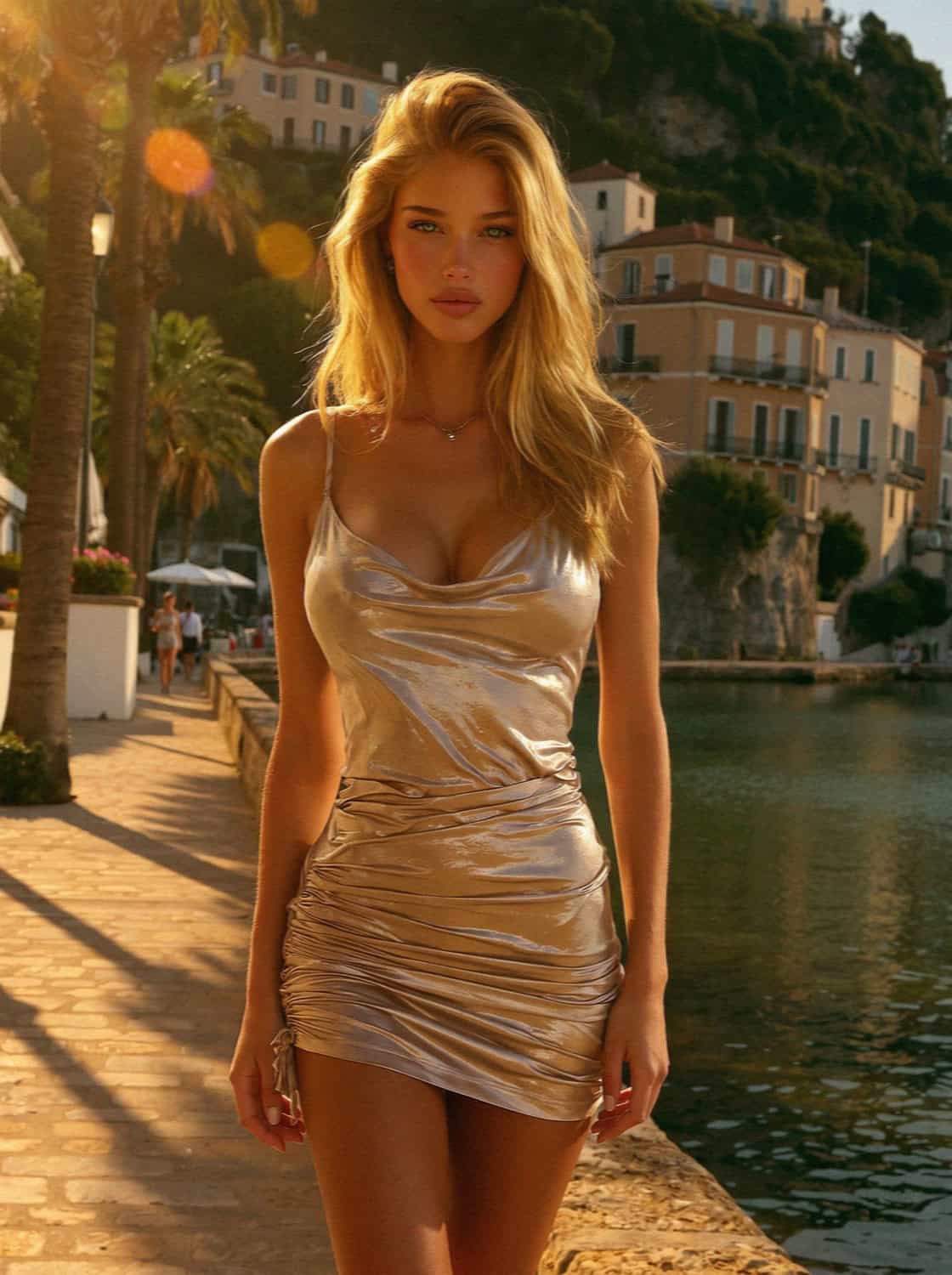
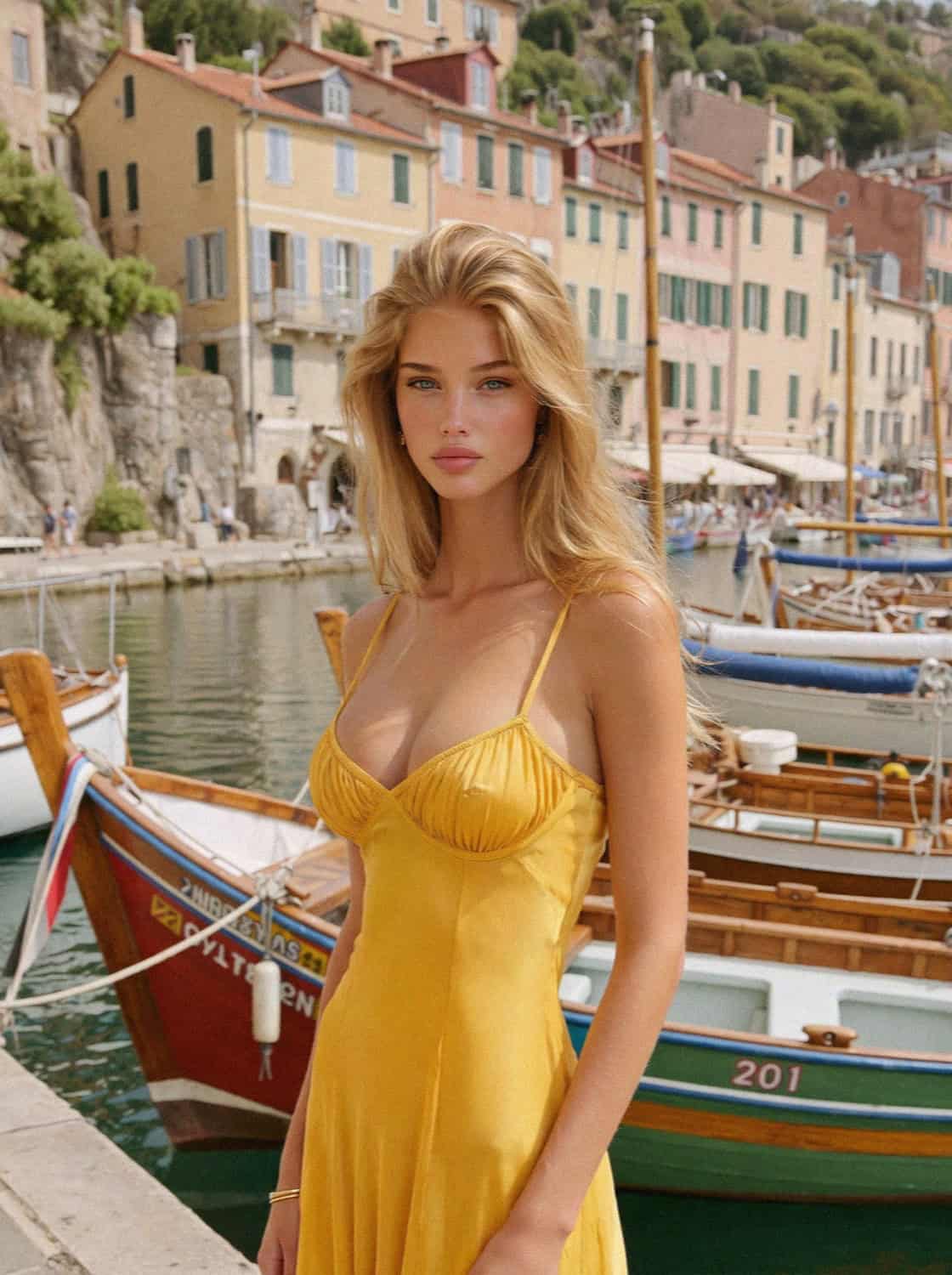
Santa Margherita, when I reached it, moved to a different rhythm entirely. Where Portofino is a jewel kept in a small box, Santa Margherita simply gets on with being a town. Palms line the belle époque seafront and the villas behind them wear their faded pinks and yellows with the ease of houses that have never once doubted they are beautiful. Boats knocked softly against the moorings. Children argued over gelato. An old man read his newspaper with the particular concentration of someone who has read it in the same chair for thirty years. No one here was performing. It was a relief I had not realised I needed, to stand in a lovely place that was not the least bit interested in whether I found it lovely.
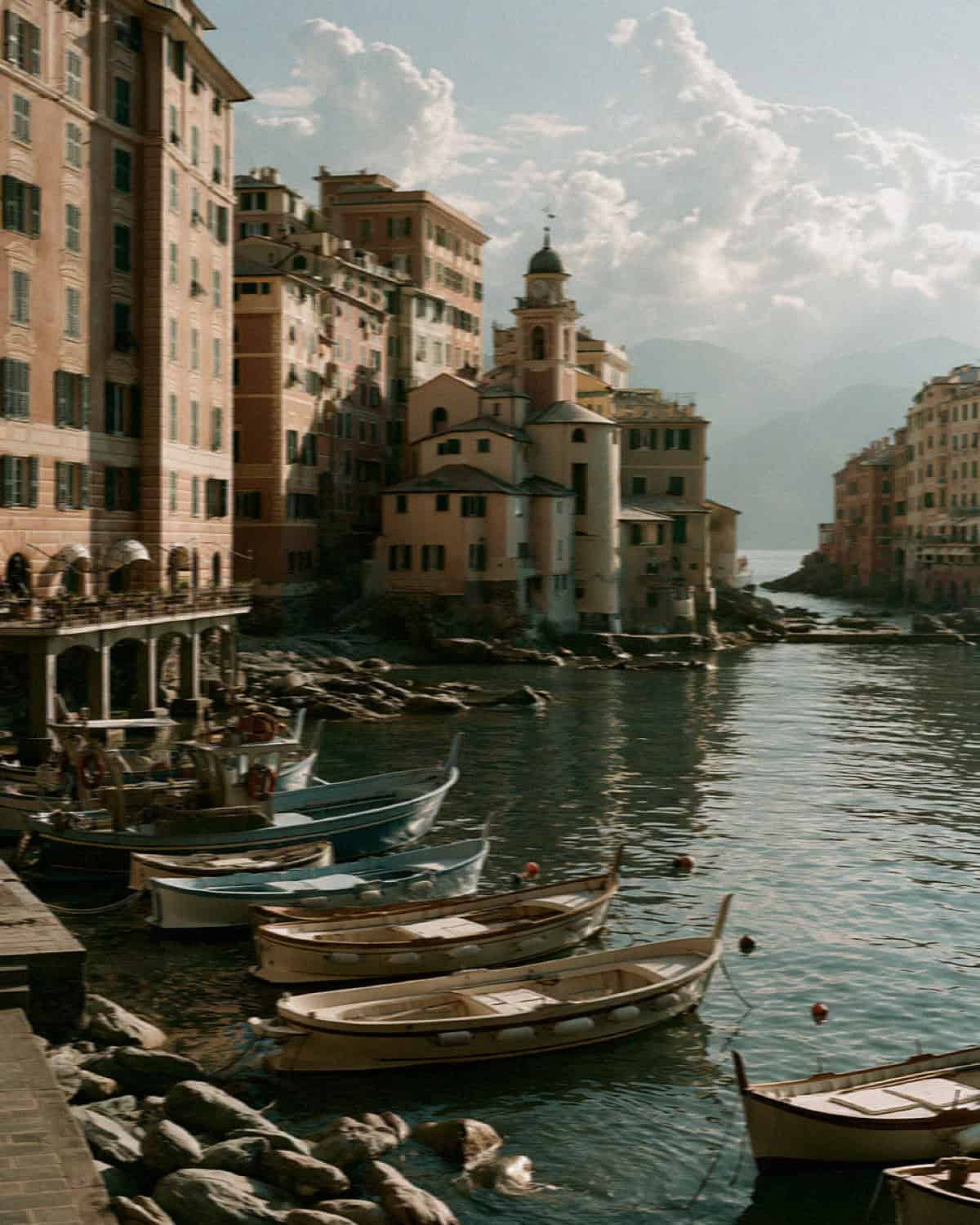
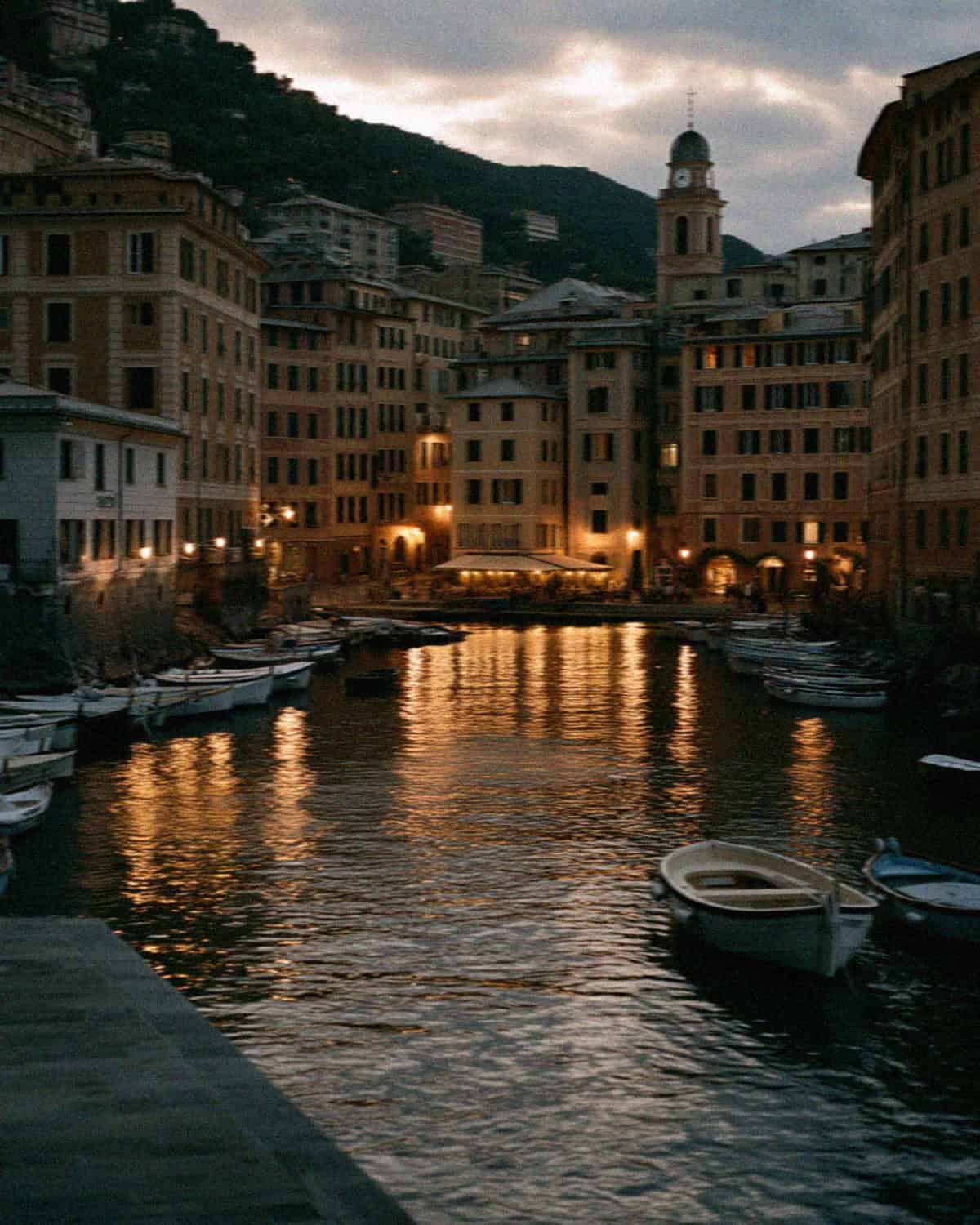
I ended the day in Camogli, which may quietly have been the whole point of it. If Portofino is where the world comes to be seen, Camogli is where the coast keeps its real life. The houses rise absurdly tall and narrow along the waterfront, painted every warm colour there is, and if you look closely you notice that some of the windows and shutters and little balconies are not windows and shutters at all but paintings of them, added long ago by fishermen who wanted their homes to look grander from the sea than their money allowed. I found that unbearably tender. A whole town that decided to paint itself the life it wished for, and in doing so became more beautiful than honesty alone would ever have managed.
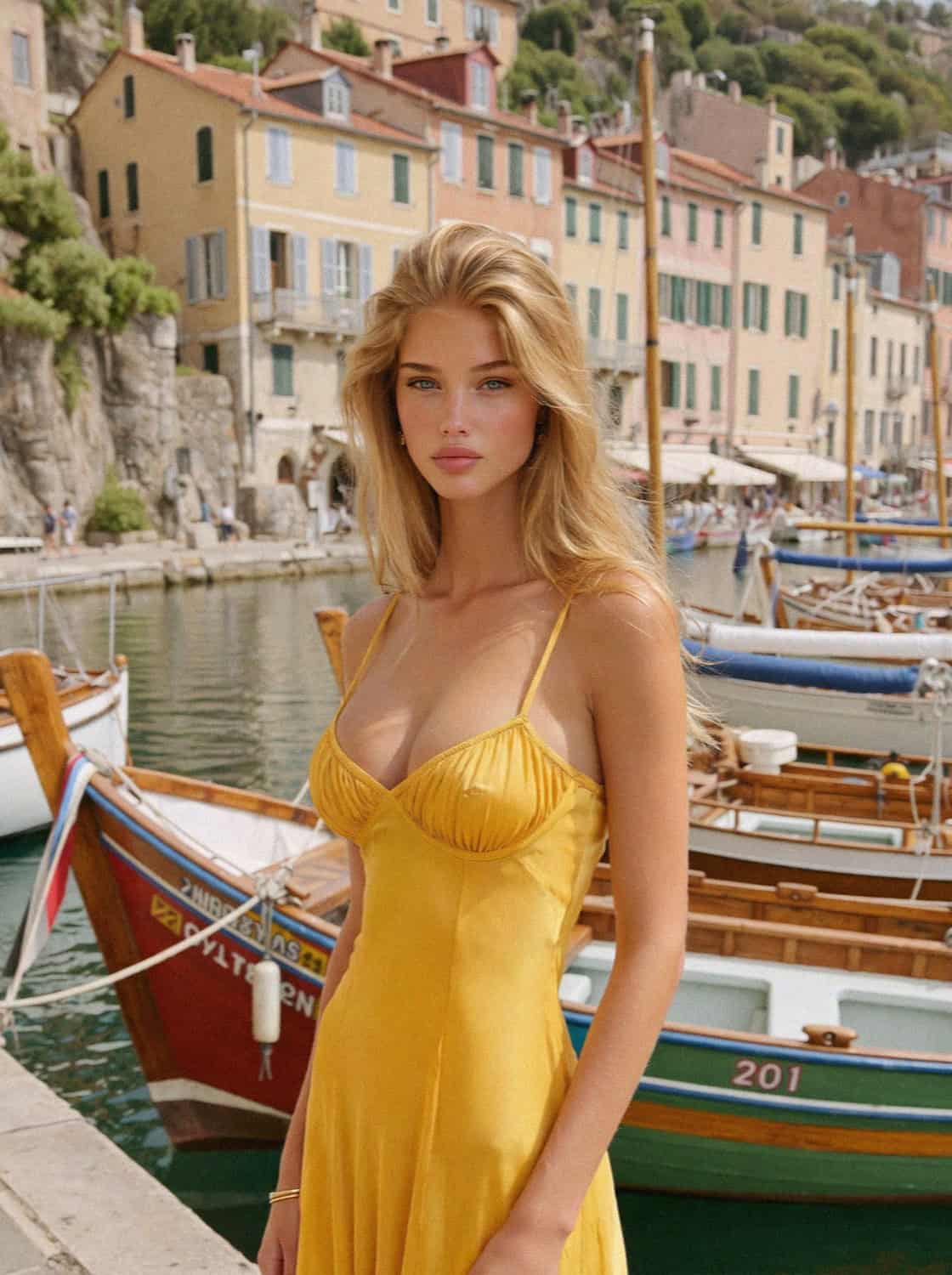
The boats there are working boats, drawn up on the shingle, paint scuffed, nets folded. Men mended things without hurrying. The air smelled of salt and frying, and somewhere a church bell counted an hour I had entirely stopped keeping. I ate a piece of the local focaccia standing beside the water, and it was one of the best things I have eaten anywhere, precisely because no one had tried to make it an occasion.
I think that is what the third day gave me, in the end. Portofino is the face this coast turns to the world, and it is right to love it. But a face is not a life. The life is in the walk between the towns, in the neighbours who never learned to pose, in a fishing village that painted its own windows and meant every brushstroke. You cannot understand the jewel until you have met the hands that live around it.
I came home the long way as the light turned gold, the sea on my left the whole while, Portofino waiting at the end of the path like a lamp someone had left burning for me. My legs ached in the good way. The pines were beginning to darken against the evening sky.





There are places you visit, and there are places that quietly return you to your own company.
Today was the second kind.
The lighthouse is dark now.
The town is not.
Tomorrow can decide for itself.
V.