Where to eat in Santorini is mostly a question of where not to. The terraces on the caldera rim at sunset are selling the view, and the food tends to come second. A short drive inland, or down to a harbour, the same island cooks some of the best food in the Cyclades for a fraction of the price.
The cooking here grew out of a hard place: thin volcanic soil, almost no rain, wind. What survived those conditions is small, sweet and intense, and the island’s dishes are built on it. This is what to order, where to go, and how to book. And for everything beyond the table, my complete guide to Santorini.
The dishes to know
Tomatokeftedes. Tomato fritters, the island’s signature, made with its small dry tomatoes, onion, mint and herbs, fried crisp.
Fava. A smooth yellow purée, served warm or at room temperature with capers, raw red onion and olive oil.
White aubergine. A local variety, pale and sweet, with fewer seeds, grilled or baked or turned into a salad.
Chlorotyri. A soft, fresh, slightly sour goat’s cheese, crumbled into salads or on its own with honey.
Capers and caper leaves. Both picked wild from the rocks; the pickled leaves turn up in salads.
Octopus. Hung out to dry in the sun first, then grilled, at the harbours.
Koufeto. A sweet of almonds and honey, traditionally served at weddings.
Fava, tomatokeftedes and the white aubergine
Three things to eat at least twice each.
The fava on Santorini is not made from split peas, as it is elsewhere in Greece, but from a local legume that grows on the island’s dry soil and is protected by its own designation of origin. It has been grown here for a very long time; traces of it are said to have turned up at Akrotiri. Good fava is silky, almost like a warm butter, and it changes completely with the olive oil and capers on top. Order it everywhere and compare.
The tomatoes are small, hard and wrinkled, grown without irrigation on volcanic soil, and they have an intense, almost sweet flavour that larger tomatoes never reach. Grated and fried into tomatokeftedes, with mint and onion, they are the dish that tells you which kitchen is serious: the good ones are crisp outside and soft inside, never greasy.
The white aubergine is milder and sweeter than the purple kind, and tastes faintly of cream when it is grilled. Look for it as a salad, a dip, or simply grilled with oil and salt.

Eating inland: Pyrgos, Exo Gonia and Megalochori
The best food on Santorini is in the villages away from the cliff.
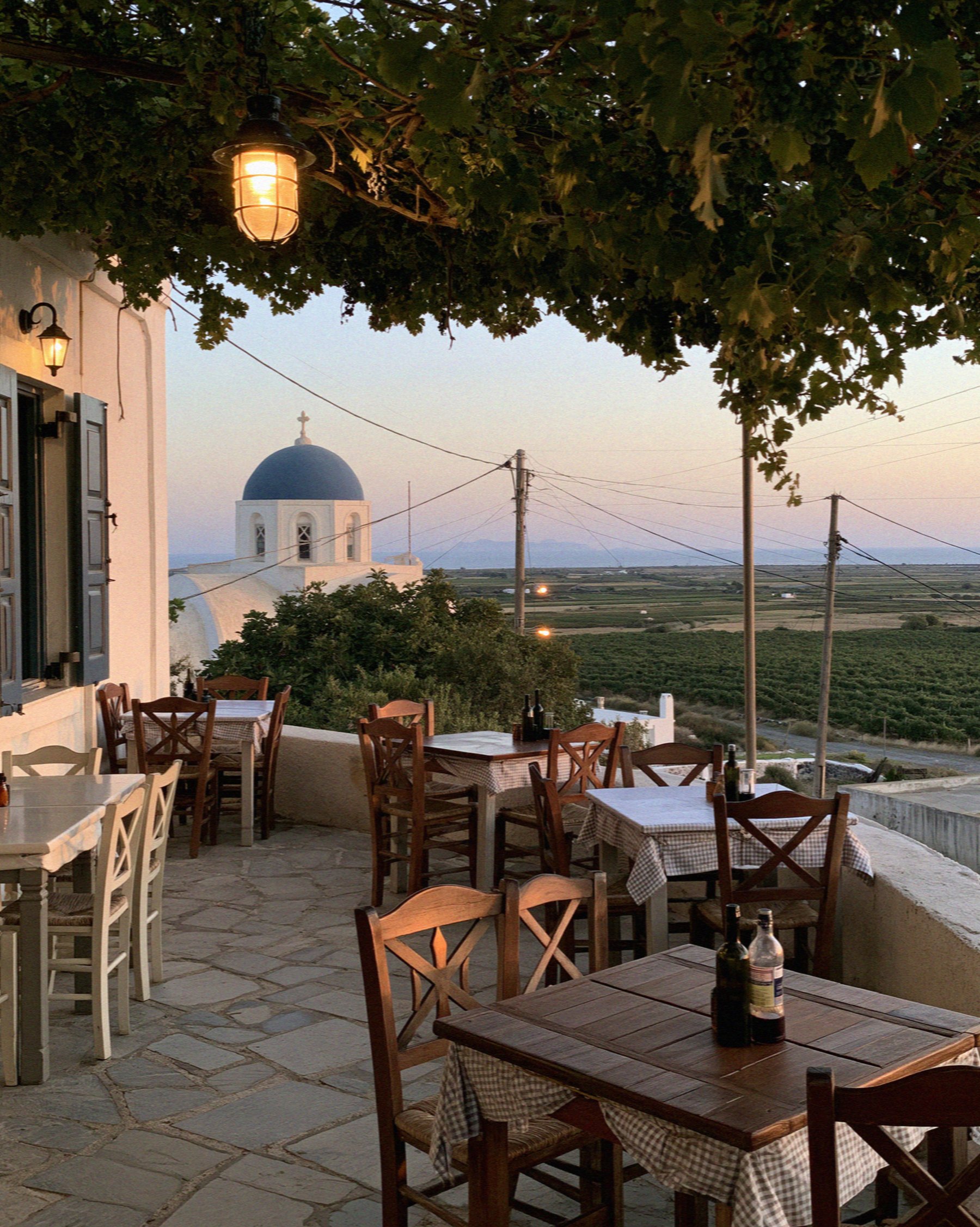
Metaxi Mas, Exo Gonia. The restaurant locals talk about first, in a small village on the slope below Pyrgos, with a terrace looking out to the east coast rather than the caldera. Cretan and Santorinian cooking, generous plates, a long list of island wines, and a room full of people who live here. Book, and take a taxi; parking is near the church below and the last stretch is on foot.
Selene, Pyrgos. The restaurant that, more than any other, put the island’s own ingredients on the menu and took them seriously. It has moved more than once over the years and is now in Pyrgos. This is the island’s fine dining, with tasting menus to match.
Cava Alta, Pyrgos. A relaxed modern taverna in the village, good for a long lunch after walking up to the top.
Aroma Avlis, Exo Gonia. A restaurant in the courtyard of the Artemis Karamolegos winery, cooking a seasonal menu around produce from its own garden, with the winery’s Assyrtikos to drink. Good for a long lunch that turns into a tasting.
Feggera, Megalochori. On the terrace of an old mansion in the middle of the village, with modern Aegean cooking and a view over the rooftops.
In Megalochori, the tavernas around the small square are simple and honest, and the lanes around them are wonderfully quiet in the evening. I ate there through two days of work in the village, and it was the most relaxed table I sat at on the island.
Fish at Ammoudi and Vlychada
For fish, eat by the sea.
Ammoudi, the tiny harbour a few hundred steps below Oia, has a row of fish tavernas right on the quay, with tables so close to the water that the waves sometimes reach your feet. Ammoudi Fish Tavern, a family place stepped above the bay, is the best known; Katina’s and Sunset, a long-running family taverna, are on the same quay. The octopus hangs drying on lines outside, and the fish is sold by the kilo, so ask the price before it is cooked. Go for lunch after a swim off the rocks, or early in the evening.
Vlychada, on the south coast, has a small marina with fishing boats, and To Psaraki above it, a simple, excellent fish taverna that people who live here recommend more than any other. It is the place to finish a day on the beach at Vlychada or Perissa.

Eating on the caldera
You will want at least one dinner looking at the caldera, and you should have one. Choose with care.
In Firostefani, Aktaion has been a family taverna since 1922, in a small room by the square with a few tables outside. It is traditional cooking, at fair prices, and it is a good antidote to the terraces. In Oia, Roka is a small, well-loved restaurant set back from the main lane, with good modern Greek cooking. For a proper sunset dinner, the famous terraces of Oia, Imerovigli and Fira are expensive and booked days ahead, and the view does most of the work.
My advice is to watch the sunset from somewhere else, a winery terrace or a boat, and come to the caldera restaurants for a later table, when the light has gone and the prices are the same but the rush has passed.
Cheap and good
Santorini is expensive, but not everywhere.
Lucky’s Souvlaki, in Fira, serves pitta gyros and souvlaki from a tiny counter, very cheap and very good, and is the cheapest good meal on the caldera. In Oia, Pitogyros does the same. Bakeries in every village sell spanakopita and cheese pies in the morning for a couple of euros.
On the beach side, the tavernas of Kamari and Perissa are much cheaper than the caldera, and some are very good, particularly for grilled fish and the island dishes.
Santorini is also easy for vegetarians. Fava, tomato fritters, giant beans, stuffed vegetables, the white aubergine, the island cheeses and Greek salads are on almost every menu, and a meal of meze alone is one of the best ways to eat here.
If you would like someone to walk you through it all, there is a good food tour that runs from Firostefani to Fira, stopping for local dishes, wine and sweets along the way. It is a pleasant way to spend a first evening and get your bearings.
What to drink with it
Order the island’s wine. Santorini’s Assyrtiko, a dry white with a salty, mineral edge, is made for fish, fava and tomatoes. A carafe of house wine in a taverna is often local and often good.
Nykteri is a fuller, older white; Vinsanto is the sweet amber wine made from sun-dried grapes, and it is very good with almonds or cheese at the end of a meal. Santorini also has its own small brewery, and its donkey-named beers turn up in tavernas across the island.
I have written about the grapes and where to taste them in my guide to Santorini wineries.
How to book
Sunset tables on the caldera: book days ahead in summer, sometimes more.
Inland favourites, like Metaxi Mas and Selene: book a day or two ahead in season.
Harbour tavernas at Ammoudi: walk in early, or book for sunset.
Everywhere else: walk in, and eat a little later than you would at home. Greeks eat dinner late, and the tavernas fill after nine.
Service is usually included in the price, but rounding up the bill, or leaving around ten per cent for good service, is normal and appreciated.
Many restaurants close between November and March, and some inland places keep shorter hours in spring and autumn, so check before you make a special trip.
The villages these restaurants are in are described in my guide to the villages of Santorini, and a sensible day of eating is built into my Santorini itinerary.
Frequently Asked Questions
What food is Santorini famous for?
Tomatokeftedes (tomato fritters), fava purée, white aubergine, capers and the fresh goat’s cheese chlorotyri, with the island’s Assyrtiko wine.
What is the best restaurant in Santorini?
Metaxi Mas in Exo Gonia is the one locals mention first. Selene in Pyrgos is the island’s best known fine dining.
Where can you eat fresh fish in Santorini?
At the harbour tavernas of Ammoudi below Oia, and at To Psaraki on the marina at Vlychada.
Do you need to book restaurants in Santorini?
For sunset tables on the caldera and the best inland restaurants in summer, yes. Most tavernas take walk-ins.
Is food expensive in Santorini?
On the caldera at sunset, very. Inland, at the harbours and for gyros and pies, it is reasonable.
Read also: Santorini Wineries: Where to Taste Assyrtiko | The Villages of Santorini: Oia, Fira, Pyrgos and Beyond | Victoria’s Complete Guide to Santorini