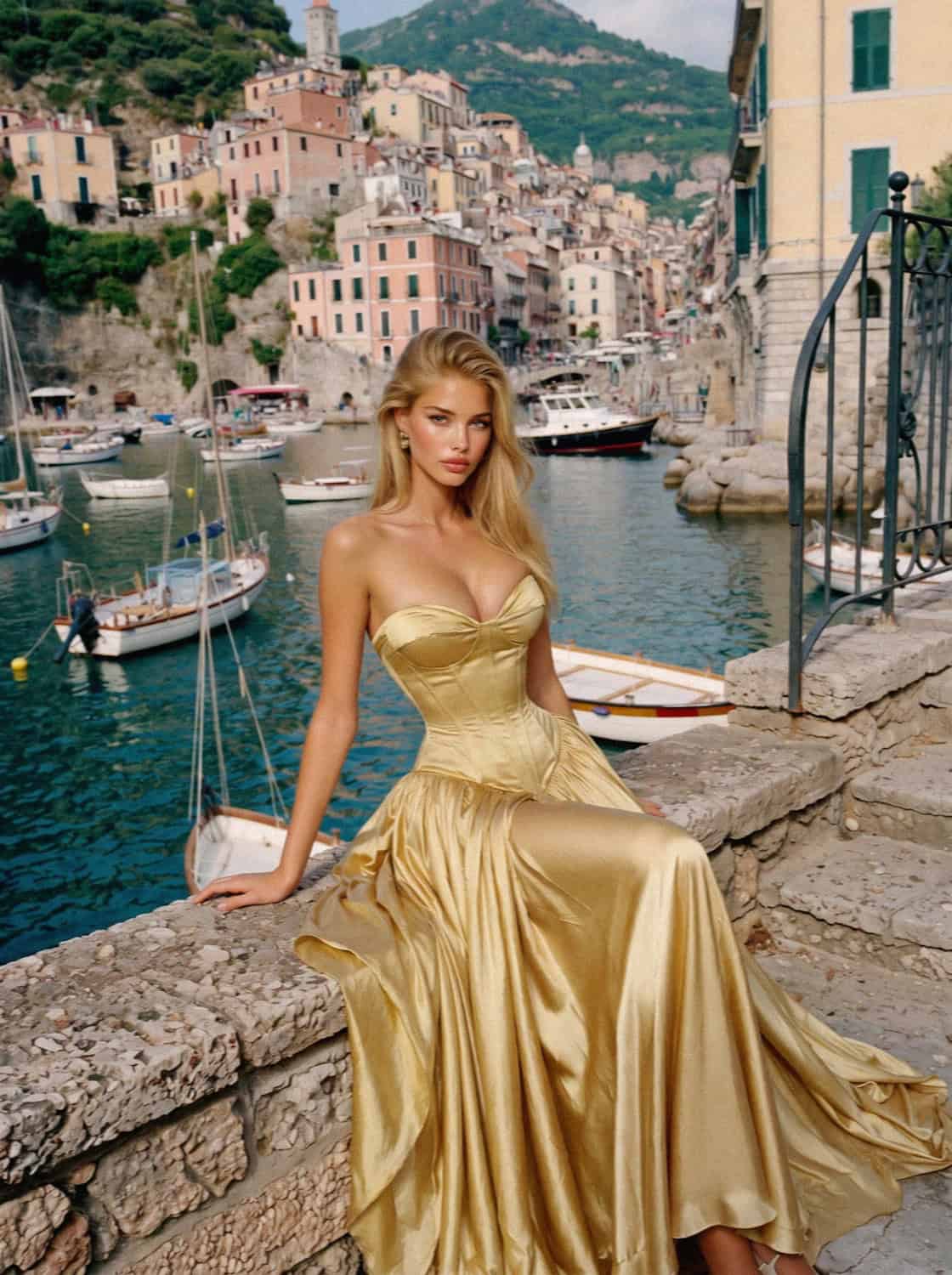
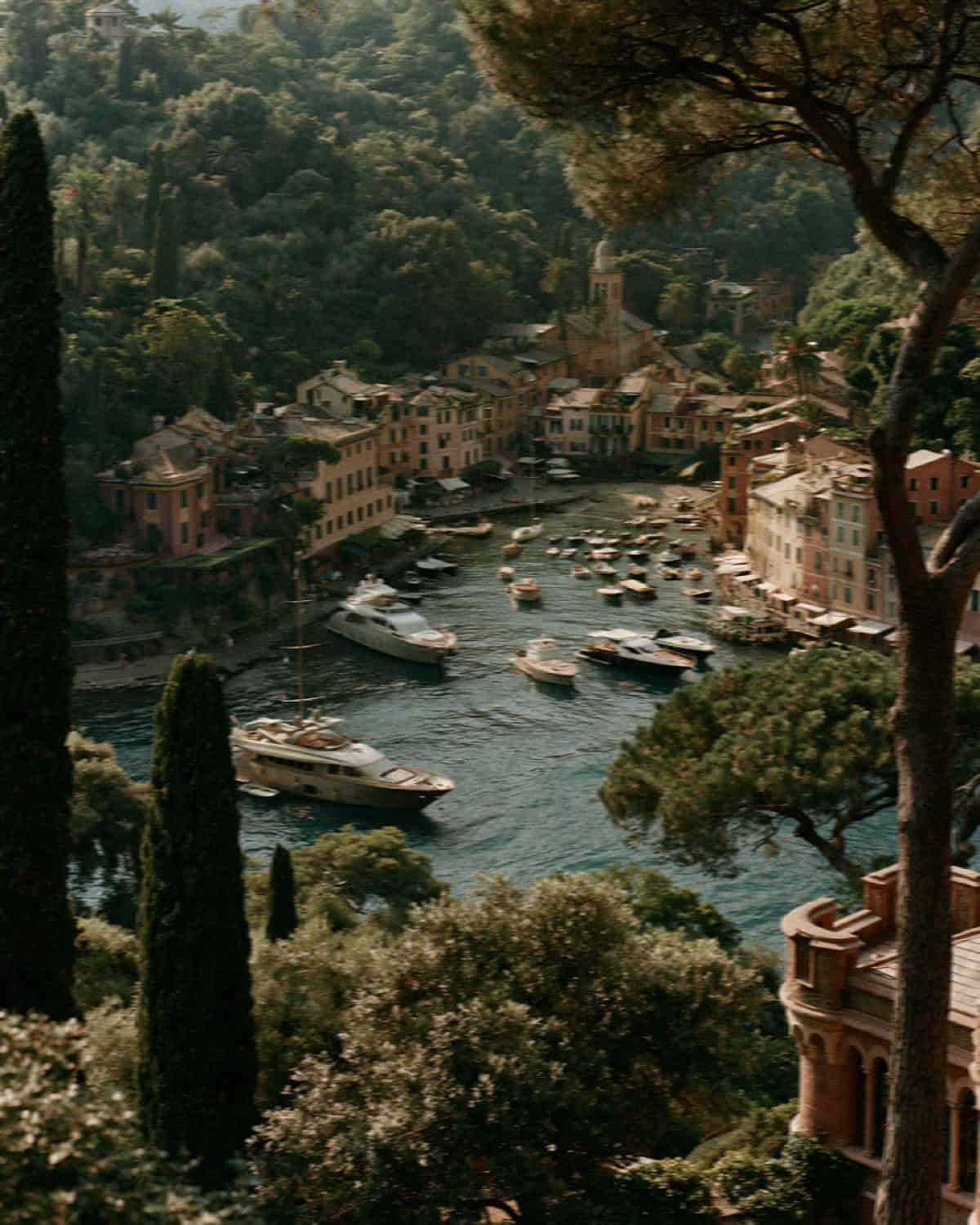
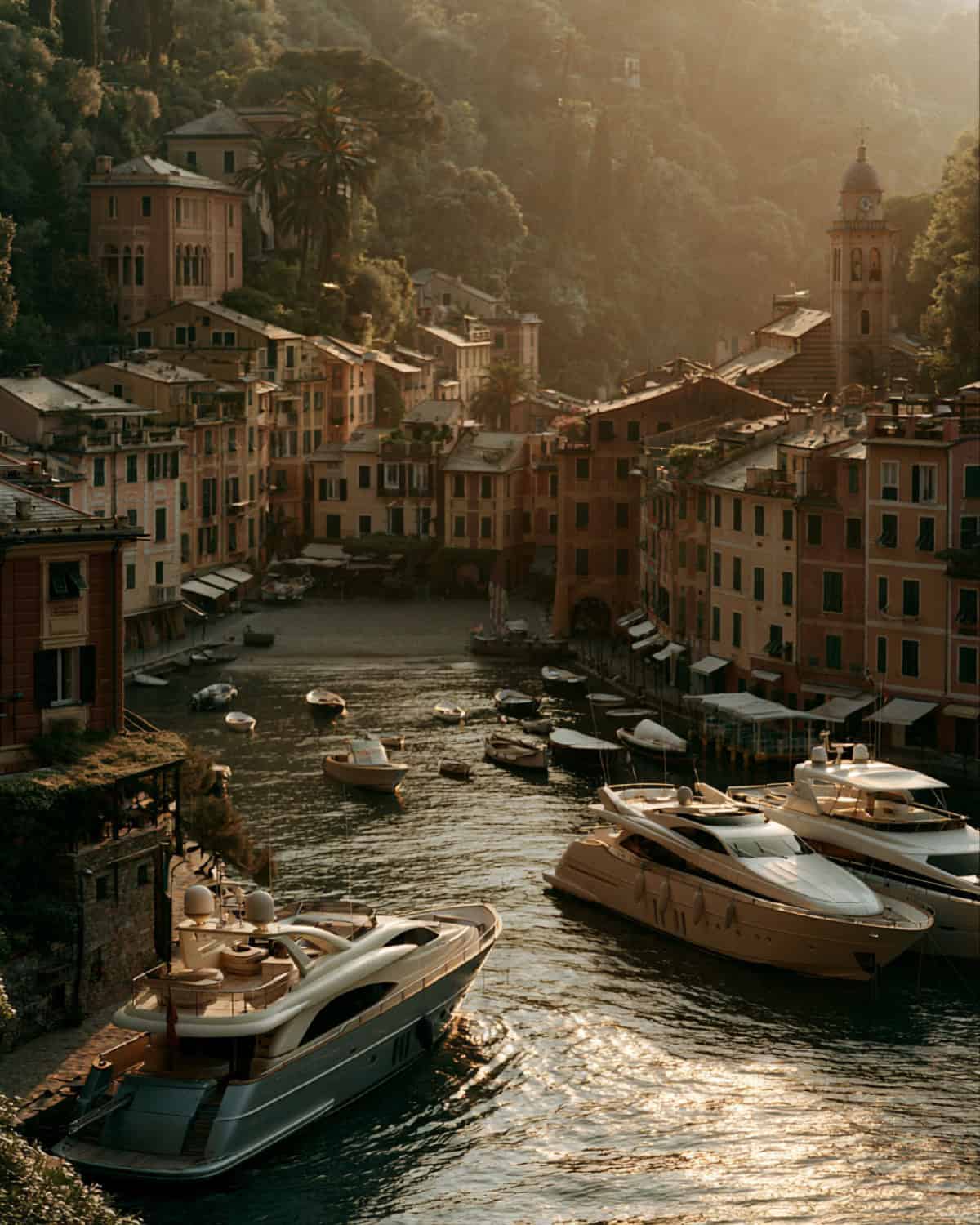
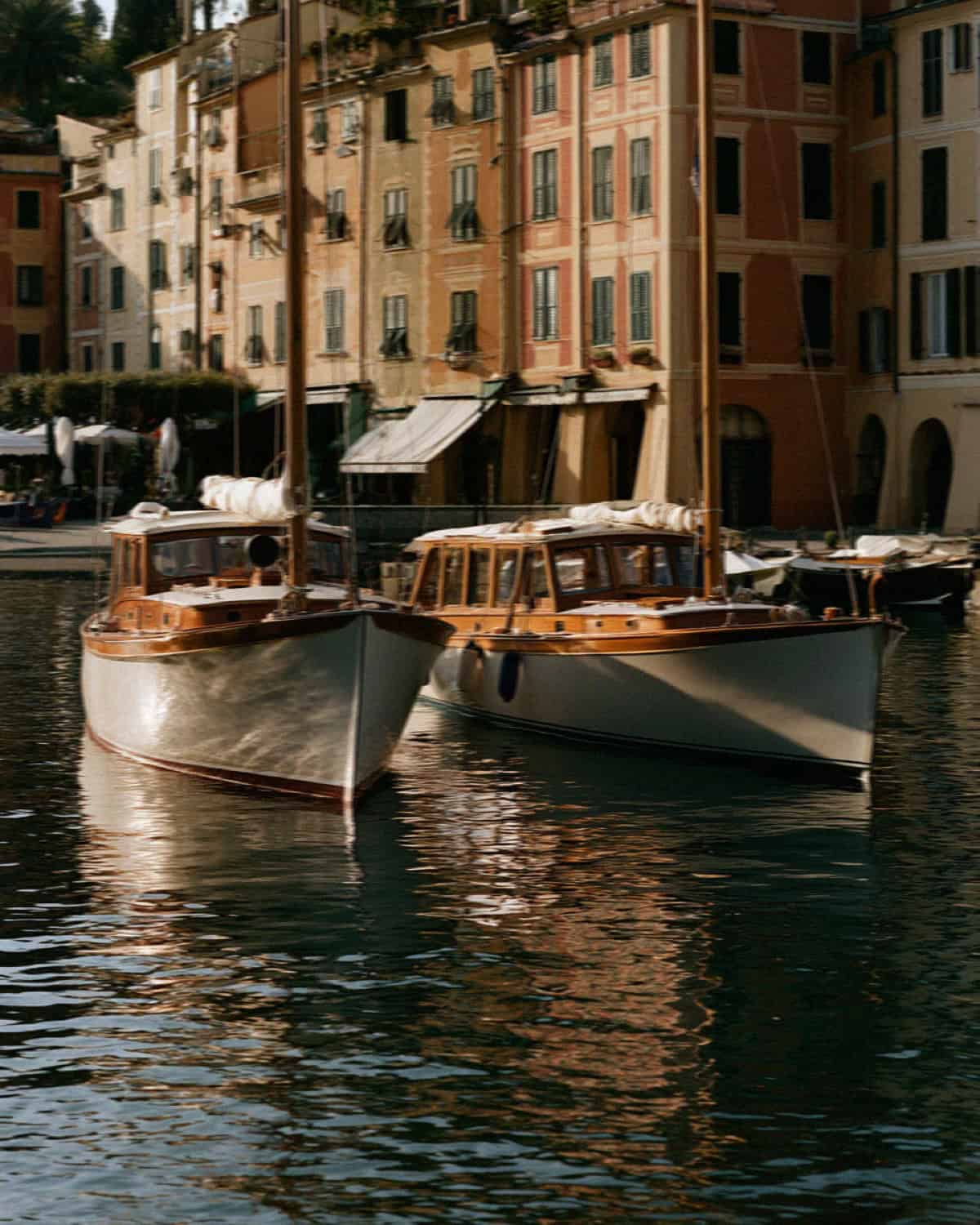
There is a moment, coming around the last curve of the coast road, when Portofino simply appears. One second there is only sea and green hillside, and the next there it is, that impossible little stack of ochre and rose and faded green houses gathered around a harbour the shape of a held breath. I have arrived in a great many beautiful places. Very few of them have made me stop talking mid-sentence. This one did.
Portofino is tiny, and that is the whole secret of it. There is no grand museum, no ruin you are meant to file past, no checklist to work through. There is a harbour, a piazzetta, a handful of steep green lanes, a castle on the hill, a lighthouse at the end of a walk, and a sea that turns from silver to gold as the day goes. You do not come here to do things. You come here to be idle beautifully, which is far harder than it sounds and which this village has been perfecting for a hundred years.
This is my complete guide to visiting Portofino: how to get there, how to move around, what is genuinely worth your time, where to eat and stay, and when to come so you have the place more or less to yourself. If you want the mood of it rather than the logistics, my first day in Portofino and second day out on the water are written up as diaries. This is the practical companion to those.
What to book before you come
Portofino is a very small harbour and the village takes about twenty minutes to see. Everything that makes a day here worth having is along the coast or up on the headland, and the coast is reachable only by boat or on foot.
- Portofino and San Fruttuoso by boat. San Fruttuoso is a tenth century abbey in a cove with no road to it at all. You arrive the only way anyone ever has.
- Camogli, San Fruttuoso and Portofino, a full day. 4.4 from over four thousand people. The best value of the lot, and Camogli has not been priced into unreality.
- From Genoa, five hours with free time. Arriving by sea beats the coast road, which is narrow, slow, and has nowhere to park at the end.
- The Genoa return transfer, on your own. No guide, no group, just the getting there solved.
The walk up to the Castello Brown and out to the lighthouse costs almost nothing and is the best hour here.
How to Get to Portofino
The first thing to understand is that Portofino has no train station and, for all practical purposes, nowhere to park. The village sits at the end of a single narrow road, and it protects itself by being genuinely difficult to drive to. This is a feature, not a flaw. Embrace it and arrive the way everyone should: by boat, or by the little electric bus, from the neighbouring town of Santa Margherita Ligure.
For every route, ferry time and fare laid out in full, I wrote a separate guide on how to get to Portofino and get around.
Getting to Santa Margherita Ligure first. Santa Margherita is on the main Genoa to La Spezia coastal railway line, so it is easy to reach by train from Genoa (about forty minutes), from the Cinque Terre, or from further afield with a change in Genoa. Genoa’s Cristoforo Colombo airport is roughly forty minutes away by car or transfer. Santa Margherita is where you leave your car, catch your boat, or pick up the bus. It is also, quietly, a lovely place to stay in its own right and considerably cheaper than Portofino.
The bus (my recommendation for value). The number 782 bus, an all-electric service, runs from the square by Santa Margherita’s station along the cliff road to Portofino’s terminal. It is inexpensive, a few euros, bought on the AMT app or by card on board, and the ride itself is spectacular as it hugs the coast past Paraggi. The catch is the road: it is one lane in each direction, and on summer weekends it can crawl. Come on a weekday if you possibly can.
The ferry (my recommendation for romance). The Servizio Marittimo del Tigullio runs boats along the Tigullio gulf, and Line 1 connects Rapallo, Santa Margherita, Portofino and San Fruttuoso. From Santa Margherita the crossing to Portofino takes about fifteen minutes and costs only a handful of euros each way, a little more from Rapallo. Arriving by sea is how Portofino was always meant to be seen: the whole coloured village rising up in front of you as you come in. Timetables thin out in winter and boats can be cancelled in rough weather, so check the day’s schedule at the ticket kiosk.
Taxi or on foot. A taxi from Santa Margherita will get you there in ten or fifteen minutes but costs far more than the bus for the same trip. If you are a walker, there is a beautiful coastal footpath from Santa Margherita to Portofino, roughly an hour at an easy pace, passing Paraggi on the way.
A word on driving and parking. Do not. There is a single small garage on the edge of the village and it is expensive and often full. Leave the car in Santa Margherita and arrive on the water or the bus. Portofino is a place to be on foot.
Plan Your Visit to Portofino
A few things I booked and loved. These help support the blog, at no cost to you.
This section contains affiliate links. If you book through them I may earn a small commission, at no extra cost to you.
Getting Around Portofino
Once you are here, there is nothing to arrange. The village is a few hundred metres end to end and entirely walkable, which is the point. From the piazzetta everything worth seeing is a short, sometimes steep, stroll away: up to the church and the castle, out along the headland to the lighthouse, or down onto the harbourfront. Wear shoes you can climb a few stone steps in. The only other way to travel here is by boat, and hiring a small one for an hour or two to see the village and coastline from the water is one of the loveliest things you can do with your time.
Things to Do in Portofino
The Piazzetta and the Harbour
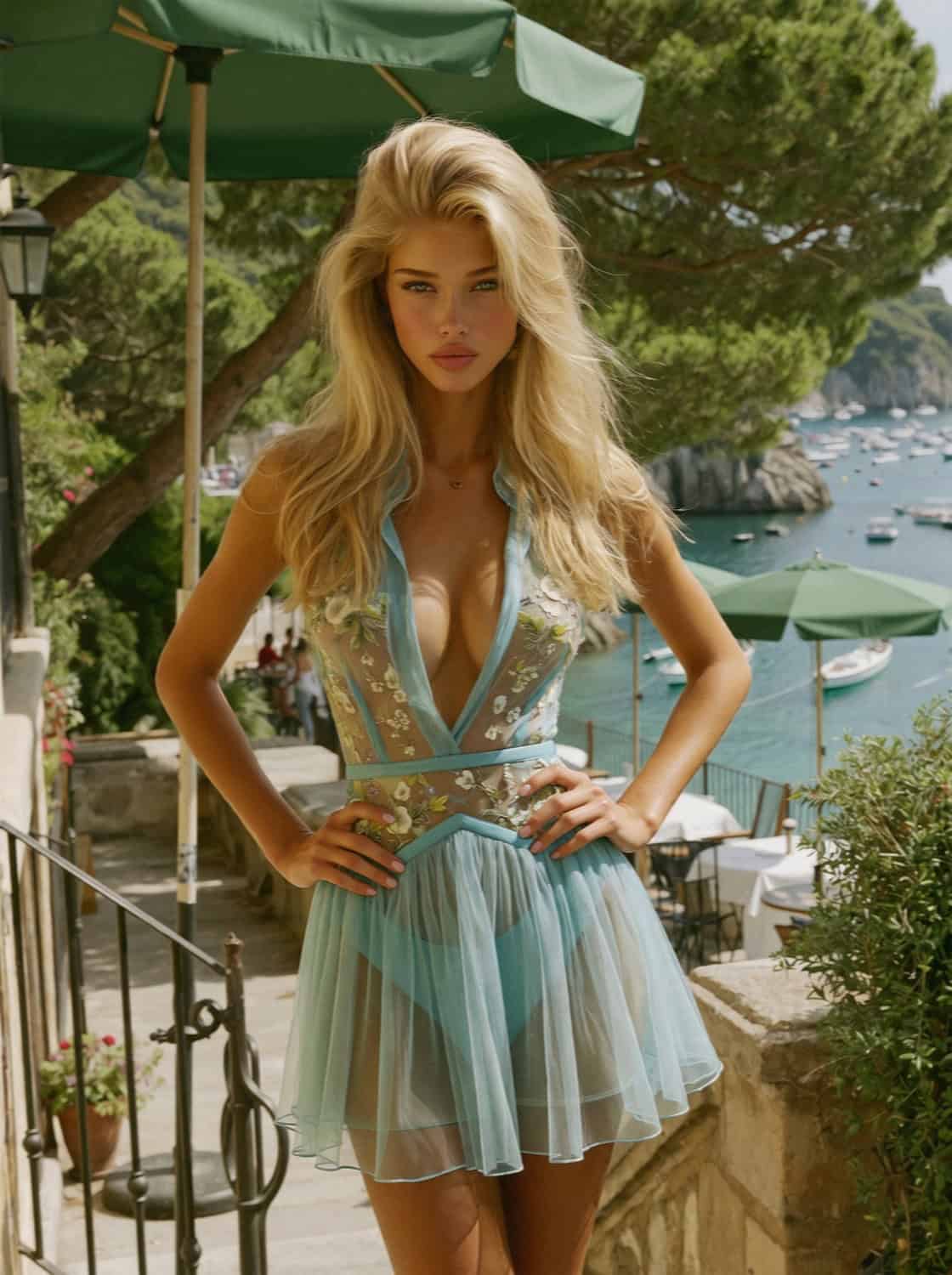
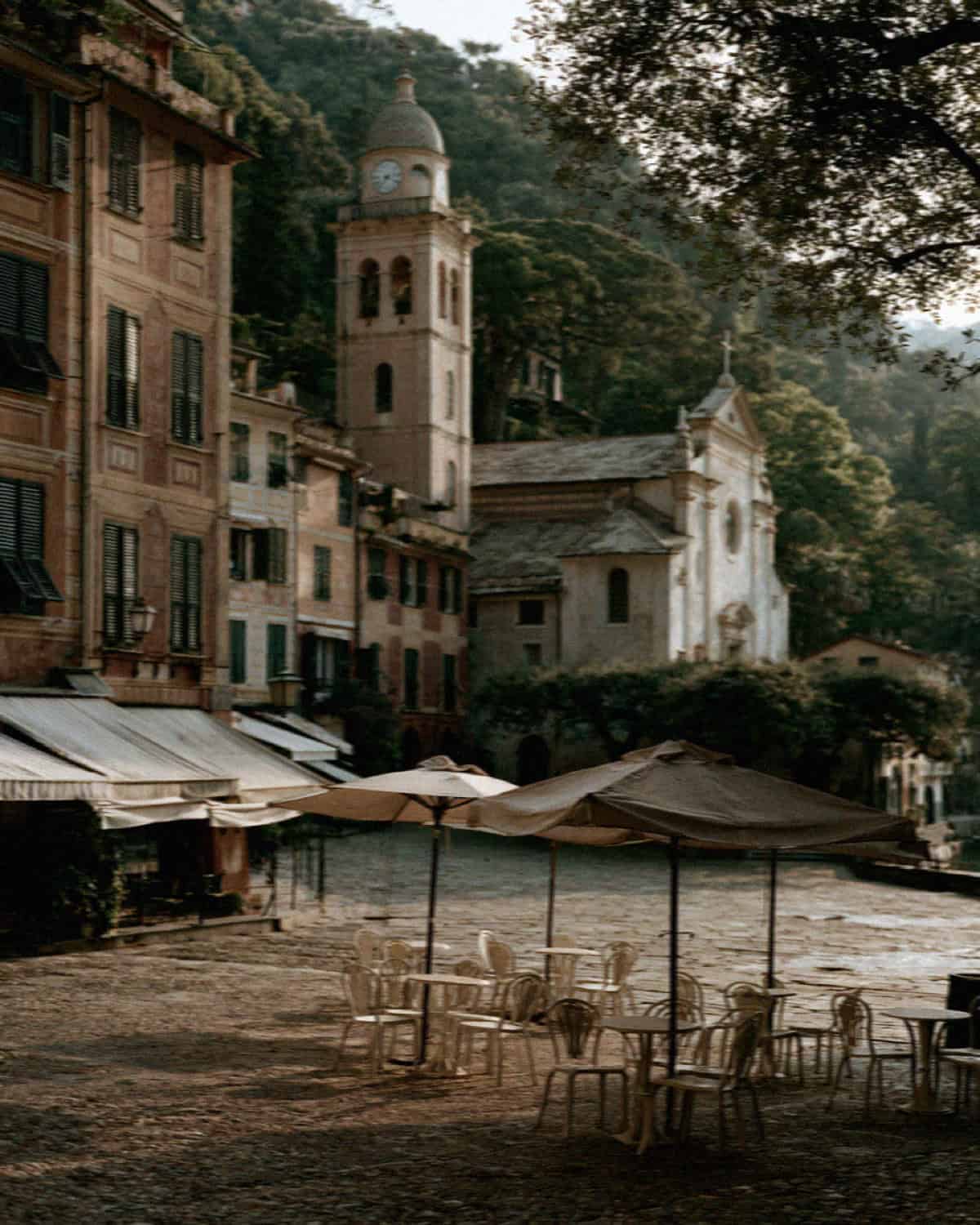
The heart of Portofino is its piazzetta, the small square that opens onto the harbour and is ringed by pastel houses and cafe tables. This is where you sit, order a drink you do not really need, and watch the boats and the light. It is also, in high season, where the day-trippers gather, so it is at its most magical early in the morning before the crowds arrive and again in the evening after they have gone. Time your coffee accordingly.
There is more to see than fits in one section, so I gathered it all in my guide to the best things to do in Portofino.
Castello Brown
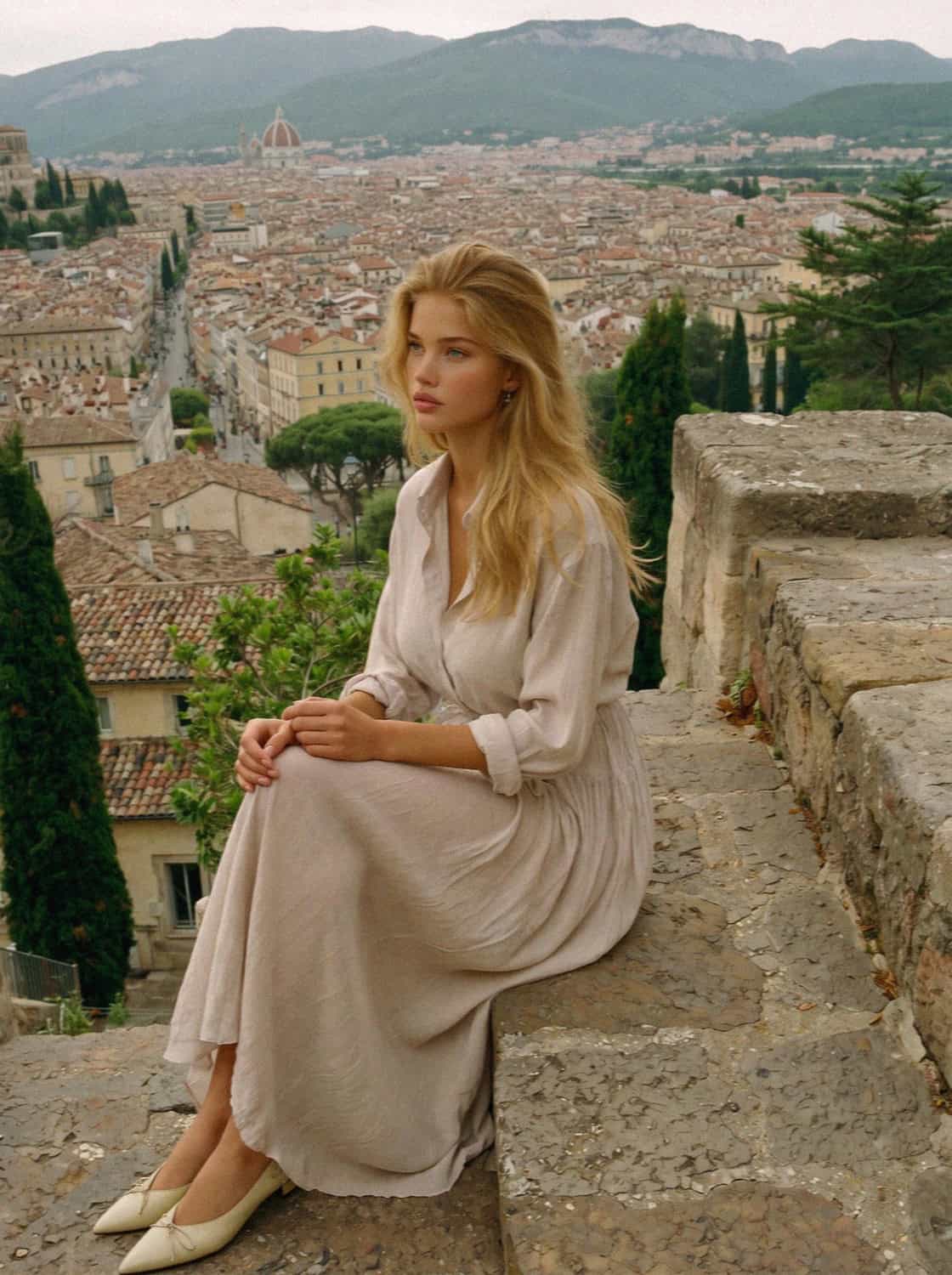
Climb the stone steps above the harbour and you reach Castello Brown, the old fortress that has kept watch over the bay for centuries. It is named for an English consul who bought it in the nineteenth century and made it a home, and the terraced gardens and the view are the reason to go. From up here the whole harbour rearranges itself below you into something you feel you could hold in your hand. Entry is around eight euros in the high season from April to October, less in winter, and free for children under twelve. It is open roughly ten in the morning until seven in the evening in the warmer months, closing earlier in winter, and tickets are sold only at the door, so bring a little cash.
The Church of San Giorgio
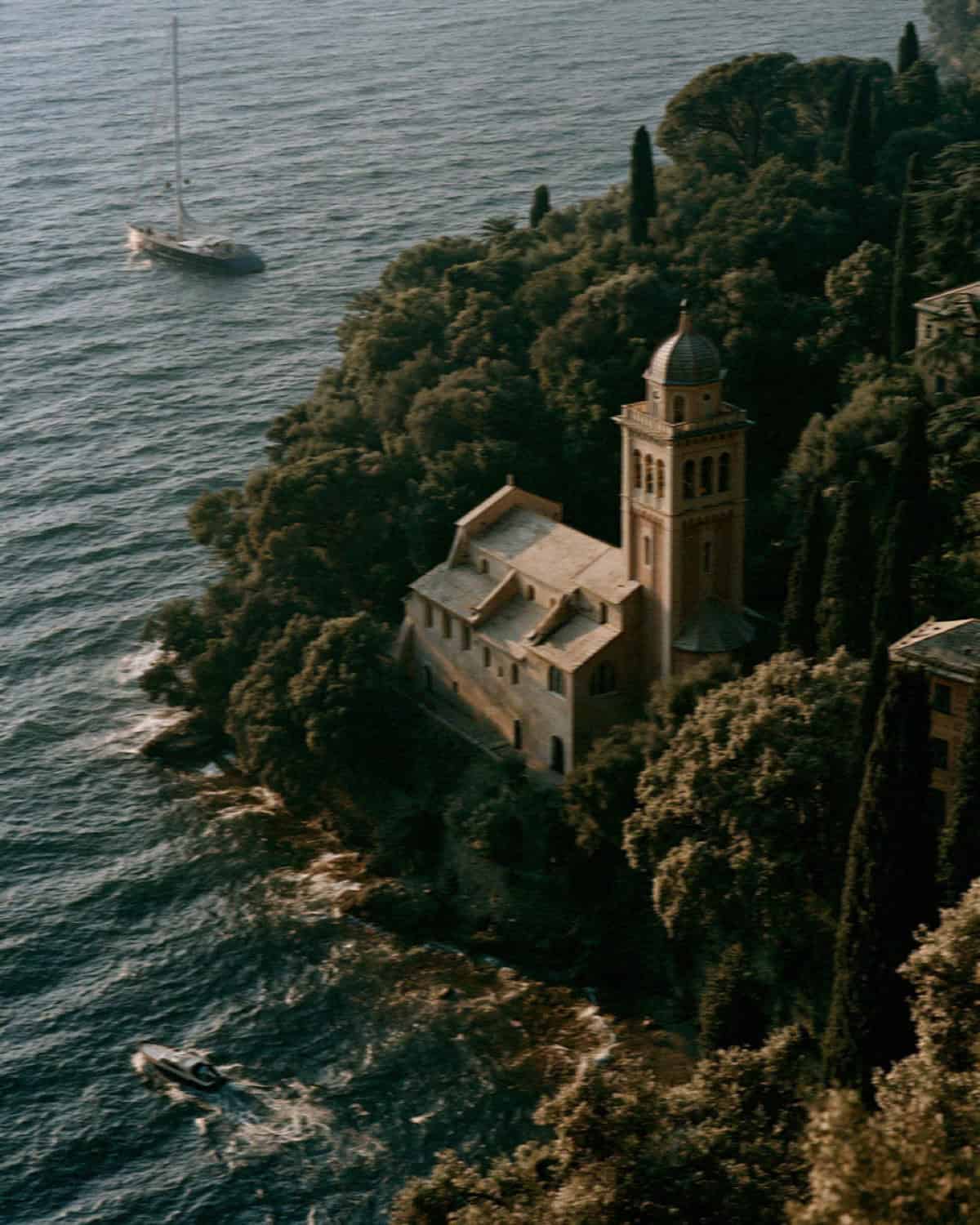
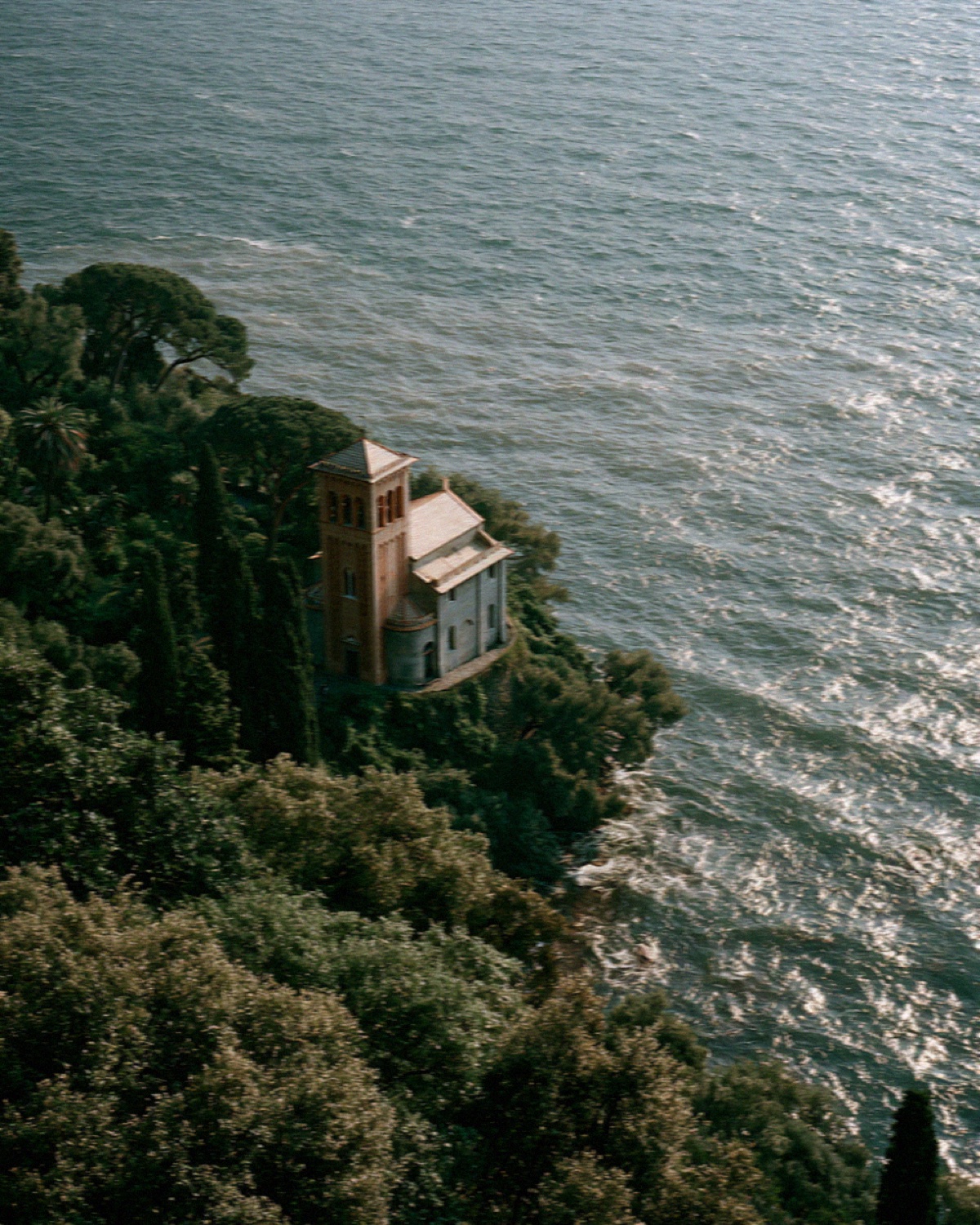
Just below the castle sits the little church of San Giorgio, perched on its shoulder of rock above the sea. It is plain, sun-bleached and cool inside, and often almost empty. Whether or not you are the praying kind, it is a quiet, lovely pause on the climb, with a view back over the harbour that is worth the few extra steps.
The Walk to the Lighthouse
My favourite thing to do in Portofino costs nothing at all. From the harbour, a paved path, undulating and almost without steps, leads out along the headland through a landscape of villas and gardens, past the castle, to the Faro di Portofino, the lighthouse at the very tip of the promontory. It takes twenty to thirty minutes at a gentle pace. You cannot go inside the lighthouse, but there is a little bar tucked into the rocks beside it where you can have a cocktail at the end of the point with the sea on three sides. Go in the late afternoon and stay for the light.
The Boutiques
Portofino has, in recent years, become a summer address for the great fashion houses, and the lanes off the piazzetta fill with designer boutiques and seasonal pop-ups. Even if you buy nothing, they are part of the theatre of the place. Window-shopping here is a sport.
San Fruttuoso and the Christ of the Abyss
If you do one excursion from Portofino, make it this one. Tucked into a hidden cove on the far side of the promontory, reachable only by boat or on foot, sits the medieval Abbey of San Fruttuoso, a thousand-year-old monastery with its feet almost in the sea and a tiny pebble beach in front of it. The setting is unforgettable precisely because it is so hard to reach.
The full story, how to reach it by boat or on the coastal path and what the Christ of the Abyss is really like, is in my guide to San Fruttuoso and its abbey.
Out in the bay, submerged about fifteen metres down and some three hundred metres from the shore, stands the Christ of the Abyss, a bronze statue of Christ with his arms raised to the surface, placed there in memory of those lost at sea. On a calm day you can see him from the surface, and snorkellers and divers go out to hover above him. If you would rather stay dry, there is a full-size replica inside the abbey church.
To get there, take a ferry from Portofino, Camogli or Santa Margherita; the abbey itself charges a small entry fee of around eight and a half euros. The walk over the headland from Portofino takes roughly ninety minutes and is genuinely steep, so most people arrive by sea. Come in late spring or early autumn if you can, because in July and August the little cove is packed and the boats are often full.
Paraggi: The Beach

Portofino itself has no real beach, which surprises people. For sand and swimming you go to Paraggi, the small emerald cove between Santa Margherita and Portofino that the bus and the coast path both pass. The water here is an almost unreal shade of green, and it is one of the prettiest places to swim on the whole Riviera.
Paraggi is the closest, but a few more coves are worth the short trip, which I covered in my guide to the beaches near Portofino.
Most of the cove is given over to beach clubs, and they are not cheap: expect somewhere between eighty and two hundred and fifty euros a day for two loungers and an umbrella in high season, depending on the club and how fashionable it is. Bagni Fiore is the famous one, where the beautiful people go. There is, by law, a small free public strip of sand as well, but it is tiny and fills early, so arrive first thing if you want a spot, and bring your own towel.
Where to Eat in Portofino

Eating in Portofino is expensive, there is no pretending otherwise, and much of what you pay for is the setting. Accept that, choose well, and it is worth it. This is Liguria, so look for the regional things: trofie al pesto (pesto was more or less invented in these hills), focaccia, trenette, fresh fish, pansoti with walnut sauce, and a cold glass of local white.
I have listed the exact tables I would book, and the ones I would skip, in my full where to eat in Portofino guide.
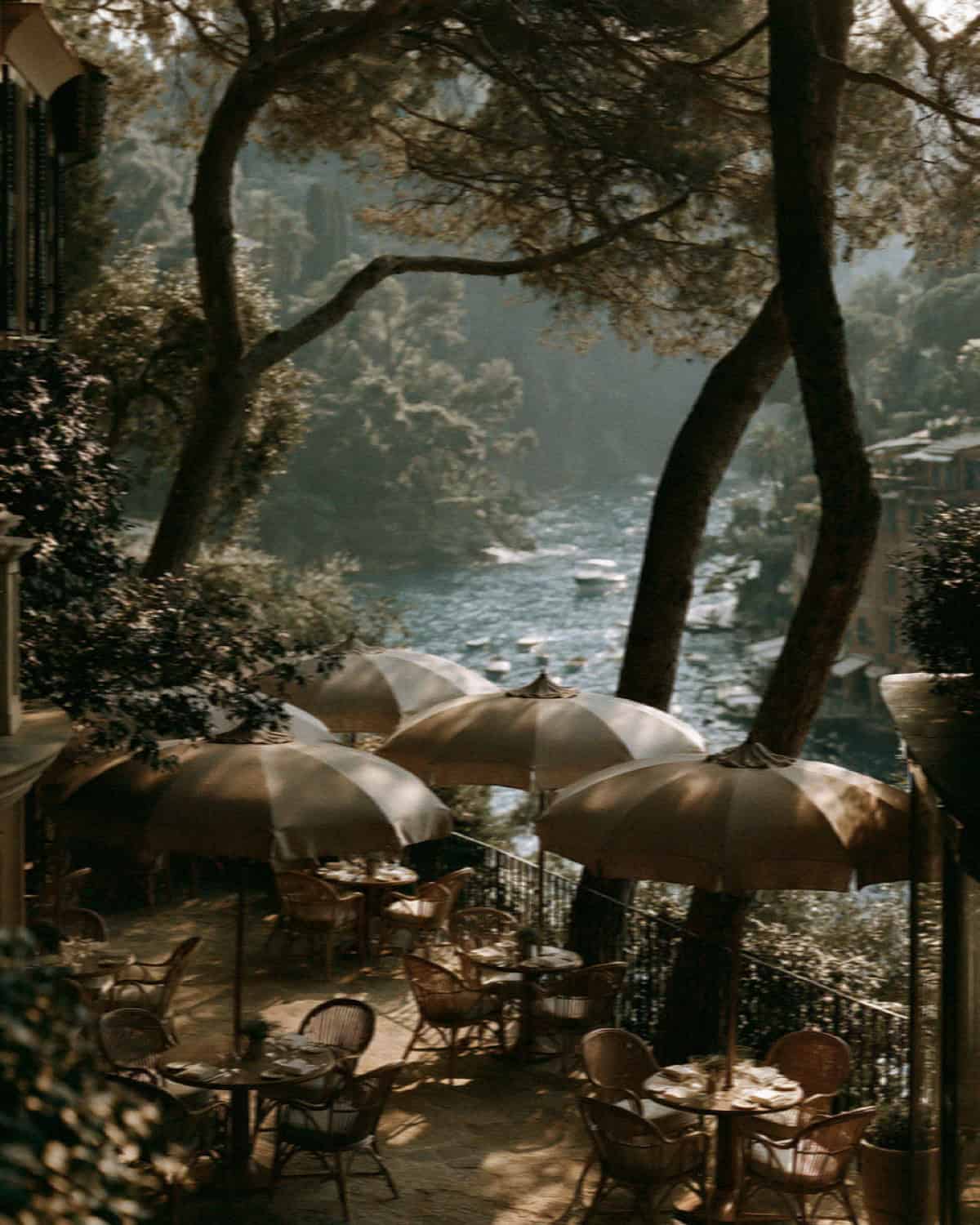
Ristorante Puny on the piazzetta is the institution, a small, much-loved place that has been feeding Portofino for decades. Book well ahead. In the last couple of years the piazzetta has also drawn some serious names: the Cerea family behind the three-Michelin-star Da Vittorio have opened a harbour-front room here, and there are other high-end arrivals too, so Portofino now has genuinely destination-level cooking if you want to splurge. DaV Mare, at the Splendido Mare hotel on the harbour, is wonderful for a long lunch or a cocktail by the water. Ristorante Lo Stella, run by the same family for generations since 1850, is a lovely harbour-side classic. And for a drink with a view, La Gritta has long claimed to be one of the most romantic bars in the world, out on its floating terrace.
A note on prices: a spritz on the piazzetta can cost what a whole lunch does elsewhere. If you want the aperitivo ritual without the sting, have your everyday coffee and snacks a little back from the water, and save the harbour-front table for the one drink you will remember.
Where to Stay in Portofino

If you want to wake up in Portofino itself, the choices are few and mostly luxurious. Splendido, A Belmond Hotel is the legend: a former monastery draped in wisteria on the hillside above the bay, with a pool looking out over the sea, and prices to match its reputation, comfortably into the thousands per night in season. Its harbour-front sister, Splendido Mare, sits right on the piazzetta and is a touch more attainable, though still a serious indulgence, with rates that climb steeply in July and August. Eight Hotel Portofino and the smaller Hotel Piccolo and Hotel Nazionale offer more choice, though nothing here is truly inexpensive.
For the full range, from the harbour splurges to the smarter bases nearby, see my guide to where to stay in Portofino.
The honest alternative, and what a lot of clever travellers do, is to stay in Santa Margherita Ligure or Rapallo, where there are far more hotels at far kinder prices, and treat Portofino as an easy fifteen-minute boat ride away. You lose the magic of being there after dark, but you keep a great deal of money, and Santa Margherita is genuinely charming in its own right.
There is, though, something to be said for staying the night. The village that belongs to the day-trippers at noon belongs to the few of us who stayed by evening, and Portofino after the last boat has gone is a different, quieter, lovelier place entirely.
The Best Time to Visit Portofino
Come in May, June or September. In those months the weather is warm, the sea is swimmable, the gardens are in flower or the light is turning golden, and the crowds and prices have not yet reached their summer peak. September in particular is close to perfect.
I broke the seasons down further in my guide to the best time to visit Portofino.
July and August are the height of the season: hot, expensive, and busy, with the piazzetta full and the ferries often at capacity. It can still be wonderful, but you will share it with a great many other people, so go early and late in the day and book everything ahead.
April and October are lovely shoulder months, quieter and cheaper, though the sea is cooler and some places keep shorter hours. Winter is very quiet, with a number of restaurants and hotels closed, but there is a stark beauty to an empty Portofino if you do not mind the hush.
Whenever you come, favour a weekday over a weekend. The single coast road backs up badly on Saturdays and Sundays, and the village feels calmer midweek.
A Perfect Day in Portofino
Arrive by the morning boat from Santa Margherita, before the crowds. Have a coffee on the still-quiet piazzetta and watch the village wake up. Wander the lanes, then climb to the church of San Giorgio and up to Castello Brown for the view. Walk out along the headland to the lighthouse and have a mid-morning drink at the little bar on the point. Take a boat around to San Fruttuoso for the abbey and a swim over the Christ of the Abyss, or spend the afternoon on the green water at Paraggi. Come back for a long, late lunch of trofie al pesto and cold white wine by the harbour. And then, if you are wise, stay for the evening, when the day-trippers leave, the string lights come on over the tables, and Portofino becomes, for a few hours, entirely yours.
If you are photographing as you go, I mapped out the best photo spots in Portofino in their own guide.
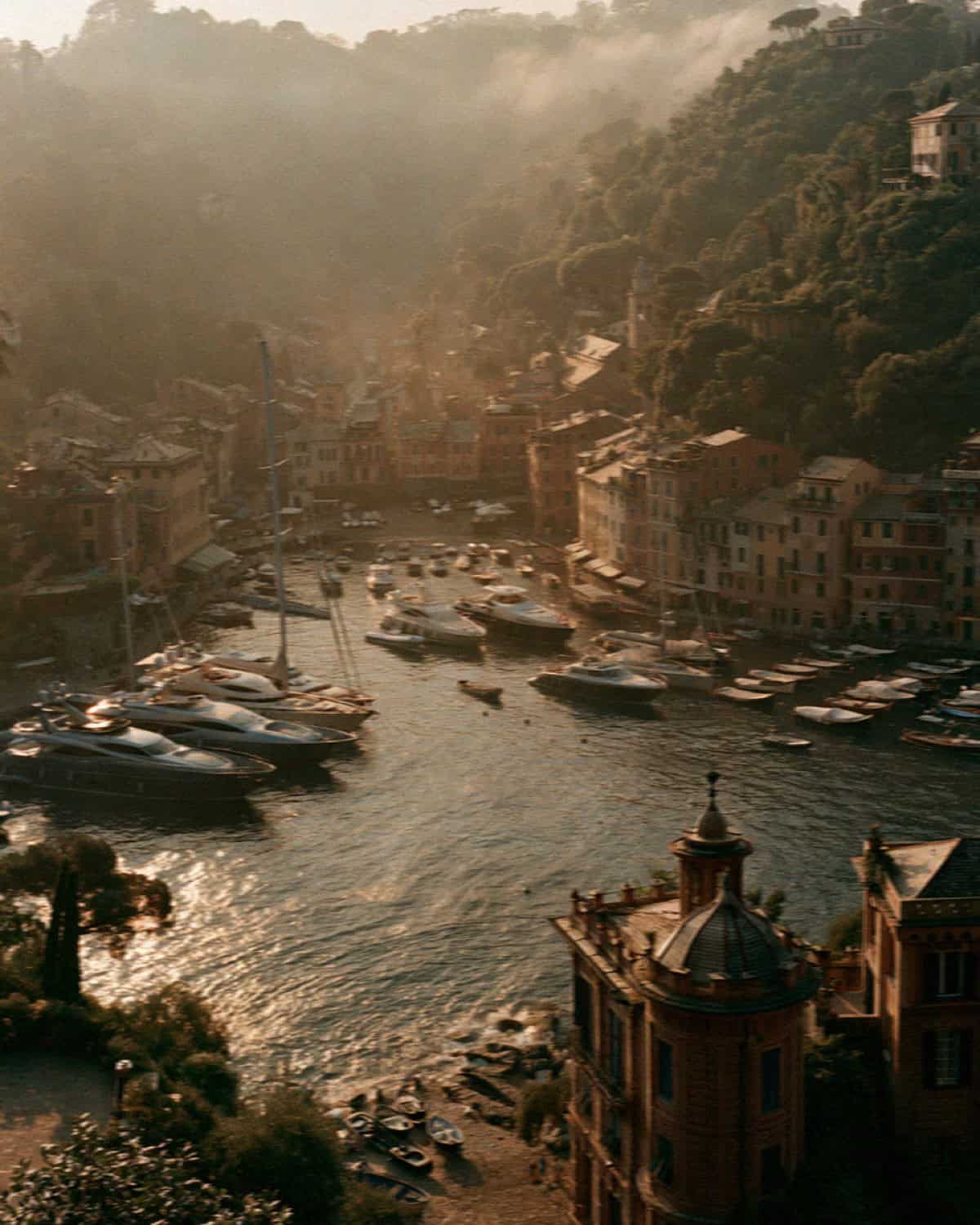
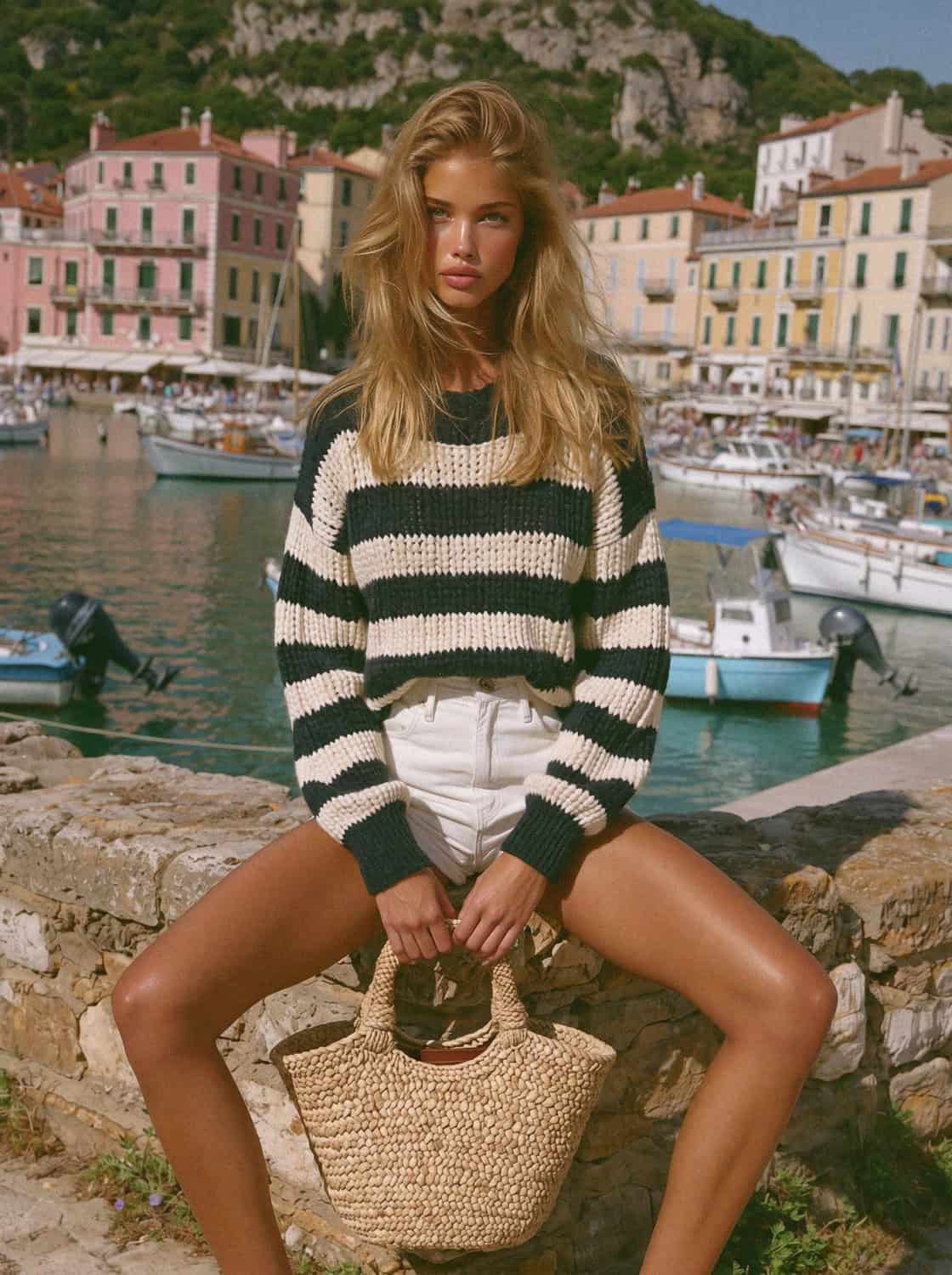
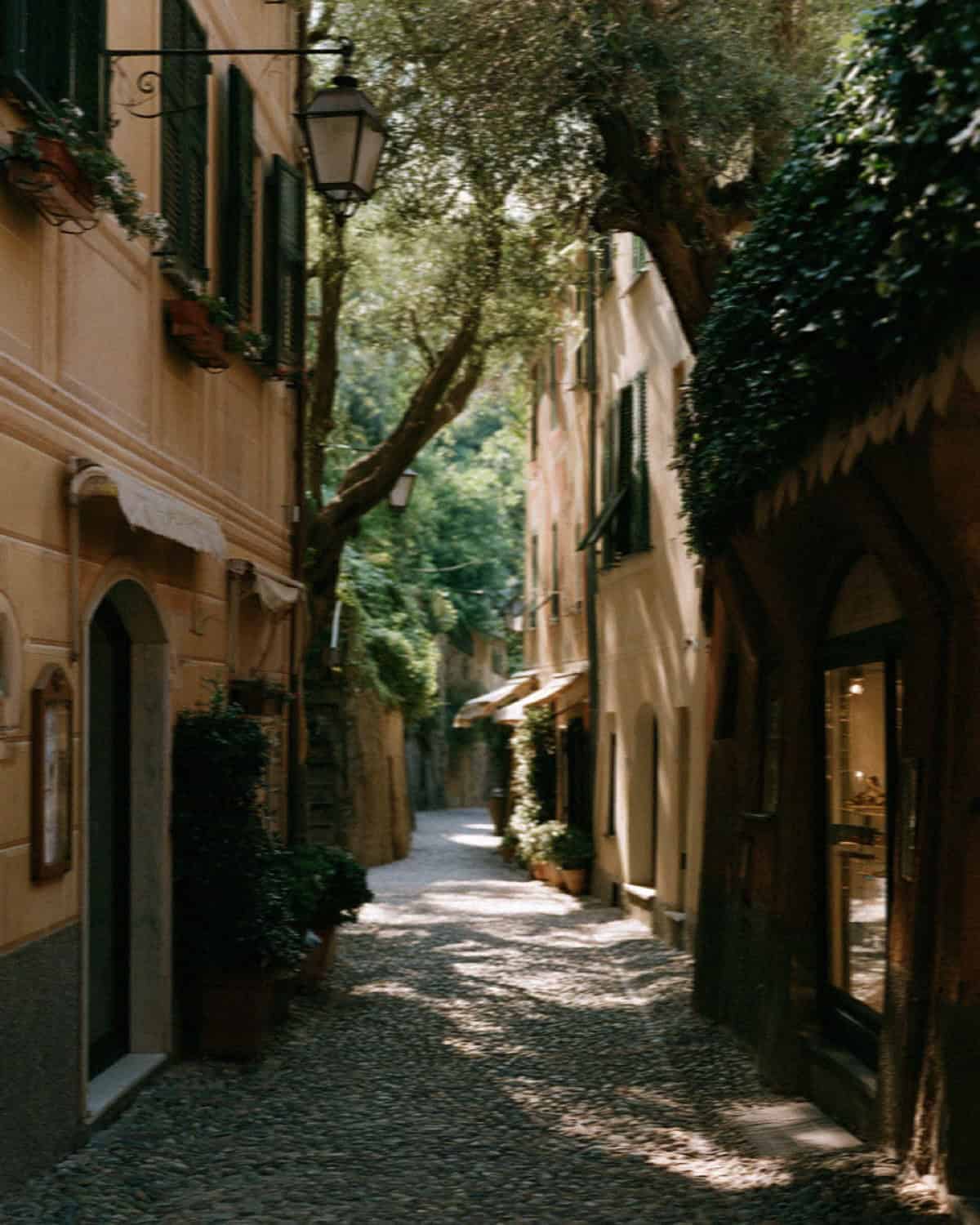
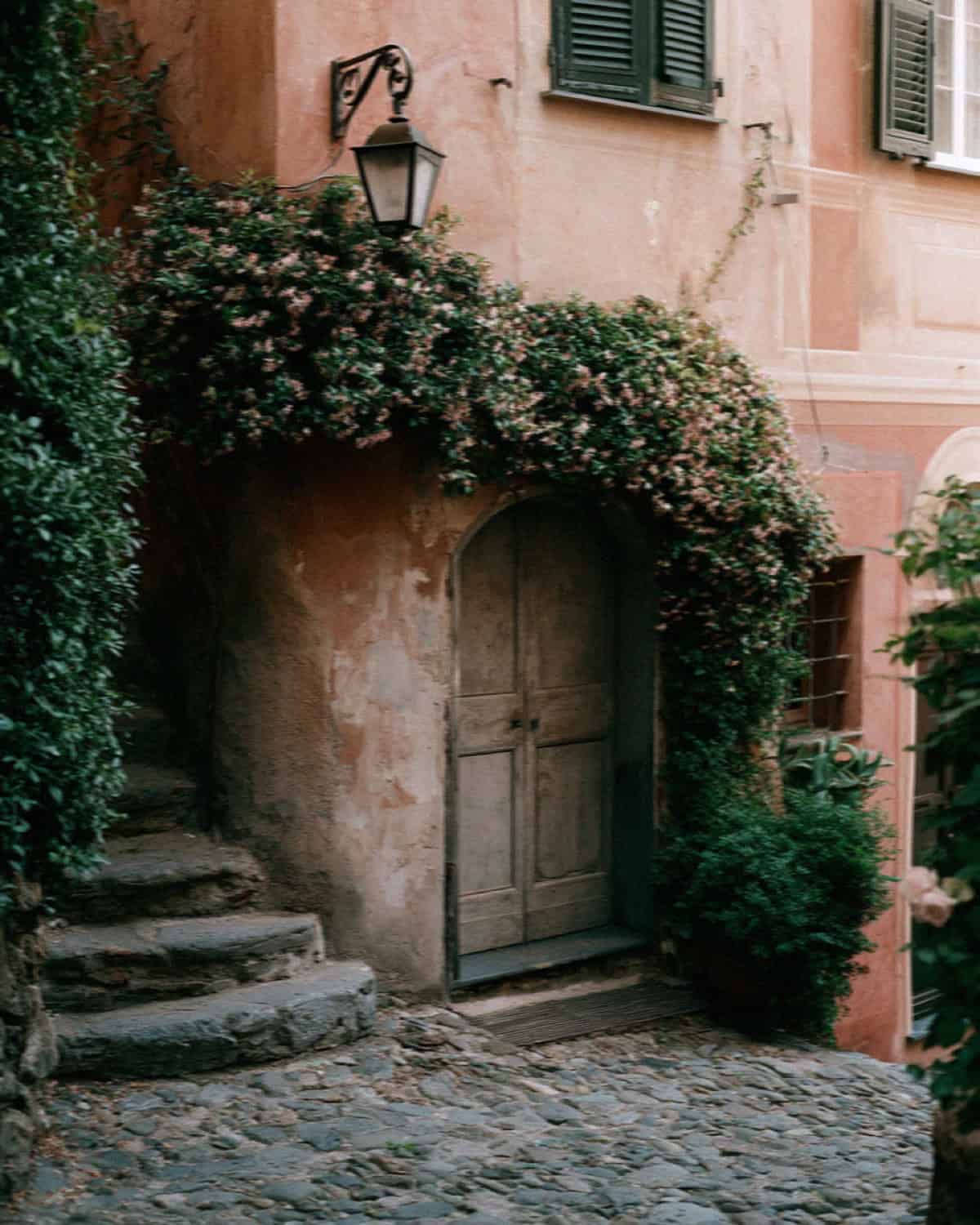
More images from Portofino












Your Portofino Guides
- How to Get to Portofino (and Get Around)
- The Best Things to Do in Portofino
- San Fruttuoso: The Abbey, the Boat, and the Christ of the Abyss
- The Beaches Near Portofino: Paraggi and the Coves
- Where to Eat in Portofino
- Where to Stay in Portofino
- The Best Time to Visit Portofino
- The Best Photo Spots in Portofino
Portofino Travel Diaries
Frequently Asked Questions
How do you get to Portofino?
There is no train station in Portofino. Take a train to Santa Margherita Ligure on the Genoa to La Spezia line, then continue the last few kilometres by the 782 electric bus, by ferry (about fifteen minutes on the Servizio Marittimo del Tigullio boats), or by taxi. Driving is strongly discouraged because parking is extremely limited and expensive, so leave your car in Santa Margherita.
Is Portofino worth visiting, or is it just for the rich?
It is worth visiting for anyone. Yes, it is an expensive place to eat and sleep, but the harbour, the piazzetta, the walk to the lighthouse and the view from Castello Brown cost little or nothing, and arriving by the inexpensive bus or ferry and simply spending a day is very doable on a normal budget. The trick is to spend your money on one memorable drink or meal by the water and enjoy the rest of it, which is free, at your own pace.
Does Portofino have a beach?
Not really. The village has no proper beach of its own. For swimming you go to nearby Paraggi, a small emerald cove on the road between Santa Margherita and Portofino, which has beach clubs (loungers roughly eighty to two hundred and fifty euros a day for two in high season) and a small free public strip of sand that fills up early.
How much time do you need in Portofino?
You can see the essentials in a well-planned day: the harbour, the castle, the lighthouse walk, a swim, and a meal. If you want to add the boat trip to San Fruttuoso and the Christ of the Abyss, or simply to experience the village in the quiet of the evening, stay a night. Portofino after the day-trippers leave is a different and better place.
What is the Christ of the Abyss and how do you see it?
It is a bronze statue of Christ placed on the seabed off San Fruttuoso, about fifteen metres deep, in memory of those lost at sea. You reach San Fruttuoso by boat from Portofino, Camogli or Santa Margherita, and see the statue by snorkelling or diving over it on a calm day. If you prefer to stay dry, there is a full-size replica inside the San Fruttuoso abbey church, which charges a small entry fee.
When is the best time to visit Portofino?
May, June and September are the sweet spots: warm, beautiful and less crowded than midsummer. July and August are the busiest and most expensive months. April and October are quieter and cheaper but cooler, and winter is very quiet with some closures. On any date, choose a weekday over a weekend to avoid the traffic on the single coast road.
Where should I stay, in Portofino or Santa Margherita?
Both work. Staying in Portofino, at the Belmond Splendido, its harbour-front sister Splendido Mare, or one of the handful of smaller hotels, is a luxurious splurge and lets you enjoy the village after dark. Staying in Santa Margherita Ligure or Rapallo is far more affordable, gives you many more options, and puts Portofino a short, scenic boat ride away.
Do I need to book restaurants in Portofino in advance?
In high season, yes, especially for the well-known places on the piazzetta like Puny. Tables by the water are limited and in demand, so reserve ahead if there is somewhere in particular you want to eat. For a casual snack or a coffee you can simply turn up, ideally a little back from the harbour where prices are gentler.
V.