There is a particular quiet that comes off a lake. It is not the quiet of the sea, which is really only distance. It is closer than that, held in by the mountains, the way a room holds a conversation after everyone has left it.
Bellagio arrived slowly. The ferry came up from the south and the town assembled itself out of the haze, ochre and rose stacked against the green, and then the landing, the white boat swinging in against the stone, and then the smell of the water, which is not salt but stone and something faintly sweet.
I had come from the coast, from all that open light. The lake asks for a different kind of attention.
I went first to the gardens.
Villa Melzi keeps its statues down by the water, pale figures spaced along the shore, with cypress standing behind them like a decision no one has ever regretted. There were palms that had no business this far north, and a grotto gone green with shade, and stone steps that went down into the lake and simply stopped, as though the water had once been expected to rise and never had. I sat on the steps for a while. The marble held the morning. A gardener passed and did not look at me, which I was grateful for.
Then the town, which is all stairs.
The lanes climb. That is the first thing Bellagio teaches you. Nothing here is level.
The salita goes up between the shopfronts in shallow steps. Silk moved a little in the windows whenever a door opened, and geraniums leaned out from iron balconies, red against the warm stone. The light came down in pieces through the narrow space between the roofs. I walked it in the afternoon, when the shops had only just come back from lunch and were unhurried about it. A woman set linen out on a rail. Someone higher up was washing a step with a slow brush.
A bell went somewhere over the roofs, not for any hour I could name.
I have never been good at the beginnings of places. They ask you to have opinions before you have earned them. Bellagio did not seem to mind. It let me be a stranger in it, which is a kind of generosity, and rare.
By the water, the promenade ran flat and easy beneath the oleander. I took a table at the edge of it and let a coffee go cold while I watched the ferries come and go, the way they gather a small crowd to the quay and then set off and leave it to itself again. There is a rhythm to a lake town that has nothing to do with you. It was a relief to be inside it and not the cause of it.
In the afternoon I climbed to the park above the town.
From up there the whole thing gives itself away. Bellagio sits at the tip of a headland, and from the gardens of Serbelloni you can see what the maps only tell you, that the lake divides here, that it comes down out of the mountains and splits at the point and goes two ways into the hills. Hydrangeas ran along the path, blue going to rust at the edges. I stood for a long time and watched the water hold two directions at once and seem untroubled by it.
Later there was a boat.
One of the old wooden ones, all varnish and brass, the kind that belongs to the last century and behaves as though it knows it. It went out past the point where the water turns properly clear, and the engine was cut, and for a while there was only the small knock of water against the hull and the mountains standing around us, holding their own weather. I put a hand into the lake. It was colder than the coast, and cleaner, and it did not forgive as easily.
Then, near evening, a terrace.
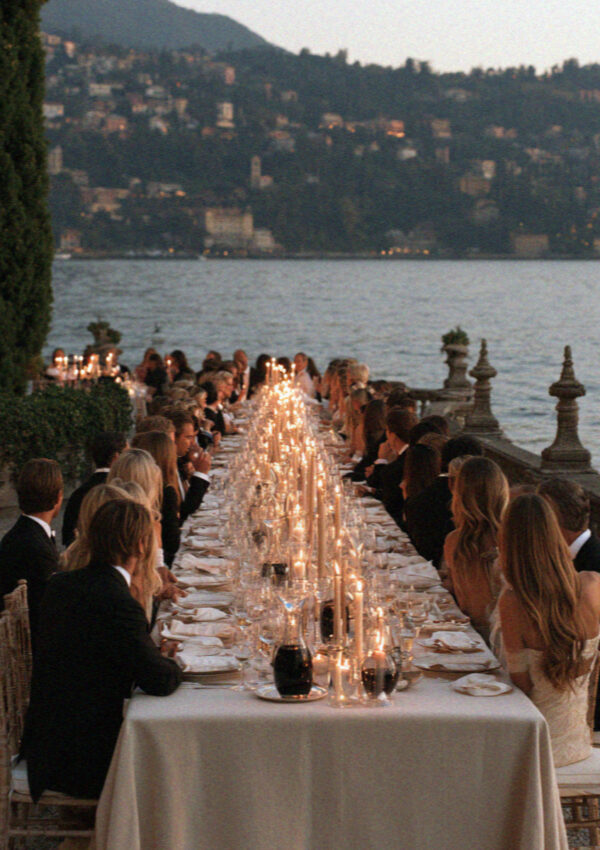
One of the old villas, the kind with a name and a history I half-read from a card beside the gate and have already misplaced. Statues stood along the balustrade, patient, looking out at the water the way they have looked at it for two hundred years. The lake went flat and silver toward the mountains. A ferry drew its slow line across it, and then there was no ferry, only the line, and then not even that.
I stood at the stone rail and forgot to move on. The marble had kept the day in it and was warm beneath my hands. Below, the water did almost nothing, which is what it does best here.
There is a thing that happens at the start of a place, before it has given you anything to remember it by. Everything is still possible and nothing has been spent. You are somewhere on the other side of this, reading it after the fact, already knowing which of these days turned out to matter. I did not know yet. That is the difference between us, and on the first day it is the only one.
In the evening the light came down from the mountains and lay upon the water and then, without ceremony, went. The town set its lamps out one by one along the shore, and they ran across the lake in long, soft lines. It went unrecorded. Some things are only for the person standing at the rail, and the lake, I think, prefers it that way.
The rest can wait for morning.
V.
More from the day








Read also: Varenna – The Town That Climbs
Planning your own days on the lake? See Victoria’s Complete Guide to Lake Como.