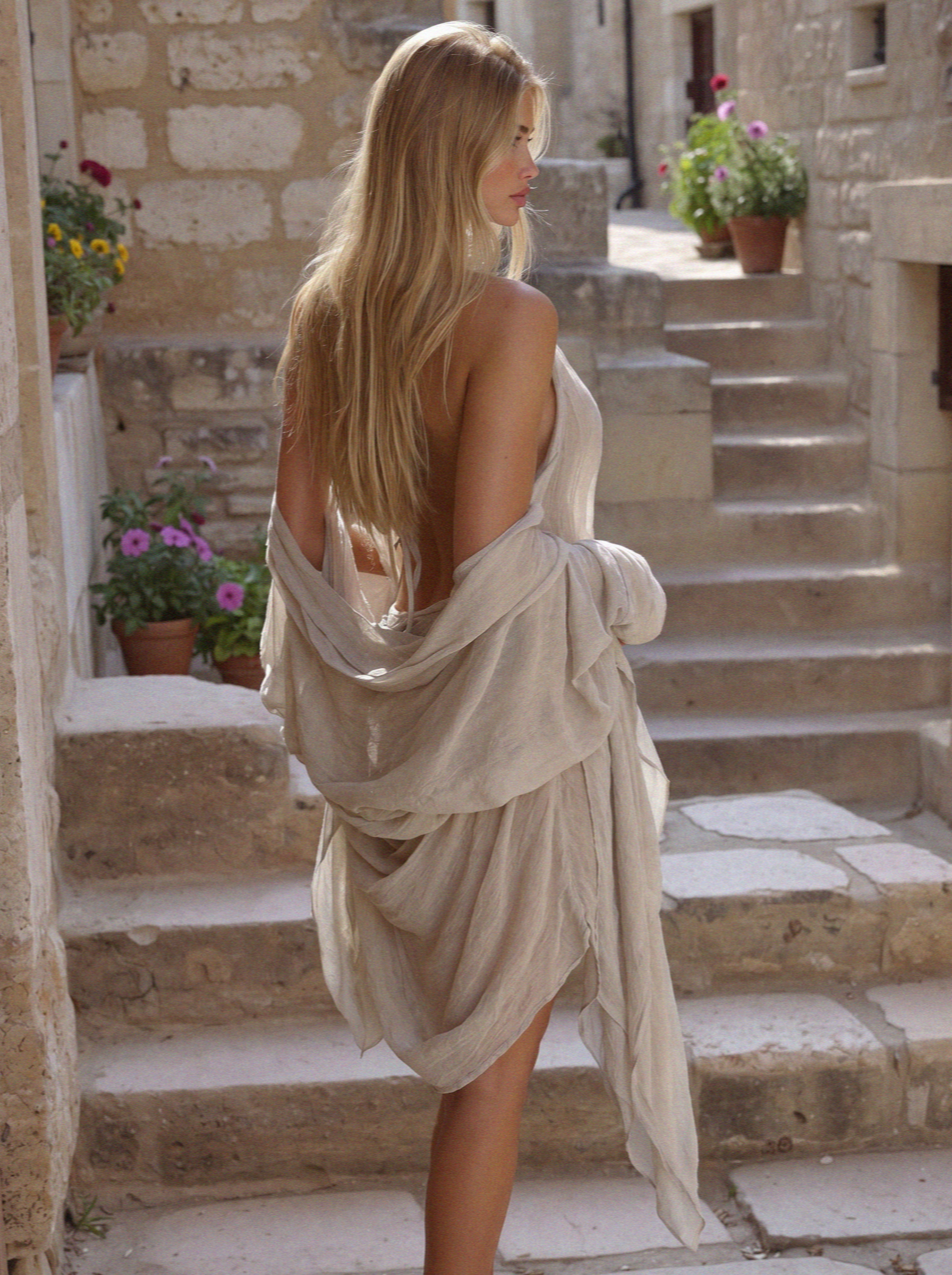
Assisi is small enough to walk end to end in about twenty-five minutes, which fools a lot of people into thinking one day is plenty. It is, just about. Give the town a single day and you will see the great things, the Basilica, the main square, Santa Chiara, and go home happy. But the town has a slower self that only comes out when the buses leave, and two days lets you climb into the hills, catch the light change on the stone, and stop rushing. Below is exactly how I would spend it, walked in the order the streets actually run, with the town’s steep spine in mind. If you want the wider context first, this fits inside my complete guide to Assisi.
Day 1, Morning: Basilica di San Francesco and Via San Francesco
Start at the far western, lower end of town, at the Basilica di San Francesco, and start early. Go for opening, around 08:30 for the Upper church, and you will have Giotto’s twenty-eight-scene “Legend of St Francis” cycle to yourself before the coach groups arrive. Two churches sit stacked here: the bright Gothic Upper church with its single soaring nave, and the dark, low Romanesque Lower church below, where Cimabue’s Maestà, Simone Martini and Pietro Lorenzetti wait in the gloom. Beneath that again is the crypt with the tomb of St Francis. Entry is free.
Two practical things. There is no photography inside, which protects the frescoes, so put the phone away and simply look. And the dress code is enforced: shoulders and knees covered, both of you if you are travelling as a pair. Give it an hour and a half if you love painting, an hour if you are moving briskly.
When you come out, walk uphill along Via San Francesco, the sloping medieval street of pale stone and arches that connects the Basilica to the centre. It is one of the loveliest approaches in Umbria and worth dawdling on. Duck into a shop, buy nothing, admire the light on the limestone. If you want the full ranking of what is worth your time in town, I keep it in my guide to the best things to do in Assisi.
Plan Your Visit to Assisi
A few things I booked and loved. These help support the blog, at no cost to you.
- Where I stayed: search Assisi hotels
- Tickets and things to do in Assisi
- Rent a car to explore the area
- Stay connected: get a travel eSIM
This section contains affiliate links. If you book through them I may earn a small commission, at no extra cost to you.
Day 1, Afternoon: Piazza del Comune and Santa Chiara
Via San Francesco delivers you into Piazza del Comune, the main square, built over the old Roman forum. The showpiece here is the Temple of Minerva, a 1st-century BC Roman temple with six intact Corinthian columns, now a church called Santa Maria sopra Minerva. It is free to step inside, and the contrast between the severe pagan front and the fussy Baroque interior is one of those small delights the town does so well. This is your lunch stop: the cafes and terraces on the square face the temple, so take a table, order torta al testo, the split griddle flatbread filled with salumi or cheese that is the Assisi staple, and watch the columns.
Afterwards, carry on east and slightly uphill to the Basilica di Santa Chiara, with its pink-and-white striped facade and great flying buttresses. Inside, in the Oratorio del Crocifisso, hangs the original 12th-century San Damiano Crucifix, the one that is said to have spoken to Francis and told him to repair the church. St Clare’s tomb is in the crypt below. Entry is free. Do not leave without going out to the terrace: the valley view from here, olive groves rolling toward Perugia, is the first of the two great panoramas the day will give you.
Day 1, Evening: Aperitivo and Dinner on the Square

This is the hour Assisi is quietly best. The day-trippers thin out, the stone goes gold then rose, and the vicoli, those narrow arched lanes, glow under the lamps. Drift back to Piazza del Comune for aperitivo on one of the terraces facing the Temple of Minerva, a glass of something Umbrian in hand as the light drops. If you want to make a small ceremony of it, Bibenda Assisi on Via San Rufino pours guided flights of local wines with truffle, salumi and cheese, which is more a tasting than a drink.
For dinner, I would book Trattoria Pallotta, a long-running family place just off the square, for proper Umbrian home cooking: strangozzi, the hand-rolled eggless pasta, pigeon, rabbit. If you want something more refined, La Locanda del Cardinale sets its tables over an excavated Roman domus with the mosaics still visible under glass. Either way, do not over-plan the evening. Half the pleasure is wandering the lamplit lanes with no particular destination. I have written far more on all of this in my guide to where to eat in Assisi.
If you only have one day, this is where it ends, and it ends well. Everything below is the argument for staying the night.
Day 2, Morning: Eremo delle Carceri or San Damiano
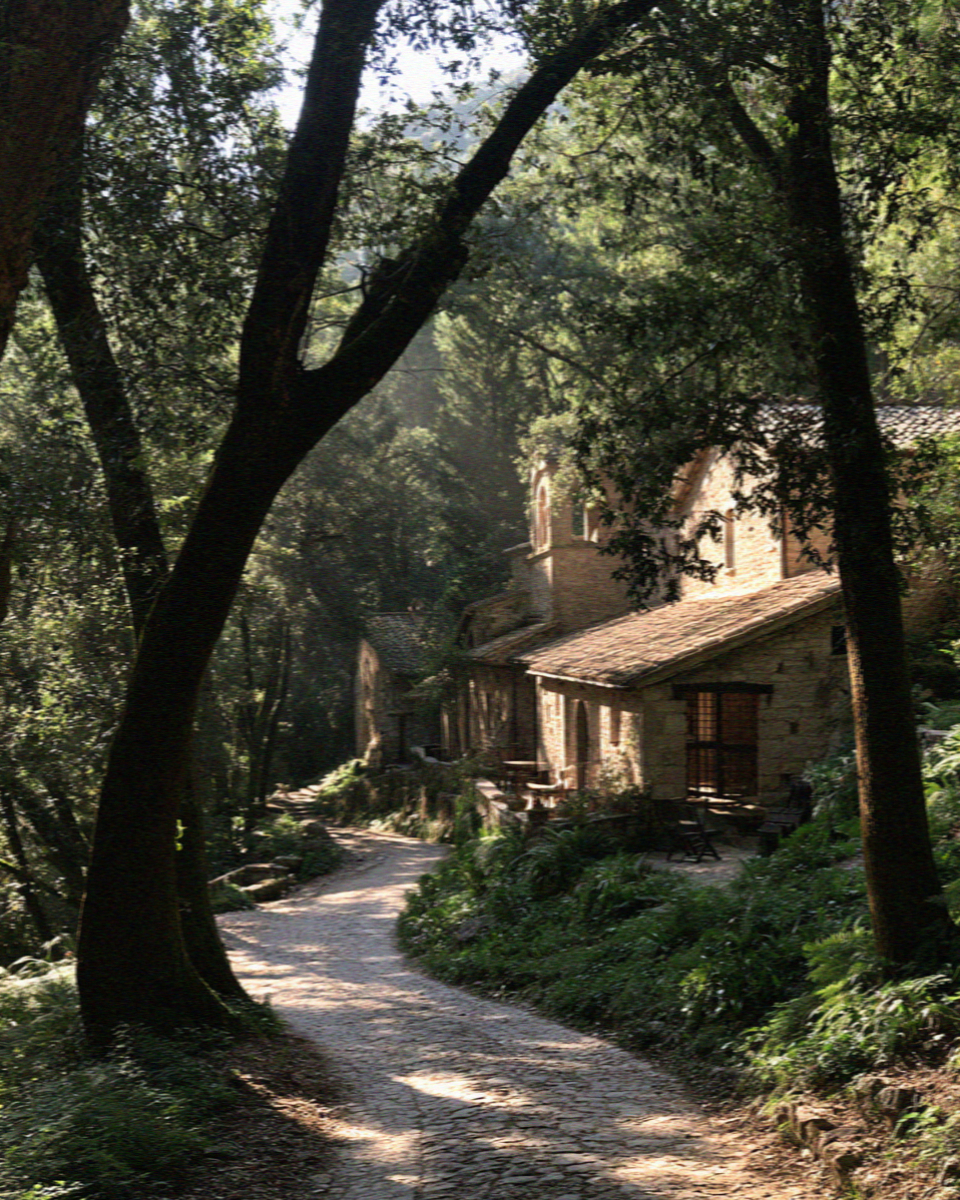
Day two is for the quiet places, and I would give the morning to the Eremo delle Carceri, the forest hermitage on Monte Subasio about four kilometres above town, where St Francis withdrew to a grotto. It is free, it is hushed, and it is the closest I have come to understanding why he chose this landscape. There is no regular city bus, so take a taxi or drive up (there is parking on site), or, if your legs are willing, walk the steep hour to an hour-and-a-half climb from Porta Cappuccini. In summer it opens around 06:15 and closes over the middle of the day, roughly 12:45 to 14:30, so go early.
If a mountain hermitage feels like too much before coffee, the gentler alternative is San Damiano, the little convent below the walls, about a fifteen to twenty minute downhill walk from Porta Nuova. This is where the crucifix first spoke to Francis, where St Clare and the Poor Clares lived, and where Francis composed the Canticle of the Creatures. It is atmospheric and far less crowded than anything in town, and it is free. Either choice gives you the same thing: a morning of stillness before the afternoon’s sights.
Day 2, Afternoon: Santa Maria degli Angeli and Rocca Maggiore
Come back down and, if you have a car or you are heading for the train anyway, stop at Santa Maria degli Angeli in the valley. This enormous Baroque basilica, about a five-minute walk from Assisi’s railway station, was built around the tiny Porziuncola, the humble chapel Francis restored with his own hands, and it also holds the Cappella del Transito where he died. The basilica is free (the Porziuncola museum is ticketed). The scale of the thing, a vast dome sheltering a chapel you could almost touch both walls of, is the whole story of Francis in one building.
Save the best view for last. Climb up to the Rocca Maggiore, the hilltop fortress, for a roughly 360-degree sweep over the rooftops, the Basilica and the valley toward Perugia and Spoleto. It is a steep uphill walk and the ticket is around EUR 8, or a bit less reduced, with a combined civic ticket around EUR 10; hours are seasonal, so confirm on the day. Time it for late afternoon. The complex faces south-west, so the golden hour sets the whole valley alight, and this is the classic photograph of Assisi you have already seen a hundred times and will still want to take yourself.
With More Time, and How to Pace Yourself
If you have a third day, spend it in the valley towns: Spello for flower-hung alleys is barely ten minutes by train, and Montefalco, the “balcony of Umbria,” is worth it for the bold Sagrantino reds. I gather the routes in my guide to getting to Assisi and day trips.
A word on pacing, because it matters here more than in most towns. Assisi is steep. The main axis runs from the Basilica di San Francesco at the lower west end, up through Piazza del Comune, to Santa Chiara and Piazza Matteotti at the upper east end, and “up” is not a figure of speech. It is cobbles, stairs and gradients the whole way, so wear proper shoes and do not schedule yourself minute by minute. If you drive, park below the walls (the Mojano and Porta Nuova car parks have escalators that spare you the worst of the climb) rather than fighting the camera-enforced ZTL in the centre. And build the day around the town’s rhythm: churches and hills in the cool morning, a long lunch, sights and views as the light softens.
Frequently Asked Questions
Is one day in Assisi enough?
Yes, for the essentials. In a single well-paced day you can see the Basilica di San Francesco, walk Via San Francesco, lunch on Piazza del Comune by the Temple of Minerva, and visit Santa Chiara, ending with aperitivo on the square. Two days lets you add the Eremo delle Carceri or San Damiano, Santa Maria degli Angeli in the valley, and the Rocca Maggiore view without hurrying.
What is the best order to see Assisi in?
Walk with the hill, not against it. Start low at the Basilica di San Francesco in the morning, climb gently east through Piazza del Comune to Santa Chiara during the day, and save the steep Rocca Maggiore for late afternoon light. Escalators from the lower car parks help with the climb if your legs are tired.
Do I need a car for this Assisi itinerary?
Not for the town itself, which is entirely walkable. A car (or a taxi) helps for the Eremo delle Carceri up on Monte Subasio, since there is no regular city bus, and for reaching valley day trips like Spello and Montefalco. Within the walls a car is a liability thanks to the ZTL, so park below and walk up.
Wherever you base yourself shapes how this itinerary flows, so it is worth reading my complete guide to Assisi alongside it, then sorting out where to stay in Assisi inside the walls for the magic evenings, planning your meals with my guide to where to eat in Assisi, and skimming the best things to do in Assisi so nothing on your list gets missed. Take it slowly. The town rewards it.