If I could give Antibes only one number, it would be three days. Two is enough for the old town and the Cap, the two halves that make the place. A third adds the sea, properly, from a boat or an island. A fourth takes you up into the hills behind, where Picasso, Léger and the perfumers worked.
This is the route I would follow, day by day, with the timings that matter, because Antibes has a habit of closing exactly the thing you wanted on the day you chose. The background to every stop below is in my complete guide to Antibes and Cap d’Antibes.
How to split the days
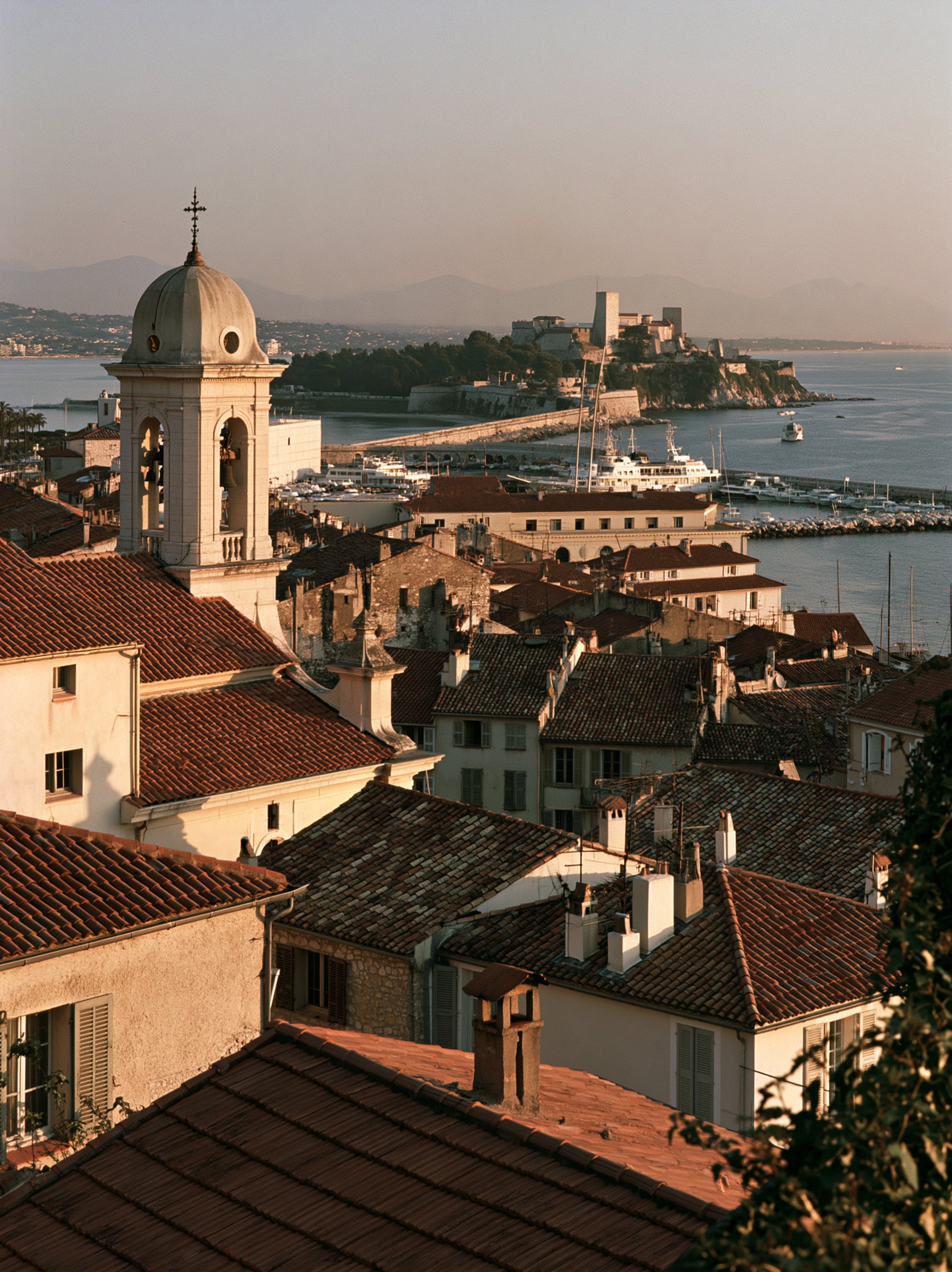
Antibes splits itself up for you. On the east side, walled and compact, are the old town and Port Vauban. Cap d’Antibes, the wooded peninsula to the south, is all coast path, villas and rocks. Juan-les-Pins, on the west side of the Cap, is the resort, with long sandy beaches and the jazz festival.
Give each its own day, in that order if you can, and keep the inland villages for last. Then check the calendar before you fix anything. Mondays are the trap: the Picasso Museum, Fort Carré and the Nomade all close, and outside June, July and August so is the market. Never give the old town a Monday. The Villa Thuret garden opens on weekdays only and Villa Eilenroc on Saturdays only, which means the Cap day is best on a weekday, unless Eilenroc matters more to you.
Day one: the old town
Start early at the Marché Provençal on the Cours Masséna, under the old iron roof. It opens at six and is winding down by one, so be there by nine at the latest, with breakfast from the stalls: a slice of socca or pissaladière and a coffee at one of the cafés around the hall.
From the market it is a few steps to the Musée Picasso in the Château Grimaldi, on the sea wall. It opens at ten. The pictures inside were made in these very rooms in 1946, and the windows open straight onto the sea. Allow an hour and a half, and do not miss the terrace of sculptures facing the water. The old cathedral, with its ochre front, is right beside it.
After lunch in the old town, walk south along the ramparts towards the Bastion Saint-André, then wander back through Le Safranier, the tiny quarter of low houses and flowered steps. Late in the afternoon, go north round the harbour, past the yachts of Port Vauban, to the Nomade, Jaume Plensa’s great seated figure of steel letters on the Bastion Saint-Jaume, with the bay behind it. If you have the energy, Fort Carré stands on the point beyond the harbour, and in July and August it stays open until six.
Dinner in the old town, then a last walk on the walls in the dark. My guide to Antibes old town covers every stop in detail.
Day two: the Cap
Go early, before the heat. Take the bus or a taxi out to La Garoupe for the Sentier de Tire-Poil, a loop of about two hours round the end of the Cap over uneven but secured ground, with the sea on one side and the backs of great villas on the other. A rough sea closes it, so look at the forecast first.
Back at Garoupe, swim from the public strip of the beach, or climb to the lighthouse and the Garoupe chapel on the plateau above, the highest point of the Cap, for the view along the coast to the Alps.
For lunch, if you are here between late April and mid-October, book lunch at Eden-Roc, the Hôtel du Cap-Eden-Roc’s restaurant in the pavilion on the water, which takes reservations from non-residents and is the easiest way to sit there without a room. From the restaurant you look straight back up the Grande Allée to the white château. My guide to the Hôtel du Cap-Eden-Roc explains the history and the practicalities.
In the afternoon, on a weekday, walk through the Villa Thuret botanical garden (free, closes at six in summer), or on a Saturday visit Villa Eilenroc at the tip of the Cap. Then swim off the rocks somewhere quiet and go back to town for dinner.
Day three: Juan-les-Pins and the islands
Day three is for the water. Take the train to Cannes, ten minutes from Antibes, and a boat from the old port to Sainte-Marguerite, the larger of the Lérins Islands, about fifteen minutes across. Spend the morning on the forest paths around the island and swim from the rocks on its south side, which faces the open sea and the smaller island of Saint-Honorat.
Come back in the early afternoon and spend the rest of the day at Juan-les-Pins: the long sandy beaches, the shade of the Pinède Gould, and a drink at the Hôtel Belles Rives, a house with a Fitzgerald story of its own. If you are here between 9 and 19 July (in 2026; the dates move a little each year), stay for Jazz à Juan in the pines; even without a ticket, the early-evening sets on the second stage are free.

Day four: the villages inland
On a fourth day, go up into the hills. With a car, drive to Saint-Paul-de-Vence first thing, before the crowds, walk the ramparts and visit the Fondation Maeght, then stop at Biot on the way back to watch the glassblowers and see the Fernand Léger museum. Without a car, Vallauris and Biot are easier, by bus, and Grasse, for the perfume houses, is a direct train. Léger’s museum and Picasso’s chapel are both shut on Tuesdays, so give this day another date.
I describe each of these properly in my guide to the best day trips from Antibes.
If you only have two days
With two days, do day one and day two exactly as above, and give up the islands. If you must choose between them and the Cap, choose by temperament: the Cap if you want to walk and swim off rocks, the islands if you want forest and a boat. On the evening of day two, walk to Juan-les-Pins across the Cap for a sunset drink, so you have seen the resort side of the town too.
If it rains
Rain on the Riviera is rarely long. The Picasso Museum is the obvious first choice, followed by the archaeology museum in the Bastion Saint-André and the Musée Peynet, both small and cheap. The market is under a roof. Further afield, the Fernand Léger museum in Biot, the Fondation Maeght and the museums of Nice all make good wet days. Do not walk the Tire-Poil path after heavy rain or in wind; it closes in rough weather for good reason.
What the days cost
Antibes can be as cheap or as dear as you like. The Picasso Museum costs 12 euros, and the town’s seven-day pass, at 15 euros, takes in the other museums and Fort Carré, so it wins as soon as you see a second. Local Envibus tickets cost 1.50 euros on board (less if bought in advance), and a day pass 3.50 euros. A train to Cannes costs a few euros, and the boat to Sainte-Marguerite about 19 euros return.
The Tire-Poil path, the ramparts, the Nomade, the lighthouse viewpoint and the Villa Thuret garden are all free. Lunch at Eden-Roc is the big expense of the route; set aside a grand hotel budget for that day and keep the others simple, with socca at the market and a picnic on the Cap.
Where to sleep for this route
For this route, sleep in the old town or by the port. The market and the museums are on your doorstep, the station is a short walk for the train to Cannes and the coast, and the buses to the Cap leave from the town. If you want the sea more than the town, a room by the beaches just south of the walls splits the difference between town and Cap.
I go through every area, with names and prices, in my guide to where to stay in Antibes.
Frequently Asked Questions
How many days do you need in Antibes?
Three days is ideal: one for the old town, one for the Cap and one for Juan-les-Pins and the Lérins Islands. Two days covers the old town and the Cap, and a fourth adds the hill villages inland.
Which day should you avoid for the old town?
Monday. The Picasso Museum, Fort Carré and the Nomade are all closed, and outside the summer months the market is too, so make Monday your beach or day-trip day.
Can you do Antibes and the Lérins Islands in one day?
You can, but it is a rush. A better plan is the islands in the morning, via a ten-minute train to Cannes and a short boat, and Juan-les-Pins or the old town walls in the evening.
What can you do in Antibes when it rains?
Start with the Picasso Museum, then the archaeology museum in the Bastion Saint-André and the Musée Peynet. The market is under cover, and the Fernand Léger museum in Biot, the Fondation Maeght and the museums of Nice all suit a wet day.
Can you follow this itinerary without a car?
Yes, except for Saint-Paul-de-Vence on day four, which is far easier by car. The old town is on foot, buses and taxis reach the Cap, the train takes you to Cannes for the island boats, and Vallauris, Biot and Grasse work by bus or train.
Read also: The Best Day Trips from Antibes | Cap d’Antibes: the Coastal Path, the Lighthouse and the Villas | Victoria’s Complete Guide to Antibes and Cap d’Antibes