Some links in this guide are affiliate links. If you book through one, this site may earn a small commission, at no extra cost to you. How this works.
The best things to do in Mykonos are not the ones on the posters, or not only those. The windmills and Little Venice are lovely, and you should see them. But the island I remember is the early morning town, an ancient city lying open on the next island, a lighthouse at the end of a dirt track, and an afternoon on a beach with no sunbeds at all.
This is everything I would do, roughly in the order I would do it, with what each costs and how long it takes. For the whole island, start with my complete guide to Mykonos.
What to book before you come
Three things I would book ahead, because the boats and the beach beds fill up in summer.
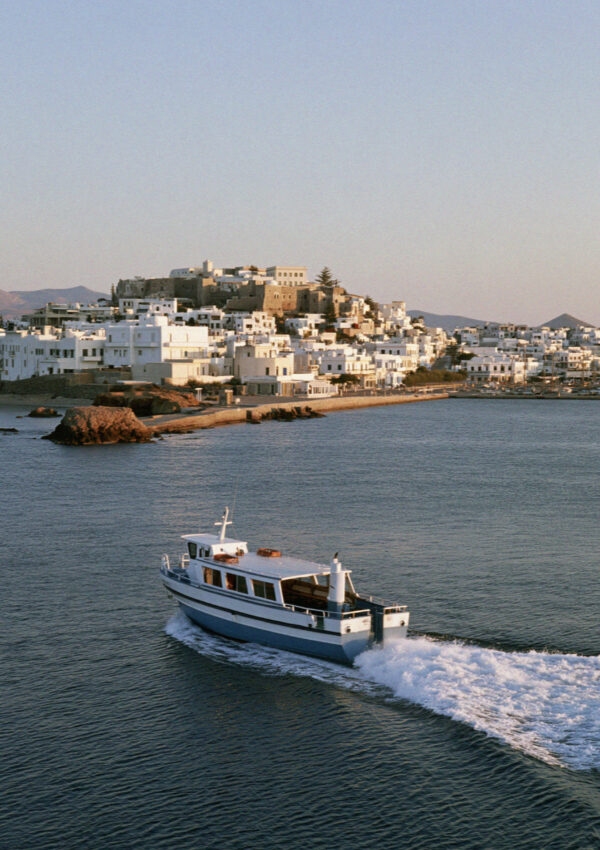
Delos with a guide, and a swim off Rhenia
A small boat across, a proper guide on the site, then the beaches on the island next door.
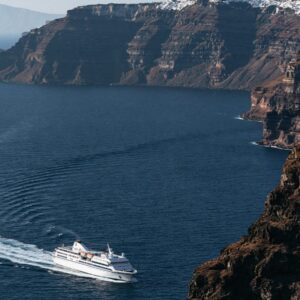
The south coast by boat, into the sunset
Swim stops in bays you cannot reach by road, food and drinks on board, back as the light goes.
A day on a sunbed at Super Paradise
The transfer and a reserved bed at a south coast beach club, for a day that needs no planning.
Each button opens GetYourGuide in a new tab, so this page stays open. Booking through them supports the blog at no cost to you.
Lose the map in Mykonos Town
The first thing to do on Mykonos is the simplest. Go into the old town early, before nine, and walk without a plan.
The lanes are a maze, built narrow and crooked, and a map is almost useless in them. That is the point. Pick a direction, turn whenever something catches your eye, and let the town decide. At that hour the shops are shut, the lanes are being swept and washed, the cats are on the warm steps and an old woman in black is scrubbing her doorstep with the efficiency of someone who has done it every morning for fifty years. By eleven the lanes are full and it is a different place.
Come back in the evening, when the light comes in low and sideways and stripes the walls through the cane and timber shades over the lanes. Then again after dark, when the town is lit and the shops stay open until midnight.
Cost: free. Time: an hour in the morning, as long as you like in the evening.
I have mapped out the quarters, and a walk through them, in my guide to Mykonos Town.
The windmills and Little Venice at sunset
Everybody does this, and it is still worth doing once.
Walk up to the row of white windmills on the low ridge at the southern edge of town an hour or so before sunset. They are called Kato Mili, and they once ground the grain for the hard ship’s biscuit that sailors carried out of the harbour. Then look down at Little Venice, the row of old captains’ houses built straight out of the sea, with their wooden balconies over the water.
Then decide. Either sit on the rocks with everyone else and watch the sun go down behind the sea, or take a table in one of the Little Venice bars, booked or claimed early, with the spray reaching the drinks on a windy evening. I did both on different nights. The rocks were better.
Cost: free, or the price of an expensive cocktail. Time: an hour and a half.
Panagia Paraportiani
At the edge of the old town, on the headland of the Kastro quarter, stands the strangest church in the Cyclades.
From a distance it looks sculpted, a soft white mass of curves and domes. Close up, you see it is not one church but five, four at ground level and one above them, joined over roughly two centuries from the fifteenth century onwards. The curves are simply where one chapel meets the next. The name comes from a side gate in the walls of the old castle that once stood here. The gate has gone; the church kept its name.
It is usually locked, and that hardly matters. Walk round it slowly, see it at different times of day, and sit on the steps for a while.
Cost: free. Time: twenty minutes, or longer if you sit.
Delos, the island next door
If you do one thing on Mykonos that is not a beach, make it Delos.
A short boat ride from the old harbour, Delos was the sacred island where Apollo and Artemis were said to be born, and later one of the great trading ports of the Mediterranean. Today it is an entire ancient town lying open under the sky: temples, markets, a theatre, houses with their mosaic floors, a hill to climb, and a row of marble lions. Apart from the site guards, nobody lives there, and visitors may not stay overnight.
The boats take about half an hour, and the site ticket is separate from the boat. Go on the first morning boat, take water and a hat, and allow three or four hours. I meant to go, changed my mind on the morning and stayed in town, and I would still put it first for anyone else.
Cost: about twenty euros for the site, plus the boat. Time: a morning.
Times, tickets and what to see are all in my guide to how to do a Delos day trip from Mykonos.
A day on the south coast by water taxi
This is the best beach day on the island, and one of the cheapest.
Small wooden boats run along the south coast in the season, from Ornos and Platis Gialos east past Paraga, Paradise and Super Paradise to Agrari and Elia, pulling up on the sand or at a short jetty. One all-day pass lets you hop on and off as often as you like, so you can swim at three or four beaches in a day without a car or a taxi.
I would take the bus from town to Platis Gialos in the morning, the boat east to Agrari for a quiet swim, back to Super Paradise or Paraga for lunch, and Platis Gialos again in time for the bus home. Some people walk the coastal path between Platis Gialos and Paraga instead of taking the first leg by boat.

Cost: the day pass is around twenty euros, cash. Time: a whole day.
Every beach on the route is in my guide to the best beaches in Mykonos.
A boat to Rhenia
Rhenia is the larger, empty island just beyond Delos, and it has the clearest water around Mykonos.
Nobody lives there apart from a few shepherds, and there are no roads to speak of, only bare hills and coves of pale sand. You reach it by boat, usually on a day cruise that combines a stop at Delos with a few hours of swimming and lunch on board at Rhenia. If the meltemi is up, the boats switch to the sheltered south coast instead, so keep a spare day in your plans.
Cost: shared day cruises run from roughly eighty-five to one hundred and sixty-five euros with lunch. Time: most of a day.
I have compared the boat days in my guide to Mykonos boat tours.
Ano Mera and the monastery
Ano Mera, in the middle of the island, is the only real village on Mykonos, and it feels like a different place.
It grew up around the monastery of Panagia Tourliani, founded in 1542 and dedicated to the island’s patron saint. The monastery is whitewashed, with a tall marble bell tower and a red dome, and inside there is a carved wooden iconostasis and a small museum of church treasures. Modest dress is expected. In the square in front of it, a few tavernas set out tables under the trees, and lunch there is calmer and cheaper than anything on the coast.
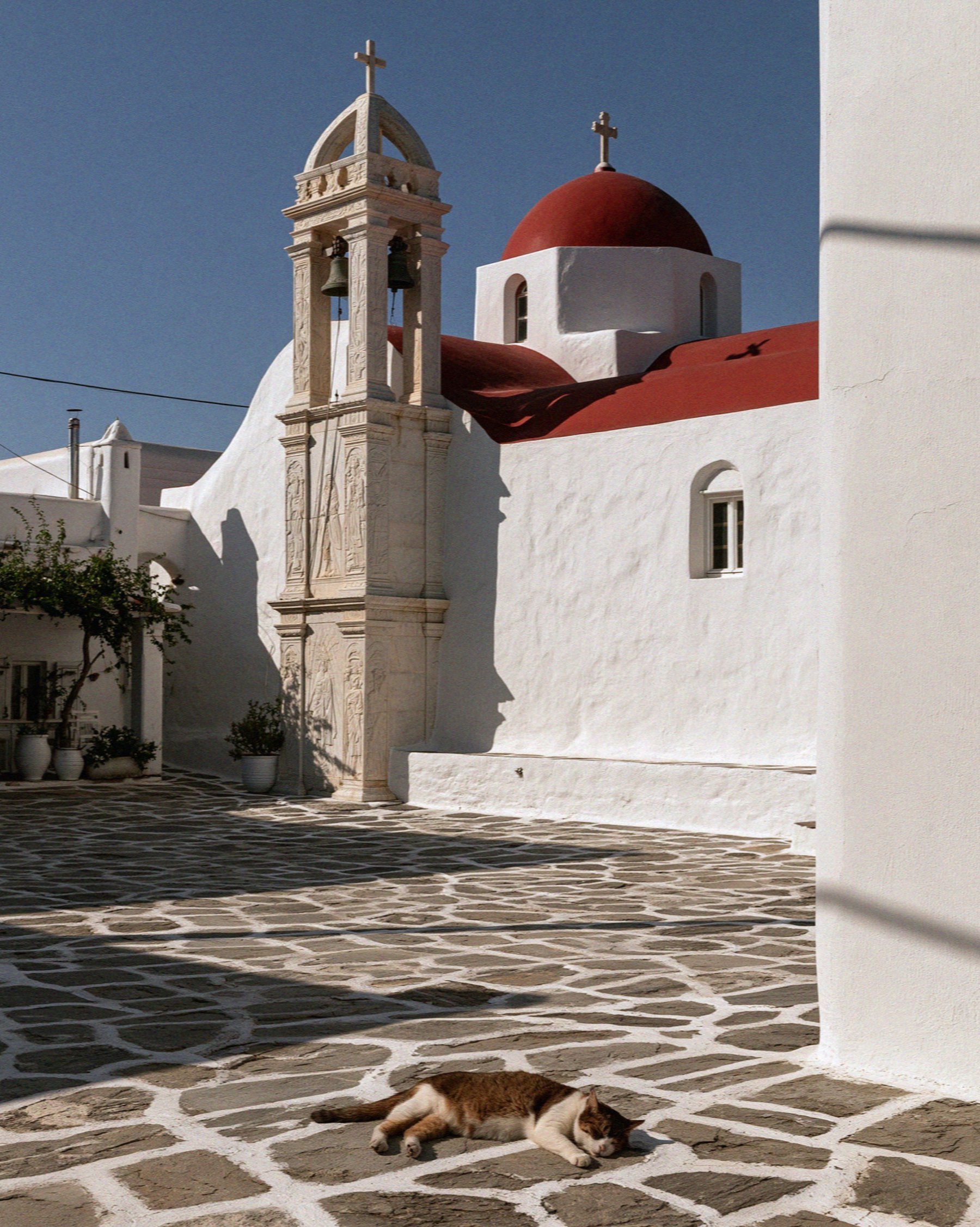
Cost: free, a donation for the museum. Time: a long lunch. Buses run from the Old Port station in town.
Armenistis lighthouse
At the north-western tip of the island, at the end of a narrow road, a squat white lighthouse stands on a wild cape facing Tinos.
It was built in 1891, after the British steamship Volta was wrecked off this coast in 1887. You cannot go inside, but the drive out, through dry hills and stone walls, and the view across the strait are worth the trip, and late in the afternoon the light is lovely. Take a car or a quad, and something warm, because the wind up there is real.

Cost: free. Time: an hour from town, there and back, with a stop.
The wild beaches of the north
On a calm day, drive to the north coast.
Agios Sostis is a sandy bay with no sunbeds, no club and no music, and Kiki’s, the most famous taverna on the island, on the hill above it. Panormos next door is wider, with a couple of beach bars. Further east, at the end of rough roads, Fokos has a single taverna and Mersini almost nothing at all. These are the most beautiful beaches on Mykonos when the wind drops, and the least welcoming when it does not.
Cost: free, apart from lunch. Time: an afternoon, with a car.
The museums in town
Mykonos Town has a handful of small museums, each worth half an hour.
The Archaeological Museum, near the Old Port, is small and good, with finds from Rhenia and the Mykonos pithos, a great clay jar from the seventh century BC decorated with one of the earliest known images of the Trojan Horse. It is closed on Tuesdays. Lena’s House, at Three Wells, is a nineteenth-century middle-class Mykonian house kept exactly as it was, with its furniture, linens and family portraits, and opens on summer evenings. The Aegean Maritime Museum next door has ship models, maps and navigation instruments. The Folklore Museum in the Kastro quarter is in an old sea captain’s house.
Cost: a few euros each. Time: an hour or two in total.
A day trip to Tinos
Tinos is the next island to the north, a short ferry ride away, and the opposite of Mykonos in almost every way.
It is a pilgrimage island. The great church of Panagia Evangelistria, up the hill from the port, holds an icon believed to work miracles, and pilgrims walk up to it, some of them on their knees. Beyond the town there are dozens of marble villages, dovecotes and very few visitors. Fast ferries take from about a quarter of an hour, and there are several a day in the season, so it is an easy day out, especially if the clubs are not your thing.
Cost: ferry tickets from around ten euros each way. Time: a full day.
If you are fitting all this into a few days, my Mykonos itinerary puts it in order, and when to come for each of these is in my guide to the best time to visit Mykonos.
Frequently Asked Questions
What is Mykonos best known for?
Its whitewashed town, the windmills and Little Venice, the beaches and beach clubs of the south coast, and its nightlife. It is also the gateway to Delos, one of the most important ancient sites in Greece.
Is Delos worth visiting from Mykonos?
Yes. It is a short boat ride and an entire ancient town lies open on the island. Go on an early boat, take water and a hat, and allow a whole morning.
What is there to do in Mykonos apart from beaches and clubs?
Walk the old town early, visit Delos, see Ano Mera and its monastery, drive to Armenistis lighthouse, see the museums in town, or take a ferry to Tinos.
How do you get between the beaches in Mykonos?
The water taxi runs along the south coast from Ornos and Platis Gialos to Elia, with an all-day pass. Buses from town reach most south coast beaches too.
What should you do in Mykonos at sunset?
Watch it from the windmills or a bar in Little Venice once, then try somewhere quieter, along the coast to the south or from a boat.
Read also: Mykonos Town: Little Venice, the Windmills and the Old Lanes | How to Do a Delos Day Trip from Mykonos | Victoria’s Complete Guide to Mykonos