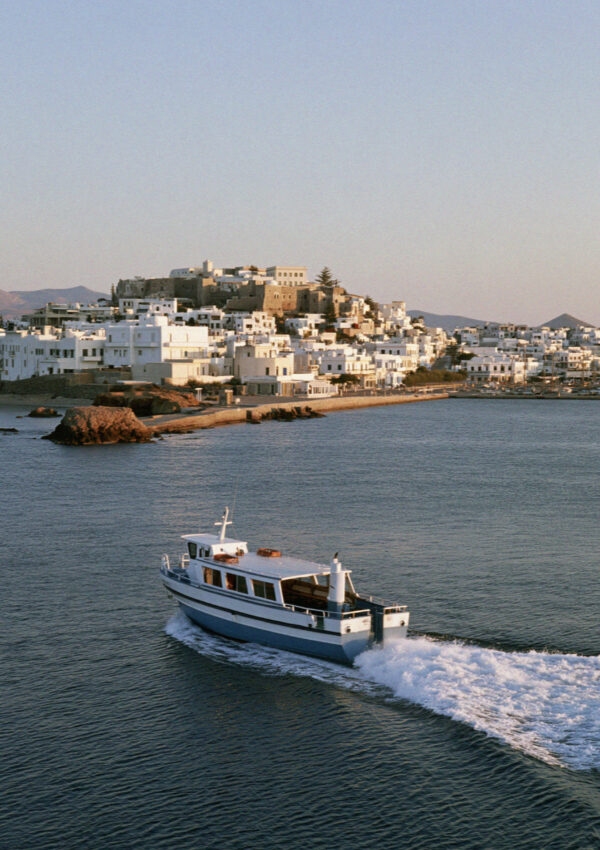
For most of its history, Naxos kept its back to the sea. The fertile valleys and the high ground of the interior were where the island farmed and prayed, and Halki was the busy heart of the interior. What those centuries left behind is the best reason to choose Naxos over its neighbours: marble lanes and Venetian towers, Byzantine chapels among the olives, and ancient statues still lying in the quarries where they were cut.
I spent one long day inland: up Mount Zas from the spring above Filoti, then the kouros at Flerio, then Halki for kitron and a plate of Naxian potatoes. The rest of this guide is where I would go with a second day, and how to fit it together. For the whole island, see my complete guide to Naxos.
How to see the villages
A car makes this easy. Most of the villages sit on or just off one main road that climbs from Naxos Town through the Tragaea valley to Halki and Filoti, then over the mountains to Apeiranthos, on to Koronos and Komiaki, and down to Apollonas on the north coast. The whole run fits into a long day.
Without one, the KTEL village line from the port serves Halki, Filoti and Apeiranthos. Buy your ticket at the kiosk by the port, not on board, and find out when the last bus back leaves before you go.
Start early whichever way you travel. The roads are slow and winding, and the ticketed sites close in mid-afternoon.
Sangri and the Temple of Demeter
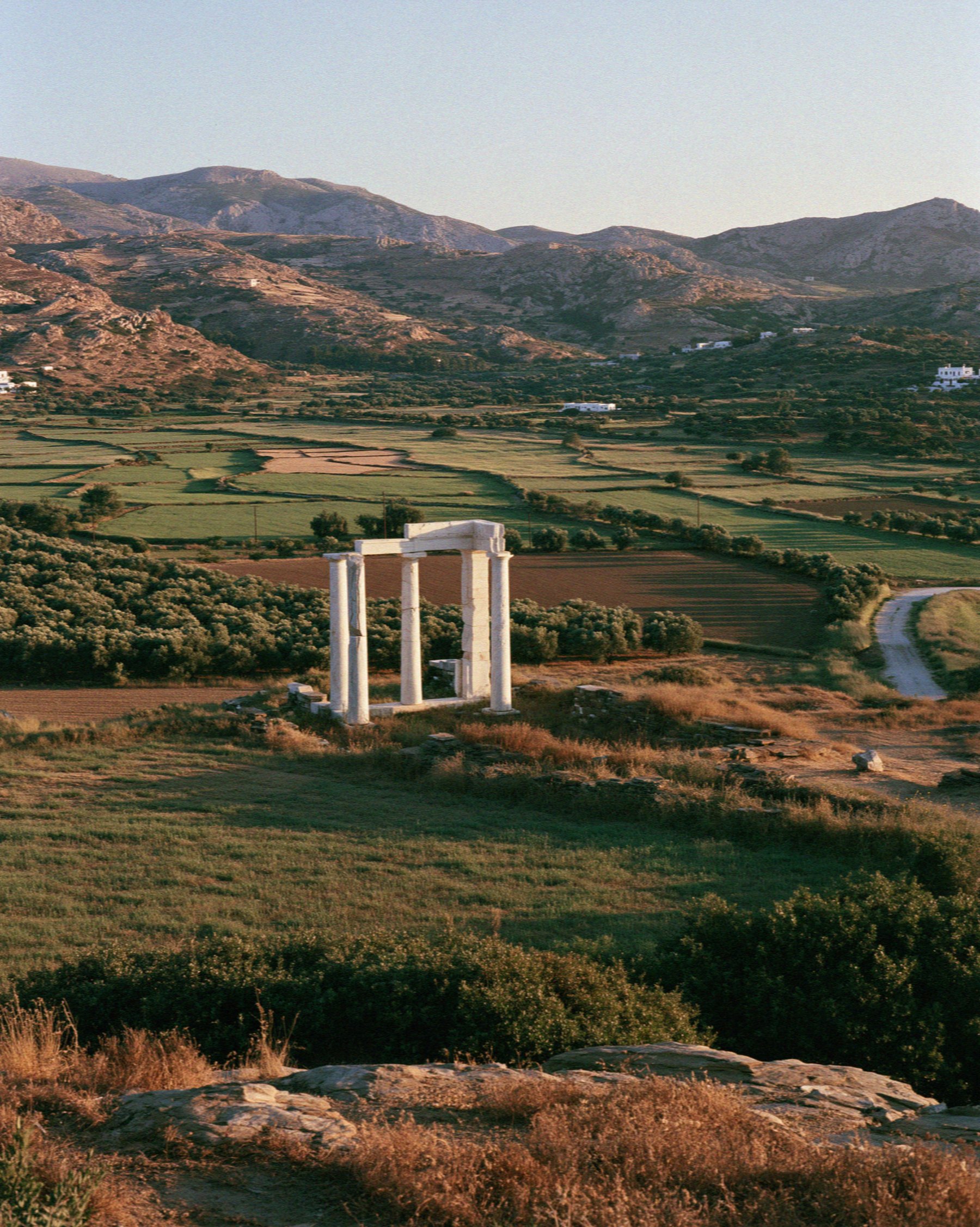
The first stop on the way up is Sangri, a scattering of hamlets on a plateau about half an hour from town. Its Bazeos Tower, an old fortified tower, now hosts the Naxos Festival in summer. Just to the south, on a low hill among the fields at Gyroulas, stands the Temple of Demeter.
It was built around 530 to 520 BC, and every part of it was marble, right down to the roof tiles. In early Christian times a basilica was built over it, reusing its stones, and in recent decades part of the temple has been re-erected from its original blocks. A small museum beside the site holds the finds.
Hours are 08:30 to 15:30, closed on Tuesdays. Entry is 5 euros, 3 reduced, with last entry 20 minutes before closing.
Halki
Halki was once the main town of the interior, and it still carries itself like one: neoclassical houses with tall shuttered windows, a small square, old churches tucked into the lanes, and the Barozzi-Gratsia tower, a fortified Venetian house, at the edge of the village.
Most people stop for kitron. The Vallindras distillery has been making the island’s citron liqueur here since 1896, and its back room still holds the old copper stills. You can walk in, look round and taste for nothing; there is no formal tour. Work through them in order of strength, green, then clear, then yellow, and decide for yourself. I preferred the yellow, having been told firmly on my first night that only the green was worth having.
For lunch, O Yiannis is the taverna in Halki people tend to recommend. Whatever you order, have the fried Naxian potatoes, which deserve every word said about them. My guide to where to eat in Naxos has more of the village tavernas.
Panagia Drosiani
About two and a half kilometres north of Halki, near the road to Moni, is the small stone church of Panagia Drosiani, one of the oldest churches in the Aegean. It is a low cluster of chapels under rough domes, and inside are early Byzantine frescoes, faded, simple and very moving.
There are no published hours I would rely on, so go earlier in the day and be prepared to find the door shut. Cover your shoulders and knees.

Filoti
A few kilometres beyond Halki, Filoti is the biggest village on Naxos, spread across the lower slopes of Mount Zas. It is a working village rather than a pretty one in the brochure sense, and that is its charm: old men at the kafeneio, a large church, steep lanes climbing away from the main road, and cafes around the central square where the bus stops.
Filoti is also the base for Zas. The road to the spring at Aria, where the main path begins, leaves from above the village; the spring is about two kilometres up. If you are climbing, take the early bus from town and you will have the whole morning ahead of you. My guide to hiking Mount Zas has both routes, the timings and what to carry.
Apeiranthos
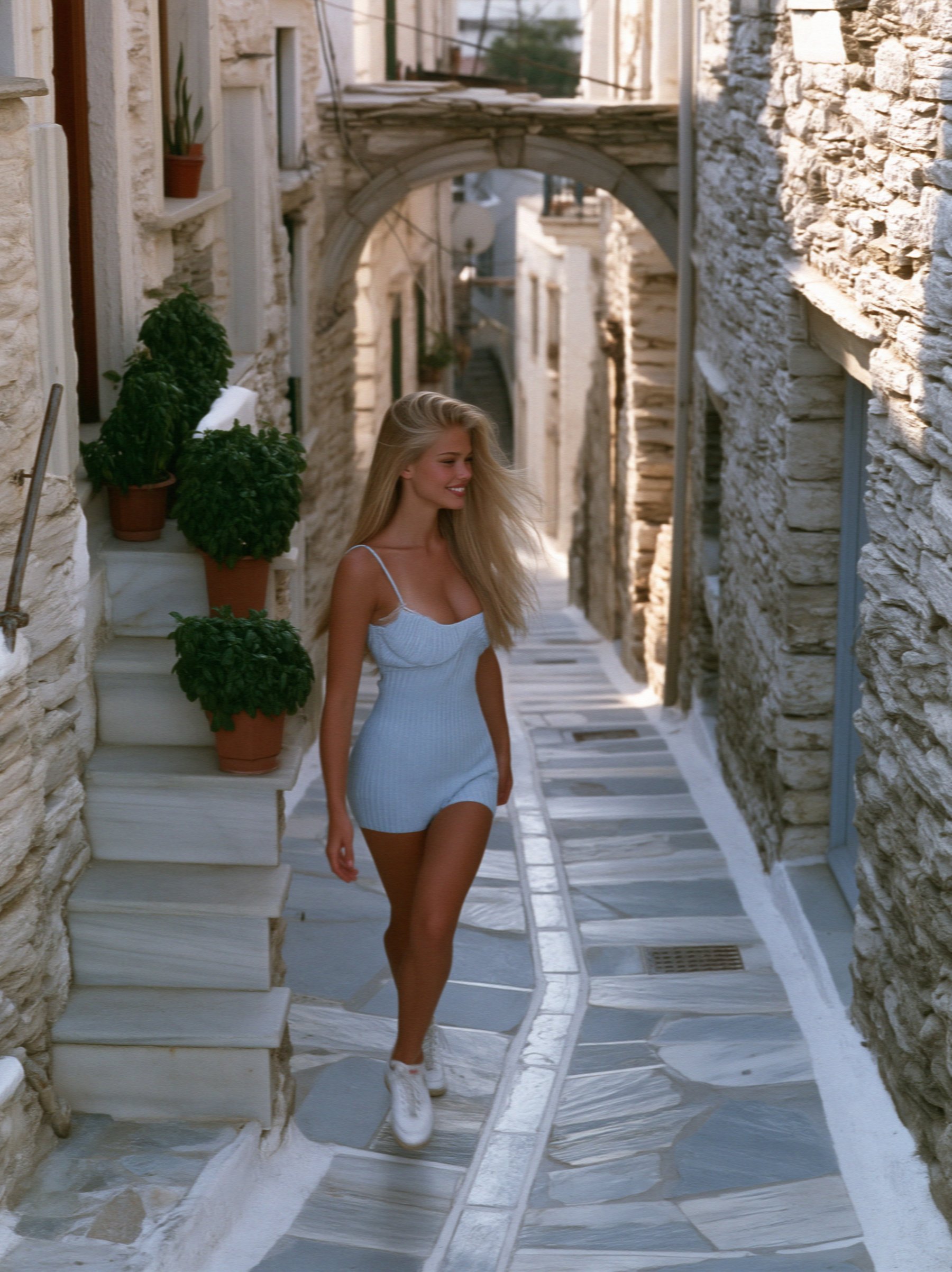
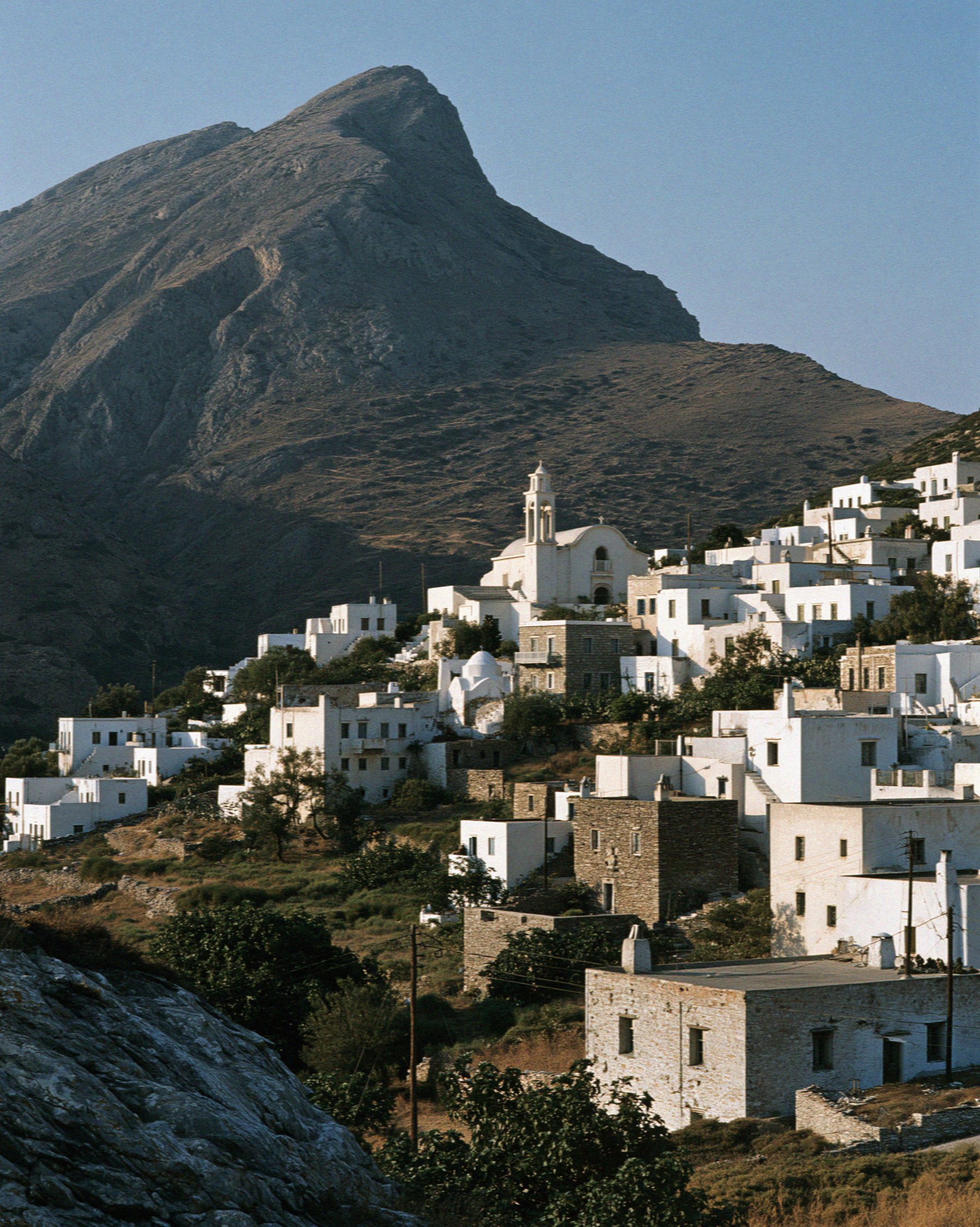
Apeiranthos is the village people remember. It sits about 600 metres up on the far side of the mountains, and it is made of marble: lanes, steps, arches and doorsteps, all worn pale and smooth, worn pale and smooth. The Zevgoli tower, a Venetian tower house, stands at its edge, and the village has a character all its own, with an accent and customs that set it apart from the rest of the island.
For a village it has a surprising number of small museums: an archaeological collection, plus folklore, geological and natural history museums. The archaeological collection opens 08:30 to 15:30, closes on Tuesdays and costs 5 euros, 3 reduced. Ask locally about the others.
Platanos and Amorginos are the two village tavernas to look for at lunch. Give Apeiranthos a slow lunch and an hour in the lanes, not a quick photograph.
Melanes and the kouroi of Flerio
Melanes is on a different road, in the hills east of Naxos Town, and in the valley below it, at Flerio, are the ancient marble quarries. One kouros, a statue of a young man close to five metres long, lies on his back in a garden among olive trees. He was carved here in the 6th century BC and abandoned when his feet broke. A second lies higher up in the quarry at Farangi, along a short, rough path.
Neither has a ticket or opening hours. I came here on the afternoon after Zas, and it was the sight on Naxos I had least expected to move me. Because he was never finished, he shows a working stage that the polished statues in museums have long since lost.
Flerio is easy to reach from town, so it slots into the same day, or makes an easy half day from town on its own.
Koronos and Komiaki
North of Apeiranthos the road climbs higher and the land gets wilder. Koronos is a steep village of stepped lanes folded into a ravine, once home to the island’s emery miners, and Platsa there is a good place to stop for lunch. Komiaki, further on, is the highest village on Naxos, with views down towards the north coast.
These are the quietest of the mountain villages and the least visited. If you are driving through to Apollonas, stop in both.
Apollonas and the giant
The road ends at Apollonas, a small fishing village on the north coast with a beach and tavernas by the water. Just above it, in an ancient quarry a short walk from the road, lies the biggest of the Naxos kouroi: around 10.7 metres long and some 80 tonnes, bearded and only roughly shaped. He may have been meant for Dionysus or for Apollo; nobody is certain.
Apollonas is a little over 30 kilometres from Naxos Town by the north-coast road, and further by the mountain road through the villages, a slow drive with plenty of bends. If the sea is calm, swim before you head back.
A day’s loop by car
Leave Naxos Town by 08:30, and not on a Tuesday. Drive to the Temple of Demeter for opening time, then on to Halki for coffee and a kitron tasting, with a short detour to Panagia Drosiani. Carry on through Filoti and over the mountains to Apeiranthos for a long lunch and a walk through the marble lanes. In the afternoon, drive north through Koronos and Komiaki to Apollonas for the giant and a swim, then back to town in the evening.
It is a full day of slow mountain driving, so do not try to add Flerio as well. Give the kouros at Flerio a separate morning, and if you have the legs, give Mount Zas a day of its own. My list of the best things to do in Naxos puts them in context.
Frequently Asked Questions
Which is the most beautiful village on Naxos?
Apeiranthos, for most people: a marble village about 600 metres up, with a Venetian tower and several small museums. Halki, with its neoclassical houses and kitron distillery, is a close second.
Can you visit the Naxos mountain villages by bus?
Yes, partly. The KTEL village line from the port runs to Halki, Filoti and Apeiranthos. Buy tickets at the port kiosk before boarding and check the time of the last bus back. For Koronos, Komiaki, Apollonas and Flerio, a car is far easier.
Where are the kouroi on Naxos?
Two lie at Flerio near Melanes, one in a garden and one higher up in the quarry, both close to five metres long. The largest, about 10.7 metres, lies in a quarry above Apollonas on the north coast. All three are free to see.
Is the Temple of Demeter on Naxos worth visiting?
Yes. It is a temple of around 530 to 520 BC made entirely of marble, partly re-erected, near Sangri about half an hour from town. It opens 08:30 to 15:30, closes on Tuesdays, and costs 5 euros.
What is Halki on Naxos known for?
Kitron. The Vallindras distillery has made the liqueur in Halki since 1896, with free tastings among the old copper stills. It is also known for its neoclassical houses.
Read also: Hiking Mount Zas on Naxos: Both Routes and the Cave of Zeus | The Best Things to Do in Naxos | Victoria’s Complete Guide to Naxos