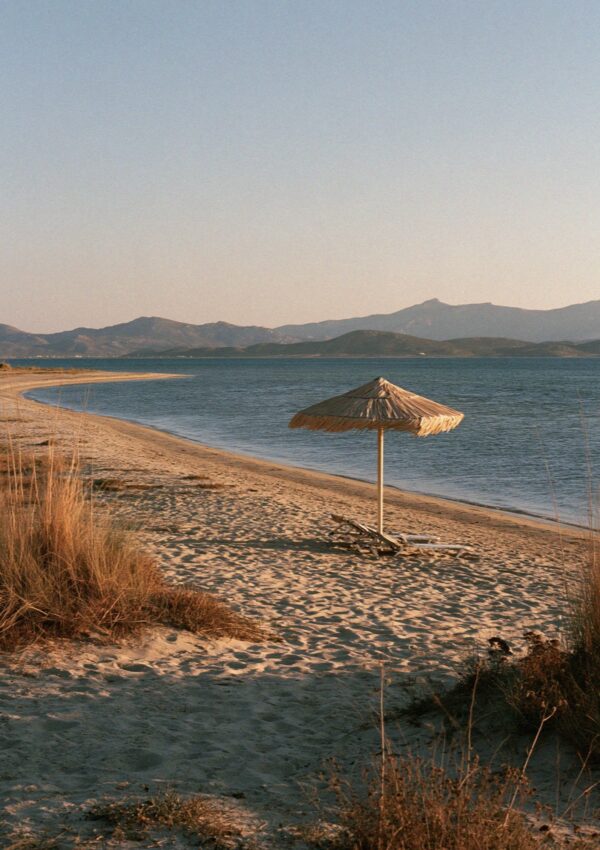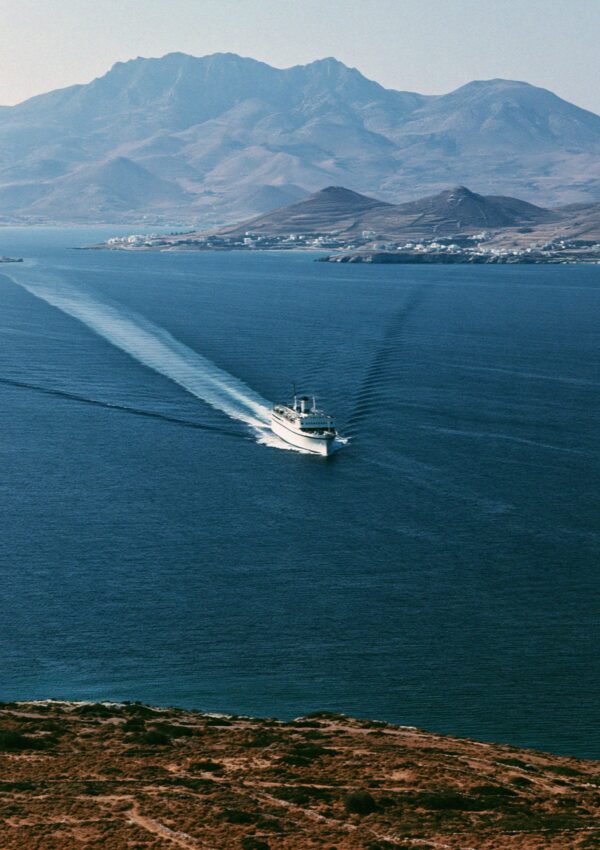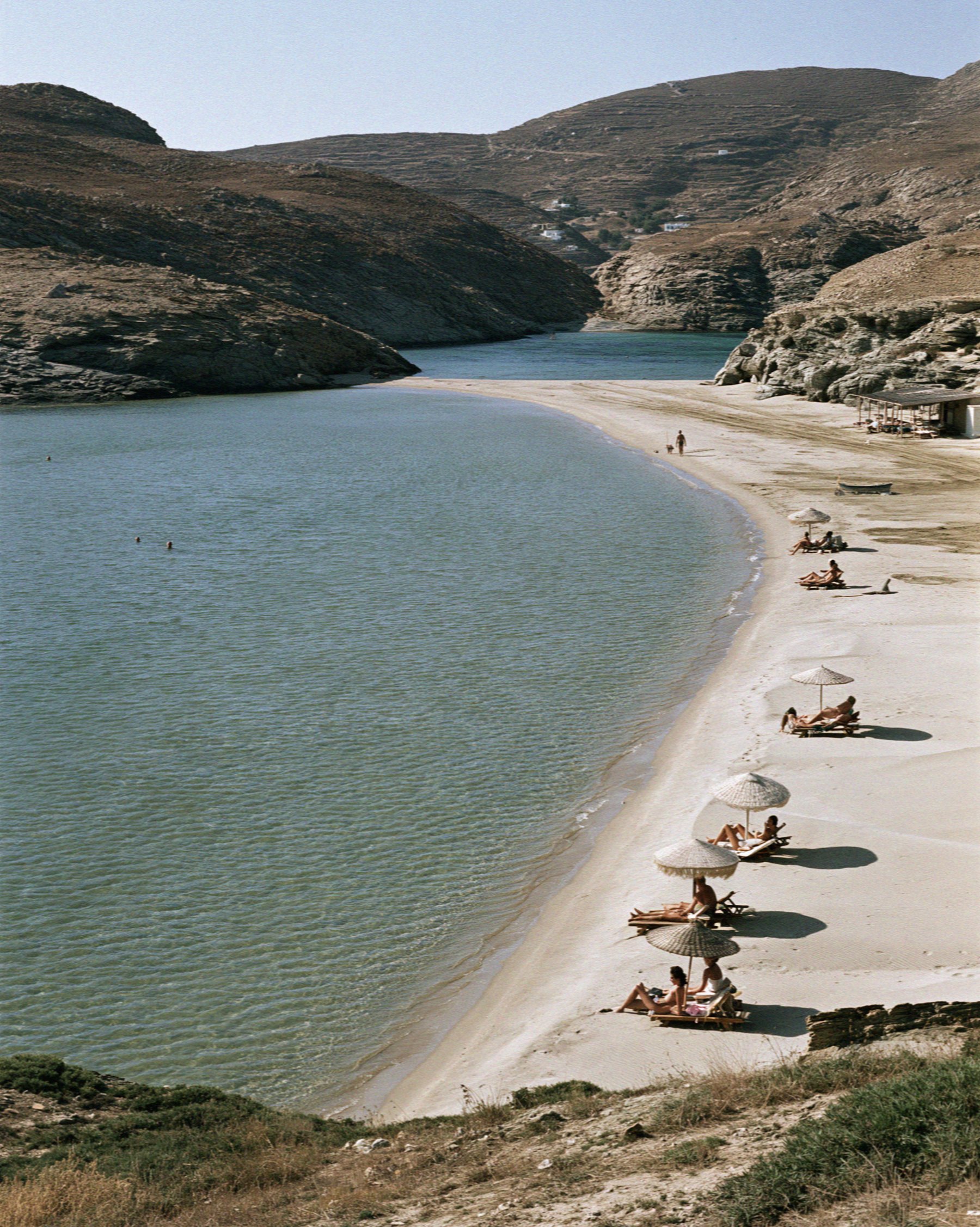
I swam at Piso Livadi in October, at the end of the long walk down from Lefkes, and the water was still kind. It was enough to learn the main thing about this island’s sea: it is clear almost everywhere, and what changes from one beach to the next is not the water but how much wind is pushing it about.
Paros has sand on every side, from sculpted granite coves in the north to long windsurf beaches in the east and small sheltered bays in the south. Here they are coast by coast, with who each one suits and how to reach it. Everything else on the island is in my complete guide to Paros.
Which coast, which wind
Think of the beaches in four groups. The north wraps around the big bay of Naoussa. The west has the little bay facing Parikia. The east runs in a long line from Piso Livadi down to Golden Beach and beyond. The south and south-west are lower, quieter and further from everything.
High summer brings the meltemi, a dry north wind that can blow for days at a stretch, and it comes down the gap between Paros and Naxos harder than it blows across open sea. The east coast takes the brunt, which is exactly why it belongs to windsurfers in high summer. The beaches tucked inside the bay of Naoussa are calmer than the open coast, and the south, Faragas in particular, is where locals head when the north wind refuses to drop.
In June, September and early October the wind is usually gentler and every coast is yours. Look at the forecast the evening before and choose the beach to suit it, rather than choosing the beach first and hoping.
Kolymbithres
This is the one in all the photographs: little coves of sand between huge, smooth granite boulders that wind and water have worn into rounded ledges, hollows and pools.
Kolymbithres sits on the western side of the bay of Naoussa, across the water from the town. You can drive round, or take one of the small boats that cross from Naoussa harbour in season, which is the nicer way to arrive. The water among the rocks is shallow and calm on most days, which makes it good for children, though the stone is slippery when wet and water shoes help.
The catch is size. The coves are small, the rocks take up much of the space, and in July and August they are full by late morning. Come early, or come in June or September, when you can have a whole hollow in the granite to yourself.
Monastiri
A little further round the same side of the bay, inside Paros Park, Monastiri is the sheltered one. It is a cove of sand and clear water tucked into the headland of Agios Ioannis Detis, with the monastery that gives it its name on the slope above.
The park around it is free and open all year, a rough, quiet headland with footpaths, a small lighthouse at the point and long views back across the bay to Naoussa. The best way to do it is to walk first, while it is cool, then come down to Monastiri to swim. Boats run across from Naoussa in season, and there is also a road in. Take water with you on the paths, because there is very little shade out on the headland.
Santa Maria
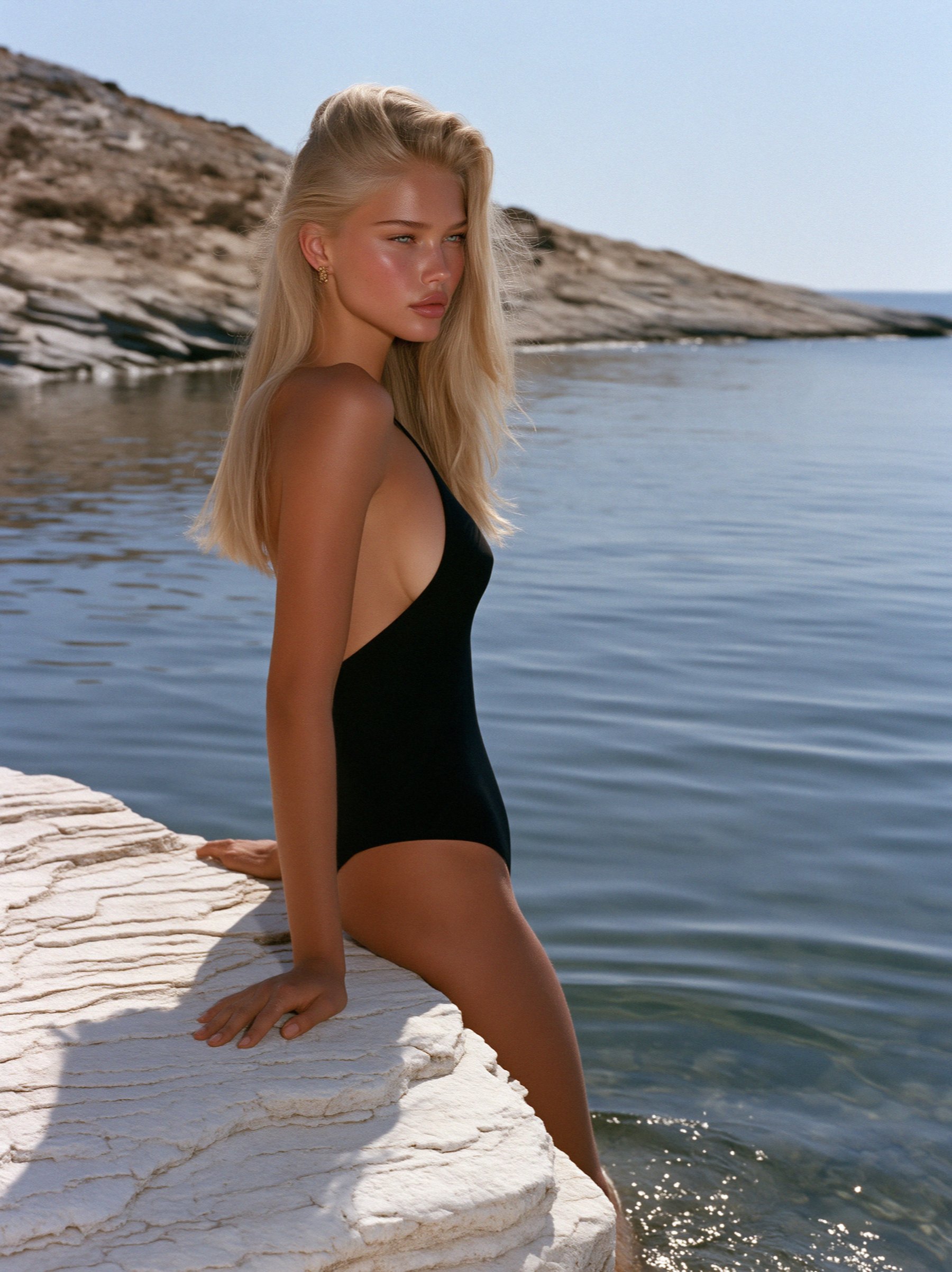
North-east of Naoussa, Santa Maria is the long sandy beach of the north, and Mikri Santa Maria is its smaller neighbour. The sand is fine and pale and the water shelves very gently, so you can wade a long way out, which is why families like it.
It faces more open sea than the coves inside the bay, so it feels the wind more on a meltemi day. On a still morning, though, it is one of the loveliest stretches of sand on the island, and there is space here even when Kolymbithres is packed. You will want a car or a scooter, or a taxi from Naoussa.
Lageri
Lageri is where people go when they want sand and nothing else. It lies north-east of Naoussa, on the eastern shore of the bay towards Santa Maria, quiet and undeveloped compared with Santa Maria, and the easiest way there is the water taxi from Naoussa harbour in season.
Do not count on much in the way of facilities. Bring water, something to eat and your own shade, and treat it as a beach for a long, slow afternoon rather than a lunch stop.
Krios and Marcello
If you are staying in Parikia without a car, these two are your beaches. They lie across the bay from the harbour, and in season a small boat shuttles over from the port, a crossing of a few minutes that puts the whole bay between you and the ferries.
Both are sandy, sheltered on most days, and look back at the town and its windmill. They are busy in August, but they turn a day in the port into a beach day.
Golden Beach and the windsurfers
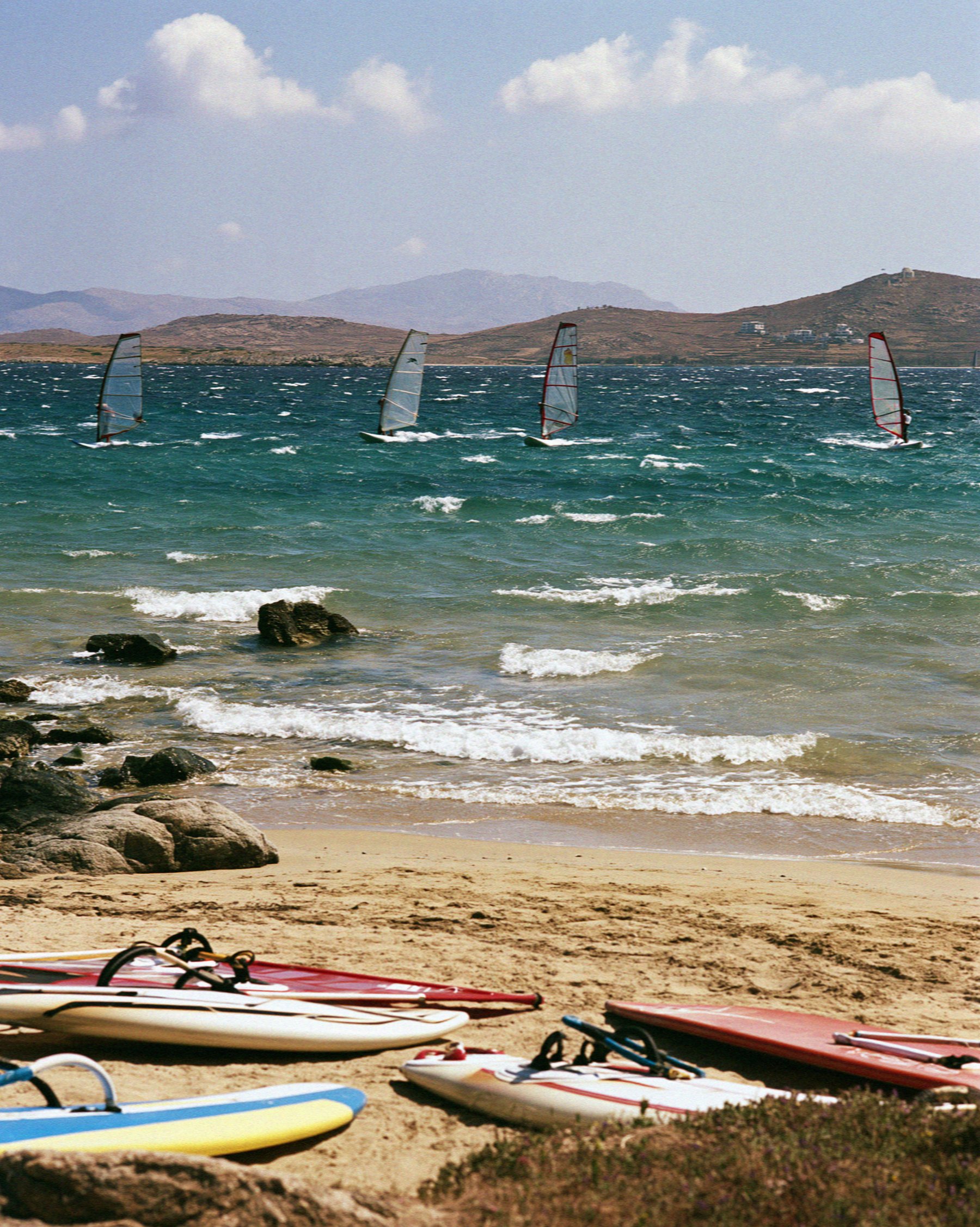
On the east coast, Golden Beach (Chrissi Akti) is a long stretch of golden sand that in high summer belongs to the wind. Together with New Golden Beach just to the south, it is the island’s windsurf centre and hosts big windsurfing events, and there are schools here for beginners as well as rental for people who already know what they are doing.
Kitesurfers, though, go to the other side of the island. Pounda, on the west coast beside the little port for the Antiparos ferry, is the island’s kite beach, with schools on the sand and the wind running down the strait. Do not confuse it with the beach of the same name on the east coast, which is known for its beach bar rather than its kites.
If you do not sail, go to Golden Beach in June or September, when the wind is lighter and it becomes simply a long, easy beach with room to spread out. The buses from Parikia run down this coast in season.
Logaras and Piso Livadi
Piso Livadi is a small fishing harbour on the east coast, with a handful of tavernas around the quay, boats tied up along the quay, and a beach just beyond the harbour. It is a real village rather than a resort, and it is the end of the walk down from Lefkes along the old Byzantine road, which is how I arrived there. I wrote about that day, and the swim, in The Stone That Lets the Light In.
Logaras, next door, is a curved, sheltered bay of sand with tavernas behind it, calmer than the open beaches further south. Together they make one of the best bases on the coast for someone who wants to swim every day and eat fish in the evening. The walk from Lefkes is in my guide to Lefkes and the Byzantine road.
Faragas and the south
When the meltemi is blowing, drive south. Faragas is a small sandy bay on the south coast that sits out of the north wind, which makes it the island’s best refuge in late July and August. On a windy day it feels like finding the one quiet room in a noisy house.
Aliki, in the south-west, is a small village with a harbour and beaches either side of it, and several of the day boats to the Blue Lagoon and Despotiko leave from here. The whole southern end of the island is lower and emptier than the north, with fewer hotels and fewer people.
Getting to the beaches
The KTEL buses are good on Paros, and in 2026 they take card payment only, so do not count on paying in coins. The Parikia to Naoussa route runs very often in season, and other lines go from Parikia down the east coast to Piso Livadi, Golden Beach and Drios.
From Naoussa harbour, small boats run across the bay in summer to the beaches on the far side, and from Parikia a boat crosses to Krios and Marcello. Everything else is easiest with a car or a scooter, which you should book well ahead for August.
If you want the beach on your doorstep, my guide to where to stay in Paros matches each area to its sand. And if you have a spare day, the beaches across the water are covered in my Antiparos day trip.
Frequently Asked Questions
What is the best beach in Paros?
Kolymbithres for its granite coves, Santa Maria for long sand and shallow water, Golden Beach for windsurfing, and Faragas when the wind is up. Monastiri, inside Paros Park, is the best for a calm swim after a walk.
Which beaches in Paros are sheltered from the meltemi?
Faragas on the south coast is the most reliable refuge from the north wind. The coves inside the bay of Naoussa, such as Monastiri and Kolymbithres, are also calmer than the open coast. The east coast, around Golden Beach, is the windiest.
Can you reach the beaches in Paros without a car?
Yes, for many of them. Buses run from Parikia to Naoussa and down the east coast to Piso Livadi and Golden Beach, boats cross from Naoussa to the beaches around the bay, and a small boat goes from Parikia to Krios and Marcello in season.
Is Kolymbithres worth visiting?
Yes, but go early or outside July and August. The coves between the rocks are small and fill by late morning in high summer. In June or September it is far quieter.
Which Paros beach is best for families?
Santa Maria, for its fine sand and very gently shelving water, and Logaras for its sheltered bay. The shallow pools among the rocks at Kolymbithres are good for small children on a calm day.
Read also: Where to Stay in Paros: Naoussa, Parikia or the Beaches | Naoussa, Paros: the Harbour, the Venetian Fort and the Evenings | Victoria’s Complete Guide to Paros