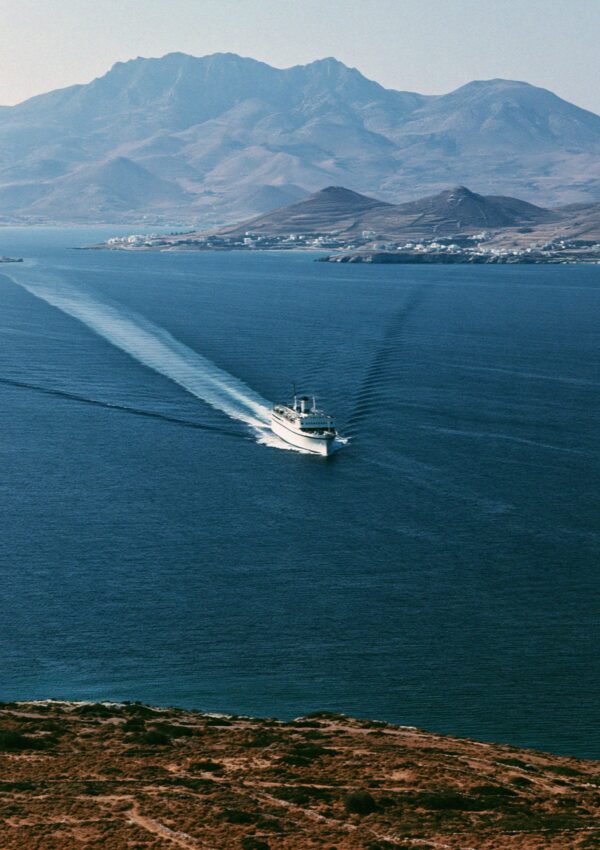
Seven minutes. That is all the water there is between Pounta, on the west coast of Paros, and the little island of Antiparos, and the ferry that crosses it runs back and forth all day like a bus. It is the easiest island hop in the Cyclades, and it gives you a different place entirely: smaller, slower, with one long lane of a town, a cave that has been drawing visitors for centuries, and boats out to the Blue Lagoon and the ancient sanctuary on Despotiko.
This is the day I would plan for a first visit, built from the timetables, the opening hours and what people who know the island recommend. For the rest of Paros, start with my complete guide to Paros.
Why Antiparos
Antiparos is what Paros was before it became popular, people say, and there is some truth in it. The island is small, the main town is a single village, and away from the summer peak the pace is very slow. It has a well-known cave, a handful of good beaches and some of the clearest water around Paros, with the uninhabited islets to the south-west only a short boat ride away.
It works as a day trip because it is so close. You can go over after breakfast, see the cave, swim, eat lunch in the town and be back in Paros for dinner without ever looking at your watch. It also works very well as a night or two, which I come to at the end.
Getting across
There are two ways over.
The car ferry from Pounta is the main one. It leaves from the small port of Pounta on the west coast of Paros, takes about seven minutes, and runs every 20 to 30 minutes in summer and every 30 to 60 minutes in winter. Foot passengers pay under two euros, in cash only, at the port or on board. You can take a car or a scooter across too, which is useful for the cave and the beaches in the south of the island. Buses run from Parikia to Pounta, and the stop is close to the quay.
The passenger boat from Parikia runs in season, takes about 30 minutes and costs about 7 euros. It lands you right in Antiparos town, so it suits people staying in Parikia who do not want to bother with the bus.
The kite beach at Pounda sits right beside the ferry quay, so you will see the kites as you wait. There is also a beach of the same name on the east coast, known for its beach bar, so say “the ferry for Antiparos” and nobody will send you the wrong way.
Antiparos town
The town is essentially one long pedestrian lane running up from the harbour, lined with shops, cafés and small bars, with bougainvillea over the doorways and little squares opening off it. At the top is the small Venetian kastro, a ring of houses built into its old walls around a central space, much quieter than the lane below.
It is very pleasant in the morning before the day boats arrive, and lively in the evening in July and August, when the bars fill up. In between, it is the place for a long lunch and a slow walk. The folklore museum is in the town too, and your cave ticket covers it.
The cave
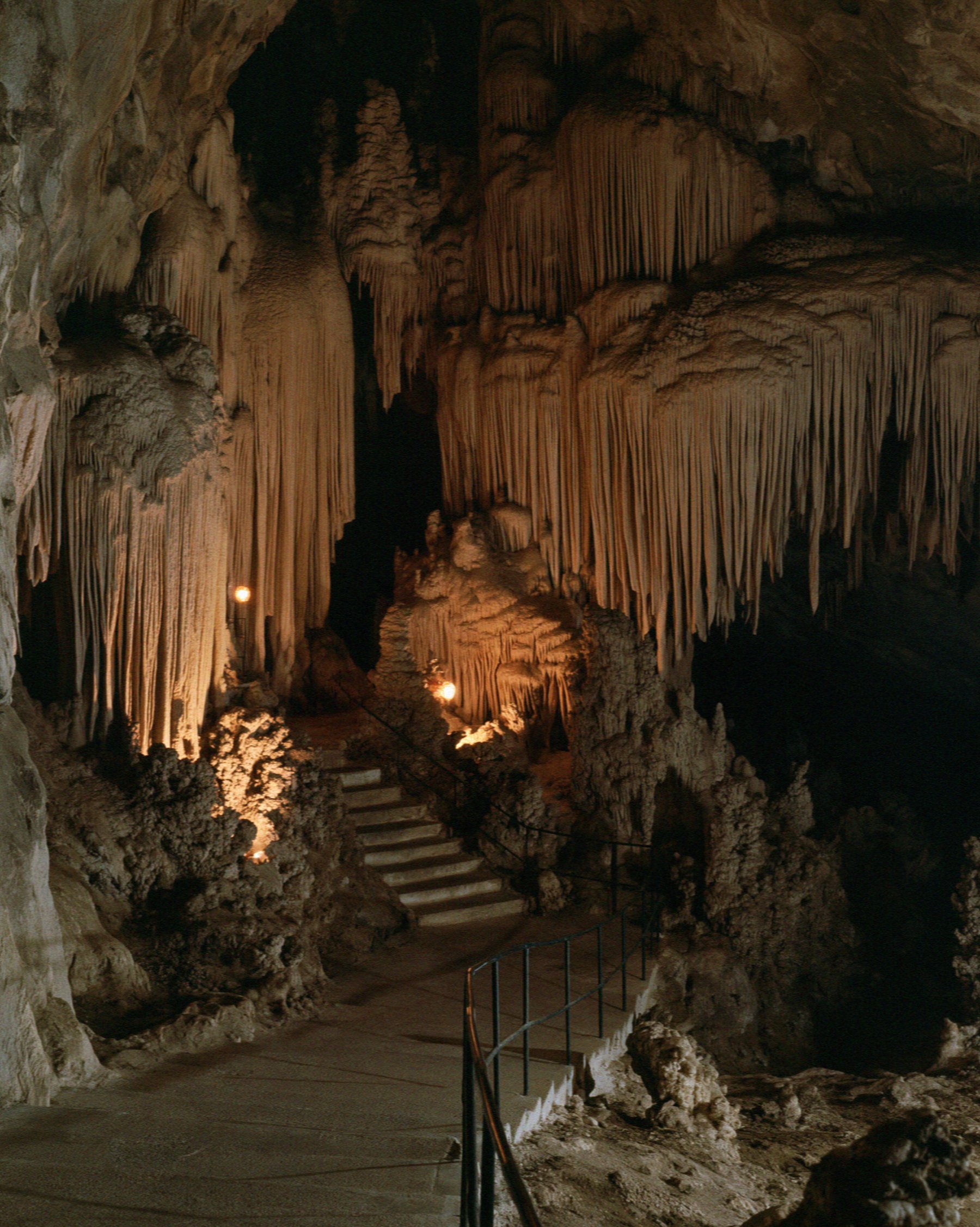
The cave of Antiparos is the island’s great sight, a deep cavern full of stalactites and stalagmites, reached by a long descent of steps into the hill. It lies about 8 km from the town, and a bus runs there in season; otherwise take a taxi, a car or a scooter.
It is open from 10:00 to 16:00, with last entry at 15:30, every day through October, and the ticket costs 6 euros, including the folklore museum in town. In winter, visits are by arrangement with the municipality, so ask in advance rather than turning up.
Two things to know. The steps down are many, and every one of them has to be climbed again on the way out, so it is not for anyone who struggles with stairs. And it is noticeably cooler inside than out, which is a pleasure in August and a reason to bring a layer in spring or autumn. Go in the morning, before the heat and the busiest hour.
Beaches on Antiparos
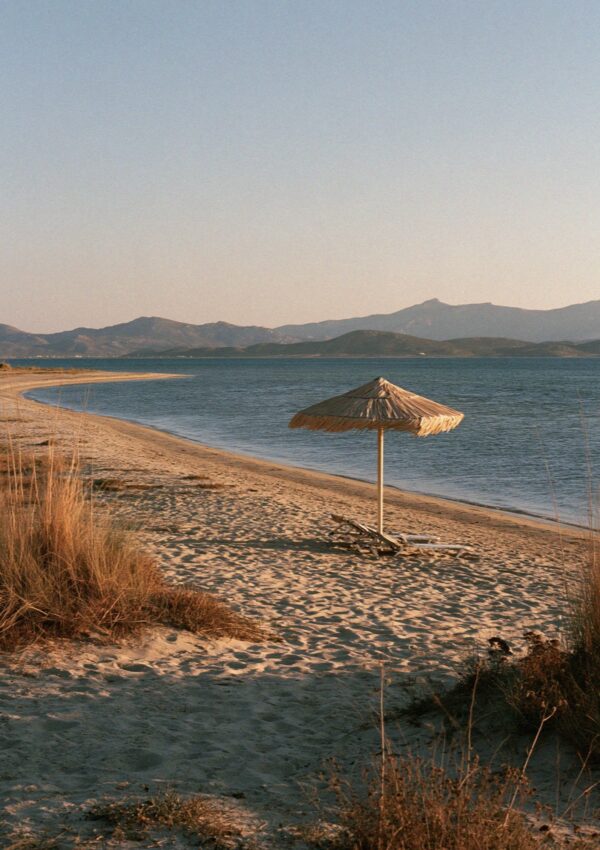
The beaches are the other reason to come. Just south of the town are the Psaraliki beaches, sandy and close enough to walk to, which makes them the obvious place for a swim between the cave and lunch. Soros, on the east coast, is a longer stretch of sand with a taverna or two behind it. Down at the southern end of the island, Agios Georgios looks across the water to Despotiko and is one of the quietest places to swim.
For anything beyond the town beaches you will want wheels, so if beaches are the point of your day, take a car or scooter across on the ferry or hire one on the island. As on Paros, the wind decides a great deal in late July and August, so check it before you choose. My guide to the best beaches in Paros has the sheltered options on the bigger island.
The Blue Lagoon and Despotiko by boat
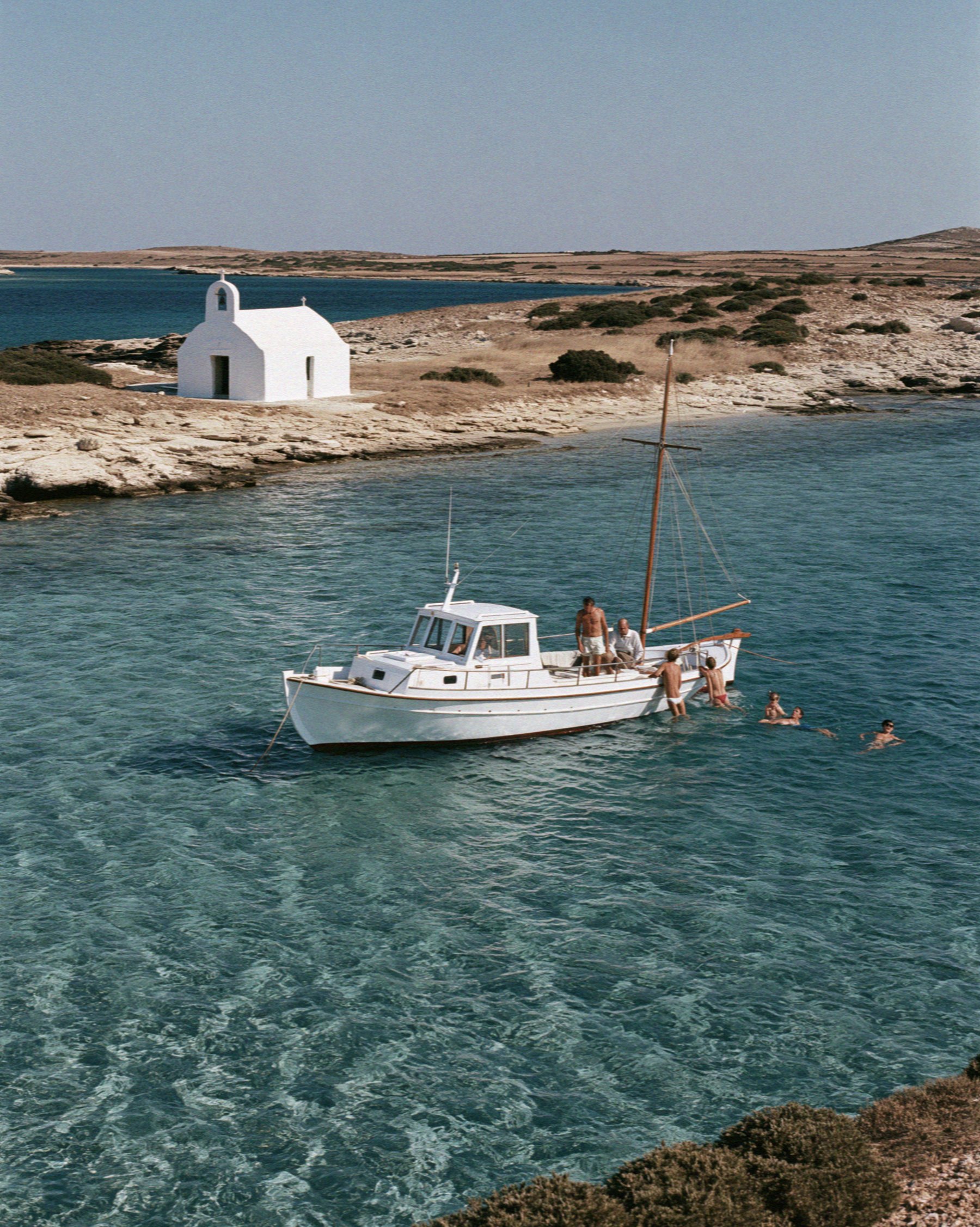
Some of the best of Antiparos can only be reached by sea. Day boats run to the Blue Lagoon, a stretch of shallow turquoise water among the Panteronisia islets, and to Despotiko, an uninhabited island where archaeologists are excavating an ancient sanctuary of Apollo. Most boats also stop at sea caves along the coast and anchor for swims in bays you cannot reach by road.
They leave from several places on Paros: Parikia, Aliki, Pounta, Piso Livadi and Naoussa, so choose the one nearest your hotel. Shared trips start at roughly 85 euros for a half day, and a full day with lunch on board runs to about 145 euros, though prices vary a good deal from boat to boat. A private boat for a group is well over 1,000 euros. Book a day or two ahead in July and August, and expect the trip to be cancelled or rerouted if the wind is strong; a good skipper will tell you the night before.
The boat day pairs naturally with the rest of the island, and I have put it in my Paros itinerary as the fifth day.
Staying the night
Antiparos is lovely in the evening, when the day visitors have gone back across the strait and the town lane belongs to the people sleeping on the island. If you have the time, a night or two here is the best way to see it.
The town has small hotels and rooms, and there are larger and very expensive villas and resorts elsewhere on the island. Book early for July and August, because there are far fewer beds than on Paros. In the quieter months, much of the island closes, so check before you plan to stay. If you would rather keep Paros as your base, my guide to where to stay in Paros points out the west coast hotels nearest the ferry.
How to do it well
Go early. Take an early ferry from Pounta, which starts running soon after dawn, and you will have the town and the cave before the crowds. The passenger boat from Parikia does not leave until mid-morning.
Do the cave first. It closes in the middle of the afternoon, and it is easier in the cool of the morning.
Swim and eat after. The Psaraliki beaches and the town make the perfect second half of the day.
Take wheels if you want the south. A car or scooter on the ferry opens up Soros and Agios Georgios.
Check the last boat back. The Pounta ferry runs into the evening in summer, but the Parikia boat stops much earlier, and in winter both thin out.
Keep a separate day for the boat trip. The Blue Lagoon and Despotiko deserve their own day rather than being squeezed in.
If you are deciding what else deserves a day, my list of the best things to do in Paros puts Antiparos in context with the rest of the island.
Frequently Asked Questions
How do you get from Paros to Antiparos?
Most people take the little car ferry from Pounta: the crossing is about seven minutes, with a boat every 20 to 30 minutes in summer. A seasonal passenger boat from Parikia takes about 30 minutes and lands in Antiparos town.
How much is the ferry to Antiparos?
Foot passengers pay under two euros on the Pounta car ferry, cash only. The passenger boat from Parikia costs about 7 euros.
Is the Antiparos cave worth visiting?
Yes, if you can manage a lot of steps. In 2026 it opens daily from 10:00 to 16:00 until the end of October (last entry 15:30), and 6 euros also gets you into the folklore museum in town.
Is Antiparos worth a day trip from Paros?
Yes. It is only seven minutes away by ferry, and a day is enough for the town, the cave, a swim and lunch. A night or two lets you see it in the quiet evenings.
Can you visit Despotiko from Paros?
Yes, by day boat. Trips to Despotiko and the Blue Lagoon leave from Parikia, Aliki, Pounta, Piso Livadi and Naoussa, costing from roughly 85 euros for a shared half day to about 145 euros for a full day with lunch.
Read also: The Best Things to Do in Paros | A Paros Itinerary: 3 to 5 Days | Victoria’s Complete Guide to Paros