Most people book Paros for the beaches and leave talking about marble. It is in the church walls of Parikia, in the paving of an old mule path across the middle of the island, and in the ground at Marathi, where the finest white stone of the ancient world was cut out of a hillside by lamplight. The beaches are very good. The island underneath them is the surprise.
This is what I would actually do with a week here, in roughly the order I would do it, with the practical detail that makes each one work. For where to sleep, how to get around and everything else, start with my complete guide to Paros.
Panagia Ekatontapyliani
Start where the ferry leaves you. A few minutes’ walk from the quay in Parikia, behind its own wall and a shady courtyard, is the oldest and most important church on the island, Panagia Ekatontapyliani, Our Lady of a Hundred Doors.
Tradition traces the first church here to St Helen, the mother of Constantine, in the 4th century, and the building you walk into was rebuilt in the time of Justinian, two hundred years later. Inside it is dark, layered and enormous, chapel opening into chapel, with a small Byzantine museum of icons and church treasures within the complex.
The name comes with a legend about a door that has not appeared yet, which I wrote about in Ninety-Nine Doors. It is open daily from morning into the evening, it is a working church, so cover your shoulders and keep your voice down, and it is free to walk in. The full story of the church and the town around it is in my guide to Parikia.
The archaeological museum
Directly behind the church, the small Archaeological Museum of Paros is worth an hour for one reason above all: it shows you what the island’s marble became. There is sculpture from the sanctuaries of Paros, and a piece of the Parian Chronicle, an ancient marble inscription that lists the dates of Greek history as its authors understood them.
It keeps short hours, mornings and early afternoon only, and it shuts on Tuesdays. Entry is 5 euros, or 3 reduced.
The Kastro in Parikia
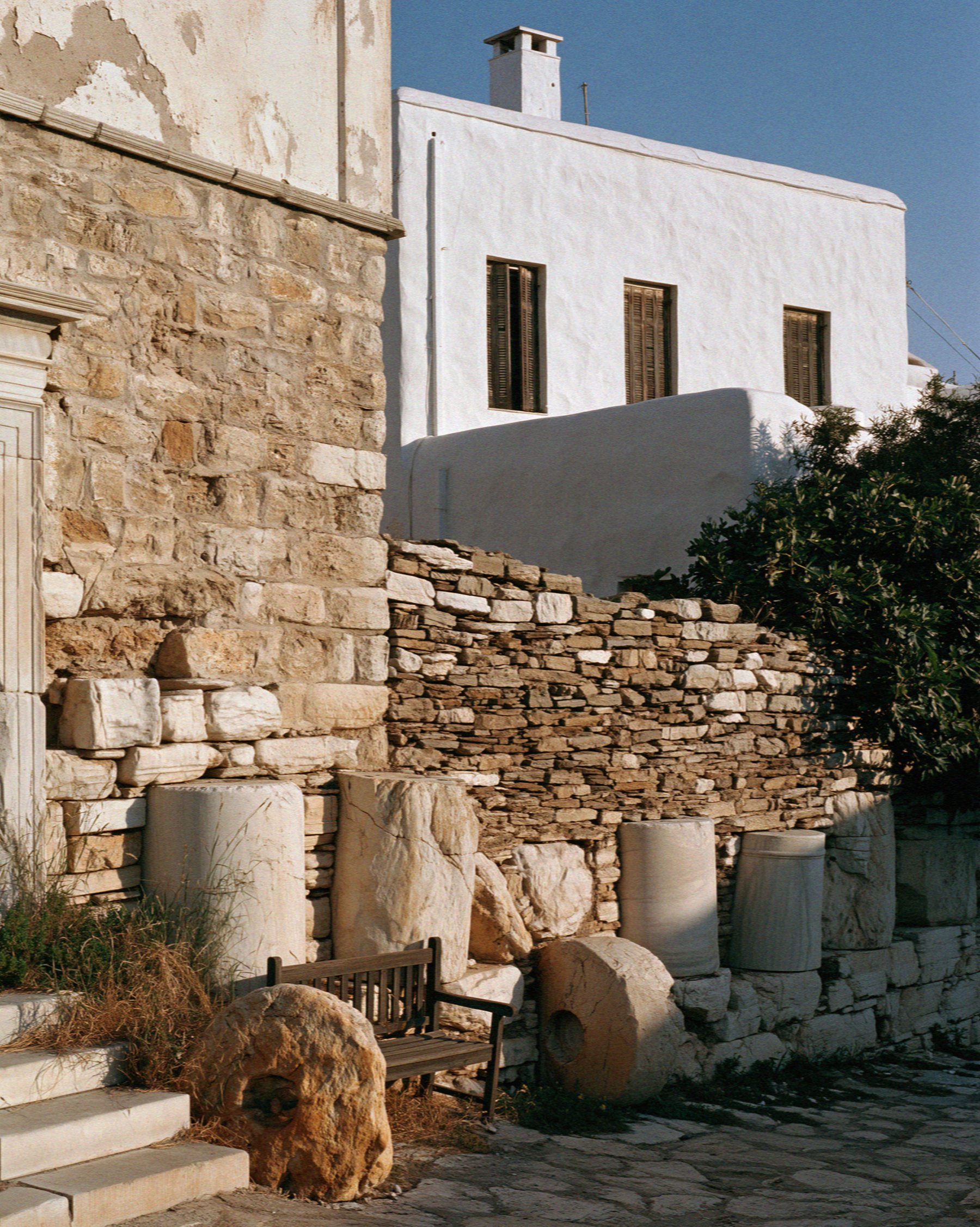
The Kastro is a short walk west along the old town lanes, and it is the strangest wall in the Cyclades. When the Venetian dukes of Naxos fortified Parikia in the 13th century, they built with what was lying around, which meant the marble of an ancient temple of Athena on the same hill. Column drums lie sideways in the masonry. Carved blocks sit next to rubble. Later, families built their houses into the wall itself, so the fortification is now part of people’s homes.
Walk around it in the late afternoon, when the low sun picks out the round ends of the columns, and finish at the little church of Agios Konstantinos on the top.
Sunset in Naoussa
Naoussa, on the north coast about twenty minutes from Parikia by road, is the town in most of the photographs of Paros: a small fishing harbour with painted caiques, tavernas at the water’s edge and a broken Venetian fort at the harbour mouth. In the evening it becomes the smartest place on the island.
Arrive an hour before sunset, walk out along the breakwater towards the fort while the light is still up, then find a table on the harbour. The bus from Parikia runs very often in summer, but the last ones back fill up, so a taxi or a hire car is calmer. Everything about the town, including where to eat, is in my guide to Naoussa.
Lefkes and the Byzantine road
If you do one thing inland, make it this. Lefkes, high in the middle of the island, was the old capital, built where pirates would have to climb to reach it. Its lanes are white and arched, its big marble church is almost too bright to look at in the middle of the day, and when I was there in October it was very quiet.
From the edge of the village, a stone path paved in long stretches of marble runs down through olives and terraces to Prodromos, about an hour’s walk, and on towards the east coast. I walked it on a clear October day with Naxos across the water, and I wrote about it in The Stone That Lets the Light In. Distances, buses and the best direction to walk are in my guide to Lefkes and the Byzantine road.
The ancient marble quarries
On the road from Parikia to Lefkes, at Marathi, are the quarries that made the island famous. The Parians cut their best stone underground here, following the seams into the hill, and called it lychnites, after the word for a lamp. Parian marble is thought to be the stone of the Venus de Milo and the Winged Victory of Samothrace, among much else.
You cannot go into the galleries, which are gated for safety, but you can walk up to their mouths from the road and feel the cold air coming out of the hill.
Kolymbithres and Paros Park
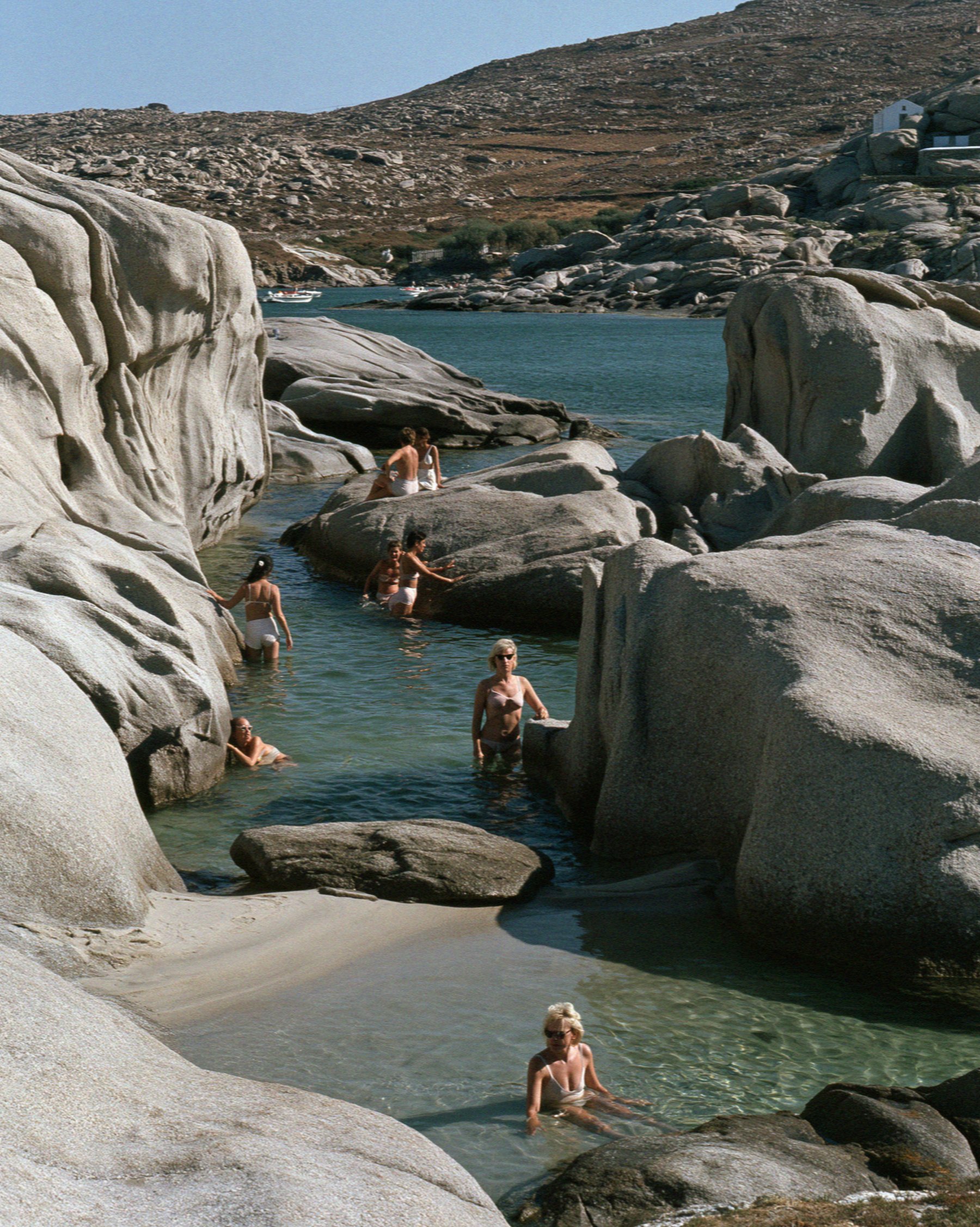
Across the bay from Naoussa, two things sit side by side. Kolymbithres is a beach of small sandy coves between smooth, sculpted granite boulders, wonderful for swimming and very busy by midday in August, so go early. Beyond it, on the headland, Paros Park is a free nature park with marked footpaths, a small lighthouse, a monastery and the sheltered bay of Monastiri.
In season, a water taxi crosses from Naoussa harbour, which is the nicest way to arrive. For every other beach on the island, see my guide to the best beaches in Paros.
A winery afternoon
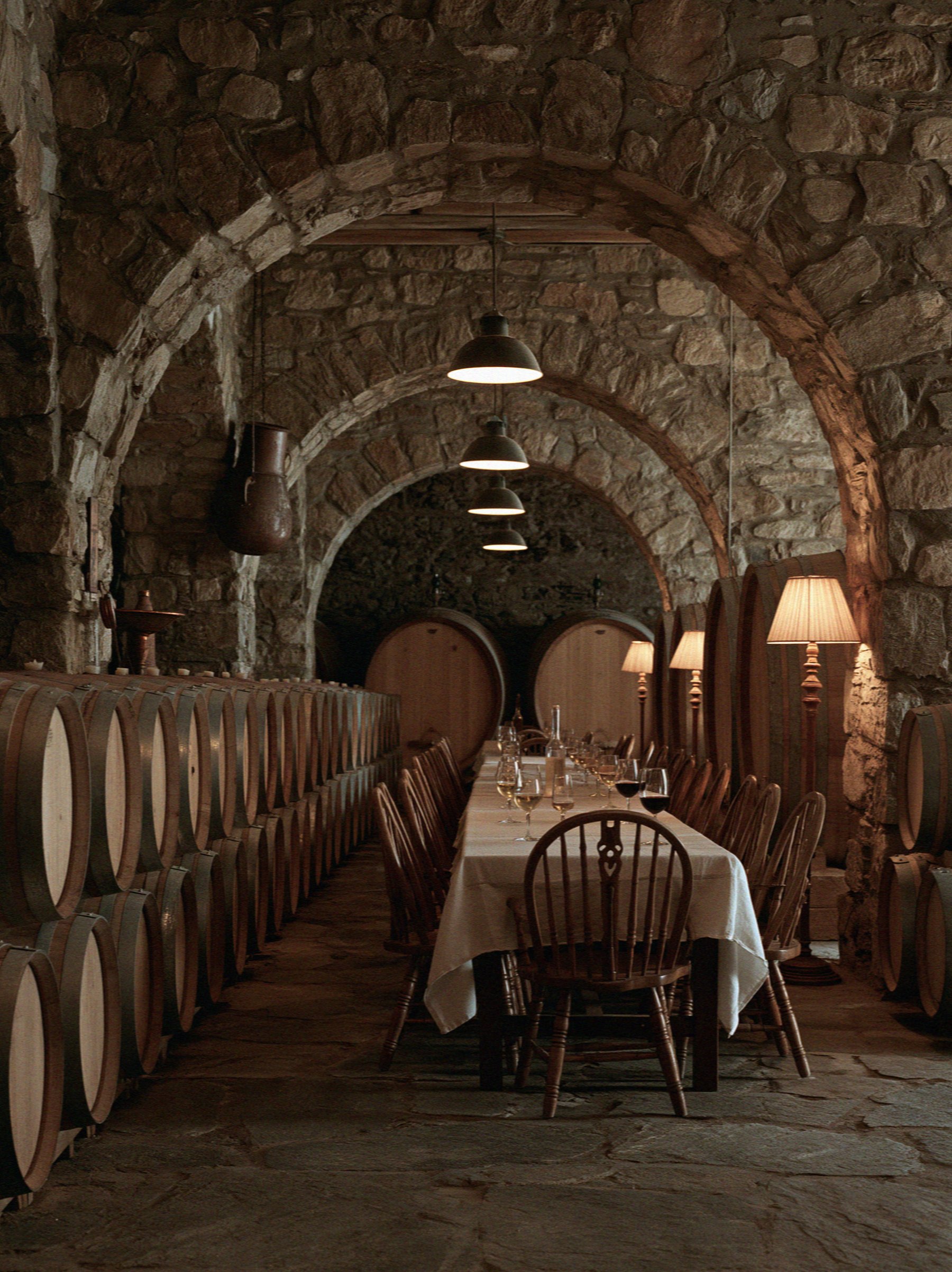
Paros makes good wine, mostly from two local grapes, Monemvasia for the whites and Mandilaria for the reds. The easiest place to taste it is the Moraitis winery on the edge of Naoussa, a family winery founded in 1910, with an old cellar and tastings. Tour days and times change with the season, so check before you go and book in summer.
The Valley of the Butterflies
A short drive south of Parikia, Petaloudes is a green, shaded valley where thousands of tiger moths gather in early summer. At the height of it, the tree trunks can be covered in them. Outside that season it is a pleasant garden walk and not much more, so only make the trip if your dates fit.
A day on Antiparos
Antiparos is a seven-minute car ferry from Pounta, on the west coast of Paros, with boats every half hour or so in summer. It is smaller, slower and barefoot: one long lane of shops and cafes in the town, a scrap of Venetian castle, and a great cave in the hills with a long stairway down into it. From late spring to October there is also a passenger boat from Parikia, about half an hour across.
I would give it a whole day, and if you can, a night. How to do it, with the cave’s hours and the boats, is in my Antiparos day trip guide.
The Blue Lagoon by boat
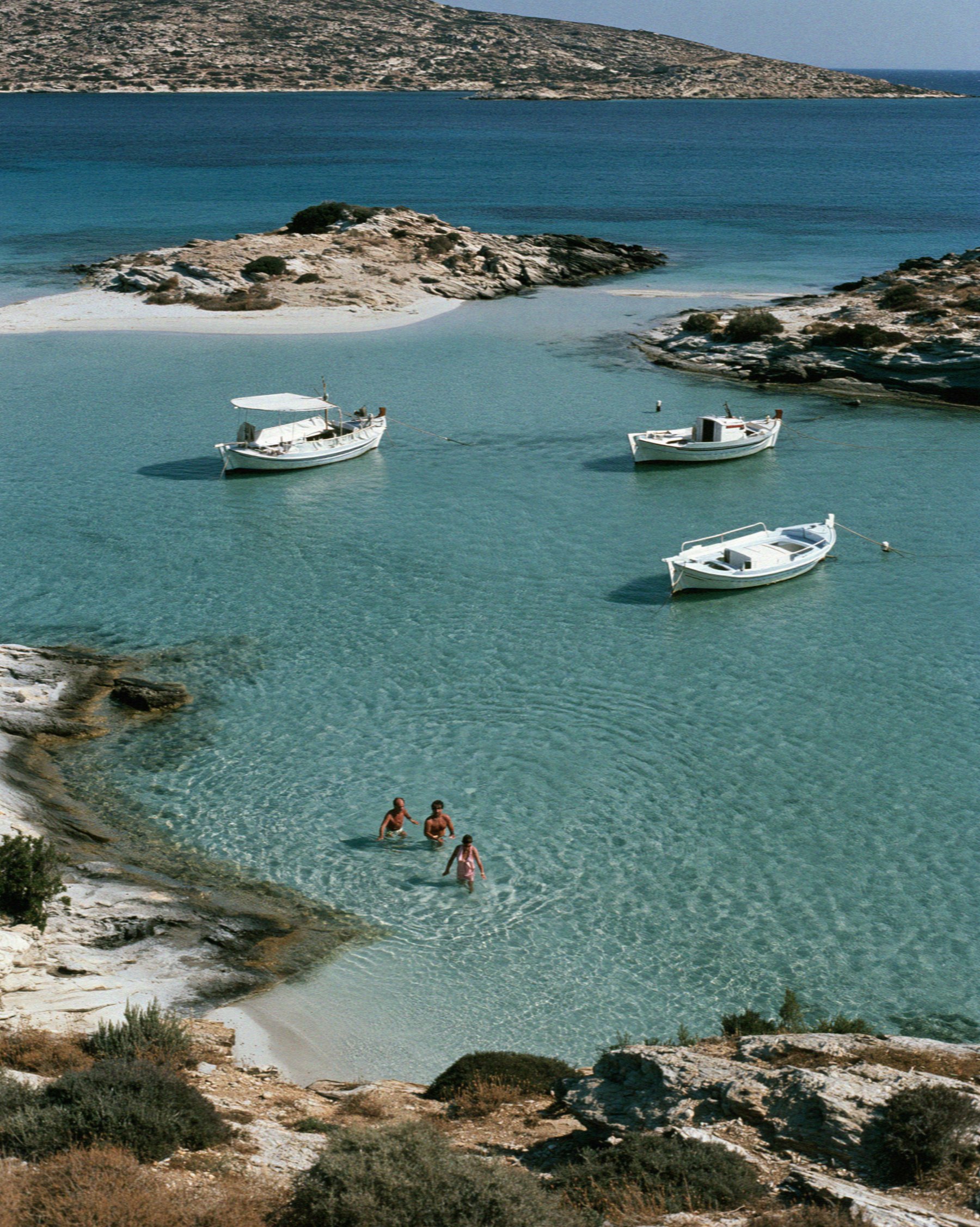
The most beautiful water around Paros is at the Blue Lagoon, the shallow channel between the little Panteronisia islets off Antiparos, where the sea goes pale and clear over sand. You can only reach it by boat. Day boats leave from Parikia, Naoussa, Aliki, Pounta and Piso Livadi, usually combining the lagoon with Despotiko, an uninhabited island with an ancient sanctuary of Apollo under excavation, and a few sea caves.
A half day costs about 85 euros, a full day with lunch about 90 to 145, and a private boat for a group well over 1,000.
What not to plan around
The meltemi. From mid-July to the end of August the north wind blows hard down the channel between Paros and Naxos. Boat trips cancel, the north-facing beaches churn, and Golden Beach fills with windsurfers. Keep a sea day flexible and move it if the forecast is bad.
Tuesdays. The archaeological museum is closed, so do not save it for the afternoon before your ferry on a Tuesday.
The butterflies in late summer. By August most of the moths have gone, so do not build a day around them.
Winter openings. From November to March many hotels, beach places and boats close, and the buses thin out. The churches, the Byzantine road and the Kastro are all still there, and quieter for it.
Frequently Asked Questions
What is Paros best known for?
Its marble, which ancient sculptors prized above almost any other, and today for Naoussa’s harbour, its beaches and Panagia Ekatontapyliani, the great Byzantine church in Parikia.
How many days do you need in Paros?
Three days covers Parikia, Naoussa and the walk from Lefkes. Five lets you add Antiparos, a boat day to the Blue Lagoon and a slow beach day.
Can you visit the marble quarries on Paros?
Yes, at Marathi on the road from Parikia to Lefkes. The galleries are gated, so you see the entrances and the hillside from outside. It is free and open access.
Is the Byzantine road on Paros hard to walk?
No. From Lefkes to Prodromos it is about an hour, mostly downhill on old stone paving. Wear proper shoes and carry water, because there is little shade.
When can you see the butterflies in Paros?
In early summer, roughly late May to July, when the tiger moths gather in the Valley of the Butterflies south of Parikia. Outside that window it is simply a shady walk.
Read also: Parikia: the Church of a Hundred Doors, the Kastro and the Old Town | Lefkes, the Byzantine Road and the Marble Quarries of Paros | Victoria’s Complete Guide to Paros